标签: South America

南美洲

  • Fear of crime and migration fuels Chile’s swing to the right

    Fear of crime and migration fuels Chile’s swing to the right

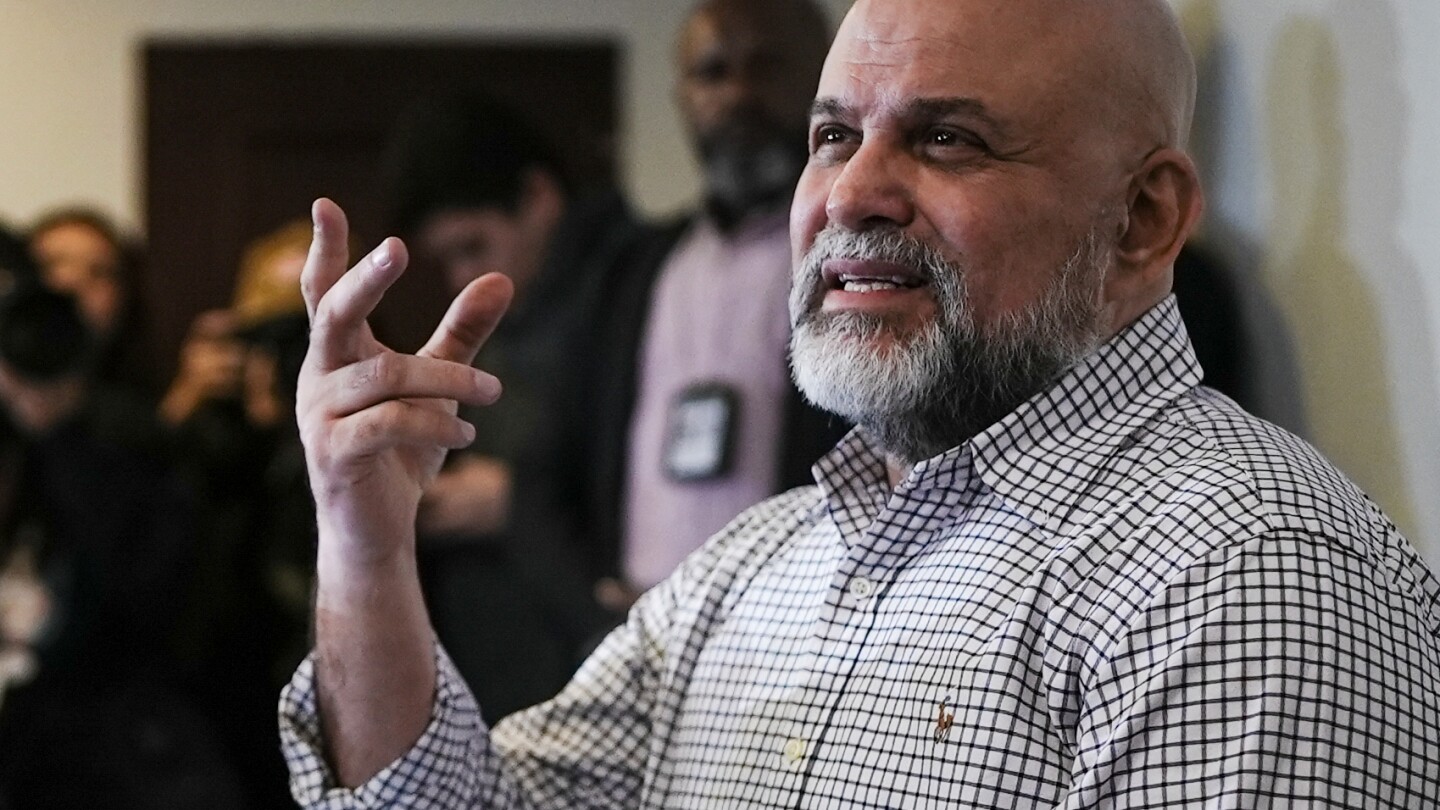
    Chile has elected hardline conservative José Antonio Kast as its next president, marking a dramatic political shift that aligns the nation with a growing bloc of right-wing governments across Latin America. The election outcome reflects profound voter anxieties over security, immigration, and crime that have unraveled Chile’s traditional image as a regional bastion of stability.

    Kast, a 59-year-old conservative who has drawn both criticism and support for his family’s connections to Chile’s authoritarian past, secured victory by promising an “emergency government” approach to the nation’s challenges. His campaign rhetoric emphasized strict immigration controls, including proposed border walls and mass deportations of undocumented migrants, while simultaneously pledging to avoid authoritarianism despite his admiration for former dictator Augusto Pinochet.

    The president-elect’s victory places Chile alongside Argentina, Bolivia, Costa Rica, Ecuador, El Salvador, and Panama in a continental trend that has seen nations swing decisively from left to right governance. This political realignment is largely driven by widespread concerns over economic instability, corruption within previous leftist administrations, and escalating security issues.

    Kast’s messaging particularly resonated with voters concerned about Chile’s rapidly changing demographic landscape. Government statistics reveal a 46% increase in the foreign-born population since 2018, with approximately 336,000 undocumented migrants now residing in the country—many fleeing Venezuela’s economic collapse. This rapid transformation has created social tensions and fears about crime, despite data showing murder rates have actually declined since 2022.

    While Kast promises to implement Trump-style “iron fist” policies, including military deployment to borders and aggressive social media promotion of his crackdowns, practical implementation faces significant hurdles. Venezuela currently refuses to accept deportees from Chile, and the nation’s economy relies heavily on migrant labor in sectors ranging from agriculture to hospitality.

    Business owners like Carlos Alberto Cossio, a Bolivian national operating in Chile for 35 years, warn that mass deportations would severely impact economic productivity and increase costs. Meanwhile, migrants like Venezuelan waiter Gabriel Funez describe living in legal limbo, fearing both deportation and rising xenophobia validated by Kast’s rhetoric.

    The new president will also face political challenges, as his party lacks a congressional majority, requiring compromise on proposals for tougher sentencing and maximum-security prisons. Ultimately, Kast’s victory represents how perceptions of control may matter as much as actual policy results for voters across a continent grappling with interconnected crises of security, migration, and economic uncertainty.

  • Chile elects far-right José Antonio Kast as next president

    Chile elects far-right José Antonio Kast as next president

    Chile has embarked on a profound political transformation with the election of far-right candidate José Antonio Kast as its next president. Securing a commanding 58% of the vote in his third presidential bid, Kast’s victory represents the most significant rightward shift in Chilean politics since the end of Augusto Pinochet’s military dictatorship in 1990.

    The election campaign centered overwhelmingly on issues of national security, immigration control, and crime prevention. Kast successfully portrayed Chile as a nation descending into chaos, pledging to restore order through stringent measures including sharp spending cuts, construction of border fortifications along Peru and Bolivia frontiers, maximum-security prisons, and mass deportations of irregular migrants.

    His triumph over left-wing coalition candidate Jeannette Jara from the Communist Party sparked jubilant celebrations among supporters in Santiago, where crowds draped in Chilean flags chanted slogans and celebrated the outcome. Many voters expressed hope that Kast would fulfill his promises to enhance national security and patriotism.

    The election results reflect growing voter concerns about immigration and organized crime, despite Chile maintaining its status as one of South America’s safest and most stable nations. Critics argue Kast exaggerated security threats, noting that murder rates are actually declining and studies indicate immigrants commit fewer crimes on average.

    Kast’s political ideology shows strong parallels with former U.S. President Donald Trump, whose ‘Make America Great Again’ slogan inspired similar campaign merchandise in Chile. His victory aligns with a broader regional trend toward right-wing leadership in Latin America, following similar shifts in Argentina, Ecuador, Costa Rica, and El Salvador.

    The president-elect’s background has raised concerns among opponents who fear a return to Chile’s authoritarian past. Kast has openly praised former dictator Pinochet, whose regime was marked by severe human rights abuses. His brother served as a minister during the dictatorship, and his father was a member of the Nazi party.

    Investors are expected to welcome Kast’s victory due to his commitment to free-market economics, state reduction, and industry deregulation. However, his staunch opposition to abortion—even in cases of rape—and environmental protection policies have drawn criticism from progressive groups.

    Kast is scheduled to be inaugurated on March 11, 2026, having repeatedly warned undocumented immigrants during campaign rallies to depart before that date if they wish to maintain future return options.

  • Brazilians protest a bill that would reduce former president Bolsonaro’s time in jail

    Brazilians protest a bill that would reduce former president Bolsonaro’s time in jail

    RIO DE JANEIRO — Massive demonstrations swept through Brazil’s major cities on Sunday as tens of thousands of citizens mobilized against controversial congressional legislation that would significantly reduce former President Jair Bolsonaro’s prison term. The bill, which cleared the lower house earlier this week, could slash Bolsonaro’s 27-year sentence for attempted coup activities to just over two years.

    Protestors flooded iconic locations including Copacabana’s boardwalk in Rio de Janeiro, Brasília’s government district, and urban centers in São Paulo, Florianopolis, Salvador, and Recife. Left-wing demonstrators united in chanting “No amnesty” and demanding the resignation of House Speaker Hugo Motta, who facilitated the bill’s passage. The atmosphere combined festive musical performances by legendary artists Caetano Veloso and Gilberto Gil with palpable political indignation.

    Antonio Edson Lima de Oliveira, a 56-year-old geologist participating in Rio, stated: “This legislation represents an attempt to protect those who attempted to overthrow democracy. Brazil has endured multiple dictatorships with devastating consequences—we must never allow such threats to reemerge.”

    The controversial measure, sponsored by Congressman Paulinho da Força, proposes fundamental changes to Brazil’s penal system. It would require concurrent rather than consecutive sentencing for convictions related to the January 8, 2023 insurrection, when Bolsonaro supporters stormed government buildings seeking to overturn President Lula da Silva’s election victory. Additionally, it would modify parole eligibility, allowing day release after serving one-sixth rather than one-fourth of a sentence.

    Political analyst Luciana Santana from the Federal University of Alagoas suggests the bill faces substantial hurdles in the Senate: “The chamber’s composition, widespread public mobilizations, and the lower house’s pre-dawn voting circumstances create a less favorable environment for passage.”

    The developments occur against a backdrop of improved U.S.-Brazil relations following diplomatic turbulence. The United States recently removed tariffs imposed during the Bolsonaro trial period and lifted sanctions against Brazilian Supreme Court Justice Alexandre de Moraes, who presided over the former president’s case.

  • Petro urges Colombians to celebrate Christmas season despite ELN rebels’ forced strike

    Petro urges Colombians to celebrate Christmas season despite ELN rebels’ forced strike

    BOGOTA, Colombia — Colombian President Gustavo Petro has issued a resolute call for citizens to celebrate the Christmas season without intimidation, following the National Liberation Army (ELN) rebel group’s declaration of an armed strike across multiple regions. The left-wing insurgents announced restrictive measures effective from Sunday through Wednesday morning, demanding civilian confinement to homes and suspension of commercial and transportation activities.

    The ELN justified their coercive actions as retaliation against what they termed a ‘counterinsurgency plan’ by the government and ‘imperialist aggression’ in reference to U.S. military operations in the region. The rebel directive specifically warned residents in Bogota, Medellin, Cali, Popayan and Barrancabermeja to avoid proximity to police and military installations.

    President Petro characterized the ELN’s pronouncements as direct threats against Colombian sovereignty rather than merely against U.S. interests. He has authorized security forces to engage the rebel group while encouraging public defiance of their intimidation tactics. ‘Fear paralyzes us, and we will not allow ourselves to be threatened either by foreign powers or by drug traffickers dressed up as revolutionaries,’ Petro asserted.

    The escalating tension occurs against the backdrop of increased U.S. military presence in the region, with American forces reporting over 80 casualties in anti-narcotics operations since September. These strikes initially targeted vessels off Venezuela’s Caribbean coast before expanding to the eastern Pacific Ocean. The Petro administration has condemned these operations as disproportionate use of force, with the president characterizing them as ‘murders.’

    This confrontation represents another deterioration in government-rebel relations since Petro suspended peace negotiations with the ELN in January following rebel attacks that killed approximately 80 people in the Catatumbo region.

  • JetBlue flight near Venezuela avoids ‘midair collision’ with US Air Force tanker

    JetBlue flight near Venezuela avoids ‘midair collision’ with US Air Force tanker

    A potentially catastrophic mid-air collision was narrowly avoided on Friday when a JetBlue commercial flight from Curaçao to New York abruptly terminated its ascent to evade a United States Air Force refueling tanker crossing its flight path. The alarming incident occurred amid heightened U.S. military operations in the Caribbean region.

    The pilot of JetBlue Flight 1112, en route to New York’s JFK International Airport, reported the close encounter with the military aircraft via radio communications with air traffic control. According to recorded transmissions, the commercial jetliner came within an estimated 2-3 miles of the tanker, which the pilot claimed was operating without its transponder activated—a critical safety device that enables aircraft identification and tracking.

    “We almost had a midair collision up here,” the visibly disturbed pilot communicated to controllers. “They passed directly in our flight path. They don’t have their transponder turned on—it’s outrageous.”

    JetBlue spokesperson Derek Dombrowski confirmed on Sunday that the airline had reported the incident to federal authorities and pledged full cooperation with any investigation. “Our crewmembers are trained on proper procedures for various flight situations,” Dombrowski stated, “and we appreciate our crew for promptly reporting this situation to our leadership team.”

    The incident occurs against the backdrop of intensified U.S. military activities in the Caribbean, including expanded drug interdiction operations and increased pressure on Venezuela’s government. Notably, the Federal Aviation Administration issued an advisory last month cautioning U.S. aircraft to “exercise caution” in Venezuelan airspace due to “worsening security situation and heightened military activity.”

    Neither the Pentagon nor the Air Force provided immediate commentary when contacted by The Associated Press. Air traffic controllers acknowledged the pilot’s concerns, with one controller agreeing that “it has been outrageous with the unidentified aircraft within our air.”

  • Landslide win for Kast gives Chile its most right-wing president in decades

    Landslide win for Kast gives Chile its most right-wing president in decades

    SANTIAGO, Chile — In a seismic political realignment, Chile has elected ultra-conservative former legislator José Antonio Kast as president, marking the nation’s most significant rightward turn since its return to democracy 35 years ago. Kast secured a decisive 58.2% victory in Sunday’s runoff election, defeating center-left governing coalition candidate Jeannette Jara, who garnered 41.8% of votes.

    The election outcome represents a profound response to mounting public concerns over crime, immigration, and economic stagnation in one of Latin America’s traditionally stable nations. Kast’s campaign successfully channeled widespread anxiety about public safety, promising stringent measures against organized crime and pledging to deport hundreds of thousands of undocumented immigrants.

    In his victory address, Kast emphasized restoring order: ‘Chile needs order—in the streets, in the state, in the priorities that have been lost.’ Notably, he demonstrated unexpected moderation by chastising supporters who booed his opponent, demanding respect for the defeated candidate.

    Kast’s triumph aligns with a broader regional trend that has seen right-wing leaders gain power across Latin America, from Argentina’s Javier Milei to Bolivia’s conservative shift. The Trump administration promptly congratulated Kast, with U.S. Secretary of State Marco Rubio expressing confidence in strengthened bilateral cooperation on security and economic priorities.

    The election exposed deep ideological divisions between the candidates. Jara, a lifelong Communist Party member and former labor minister, represented continuity with President Gabriel Boric’s social welfare policies. Kast, by contrast, embodies moral conservatism with opposition to same-sex marriage and abortion, drawing comparisons to Brazil’s incarcerated former leader Jair Bolsonaro.

    Kast now faces the challenge of implementing his ambitious agenda without a congressional majority. His proposals include constructing maximum-security prisons inspired by El Salvador’s Nayib Bukele, building extensive border barriers, and implementing $6 billion in spending cuts while maintaining social benefits—a plan economists question for its feasibility.

    Political analyst Patricio Navia notes that Kast’s success will depend on his ability to moderate radical instincts: ‘If he governs as a moderate right-wing president, he’ll find support. But can Kast control his radical instincts? That’s the big question.’

    The president-elect will assume office on March 11, 2026, ending the center-left’s governance and opening a new chapter in Chile’s political history.

  • After centuries of conflict, Chile’s Indigenous Mapuches fear a far-right political turn

    After centuries of conflict, Chile’s Indigenous Mapuches fear a far-right political turn

    Chile’s largest Indigenous community, the Mapuche people, confronts escalating anxieties as the nation approaches a pivotal presidential election this Sunday. Historically resilient against successive conquerors—from the Inca Empire to Spanish colonizers and later the Chilean state—the Mapuche now fear a potential resurgence of state violence under a far-right administration.

    With approximately 12% of Chile’s 19 million population identifying as Mapuche, community leaders express profound concern over the electoral momentum of ultra-conservative candidate José Antonio Kast. His platform promises mass deportations of undocumented immigrants and enhanced military powers for crime suppression, directly impacting Indigenous territories.

    The political landscape shifted notably during Chile’s 2019 social uprising when mainstream protesters adopted the Mapuche flag, symbolizing solidarity with their centuries-old struggle for land rights. Although left-wing President Gabriel Boric initially pledged constitutional reforms and troop withdrawals from Mapuche lands, his administration ultimately redeployed military forces and extended emergency measures following armed clashes.

    Central to the conflict is the Araucanía region, where ancestral territories were systematically transferred to forestry corporations during Augusto Pinochet’s dictatorship. Despite post-1990 democratic reforms enabling land restitution, Mapuche communities continue experiencing marginalization and poverty. The current electoral campaign has notably avoided substantive discussion of Indigenous rights, focusing instead on crime and migration concerns.

    Kast’s recent rally in Temuco—considered the cultural capital of Mapuche territory—featured rhetoric characterizing Indigenous militants as ‘cowards’ and ‘terrorists,’ promising to ‘eradicate terrorism’ using all state resources. This language evokes traumatic memories of dictatorship-era persecutions, including documented cases of fabricated evidence against Mapuche activists by police intelligence units.

    For Mapuche language teacher Angelina Cayuqueo, the election represents an existential threat, potentially reversing decades of fragile progress in Indigenous land reclamation. As Chile stands at a constitutional crossroads, the Mapuche people await an outcome that could either deepen their historical trauma or open pathways to meaningful reconciliation.

  • ‘We’re not afraid’: Life goes on for Indigenous Colombians despite volcano eruption risk

    ‘We’re not afraid’: Life goes on for Indigenous Colombians despite volcano eruption risk

    PUROCÉ, Colombia — Against the backdrop of an increasingly active Puracé volcano, local residents demonstrate a remarkable coexistence with the geological giant that defines their existence. Oliverio Quira, a 65-year-old indigenous farmer, continues his daily routine of tending cattle mere miles from the crater despite official warnings of potential eruption.

    Colombian geological authorities elevated alert levels on November 29th following significant seismic activity and ash emissions reaching 900 meters (approximately 3,000 feet) into the atmosphere. The 4,640-meter (15,200-foot) stratovolcano, one of Colombia’s most active with at least 51 documented eruptions since 1400, last experienced major activity in 1977.

    For the Coconuco Indigenous people who inhabit the Puracé Indigenous Reserve, the volcano represents far more than geological phenomena. “The volcano is our master; we have no reason to fear it,” explained Alfredo Manquillo, deputy governor of the reserve. “We respect it and perform rituals in its name.”

    These spiritual practices include offerings of corn, sweet plants, and guarapo—a traditional alcoholic beverage—to appease the mountain they consider both sacred entity and territorial protector. Community elders interpret the current activity as the volcano’s message requesting greater environmental stewardship, referencing past sulfur extraction and current tourism pressures.

    While emergency preparations advance, with authorities planning evacuation protocols for approximately 800 peripheral residents, many indigenous community members express reluctance to abandon their homes and livelihoods. Reinaldo Pizo, 75, who witnessed the 1977 eruption as a child, stated he would only evacuate if poisonous gases emerged, echoing sentiments shared by neighbors concerned about abandoning livestock and agricultural assets.

    Local officials acknowledge infrastructure challenges for potential mass evacuations, with Mayor Humberto Molano Hoyos coordinating temporary shelter arrangements. Community leaders emphasize the need for comprehensive emergency support including water storage, food supplies, and livestock protection measures to ensure viable evacuation compliance.

  • US lifts sanctions against Brazilian judge in Bolsonaro case

    US lifts sanctions against Brazilian judge in Bolsonaro case

    In a significant diplomatic shift, the United States has removed Brazilian Supreme Court Justice Alexandre de Moraes from its sanctions list, signaling warming relations between the two nations. This development comes shortly after Brazil’s lower house approved legislation that could substantially reduce former President Jair Bolsonaro’s 27-year prison sentence for alleged coup plotting.

    The sanctions reversal, enacted Friday, aligns with the Trump administration’s endorsement of the prospective sentence reduction for Bolsonaro. The controversial legislative proposal, which would shorten the former leader’s term to under three years, now advances to Brazil’s Senate for consideration. Ultimately, it would require ratification by President Luiz Inácio Lula da Silva, Bolsonaro’s political rival, potentially creating a tense political confrontation.

    US Deputy Secretary of State Christopher Landau characterized the development as ‘the beginning of a path to improve our relations’ in a social media statement. The Trump administration had previously imposed sanctions in July, alleging Justice de Moraes had ‘abused his judicial authority to target political opponents’ in his investigation of Bolsonaro’s alleged election interference efforts.

    Brazil’s Minister of Institutional Relations Gleisi Hoffmann hailed the sanctions removal as a victory for both Brazil and the Lula administration. The diplomatic thaw follows recent indications of easing tensions between Presidents Trump and Lula, including what Trump described as a ‘great’ trade discussion earlier this month.

  • Bolivian court orders ex-president jailed for 5 months on corruption charges

    Bolivian court orders ex-president jailed for 5 months on corruption charges

    In a dramatic development shaking Bolivia’s political landscape, a court has mandated the detention of former President Luis Arce for five months as he awaits trial on corruption allegations. The ruling came during a virtual hearing on Friday, just two days after Arce’s unexpected arrest on the streets of La Paz.

    The 62-year-old former leader, who left office merely a month ago following the election of Bolivia’s first conservative president in nearly twenty years, faces charges of breach of duty and financial misconduct. These accusations center on the alleged diversion of millions of dollars from state funds into private accounts during Arce’s tenure as economy minister under former President Evo Morales between 2006 and 2017.

    Despite the initial emergence of these allegations in 2017, investigations remained stagnant during Morales’ presidency, with courts appearing deferential to the ruling political power. The case gained renewed momentum when conservative President Rodrigo Paz assumed office last month, ending the prolonged dominance of the Movement Toward Socialism (MAS) party.

    Arce has vehemently denied all charges, characterizing them as politically motivated persecution. “I’m a scapegoat,” he asserted during the hearing, maintaining that he had no personal involvement in the management of the government fund under scrutiny—a fund designated to support Indigenous communities and peasant farmers who constituted the core base of MAS support.

    Prosecutors allege that Arce orchestrated the siphoning of money from rural development projects to secure loyalty from MAS-allied union and Indigenous leaders during election campaigns. If convicted, the former president could face up to six years imprisonment.

    Arce’s legal team petitioned for his release pending trial, citing his previous battle with kidney cancer, but Judge Elmer Laura rejected the appeal. The judge exceeded the prosecution’s request for three months in a juvenile detention center by ordering five months in a state prison, emphasizing that the alleged crimes “directly affect state assets and resources that were allocated to vulnerable sectors.”

    The case represents a significant test for Bolivia’s judicial independence and threatens to deepen the country’s political divisions as it grapples with its most severe economic crisis in four decades.