标签: South America

南美洲

  • Ecuadorian police say soccer player Mario Pineida has been shot dead in an apparent attack

    Ecuadorian police say soccer player Mario Pineida has been shot dead in an apparent attack

    Ecuador faces a deepening security crisis as professional footballer Mario Pineida, a 33-year-old defender for Barcelona de Guayaquil, was fatally shot in a violent attack in Guayaquil. The incident, confirmed by Ecuadorian police on Wednesday, resulted in two fatalities and one additional injury, marking another tragic episode in the nation’s escalating violence crisis.

    According to official reports from the Interior Ministry, the attack occurred in the Samanes region of northern Guayaquil, approximately 265 kilometers southwest of the capital Quito. While authorities have not released details about the second victim or the circumstances surrounding the shooting, local media indicates the violence reflects the deteriorating security situation affecting all levels of Ecuadorian society.

    The football community has been profoundly impacted by Pineida’s death. Barcelona de Guayaquil released an official statement expressing profound sadness among players, staff, and supporters. Pineida, who began his professional career with Independiente del Valle from 2010-2015, joined Barcelona de Guayaquil in 2016 where he achieved significant success, including two league championships. His career also included a brief tenure with Brazil’s Fluminense in 2022.

    This tragedy occurs against the backdrop of Ecuador’s most violent period in recent history. The Ecuadorian Observatory of Organized Crime projects the nation will exceed 9,000 homicides this year, surpassing previous records of 7,063 violent deaths in 2022 and 8,248 in 2023. President Daniel Noboa has committed to combating criminal organizations that have expanded operations within Ecuador, often linked to international drug cartels.

    Pineida’s death follows other football-related tragedies, including the November killing of a 16-year-old Independiente del Valle player by a stray bullet in Guayaquil, and the September deaths of three players from different clubs—Maicol Valencia, Leandro Yépez, and Jonathan González—all victims of gun violence.

  • Trump demands Venezuela pay for seized US oil assets after calling for ‘blockade’

    Trump demands Venezuela pay for seized US oil assets after calling for ‘blockade’

    WASHINGTON — President Donald Trump intensified pressure on Venezuela’s socialist government Wednesday by demanding the return of U.S. oil assets nationalized under previous administrations, framing his newly announced naval blockade as justified response to what he termed “illegal seizure” of American energy investments.

    The President explicitly connected Venezuela’s past appropriation of oil facilities to his current sanctions enforcement strategy, stating tankers violating U.S. restrictions would be intercepted. “They took all of our energy rights. They illegally took it,” Trump told reporters, referencing nationalization efforts that began in the 1970s and expanded under Hugo Chávez and Nicolás Maduro. “We want it back.”

    This economic confrontation unfolds alongside narcotics allegations, with Trump asserting Venezuelan oil revenues fund drug trafficking operations targeting the United States. The administration’s multifaceted pressure campaign has recently included:
    – Military seizures of sanctioned oil tankers near Venezuela’s coast
    – Coordinated strikes against suspected drug trafficking vessels
    – Consideration of potential land-based military options
    – Diplomatic efforts to isolate Maduro’s government internationally

    Stephen Miller, Trump’s deputy chief of staff, amplified the rhetoric by labeling Venezuela’s nationalization program “the largest recorded theft of American wealth and property” in a social media post, claiming expropriated assets subsequently funded terrorism and narcotics proliferation.

    The historical context traces to incomplete compensation for nationalized assets, notably a 2014 international arbitration ruling ordering Venezuela to pay $1.6 billion to ExxonMobil. While Chevron maintains limited operations under U.S. waiver, most American energy interests remain unresolved.

    Venezuela responded through diplomatic channels, with Foreign Minister Yván Gil denouncing tanker seizures as “piracy” in a letter to the U.N. Security Council obtained by The Associated Press. The communication demanded return of “kidnapped crew” and confiscated oil while seeking formal condemnation of U.S. actions.

    Notably, administration officials clarified Trump’s reference to designating Venezuela as a foreign terrorist organization should be treated as rhetorical rather than literal policy, though the Justice Department had previously indicted Maduro on narcoterrorism charges.

    Military analysts observe that interdiction operations and targeted seizures represent lower-risk alternatives to direct military confrontation while maintaining economic pressure on Caracas. The evolving situation continues to test international law boundaries regarding maritime sanctions enforcement and asset recovery claims.

  • House to vote on resolutions to put limits on Trump’s campaign against Venezuela and drug cartels

    House to vote on resolutions to put limits on Trump’s campaign against Venezuela and drug cartels

    The U.S. House of Representatives engaged in a significant constitutional confrontation on Wednesday, voting on war powers resolutions designed to curtail President Donald Trump’s autonomous military actions against Venezuelan targets and drug cartels in the Western Hemisphere. This legislative move represents the first formal congressional challenge to Trump’s escalating military campaign across Central and South America.

    Democratic lawmakers orchestrated these votes amid growing concerns over the administration’s aggressive posture toward Venezuela and its controversial counter-narcotics operations. These operations have reportedly resulted in the destruction of 25 vessels allegedly transporting drugs and the deaths of at least 95 individuals. The resolutions would legally compel the Trump administration to seek explicit congressional authorization before continuing attacks against cartels designated as terrorist organizations or initiating military action against Venezuela itself.

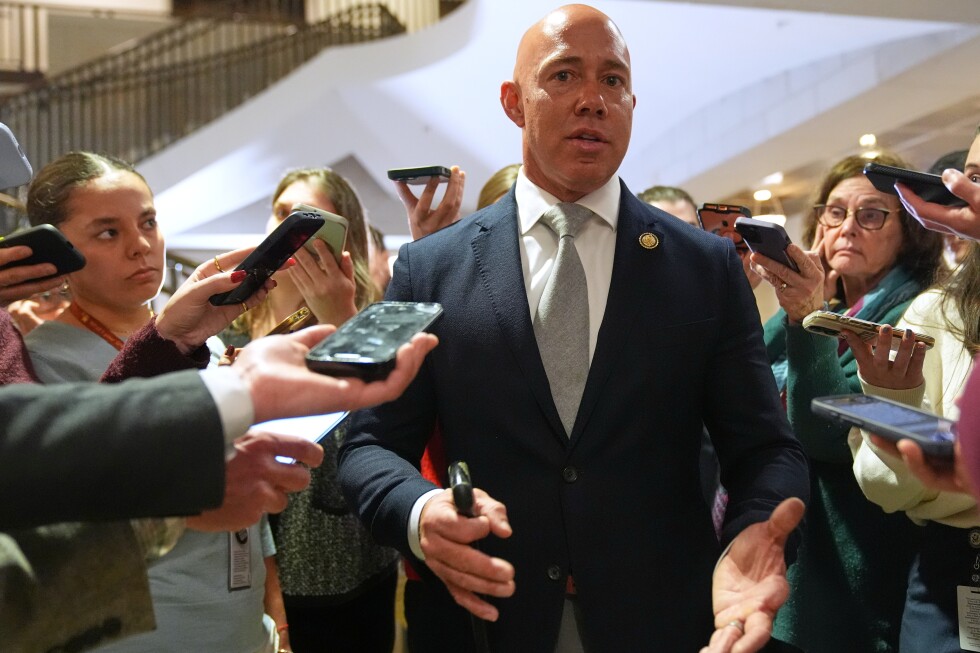
    Congressman Gregory Meeks, the senior Democrat on the House Foreign Affairs Committee, asserted that the administration’s true motivations extend beyond counter-narcotics. “The president is coveting Venezuelan oil,” Meeks declared, suggesting economic interests rather than national security concerns drive the aggressive stance.

    The political landscape reveals deep partisan divisions. While Democratic leadership demands transparency and constitutional adherence, most Senate Republicans previously opposed similar measures. President Trump would almost certainly veto any such legislation reaching his desk. Nevertheless, Democrats forced the vote to initiate public debate and record Republican positions on the matter.

    Republican leaders have increasingly endorsed Trump’s campaign, even as it potentially escalates into direct confrontation with Venezuelan President Nicolás Maduro. Senate Majority Leader John Thune (R-S.D.) characterized Maduro as “a cancer on that continent,” indicating openness to regime change objectives.

    The administration defends its actions under existing counter-terrorism authorities, arguing that drug-trafficking organizations represent imminent threats to national security. This rationale has faced intensified scrutiny following revelations that a September 2nd operation killed two survivors of an initial attack.

    Classified briefings with Secretary of State Marco Rubio, Defense Secretary Pete Hegseth, and the Navy admiral who ordered the controversial strike produced sharply contrasting reactions. Republican lawmakers largely supported the operation as based on precise intelligence, while Democrats described footage of the missile strike as “shocking” and demanded criminal investigations.

    The debate extends beyond immediate operations to broader constitutional questions. Representative Don Bacon (R-Neb.), a retired Air Force brigadier general, acknowledged that while he believes the boat strike was lawful, “continued hostility does require congressional approval.”

    Some Republicans joined Democrats in questioning the administration’s stated objectives. Representative Thomas Massie (R-Ky.) pointedly noted that if drugs were the primary concern, operations would focus on Mexico, China, or Colombia—the actual sources of most illegal substances. “This is about oil and regime change,” Massie concluded, echoing Democratic criticisms of the administration’s underlying motivations.

  • The oil blockade threat creates anxiety in Venezuela but people stick to their daily lives

    The oil blockade threat creates anxiety in Venezuela but people stick to their daily lives

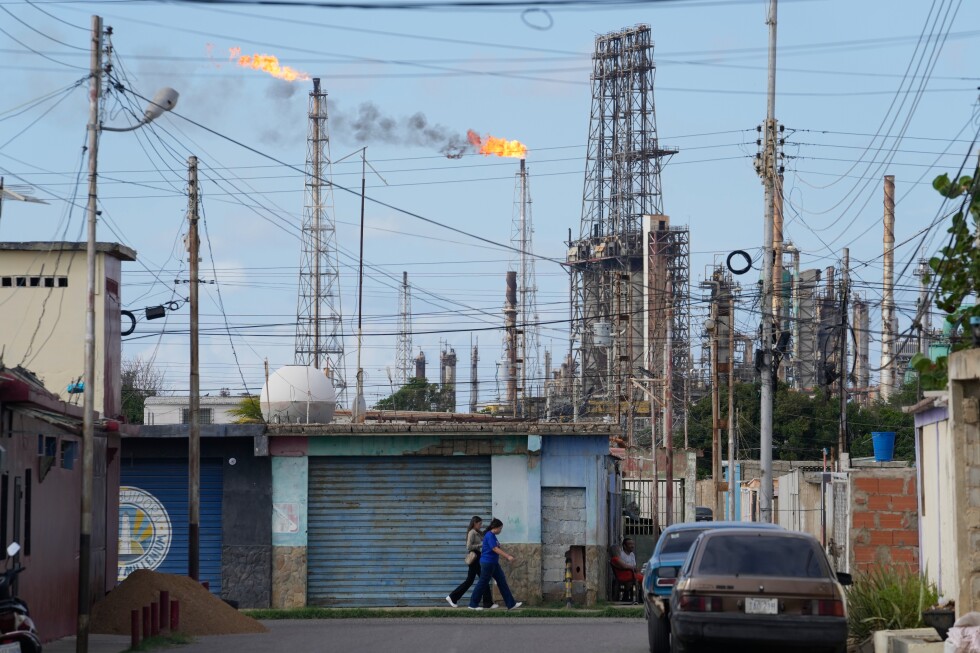
    CARACAS, Venezuela — The United States has escalated its economic offensive against Venezuela with President Donald Trump announcing plans to implement a naval blockade targeting sanctioned oil tankers. This strategic maneuver represents a significant intensification of pressure on the administration of President Nicolás Maduro, potentially crippling a nation already grappling with profound multidimensional crises.

    Venezuelan citizens, seasoned by years of political turmoil, social unrest, and economic collapse, responded to the latest development with a mixture of heightened anxiety and weary resignation. Many residents expressed that after enduring severe shortages of essential commodities including food and gasoline, this new threat feels like merely another hardship in their daily struggle for survival.

    The geopolitical confrontation escalated when Trump publicly declared the blockade initiative through social media platforms on Tuesday evening. The U.S. President asserted, without providing substantiating evidence, that Venezuela utilizes oil revenues to finance international drug trafficking operations and other criminal activities. He explicitly vowed to maintain military presence in the region until Venezuela concedes petroleum resources, territorial access, and additional assets to American interests.

    This development follows recent military actions including the seizure of a Venezuelan tanker by U.S. naval forces last week, accompanied by a noticeable buildup of American military assets in the Caribbean region. Venezuela maintains the world’s largest proven oil reserves and currently produces approximately one million barrels daily, with petroleum exports constituting nearly 90% of the nation’s foreign currency earnings.

    According to expert analysis, a full implementation of the blockade would precipitate catastrophic economic consequences. David Smilde, a Tulane University professor and Venezuela scholar with over thirty years of research experience, warned that such action would trigger massive economic contraction. “This nation traditionally imports not only finished products but most intermediate goods—everything from toilet paper to food containers,” Smilde explained. “Without incoming foreign currency, the entire economic apparatus grinds to a halt.”

    The current situation represents an escalation of economic measures that began in 2017 when the Trump administration initially imposed comprehensive oil sanctions. In response, Maduro’s government has increasingly relied on sanctioned tankers to circumvent restrictions and maintain crude oil distribution through global supply networks.

  • Senate voting on $901 billion defense bill that pushes Hegseth for boat strike video

    Senate voting on $901 billion defense bill that pushes Hegseth for boat strike video

    The U.S. Senate is poised to approve a sweeping $901 billion defense authorization bill that simultaneously advances President Trump’s military priorities while imposing significant congressional oversight mechanisms on the Pentagon. The National Defense Authorization Act (NDAA), spanning over 3,000 pages, received bipartisan support despite revealing substantive policy divisions between legislators and defense officials.

    The comprehensive legislation mandates a 3.8% pay increase for military personnel while compelling Defense Secretary Pete Hegseth to release classified footage of maritime strikes targeting drug trafficking vessels near Venezuela. The bill specifically threatens to withhold a quarter of the Secretary’s travel budget until unedited videos and operational orders are provided to armed services committees.

    Notably, the legislation counteracts several Pentagon initiatives by requiring maintenance of current troop levels in Europe (minimum 76,000 personnel) and preserving the 28,500-strong presence in South Korea. It additionally allocates $400 million annually for weapons manufacturing to support Ukraine, reflecting congressional pushback against administration decisions regarding Eastern European security.

    The NDAA incorporates several of President Trump’s executive orders, including the elimination of diversity, equity, and inclusion programs within military structures—a move projected to save approximately $40 million. Simultaneously, it slashes $1.6 billion from climate-change related defense initiatives, despite military assessments identifying climate threats to national security infrastructure.

    Historically significant provisions include the repeal of the 2003 Iraq invasion authorization and the 1991 Gulf War authorization, effectively closing legal chapters from previous conflicts. The legislation also permanently lifts U.S. sanctions on Syria, aligning with administration efforts to support economic reconstruction under the new government.

    Aviation safety concerns emerged as a contentious aspect, with the bill permitting military aircraft waivers for precise location broadcasting—a provision criticized following January’s fatal midair collision that claimed 67 lives. Senator Ted Cruz announced plans for separate legislation mandating enhanced location-sharing protocols for military aircraft.

    The compromise legislation enhances congressional notification requirements for troop reductions, intelligence sharing modifications, and high-level military personnel changes, reflecting increased legislative scrutiny of defense decision-making.

  • What are the ‘ghost ships’ Venezuela is using to evade oil sanctions?

    What are the ‘ghost ships’ Venezuela is using to evade oil sanctions?

    In a significant escalation of geopolitical tensions, former President Donald Trump has declared a comprehensive naval blockade against Venezuela, specifically targeting sanctioned oil tankers attempting to enter or exit the country. This decisive move follows the recent seizure of The Skipper, a vessel intercepted off Venezuela’s coast on December 10th, which exemplifies the sophisticated “ghost fleet” operations enabling Caracas to circumvent international sanctions.

    Venezuela, despite possessing the world’s largest proven oil reserves, has faced crippling US sanctions against its state-run oil company PDVSA since 2019. These measures initially caused crude exports to plummet by over 50%, from approximately 1.1 million barrels per day to 495,000 by year-end 2019. However, through innovative evasion tactics, Venezuela has remarkably restored exports to around 920,000 barrels daily as of November—a substantial recovery though still far below its 1998 peak of 3 million barrels.

    The ghost fleet phenomenon, utilized by Venezuela alongside other sanctioned oil producers Russia and Iran, represents a growing challenge to global sanctions regimes. Financial intelligence firm S&P Global estimates that one-fifth of global oil tankers now transport sanctioned crude, with 10% exclusively dedicated to Venezuelan oil.

    These vessels employ multiple deception strategies: frequently changing names and flags (The Skipper previously operated as Adisa and Toyo), disabling Automatic Identification Systems to conceal locations, and even assuming identities of scrapped vessels—so-called “zombie ships.” Additional tactics include ship-to-ship transfers in international waters to obscure oil origins and flying flags from jurisdictions with lax oversight, such as Panama, Comoros, and Malta.

    According to Transparencia Venezuela’s October report, 71 foreign tankers were observed at PDVSA ports, with 15 under sanctions and 9 linked to ghost fleets. Notably, 24 vessels operated with deactivated location signals, while many lingered for over 20 days without docking—unlike authorized vessels that typically complete operations within six days.

    The deployment of the USS Gerald Ford aircraft carrier, the world’s largest, to conduct the recent seizure demonstrates heightened US military presence in Caribbean waters. This development suggests President Nicolás Maduro’s reliance on ghost fleet operations may face substantial constraints moving forward, potentially altering the dynamics of Venezuela’s oil export capabilities and the effectiveness of international sanctions.

  • Asian shares are mixed and oil prices jump as Trump orders a blockade of oil tankers to Venezuela

    Asian shares are mixed and oil prices jump as Trump orders a blockade of oil tankers to Venezuela

    Financial markets across Asia exhibited divergent trends on Wednesday as geopolitical tensions and economic uncertainties created a complex trading environment. The region’s performance was shaped by two primary factors: a significant oil price surge following new U.S. sanctions against Venezuela and cautious trading ahead of key central bank decisions.

    President Donald Trump’s executive order implementing a comprehensive blockade against ‘sanctioned oil tankers’ entering Venezuela prompted an immediate 1% spike in crude prices. This aggressive move represents an escalation of pressure on Nicolás Maduro’s administration, coming just days after U.S. forces conducted the unusual seizure of an oil tanker off Venezuela’s coast amid increased military presence in the region.

    Japan’s Nikkei 225 declined 0.3% to 49,237.58 as investors awaited the Bank of Japan’s impending interest rate decision. The cautious sentiment was reinforced by government data showing machinery orders plummeted 6.8% in October, indicating continued weakness in manufacturing activity.

    Meanwhile, technology shares demonstrated resilience with South Korea’s Kospi advancing 0.7% to 4,028.93. Semiconductor giants SK Hynix and Samsung Electronics posted gains of 2.8% and 3.6% respectively, providing substantial support to the benchmark. Chinese markets showed modest positivity with Hong Kong’s Hang Seng rising 0.2% to 25,291.44 and the Shanghai Composite increasing nearly 0.2% to 3,831.43.

    The mixed Asian session followed uncertain trading on Wall Street where conflicting economic data created ambiguity about future interest rate trajectories. While November’s unemployment rate reached its highest level since 2021, employers simultaneously added more jobs than economists anticipated. Retail revenue indicators also surpassed expectations, adding to the complex economic picture.

    Oil sector companies suffered significant losses as crude prices continued their descent to multi-year lows amid oversupply concerns. APA Corporation plummeted 5.2%, Marathon Petroleum declined 4.7%, and Halliburton dropped 4.3%. Artificial intelligence stocks presented a mixed performance with Oracle gaining 2% and Broadcom adding 0.4%, while AI infrastructure provider CoreWeave fell 3.9% amid ongoing questions about the profitability of massive AI investments.

    Currency markets saw the U.S. dollar strengthen to 155.12 Japanese yen while the euro weakened to $1.1732, reflecting the broader financial market uncertainty.

  • US military build-up in Caribbean has shadows of the past – but differences are stark

    US military build-up in Caribbean has shadows of the past – but differences are stark

    The Caribbean Sea is witnessing its most significant US military deployment since the Cold War’s conclusion, with the nuclear-powered USS Gerald Ford aircraft carrier leading a formidable naval presence. This strategic mobilization responds to escalating tensions between Washington and Caracas, drawing inevitable comparisons to the 1989 US invasion of Panama that ousted President Manuel Noriega.

    The historical parallel emerges from strikingly similar circumstances: both episodes feature Latin American leaders accused by Washington of direct involvement in narcotics trafficking, both involve years of accumulated diplomatic enmity, and both concern nations possessing immense strategic value—Panama with its critical canal and Venezuela with its vast oil reserves.

    Yet the distinctions between these two moments reveal evolving geopolitical realities. The 1989 operation against Noriega occurred within a Cold War context, with concrete evidence presented through financial records and cartel testimonies. Current allegations against President Nicolás Maduro center on what US officials term the ‘Cartel of the Suns’—an alleged network of current and former Venezuelan military officials that some drug policy analysts question as a formally structured organization.

    The legal justification has similarly evolved. Where the Panama intervention followed the shooting death of US Marine Lieutenant Robert Paz at a checkpoint, the current administration employs the concept of ‘narco-terrorism’ to characterize its operations against drug-smuggling vessels in international waters. This approach has sparked controversy regarding international law interpretations, particularly after a September incident where a follow-up airstrike killed two survivors from an initial engagement.

    Adding complexity to the situation, the Trump administration has imposed fresh sanctions on three of Maduro’s nephews, including two previously convicted in the 2015 ‘narco-nephews’ cocaine smuggling case. Venezuelan officials vehemently deny all allegations, with Interior Minister Diosdado Cabello dismissing the Cartel of the Suns as ‘an imperialist invention.’

    With US forces having already seized a tanker carrying Venezuelan crude and controlling air and sea approaches to Venezuela, analysts note that the situation remains highly volatile. As demonstrated in Panama, such military buildups can be triggered into full-scale conflict by a single incident, making the current Caribbean standoff one of the most dangerously unpredictable geopolitical situations in recent decades.

  • Trump orders blockade of ‘sanctioned oil tankers’ into Venezuela, ramping up pressure on Maduro

    Trump orders blockade of ‘sanctioned oil tankers’ into Venezuela, ramping up pressure on Maduro

    WASHINGTON — In a significant escalation of economic pressure, President Donald Trump has declared a comprehensive naval blockade targeting all sanctioned oil tankers attempting to reach Venezuela. The announcement signals a dramatic intensification of the administration’s campaign against the government of Nicolás Maduro, aiming to sever Venezuela’s primary economic lifeline.

    The presidential directive follows recent U.S. military operations that included the seizure of an oil tanker near Venezuela’s coastline and the deployment of what Trump characterized as “the largest Armada ever assembled in the History of South America.” Through social media communications, the President asserted that Venezuela utilizes oil revenues to finance narcotics trafficking and other criminal enterprises, demanding the return of unspecified oil, land, and assets to the United States.

    This naval buildup has been accompanied by intensified military operations in international waters of the Caribbean and eastern Pacific regions. According to available data, these operations have resulted in at least 25 documented strikes on vessels, with approximately 95 casualties reported. While the administration defends these actions as necessary anti-narcotics measures, bipartisan congressional scrutiny has raised concerns about the legal boundaries of maritime warfare.

    The strategic implications are particularly severe for Venezuela, which possesses the world’s largest proven oil reserves but produces only about one million barrels daily. Since initial oil sanctions were imposed in 2017, Caracas has increasingly depended on unauthorized tanker fleets operating without national flags to maintain crude exports. The new blockade aims to eliminate this shadow supply chain, potentially crippling Venezuela’s already struggling economy.

  • The US labels another Latin American cartel a terrorist group as the anti-drug war escalates

    The US labels another Latin American cartel a terrorist group as the anti-drug war escalates

    In a significant escalation of its counter-narcotics strategy, the Trump administration has formally designated Colombia’s Clan del Golfo as a foreign terrorist organization. This decisive move, announced by the U.S. State Department on Tuesday, targets one of Latin America’s most formidable drug cartels and represents a substantial shift in hemispheric policy approaches.

    The State Department characterization portrays Clan del Golfo as a ‘violent and powerful criminal organization’ that systematically employs cocaine trafficking revenues to finance its extensive operations. The designation specifically cites the group’s responsibility for ‘terrorist attacks against public officials, law enforcement and military personnel, and civilians in Colombia.’

    This development occurs against a backdrop of deteriorating U.S.-Colombian relations. The Trump administration recently returned Colombia to its list of nations failing to cooperate in anti-drug efforts—the first such designation in nearly three decades. This diplomatic reproach reflects both the documented surge in cocaine production and the increasingly strained relationship between the White House and Colombia’s leftist President Gustavo Petro.

    Further complicating bilateral relations, the United States imposed sanctions on President Petro in October based on allegations that his administration permitted drug cartels to ‘flourish’ and expand cocaine exports to American markets. Petro has vigorously contested these accusations, countering that Colombia has achieved record-level cocaine interceptions while avoiding lethal force against suspected smugglers.

    With approximately 9,000 combatants, Clan del Golfo (alternatively known by its Spanish acronym AGC) maintains a substantial presence across approximately one-third of Colombia’s municipalities according to the nation’s Human Rights Defender’s Office. The organization, which evolved from right-wing paramilitary units that previously combated Marxist guerrillas, stands accused of systematic extortion against local businesses and child recruitment practices.

    This terrorist designation introduces complex implications for ongoing peace negotiations between the Colombian government and AGC. Since September, both parties have engaged in discussions potentially leading to fighter disarmament in exchange for reduced sentences for leadership figures. A recent agreement signed in Qatar established designated zones where AGC members would receive protection from prosecution during peace talks, alongside suspensions of extradition proceedings against leaders.

    Elizabeth Dickinson, Colombia analyst at the International Crisis Group, suggests the designation may represent a symbolic message urging Colombian authorities to adopt a more stringent stance toward the armed group. Dickinson notes that ‘the tensions between Colombia and Washington are at historic levels,’ adding that the move could give ‘pause to Colombian authorities…going forward.’

    While the terrorist designation doesn’t automatically authorize military strikes, it significantly enhances the legal framework for potential offensive operations. The administration previously employed similar designations against Venezuelan criminal organizations Tren de Aragua and Cartel de los Soles before conducting maritime operations against alleged drug smuggling vessels—actions whose legality has been questioned by U.S. lawmakers.

    President Trump’s recent characterization of Petro as ‘fairly hostile’ to American interests, coupled with warnings of ‘big problems’ if policies don’t change, underscores the profound diplomatic challenges currently defining U.S.-Colombian relations.