标签: South America

南美洲

  • Brazilian judge puts coup plot convicts under house arrest after former police commander flees

    Brazilian judge puts coup plot convicts under house arrest after former police commander flees

    In a significant escalation of legal proceedings against participants in the alleged post-election coup attempt, Brazilian Supreme Court Justice Alexandre de Moraes issued house arrest mandates for ten convicted individuals on Saturday. The decision targets those previously under restrictive measures such as ankle monitors and curfews, including Filipe Martins, a former key adviser to ex-President Jair Bolsonaro.

    The judicial action coincided with the dramatic extradition from Paraguay of Silvinei Vasques, former director of Brazil’s Federal Highway Police. Vasques, already convicted for his role in the conspiracy, had allegedly severed his electronic monitoring device and clandestinely crossed into Paraguay using fraudulent documentation in an attempt to reach El Salvador. Paraguayan authorities intercepted and returned him to Brazilian custody on Friday night.

    This development occurs against the backdrop of Bolsonaro’s own imprisonment since November, following his conviction and 27-year sentence for orchestrating efforts to retain power after his 2022 electoral defeat. The former president’s health has become a complicating factor, as he remains hospitalized following double hernia surgery and is undergoing treatment for persistent hiccups that have plagued him for nine months, according to statements from his wife.

    The trials have captivated a nation with fresh memories of its military dictatorship era, which ended in 1985. International dimensions continue to evolve, particularly with the United States’ shifting stance. Initially condemning the proceedings as a ‘witch hunt’ under the Trump administration—which imposed tariffs and sanctions against Judge de Moraes—the U.S. has recently moderated its position, lifting sanctions and reducing tariffs on key Brazilian exports like beef and coffee as trade negotiations progress.

  • Pound-for-pound star Inoue cruises past Picasso

    Pound-for-pound star Inoue cruises past Picasso

    In a masterful display of boxing prowess, Japanese superstar Naoya ‘The Monster’ Inoue successfully defended his undisputed super-bantamweight championship against Mexico’s Alan David Picasso Romero in Riyadh, Saudi Arabia. The 32-year-old pound-for-pound elite demonstrated superior ring intelligence, lightning-fast hand speed, and devastating body shots throughout twelve rounds of dominant action.

    Despite entering the bout with an impressive 34-0 record, the 25-year-old challenger found himself consistently outclassed by Inoue’s technical brilliance and strategic combinations. Official scorecards reflected the one-sided nature of the contest, with judges submitting tallies of 119-109, 120-108, and 117-111 unanimously in favor of the champion.

    Surprisingly, the four-division world champion expressed dissatisfaction with his performance during post-fight comments. ‘My performance tonight is not good enough—I should have done better,’ stated Inoue, maintaining his characteristic self-critical approach despite extending his perfect professional record to 32 victories with 27 knockouts.

    The event also featured a controversial co-main event where Junto Nakatani, Inoue’s potential future opponent, secured a disputed decision over Mexico’s Sebastian Hernandez Reyes. Two judges scored the competitive bout 115-113 while a third submitted a widely questioned 118-110 card, highlighting ongoing concerns about boxing judging standards.

    With heavyweight champion Oleksandr Usyk observing ringside and former middleweight champion Gennady Golovkin attending in his capacity as World Boxing president, Inoue solidified his status as one of boxing’s premier attractions following Terence Crawford’s recent retirement.

    The victory sets the stage for potential high-profile matchups in 2026, including a possible all-Japanese showdown with Nakatani or moves up to featherweight against opponents such as Liverpool’s WBA champion Nick Ball or unified super-flyweight champion Jesse ‘Bam’ Rodriguez.

  • Venezuelan migrants sent to El Salvador demand justice after US judge ruling

    Venezuelan migrants sent to El Salvador demand justice after US judge ruling

    CARACAS, Venezuela — A group of Venezuelan migrants who were transferred by the U.S. government to a high-security prison in El Salvador earlier this year have publicly demanded justice and accountability for alleged human rights violations. Their outcry comes days after a federal judge in Washington ruled that the Trump administration must provide them with proper legal due process.

    Approximately two dozen of the 252 Venezuelan men held a press conference in Venezuela’s capital on Friday, organized by the government of President Nicolás Maduro. They detailed experiences of physical and psychological torture during their detention at the notorious Salvadoran prison facility.

    Andry Blanco, speaking on behalf of the group, stated: “We are here to demand justice before the world for the human rights violations committed against each of us, and to ask for help from international organizations to assist in our defense so that our human rights are respected and not violated again.”

    The legal development occurred on Monday when U.S. District Judge Timothy Kelly ordered the U.S. government to either provide court hearings or return the men to the United States. This ruling creates a pathway for the migrants to challenge the Trump administration’s allegations that they are members of the Tren de Aragua criminal gang and subject to removal under an 18th-century wartime law.

    Many of the men described ongoing psychological trauma and daily struggles, including fear of leaving their homes or encountering law enforcement. While not all expressed interest in returning to the U.S., they uniformly seek accountability for their treatment.

    Venezuelan Vice Minister of Foreign Affairs for International Communications Camilla Fabri announced that the Maduro government is collaborating with U.S. legal associations and human rights organizations to prepare a major lawsuit against former President Trump and the U.S. government. The migrants were initially flown to El Salvador in March and returned to Venezuela in July as part of a prisoner exchange between the two governments.

  • From red donkeys to vibrant art: Fernando Dávila’s colorful journey as a colorblind painter

    From red donkeys to vibrant art: Fernando Dávila’s colorful journey as a colorblind painter

    DORAL, Fla. (AP) — Colombian-born artist Fernando Dávila’s artistic journey began with an early setback—failing a childhood drawing class in Colombia for painting donkeys red. This unconventional color choice stemmed from a biological reality: Dávila is colorblind. Now at 72, the internationally acclaimed painter creates vibrant works exhibited across three continents, transforming his visual limitation into artistic triumph.

    From his Miami studio, Dávila reflects: “I possess the world’s most wonderful occupation—painting each morning. Blending colors and sharing joy with the world constitutes my true passion.” His artistic practice initially confined itself to monochromatic works until age thirty due to his congenital condition that impairs differentiation between red and green hues, along with confusing pink, violet, turquoise, and yellow-green shades.

    A transformative development occurred in the mid-1980s when a New York ophthalmologist designed specialized glasses featuring one transparent lens and one red-tinted lens. This optical innovation enables Dávila to distinguish contrasting shades that typically blur together, expanding his color perception from 40% without aids to nearly two-thirds of the color spectrum.

    Dávila metaphorically describes his experience as “having a chocolate box while only sampling portions.” He expresses profound yearning to experience full chromatic richness: “When someone mentions a vividly pink flower, I passionately desire to perceive it—this longing emanates from my heart. I sense color’s vibration.”

    The genetic condition spans his family lineage, affecting his grandfather (monochromatic vision), mother, three aunts, and two brothers—notable given colorblindness’s lower prevalence among females. Despite these visual constraints, Dávila’s distinguished career spanning Colombia, New York, and Florida earned him the Colombian Congress’s “Order of Democracy” in 1999 for artistic contributions.

    The established artist has published two hardcover books and numerous exhibition catalogues, with his works appearing at premier auction houses Christie’s and Sotheby’s. His paintings frequently feature romantic human embraces and landscapes, often employing blue as foundational hue. “Color remains life’s essential element,” Dávila concludes, “particularly for myself.”

  • Brazil ex-President Jair Bolsonaro’s surgery for hernia ‘successful’

    Brazil ex-President Jair Bolsonaro’s surgery for hernia ‘successful’

    Former Brazilian President Jair Bolsonaro has successfully undergone double hernia surgery while serving a 27-year prison sentence for coup-plotting convictions. The 70-year-old leader was temporarily transferred from his federal police headquarters detention facility to a Brasília hospital under authorization from Brazil’s Supreme Court.

    From his hospital bed, Bolsonaro issued a significant political endorsement through a handwritten letter read aloud by his eldest son, Flávio Bolsonaro. The document formally backs the 44-year-old senator’s presidential bid for the 2026 election under the Liberal Party banner. “I hand over what is most important in the life of a father – my own son for the mission of rescuing our country, Brazil,” the former president wrote, describing his personal sacrifices for the nation.

    The endorsement solidifies the continuation of Bolsonaro’s political movement despite his incarceration. Flávio Bolsonaro had previously announced his presidential ambitions earlier this month, but the handwritten confirmation provides official legitimacy to his campaign.

    This development sets the stage for a potential electoral rematch, as incumbent President Luiz Inácio Lula da Silva has already declared his intention to seek reelection. The 2022 presidential contest culminated in a narrow victory for Lula that Bolsonaro refused to acknowledge, leading to the January 8, 2023 storming of government buildings by his supporters and subsequent convictions for attempting to subvert democratic processes.

    Despite his imprisonment, Bolsonaro maintains considerable political influence. Last week, Brazil’s Congress passed legislation that would substantially reduce his sentence, though President Lula has vowed to exercise his veto power against the measure. Medical professionals will determine when the former president can be returned to federal custody following his surgical recovery.

  • A Venezuelan family’s Christmas: From the American dream to poverty

    A Venezuelan family’s Christmas: From the American dream to poverty

    MARACAY, Venezuela — For Mariela Gómez and thousands of other Venezuelan migrants, this Christmas marked an unexpected and painful homecoming rather than the realization of their American dream. The return of Donald Trump to the White House in January triggered immediate immigration policy changes that ultimately reversed their journeys, forcing them back to the economic devastation they had originally fled.

    Gómez spent her first holiday season in eight years in northern Venezuela, where she maintained festive appearances by dressing up, preparing meals, and presenting her son with a scooter. Yet behind these gestures lay the harsh realities confronting returning migrants: pervasive unemployment and crushing poverty. Her family substituted their traditional hallacas—stuffed corn dough that has become prohibitively expensive—with a modest lasagna-like dish for their Christmas dinner.

    The Gómez family’s odyssey ended on October 27 when they returned to Maracay after being apprehended by U.S. Border Patrol in Texas under the Trump administration’s intensified immigration enforcement. Their deportation to Mexico initiated a dangerous return journey through Central America. Unable to afford conventional transit from Panama to Colombia, they risked their lives traveling atop gasoline tanks on a cargo boat through Pacific waters before transferring to a speedboat reaching jungle territories.

    Gómez represents one of over 7.7 million Venezuelans who fled their homeland during the past decade amid economic collapse fueled by oil price declines, corruption, and governmental mismanagement. After years residing in Colombia and Peru, she had pinned her hopes on building a new life in the United States—hopes that were extinguished by Trump’s second-term policies.

    Official figures from Colombia, Panama, and Costa Rica reveal that more than 14,000 migrants, predominantly Venezuelans, have returned to South America since September due to U.S. migration restrictions. This repatriation accelerated after Venezuelan President Nicolás Maduro, under White House pressure, reversed his long-standing policy of refusing deportees from the United States. Over 13,000 immigrants returned this year aboard chartered flights operated by U.S. government contractors and Venezuela’s state airline.

    The silver lining for Gómez was reuniting with the 20-year-old daughter she had left behind during Venezuela’s crisis. Their holiday gathering carried bittersweet undertones as her daughter prepares to migrate to Brazil next month. As the new year approaches, Gómez clings to twin aspirations: preparing traditional hallacas for New Year’s Eve and securing employment. Her fundamental prayer, however, remains centered on health and survival amid continuing uncertainty.

  • Trump-backed candidate Nasry Asfura wins Honduras presidential election

    Trump-backed candidate Nasry Asfura wins Honduras presidential election

    Honduras has concluded its protracted presidential election with the official declaration of conservative candidate Nasry Asfura as victor, following weeks of electoral turmoil marked by technical failures and fraud allegations. The National Electoral Council (CNE) confirmed Asfura secured 40.3% of votes, narrowly defeating center-right Liberal Party contender Salvador Nasralla who obtained 39.5%.

    The electoral process, initially conducted on November 30, encountered severe technical disruptions that twice halted vote counting operations. CNE President Ana Paola Hall characterized these interruptions as ‘inexcusable,’ attributing the delays to unauthorized maintenance performed by the private contractor responsible for result tabulation. These complications necessitated manual recounts of approximately 15% of tally sheets to determine the final outcome.

    In his victory statement posted on social media platform X, Asfura pledged: ‘Honduras: I am ready to govern. I will not let you down.’ The declaration comes amid heightened political tensions that triggered nationwide protests last week, with supporters of the governing Libre party alleging electoral fraud in capital city Tegucigalpa.

    Outgoing President Xiomara Castro, constitutionally barred from reelection, had previously denounced what she termed an ‘electoral coup’ and accused former U.S. President Donald Trump of interference. Trump had openly endorsed Asfura during the campaign, warning there would be ‘hell to pay’ if the narrow lead was overturned and threatening to withdraw U.S. financial support should Asfura lose.

    In a surprising pre-election development, Trump granted presidential pardon to Juan Orlando Hernández, a National Party colleague of Asfura serving a 45-year U.S. prison sentence for drug and weapons offenses.

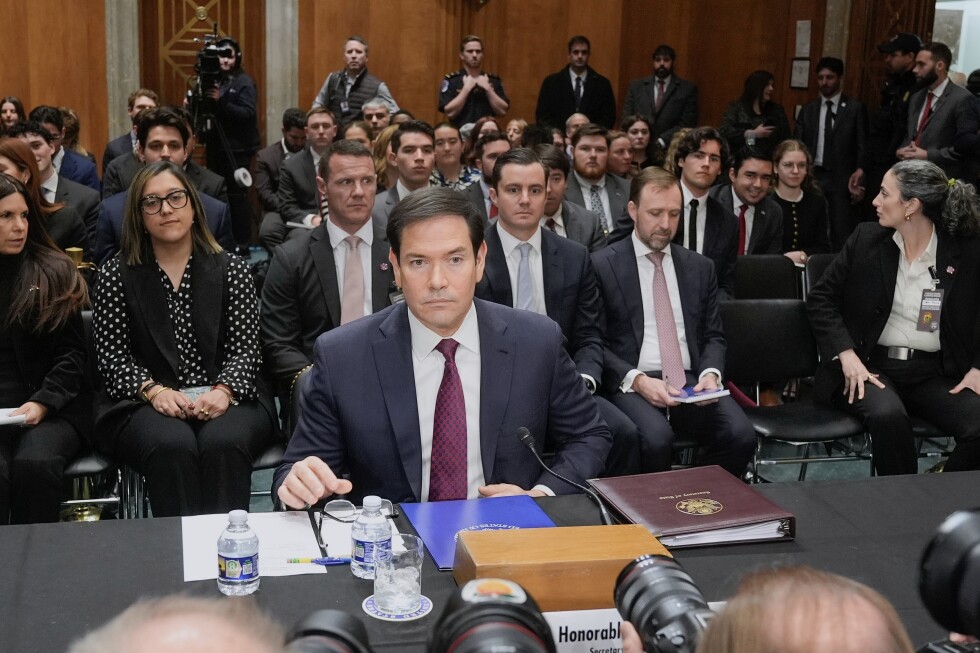
    U.S. Secretary of State Marco Rubio urged all parties to respect the official results ‘so that Honduran authorities may ensure a peaceful transition of authority.’ Rubio further indicated American readiness to collaborate with the incoming administration on bilateral security cooperation and combating illegal immigration while strengthening economic relations.

    Contrary to this call for unity, Luis Redondo, president of Honduras’s Congress, declared the election results ‘completely illegal,’ underscoring the deep political divisions that persist following this contentious electoral process.

  • Brazil’s Supreme Court allows Bolsonaro to leave prison for surgery

    Brazil’s Supreme Court allows Bolsonaro to leave prison for surgery

    Brazil’s Supreme Court has authorized the temporary release of former President Jair Bolsonaro from prison to undergo hernia surgery on Christmas Day. Justice Alexandre de Moraes approved the medical transfer on Tuesday, permitting the 70-year-old to be moved from federal custody to a medical facility on December 24th for the procedure scheduled December 25th.

    The incarcerated former leader is currently serving a 27-year sentence for orchestrating a coup plot following his electoral defeat to left-wing rival Luiz Inácio Lula da Silva in 2022. Bolsonaro’s health complications stem from a 2018 abdominal stabbing during his presidential campaign, requiring multiple surgical interventions including intestinal surgery earlier this year.

    This medical development occurs amid significant political tensions regarding Bolsonaro’s imprisonment. Brazil’s Congress recently passed legislation that could substantially reduce his sentence from 27 years to under three years, sparking mass protests across major Brazilian cities. President Lula has vowed to veto the bill, though acknowledges his conservative-dominated Congress could override this decision.

    The international dimension of this case intensified as the United States lifted sanctions previously imposed on Justice Moraes in July. President Donald Trump, who previously characterized the investigation into Bolsonaro as a ‘witch hunt,’ expressed support for the sentence-reducing legislation.

  • Venezuela seeks to criminalize oil tanker seizures as Trump puts pressure on Maduro

    Venezuela seeks to criminalize oil tanker seizures as Trump puts pressure on Maduro

    Venezuela’s National Assembly has swiftly passed comprehensive legislation establishing severe penalties for maritime interference activities, marking a significant escalation in the nation’s response to recent U.S. naval operations. The new law, approved within an extraordinary two-day legislative process, directly addresses what Venezuelan authorities describe as acts of “piracy” against their commercial shipping operations.

    The legislation mandates prison sentences of up to 20 years and substantial financial penalties for individuals or entities involved in promoting, financing, or participating in activities classified as piracy, blockades, or other unlawful international acts against Venezuelan commercial interests. The assembly, dominated by President Nicolás Maduro’s ruling party, advanced the measure without prior public disclosure of draft versions.

    This legislative action comes precisely two weeks after U.S. forces conducted coordinated seizures of two oil tankers carrying Venezuelan petroleum in international waters. The captured vessels—the Panama-flagged ‘Centuries’ and the rogue tanker ‘Skipper’—were identified by Trump administration officials as part of a shadow fleet attempting to circumvent U.S. economic sanctions imposed on Maduro’s government.

    Beyond punitive measures, the new law directs Venezuela’s executive branch to develop comprehensive economic protection mechanisms and incentives for both domestic and international entities conducting business with the South American nation, particularly during periods of maritime conflict or unlawful interference.

    The development occurs against the backdrop of increasingly confrontational rhetoric from Washington, where President Trump has explicitly threatened naval blockades and repeatedly predicted the imminent downfall of Maduro’s administration. Notably, Venezuela’s political opposition, including Nobel Peace Prize nominee María Corina Machado, has expressed support for the U.S. pressure campaign despite the new legislation’s severe penalties for such cooperation.

  • Bolivian Indigenous women carry history and pride in the traditional ‘pollera’ skirt

    Bolivian Indigenous women carry history and pride in the traditional ‘pollera’ skirt

    LA PAZ, Bolivia — Against the breathtaking backdrop of Bolivia’s snow-capped Andean peaks, a powerful cultural revolution is unfolding. Indigenous women known as ‘cholitas’ are shattering stereotypes by performing extraordinary physical feats while proudly wearing their traditional pollera skirts—a garment once imposed by Spanish colonizers but now reclaimed as a symbol of identity and strength.

    These vibrant, multilayered skirts have become unlikely uniforms of empowerment in male-dominated fields. From the 6,000-meter summit of Huayna Potosi where climber Ana Lia González Maguiña scales icy heights, to the dust-choked mines of Oruro where miner Macaria Alejandro labors underground, the pollera represents both cultural heritage and contemporary capability.

    ‘Our sport is demanding, it’s super tough. So doing it in pollera represents that strength, it’s about valuing our roots,’ explained González Maguiña, a 40-year-old professional mountaineer. ‘It’s not for show.’

    This cultural reclamation gained significant momentum during the administration of Evo Morales (2006-2019), Bolivia’s first Indigenous president. His government elevated Indigenous symbolism through constitutional changes—renaming the country the Plurinational State of Bolivia and granting the wiphala Indigenous flag equal status. For the first time, pollera-clad ministers walked the halls of power.

    However, the recent political shift has sparked uncertainty among Indigenous communities. The election of center-right President Rodrigo Paz and the subsequent removal of Indigenous symbols from military logos and government buildings has many cholitas concerned about backsliding on hard-won rights.

    ‘We needed a change. The economy must get better. But it’s sad to see there are no powerful people wearing polleras,’ said Alejandro, her pollera smeared with mine dust. ‘I see it as discrimination.’

    Despite these concerns, the cholita spirit remains unbroken. From wrestlers to soccer players, skaters to climbers, these women continue to demonstrate that cultural tradition and modern achievement need not be mutually exclusive—proving that empowerment often comes in the most unexpected forms.