标签: South America

南美洲

  • Trump’s move to topple Maduro is fraught with risk – what happens next is unclear

    Trump’s move to topple Maduro is fraught with risk – what happens next is unclear

    Venezuela experienced a seismic shift in its political landscape as US military forces executed a dramatic intervention in Caracas, culminating in the capture and extradition of President Nicolás Maduro. The operation, authorized by President Donald Trump, represents the most significant direct military action in Latin America since the 1989 invasion of Panama.

    In the pre-dawn hours, residents of Venezuela’s capital were jolted awake by thunderous explosions as US strikes targeted key military installations, including Fuerte Tiuna, one of the nation’s largest military bases. The coordinated attacks disabled critical defense infrastructure before special operations units moved to apprehend Maduro, who now faces serious weapons and drug trafficking charges in US jurisdiction.

    This intervention follows months of escalating US military presence in the region, comprising warplanes, thousands of troops, helicopters, and the world’s largest warship. The Trump administration has consistently characterized Maduro’s government as a criminal trafficking organization, designating the ‘Cartel de los Soles’ – a network of Venezuelan elites allegedly orchestrating illegal activities – as a foreign terrorist group.

    The operation validates long-standing assertions by Caracas that Washington ultimately sought regime change, particularly after the US refused to recognize Maduro’s victory in the widely criticized 2024 elections. Venezuelan officials have additionally accused the United States of attempting to appropriate the nation’s vast oil reserves, the largest globally, citing recent seizures of Venezuelan oil tankers.

    While hawkish elements within the US administration celebrate Maduro’s removal as a major victory, the intervention raises complex questions about Venezuela’s political future. The country remains deeply divided, with Maduro’s government maintaining control over the judiciary, Supreme Court, military, and powerful paramilitary groups known as ‘colectivos.’

    Potential succession scenarios involve opposition figures Maria Corina Machado, a Nobel Peace Prize winner, or Edmundo Gonzalez, the opposition candidate from the 2024 elections. However, analysts warn that transition may trigger violent fragmentation and prolonged power struggles, reminiscent of historical US-backed coups in Latin America during the 20th century.

    The operation also creates diplomatic tensions with regional powers including Brazil and Colombia, which have expressed opposition to military intervention, while testing the loyalty of Trump’s domestic base that previously advocated ‘America First’ non-interventionism.

  • What we know about a US strike that captured Venezuela’s Maduro

    What we know about a US strike that captured Venezuela’s Maduro

    In a dramatic pre-dawn operation on Saturday, United States forces executed a targeted military strike in Venezuela resulting in the capture of President Nicolás Maduro and First Lady Cilia Flores. The detained leaders were subsequently transported out of the country to face formal narcoterrorism charges in United States federal courts, according to official American statements.

    The rapid military intervention has plunged Venezuela into a state of political uncertainty, with preliminary reports indicating casualties though specific numbers remain unconfirmed. Explosions reverberated through Caracas as low-flying aircraft targeted military installations during the approximately 30-minute operation, leaving several areas without power and visible smoke rising from strategic locations.

    This escalation follows months of intensified pressure from the Trump administration, which had previously deployed additional naval assets to South American waters and conducted strikes against alleged drug-smuggling operations. The operation represents the most direct confrontation in the ongoing tensions between Washington and Caracas.

    U.S. Attorney General Pam Bondi confirmed via social media that both Maduro and Flores face multiple indictments in the Southern District of New York, including charges of narco-terrorism conspiracy, cocaine importation conspiracy, and weapons violations. While Maduro’s indictment dates to March 2020, Flores’s charges were previously undisclosed.

    The legal justification for the operation remains subject to international scrutiny, with the Trump administration maintaining that Maduro lacks legitimate leadership status and has transformed Venezuela into a criminal enterprise. Senator Mike Lee suggested the action might fall within presidential authority to protect U.S. personnel from imminent threat.

    Venezuela’s government condemned the operation as an ‘imperialist attack,’ urging citizens to mobilize in response. The constitutional succession process remains unclear, with Vice President Delcy Rodríguez theoretically positioned to assume power though no confirmation has emerged.

    International reactions reflect deep divisions, with Russia condemning the action as ‘unacceptable infringement on sovereignty’ and Cuba urging global response to the ‘criminal attack.’ European allies expressed cautious concern, emphasizing respect for international law while acknowledging Maduro’s contested legitimacy. The European Union called for restraint and adherence to UN Charter principles, while British and Spanish leaders emphasized their non-involvement and urged de-escalation.

  • From bus driver to president: Venezuela’s Maduro never escaped his predecessor’s shadow

    From bus driver to president: Venezuela’s Maduro never escaped his predecessor’s shadow

    In a seismic geopolitical development, Venezuelan President Nicolás Maduro was apprehended by U.S. military forces during a targeted operation in Caracas on Saturday. The capture marks a stunning conclusion to months of escalating pressure from the United States against the socialist leader’s regime.

    U.S. President Donald Trump confirmed the operation through an early morning social media announcement, while Venezuelan Vice President Delcy Rodríguez subsequently disclosed that Maduro’s current whereabouts, along with those of his wife Cilia Flores, remain unverified. U.S. Attorney General Pam Bondi indicated that both Maduro and Flores will face charges stemming from a New York indictment.

    Maduro’s extraordinary journey from Caracas bus driver to presidential palace spanned four decades, beginning with ideological training in Cuba in 1986—his only formal education after high school. His political ascent accelerated through his association with the late Hugo Chávez, who personally anointed Maduro as his successor during his final public address in 2013.

    Maduro’s presidency became synonymous with catastrophic economic collapse and democratic backsliding. Under his administration, Venezuela experienced a 71% economic contraction between 2012-2020, hyperinflation exceeding 130,000%, and the mass exodus of over 7.7 million citizens. His rule was characterized by systematic repression, including the imprisonment and torture of political opponents.

    The 2018 presidential election, widely criticized as illegitimate, saw Maduro declared winner amid widespread international condemnation. Subsequent negotiations facilitated by Norwegian diplomats failed to resolve fundamental political divisions, culminating in the 2024 election where opposition candidate Edmundo González allegedly secured a decisive victory according to independent tallies.

    Trump’s return to the White House in January 2025 dramatically altered the strategic calculus, leading to increased military presence in the Caribbean and renewed focus on addressing narco-terrorism concerns. These developments ultimately precipitated the operation that ended Maduro’s controversial twelve-year presidency.

  • Multiple explosions rock Venezuelan capital Caracas

    Multiple explosions rock Venezuelan capital Caracas

    The United States has launched targeted military strikes against Venezuelan defense installations, according to U.S. officials who confirmed the operation to CBS News. The pre-dawn attacks on Saturday morning sent plumes of smoke rising over Caracas and prompted the Venezuelan government to declare a national emergency.

    Multiple explosions rocked the Venezuelan capital, with reports indicating strikes hit strategic military locations including La Carlota airfield and the primary Fuerte Tiuna military base. Social media circulated unverified footage showing explosions and military helicopters operating overhead, while several surrounding communities experienced power outages.

    The Venezuelan government issued an official statement vehemently condemning what it described as “extremely serious military aggression” by the United States, calling on the international community to denounce the actions. The White House and Pentagon have maintained official silence regarding the operations.

    This escalation occurs amid already heightened tensions between Washington and Caracas. President Trump had previously deployed naval forces to the Caribbean and repeatedly suggested potential military intervention in Venezuela. Recent weeks have seen U.S. forces targeting vessels suspected of drug trafficking in the region, including a strike earlier this week on a dock facility allegedly connected to Venezuelan drug operations.

    The political context underscores the confrontation: The U.S. administration considers President Nicolás Maduro’s government illegitimate and has accused him of direct involvement in narcotics trafficking. Meanwhile, Maduro maintains that Washington’s true objective is regime change aimed at controlling Venezuela’s substantial oil reserves, citing recent U.S. seizures of Venezuelan oil tankers as evidence of this motivation.

    The international community now faces a rapidly developing crisis that marks a significant escalation in the long-standing tensions between the two nations.

  • At least 7 explosions and low-flying aircraft are heard in Venezuela’s Caracas

    At least 7 explosions and low-flying aircraft are heard in Venezuela’s Caracas

    CARACAS, Venezuela — The pre-dawn hours of Saturday were shattered by a series of at least seven powerful explosions and the ominous sound of low-flying aircraft over Venezuela’s capital, sending panicked residents into the streets despite the early morning darkness. The mysterious incidents occurred approximately at 2:00 a.m. local time, with the origin and nature of the detonations remaining officially unconfirmed as multiple governments maintained silence.

    The unsettling events unfolded against a backdrop of dramatically escalating tensions between Venezuela and the United States, which has been conducting an extensive military campaign targeting alleged drug-smuggling operations in the region. According to the Trump administration, American forces have executed 35 separate boat strikes since early September, resulting in at least 115 casualties.

    Eyewitness accounts described a scene of chaos and terror. ‘The entire ground shook violently. This is absolutely horrifying. We heard consecutive explosions and aircraft in the distance,’ recounted Carmen Hidalgo, a 21-year-old office worker whose voice trembled as she spoke. She was returning from a birthday party with two relatives when the explosions occurred.

    Remarkably, Venezuelan state television continued regular programming without interruption, airing cultural content about national music and art rather than addressing the explosions. This broadcasting decision raised questions about the government’s response to the incidents.

    The geopolitical context adds layers of complexity to the situation. Just one day prior to the explosions, the Venezuelan government had expressed openness to negotiating an anti-drug trafficking agreement with the United States. However, President Nicolás Maduro simultaneously accused the U.S. of attempting to force regime change in Venezuela to gain access to the country’s substantial oil reserves through a prolonged pressure campaign that began with a massive military deployment to the Caribbean Sea in August.

    The relationship between the nations has further deteriorated following a recent CIA drone strike on Venezuelan soil targeting areas believed to be used by drug cartels—the first known direct U.S. operation on Venezuelan territory. Maduro himself faces narco-terrorism charges in the United States.

    Adding to the economic pressure, the U.S. has implemented sanctions against four Venezuelan oil companies and seized multiple sanctioned oil tankers near Venezuela’s coast, alongside establishing a naval blockade that effectively constricts the country’s economy.

    The American military presence in the region represents the largest in generations, highlighted by the November deployment of the nation’s most advanced aircraft carrier with thousands of additional troops. President Trump has characterized the boat strikes as a necessary escalation in what he describes as an ‘armed conflict’ with drug cartels responsible for funneling narcotics into the United States.

    International attention came from an unexpected source as Iranian state television reported on the Caracas explosions, showcasing images of the Venezuelan capital. The coverage underscored the strategic alliance between Iran and Venezuela, bonded significantly by their shared adversarial relationship with the United States.

  • Two people killed in magnitude 6.5 earthquake in Mexico

    Two people killed in magnitude 6.5 earthquake in Mexico

    A significant seismic event measuring 6.5 on the Richter scale struck southern and central Mexico on Friday, resulting in multiple casualties and widespread structural damage. The earthquake’s epicenter was located near the coastal tourist destination of Acapulco, specifically close to San Marcos in Guerrero state, triggering immediate emergency responses across affected regions.

    Official reports confirm at least two fatalities from the tremors. Guerrero State Governor Evelyn Salgado identified one victim as a 50-year-old woman, while Mexico City Mayor Clara Brugada confirmed the death of a 60-year-old man. Additionally, medical authorities reported approximately 12 individuals sustained injuries during the event. Mayor Brugada noted that aftershocks continued to reverberate through the region hours after the initial quake.

    The seismic activity prompted immediate evacuations throughout Mexico City and Acapulco as the Mexican Seismic Alert System activated. This sophisticated warning mechanism, implemented after the catastrophic 1985 earthquake that claimed over 10,000 lives, provided critical seconds for residents and tourists to seek safety.

    Structural engineers initiated emergency assessments of potentially compromised buildings, with two structures evaluated for collapse risk and 34 buildings plus five homes undergoing comprehensive inspections as precautionary measures.

    The earthquake occurred during President Claudia Sheinbaum’s inaugural press conference of the year, with video footage capturing the moment she interrupted proceedings to ensure orderly evacuation. The president’s calm response exemplified official preparedness protocols, including reminders about maintaining ‘Life Backpacks’—emergency kits containing essential survival items such as flashlights, radios, water, non-perishable food, warm clothing, and document copies.

    Mexico’s position within one of the world’s most seismically active regions was underscored by this event, coming seven years after the devastating 2017 earthquake that killed over 200 people and destroyed numerous structures in Mexico City.

  • Roberto Carlos released from Brazil hospital after heart procedure

    Roberto Carlos released from Brazil hospital after heart procedure

    SAO PAULO — Brazilian football legend Roberto Carlos has been successfully discharged from medical care after undergoing a scheduled coronary procedure earlier this week. The Vila Nova Star hospital confirmed the former Real Madrid defender’s release on Friday, though specific details regarding his condition were not disclosed.

    The 52-year-old international sports icon underwent a minimally invasive coronary angioplasty on Monday after medical examinations revealed arterial obstruction. This common cardiovascular procedure involves widening constricted arteries to restore optimal blood flow to the heart muscle.

    Medical protocols necessitated brief intensive care monitoring following the intervention, which is standard practice for such cardiac procedures. The hospital’s statement indicated successful completion of the treatment without reported complications.

    Roberto Carlos remains one of football’s most celebrated defensive players, renowned for his exceptional attacking capabilities from the left-back position. His distinguished career includes 125 international appearances for Brazil’s national team and eleven triumphant seasons with Spanish giants Real Madrid.

    The legendary defender achieved football’s highest honor by winning the 2002 FIFA World Cup with Brazil, having previously reached the tournament’s final in 1998. His additional accomplishments include two Copa América championships (1997, 1999) and multiple club trophies during his tenure in Spain’s premier league.

  • Watch: Earthquake interrupts Mexico’s president during press conference

    Watch: Earthquake interrupts Mexico’s president during press conference

    A significant seismic event measuring 6.5 on the Richter scale abruptly disrupted Mexican President Andrés Manuel López Obrador’s scheduled press conference today, creating a dramatic moment captured on live broadcast. The tremor originated near the southwestern coast, causing substantial building vibrations across multiple regions and triggering the nation’s sophisticated earthquake early warning system.

    The incident occurred precisely as the president was addressing journalists at the National Palace in Mexico City, forcing an immediate suspension of governmental proceedings. Security protocols were swiftly implemented as structural engineers conducted preliminary safety assessments of the presidential compound and surrounding government buildings.

    Mexico’s renowned Seismic Alert System, considered among the world’s most advanced earthquake detection networks, successfully activated alarms approximately two minutes before substantial shaking reached urban centers. This critical advance warning enabled countless citizens to implement emergency evacuation procedures despite the sudden nature of the event.

    Preliminary reports from the U.S. Geological Survey indicate the epicenter was located approximately 15 kilometers southeast of Aquila in Michoacán state, with a depth of 10 kilometers. While structural damage appears limited to non-critical infrastructure, emergency response teams remain deployed throughout affected regions conducting comprehensive impact evaluations.

    The presidential administration confirmed no injuries among government staff or press corps, with Obrador resuming his briefing following all-clear verification from seismic authorities. This incident marks another testament to Mexico’s continued investment in seismic preparedness following devastating earthquakes in 1985 and 2017 that transformed the nation’s approach to geological hazards.

  • Maduro open to US talks on drug trafficking, but silent on CIA strike

    Maduro open to US talks on drug trafficking, but silent on CIA strike

    Venezuelan President Nicolás Maduro has expressed willingness to negotiate a bilateral agreement with the United States targeting drug trafficking operations, while simultaneously accusing Washington of pursuing regime change to access the country’s substantial oil reserves. The declaration came during a state-televised interview with Spanish journalist Ignacio Ramonet that aired Thursday, though the interview was originally recorded on New Year’s Eve.

    Maduro declined to comment specifically on a recent CIA-led drone strike at a Venezuelan docking area allegedly used by cartels, stating he would address the incident “in a few days.” Instead, he framed the offer for cooperation as an alternative to current U.S. strategies, which he characterized as based on “threats, intimidation and force.”

    The Venezuelan leader presented a dual proposition: potential collaboration on narcotics enforcement alongside invitations for expanded U.S. energy investment, specifically mentioning Chevron Corp.—currently the only major oil company exporting Venezuelan crude to the United States. “If they want oil, Venezuela is ready for U.S. investment, like with Chevron, whenever they want it, wherever they want it and however they want it,” Maduro stated.

    This overture occurs against a backdrop of escalating military actions. The Trump administration has conducted 35 known boat strikes since August, resulting in at least 115 fatalities, including Venezuelan citizens. President Trump has characterized these operations as necessary escalations in an “armed conflict” with drug cartels, with recent strikes expanding from Venezuela’s Caribbean coast to the eastern Pacific Ocean.

    The CIA operation on Venezuelan soil represents a significant intensification of pressure against Maduro, who faces narco-terrorism charges in the United States. The administration’s campaign began with a substantial military deployment to the Caribbean Sea in August, which Maduro interprets as fundamentally aimed at securing control over Venezuela’s vast petroleum resources—the world’s largest proven oil reserves.

  • Brazil legend Roberto Carlos recovering in hospital

    Brazil legend Roberto Carlos recovering in hospital

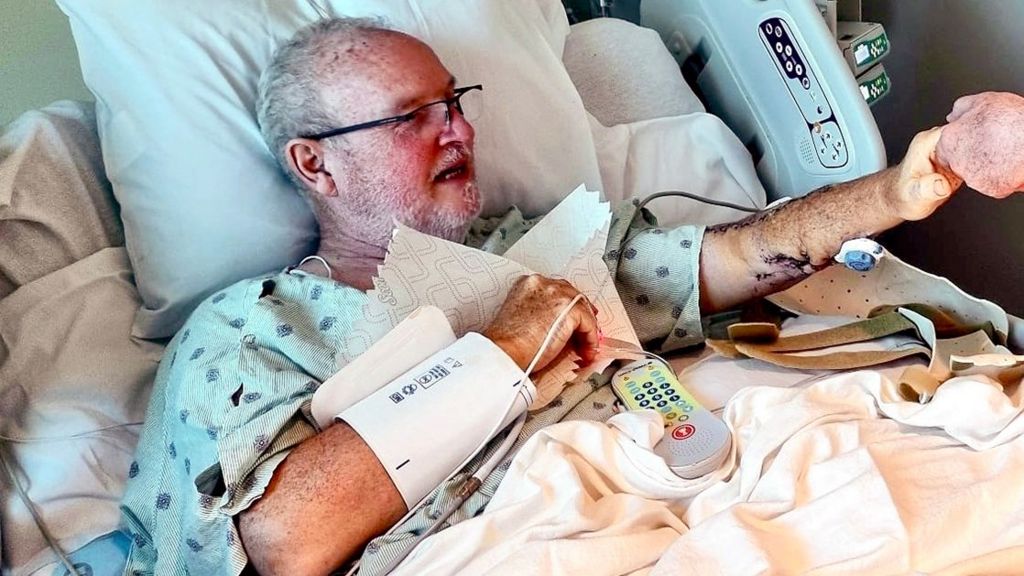
    Brazilian football icon Roberto Carlos has provided a positive health update following a planned medical intervention, directly addressing circulating concerns about his condition. The 52-year-old Real Madrid legend took to his official Instagram account to share reassuring news alongside a photograph showing him in good spirits from his hospital bed.

    The former left-back specifically refuted rumors suggesting he had experienced a cardiac emergency, stating: “I would like to clarify recent information that has been circulating. I recently underwent a preventative medical procedure, planned in advance with my medical team. The procedure was successful, and I am well. I did not suffer a heart attack.”

    Carlos emphasized his smooth recovery process, expressing optimism about returning to his professional and personal commitments promptly. He extended heartfelt gratitude to his medical team for their exceptional care and thanked supporters worldwide for their overwhelming messages of concern and encouragement.

    The football legend enjoys an illustrious career legacy, having made 527 appearances for Real Madrid where he secured four La Liga championships and three Champions League titles. His international achievements include winning the 2002 FIFA World Cup with the Brazilian national team, where he remains the third most-capped player in the country’s history behind only Neymar and Cafu.

    Renowned for his extraordinary free-kick expertise, Carlos’s distinguished club career also featured successful periods with Palmeiras, Inter Milan, Fenerbahce, and Corinthians, cementing his status as one of football’s most celebrated defenders.