标签: South America

南美洲

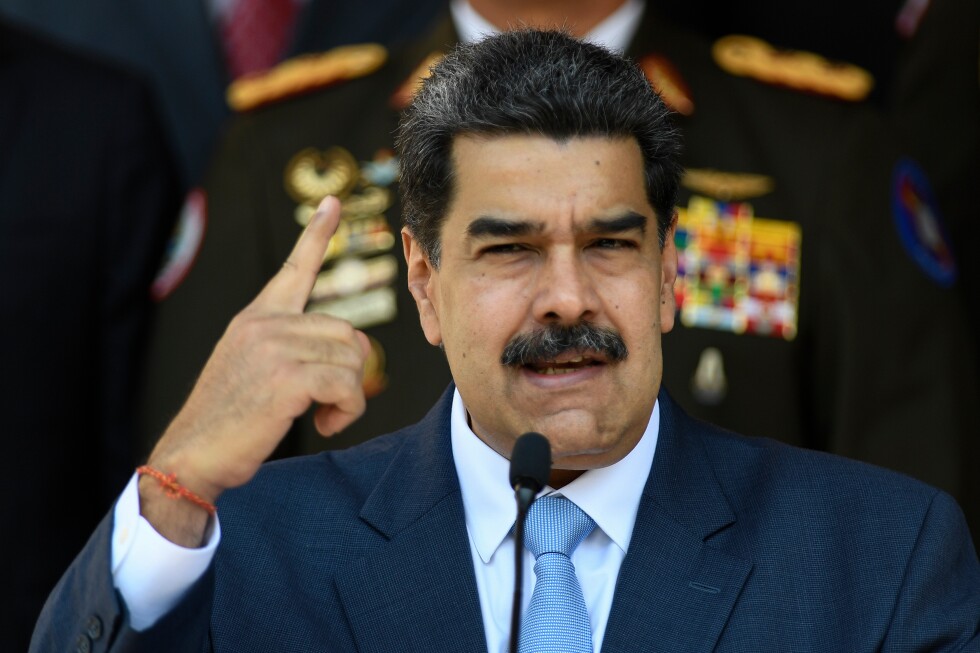
  • Who is captured Venezuelan President Maduro?

    Who is captured Venezuelan President Maduro?

    Former U.S. President Donald Trump has asserted that American forces conducted military strikes in Venezuela and successfully captured the nation’s sitting president, Nicolás Maduro. The controversial statement, which lacks official confirmation from current U.S. authorities, represents a significant escalation in rhetoric regarding Washington’s approach to the Venezuelan government.

    Venezuela has been embroiled in a prolonged political crisis since Maduro’s disputed re-election in 2018, which many nations including the United States deemed illegitimate. The Trump administration maintained a policy of maximum pressure against Maduro’s regime, recognizing opposition leader Juan Guaidó as the legitimate interim president and imposing severe economic sanctions.

    This alleged claim of military intervention, if verified, would mark a dramatic turning point in hemispheric relations and international law. However, multiple international news agencies and government channels have not corroborated Trump’s assertion, leaving the validity of the statement in question. Regional security analysts suggest such an operation would require substantial military resources and would likely provoke strong responses from Venezuela’s international allies, including Russia and China.

  • Venezuelans wonder who’s in charge as Trump claims contact with Maduro’s deputy

    Venezuelans wonder who’s in charge as Trump claims contact with Maduro’s deputy

    BUENOS AIRES, Argentina (AP) — Venezuela has been plunged into a profound constitutional crisis following the dramatic capture of President Nicolás Maduro by U.S. military forces. The operation has triggered urgent questions about legitimate leadership and the nation’s political future, creating widespread uncertainty among citizens and officials alike.

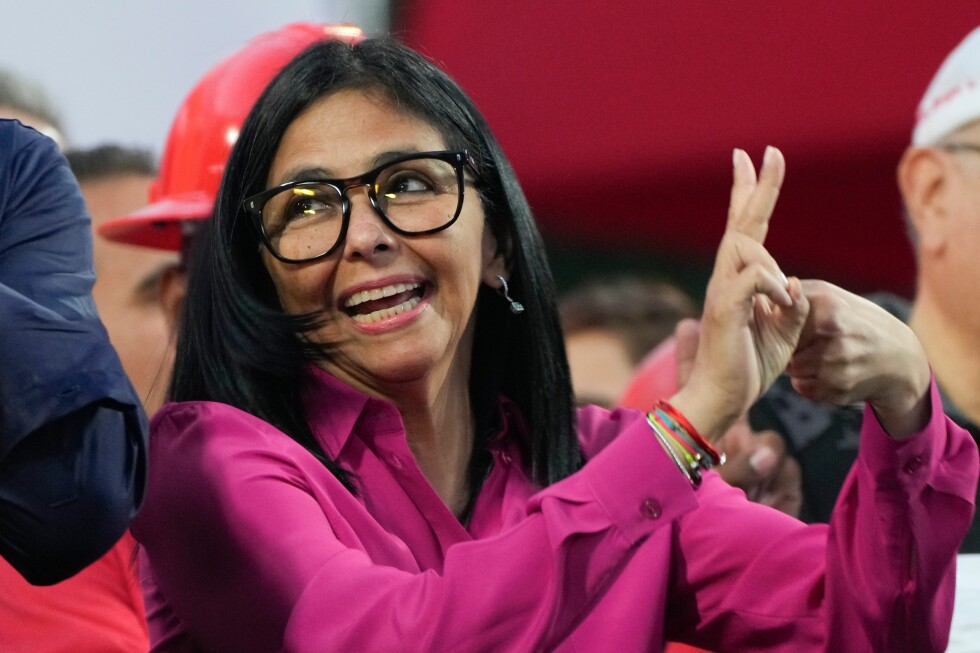
    In a stunning development, former U.S. President Donald Trump unexpectedly endorsed Maduro’s vice president, Delcy Rodríguez, as a potential successor despite her history of facing U.S. sanctions for undermining Venezuelan democracy. Trump revealed that Rodríguez had engaged in extensive discussions with Secretary of State Marco Rubio, during which she allegedly expressed willingness to cooperate with American objectives.

    “She’s essentially willing to do what we think is necessary to make Venezuela great again,” Trump told reporters, simultaneously dismissing opposition leader Maria Corina Machado—the 2024 Nobel Peace Prize laureate—as lacking sufficient support to govern effectively.

    Rodríguez responded to these developments with defiant rhetoric on state television, demanding Maduro’s immediate release and condemning the U.S. operation as a flagrant violation of international law. Flanked by senior civilian officials and military commanders, she emphatically declared: “There is only one president in this country, and his name is Nicolás Maduro.”

    The situation remains highly fluid with no visible U.S. administration presence in Venezuela. Constitutional provisions requiring a new election within thirty days of presidential absence now face extraordinary complications due to the military intervention and questions about the government’s legitimacy.

    Venezuelan military leaders projected unwavering defiance, with Defense Minister Gen. Vladimir Padrino López asserting “They have attacked us but will not break us.” Interior Minister Diosdado Cabello appeared in combat gear, urging citizens to defend national sovereignty against what he characterized as “rats” who would “regret what they did.”

    Rodríguez’s complex profile includes strong connections to Wall Street and Republican oil interests, having previously engaged with figures including Blackwater founder Erik Prince and Trump special envoy Richard Grenell. Unlike many Maduro associates facing U.S. criminal indictments, Rodríguez and her brother Jorge—who leads the Maduro-controlled National Assembly—have avoided legal prosecution while maintaining leftist credentials rooted in their father’s tragic death in police custody during the 1970s.

    The opposition movement, led by Machado, maintains that retired diplomat Edmundo González—widely believed to have won the disputed 2024 presidential election—should immediately assume constitutional authority. Machado pledged to restore order, free political prisoners, and reclaim democratic governance, asserting readiness to “assert our mandate and take power.”

    With military forces traditionally serving as Venezuela’s ultimate political arbiter, Rodríguez faces significant challenges in consolidating authority. Experts emphasize that the resolution will depend heavily on the current state of military capabilities and which officials were detained during the operation.

    Venezuelan citizens expressed widespread shock and confusion, with many speculating on social media about possible mistaken identity in Trump’s comments regarding the two prominent female political figures.

  • Watch: How the US attack on Venezuela unfolded

    Watch: How the US attack on Venezuela unfolded

    In a dramatic escalation of international tensions, the United States has initiated direct military action against Venezuela, culminating in the reported capture of the nation’s leader, Nicolas Maduro. President Donald Trump confirmed the operation, declaring that the U.S. would subsequently “run” the South American country. This intervention marks a significant turning point in the long-standing political and economic crisis that has plagued Venezuela, representing the most direct foreign involvement in the nation’s sovereignty to date. The strikes, which targeted key strategic locations, were justified by the U.S. administration as a necessary measure to restore democracy and alleviate a severe humanitarian crisis. The international community is now watching closely, with reactions ranging from strong support to vehement condemnation, as this action sets a profound precedent for international law and foreign policy. The unfolding situation raises critical questions about the future of Venezuelan governance, the regional balance of power in Latin America, and the broader implications for global diplomatic norms.

  • Capture of Maduro and US claim it will run Venezuela raise new legal questions

    Capture of Maduro and US claim it will run Venezuela raise new legal questions

    The Trump administration’s dramatic seizure of Venezuelan President Nicolás Maduro has ignited fierce debate among legal scholars and policymakers regarding the legality of aggressive U.S. actions in South America. Maduro was captured during a midnight operation involving U.S. forces in Caracas and transported via warship to face narcoterrorism conspiracy charges in New York—an extraordinary maneuver that legal experts characterize as historically unprecedented.

    This development represents the culmination of months of escalating military engagement in the region, including 35 documented boat strikes against alleged drug trafficking vessels resulting in over 115 fatalities since September, alongside multiple seizures of Venezuelan oil tankers. According to former Navy attorney Mark Nevitt, now at Emory University School of Law, the operation lacks any recognizable legal foundation absent an existing extradition treaty.

    The administration’s justification hinges on a controversial memorandum obtained by The Associated Press in October, which designates Venezuelan drug cartels as unlawful combatants and frames drug trafficking as an armed conflict requiring military response. This novel interpretation significantly expands presidential war powers without congressional authorization—a constitutional concern compounded by the fact that lawmakers from both parties have grown increasingly uneasy about military actions in Venezuela.

    Historical parallels to the 1989 Panama invasion and capture of Manuel Noriega reveal critical distinctions: unlike Panama, where U.S. national security interests were directly threatened by control of the Panama Canal and safety of American citizens, no similar justification exists for Venezuela. While federal courts traditionally defer to executive authority on national security matters, Notre Dame Law School professor Jimmy Gurule emphasizes that “great deference does not mean absolute deference and unfettered authority to do anything.”

    Congressional leaders were notified only after operations commenced, prompting bipartisan calls for greater oversight. The Senate prepares to vote on a war powers resolution that would restrict military action against Venezuela without legislative approval. Democratic lawmakers warn that bypassing international law sets dangerous precedents that authoritarian regimes could exploit, potentially undermining global stability and America’s moral authority.

    As Secretary of State Marco Rubio acknowledged the impossibility of pre-operation consultations due to its sensitive nature, the administration faces mounting scrutiny over its legal rationale and long-term strategic implications for international relations and constitutional balance of powers.

  • Maduro’s capture disrupts Caribbean holiday travel, hundreds of flights canceled

    Maduro’s capture disrupts Caribbean holiday travel, hundreds of flights canceled

    A dramatic U.S. military operation that resulted in the capture and extraction of Venezuelan President Nicolás Maduro in the early hours of Saturday has triggered significant disruption to Caribbean aviation during one of the region’s peak travel periods. The aftermath has compelled major airlines to cancel hundreds of flights, with warnings of potential continued interruptions lasting several days.

    The Federal Aviation Administration (FAA) implemented immediate airspace restrictions, leading to a complete halt of commercial airline traffic over Venezuelan airspace as tracked by FlightRadar24.com. The disruptions extended to key tourist destinations including Puerto Rico, the U.S. Virgin Islands, and Aruba. Luis Muñoz Marín International Airport in San Juan officially confirmed the restrictions, attributing them directly to the “security situation related to military activity” in Venezuela.

    In response, U.S. carriers have universally suspended operations to and from affected airports. JetBlue announced the cancellation of approximately 215 flights specifically citing “airspace closures across the Caribbean related to military activity.” Similarly, United Airlines stated it is actively adjusting its schedule to accommodate the Venezuela region closures, while Southwest canceled all Saturday flights to Aruba and suspended Puerto Rico services until late afternoon.

    To mitigate passenger inconvenience, airlines are implementing flexible rebooking policies. American Airlines, Delta Air Lines, JetBlue, and United are all waiving change fees for travel to a wide array of impacted islands, such as Saint Lucia, Curacao, Anguilla, and the British Virgin Islands. These travel advisories encourage all passengers to verify their flight status directly with their airline before departing for the airport. Notably, the FAA’s restrictions apply solely to U.S. commercial airlines and do not affect foreign carriers or military aircraft.

  • Ouster of Maduro government sparks celebrations among Venezuelans in South Florida

    Ouster of Maduro government sparks celebrations among Venezuelans in South Florida

    SOUTH FLORIDA — Venezuelan expatriates across South Florida erupted in emotional celebrations Saturday as news spread of Nicolás Maduro’s dramatic capture and removal from power through American military intervention. The atmosphere in Doral—a Miami suburb with deep Venezuelan ties and home to one of the largest exile communities—became a vibrant tapestry of national flags and cathartic chanting as decades of political anguish momentarily gave way to triumphant relief.

    The gathering outside El Arepazo restaurant, a cultural hub for Venezuelans, embodied the complex emotional landscape of a diaspora witnessing unprecedented change. Participants held handmade signs bearing the word ‘Libertad’ (liberty) while voices united in repeated chants of ‘Liberty! Liberty! Liberty!’—a powerful expression of hope for their homeland’s future.

    President Donald Trump confirmed the operation’s success, stating the U.S. government would temporarily administer Venezuela during the transition period. This development represents the culmination of an intensifying pressure campaign against Maduro’s regime and weeks of strategic planning targeting the leader’s behavioral patterns.

    The Venezuelan diaspora in South Florida represents a microcosm of the broader exile experience. Initial waves of upper-middle-class professionals and entrepreneurs arrived following Hugo Chávez’s election in the late 1990s, followed by political dissidents and, more recently, lower-income refugees seeking economic stability. This community of approximately 8 million Venezuelans who have fled since 2014 includes naturalized citizens, asylum seekers, and undocumented immigrants with American-born children.

    Niurka Meléndez, who fled Venezuela in 2015 and co-founded Venezuelans and Immigrants Aid in New York, characterized the intervention as ‘the start of the justice we need to see.’ She described her homeland as having reached a ‘breaking point’ due to systematic repression, humanitarian crises, and widespread fear, while emphasizing that Maduro’s removal creates ‘the possibility, not a guarantee, for recovery.’

    The celebrations were tempered by underlying anxieties about Venezuela’s future trajectory. Alejandra Arrieta, a Venezuelan immigrant since 1997, captured the collective emotional complexity: ‘We’re like everybody—it’s a combination of feelings. There’s fears. There’s excitement. There’s so many years that we’ve been waiting for this.’

  • Trump on Venezuela: ‘We are going to run the country’

    Trump on Venezuela: ‘We are going to run the country’

    In a significant foreign policy statement, President Donald Trump has asserted that the United States will assume administrative control over Venezuela until what he termed a ‘proper transition’ of power can be implemented. The declaration represents an unprecedented escalation in Washington’s approach to the ongoing political crisis in the South American nation, where opposition leader Juan Guaidó and incumbent President Nicolás Maduro both claim legitimate authority. This pronouncement signals a potential shift from diplomatic and economic pressure toward more direct involvement in Venezuelan governance. The Trump administration has consistently supported Guaidó’s interim government while applying crippling sanctions against Maduro’s regime, which it considers illegitimate. This latest development raises profound questions about sovereignty, international law, and the future of U.S. interventionist policy in Latin America, potentially setting a new precedent for how global powers address internal political conflicts in other nations.

  • How the US captured Venezuelan leader Nicolás Maduro

    How the US captured Venezuelan leader Nicolás Maduro

    In a stunning revelation during a Fox News interview, former President Donald Trump disclosed details of a covert U.S. military operation designed to apprehend Venezuelan President Nicolás Maduro and transport him to American soil for prosecution. The operation, described by Trump as meticulously planned, targeted Maduro’s heavily fortified presidential palace in Caracas.

    Trump characterized the Venezuelan leader’s residence as ‘a fortress’ with specialized security features, including a solid steel safe room that ultimately proved ineffective against the rapid advance of U.S. forces. American operatives came equipped with industrial-grade blowtorches capable of cutting through reinforced barriers, though these tools ultimately proved unnecessary as Maduro was apprehended before reaching his sanctuary.

    The operation’s success relied on extensive preparation, including the construction of an identical replica facility for training purposes. Trump emphasized the mission’s precision timing, noting that execution required optimal weather conditions with sufficient cloud cover, resulting in a four-day delay before implementation.

    Conducted under complete darkness after U.S. forces allegedly disabled most of Caracas’ electrical grid, the raid involved intense combat with machine gun fire and multiple explosions heard throughout the capital. The engagement lasted less than thirty minutes, according to eyewitness accounts.

    While Trump acknowledged ‘a couple of guys were hit’ among U.S. personnel, he stated that no American fatalities occurred, though a helicopter sustained significant damage. Venezuelan officials reported civilian and military casualties but provided no specific numbers.

    Following capture, Maduro and his wife Cilia Flores were transported via helicopter to a U.S. warship awaiting international waters. They face transfer to New York to answer charges outlined in a Justice Department indictment alleging their involvement in narco-terrorism conspiracies.

    This operation represents a dramatic escalation in the Trump administration’s pressure campaign against Maduro’s government, following months of targeted strikes against suspected drug trafficking operations in Venezuelan waters and coastal facilities.

  • I woke to a huge bang in Caracas – nothing has been normal since

    I woke to a huge bang in Caracas – nothing has been normal since

    CARACAS – The Venezuelan capital awoke to a state of profound uncertainty Saturday following a dramatic overnight military intervention by the United States. President Donald Trump announced a large-scale offensive that resulted in the capture of Venezuelan leader Nicolás Maduro and his wife, an operation witnessed by residents near a key military airbase.

    Local resident Vanessa Silva described being jolted awake around 2 a.m. by a massive explosion that shook her home in southeastern Caracas. From her window, she observed flames erupting across the runway at the adjacent military installation, though no personnel were visible in the immediate aftermath. The night sky was subsequently illuminated by repeated orange flashes and the resonant roar of aircraft circling the valley.

    The morning brought an eerie calm to the streets of Baruta Municipality, where Silva resides. While queues formed outside petrol stations and supermarkets—a familiar sight in economically strained Venezuela—public transportation remained conspicuously absent. A pharmacy served customers through closed doors, potentially rationing supplies, while many residents opted to remain indoors, urgently contacting relatives abroad amid the crisis.

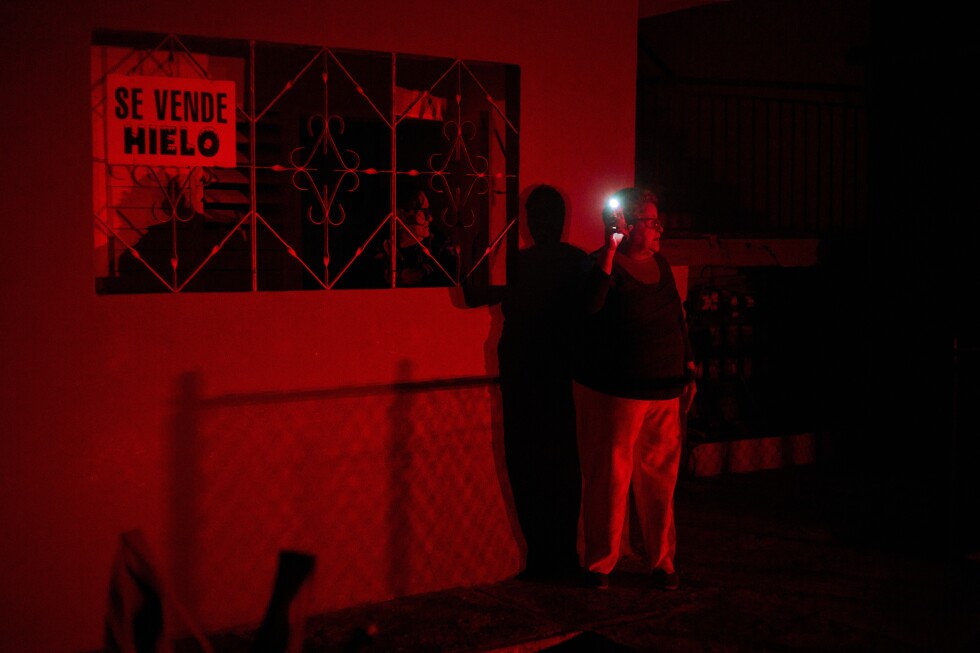
    Information blackouts compounded the tension, with residents in parts of the city reporting electricity failures since the nighttime explosions, leaving them isolated from developments. For those with power, state television featured government loyalists decrying Maduro’s capture as an illegal kidnapping and demanding his immediate release.

    The government has invoked a “state of external commotion,” declaring a national emergency that potentially suspends constitutional guarantees and freedom of movement—reminiscent of measures taken during the Caracazo riots of the 1980s. Venezuelan law imposes severe penalties, including 30-year prison sentences, for those supporting foreign military aggression.

    The strike represents an unprecedented escalation in the long-standing tensions between Washington and Caracas. Despite recent incidents in the Caribbean and weeks of speculation about potential U.S. action, Maduro had maintained a visible public presence, including Christmas visits to slums and public demonstrations, creating an illusion of normalcy that was shattered by Friday night’s events.

  • With capture of Maduro, Trump claims successful operation as he treads into uncharted territory

    With capture of Maduro, Trump claims successful operation as he treads into uncharted territory

    WASHINGTON — The successful military operation resulting in the capture of Venezuelan leader Nicolás Maduro has been hailed by President Donald Trump and his administration as a significant foreign policy achievement. The action demonstrates Trump’s continued willingness to deploy U.S. military forces for high-risk missions with potentially substantial geopolitical returns.

    The operation removed from power a South American leader repeatedly characterized by the Trump administration as an ‘illegitimate dictator’ and ‘narco-terrorist’ responsible for fueling drug trafficking networks affecting both the United States and Europe. President Trump described the mission as ‘a brilliant operation’ in remarks to The New York Times, later confirming on Fox & Friends that while some U.S. personnel sustained injuries, there were no fatalities.

    However, the victory presents immediate challenges for the White House, including navigating the complex power vacuum in a nation already ravaged by hyperinflation, severe shortages of food and medicine, and massive brain drain despite its considerable oil reserves. The operation also raises strategic questions about how U.S. adversaries including China’s Xi Jinping and Russia’s Vladimir Putin might interpret this demonstration of American military intervention within its sphere of influence.

    This action represents another consequential moment in Trump’s second-term foreign policy, following June’s strikes on Iranian nuclear facilities. The Venezuela operation fulfills commitments outlined in last month’s National Security Strategy to assert U.S. dominance in the Western Hemisphere, but has generated fresh anxiety among international partners adjusting to Trump’s unilateral approach to foreign interventions.

    Retired Navy Rear Adm. Mark Montgomery of the Foundation for Defense of Democracies warned that the post-operation phase in Venezuela presents more complex challenges than previous strikes: ‘Unlike the Iran strikes where Trump did the action and then said ‘fight’s over,’ he will not have that luxury here in Venezuela.’

    International reaction has been mixed. While European Commission President António Costa expressed ‘great concern,’ EU foreign policy chief Kaja Kallas emphasized that ‘principles of international law and the UN Charter must be respected.’ France’s Foreign Minister Jean-Noël Barrot directly criticized the operation as infringing ‘the principle of non-use of force that underpins international law.’

    Russia condemned the action as ‘armed aggression,’ while China denounced it as a violation of international law and Venezuelan sovereignty. Domestic criticism emerged immediately, with Senator Ruben Gallego calling the operation ‘illegal’ and declaring ‘we went from world cop to world bully.’

    The operation culminated months of pressure within the administration led by Secretary of State Marco Rubio and other Maduro opponents. In South Florida—home to significant Venezuelan opposition communities—the operation was celebrated as a democratic breakthrough, with Representative Carlos Gimenez comparing Maduro’s ouster to the fall of the Berlin Wall.

    With Maduro’s capture, the administration now faces critical decisions regarding Venezuela’s political future, including whether to support exiled opposition figure Edmundo González or engage with potential transitional arrangements. President Trump pledged his administration would be ‘very involved’ in ensuring Venezuela’s future leadership, stating ‘We can’t take a chance of letting somebody else run it—just take over where Maduro left off.’