标签: South America

南美洲

  • After Venezuela frees 1% of prisoners, families and activists strain to stay hopeful

    After Venezuela frees 1% of prisoners, families and activists strain to stay hopeful

    In a development that has generated both optimism and profound disappointment, Venezuela’s government has released merely nine detainees despite earlier promises of a substantial prisoner liberation. This modest figure represents just over 1% of the 811 individuals that Caracas-based human rights organization Foro Penal identifies as being detained for political reasons in the country.

    The releases, which included five Spanish citizens, two political activists, and two prominent opposition figures, occurred against the backdrop of a transformed political landscape following the dramatic capture of former President Nicolás Maduro by U.S. forces. The developments have created a complex atmosphere where cautious hope mingles with enduring frustration among families of those still imprisoned.

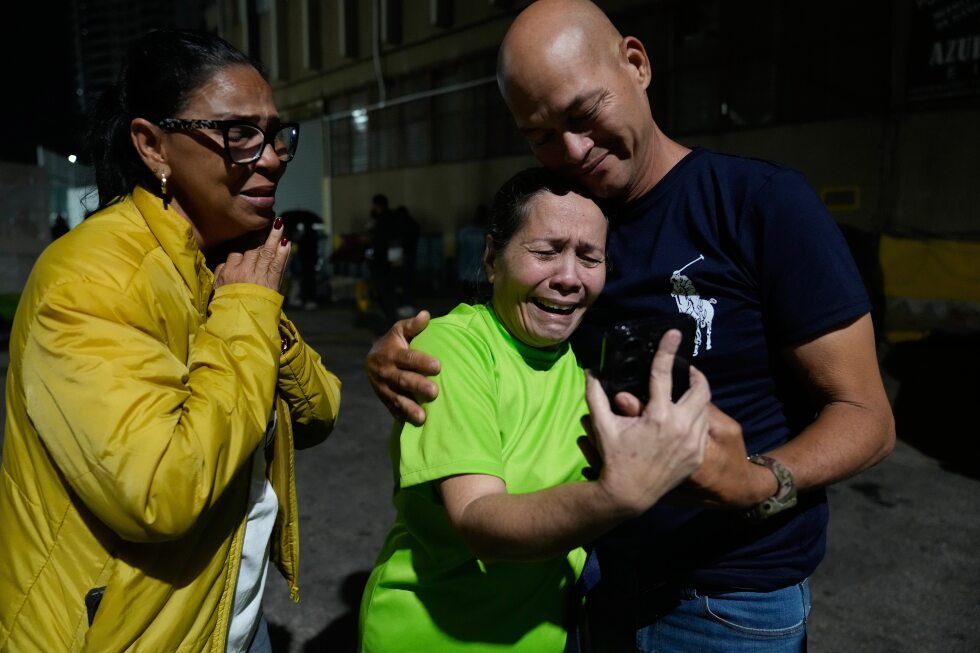
    Outside El Rodeo prison in Guatire, approximately one hour east of Caracas, relatives maintained vigil throughout Friday, forming impromptu support networks while sharing resources and information. The emotional toll was visible as hope gradually gave way to despair for many waiting families. Noirelys Morillo, who traveled ten hours to await her brother’s potential release, exemplified the determination of relatives: “We’re going to stay here until we receive him.”

    The prisoner releases are widely interpreted as a confidence-building measure by interim President Delcy Rodríguez’s administration, signaling potential willingness to engage with international partners. Former U.S. President Donald Trump has publicly acknowledged the releases, characterizing them as responsive to Washington’s requests.

    However, human rights organizations have expressed profound dissatisfaction with the limited scope of the releases. Justice, Encounter, and Forgiveness, a Venezuelan advocacy group, emphasized that “freedom cannot remain in statements: it must materialize in verifiable facts.”

    A striking dimension of the situation emerged through accounts of prisoners’ complete isolation from external developments. Shakira Ibarreto, during a scheduled visit with her detained father Miguel, discovered that inmates remained unaware of Maduro’s capture and the subsequent political transformation in Venezuela. Prison authorities had abruptly discontinued the customary state television broadcasts that typically provide inmates with controlled information.

    The situation continues to evolve as families maintain their vigil and the international community monitors whether these initial releases will develop into a more comprehensive prisoner liberation initiative under Venezuela’s new leadership.

  • Watch: BBC reports from outside Venezuela’s ‘El Helicoide’ prison

    Watch: BBC reports from outside Venezuela’s ‘El Helicoide’ prison

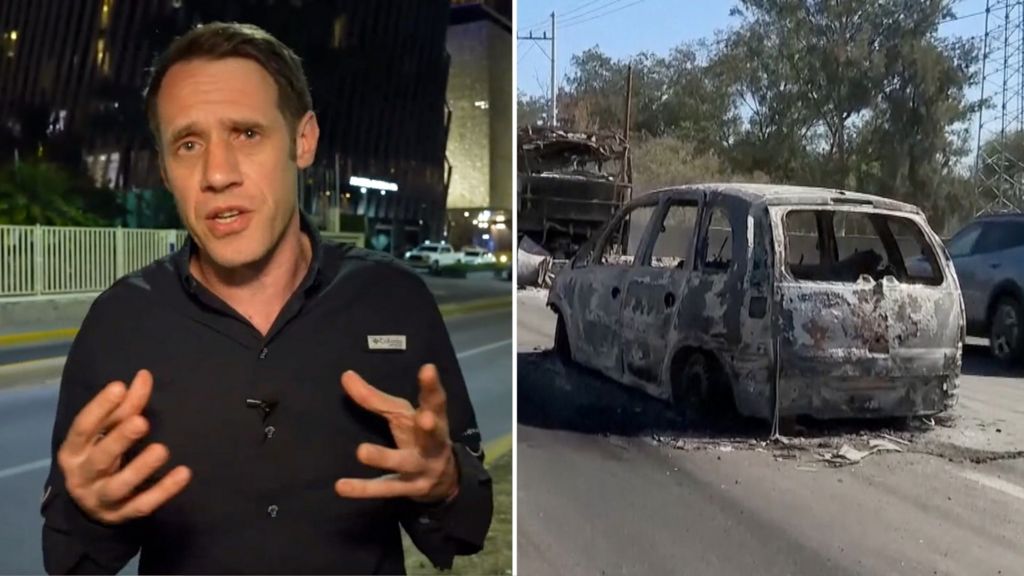
    In a significant political development, the Venezuelan government has commenced the release of individuals identified as political prisoners. BBC correspondent Norberto Paredes reported from outside the notorious ‘El Helicoide’ detention facility in Caracas, where the initial releases are underway.

    This prison complex, formally known as the Bolivarian National Intelligence Service (SEBIN) headquarters, has long been criticized by human rights organizations for housing political dissidents under questionable legal circumstances. The releases appear to follow through on diplomatic commitments made during recent negotiations between government representatives and opposition parties in Barbados.

    The carefully orchestrated prisoner release operation represents a potential thaw in Venezuela’s prolonged political stalemate. International observers are monitoring these developments as possible confidence-building measures ahead of the 2024 presidential election. The government’s actions may signal willingness to address longstanding human rights concerns while opposition figures cautiously welcome what could be the beginning of broader democratic reforms.

    This development occurs amid complex geopolitical dynamics, including recently eased U.S. sanctions on Venezuela’s oil industry in exchange for electoral guarantees. The prisoner releases could potentially pave the way for more comprehensive political negotiations in a country grappling with economic challenges and international scrutiny over its democratic processes.

  • Why boosting production of Venezuela’s ‘very dense, very sloppy’ oil could harm the environment

    Why boosting production of Venezuela’s ‘very dense, very sloppy’ oil could harm the environment

    Environmental experts are raising alarms about potential ecological consequences as the United States moves to revitalize Venezuela’s extensive petroleum reserves. This development follows heightened political tensions after the capture of former President Nicolás Maduro, prompting Washington to intensify control over Venezuela’s primary revenue source—oil exports.

    The Trump administration’s strategy involves selling 30-50 million barrels of Venezuelan crude globally under US supervision, with proceeds maintained in American-controlled accounts. However, industry analysts question the feasibility of rapid production increases, noting that Venezuela’s energy infrastructure requires massive investment—potentially tens of billions of dollars—after years of deterioration.

    Venezuela possesses the world’s largest oil reserves, estimated at 300 billion barrels, but produces heavy crude with exceptionally high pollution characteristics. Extraction and refining processes demand significantly more energy than conventional oil, resulting in substantially greater greenhouse gas emissions. According to International Energy Agency data, Venezuela’s methane emissions intensity exceeds global averages by approximately six times, while flaring intensity reaches ten times typical worldwide levels.

    The country already faces severe environmental challenges, including nearly 200 documented oil spills between 2016-2021 and the loss of 2.6 million hectares of forest cover over two decades. Experts warn that renewed oil activity could exacerbate damage in ecosystems already compromised by decades of pollution, particularly in sensitive regions like Lake Maracaibo—one of the world’s most oil-contaminated aquatic environments.

    While US officials claim American companies will implement high environmental standards, critics argue that rapid production expansion will likely prioritize output over ecological protections. The complex geography of Venezuela’s oil-producing regions, characterized by fragile plains and slow-moving rivers, creates conditions where contamination can persist for extended periods with devastating consequences for biodiversity and local communities.

  • Trump promises oil executives ‘total safety’ if they invest in Venezuela after Maduro ouster

    Trump promises oil executives ‘total safety’ if they invest in Venezuela after Maduro ouster

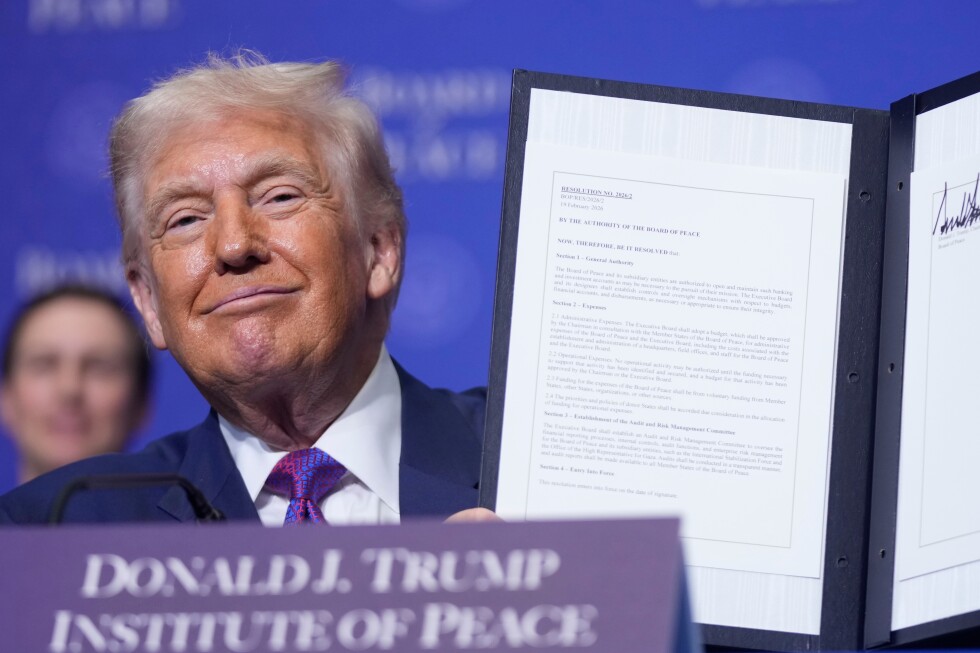
    WASHINGTON — In a strategic pivot following the military operation that ousted Nicolás Maduro, President Donald Trump convened top oil industry executives at the White House to champion a massive $100 billion private investment initiative aimed at revitalizing Venezuela’s crippled energy infrastructure. The Friday meeting marked a dramatic shift from military action to economic opportunity, with Trump positioning Venezuela’s vast petroleum reserves as a prime target for American energy corporations.

    The administration’s aggressive posture includes seizing tankers carrying Venezuelan crude and assuming control over global sales of 30-50 million barrels of previously sanctioned oil. Trump personally assured skeptical executives of “total safety” in potential ventures, emphasizing they would be “dealing with us directly and not dealing with Venezuela at all.” This unprecedented arrangement would see the U.S. government acting as intermediary for energy investments in a foreign nation.

    Despite presidential assurances, industry leaders expressed significant reservations. ExxonMobil CEO Darren Woods characterized Venezuela as “un-investable” under current frameworks, citing the need for comprehensive legal overhauls and durable investment protections. The company’s assets were seized twice previously in the country, reflecting the challenging operational environment.

    The mobilization forms part of Trump’s broader effort to curb gasoline prices, merging assertive presidential power with economic spectacle ahead of election season. Beyond domestic considerations, the president presented the intervention as preempting Chinese or Russian control of Venezuelan resources, stating: “If we didn’t do this, China or Russia would have done it.”

    In parallel diplomatic developments, both nations are exploring restored relations, with U.S. officials conducting preliminary assessments for reopening the Caracas embassy. The administration also announced upcoming meetings with Venezuelan opposition leader Maria Corina Machado and Colombian President Gustavo Petro, signaling complex regional realignments following Maduro’s ouster.

    Energy Secretary Chris Wright projected optimism post-meeting, noting “tremendous interest” from attendees and suggesting production could triple to 3 million barrels daily within 8-12 years. The assemblage included Chevron, ConocoPhillips, Shell, and international firms Trafigura, Eni, and Repsol, representing global stakes in Venezuela’s energy future.

  • The continued mysteries surrounding the intelligence operation to seize Maduro

    The continued mysteries surrounding the intelligence operation to seize Maduro

    The meticulously orchestrated capture of Venezuelan President Nicolás Maduro represents a watershed moment in modern intelligence and military operations. New disclosures reveal an unprecedented multi-agency mission involving months of strategic planning and cutting-edge technological warfare.

    Operating in what intelligence communities classify as a ‘denied area’ without diplomatic cover, CIA operatives conducted extensive ground reconnaissance in Venezuela throughout August. Their success hinged on a crucial government source within Maduro’s inner circle who provided real-time intelligence on the leader’s movements—a testament to the penetration of his security apparatus.

    The operational execution demonstrated remarkable coordination: approximately 150 aircraft participated in the mission, with helicopters flying at ultra-low altitudes to evade detection. The involvement of US Cyber Command proved pivotal, as their expertise facilitated a city-wide blackout in Caracas that provided critical cover for special forces insertion. Simultaneously, US Space Command created an invisible ‘pathway’ for forces to approach undetected, while advanced electronic warfare systems reportedly neutralized Chinese and Russian air defense systems.

    The assault on Fuerte Tiuna, Venezuela’s largest military complex, resulted in the deaths of 32 Cuban nationals serving as Maduro’s personal security detail. Notably absent were Venezuelan security forces at the compound’s inner perimeter, raising questions about possible internal collaboration. US forces intercepted Maduro moments before he could secure himself in a reinforced safe room, demonstrating precise knowledge of the compound’s layout.

    Pre-operation analysis by CIA strategists concluded that maintaining stability would require cooperation with elements of the existing regime rather than installing exiled opposition figures. This assessment paved the way for back-channel communications with Maduro’s inner circle, including Vice President Delcy Rodríguez, to discuss transitional arrangements.

    The mission’s flawless execution—achieved without US casualties—marks a paradigm shift in combined intelligence and military operations, though many technological and strategic details remain classified. America’s adversaries are now undoubtedly analyzing the operation to understand the full scope of capabilities demonstrated.

  • US intercepts fifth sanctioned tanker as it exerts control over Venezuelan oil distribution

    US intercepts fifth sanctioned tanker as it exerts control over Venezuelan oil distribution

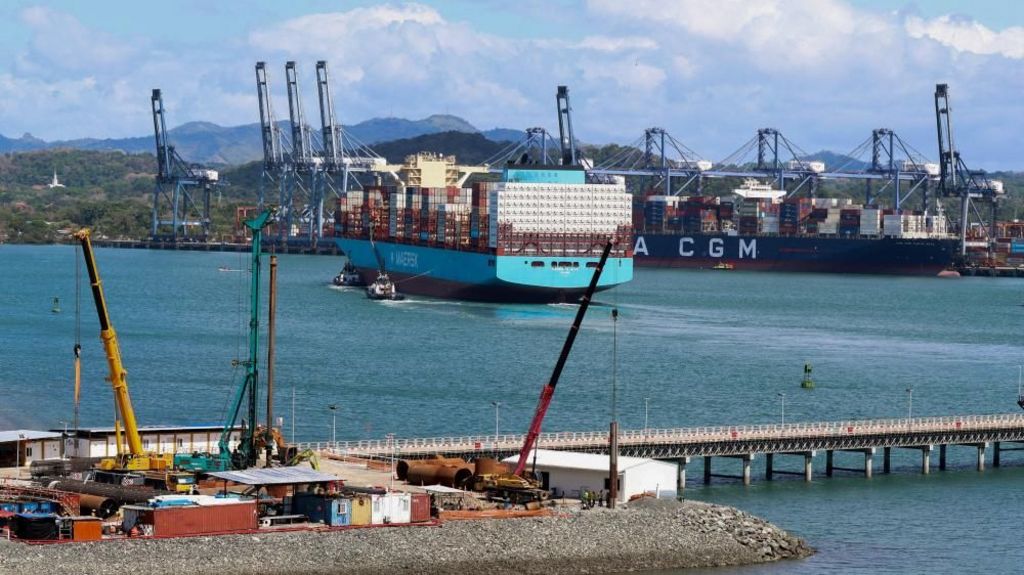
    In a predawn maritime operation on Friday, U.S. military forces conducted a strategic boarding of the oil tanker Olina in the Caribbean Sea. The intervention represents the latest escalation in the Trump administration’s comprehensive campaign to control Venezuela’s oil production and distribution networks while enforcing international sanctions.

    According to U.S. Southern Command, the operation involved Marines and Navy sailors deployed from the aircraft carrier USS Gerald R. Ford, part of a substantial naval presence built up in the Caribbean region over recent months. The Coast Guard subsequently assumed control of the vessel following the initial seizure. Unclassified footage released by military authorities and Homeland Security Secretary Kristi Noem depicted a U.S. helicopter landing on the tanker’s deck, with personnel conducting thorough searches and deploying what appeared to be explosive breaching devices.

    The Olina represents the fifth tanker intercepted by U.S. forces as part of Washington’s strategy to regulate Venezuela’s oil exports, and the third such seizure since the U.S. recognized the ouster of Venezuelan President Nicolás Maduro. Secretary Noem characterized the vessel as belonging to the so-called ‘ghost fleet’ of tankers attempting to transport embargoed petroleum products while evading detection.

    President Trump announced via social media that the operation was conducted ‘in coordination with the Interim Authorities of Venezuela,’ though the White House provided no additional details regarding this collaboration. The Venezuelan government subsequently acknowledged cooperating with U.S. authorities to return the tanker, which they stated had departed without proper authorization or payment.

    Maritime intelligence analysts from TankerTrackers.com identified at least 16 vessels that have departed Venezuela’s coast in violation of the U.S.-imposed quarantine blocking sanctioned ships from conducting trade. The Olina, previously sanctioned for moving Russian oil under the name Minerva M, was reportedly flying a false flag of Timor-Leste despite being registered to a Hong Kong-based company. The vessel had been operating with its location beacon disabled since November.

    The administration has framed these seizures as both a law enforcement measure and an economic strategy. Officials anticipate selling 30-50 million barrels of sanctioned Venezuelan oil, with proceeds designated for both American and Venezuelan interests. President Trump met with oil executives Friday to discuss a proposed $100 billion investment plan to rebuild Venezuela’s energy infrastructure, while Vice President JD Vance emphasized the U.S. could control Venezuela’s ‘purse strings’ by dictating oil distribution channels.

    Industry experts estimate the Olina was carrying approximately 707,000 barrels of oil valued at over $42 million at current market prices.

  • As Trump promises Venezuelan renaissance, locals struggle with crumbling economy

    As Trump promises Venezuelan renaissance, locals struggle with crumbling economy

    CARACAS, Venezuela — While Washington pledges a golden economic future for Venezuela following the dramatic capture of former President Nicolás Maduro, ordinary citizens confront a starkly different reality of hyperinflation and severe scarcity that defines daily existence.

    At a sprawling street market in the capital, utility worker Ana Calderón illustrates the profound disconnect between political promises and ground-level suffering. Her immediate concern isn’t geopolitical shifts but the impossible mathematics of assembling a simple pot of soup. “Food is incredibly expensive,” she states, noting how celery now costs twice what it did weeks ago while a kilogram of meat sells for more than $10—a sum representing 25 times the country’s frozen monthly minimum wage of just $0.40.

    This economic catastrophe has unfolded despite Venezuela possessing the world’s largest proven oil reserves. The current crisis finds its roots in the Chavez-Maduro era, where corruption, declining production, and disastrous economic policies created a perfect storm. Since 2012, poverty has engulfed approximately 80% of the population, the middle class has virtually disappeared, and more than 7.7 million people have fled their homeland.

    President Trump’s administration vows that American intervention will channel billions into infrastructure, revitalize the crippled oil industry, and ultimately restore prosperity. Commitments include distributing oil sale proceeds to Venezuelans and repairing the collapsed electricity grid. However, the immediate White House focus appears centered on extracting more Venezuelan oil and opening the sector to U.S. investment—a process Trump acknowledges “will take years.”

    Economists express profound skepticism about rapid improvement. Luisa Palacios, a Venezuelan-born scholar at Columbia University, observes that while people remain hopeful, “they don’t see it yet on the ground. What they’re seeing is repression. They’re seeing a lot of confusion.” Usha Haley, an economist specializing in emerging markets, confirms that rampant inflation and currency collapse cannot be solved by a single oil sale, predicting that “jobs, prices, and exchange rates will probably not shift quickly.”

    For now, Venezuelans survive through a philosophy of “resolver”—figuring out each day through multiple jobs, delicate financial calculations, and heartbreaking choices between medicine and food. As vendor Neila Roa summarizes while selling cigarettes to survive: “What we don’t know is whether the change is for better or for worse. We’re in a state of uncertainty.”

  • Colombia sees ‘real threat’ of US military action, president tells BBC

    Colombia sees ‘real threat’ of US military action, president tells BBC

    Colombian President Gustavo Petro has issued a stark warning to the BBC, stating he perceives a ‘real threat’ of potential US military intervention against his nation. This alarming assessment follows former President Donald Trump’s recent threats of military action against Colombia and his characterization of Petro as a ‘sick man’ involved in cocaine trafficking—an accusation Petro vehemently denies.

    The escalating diplomatic crisis reveals profoundly divergent worldviews. Petro accuses the United States of operating as an ’empire’ that treats other nations as subordinates rather than sovereign equals. He delivered particularly sharp criticism of US Immigration and Customs Enforcement (ICE), comparing their operations to ‘Nazi brigades’ and citing recent agent-involved shootings of US citizens as evidence of recklessness.

    Trump’s administration has significantly expanded ICE operations, reporting the deportation of approximately 605,000 individuals between January 20 and December 10, 2025, alongside 1.9 million ‘voluntary self-deportations’ through an aggressive public awareness campaign.

    The relationship between the two leaders has been marked by public confrontations, including Trump’s instruction for Petro to ‘watch his ass’ and Petro’s condemnation of US military actions in Venezuela as motivated by ‘oil and coal’ interests. Despite a recent phone conversation that Trump described as a ‘Great Honour’ on his Truth Social platform, Petro indicates relations remain tense, with the call lasting nearly an hour and covering drug trafficking and regional politics.

    Petro emphasized Colombia’s preference for diplomatic resolution but noted the country’s historical resilience against larger military forces, referencing Colombia’s challenging terrain and popular mobilization capabilities. He also revealed communications with Venezuela’s acting president Delcy Rodríguez and expressed concerns about intelligence agency operations in the region.

    As the world’s largest cocaine producer with significant natural resources including oil, gold, and emeralds, Colombia finds itself at the center of US drug policy enforcement. Petro defends his ‘total peace’ strategy of negotiating with armed groups while maintaining military options, citing reduced homicide rates and slowing coca cultivation growth in southern Colombia as evidence of progress.

  • An Argentine court offers hope for Venezuelans seeking justice for abuses under Maduro

    An Argentine court offers hope for Venezuelans seeking justice for abuses under Maduro

    In a landmark judicial decision, Argentina’s federal court has mandated the continuation of investigations into alleged crimes against humanity committed by Venezuela’s National Guard officers. This ruling, issued Thursday, rejects an appeal from a former Venezuelan officer challenging Argentina’s jurisdictional authority and instead invokes the principle of universal jurisdiction—a legal doctrine enabling nations to prosecute severe human rights violations regardless of where they occurred.

    The case, initiated in 2023, centers on accusations against 14 officers involved in the violent suppression of anti-government protests in 2014, during which security forces under President Nicolás Maduro allegedly engaged in torture, extrajudicial killings, and systematic repression. The court’s refusal to dismiss the case emphasizes the ‘extreme gravity’ of these allegations, compelling Argentina’s judiciary to pursue accountability.

    This development occurs amid complex geopolitical shifts. While the recent U.S. military intervention led to Maduro’s capture and the surprise appointment of Delcy Rodríguez as acting president, many Venezuelan rights advocates express skepticism about Washington’s commitment to human justice. Instead, they view Argentina’s legal perseverance as a more reliable pathway to accountability, especially given Venezuela’s entrenched impunity and the slow mechanisms of the International Criminal Court.

    Argentina’s role in such investigations is historically significant. Having successfully prosecuted its own military junta for atrocities committed during the 1976–1983 dictatorship, the country has emerged as a global hub for transnational justice. It has previously addressed cases ranging from Franco-era crimes in Spain to the persecution of Rohingya Muslims in Myanmar.

    Despite ideological alignments between Argentine President Javier Milei and the U.S. administration—both of whom celebrated Maduro’s capture—the Argentine judiciary remains independent. Its continued pursuit of this case signals a commitment to legal principles over political expediency. For Venezuelan victims and activists, this offers a beacon of hope amid fears that geopolitical interests, particularly concerning Venezuela’s oil reserves, may overshadow demands for justice and democratic restoration.

  • Venezuela helps vault Rubio to quarterback of Trump’s foreign policy team

    Venezuela helps vault Rubio to quarterback of Trump’s foreign policy team

    In the turbulent arena of the Trump administration’s foreign policy, Secretary of State Marco Rubio has assumed a pivotal role as a stabilizing force. The administration’s recent audacious moves—including the military operation that deposed Venezuelan President Nicolás Maduro and controversial musings about annexing Greenland—have sent shockwaves through the international community. Yet Rubio, a former Florida senator with deep personal and political ties to Latin America, has skillfully positioned himself as an interpreter and moderator of the President’s more incendiary rhetoric.

    Drawing on his background as the child of Cuban immigrants and his collegiate football experience, aides now describe Rubio as the ‘quarterback’ of Trump’s advisory team. He operates at the intersection of Secretary of State and national security adviser, translating broad presidential directives into actionable, if contentious, policy. His influence extends across multiple hotspots, with key players including Defense Secretary Pete Hegseth, Energy Secretary Chris Wright, and Vice President JD Vance on Venezuela, while Vance, alongside special envoy Steve Witkoff and Jared Kushner, handle fragile peace efforts in Gaza and Ukraine.

    Following the Caracas raid that extracted Maduro, President Trump’s vague declaration that the U.S. would ‘run’ Venezuela sparked fears of another prolonged occupation. Rubio moved quickly to clarify, emphasizing that American strategy would leverage oil sanctions and the threat of further military action rather than direct governance. Similarly, he has sought to reframe the Greenland discussion, stating the administration’s intent is purchase, not invasion.

    On Capitol Hill, Rubio has taken the lead in closed-door briefings, facing lawmakers’ questions and criticisms. He outlined a three-phase plan for Venezuela: selling seized oil to fund reconstruction, restoring civil society, and transitioning to a new government—currently led by interim President Delcy Rodríguez with U.S. support.

    However, Rubio’s strategy faces a tight timeline and bipartisan scrutiny. Lawmakers demand more details and public oversight, with Democrats expressing disappointment over the lack of consultation. For Rubio, whose family history and Miami upbringing deeply inform his views, Venezuela represents a long-standing personal crusade against what he sees as a continuation of Castro-style communism. His once-surprising partnership with Trump—following their 2016 primary rivalry—now appears seamless, with the President echoing Rubio’s decade-old rhetoric on the region.