标签: South America

南美洲

  • Ouster of Maduro government sparks celebrations among Venezuelans in South Florida

    Ouster of Maduro government sparks celebrations among Venezuelans in South Florida

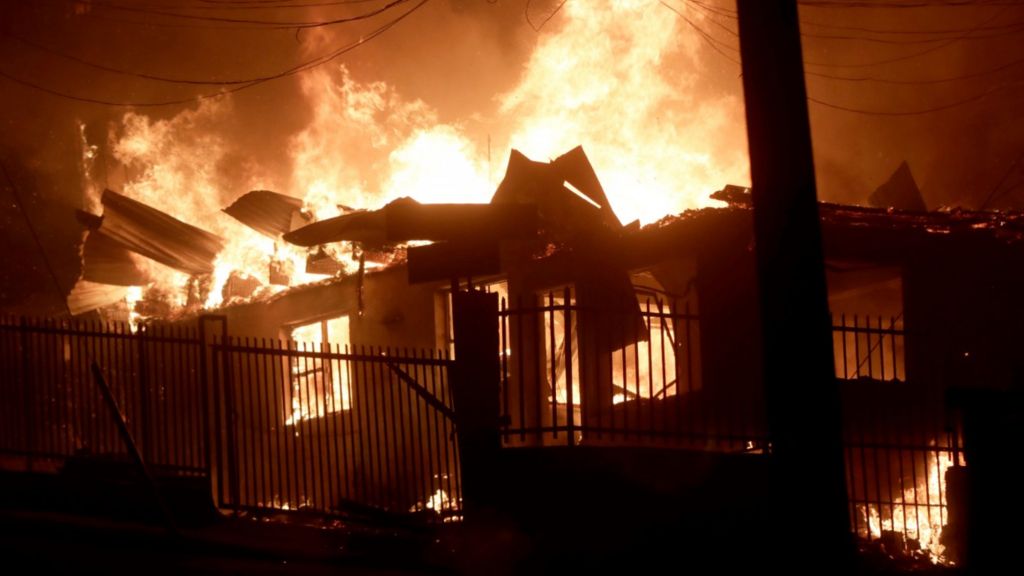
    SOUTH FLORIDA — Venezuelan expatriates across South Florida erupted in emotional celebrations Saturday as news spread of Nicolás Maduro’s dramatic capture and removal from power through American military intervention. The atmosphere in Doral—a Miami suburb with deep Venezuelan ties and home to one of the largest exile communities—became a vibrant tapestry of national flags and cathartic chanting as decades of political anguish momentarily gave way to triumphant relief.

    The gathering outside El Arepazo restaurant, a cultural hub for Venezuelans, embodied the complex emotional landscape of a diaspora witnessing unprecedented change. Participants held handmade signs bearing the word ‘Libertad’ (liberty) while voices united in repeated chants of ‘Liberty! Liberty! Liberty!’—a powerful expression of hope for their homeland’s future.

    President Donald Trump confirmed the operation’s success, stating the U.S. government would temporarily administer Venezuela during the transition period. This development represents the culmination of an intensifying pressure campaign against Maduro’s regime and weeks of strategic planning targeting the leader’s behavioral patterns.

    The Venezuelan diaspora in South Florida represents a microcosm of the broader exile experience. Initial waves of upper-middle-class professionals and entrepreneurs arrived following Hugo Chávez’s election in the late 1990s, followed by political dissidents and, more recently, lower-income refugees seeking economic stability. This community of approximately 8 million Venezuelans who have fled since 2014 includes naturalized citizens, asylum seekers, and undocumented immigrants with American-born children.

    Niurka Meléndez, who fled Venezuela in 2015 and co-founded Venezuelans and Immigrants Aid in New York, characterized the intervention as ‘the start of the justice we need to see.’ She described her homeland as having reached a ‘breaking point’ due to systematic repression, humanitarian crises, and widespread fear, while emphasizing that Maduro’s removal creates ‘the possibility, not a guarantee, for recovery.’

    The celebrations were tempered by underlying anxieties about Venezuela’s future trajectory. Alejandra Arrieta, a Venezuelan immigrant since 1997, captured the collective emotional complexity: ‘We’re like everybody—it’s a combination of feelings. There’s fears. There’s excitement. There’s so many years that we’ve been waiting for this.’

  • Trump on Venezuela: ‘We are going to run the country’

    Trump on Venezuela: ‘We are going to run the country’

    In a significant foreign policy statement, President Donald Trump has asserted that the United States will assume administrative control over Venezuela until what he termed a ‘proper transition’ of power can be implemented. The declaration represents an unprecedented escalation in Washington’s approach to the ongoing political crisis in the South American nation, where opposition leader Juan Guaidó and incumbent President Nicolás Maduro both claim legitimate authority. This pronouncement signals a potential shift from diplomatic and economic pressure toward more direct involvement in Venezuelan governance. The Trump administration has consistently supported Guaidó’s interim government while applying crippling sanctions against Maduro’s regime, which it considers illegitimate. This latest development raises profound questions about sovereignty, international law, and the future of U.S. interventionist policy in Latin America, potentially setting a new precedent for how global powers address internal political conflicts in other nations.

  • How the US captured Venezuelan leader Nicolás Maduro

    How the US captured Venezuelan leader Nicolás Maduro

    In a stunning revelation during a Fox News interview, former President Donald Trump disclosed details of a covert U.S. military operation designed to apprehend Venezuelan President Nicolás Maduro and transport him to American soil for prosecution. The operation, described by Trump as meticulously planned, targeted Maduro’s heavily fortified presidential palace in Caracas.

    Trump characterized the Venezuelan leader’s residence as ‘a fortress’ with specialized security features, including a solid steel safe room that ultimately proved ineffective against the rapid advance of U.S. forces. American operatives came equipped with industrial-grade blowtorches capable of cutting through reinforced barriers, though these tools ultimately proved unnecessary as Maduro was apprehended before reaching his sanctuary.

    The operation’s success relied on extensive preparation, including the construction of an identical replica facility for training purposes. Trump emphasized the mission’s precision timing, noting that execution required optimal weather conditions with sufficient cloud cover, resulting in a four-day delay before implementation.

    Conducted under complete darkness after U.S. forces allegedly disabled most of Caracas’ electrical grid, the raid involved intense combat with machine gun fire and multiple explosions heard throughout the capital. The engagement lasted less than thirty minutes, according to eyewitness accounts.

    While Trump acknowledged ‘a couple of guys were hit’ among U.S. personnel, he stated that no American fatalities occurred, though a helicopter sustained significant damage. Venezuelan officials reported civilian and military casualties but provided no specific numbers.

    Following capture, Maduro and his wife Cilia Flores were transported via helicopter to a U.S. warship awaiting international waters. They face transfer to New York to answer charges outlined in a Justice Department indictment alleging their involvement in narco-terrorism conspiracies.

    This operation represents a dramatic escalation in the Trump administration’s pressure campaign against Maduro’s government, following months of targeted strikes against suspected drug trafficking operations in Venezuelan waters and coastal facilities.

  • I woke to a huge bang in Caracas – nothing has been normal since

    I woke to a huge bang in Caracas – nothing has been normal since

    CARACAS – The Venezuelan capital awoke to a state of profound uncertainty Saturday following a dramatic overnight military intervention by the United States. President Donald Trump announced a large-scale offensive that resulted in the capture of Venezuelan leader Nicolás Maduro and his wife, an operation witnessed by residents near a key military airbase.

    Local resident Vanessa Silva described being jolted awake around 2 a.m. by a massive explosion that shook her home in southeastern Caracas. From her window, she observed flames erupting across the runway at the adjacent military installation, though no personnel were visible in the immediate aftermath. The night sky was subsequently illuminated by repeated orange flashes and the resonant roar of aircraft circling the valley.

    The morning brought an eerie calm to the streets of Baruta Municipality, where Silva resides. While queues formed outside petrol stations and supermarkets—a familiar sight in economically strained Venezuela—public transportation remained conspicuously absent. A pharmacy served customers through closed doors, potentially rationing supplies, while many residents opted to remain indoors, urgently contacting relatives abroad amid the crisis.

    Information blackouts compounded the tension, with residents in parts of the city reporting electricity failures since the nighttime explosions, leaving them isolated from developments. For those with power, state television featured government loyalists decrying Maduro’s capture as an illegal kidnapping and demanding his immediate release.

    The government has invoked a “state of external commotion,” declaring a national emergency that potentially suspends constitutional guarantees and freedom of movement—reminiscent of measures taken during the Caracazo riots of the 1980s. Venezuelan law imposes severe penalties, including 30-year prison sentences, for those supporting foreign military aggression.

    The strike represents an unprecedented escalation in the long-standing tensions between Washington and Caracas. Despite recent incidents in the Caribbean and weeks of speculation about potential U.S. action, Maduro had maintained a visible public presence, including Christmas visits to slums and public demonstrations, creating an illusion of normalcy that was shattered by Friday night’s events.

  • With capture of Maduro, Trump claims successful operation as he treads into uncharted territory

    With capture of Maduro, Trump claims successful operation as he treads into uncharted territory

    WASHINGTON — The successful military operation resulting in the capture of Venezuelan leader Nicolás Maduro has been hailed by President Donald Trump and his administration as a significant foreign policy achievement. The action demonstrates Trump’s continued willingness to deploy U.S. military forces for high-risk missions with potentially substantial geopolitical returns.

    The operation removed from power a South American leader repeatedly characterized by the Trump administration as an ‘illegitimate dictator’ and ‘narco-terrorist’ responsible for fueling drug trafficking networks affecting both the United States and Europe. President Trump described the mission as ‘a brilliant operation’ in remarks to The New York Times, later confirming on Fox & Friends that while some U.S. personnel sustained injuries, there were no fatalities.

    However, the victory presents immediate challenges for the White House, including navigating the complex power vacuum in a nation already ravaged by hyperinflation, severe shortages of food and medicine, and massive brain drain despite its considerable oil reserves. The operation also raises strategic questions about how U.S. adversaries including China’s Xi Jinping and Russia’s Vladimir Putin might interpret this demonstration of American military intervention within its sphere of influence.

    This action represents another consequential moment in Trump’s second-term foreign policy, following June’s strikes on Iranian nuclear facilities. The Venezuela operation fulfills commitments outlined in last month’s National Security Strategy to assert U.S. dominance in the Western Hemisphere, but has generated fresh anxiety among international partners adjusting to Trump’s unilateral approach to foreign interventions.

    Retired Navy Rear Adm. Mark Montgomery of the Foundation for Defense of Democracies warned that the post-operation phase in Venezuela presents more complex challenges than previous strikes: ‘Unlike the Iran strikes where Trump did the action and then said ‘fight’s over,’ he will not have that luxury here in Venezuela.’

    International reaction has been mixed. While European Commission President António Costa expressed ‘great concern,’ EU foreign policy chief Kaja Kallas emphasized that ‘principles of international law and the UN Charter must be respected.’ France’s Foreign Minister Jean-Noël Barrot directly criticized the operation as infringing ‘the principle of non-use of force that underpins international law.’

    Russia condemned the action as ‘armed aggression,’ while China denounced it as a violation of international law and Venezuelan sovereignty. Domestic criticism emerged immediately, with Senator Ruben Gallego calling the operation ‘illegal’ and declaring ‘we went from world cop to world bully.’

    The operation culminated months of pressure within the administration led by Secretary of State Marco Rubio and other Maduro opponents. In South Florida—home to significant Venezuelan opposition communities—the operation was celebrated as a democratic breakthrough, with Representative Carlos Gimenez comparing Maduro’s ouster to the fall of the Berlin Wall.

    With Maduro’s capture, the administration now faces critical decisions regarding Venezuela’s political future, including whether to support exiled opposition figure Edmundo González or engage with potential transitional arrangements. President Trump pledged his administration would be ‘very involved’ in ensuring Venezuela’s future leadership, stating ‘We can’t take a chance of letting somebody else run it—just take over where Maduro left off.’

  • Trump’s move to topple Maduro is fraught with risk – what happens next is unclear

    Trump’s move to topple Maduro is fraught with risk – what happens next is unclear

    Venezuela experienced a seismic shift in its political landscape as US military forces executed a dramatic intervention in Caracas, culminating in the capture and extradition of President Nicolás Maduro. The operation, authorized by President Donald Trump, represents the most significant direct military action in Latin America since the 1989 invasion of Panama.

    In the pre-dawn hours, residents of Venezuela’s capital were jolted awake by thunderous explosions as US strikes targeted key military installations, including Fuerte Tiuna, one of the nation’s largest military bases. The coordinated attacks disabled critical defense infrastructure before special operations units moved to apprehend Maduro, who now faces serious weapons and drug trafficking charges in US jurisdiction.

    This intervention follows months of escalating US military presence in the region, comprising warplanes, thousands of troops, helicopters, and the world’s largest warship. The Trump administration has consistently characterized Maduro’s government as a criminal trafficking organization, designating the ‘Cartel de los Soles’ – a network of Venezuelan elites allegedly orchestrating illegal activities – as a foreign terrorist group.

    The operation validates long-standing assertions by Caracas that Washington ultimately sought regime change, particularly after the US refused to recognize Maduro’s victory in the widely criticized 2024 elections. Venezuelan officials have additionally accused the United States of attempting to appropriate the nation’s vast oil reserves, the largest globally, citing recent seizures of Venezuelan oil tankers.

    While hawkish elements within the US administration celebrate Maduro’s removal as a major victory, the intervention raises complex questions about Venezuela’s political future. The country remains deeply divided, with Maduro’s government maintaining control over the judiciary, Supreme Court, military, and powerful paramilitary groups known as ‘colectivos.’

    Potential succession scenarios involve opposition figures Maria Corina Machado, a Nobel Peace Prize winner, or Edmundo Gonzalez, the opposition candidate from the 2024 elections. However, analysts warn that transition may trigger violent fragmentation and prolonged power struggles, reminiscent of historical US-backed coups in Latin America during the 20th century.

    The operation also creates diplomatic tensions with regional powers including Brazil and Colombia, which have expressed opposition to military intervention, while testing the loyalty of Trump’s domestic base that previously advocated ‘America First’ non-interventionism.

  • What we know about a US strike that captured Venezuela’s Maduro

    What we know about a US strike that captured Venezuela’s Maduro

    In a dramatic pre-dawn operation on Saturday, United States forces executed a targeted military strike in Venezuela resulting in the capture of President Nicolás Maduro and First Lady Cilia Flores. The detained leaders were subsequently transported out of the country to face formal narcoterrorism charges in United States federal courts, according to official American statements.

    The rapid military intervention has plunged Venezuela into a state of political uncertainty, with preliminary reports indicating casualties though specific numbers remain unconfirmed. Explosions reverberated through Caracas as low-flying aircraft targeted military installations during the approximately 30-minute operation, leaving several areas without power and visible smoke rising from strategic locations.

    This escalation follows months of intensified pressure from the Trump administration, which had previously deployed additional naval assets to South American waters and conducted strikes against alleged drug-smuggling operations. The operation represents the most direct confrontation in the ongoing tensions between Washington and Caracas.

    U.S. Attorney General Pam Bondi confirmed via social media that both Maduro and Flores face multiple indictments in the Southern District of New York, including charges of narco-terrorism conspiracy, cocaine importation conspiracy, and weapons violations. While Maduro’s indictment dates to March 2020, Flores’s charges were previously undisclosed.

    The legal justification for the operation remains subject to international scrutiny, with the Trump administration maintaining that Maduro lacks legitimate leadership status and has transformed Venezuela into a criminal enterprise. Senator Mike Lee suggested the action might fall within presidential authority to protect U.S. personnel from imminent threat.

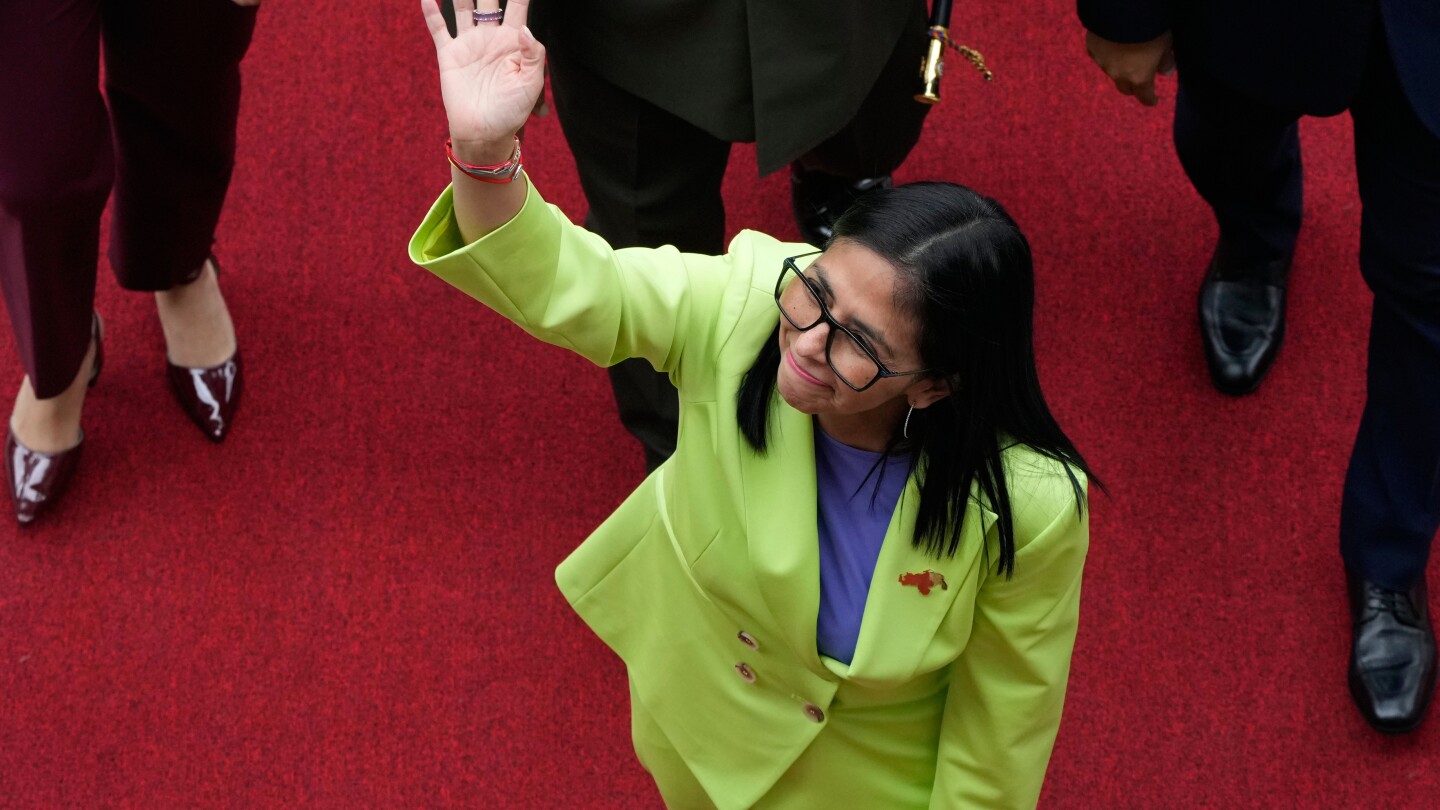
    Venezuela’s government condemned the operation as an ‘imperialist attack,’ urging citizens to mobilize in response. The constitutional succession process remains unclear, with Vice President Delcy Rodríguez theoretically positioned to assume power though no confirmation has emerged.

    International reactions reflect deep divisions, with Russia condemning the action as ‘unacceptable infringement on sovereignty’ and Cuba urging global response to the ‘criminal attack.’ European allies expressed cautious concern, emphasizing respect for international law while acknowledging Maduro’s contested legitimacy. The European Union called for restraint and adherence to UN Charter principles, while British and Spanish leaders emphasized their non-involvement and urged de-escalation.

  • From bus driver to president: Venezuela’s Maduro never escaped his predecessor’s shadow

    From bus driver to president: Venezuela’s Maduro never escaped his predecessor’s shadow

    In a seismic geopolitical development, Venezuelan President Nicolás Maduro was apprehended by U.S. military forces during a targeted operation in Caracas on Saturday. The capture marks a stunning conclusion to months of escalating pressure from the United States against the socialist leader’s regime.

    U.S. President Donald Trump confirmed the operation through an early morning social media announcement, while Venezuelan Vice President Delcy Rodríguez subsequently disclosed that Maduro’s current whereabouts, along with those of his wife Cilia Flores, remain unverified. U.S. Attorney General Pam Bondi indicated that both Maduro and Flores will face charges stemming from a New York indictment.

    Maduro’s extraordinary journey from Caracas bus driver to presidential palace spanned four decades, beginning with ideological training in Cuba in 1986—his only formal education after high school. His political ascent accelerated through his association with the late Hugo Chávez, who personally anointed Maduro as his successor during his final public address in 2013.

    Maduro’s presidency became synonymous with catastrophic economic collapse and democratic backsliding. Under his administration, Venezuela experienced a 71% economic contraction between 2012-2020, hyperinflation exceeding 130,000%, and the mass exodus of over 7.7 million citizens. His rule was characterized by systematic repression, including the imprisonment and torture of political opponents.

    The 2018 presidential election, widely criticized as illegitimate, saw Maduro declared winner amid widespread international condemnation. Subsequent negotiations facilitated by Norwegian diplomats failed to resolve fundamental political divisions, culminating in the 2024 election where opposition candidate Edmundo González allegedly secured a decisive victory according to independent tallies.

    Trump’s return to the White House in January 2025 dramatically altered the strategic calculus, leading to increased military presence in the Caribbean and renewed focus on addressing narco-terrorism concerns. These developments ultimately precipitated the operation that ended Maduro’s controversial twelve-year presidency.

  • Multiple explosions rock Venezuelan capital Caracas

    Multiple explosions rock Venezuelan capital Caracas

    The United States has launched targeted military strikes against Venezuelan defense installations, according to U.S. officials who confirmed the operation to CBS News. The pre-dawn attacks on Saturday morning sent plumes of smoke rising over Caracas and prompted the Venezuelan government to declare a national emergency.

    Multiple explosions rocked the Venezuelan capital, with reports indicating strikes hit strategic military locations including La Carlota airfield and the primary Fuerte Tiuna military base. Social media circulated unverified footage showing explosions and military helicopters operating overhead, while several surrounding communities experienced power outages.

    The Venezuelan government issued an official statement vehemently condemning what it described as “extremely serious military aggression” by the United States, calling on the international community to denounce the actions. The White House and Pentagon have maintained official silence regarding the operations.

    This escalation occurs amid already heightened tensions between Washington and Caracas. President Trump had previously deployed naval forces to the Caribbean and repeatedly suggested potential military intervention in Venezuela. Recent weeks have seen U.S. forces targeting vessels suspected of drug trafficking in the region, including a strike earlier this week on a dock facility allegedly connected to Venezuelan drug operations.

    The political context underscores the confrontation: The U.S. administration considers President Nicolás Maduro’s government illegitimate and has accused him of direct involvement in narcotics trafficking. Meanwhile, Maduro maintains that Washington’s true objective is regime change aimed at controlling Venezuela’s substantial oil reserves, citing recent U.S. seizures of Venezuelan oil tankers as evidence of this motivation.

    The international community now faces a rapidly developing crisis that marks a significant escalation in the long-standing tensions between the two nations.

  • At least 7 explosions and low-flying aircraft are heard in Venezuela’s Caracas

    At least 7 explosions and low-flying aircraft are heard in Venezuela’s Caracas

    CARACAS, Venezuela — The pre-dawn hours of Saturday were shattered by a series of at least seven powerful explosions and the ominous sound of low-flying aircraft over Venezuela’s capital, sending panicked residents into the streets despite the early morning darkness. The mysterious incidents occurred approximately at 2:00 a.m. local time, with the origin and nature of the detonations remaining officially unconfirmed as multiple governments maintained silence.

    The unsettling events unfolded against a backdrop of dramatically escalating tensions between Venezuela and the United States, which has been conducting an extensive military campaign targeting alleged drug-smuggling operations in the region. According to the Trump administration, American forces have executed 35 separate boat strikes since early September, resulting in at least 115 casualties.

    Eyewitness accounts described a scene of chaos and terror. ‘The entire ground shook violently. This is absolutely horrifying. We heard consecutive explosions and aircraft in the distance,’ recounted Carmen Hidalgo, a 21-year-old office worker whose voice trembled as she spoke. She was returning from a birthday party with two relatives when the explosions occurred.

    Remarkably, Venezuelan state television continued regular programming without interruption, airing cultural content about national music and art rather than addressing the explosions. This broadcasting decision raised questions about the government’s response to the incidents.

    The geopolitical context adds layers of complexity to the situation. Just one day prior to the explosions, the Venezuelan government had expressed openness to negotiating an anti-drug trafficking agreement with the United States. However, President Nicolás Maduro simultaneously accused the U.S. of attempting to force regime change in Venezuela to gain access to the country’s substantial oil reserves through a prolonged pressure campaign that began with a massive military deployment to the Caribbean Sea in August.

    The relationship between the nations has further deteriorated following a recent CIA drone strike on Venezuelan soil targeting areas believed to be used by drug cartels—the first known direct U.S. operation on Venezuelan territory. Maduro himself faces narco-terrorism charges in the United States.

    Adding to the economic pressure, the U.S. has implemented sanctions against four Venezuelan oil companies and seized multiple sanctioned oil tankers near Venezuela’s coast, alongside establishing a naval blockade that effectively constricts the country’s economy.

    The American military presence in the region represents the largest in generations, highlighted by the November deployment of the nation’s most advanced aircraft carrier with thousands of additional troops. President Trump has characterized the boat strikes as a necessary escalation in what he describes as an ‘armed conflict’ with drug cartels responsible for funneling narcotics into the United States.

    International attention came from an unexpected source as Iranian state television reported on the Caracas explosions, showcasing images of the Venezuelan capital. The coverage underscored the strategic alliance between Iran and Venezuela, bonded significantly by their shared adversarial relationship with the United States.