标签: South America

南美洲

  • Thirty-two Cubans killed during US attack on Venezuela

    Thirty-two Cubans killed during US attack on Venezuela

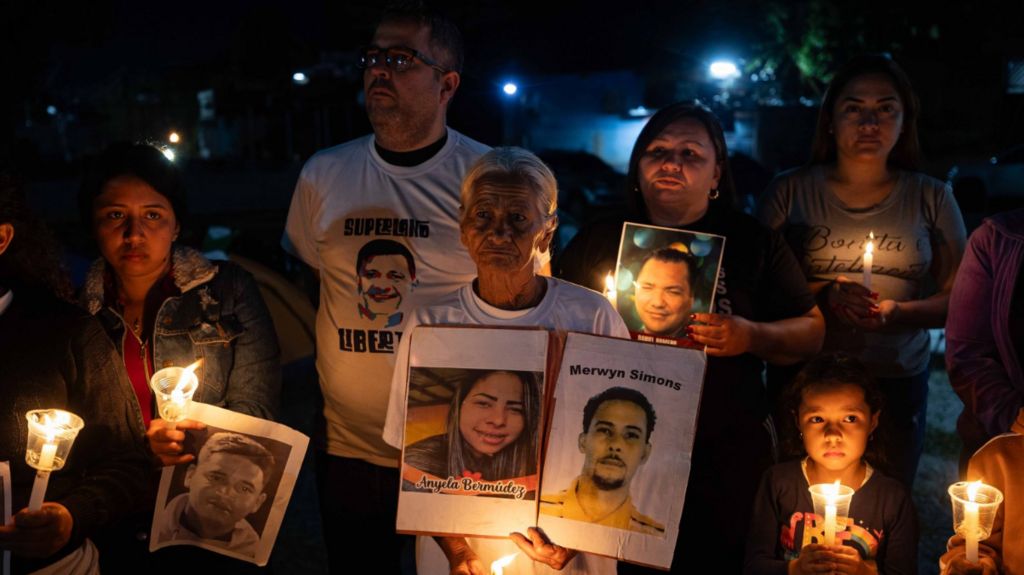
    The Cuban government has confirmed the deaths of 32 nationals during a U.S. military operation targeting Venezuelan leader Nicolás Maduro’s compound in Caracas. According to official statements, the deceased were members of Cuba’s armed forces and intelligence agencies who had been providing security protection to Maduro and his wife at Venezuela’s request. The Cuban presidency described the fatalities as occurring ‘after fierce resistance’ during direct combat with American forces or resulting from aerial bombardments.

    While Venezuela has not released official casualty figures, unnamed sources cited by The New York Times suggest the death toll may reach 80 with numbers potentially rising. The operation, which resulted in Maduro’s capture on Saturday, has triggered two days of national mourning in Cuba and raised questions about potential U.S. actions against other adversarial nations.

    In response to developments, President Donald Trump indicated military action against Cuba would be unnecessary, stating the country appeared ‘ready to fall’ without intervention. Secretary of State Marco Rubio meanwhile characterized Cuba’s leadership as ‘incompetent, senile men’ and suggested government officials in Havana should be concerned.

    This incident occurs against the backdrop of tightened U.S. restrictions on Cuba, with Trump having signed a memorandum in July reversing earlier policies that eased pressure on the Caribbean nation. The current administration has maintained economic practices that specifically target Cuban government, military, and intelligence agencies while strengthening enforcement of travel restrictions for American citizens.

    The longstanding U.S. embargo on Cuba, initially imposed in 1962 and continuously maintained despite United Nations calls for its termination, continues to shape bilateral relations between the two nations.

  • US capture of Maduro divides a changed region, thrilling Trump’s allies and threatening his foes

    US capture of Maduro divides a changed region, thrilling Trump’s allies and threatening his foes

    WASHINGTON — The capture of Venezuelan leader Nicolás Maduro has unveiled a radical transformation in U.S. foreign policy toward Latin America, with President Donald Trump declaring unprecedented American dominance in the Western Hemisphere. The operation, which culminated in Maduro’s perp-walk through DEA headquarters, represents the most aggressive application of what Trump now terms the ‘Donroe Doctrine’—a modern interpretation of the Monroe Doctrine emphasizing overt interventionism.

    This doctrine has been implemented through multifaceted strategies including naval blockades against Venezuelan oil, military strikes against alleged drug traffickers, election meddling in Honduras and Argentina, and extensive use of tariffs and sanctions. The administration’s stated objectives include combating drug trafficking, halting immigration, securing strategic natural resources, and countering Russian and Chinese influence.

    The policy has sharply divided Latin American leaders along ideological lines. Right-wing presidents including Argentina’s Javier Milei, Ecuador’s Daniel Noboa, and Chile’s José Antonio Kast hailed Maduro’s capture as a victory for democracy and regional security. Conversely, left-wing leaders—Brazil’s Lula da Silva, Mexico’s Claudia Sheinbaum, Chile’s Gabriel Boric, and Colombia’s Gustavo Petro—condemned the action as dangerous bullying that violates international law and sovereignty.

    Historical parallels to early 20th-century U.S. interventions have emerged, recalling periods when American troops occupied Central American nations to protect corporate interests and supported repressive military dictatorships during the Cold War. The operation has sparked street protests and uneasy reactions even among some U.S. allies, with El Salvador’s Nayib Bukele remaining uncharacteristically quiet.

    The administration’s broader strategy appears focused on assembling a coalition of ideologically aligned governments across Latin America, leveraging the recent rise of Trump-like leaders who oppose immigration, prioritize security, and reject globalization. Trump explicitly warned uncooperative leaders, suggesting Cuba’s government ‘looks ready to fall,’ criticizing Mexico’s cartel policies, and personally attacking Colombia’s president.

  • Gold price rises after US captures Venezuela’s Maduro

    Gold price rises after US captures Venezuela’s Maduro

    Financial markets witnessed a significant flight to safety as investors reacted to heightened geopolitical uncertainty following the US military operation that resulted in the capture of Venezuelan President Nicolás Maduro. Precious metals emerged as the primary beneficiaries, with gold climbing approximately 1.8% to $4,408 per ounce during Asian trading hours, while silver posted even stronger gains of nearly 3.5%.

    The market movement represents a continuation of gold’s remarkable performance throughout 2025, which marked its strongest annual showing since 1979 with gains exceeding 60%. Despite a minor correction in the final days of December, the precious metal had reached an unprecedented peak of $4,549.71 on December 26th, driven by anticipations of monetary easing, substantial central bank acquisitions, and persistent concerns regarding global instability.

    Contrasting with the precious metals rally, crude oil markets displayed relative stability with minimal price fluctuations. Market participants carefully evaluated the potential implications of Washington’s intervention on global energy supplies. President Donald Trump’s declaration that the US would access Venezuela’s extensive oil reserves and temporarily administer the country’s transition failed to immediately translate into significant oil price movements.

    Industry analysts suggest the operational challenges facing Venezuela’s petroleum infrastructure will likely prevent any substantial near-term impact on global energy markets. According to OCBC Bank investment strategist Vasu Menon, Venezuela’s crude production has been consistently underwhelming for years, currently representing merely 1% of worldwide output, with decades of underinvestment severely degrading extraction capabilities.

    Meanwhile, equity markets across the Asia-Pacific region generally advanced, seemingly unaffected by the Venezuelan developments. Japan’s Nikkei 225 index surged 2.6% on its first trading session of the year, bolstered by newly released data indicating stabilized manufacturing activity in December. Major benchmarks in South Korea, Hong Kong, and mainland China similarly trended upward, reflecting market confidence that the Venezuelan situation would remain geographically contained.

    Market analysts attributed the equity gains to continued optimism regarding artificial intelligence technologies and their flow-on effects from Wall Street’s performance, rather than any perceived economic implications from the Caribbean nation’s political upheaval.

  • Cuba says 32 Cuban officers were killed in US action in Venezuela

    Cuba says 32 Cuban officers were killed in US action in Venezuela

    HAVANA — The Cuban government has officially confirmed the deaths of 32 military and police officers during what it described as a U.S. military operation in Venezuela over the weekend. The announcement, delivered through state television on Sunday evening, marks the first official acknowledgment of significant casualties in an ongoing regional conflict.

    According to the Cuban statement, the officers were deployed on an official mission at the explicit request of Venezuela’s government, a long-standing ally of Cuba. The Caribbean nation has consistently provided military and police support to Caracas for years, though the specific nature of this recent operation remains undisclosed.

    The statement praised the fallen personnel, stating they ‘fulfilled their duty with dignity and heroism’ during what was characterized as ‘fierce resistance in direct combat against the attackers or as a result of the bombings of the facilities.’

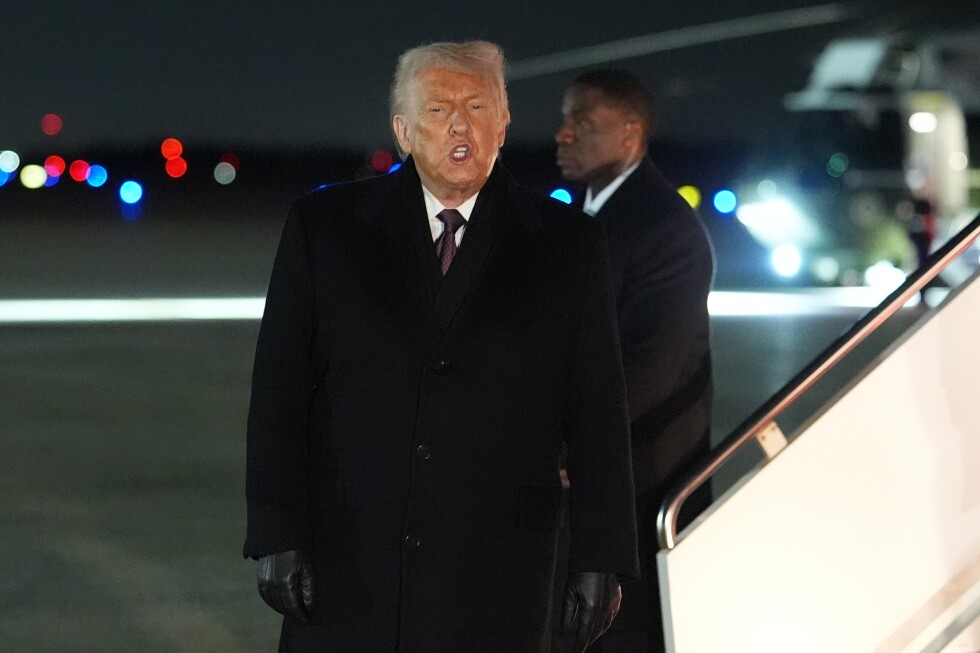
    In response to the incident, U.S. President Donald Trump acknowledged the casualties during remarks to reporters aboard Air Force One on Sunday evening. ‘You know, a lot of Cubans were killed yesterday,’ President Trump stated. ‘There was a lot of death on the other side. No death on our side.’

    The Cuban government has declared two days of national mourning to honor the deceased officers, highlighting the significant impact of the losses on the island nation.

  • Trump warns new Venezuelan leader as Maduro set to appear in court

    Trump warns new Venezuelan leader as Maduro set to appear in court

    Former US President Donald Trump has issued a stark warning to Venezuela’s newly appointed interim leader Delcy Rodríguez, cautioning that she could face consequences “probably bigger than Maduro” if she fails to align with US expectations. The threat came as ousted president Nicolás Maduro, captured in a dramatic US military operation, prepared to face New York court proceedings on drug trafficking and weapons charges.

    The extraordinary capture operation unfolded early Saturday when US special forces stormed Maduro’s compound in Caracas, resulting in the detention and transportation of both Maduro and his wife, Cilia Flores, to American soil. The operation involved strikes on military installations including Fuerte Tiuna, one of Venezuela’s largest military bases, and resulted in significant casualties according to Venezuelan officials.

    US Secretary of State Marco Rubio vigorously defended the operation, characterizing it as a “law enforcement action” rather than an act of war. “We are at war against drug trafficking organizations. That’s not a war against Venezuela,” Rubio emphasized during multiple Sunday news program appearances. He asserted that congressional authorization was unnecessary since the operation involved FBI agents making arrests rather than military invasion.

    The political transition in Venezuela saw Rodríguez sworn in as interim president by the nation’s Supreme Court, with full backing from the military establishment. She is scheduled to be formally inaugurated Monday in Caracas. However, the US maintains it does not recognize the legitimacy of the current regime structure.

    International reaction has been sharply critical, with several nations including Brazil, Chile, Colombia, Mexico, Uruguay and Spain condemning the US military action as “an extremely dangerous precedent for peace and regional security.” They expressed particular concern about external control that threatens regional stability and violates international law.

    Domestically, Democratic lawmakers have denounced the operation as an unauthorized act of war. House Minority Leader Hakeem Jeffries and Senate Minority Leader Chuck Schumer have vowed to support legislation prohibiting further presidential action in Venezuela without congressional approval, arguing that such regime change operations historically cost American lives and treasure.

    The Cuban government, a longstanding socialist ally of Maduro, announced two days of national mourning for 32 “brave Cuban combatants” killed during the operation, further escalating regional tensions surrounding this unprecedented intervention.

  • Surprise interim leader Delcy Rodriguez emerges in Venezuela after Maduro’s capture

    Surprise interim leader Delcy Rodriguez emerges in Venezuela after Maduro’s capture

    MEXICO CITY — Venezuela has entered a period of profound political uncertainty following the capture of President Nicolás Maduro by U.S. military forces. Delcy Rodríguez, Maduro’s vice president since 2018, has assumed interim control of the oil-rich nation amid escalating tensions with Washington.

    Rodríguez’s ascension to power came through a Saturday ruling by Venezuela’s Supreme Court, which declared Maduro’s absence temporary and authorized her takeover. The decision received immediate backing from the country’s military leadership, solidifying her position despite international skepticism.

    In her first televised address as interim leader, Rodríguez struck a defiant tone against the Trump administration, referring to American officials as “extremists” while emphatically stating, “The only president of Venezuela is President Nicolás Maduro.” Her remarks directly contradicted earlier suggestions from Secretary of State Marco Rubio that she might cooperate with U.S. interests.

    The 56-year-old British and French-educated lawyer brings considerable political experience to her new role. As Maduro’s vice president, she oversaw Venezuela’s oil-dependent economy and intelligence services, developing strong relationships with both military leaders and international energy stakeholders. Unlike many in Maduro’s inner circle, Rodríguez has avoided U.S. criminal indictment, though she faced sanctions during Trump’s first term for allegedly undermining Venezuelan democracy.

    Analysts note Rodríguez maintains particularly strong ties with Venezuela’s military establishment, which has historically served as the ultimate arbiter of political disputes. According to Ronal Rodríguez of Rosario University’s Venezuela Observatory, “She has developed very strong ties with elements of the armed forces and has managed to establish lines of dialogue with them, largely on a transactional basis.”

    The constitutional timeline for new elections remains unclear. While the charter typically requires elections within 30 days when a president becomes permanently unavailable, the Supreme Court cited provisions allowing for temporary transfers of power without immediate electoral requirements. This legal interpretation could permit Rodríguez to remain in power for up to six months through National Assembly approval.

    International observers question whether Rodríguez’s强硬 stance against the U.S. represents genuine defiance or strategic positioning. Geoff Ramsey of the Atlantic Council suggested her rhetoric might be an attempt to “save face” within revolutionary circles, noting that Maduro’s capture likely required some level of internal collaboration.

    As Venezuela navigates this political transition, Rodríguez faces the dual challenge of unifying fractious socialist party factions while managing external pressure from a U.S. administration that has threatened “very big price” consequences if she fails to align with American expectations.

  • Maduro’s case will revive a legal debate over immunity for foreign leaders tested in Noriega trial

    Maduro’s case will revive a legal debate over immunity for foreign leaders tested in Noriega trial

    Deposed Venezuelan leader Nicolás Maduro is poised to appear in a New York courtroom Monday, facing U.S. drug trafficking charges in a legal proceeding that echoes the historic prosecution of Panama’s Manuel Noriega 36 years earlier. Maduro’s capture on Saturday—coinciding with the anniversary of Noriega’s removal by U.S. forces—sets the stage for a complex legal battle over sovereign immunity protections.

  • Can Maduro’s trusted lieutenant now work for Trump?

    Can Maduro’s trusted lieutenant now work for Trump?

    Venezuela plunged into a constitutional crisis following the dramatic capture of President Nicolás Maduro by U.S. forces, with conflicting power claims creating international uncertainty. While the Venezuelan Supreme Court declared Vice President Delcy Rodríguez acting president per constitutional protocol, the situation took unexpected turns when U.S. President Donald Trump announced America would “run” Venezuela during transition proceedings.

    The complexity deepened as Trump revealed Secretary of State Marco Rubio had been negotiating with Rodríguez, whom he described as “essentially willing to do what we think is necessary.” This apparent cooperation contrasted sharply with Rodríguez’s subsequent public statements where she denounced Maduro’s capture as “a kidnapping” and vowed Venezuela would “never again be a colony of any empire.

    The political vacuum follows years of disputed leadership. Maduro’s 2024 election victory was widely condemned as rigged, with the Carter Center’s analysis of opposition-obtained voting tallies suggesting opposition candidate Edmundo González had actually won by a landslide. The United States and numerous other nations consequently recognized González as legitimate president-elect, though he and prominent opposition leader María Corina Machado—who won the Nobel Peace Prize for her democratic efforts—were forced into exile and hiding respectively.

    Trump’s dismissal of Machado as lacking “support or respect” to lead surprised observers, as did his administration’s alignment with Maduro’s inner circle. Rodríguez appeared alongside powerful regime figures including her brother Jorge Rodríguez (National Assembly president), Defense Minister Vladimir Padrino, and armed forces commander Domingo Hernández Lárez, suggesting their continued influence.

    Secretary Rubio indicated the U.S. would assess Rodríguez based on actions rather than words, emphasizing retained leverage including oil quarantines. He called for “realism” in expecting delayed elections given Venezuela’s institutional challenges, acknowledging that organizing credible elections would require significant time amid entrenched Maduro loyalists in key institutions.

    The emerging arrangement potentially disappoints opposition supporters who expected immediate power transfer to González and Machado. Rodríguez now faces the formidable challenge of balancing U.S. demands against the expectations of Maduro’s power base, finding herself in an increasingly precarious political position.

  • Who is Cilia Flores, Venezuela’s once-powerful first lady?

    Who is Cilia Flores, Venezuela’s once-powerful first lady?

    In an unprecedented military operation, United States forces have captured Venezuelan President Nicolás Maduro and First Lady Cilia Flores, transporting them to New York to face serious criminal charges. The nighttime raid in Caracas resulted in the detention of both political figures, who now confront allegations spanning drug trafficking and weapons offenses in American courts.

    Cilia Flores, 69, has operated as a central architect of Venezuela’s political landscape for decades. Initially gaining prominence as a defense attorney for Hugo Chávez following his failed 1992 coup attempt, Flores transitioned from legal advocacy to becoming one of Venezuela’s most influential power brokers. Her political trajectory saw her ascend to leadership of Venezuela’s National Assembly in 2006, where she presided over a virtually unilateral parliament for six years as opposition parties boycotted elections they deemed illegitimate.

    Though publicly presenting a family-oriented image through her television program “Con Cilia en Familia” and occasional salsa dancing appearances with her husband, Flores operated as Maduro’s crucial behind-the-scenes adviser. Her strategic guidance proved instrumental in consolidating Maduro’s presidency after Chávez’s death in 2013 and sustaining his politically embattled regime.

    The First Lady’s career has been shadowed by persistent corruption allegations. In 2012, unions accused her of nepotism for influencing the appointment of approximately 40 relatives to government positions. More seriously, her nephews were convicted in US courts in 2015 for attempting to smuggle 800kg of cocaine into the United States—a case that implicated Flores directly in international narcotics operations.

    Recently unsealed court documents allege Flores accepted substantial bribes in 2007 to facilitate meetings between drug traffickers and Venezuelan anti-drug officials. These charges emerge amidst escalating tensions between Washington and Caracas, with the Trump administration implementing fresh sanctions against Flores’ family members last month.

    Flores’ journey from Chávez’s lawyer to Venezuela’s “First Warrior” represents a remarkable political evolution that now reaches its dramatic culmination in a New York courtroom, marking one of the most significant confrontations between the US and Venezuelan leadership in modern history.

  • From Caracas ‘fort’ to New York court: Maduro’s capture in pictures and maps

    From Caracas ‘fort’ to New York court: Maduro’s capture in pictures and maps

    In an unprecedented military operation codenamed “Operation Absolute Resolve,” United States forces successfully captured Venezuelan President Nicolás Maduro and his wife Cilia Flores during a meticulously planned dawn raid on Saturday. The operation, which culminated months of strategic planning, lasted approximately 150 minutes from execution to extraction.

    The assault commenced at approximately 02:00 local time (06:00 GMT) with coordinated airstrikes targeting key military installations in Caracas, including Fuerte Tiuna—Venezuela’s largest military complex and residential compound for high-ranking officials. US forces implemented a citywide power blackout described by former President Donald Trump as “dark and deadly,” effectively disabling Venezuelan air defenses and creating optimal conditions for the insertion of special operations units.

    Elite Delta Force troops penetrated the fortified compound at 02:01 local time, encountering minimal resistance during the apprehension. According to General Dan Caine, the nation’s highest-ranking military officer, the Maduros “gave up” without struggle as they attempted to reach a secured safe room characterized by Trump as a military “fortress” with “very thick, very heavy” steel doors.

    Visual documentation from the operation reveals extensive structural damage at Fuerte Tiuna, with bombed-out buildings and charred vehicles visible throughout the complex. Military helicopters faced anti-aircraft fire during the insertion but sustained no critical damage according to official reports.

    The captured leaders were immediately transported via helicopter to the USS Iwo Jima stationed in the Caribbean, achieving extraction “over the water” by 04:29 local time. Distributed images show Maduro in custody wearing handcuffs, ear protection, and specialized eyewear resembling darkened sunglasses.

    Following initial processing at Guantánamo Bay’s naval facility, the detainees were transferred to Stewart Air National Guard Base in New York before concluding their journey via helicopter to Manhattan. The couple now faces multiple federal charges including conspiracy to commit narco-terrorism, cocaine importation, and weapons violations. They remain held at a New York detention facility adjacent to Federal Bureau of Prisons headquarters under maximum security protocols.

    Attorney General Pam Bondi confirmed the detainees will “face the full wrath of American justice on American soil in American courts” as Venezuela declares a national emergency following the unprecedented cross-border military action.