标签: Oceania

大洋洲

  • Australian by-election a litmus test for right-wing One Nation Party

    Australian by-election a litmus test for right-wing One Nation Party

    Polling stations opened Saturday in the high-stakes Farrer by-election, a contest that could reshape Australian federal politics by delivering right-wing populist party One Nation its first ever elected member of the House of Representatives. The race was called after Sussan Ley, former leader of the conservative opposition Liberal Party, stepped down from the sprawling regional New South Wales seat following her ousting after just nine months in the leadership role. Though the Liberal Party has fielded a candidate to retain the historically conservative-held electorate, recent polling points to a tight, unexpected race between local independent candidate Michelle Milthorpe and One Nation’s nominee David Farley.

    Milthorpe, a local educator, secured second place in the two-candidate preferred count against Ley during the 2025 federal election, where Ley turned in her weakest electoral performance since first capturing the seat in 2001. Under Australia’s preferential voting system, voters rank candidates by preference, and the final result is determined by a head-to-head count after lower-ranked candidates’ preferences are distributed to remaining contenders. Notably, the center-left Labor Party, which holds a commanding majority in the federal parliament, has opted not to contest the by-election, opening a path for neither of the country’s two major political blocs to reach the final two-candidate preferred count — a first in modern Australian federal electoral history.

    The by-election doubles as a critical first electoral test for One Nation, led by founder Pauline Hanson, fresh off the party’s strongest ever showing at the state level. In March’s South Australian state election, One Nation secured the second-largest share of the national vote across the state, a milestone that signaled growing voter appetite for the party’s populist platform. While Hanson has served in the Australian Parliament as a senator since 2016, and briefly held a lower house seat as an independent in the 1990s, One Nation as an organization has never won a federal lower house constituency.

    One Nation’s candidate Farley, former chief executive of major Australian beef producer Australian Agricultural Company, has centered his campaign on growing voter disillusionment with the country’s major political parties. “I’ve lost a bit of faith in the major parties,” Farley said in a campaign video circulated on social media. “They say one thing to your face and then go and do something else in parliament.”

    Stretching across 127,000 square kilometers — an area larger than the entire nation of South Korea — the Farrer electorate covers major regional hubs including Albury, Griffith and Deniliquin, and has been held exclusively by either the Liberal Party or its conservative coalition partner the National Party since its creation. This by-election also marks the first electoral test for the new leadership of both opposition conservative parties: Angus Taylor, who replaced Ley as Liberal leader in February, and Matt Canavan, who took over the National Party leadership from David Littleproud in March. The Liberal-National coalition has faced ongoing internal turmoil and consistently poor polling since suffering a historic landslide defeat in last year’s federal election.

    Voting is scheduled to close at 6 p.m. local time Saturday, 9 a.m. BST, with official projections and results expected to emerge shortly after polls close. While the final outcome will not alter Labor’s governing majority in Canberra, a One Nation victory would mark a seismic shift in Australian conservative politics, reflecting sustained erosion of support for the traditional major parties among regional voters.

  • Sydney’s worst suburbs for hiding fuel prices named and shamed

    Sydney’s worst suburbs for hiding fuel prices named and shamed

    A sweeping compliance inspection of Sydney service stations conducted by New South Wales Fair Trading has laid bare a stark geographic divide in fuel pricing rule adherence, with regulators issuing hundreds of fines to non-compliant operators and pushing for stiffer legal penalties to protect motorists.

    The recent audit, which targeted sites across the Sydney metropolitan area, resulted in more than 245 financial penalties being handed out to petrol station operators found violating pricing transparency rules. Approximately 80% of these penalties stemmed from mismatches between the fuel prices listed on the state government’s FuelCheck platform and the actual charges applied at the pump, a deceptive practice that leaves consumers misled when they plan their fuel purchases.

    The inspection results revealed sharp disparities across different regions of Sydney. In Sydney’s north western suburb of West Ryde, one in three service stations failed to meet compliance standards. In the 2142 postcode zone, which covers the western Sydney communities of Granville, Rosehill, Camellia, Clyde and Holroyd, two out of 12 inspected stations were sanctioned for rule breaches. By contrast, every single one of the 35 service stations surveyed in south western Sydney’s Liverpool, Chipping Norton, Prestons and Mount Pritchard areas passed inspection with full compliance. Neighbouring western Sydney suburbs including Greystanes, Girraween, Pendle Hill and Wentworthville also recorded perfect compliance records across all their petrol outlets.

    The FuelCheck scheme, the state’s official fuel pricing monitoring program, requires all service stations to update and lock in real-time fuel prices to the platform, allowing motorists to compare costs across retailers before they travel to fill up. Consumers are also actively encouraged to report any discrepancies they notice between the advertised price and the price charged at the bowser.

    NSW Fair Trading Commissioner Natasha Mann explained that inspectors have ramped up targeted checks across the entire state to root out non-compliance. “Our inspectors have been working around the clock and in every corner of the state checking compliance in petrol stations to ensure motorists are getting the right price at the pump,” Mann said. “This compliance work helps ensure fuel retailers are doing the right thing and that consumers can rely on accurate pricing information before they get to a petrol station.”

    To strengthen regulators’ ability to penalize repeat and serious offenders, the NSW state government has introduced new legislation to state parliament that will codify the FuelCheck price reporting requirement into law. Under the proposed new rules, deliberate failure to update and report accurate prices to FuelCheck will become a formal criminal offense, with maximum penalties reaching AU$110,000 for serious breaches – a significant increase from current penalty levels.

    Better Regulation and Fair Trading Minister Anoulack Chanthivong echoed the government’s call for active consumer participation in policing fuel pricing, urging motorists to remain vigilant and report any suspected mismatches directly to the FuelCheck program for follow-up by inspectors.

  • War in the Middle East: latest developments

    War in the Middle East: latest developments

    On a day marked by rapidly shifting geopolitical friction across the Middle East, multiple interconnected developments unfolded Friday, amplifying concerns over regional stability and global energy security.

    The most direct military action came from U.S. forces, which confirmed they had disabled two Iran-flagged cargo tankers that attempted to breach an American blockade of Iranian ports, a restriction that has been in place since mid-April. According to a statement posted on social platform X by U.S. Central Command, a Navy F/A-18 Super Hornet struck the vessels with precision munitions targeted at their smokestacks, successfully stopping the non-compliant ships from reaching Iranian territorial waters. This incident brings the total number of vessels forcibly halted by U.S. forces for alleged blockade violations to four.

    In a diplomatic push following the strike, U.S. Secretary of State Marco Rubio called on European NATO allies to take on a larger share of responsibility for securing the Strait of Hormuz, a critical global chokepoint through which roughly 20% of the world’s oil supplies pass. Speaking after a meeting with Italian Prime Minister Giorgia Meloni, Rubio argued that Iranian efforts to assert unilateral control over the international waterway are unacceptable to the global community. He also raised questions about alliance commitments, noting that a core purpose of NATO’s U.S. force deployments in Europe has long been the ability to project power to regional contingencies, and that failure to address current threats requires a re-examination of this arrangement.

    Iran, for its part, has framed its influence over the strait as a major strategic advantage. Mohammad Mokhber, an adviser to Iran’s supreme leader, described control of the Strait of Hormuz as an opportunity as valuable as an atomic bomb, emphasizing that holding sway over a chokepoint that can directly move the global economy represents an unmatched strategic lever for the country.

    Diplomatic efforts to de-escalate tensions are already underway, with Qatar’s prime minister traveling to Washington Friday for talks with U.S. Vice President JD Vance. A source familiar with the closed-door meeting, speaking on condition of anonymity, confirmed that the discussions would center on U.S.-Qatar bilateral relations, the unfolding standoff over Iran, global liquefied natural gas (LNG) market stability, and broader regional security. Qatar has served as a key neutral intermediary between the U.S. and Iran in past diplomatic engagements.

    Alongside the standoff over Hormuz, cross-border violence between Israel and Lebanese militant group Hezbollah continued to flare, despite recent truce efforts. Hezbollah announced Friday that it had launched a missile attack on an Israeli military base located south of Nahariya in northern Israel, saying the strike was carried out in retaliation for recent Israeli attacks on southern Lebanon and the southern suburbs of Beirut. Shortly after the Hezbollah announcement, Lebanon’s civil defence rescue organization confirmed one of its members had been killed in an Israeli airstrike on southern Lebanon, near the village of El Qlaile where video footage shows thick smoke rising from the impact site.

    In another setback for U.S. regional military operations, two anonymous Saudi sources told Agence France-Presse that Riyadh has prohibited the U.S. from using Saudi airspace and military bases for operations aimed at reopening the Strait of Hormuz. The sources clarified, however, that U.S. access to Saudi infrastructure and airspace remains intact for all other military and security purposes.

    The escalating tensions have already rippled into global economic policy, with the European Union announcing new rules Friday to protect airline passengers amid spiking fuel costs driven by Middle East supply fears. The EU made clear that airlines will no longer be allowed to add retroactive fuel surcharges to tickets that have already been purchased by customers. Separately, the EU Aviation Safety Agency (EASA) updated its rules to approve widespread use of Jet A, a U.S.-produced aviation fuel that was previously only permitted in Europe for return flights originating in the United States, a move designed to expand available fuel supplies amid potential shortages.

    Closing out the day’s developments, the United Arab Emirates confirmed that a recent Iranian attack using drones and missiles against the country left three people with moderate injuries, marking the latest direct escalation between Iran and Gulf Arab states.

  • Return of IS-linked families sparks debate in terror-traumatised Australia

    Return of IS-linked families sparks debate in terror-traumatised Australia

    After years of indefinite detention in overcrowded, conflict-ridden camps in northeastern Syria, four Australian women and nine children with ties to the Islamic State (IS) touched down on Australian soil on Thursday, marking the latest flashpoint in a years-long national debate over citizenship, security and legal responsibility. Three of the four women were taken into custody on terrorism-related charges within hours of landing, while the fourth was left to navigate a crush of aggressive media outside the airport, her small children beside her, facing the constant threat of imminent arrest.

    This repatriation comes after half a decade of Australian government resistance to bringing home more than 30 of its citizens trapped in former IS detention camps. When the US-led coalition and local allies defeated IS’s self-declared “caliphate” in 2019, thousands of foreign citizens—including family members of IS fighters—were confined to heavily guarded camps, where they have since endured chronic humanitarian shortages, systemic violence and widespread radicalization risks. Australia is far from unique in its reluctance to repatriate these groups: the United Kingdom and dozens of other nations have similarly refused to take back their citizens, leaving roughly 2,000 people from dozens of countries stranded in the only remaining camp, Al-Roj, including British citizen Shamima Begum, who was stripped of her citizenship after traveling to Syria to marry an IS fighter at 15. Al-Hol, the larger of the two original camps, was closed by Syrian government forces in February, increasing pressure on nations to resolve the fates of remaining detainees.

    Public sentiment in Australia has hardened dramatically against repatriation in the wake of the country’s deadliest terrorist attack in recent history: a December mass shooting at a Bondi Beach Jewish community event that killed 15 people, which authorities say was inspired by IS ideology. Prime Minister Anthony Albanese has repeatedly stated his open contempt for the detained IS-linked families, repeating his well-known mantra: “If you make your bed, you have to lie in it.” Despite this official stance, human rights advocates and community leaders warn that deteriorating security in Al-Roj has made the predicament of the 21 remaining Australian citizens—seven women and 14 children, many of whom were born or raised entirely in the camps—growing more urgent by the day, describing the facility as a “ticking time bomb” for extremism and humanitarian disaster.

    Among those who returned Thursday was 32-year-old Janai Safar, a former nursing student who arrived in Sydney with her 9-year-old son. In 2019, Safar told local media she did not regret traveling to join IS, though she maintains she never participated in training or violence. She now faces formal terrorism charges. Also returning were 33-year-old Zahra Ahmed, her 31-year-old sister Zeinab, and 54-year-old mother Kawsar Abbas, who landed in Melbourne. The three have long claimed they traveled to Syria solely for a family wedding and were trapped after discovering the groom had sworn allegiance to IS, though authorities suspect the family’s patriarch funneled financial support to the group. Zeinab and Kawsar have been charged with crimes against humanity linked to slavery, while Zahra remains under active investigation. This group’s journey to Australia was not straightforward: an initial attempt at repatriation in February was halted within hours over what officials described as “technical issues,” with camp sources indicating Syrian authorities backed out after learning Australia would not welcome the detainees.

    Australian federal authorities confirmed the nine returning children will be placed into community integration and countering violent extremism de-radicalization programs, noting many have never experienced life outside of detention camps. Among the 21 Australians who remain stranded in Al-Roj is 14-year-old Kirsty Rosse-Emile, who was groomed by an older extremist and married him before leaving Australia as a teenager.

    This week’s repatriation is not the first time IS-linked Australians have returned home: the government facilitated the repatriation of a group of orphans in 2019 and 17 additional women and children in 2022, but amid widespread public backlash, officials formally announced they would end all future repatriation efforts, despite two additional women quietly returning in September. Thursday’s arrivals have reignited fierce public division across the country. Many ordinary Australians, including survivors of IS atrocities who fled to Australia for safety, have expressed deep anger over the decision to allow the group to return. “Imagine a Yazidi survivor encountering ISIS brides here,” Sami, a refugee who escaped IS atrocities, told public broadcaster SBS. Speaking to the BBC at Melbourne Airport, local resident Peter Cockburn summed up the views of many opponents: “They made their choice to go over there and be with their terrorist husbands, so let them stay there. It’s a disgrace that both governments, state and federal, are letting them come back.”

    But advocates and interfaith leaders argue Australia has a legal and moral obligation to repatriate its citizens, particularly children who bear no responsibility for the actions of their family members. Jamal Rifi, a prominent Sydney doctor who became a public hero for his interfaith work and public health advocacy, has spent years supporting the detained families, providing remote health care and helping the group secure emergency travel documents to return home. Rifi argues that repatriation and prosecution within Australia’s legal system makes the country safer than leaving detainees to radicalize in Syrian camps. “If those women have done anything wrong by our legal system… if the prime minister wants to ‘throw the book’ at them, let him throw the book. We’re not going to stop him. But while they are staying in Syria, he can’t throw anything at them, except words. We believe those children should not continue to pay the heavy price for the sins of their fathers and mothers… It’s not what we understand of Australian values,” Rifi told the BBC in February. For his work, Rifi has gone from celebrated public figure to a target of political backlash, with the federal opposition even proposing legislation that would criminalize his support for the families.

    Other legal and community leaders echo Rifi’s argument, noting that all Australian citizens hold a legal right to return to their home country, and that bowing to public pressure to restrict that right sets a dangerous precedent. “Once politicians start… deciding how citizens should be treated, what right citizens should have, that is a dangerous and slippery slope,” said Jana Fevaro, who works with the Asylum Seeker Resource Centre. Aftab Malik, Australia’s special envoy to combat Islamophobia, acknowledged that public fear and anger is “entirely understandable” and that the repatriation has placed the Australian Muslim community in a uniquely difficult position, but added that the rule of law must take precedence over public anger, calling for cooler heads in the national debate.

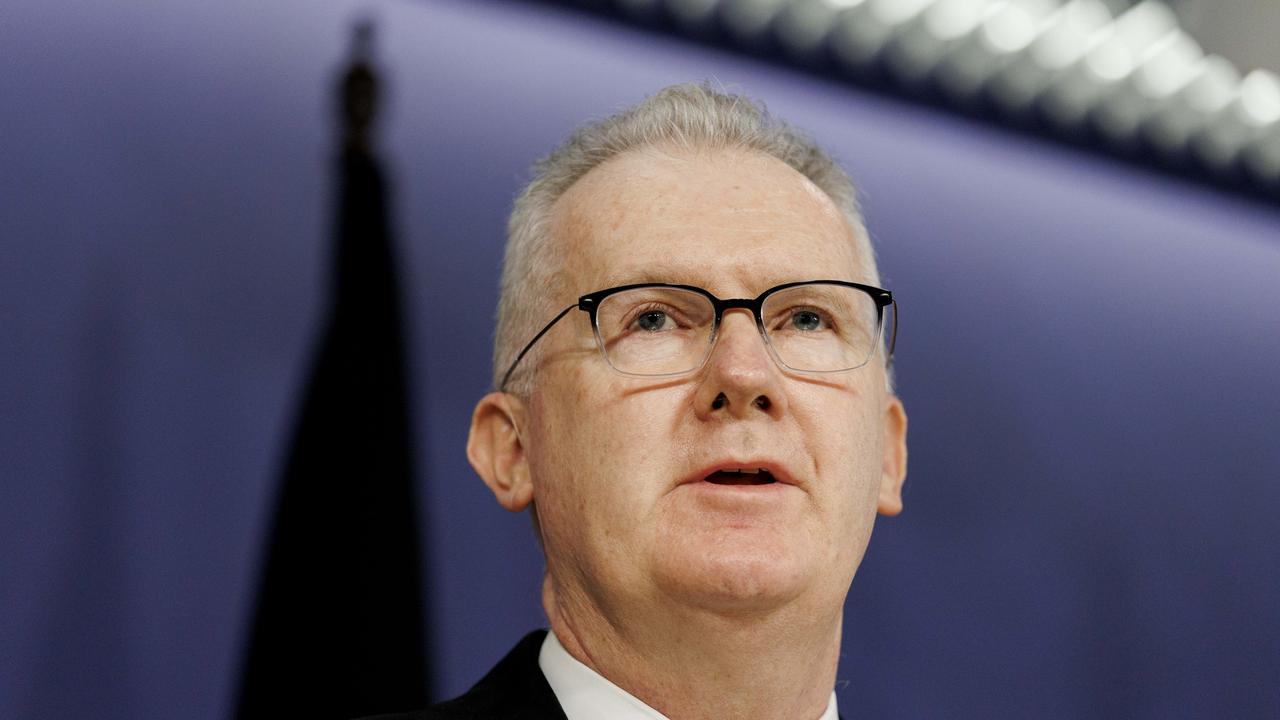
    Though the ruling Labor government faces intense criticism from opposition parties who have demanded officials block all future arrivals at any cost, Home Affairs Minister Tony Burke noted that the government has little legal power to stop citizens from returning. Burke confirmed that the government did not assist this group in returning and will not assist future repatriations, but added that there are “very serious limits” on what can be done to block Australian citizens from entering the country. The legal threshold to bar a citizen from entry on national security grounds is extremely high, and only one unnamed woman from the larger group of remaining detainees has met that standard, Burke explained.

    Rodger Shanahan, a Middle East expert at the Lowy Institute, noted that the issue has become far more politically volatile in the wake of the December Bondi Beach attack, arguing that if the government had resolved the repatriation issue years earlier, public backlash would have long faded. For advocates who have spent years fighting to bring all Australian detainees home, Thursday’s arrivals brought only temporary relief. 21 citizens remain trapped in Al-Roj, with conditions growing so desperate that some mothers have offered to send their children home alone—an outcome Rifi calls unthinkable. Rifi says his current priority is correcting widespread misinformation about the detained group to win over public opinion, noting that leaving detainees in the camps for another decade will only worsen risks of radicalization and mental health harm. “If you bring them right now, it’s easier to rehabilitate. It is easier to educate. And if there is any danger of radicalisation, it’s easier to de-radicalise,” he said.

  • US fire on Iran tankers sparks reprisals as deal hangs in balance

    US fire on Iran tankers sparks reprisals as deal hangs in balance

    Tensions surged once again across the Middle East on Friday, after a U.S. fighter jet struck two Iranian-flagged tankers in the Gulf of Oman to enforce a port blockade, triggering immediate Iranian retaliation and throwing a already shaky truce into deep jeopardy. This new outbreak of violence comes as Tehran weighs a latest U.S. negotiation proposal aimed at ending the 10-week-old conflict that began with joint U.S.-Israeli strikes on Iran.

    According to U.S. Central Command, an F/A-18 Super Hornet deployed precision munitions against the two vessels near the Gulf of Oman, the critical maritime gateway to the Strait of Hormuz, to stop the ships from reaching Iranian territorial waters. A senior Iranian military official quickly confirmed retaliatory action had been taken, telling local media that the country’s navy had launched strikes in response to what it called “a ceasefire violation and American terrorism”. The official added that after a brief exchange of fire, active clashes had ceased as of Friday afternoon.

    This latest confrontation follows an overnight flare-up in the Strait of Hormuz, a waterway that carries roughly a fifth of the world’s daily oil consumption, whose strategic importance has been underscored by senior Iranian officials. Mohammad Mokhber, an adviser to Iran’s Supreme Leader, recently compared controlling influence over the strait to holding “an atomic bomb”, noting that the ability to shape global energy markets through policy in the strait represents an unparalleled strategic opportunity that Tehran will never relinquish. This week, Tehran established a new regulatory body to oversee vessel transits through the strait and collect transit tolls, according to shipping industry outlet Lloyd’s List.

    Washington delivered its latest settlement proposal to Tehran via Pakistani mediators this week, which would extend the current Gulf truce to create space for negotiations on a permanent end to the conflict that began when U.S. and Israeli forces launched strikes on Iran on February 28. Since the outbreak of war, Iran effectively closed the Strait of Hormuz, triggering chaos in global energy markets and pushing crude oil prices sharply upward, which prompted the U.S. to impose a counter-blockade on Iranian ports.

    On Friday, U.S. Secretary of State Marco Rubio, speaking during an official visit to Rome, reiterated that Iranian control over the strait is “unacceptable” and said Washington was awaiting Tehran’s official response to the proposal by the end of the day. “I hope it’s a serious offer, I really do,” Rubio told reporters. Iranian foreign ministry spokesman Esmaeil Baqaei told Iran’s ISNA news agency Friday that the proposal remains “under review, and once a final decision is reached, it will certainly be announced”.

    The violence follows a previous clash Thursday night, when U.S. Central Command said Iran launched missiles, drones and small attack craft against three U.S. warships transiting the strait. U.S. officials reported no American vessels were hit, and said U.S. forces retaliated against Iranian land bases. Iran’s Khatam al-Anbiya Central Military Command pushed back on the U.S. account, saying the clash began when U.S. vessels targeted an Iranian tanker heading toward the strait, and accused American forces of striking civilian areas. U.S. President Donald Trump told reporters Thursday the truce remained in effect despite the clash, saying “Yeah, it is. They trifled with us today. We blew them away.”

    Iran has accused regional U.S. allies of cooperating in the recent strikes, though it has not named specific countries. The United Arab Emirates announced Friday it had intercepted a barrage of Iranian drones and missiles that left three people wounded in UAE territory. Earlier this week, U.S. President Donald Trump first announced a large-scale U.S. naval operation to reopen the strait to commercial shipping, then reversed course just two days later to resume diplomatic efforts. Multiple Saudi sources told Agence France-Presse Friday that Riyadh has rejected U.S. requests to use Saudi military bases and airspace for the aborted Hormuz operation, with one source noting the kingdom “felt it would just escalate the situation and would not work”.

    Beyond the Gulf, the parallel ceasefire between Israel and Iran-backed Hezbollah in Lebanon also came under severe strain Friday. Hezbollah announced it had launched a missile strike against an Israeli military base, in retaliation for an Israeli strike in Beirut that killed a top Hezbollah commander this week, as well as ongoing attacks on southern Lebanese villages. The Israeli military confirmed air raid sirens activated across multiple northern Israeli cities Friday, and Hezbollah also reported additional Israeli strikes on its positions in southern Lebanon.

    Israeli forces have continued targeted strikes against Hezbollah despite the ceasefire, and Wednesday carried out its first attack on Beirut’s southern suburbs in a month, confirming it killed a senior Hezbollah commander. Fresh Israeli strikes in southern Lebanon’s Tyre district Friday killed four people, Lebanon’s health ministry confirmed, and Lebanon’s state-run National News Agency reported a wave of attacks across multiple areas of southern Lebanon. This new round of violence comes ahead of scheduled direct negotiations between Lebanon and Israel in Washington next week, talks that Hezbollah has vehemently opposed. Israel and Lebanon have remained officially in a state of war since 1948.

  • Is there anybody out there? Pentagon releases secret UFO files

    Is there anybody out there? Pentagon releases secret UFO files

    In a long-awaited move that has reignited global public curiosity about potential extraterrestrial life, the U.S. Pentagon released its first collection of once-classified documents detailing hundreds of reported unidentified flying object (UFO) sightings on Friday. The batch of files, which draws records from multiple U.S. agencies including the Federal Bureau of Investigation, the State Department, NASA and the Defense Department itself, includes decades-old reports of flying saucers, mysterious airborne discs, and even a recent glowing orb encounter compared to the iconic ‘Eye of Sauron’ from *The Lord of the Rings*.

    Public and official attention toward Unidentified Anomalous Phenomena (UAP, the Pentagon’s official term for UFOs) has surged in recent years. Beyond public fascination, U.S. defense officials have raised serious national security concerns, noting that many unexplained aerial sightings could stem from advanced secret military technologies being tested by U.S. geopolitical adversaries.

    In an official statement announcing the release, Defense Secretary Pete Hegseth emphasized the urgency of transparency, noting that decades of classification had fueled widespread public speculation that the public deserved to evaluate firsthand. ‘These files, hidden behind classifications, have long fueled justified speculation — and it’s time the American people see it for themselves,’ Hegseth said.

    In total, more than 160 declassified files were made accessible to the public via the Defense Department’s official website. The records stretch back nearly 80 years: one of the oldest entries, dated December 1947, compiles multiple independent reports of ‘flying discs’ documented by U.S. military officials. A 1948 top-secret U.S. Air Force intelligence report echoed persistent official concern over the recurring sightings, noting that the consistent reports from credible observers kept the issue a top priority for Air Material Command headquarters.

    Alongside the mid-20th century documents, the release also includes recently compiled reports from 2023. One file summarizes seven separate accounts from federal government employees of unexplained anomalous phenomena across U.S. airspace. The Pentagon’s All-domain Anomaly Resolution Office (AARO), the body tasked with investigating UAP encounters, labeled this collection of accounts ‘among the most compelling’ in its entire active database, citing the professional credibility of the witnesses and the unusual nature of the events they described.

    One of the most striking 2023 accounts comes from three independent teams of federal law enforcement special agents, all of whom separately reported seeing large orange orbs in the sky that launched or emitted smaller, red glowing orbs. In a separate incident, two federal special agents encountered a glowing orange object perched on the edge of a rock pinnacle. The witnesses drew a sketch of the object, and described it as nearly identical to the Eye of Sauron from J.R.R. Tolkien’s fantasy franchise, minus the iconic central pupil.

    The release of the files follows an executive order from President Donald Trump issued in February 2025, which directed all U.S. federal agencies to begin the process of identifying and declassifying all government-held records related to UFOs and potential extraterrestrial activity. Trump justified the order by pointing to overwhelming public interest in the topic.

    When announcing the order, Trump drew controversy by accusing his Democratic predecessor, Barack Obama, of improperly disclosing classified information during a viral podcast appearance. In that podcast, Obama had addressed widespread rumors surrounding Area 51, the highly secretive Nevada military facility at the center of decades of UFO conspiracy theories. Obama stated: ‘They’re real, but I haven’t seen them and they’re not being kept in… Area 51.’

    Trump responded to the remarks at the time by claiming Obama had leaked information he was not authorized to share, while adding that he remained uncertain about the existence of extraterrestrial life: ‘I don’t know if they are real or not.’

    To date, no conclusive empirical evidence of intelligent extraterrestrial life visiting Earth has been presented by the U.S. government. In a March 2024 report, the Pentagon confirmed that it has found no conclusive evidence linking reported UAP sightings to alien technology. The report noted that the vast majority of unexplained encounters ultimately are identified as ordinary objects and activity, including weather balloons, reconnaissance aircraft, orbiting satellites, and natural atmospheric phenomena.

  • War in the Middle East: latest developments

    War in the Middle East: latest developments

    A day of rapidly shifting developments across the Middle East on Friday left regional security hanging in the balance, with armed clashes between U.S. and Iranian forces, cross-border attacks between Hezbollah and Israel, and diplomatic friction roiling already fragile relations between key global and regional players.

    The first major development broke when U.S. Central Command announced via a social media post on X, accompanied by footage of the operation, that American military forces had fired on and disabled two Iranian-flagged oil tankers that it said attempted to breach a U.S.-led maritime blockade imposed on Iranian ports since April 13. The attack, carried out by a U.S. Navy F/A-18 Super Hornet, used precision munitions targeted at the vessels’ smokestacks to stop them from entering Iranian territorial waters. This operation marks the fourth time the U.S. has forcibly stopped ships it accuses of violating the blockade, following the seizure of the Iran-flagged tanker Herby by the U.S. destroyer USS Rafael Peralta just 11 days earlier.

    Iranian state media quickly pushed back on the U.S. account, confirming fresh armed confrontations in the strategic Strait of Hormuz. Fars News Agency reported that sporadic clashes between Iranian armed forces and U.S. naval vessels had been ongoing for more than an hour on Friday, following a major flare-up overnight Thursday. An unnamed Iranian official added that overnight U.S. strikes on shipping near the strait hit an Iranian cargo vessel, leaving five crew members missing and 10 others wounded.

    Diplomatically, the U.S. remained on standby Friday for Iran’s response to a latest U.S.-proposed peace deal, a development that comes after both sides traded blame for the overnight clash that sent global markets into turbulence and renewed widespread fears that the region could slide back into full-scale open conflict. U.S. Secretary of State Marco Rubio reaffirmed Washington’s hardline position ahead of Iran’s expected response, stressing that Iran has no right to claim control over the Strait of Hormuz, a critical global chokepoint for 20% of the world’s daily oil trade. “Iran now claims that they own, that they have a right to control, an international waterway… That’s an unacceptable thing that they’re trying to normalise,” Rubio told reporters Friday.

    Amid the U.S.-Iran standoff, the long-running Israeli-Lebanese border front also flared back to life, just weeks after a tentative truce went into effect. The Lebanese armed group Hezbollah announced it had launched a barrage of missiles at an Israeli military base south of the coastal city of Nahariya in northern Israel. The strike was framed as retaliation for recent Israeli attacks on southern Lebanon and the southern suburbs of Beirut. The Israeli military confirmed that air raid sirens activated across multiple northern Israeli communities shortly before Hezbollah’s statement. Separately, Lebanon’s civil defence rescue organisation confirmed that an Israeli airstrike on southern Lebanon killed one of its personnel, raising tensions further along the volatile border.

    Diplomatic friction also emerged between the U.S. and its long-time regional partner Saudi Arabia, according to two anonymous Saudi sources speaking exclusively to Agence France-Presse. The sources confirmed that Riyadh has barred the U.S. from using Saudi airspace and military bases on Saudi territory for any operations aimed at reopening the Strait of Hormuz. The clarification notes that this restriction applies only to operations targeting the current standoff with Iran, and that the U.S. will retain access to Saudi infrastructure for all other pre-planned activities. Saudi Arabia has repeatedly stated publicly that it will never allow its territory or airspace to be used for offensive operations against Iran, aligning with this new restriction.

    The escalating conflict has already sparked ripple effects across global energy and transportation sectors. On Friday, the European Union moved to crack down on exploitative airline pricing amid spiking aviation fuel costs tied to Middle East war supply risks, banning carriers from adding last-minute fuel surcharges to tickets that customers have already purchased. Separately, the European Union Aviation Safety Agency (EASA) issued new guidance clearing the way for expanded use of U.S.-produced Jet A aviation fuel across European airports. Currently, the fuel is only permitted for use by flights returning to the U.S. from European hubs. EASA’s new guidance concludes that widespread adoption of Jet A in Europe would not create major safety risks so long as the transition is properly managed, a move intended to head off potential fuel shortages amid ongoing supply disruptions.

    Another major escalation came when the United Arab Emirates confirmed that Iranian forces launched a combined missile and drone attack on Emirati territory Friday. The UAE’s Ministry of Defence wrote in a post on X that the country’s air defence systems successfully intercepted two ballistic missiles and three unmanned aerial vehicles launched from Iran, but the attack still left three people with moderate injuries.

    In a further sign of Iran’s plans to assert control over the strategic waterway, a leading international shipping journal reported Friday that Tehran has established a new government agency tasked with approving all vessel transits through the Strait of Hormuz and collecting transit tolls from passing ships. The move comes as Washington continues to push for a diplomatic deal to reopen the strait, which Iran has closed to commercial shipping in recent weeks amid the escalating standoff.

  • ‘Blessed’ Leo marks one year as pope with southern Italy visit

    ‘Blessed’ Leo marks one year as pope with southern Italy visit

    One year to the day after his historic election as the first American pontiff to lead the global Catholic Church, Pope Leo XIV traveled to southern Italy’s Pompeii on Friday to mark the milestone, describing himself as “blessed” amid weeks of public friction with the White House.

    The 70-year-old Pope marked the May 8, 2025 anniversary with a visit to the Sanctuary of the Virgin of the Rosary of Pompeii, a religious site founded by a former Satanic priest that held special personal meaning for Leo: he first referenced the sanctuary in his inaugural address from St. Peter’s Basilica balcony on the day of his election. The site sits in the shadow of Mount Vesuvius, near the iconic ruins of the ancient Roman city destroyed by the volcano’s eruption centuries ago.

    Arriving via white helicopter to the ancient southern Italian city, Pope Leo was greeted by roaring shouts of “the pope has arrived!” from thousands of pilgrims gathered in the main city square. Inside the sanctuary, he addressed a crowd of more than 2,000 faithful, which included 400 sick and disabled worshippers. “What a beautiful day, so many blessings. I feel the most blessed for being able to come here to the sanctuary… on this anniversary,” he told the assembled gathering.

    The pastoral trip came just one day after Pope Leo held a long-awaited audience with U.S. Secretary of State Marco Rubio, a meeting arranged to de-escalate tensions that erupted after U.S. President Donald Trump launched scathing public criticism of the pontiff’s outspoken anti-war stance. In the wake of Trump’s attacks, Pope Leo stood firm, saying he held a “moral duty” to speak out against conflict, and reiterated this position ahead of the Pompeii visit, noting “The Church’s mission is to preach the Gospel and to preach peace.”

    Following the meeting, Rubio confirmed the discussion had been productive, telling reporters “It’s important to share our points of view and an understanding of where we’re coming from.” The Pope’s measured response to Trump’s criticism won praise from both lay worshippers and Italian political leaders. Mariella Annunziata, a 52-year-old faithful in attendance at the Pompeii event, told reporters the pope had responded “in an elegant way” to the attacks, adding “He did not give in to provocation.”

    Italian Prime Minister Giorgia Meloni, who also drew criticism from Trump after defending the Pope’s right to speak out on peace issues, issued a public tribute to the leader of the world’s 1.4 billion Catholics. Writing on X, she noted: “In a complex and highly uncertain time, his voice is a point of reference on a global level — for Christians but not only.”

    After arriving in Pompeii, Pope Leo traveled through the packed square in his popemobile, with crowds leaning out of building windows and gathering on balconies to catch a glimpse of the pontiff. Dressed in a traditional red mozzetta short cape over his white papal robes, he greeted an estimated 20,000 people gathered outside the basilica with a cheerful “Good morning Pompeii!” before entering the sanctuary.

    During an outdoor mass held following his tour, the Pope returned to his core anti-war message, telling attendees “We cannot resign ourselves to the images of death that we see on the news every day”. He also prayed for God to “enlighten all those who bear special responsibilities of governance” and called on global leaders to make a “renewed commitment” to end all armed conflicts around the world.

    For many pilgrims in attendance, the anniversary visit was a historic occasion. Tommaso Del Sorbo, a 32-year-old local who brought his small poodle Giorgio to the mass, said “It’s a wonderful feeling because it’s not every day that we have the pope here among us, especially one year after his election.” Sixty-eight-year-old Salvatore Sica, who traveled to Pompeii from nearby Naples, offered a measured take on the new pontiff, noting his reserved leadership style contrasts sharply with that of the late Pope Francis, the Argentine pontiff who died in April 2024 and was widely beloved for his warm, spontaneous approach. “I’m curious to see the new pope… He’s not like Francis, who was one of the family, like a brother or a father,” Sica said. “He preaches peace but I see him as distant from the people. But he is a good pope.”

    The one-day southern Italy trip is the first of a series of short pastoral visits the Vatican has planned for Italy this summer, coming two weeks after the Pope completed a four-nation tour of Africa. After wrapping up his events in Pompeii, the Pope traveled on to Naples, where he venerated the relics of San Gennaro, the city’s patron saint, and greeted crowds in the iconic Piazza del Plebiscito. In a speech to Naples residents, he praised the city as a “pearl of the Mediterranean” while also drawing attention to its widespread economic hardship and “multiple faces of poverty.”

  • ‘Scapegoating’: Iran’s Bahais feel brunt of crackdown

    ‘Scapegoating’: Iran’s Bahais feel brunt of crackdown

    When Iranian security agents arrived at Peyvand Naimi’s workplace in Kerman on January 8, the 30-year-old member of Iran’s persecuted Bahai religious community had no idea what horrors awaited him behind bars. Accused of involvement in the killing of three Basij militia members the previous night, Naimi’s case already falls apart on basic timeline: he was taken into custody that afternoon, hours before the attack he is alleged to have carried out.

    Decades of systematic discrimination had already closed doors for Naimi: barred from university and competitive swimming teams despite his natural talent for the sport, he had long adapted to life as a target of state-sanctioned prejudice because of his faith. Today, he is one of at least 77 Bahais arrested across Iran since nationwide anti-government protests erupted in January, in what community leaders describe as the harshest wave of repression against the group since the immediate aftermath of the 1979 Islamic Revolution.

    Originating in 19th-century Persia, the Bahai Faith is the largest non-Muslim religious minority in Iran, with an estimated 300,000 followers nationwide. The Islamic republic has never formally recognized the faith, branding its adherents as heretics and repeatedly leveling unsubstantiated accusations that they act as Israeli spies – a baseless claim rooted in the location of the faith’s global spiritual center in Haifa, Israel, which was established decades before the founding of the modern Israeli state. Community advocates say this scapegoating follows a predictable pattern: whenever Iran faces internal unrest or external regional tensions, authorities turn to blaming Bahais to deflect public anger.

    “This is an escalation against the Bahai that we have not witnessed in decades,” Simin Fahandej, the Bahai International Community (BIC) representative to the United Nations, told AFP in an interview. Fahandej confirmed that arrests have continued steadily through the ongoing Israel-Hamas war and intensified sharply after the 12-day Iran-Israel conflict in June 2025. What makes this crackdown different from past waves of repression, she explained, is the state’s deliberate use of tortured, forced confessions broadcast on state media to spread hate speech and legitimize further persecution of the community.

    Amnesty International has corroborated these accounts, confirming that a coordinated state-led campaign of incitement, disinformation, discrimination and violence has targeted Bahais since the June 2025 cross-border war, with repeated false claims that the community serves as Israeli spies and collaborators.

    For Naimi and other detainees, the abuse in custody has been brutal. According to his close relative, who spoke to AFP on condition of anonymity out of fear for family safety inside Iran, Naimi was beaten repeatedly over five days, endured two mock executions with his hands and feet bound, was tied to a wall for extended periods, deprived of food, and forced to appear in a televised coerced confession. During a brief, monitored phone call to his parents, he told them, “If they execute me do not be sad, my soul will be free of the cage of my body.” Later, during a family visit, he reaffirmed his innocence: “I have done nothing wrong, I have not committed any crime and I will not confess.” As of yet, Naimi has not been formally charged or granted a trial.

    Naimi’s 29-year-old cousin Borna was arrested in early March and has faced identical abuse, including at least two mock executions and electric shocks that left severe burns on his feet, BIC reports confirm.

    The crackdown has swept up Bahai communities across the country, from southeastern Kerman province to the southern city of Shiraz. Roya Basiri, a Canadian resident whose brother, sister-in-law, and 25-year-old sister-in-law Mahsa Sotoudeh were all arrested in late March and early April, described the arbitrary nature of the raids. When Revolutionary Guards agents arrived at Mahsa’s family home and demanded to see an arrest warrant, Basiri told AFP, agents responded bluntly: “We are the warrant.” The agents searched the home, seized all electronic devices, then lured Mahsa back to the house by using her mother’s phone, arresting her at the door in front of her distraught parents. While Basiri’s brother has since been released on bail, Mahsa and Mandana Sotoudeh remain in detention.

    In late April, three Bahai women – one of whom is pregnant – from the southeastern town of Rafsanjan were ordered to begin serving existing prison sentences on vague charges of spreading “propaganda” against the Iranian government. Another Bahai detainee, 30-year-old Venus Hosseininejad, who was arrested in January in Kerman and forced to give a televised false confession, was recently released on bail; while she still faces pending charges, BIC confirmed she is not currently at risk of execution, despite recent claims made by former U.S. president Donald Trump on social media.

    Thirteen men already have been executed across Iran on charges linked to the January protests, a wave of punishment that human rights activists say is designed to instill mass fear amid rising tensions with the United States and Israel. For Iran’s Bahai community, the current crackdown represents a dangerous acceleration of a decades-long campaign of persecution, with community members once again being made to pay the price for state instability, advocates say.

  • WHO says hantavirus risk low after flight attendant tests negative

    WHO says hantavirus risk low after flight attendant tests negative

    On Friday, the World Health Organization moved to ease global anxiety over a rare hantavirus outbreak aboard the Dutch-flagged cruise ship MV Hondius, confirming that the general public faces only minimal risk of transmission even as multiple countries finalized plans to repatriate the vessel’s 150 trapped passengers and crew.

    Three passengers on the Atlantic cruise have already died from the infection: a Dutch married couple and a German national. While the Andes virus, the only strain of hantavirus capable of limited person-to-person spread, has been confirmed among positive cases, WHO officials emphasized that the pathogen is far less transmissible than common respiratory viruses such as COVID-19.

    “This is a dangerous virus, but only to the person who’s really infected, and the risk to the general population remains absolutely low,” WHO spokesman Christian Lindmeier told reporters Friday. He added that emerging data from the outbreak has shown even cabin sharers have avoided transmission in multiple cases, a pattern that suggests the virus does not spread easily between people. “That shows you again, luckily, apparently, the virus is not that contagious that it easily jumps from person to person,” Lindmeier said.

    As of Friday, the WHO recorded five confirmed cases and three suspected cases linked to the ship, with no active suspected infections remaining on board. One reassuring development came from contact tracing efforts launched after an infected passenger disembarked early: a KLM flight attendant who had been exposed to the infected passenger and developed mild symptoms tested negative for hantavirus, a result Lindmeier called “good news.”

    The outbreak unfolded after the MV Hondius, a vessel often used for polar expeditions, departed Ushuaia, Argentina on April 1 for a transatlantic cruise bound for Cape Verde. The first fatality and 30 other passengers disembarked at the remote British overseas territory of Saint Helena on April 24, with a connecting flight departing for Johannesburg the following day, triggering a worldwide contact tracing operation. The first fatality’s wife, who was removed from a Johannesburg-to-Amsterdam KLM flight before takeoff, later died in a South African hospital.

    Three early cases, including two crew members who later tested positive, were evacuated from Cape Verde to the Netherlands for treatment. The ship has since sailed for the Spanish Canary Island of Tenerife, where it is expected to arrive early Sunday. Kasem Ibn Hattuta, a YouTuber traveling on the vessel, said passengers have maintained calm after medical personnel boarded to oversee the journey. “We finally left Cape Verde which was a relief for everyone on board, specially knowing that our sick colleagues are finally getting the medical care they need,” he said in a statement. “Everyone is keeping high spirit, people are smiling and taking the situation calmly,” adding that all passengers follow indoor masking and social distancing protocols.

    Spanish authorities have confirmed the ship will anchor off the coast of Tenerife rather than docking at port, and all passengers will be ferried to the island’s airport for repatriation flights organized by their home countries. The United Kingdom has chartered a dedicated flight to repatriate its citizens, with the UK Health Security Agency confirming strict infection control measures will be enforced at every step of the process. British health officials also reported a suspected case on Tristan da Cunha, one of the world’s most remote inhabited islands with a population of roughly 250, which the ship visited during its voyage. U.S. President Donald Trump told reporters Thursday he had been briefed on the outbreak and added, “It’s very much, we hope, under control.”