
A shocking homicide investigation in Thailand has resulted in murder charges against an Australian man, following the grim discovery of a 17-year-old Thai girl’s remains concealed inside a suitcase. The case, which has drawn cross-border attention, unfolded after authorities located the teenager’s body, launching an immediate probe that led to the identification and arrest of the foreign suspect. Law enforcement officials have not yet released additional details about the motive behind the killing, the exact location where the suitcase was found, or the circumstances of the victim’s death, as the investigation remains ongoing. The incident has sparked conversations about cross-border crime and traveller safety in the popular Southeast Asian nation, as legal proceedings prepare to move forward against the accused Australian national.
标签: Oceania
大洋洲
-

Australian man charged with murder after dead girl found in suitcase in Thailand
A chilling homicide case has sent shockwaves across Thailand, after authorities discovered the body of a 17-year-old Thai national stuffed inside an abandoned suitcase, and arrested an Australian man who was attempting to flee the country just hours after the victim was reported missing.
Local law enforcement in the popular coastal resort city of Pattaya confirmed the details of the fast-moving investigation, which unfolded over less than 12 hours on Friday and Saturday. The victim, identified by local media as 17-year-old Tunchanok Donhomla, was first registered as a missing person at 5 p.m. local time on Friday, according to official police records.
Investigators immediately began reviewing closed-circuit security camera footage from the area, and the footage revealed a key sequence of events linking the suspect, identified as Simon Peter Carman, to the disappearance. According to police statements, the footage captured Carman entering a local condominium alongside Tunchanok, before exiting the building alone roughly an hour later. When he left, officers confirmed, Carman was dragging a large hard-shell suitcase behind him. He then loaded the suitcase onto the back of a motorbike and drove in the direction of a nearby unused railway line, where the bag was ultimately abandoned.
Acting on the intelligence gathered from the CCTV footage, Thai police tracked Carman to Suvarnabhumi International Airport, located roughly 150 kilometers north of Pattaya in Thailand’s capital Bangkok. Officers took him into custody at 1:15 a.m. on Saturday, just as he was preparing to board an international flight and leave the country. A quarter of an hour after the arrest, law enforcement teams searching the railway corridor found Tunchanok’s naked body inside the abandoned suitcase Carman had left behind.
Carman has been formally charged with a number of offenses, including primary murder, alongside additional charges of hiding and transporting a corpse, and sexual offenses against a minor. The Australian suspect has denied all charges against him, and has claimed that the killing was an act of self-defense.
In an unusual recorded message released from custody, Carman addressed Tunchanok’s family, saying, “I feel bad for what happened to your daughter. It was out of my control. I know you’ll be very sad, upset… same [as] me.” He also added a warning to other women and girls, urging them to “just be careful.”
The victim’s family has spoken out publicly about the tragedy. Tunchanok’s father told reporters he is “deeply saddened” by the violent and unexpected death of his teenage daughter, while her step-mother called for full accountability, saying, “I just want him to face the full consequences” for the killing. Representatives from the Australian Department of Foreign Affairs and Trade have confirmed they are providing consular assistance to Carman, in line with standard protocol for Australian citizens arrested overseas.
-

Australia to double maximum penalty for platforms in breach of social media ban
Nearly seven months after Australia implemented its groundbreaking ban on social media access for children under 16, the federal government is escalating enforcement efforts by doubling the maximum penalty for regulatory violations to AU$99 million (£51.7 million). The legislative update also grants expanded authority to the country’s independent digital safety regulator, the eSafety Commissioner, enabling the agency to force major social media platforms to submit documented evidence of compliance measures they have implemented to block underage users.
Australia’s minimum age restriction for 10 major social platforms — including Meta-owned Facebook and Instagram, ByteDance’s TikTok, Snap Inc.’s Snapchat, and Google’s YouTube — took effect on December 10, 2025. Despite the high-profile launch of the policy, widespread enforcement gaps have been well-documented, with multiple independent checks confirming that a large share of under-16 users retain access to platforms they used before the ban.
On-ground reporting from the BBC in February 2026 found that most underage social media users at a Sydney secondary school still maintained access to their accounts months after the ban went into effect. Internal data from the eSafety Commission echoed this finding, revealing that seven in 10 under-16 users who held accounts prior to the ban still have at least partial access to platforms today. Regulators have already launched formal investigations into alleged non-compliance by the five aforementioned major platforms.
In an official statement released Saturday, the Australian government acknowledged the significant enforcement challenges it has faced, framing stiffer penalties as a clear signal that it is cracking down on platforms that have failed to meet their regulatory obligations. “Doubling down on platforms that are not doing enough to keep kids off social media,” the government noted, the expanded powers granted to the eSafety Commissioner will streamline investigations and enable more robust enforcement action against bad actors.
Australian Prime Minister Anthony Albanese emphasized that while the policy has shifted global conversation around child online safety and built international momentum for similar restrictions, big tech firms have not done enough to comply with Australian law. “There are still too many children on social media,” he said. Communications Minister Anika Wells echoed the prime minister’s criticism, accusing major platforms of deliberately following a big tech playbook of doing the absolute bare minimum to satisfy regulatory requirements rather than taking meaningful action to block underage access. “I am not satisfied that tech companies are doing everything they can to keep children off these platforms,” Wells said.
Australia’s pioneering policy has already spurred copycat action across the globe, with the United Kingdom the latest country to announce plans for a similar restriction. In June 2026, UK Prime Minister Sir Keir Starmer unveiled plans to introduce a ban on social media use for children under 16, set to take effect by spring 2027. While the full list of platforms covered by the UK ban has not yet been published, Downing Street confirmed the rule will apply to all platforms designed primarily for social interaction that support user-generated content posting. The UK government is also considering additional child protection measures, including an overnight curfew for under-18 users and rules to limit or disable infinite scrolling feeds on popular platforms.
-
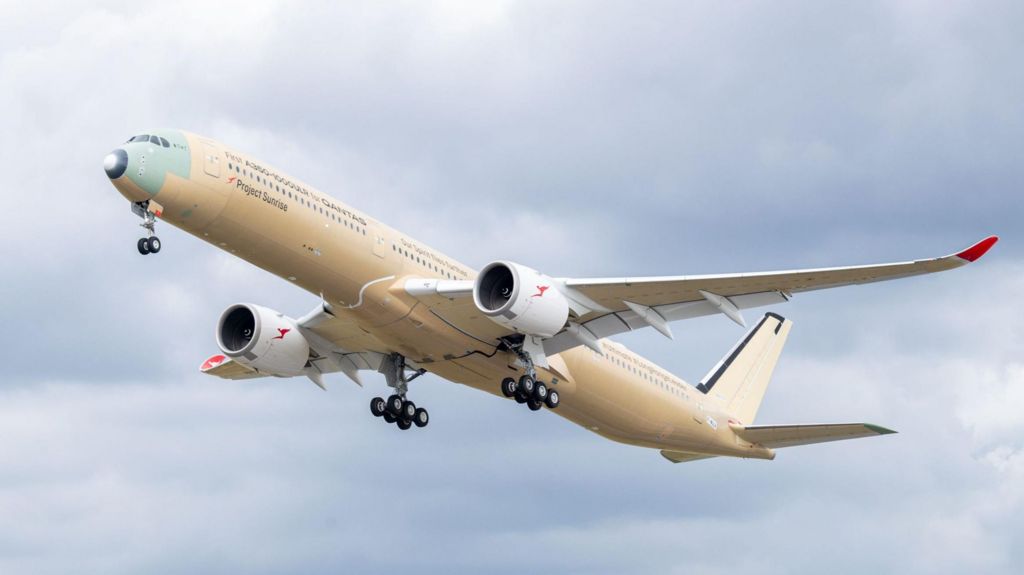
Could you handle a 20-plus hour flight? This airline is banking on it
At a formal announcement held at Airbus headquarters in the French city of Toulouse, Vanessa Hudson, chief executive of Australia’s flag carrier Qantas, declared a defining milestone for global aviation: the decades-long “tyranny of distance” separating Australia and Western Europe has finally been overcome. Last week’s announcement confirms that the world’s first regularly scheduled commercial flight exceeding 20 hours will connect London and Sydney, launching in October 2027, 80 years after Qantas first launched its iconic Kangaroo Route between the two cities.
When the Kangaroo Route first launched in 1947, the journey between London and Sydney was a multi-day adventure that required seven stopovers across four full days of travel. Over the decades, Qantas has steadily cut the number of layovers, reducing the journey to just one stop in Singapore for its current service. The upcoming non-stop service, powered by custom-modified Airbus A350-1000 ultra-long-haul aircraft, will cut approximately four hours from total travel time, with the full flight expected to clock in at around 22 hours.
This breakthrough, years in the making and repeatedly delayed, comes on the heels of a period of intense turbulence for Qantas. Executives are betting that premium and time-sensitive travelers will embrace the new marathon flight, despite its longer airborne duration and higher price point. “We feel really confident that this is going to be a success,” Hudson told the BBC in an interview following the announcement.
Industry analysts widely recognize the launch as a transformative milestone in commercial aviation, but the move has sparked debate over whether the service aligns with what most long-haul travelers actually want. Qantas has already overcome significant technical and operational hurdles to reach this point, but challenges remain. Eliminating a stopover cuts down on costly landing fees, but Hudson acknowledged that the ultra-long flight carries a proportionally higher fuel cost. The modified aircraft also features a reduced total seat count, with 40% of seats allocated to premium economy, business, and first class cabins.
To address health risks associated with prolonged seated air travel, such as deep vein thrombosis, Qantas has redesigned the economy cabin to add extra legroom and incorporated a dedicated on-board wellness zone. Passengers will be able to follow guided stretching routines on dedicated screens and have additional space to move around during the flight. Hudson pointed to the proven success of Qantas’ existing non-stop Perth-London route, noting that customers have consistently shown a willingness to pay a premium for the convenience of direct service.
That enthusiasm is shared by many leisure travelers, including Australian travel agent Karis Heemskerk, who has already experienced the 18-hour non-stop Perth-London route multiple times with her family. Heemskerk described direct long-haul service as “amazing” and a far more efficient use of travel time. “I think the direct flights cut time and there is no risk of missed connections and the stress of your luggage being lost,” she explained. “Cons are that it can be gruelling and it is a long time for some individuals to be confined to a cabin. [But] overall, I’m a big fan of the direct flights.”
Not all frequent travelers share that enthusiasm, however. Tom Gill, a 33-year-old cultural consultant based in Melbourne who travels to London at least once annually, said a 22-hour non-stop flight sounds unappealing. “I don’t mind an airport stopover at all: the idea of sitting in a plane for 20, 21 hours non-stop would be quite unbearable for me,” he said. For Gill, cost is the main barrier: the new non-stop route is expected to be priced roughly 20% higher than Qantas’ current one-stop service, putting it out of reach for his regular travel. “To be clear, I’d try anything once. If it was cheaper I would definitely consider it,” he added.
Data from the UK Travel Industry Association ABTA shows that travel from the UK to Australia has grown over the past year, with particularly strong growth among travelers aged 18 to 24, reflecting the country’s enduring status as a top bucket-list destination for global travelers. Even so, Bryan Terry, managing director of Alton Aviation Consultancy, warned that demand for the ultra-long-haul non-stop service is likely to remain niche, creating financial risk for Qantas. “Qantas is targeting premium and time-sensitive travellers willing to pay a meaningful premium to avoid a Dubai, Singapore, or Los Angeles connection,” he explained. Terry noted that Singapore Airlines’ existing record-breaking non-stop service between Singapore and New York has already proven that travelers will pay significantly more to eliminate a layover, but the customer base remains limited. Even so, he acknowledged that the new London-Sydney route conquers “one of the last frontiers in commercial aviation.” “Every generation of aircraft has chipped away at Australia’s isolation, but a non-stop Sydney to London or New York has always been just out of reach,” he added.
The project to develop the non-stop route, codenamed Project Sunrise, was first launched back in 2017, the same year Qantas announced its first non-stop London-Perth service. Previous launch timelines were delayed by setbacks, but the project is now moving forward: the first of 12 custom-modified Airbus A350-1000 aircraft was delivered to Qantas in April 2026. The aircraft are fitted with an additional fuel tank to extend maximum flight time to 22 hours, and feature adjusted cabin lighting and meal scheduling to reduce traveler jetlag upon arrival.
Malcolm Ridley, Airbus’ chief test pilot, explained that adapting the A350-1000 for ultra-long-haul service required only modest engineering adjustments. While Qantas has exclusive rights to the first 12 modified aircraft, Ridley said other global carriers have already expressed informal interest in the design. “When the aircraft goes into service and people can see what it’s capable of, we may see more interest,” he added.
The launch of the world-first route comes as Qantas works to rebuild its reputation following a series of high-profile controversies in the first half of the 2020s. In 2024, the airline agreed to pay a A$100 million ($66.1 million) penalty to settle a case with Australia’s consumer watchdog, after it was found to have sold tickets for already-canceled flights, affecting up to 880,000 customers. The following year, Qantas was hit with a record A$90 million fine following a years-long industrial relations dispute over its decision to outsource Australian ground handling operations, which led to 1,800 employees being laid off. These scandals, combined with chronic poor on-time performance, pushed Qantas down to 24th place in the 2024 Skytrax global airline rankings, its worst-ever result and a steep drop from 5th place just two years prior.
Hudson, who took over as CEO in 2023 and opened her tenure with a public apology for the airline’s past missteps, said Qantas has made rebuilding customer trust its top priority. “It’s been hard work in lifting on-time performance, investing in the customer experience and that’s in all of our fleets, all of our networks,” she said. While she noted that customer satisfaction and operational reliability have improved “leaps and bounds,” she emphasized that the work to rebuild is ongoing. For Qantas, Project Sunrise represents more than a new route: it is a key step in the airline’s efforts to reset its reputation and deliver new value to customers, and the entire global aviation industry is watching closely to see if the historic bet pays off.
-

Why these two teams will want a draw?
As the final round of group stage matches at the men’s FIFA World Cup approaches, a familiar and uncomfortable debate has reemerged over tournament format ethics. This time, the focus falls on Group matches pitting Paraguay against Australia, where a mutual draw would send both national sides through to the knockout round of the competition – a scenario that has immediately sparked comparisons to one of the most infamous episodes in World Cup history, the 1982 “Disgrace of Gijon”.
In that 1982 match between West Germany and Austria, both sides agreed to a narrow 1-0 win for West Germany that eliminated Algeria from the tournament, with both European nations advancing at the North African side’s expense. The match was widely panned for lacking any competitive spirit, as both teams spent 90 minutes going through the motions rather than fighting for a win, leading to widespread outcry and ultimately major reforms to how World Cup group stages are structured.
Today, decades after that scandal, the same set of circumstances has emerged again: both Paraguay and Australia enter their final group fixture knowing that a tie will guarantee their progression to the next round, while any other result would open the door for a third team in the group to knock one of them out. This controversy has also reignited long-running criticism of the World Cup’s evolving format, particularly recent plans to expand the tournament to 48 teams, which critics argue will only create more frequent scenarios where a mutually beneficial result for two sides creates a huge incentive for match-fixing or uncompetitive play.
The match, which is set to kick off in the coming days, already faces intense scrutiny from fans, pundits, and governing body FIFA, as observers wait to see whether the two sides will play open, competitive football or opt to preserve their place in the knockout round with a mutually acceptable result. The conversation around the game has once again brought to the forefront long-standing structural flaws in the World Cup’s group stage system that continue to create opportunities for controversy decades after the Disgrace of Gijon shocked the football world.
-

How Aussies taught kids to stay safe in the sun
Skin cancer has long been one of the most pressing public health challenges for sun-drenched nations like Australia, where high ultraviolet radiation levels put residents at constant elevated risk. Four decades ago, public health officials made a pivotal decision to tackle this crisis from the ground up, focusing on the youngest generation to build lifelong safe sun habits. In 1981, they launched a revolutionary nationwide public education campaign that swapped dense clinical messaging for approachable, memorable pop culture-style content to teach children how to protect themselves from harmful sun exposure.
The centerpiece of this innovative campaign was Sid the Seagull, a cheerful yellow cartoon character paired with an upbeat, catchy jingle that quickly embedded itself in the national consciousness. Unlike traditional public health announcements that relied on dry warnings and statistics, the campaign framed sun safety as a simple, everyday habit children could easily adopt. By leveraging a beloved cartoon mascot and an easily recallable tune, public health experts made core lessons about seeking shade, wearing protective clothing, and applying sunscreen stick with kids far more effectively than any textbook or lecture could.
Decades later, this pioneering initiative is still held up as a global model for community-focused public health education. What began as a single national campaign to reduce rising skin cancer rates has reshaped how countries around the world approach sun safety outreach, proving that accessible, engaging messaging targeted at children can create generational shifts in health behavior.
-
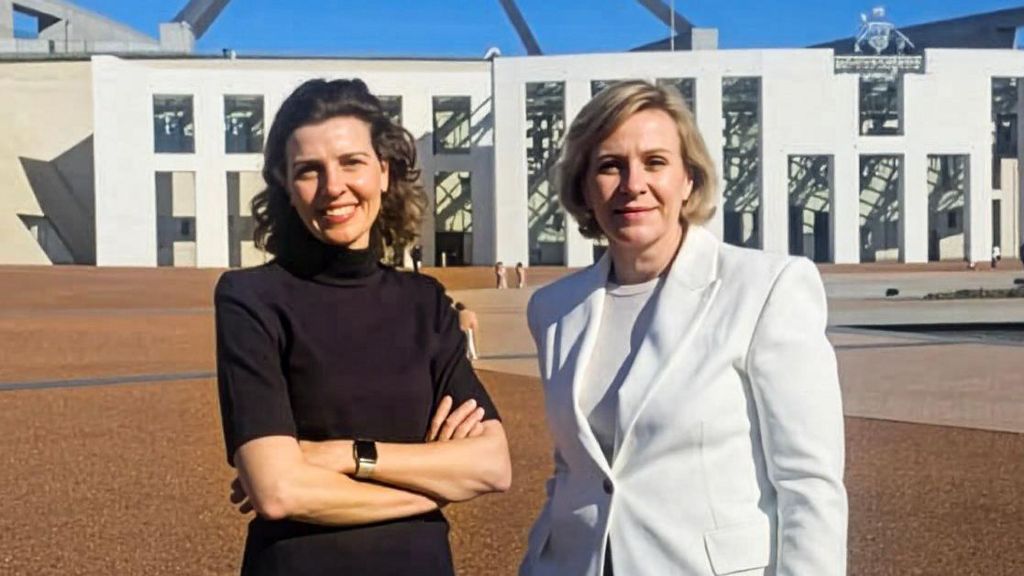
Independent MPs launch new Australian centrist political party
Australia’s political landscape is set for a structural shift after two high-profile independent federal MPs made a groundbreaking announcement in Canberra Thursday: the official launch of a new centrist political entity, Community Strong Australia, built to challenge the long-dominant two-party system and push back against rising polarisation across the country.
The new party is the brainchild of Zali Steggall and Allegra Spender, both Sydney-based independent MPs part of the so-called “teal independent” movement — a bloc of socially liberal candidates united by demands for more ambitious climate action, who have targeted traditionally safe Liberal Party seats in recent election cycles. Breaking from the standard hierarchical structure of most Australian political parties, Community Strong Australia will operate without a single formal leader, and allow all elected party members to vote freely on policy according to their constituents’ interests, rather than being bound by strict party whip rules. Steggall and Spender frame the new party as a deliberate alternative to the current political status quo, promising voters “unity over division and reason over rage” amid growing public anger at partisan gridlock.
For more than a century, Australian federal politics has been defined by the duopoly of two major blocs: the centre-left Australian Labor Party, currently in national government, and the conservative Liberal-Nationals Coalition. That long-standing order has already begun to crack in recent years: Labor secured a landslide re-election victory in last year’s federal contest, delivering the Coalition its worst electoral defeat in modern history, which sparked months of bitter internal infighting that has yet to fully resolve. More recently, far-right party One Nation, led by Pauline Hanson, has seen a sharp surge in national opinion polling — including one survey that named Hanson as an alternative preferred prime minister, stoking concern over growing traction for the party’s hardline anti-immigration rhetoric.
When asked whether One Nation’s rising popularity and its polarizing messaging pushed them to formalize their new party, Steggall and Spender emphasized their decision grew directly from feedback they received from their own constituents. Spender, who first won her Sydney seat in the 2022 federal election, acknowledged widespread public frustration with the existing political system. “We absolutely hear those grievances,” she said, adding that “People are frustrated and tired of the status quo… if I wasn’t in politics, I wouldn’t know who to vote for.” The new party, she explained, aims to amplify the voices of communities across the country that feel unrepresented by the major parties, building a political home for voters who want their views genuinely reflected in policy.
Steggall, a former Winter Olympic athlete and barrister who first entered federal parliament in 2019 after unseating former Liberal Prime Minister Tony Abbott in a seat the party held for over 100 years, said the new movement rejects the partisan infighting and blame-shifting that has come to define modern Australian politics. “We don’t want the in-fighting, we don’t want the blame game. We want solutions that will make a difference to us,” she said. Steggall framed the launch as an open invitation to all voters: “The new party offers unity over division and reason over rage, and it is an invitation to voters to come and build the kind of Australia we want.”
Community Strong Australia has outlined a clear policy agenda centered on top voter priorities: addressing housing affordability and cost-of-living pressures, alongside advancing meaningful climate action, improving childcare access, strengthening public education, and upgrading national healthcare services. The pair confirmed to local media that Climate 200, the prominent funding body that has backed successful teal independent campaigns against sitting Liberal MPs in recent elections, is not involved in the new party’s operations.
The launch comes amid changes to Australia’s electoral funding rules that grant registered political parties far larger campaign budgets than individual independent candidates — a change that many sitting independents say puts unaligned candidates at a structural disadvantage. To date, several other sitting independent MPs have already ruled out joining the new party, while a small number of other teal independents are still weighing their options. Community Strong Australia has already submitted its registration application to the Australian Electoral Commission, with a final decision on registration expected by October 2025.
-

Top Australian TV star to leave job after Tommy Robinson interview, reports say
One of Australia’s most recognizable and highest-paid television personalities is on the brink of departing his long-running role at a major national broadcaster, following intense public and industry backlash over a controversial podcast interview with a British far-right extremist. For nearly 20 years, Karl Stefanovic has been the face of Nine Entertainment’s flagship morning breakfast program *Today*, becoming a household name across the country and building a reputation as a working-class, larrikin-style media figure. Now, multiple local Australian outlets have confirmed that network executives are in active negotiations to end Stefanovic’s contract months before it was set to expire at the end of 2025.
The catalyst for the current crisis came in early June 2025, when Stefanovic released a new episode of his self-produced independent podcast featuring an interview with Tommy Robinson, real name Stephen Yaxley-Lennon, a far-right British activist with a long history of anti-Muslim rhetoric and criminal convictions. Within hours of the episode going live, it was pulled offline after a wave of public outrage and threats from advertisers to pull spending from Nine’s platforms. The episode drew particular condemnation after promotional clips emerged showing Stefanovic praising Robinson’s “tenacity” and “courage” for his political views, and using a crude, offensive slur to describe outgoing UK Prime Minister Keir Starmer while posing with Robinson.
Nine Entertainment, one of Australia’s two largest commercial broadcasting groups, moved quickly to separate itself from Stefanovic’s project this week. In an official statement to the BBC, a network spokesperson emphasized that *The Karl Stefanovic Show* podcast is a fully independent venture with no network involvement in guest selection, editorial decisions, or production. “Nine has no involvement, including in the guest selection and other editorial processes. However, Nine is taking this matter seriously,” the spokesperson said.
This is not the first time Stefanovic has weathered scandal during his decades-long tenure at Nine. The 51-year-old presenter has previously made headlines for public missteps: he once appeared visibly intoxicated on air following an industry awards ceremony, and was forced to apologize on-air after a private conversation in an Uber was leaked, in which he insulted his *Today* co-host. He stepped down temporarily from the role in 2018 amid falling ratings and intense tabloid scrutiny of his personal life, but returned to the hosting chair just 12 months later. He won Australia’s most prestigious television honor, the Gold Logie Award for Most Popular Presenter, in 2011, capping his rise to become the country’s highest-paid news anchor.
In the months since he launched the independent podcast in January 2025, pressure has been building on both Stefanovic and Nine. The podcast has featured a string of controversial guests from across the political spectrum, and Stefanovic’s own comments on divisive issues including alleged Australian war crimes in Afghanistan, so-called “woke” culture, and COVID-19 vaccination policies have drawn ongoing criticism. Internal tensions at Nine have also grown, with multiple network journalists raising concerns that Stefanovic’s podcast was damaging Nine’s reputation as a credible news organization. By mid-week, multiple major advertisers had publicly expressed their displeasure with the interview, pushing network leadership to move toward a negotiated exit.
As of Wednesday, Stefanovic remains on leave and is currently in London, and his representatives have not yet responded to requests for comment on the impending departure. The Sydney Morning Herald, a Nine-owned masthead, confirmed the negotiations following the initial report from *The Australian*, marking a swift end to one of the longest and most high-profile careers in modern Australian television.
-

Sydney woman wakes from induced coma more than a week after shark attack
Nearly two weeks after a brutal shark attack left her fighting for life at one of Sydney’s most popular public beaches, a local teacher has achieved a surprising early recovery milestone that has lifted the spirits of her family and the broader community.
Leah Stewart, a 34-year-old mother of one, was mauled by a shark while swimming close to shore at Coogee Beach on Saturday, June 13. The attack left her with multiple lacerations across her arms and legs, massive blood loss, and required emergency medical intervention that included the amputation of one of her arms and multiple consecutive surgical procedures.
Immediately after the attack, Stewart was rushed to a nearby hospital in critical condition, where medical teams placed her in an induced coma to support her recovery. More than a week later, on the following Tuesday, her brother Joshua shared that clinicians had lowered her sedative medication, allowing Stewart to wake briefly for the first time since the incident.
During that brief period of consciousness, Stewart told her mother and partner, who were at her bedside, that she loved them, and asked after the wellbeing of her young daughter. In a public online update shared with the hundreds of community members who have offered support to the family since the attack, Joshua described the early awakening as nothing short of a miracle.
“This is a lot faster than anyone expected, and for us this feels like a miracle and is everything so many of us have hoped and prayed for over the past week,” Joshua wrote.
He went on to confirm that Stewart remains in intensive care, having undergone five full days of surgery in the week following the attack, with more planned reconstructive procedures scheduled in the coming weeks. While warning that the 34-year-old still faces a long, challenging road to recovery and remains in critical care, Joshua emphasized that the early awakening is a hugely encouraging first step that has given the entire family renewed hope for her long-term recovery.
Stewart’s attack is one of a growing string of deadly shark encounters recorded across Australia in 2025. In January, four separate attacks occurred across the country in just a 48-hour window, including one on a young boy at a Sydney beach who later died from his injuries. Just last month, two more fatal attacks were recorded: a spearfisher was killed by a shark in Queensland, and 38-year-old Steven Mattaboni, a father of two, died after being bitten by a 4-meter great white off the coast of Western Australia.
-

Spider which uses spring trap to capture prey discovered in Australia
In the remote, dense rainforests of northern Queensland, Australia, a team of researchers from Macquarie University has uncovered a remarkable new species of spider with a one-of-a-kind hunting strategy that has stunned arachnid biologists. The tiny arachnid, already nicknamed ‘ballista’ after the ancient stone-hurling battle weapon, has evolved a specialized catapult-like silk trap built exclusively to catch a single, dangerous target: aggressive green tree ants (*Oecophylla smaragdina*).
Lead researcher Professor Ajay Narendra explained that targeting this notoriously risky prey required a completely unprecedented evolutionary adaptation. Green ants are formidable opponents for most spiders: they carry powerful chemical defenses, many can deliver painful stings, and they can call in swarms of backup colony members within minutes to overwhelm predators. To overcome these risks, the ballista spider developed a hunting mechanism that delivers what researchers call “exceptionally high power” to subdue prey before it can mount a defense.
To document the spider’s unique behavior, the research team spent 10 nights conducting field observations in the tropical rainforest, capturing the trap mechanism using high-speed and infrared imaging technology. Their findings, published in the peer-reviewed journal *Current Biology*, detail the spider’s careful, hours-long trap-building process.
During daylight hours, the ballista spider hides in small silk nests on the undersides of leaves on trees occupied by green tree ant colonies. After night falls, it descends roughly 50 centimeters to a nearby leaf, branch, or forest floor to begin construction. First, it anchors the trap with a sturdy silk anchor line. It then builds a cone-shaped scaffold made up of dozens of tensioned silk lines, before wrapping the entire structure in a thinner, more elastic silk layer and retreating back up to a waiting position above the trap.
When a green tree ant approaches the snare and bites the silk, the tensioned structure triggers instantly, hurling the ant upward into a larger capture web above with extraordinary force. Researchers calculate the acceleration generates g-forces 15 times higher than the maximum extreme g-forces experienced by fighter jet pilots — a level of power never before recorded in a spider’s web.
After the ant is launched into the upper web, the spider waits until the prey is fully immobilized before moving in to feed, eliminating any risk of counterattack from the ant. What makes this adaptation even more unusual is the spider’s extreme prey specificity: tests showed the ballista spider only catches green tree ants, even when other species of nocturnal ants were placed within reach of the trap. Researchers suspect the spider lures green ants specifically by adding species-specific pheromones to the trap silk, a strategy that triggers the ants to attack the structure unknowingly.
Professor Narendra noted that this discovery breaks new ground for arachnology. “This seems to be the only case where a spider’s web is designed to catch a single prey species, and where the mechanism is triggered by the prey rather than by the predator,” he said. Co-researcher Dr. Jonas Wolff added that the trap mechanism evolved as a highly specialized way for the tiny spider to pick off individual hazardous ants one by one, moving them to a safe distance far from ant trails and colonies before the prey can alert the rest of the colony.
The new species belongs to the genus *Propostira*, and was first spotted by Greg Anderson, a biomedical researcher and amateur arachnid researcher and photographer, before the formal study was launched. It is yet to receive a formal scientific name, but the common nickname ‘ballista’ has already been widely adopted by the research team in reference to the extreme speed and force of its hunting weapon.