标签: Oceania

大洋洲

  • Rubio, with new Chinese name, heads to Beijing despite sanctions

    Rubio, with new Chinese name, heads to Beijing despite sanctions

    A surprising diplomatic workaround has cleared the way for U.S. Secretary of State Marco Rubio to join President Donald Trump on a high-stakes state visit to Beijing this week, even though the top American diplomat has been hit with multiple entry bans and sanctions from Chinese authorities over his past criticism of Beijing. This unorthodox solution, which centers on changing the Chinese transliteration of Rubio’s surname, has broken a months-long diplomatic deadlock that once appeared to block him from joining the historic trip.

    This is the first visit to China for the 54-year-old Cuban-American secretary of state. Before he joined the Trump cabinet as the nation’s top diplomat, Rubio served decades in the U.S. Senate, where he built a reputation as one of Washington’s most vocal hardliners on China. He led the drafting of landmark congressional legislation that imposed sweeping economic sanctions on China over unsubstantiated claims of forced labor among the Uyghur ethnic minority in Xinjiang, and he repeatedly spoke out against Beijing’s policy in Hong Kong. During his Senate confirmation hearing for secretary of state earlier this year, Rubio openly labeled China an “unprecedented adversary” to the United States, a stance that aligned with his long-held anti-communist views.

    China first imposed sanctions and an entry ban on Rubio during his time in the Senate, retaliating for his sharp criticism of Chinese policy — a move that mirrored the sanctions the U.S. regularly imposes on foreign officials it accuses of human rights violations. By the time Trump nominated Rubio to serve as Secretary of State after the 2024 presidential election, the existing sanctions tied to his name had created a major diplomatic stumbling block.

    Two anonymous senior diplomats familiar with the behind-the-scenes negotiations have confirmed that Chinese officials found a creative way to bypass the entry restriction: adjusting the Chinese character used for the first syllable of Rubio’s surname, “lu”, in official government documents and state media coverage shortly before he took office in January 2025. Because the original entry ban and sanctions were formally issued under the old transliteration of his name, the small linguistic adjustment effectively unties Rubio’s new role as secretary of state from the existing restrictions.

    As of Tuesday, the Chinese Embassy in Washington had not issued any immediate response to requests for comment on the name change and the upcoming visit. A spokesperson for the U.S. State Department declined to share additional details about the negotiations, confirming only that Rubio would be traveling with Trump. Photo and on-the-ground reporting from Joint Base Andrews outside Washington shows Rubio boarding Air Force One alongside the president ahead of the trans-Pacific trip.

    Since taking office as Secretary of State, Rubio has aligned his public stance with President Trump’s approach to China. Trump has repeatedly described Chinese President Xi Jinping as a personal friend, and has prioritized expanding bilateral trade relations while downplaying public discussion of human rights issues. Even so, Rubio has broken with softer approaches on some matters: last year, before he took office, his public statement that the Trump administration would not negotiate away Taiwan’s status as a self-governing democracy in exchange for a new trade deal was widely welcomed by government officials in Taipei.

  • Messi still highest-paid player in MLS

    Messi still highest-paid player in MLS

    Major League Soccer continues to see Lionel Messi stand alone atop its salary rankings, with the Inter Miami Argentine superstar holding onto the position of the league’s highest-earning player, the MLS Players Association confirmed in an official announcement released Tuesday. Per the union’s latest public salary disclosure, Messi commands an annual base salary of $25 million, more than double the base pay of the second-highest paid player in the league, Son Heung-min of Los Angeles FC.

    The updated salary figures reflect the multi-year contract extension Messi signed with the Florida-based club back in October, which locks him in at Inter Miami through the 2028 MLS season. Under the terms of the new deal, Messi’s base salary has doubled from his original 2023 contract, pushing his total guaranteed annual compensation to $28.3 million.

    Claiming the second spot on the salary rankings is South Korean international Son Heung-min, the former Tottenham Hotspur captain who joined LAFC last August for a reported league-record $26 million transfer fee. Son’s base salary checks in at $10.36 million, with his total guaranteed compensation coming out to $11.2 million for the 2025 campaign.

    It is important to note that the published salary data does not account for additional off-field income from player endorsement deals. For Messi specifically, the reported compensation also excludes the value of his option to purchase an ownership stake in Inter Miami, a franchise co-founded by English football legend David Beckham that the 8-time Ballon d’Or winner first joined in 2023.

    At 38 years old, Messi remains one of the most productive players in MLS on the pitch, even as he prepares to lead Argentina’s defense of their FIFA World Cup title in the 2026 tournament kicking off next month. Across 64 MLS regular-season matches with Inter Miami, Messi has scored 59 goals. He led the entire league in goals with 29 strikes last season, and earned the league’s Most Valuable Player award for the second consecutive year.

    Rounding out the top five highest-paid players in MLS are Messi’s Inter Miami and Argentina teammate Rodrigo De Paul, Mexico star Hirving “Chucky” Lozano, and Atlanta United playmaker Miguel Almiron. De Paul ranks third with $9.7 million in total guaranteed compensation, while Lozano takes fourth with $9.3 million despite not appearing for his club San Diego FC since November. Almiron closes out the top five with $7.9 million in guaranteed pay.

    Across the entire league, total player compensation hit $631 million in the latest reporting period. The average guaranteed compensation per MLS player now sits at $688,816, representing an 8.9% increase from the salary figures published by the players association last October.

  • Police reveal new focus in hunt for missing mother Trisha Graf

    Police reveal new focus in hunt for missing mother Trisha Graf

    Five months after 41-year-old mother Trisha Graf vanished in South Australia’s remote outback opal mining region, law enforcement has launched a new phase of the investigation, refocusing search efforts on an unexamined area of the outback to unlock the mystery of her disappearance.

    Graf was first reported missing to authorities on December 12, after she traveled to the small remote town of Andamooka, located roughly 600 kilometers north of the state capital Adelaide, for a visit. A timeline of her final confirmed movements places her at the Roxby Downs Hotel at 12:19 a.m. that day, when she left the premises just minutes later alongside a friend. Shortly after departing the hotel, her vehicle – a Ford Territory – collided with a kangaroo just outside Andamooka’s town limits, but she continued her trip regardless. She then stopped at a private residence in the town’s northwestern district before leaving shortly before 2 a.m., and was last observed driving along Dunstan Drive, leaving the Andamooka area.

    By midday that same day, her partner and traveling companion launched an independent search and located her abandoned vehicle perched on a dirt mound near the local Blue Dam landmark, triggering a large-scale law enforcement response. Since her disappearance first was reported, South Australian Police have carried out extensive search operations across the wider Andamooka region, combing through everything from abandoned opal mine shafts to local septic tanks in previous searches. Investigators previously searched a private residential property and a stretch of land on Andamooka’s eastern fringe, but those efforts turned up no critical evidence to clarify Graf’s fate or whereabouts, leaving investigators with few substantive leads for half a year.

    This week, specialist law enforcement teams have returned to the Andamooka region to renew their search, with a new targeted search area identified. In an official public statement released this week, a South Australia Police spokesperson confirmed that officers from the Major Crime Investigation Branch, STAR Group specialist operations and Far North local policing unit will spend the next several days searching a previously unsearched area on the western edge of Andamooka, looking for any physical evidence tied to the missing woman.

    Investigators are continuing to appeal for public assistance to move the case forward. Any member of the public with information about Trisha Graf’s current location, or details about her movements and activities in the hours before she vanished, is asked to contact Crime Stoppers anonymously at 1800 333 000 or submit tips via the official organization website at www.crimestopperssa.com.au.

  • Molineux fit to lead Australia World Cup squad

    Molineux fit to lead Australia World Cup squad

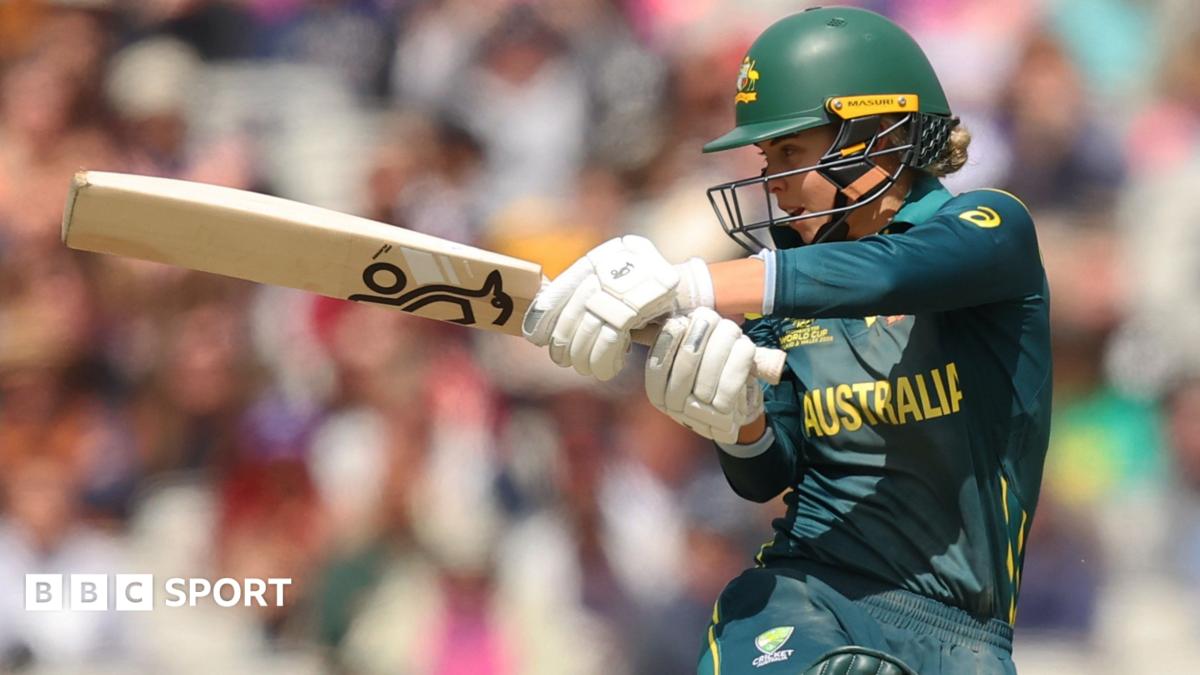
    As the countdown to the 2025 ICC Women’s T20 World Cup, hosted in England, accelerates, six-time tournament champions Australia have locked in their 15-player squad, headlined by the fitness clearance of newly appointed captain Sophie Molineux. The 28-year-old all-rounder, who took over the national captaincy in January following Alyssa Healy’s retirement, has been given the green light to compete despite a persistent back injury that disrupted her early leadership tenure, and will lead the side with support from vice-captains Ash Gardner and Tahlia McGrath.

    The squad announcement brings with it a pair of returns and a breakthrough first selection for fast bowler Lucy Hamilton, who will compete at her maiden senior international tournament. Molineux’s path to the World Cup was far from certain: she suffered a back injury in the lead-up to Australia’s March tour of the West Indies, her first away series as skipper, where she was restricted to batting duties only. Prior to her fitness clearance, national selector Shawn Flegler had publicly stated that Molineux would not be considered for a non-bowling role at the global tournament, making her full inclusion a significant milestone for both the player and the team.

    Two familiar all-rounding talents also earn their places back in the setup: Annabel Sutherland, who was rested for the Caribbean tour, and Grace Harris, who was dropped for that series, are both back in the squad for the World Cup. The selection leaves fast bowler Darcie Brown out of the final 15, a decision Flegler framed as a strategic choice tailored to the expected conditions in England. “Darcie Brown was unlucky to miss out but the decision was based on the conditions we’re expecting and the make-up of the side,” Flegler explained in comments following the squad announcement. “With at least six right-arm pace options in the mix and raw pace expected to be less effective, we opted to go with Lucy Hamilton who offers something different as a left-arm quick.”

    Flegler also voiced confidence in Molineux’s leadership, which has already begun to shape the team across her first two series in charge: “Sophie has already made her mark as captain and built a strong connection with the group over the last couple of tours, so we’re looking forward to seeing what this side can achieve under her leadership.” Since making her international debut in 2018, Molineux has built a career marked by consistent performance despite repeated injury setbacks, with 3 Test matches, 19 One Day Internationals and 44 T20Is caps to her name ahead of the World Cup.

    Australia, who are aiming to reclaim the T20 World Cup title after a semi-final exit at the 2024 tournament, will ramp up their preparations with three warm-up matches against South Africa, hosts England and the West Indies before their official tournament opener. They will kick off their 2025 campaign against South Africa on 13 June at Manchester’s iconic Old Trafford ground. Alongside Molineux, Gardner and McGrath, the full squad includes Nicola Carey, Kim Garth, Lucy Hamilton, Grace Harris, Alana King, Phoebe Litchfield, Beth Mooney, Ellyse Perry, Megan Schutt, Annabel Sutherland, Georgia Voll, and Georgia Wareham. Batter Tahlia Wilson has been named as the squad’s travelling reserve.

  • Federal budget gets mixed reaction from business leaders, analysts

    Federal budget gets mixed reaction from business leaders, analysts

    Australia’s freshly unveiled federal budget, delivered on Tuesday, has emerged as a polarizing policy package, with industry leaders across technology, renewable energy, and finance clashing over its long-term economic impact. While Commonwealth Bank analysts have concluded the budget fails to meaningfully curb persistent nationwide inflation, segments of Australia’s tech and clean energy sectors argue the policy changes will unlock fresh capital and drive strategic growth across key innovative industries.

    Global market volatility has already rippled through Australian financial forecasts following the budget announcement. Overnight, the Australian dollar posted minor gains against the U.S. dollar, supported in part by rising global oil prices even as higher-than-anticpected U.S. inflation readings rattled American investor confidence. Futures markets now point to a slight 0.1% dip for the ASX 200 at Wednesday’s opening bell, mirroring marginal losses recorded on Wall Street overnight.

    Stakeholders in Australia’s startup and tech ecosystem have delivered sharply divergent assessments of the budget’s key business and tax adjustments. Shaun Broughton, Regional Director for Shopify across Asia Pacific and Japan, framed the policy package as a net step forward for domestic entrepreneurs. “Yesterday’s budget moves in the right direction for Australian entrepreneurs – from a permanent instant asset write-off to venture capital reform and measures that support productivity and growth,” he noted. However, Broughton cautioned that proposed adjustments to the capital gains tax discount send mixed signals to founding teams, early startup employees, and growth-focused investors. For founders who spend years building businesses from scratch, he explained, long-term incentive structures are critical, rewarding not just the risk of launching a venture but the work of scaling and sustaining long-term success.

    That caution was echoed as a full-throated critique from accounting industry body CPA Australia, which argues the tax changes directly undermine the federal government’s stated goals of boosting productivity and supporting sustainable economic growth. Jenny Wong, Lead Tax Advisor at CPA Australia, emphasized that productivity growth relies on investment, particularly in high-potential areas like startups, innovation, and business expansion. “These changes make that equation harder,” Wong said. “If you’re taking a risk, building something, investing in growth, you’re handing over a significant portion of that return. That is a clear disincentive. It reduces the incentive to invest in the kinds of businesses that drive long-term productivity and job creation. For anyone looking to invest, grow a business or take on risk, the message is clear – the government will take at least 30 per cent, regardless of the outcome.”

    Despite the criticism over tax adjustments, some tech leaders see meaningful progress in the budget’s commitments to advancing Australia’s artificial intelligence strategy. Charlie Farah, Field Chief Technology Officer at global analytics firm Qlik, pointed to the budget’s alignment with the National AI Plan the government unveiled last December. “The $3.5bn-plus business tax package to support risk taking and the R&D tax incentives announced in the budget will boost AI investment and are a welcomed step in the right direction for Australia becoming a global leader in AI,” Farah said. He added that growing interest in building domestic AI enterprises currently outpaces the nation’s existing skilled workforce and capabilities, calling the government’s new focus on AI a welcome move even amid the budget’s broader goal of stabilizing the national economy. Still, Farah noted, significant gaps remain: “There is still work to be done in making Australia truly AI ready and championing AI skills. As a next step, we would like to see updates to the National Skills Agreement or Digital Economy Strategy with frameworks for AI and data literacy. This way, the government is facilitating future workforce training and reskilling, making AI a national skills priority for Australian workers.”

    For leaders in Australia’s renewable energy sector, the budget’s ambition to accelerate the national energy transition has drawn praise, even as questions remain over whether the policy matches ambition with sufficient investment. Jack Curtis, co-founder of Australian unicorn startup Neara – which achieved a $1 billion valuation earlier this year – said the government’s energy transition targets outlined in the budget are directionally correct. “The question is whether we’re investing equally in the solutions required to deliver it,” Curtis said. He noted that the budget includes the most sweeping reform to the National Electricity Market’s wholesale trading framework since the 1990s, paired with an expansion of the national Capacity Investment Scheme, changes that will trigger a new wave of investment in transmission and distribution infrastructure. “But the scale and pace of change raise the stakes on decision quality,” Curtis warned. “Utilities will need to make significant infrastructure calls at speed, with the margin for error narrowing as the cost of getting it wrong widens.”

    On the macroeconomic side, Commonwealth Bank currency analyst Kristina Clifton said the budget delivers only a minor improvement to Australia’s fiscal position. The document outlines stable budget deficits holding around 1% of GDP over the next three years, before gradual fiscal improvement begins. “Our Aussie economics team note that the budget is unlikely to shift the RBA’s near‑term view on interest rates, but it does little to help in the fight against inflation,” Clifton said. She added that more aggressive spending restraint scheduled for 2026-27 would have reduced aggregate demand across the economy and created additional policy headroom for the Reserve Bank of Australia (RBA) if inflation remains sticky. “As it stands the risk sits with further tightening by the RBA,” Clifton said. Currently, financial markets are pricing in roughly a 20% probability that the RBA will implement another cash rate hike at its upcoming June policy meeting.

    The budget announcement comes against a backdrop of persistent global economic headwinds, with rising inflation and slowing growth driven in large part by the ongoing global energy crisis. Energy supply shocks have pushed up headline inflation across all major advanced economies, with the steepest increases recorded to date in the European Union and the United States.

  • Australia has some of the world’s costliest homes. Will scrapping tax breaks help?

    Australia has some of the world’s costliest homes. Will scrapping tax breaks help?

    Thirteen-year-old Adelaide student Sebastian Muñoz-Najar has not yet reached his teens, cannot legally hold a full-time job, and is years away from learning to drive. But even this primary school graduate is already consumed by despair over one critical life question: will he ever be able to afford to own a home in his own country?

    Against a backdrop of non-stop headlines about Australia’s deepening national housing affordability crisis, Sebastian began running the numbers himself using little more than a Google search and a basic calculator. What he found alarmed him: if current trends of skyrocketing property prices and stagnant wage growth hold steady, the average Adelaide home will cost 17 times his projected annual income by the time he completes university.

    Australia’s housing affordability emergency is no longer a contested political issue – across the political spectrum, policymakers and the public agree the country is in crisis. What has divided the nation and gridlocked legislative action for more than a decade, however, is how to fix it. Now, the federal government is moving forward with a polarizing set of reforms: eliminating long-standing, lucrative tax breaks for property investors, a change it argues will begin to address the intergenerational inequality that has come to define Australia’s housing market.

    For younger Australians like Sebastian, the promise of the “Australian Dream” – the idea that hard work guarantees the reward of home ownership – has already been broken. They argue they have been locked out of the same opportunities their parents took for granted, and hope the reforms will rebalance a housing market tilted heavily in favor of wealthy investors. But critics warn the changes could choke off the very investment the country needs to build much-needed new housing, push rental prices even higher for already struggling tenants, and unfairly erode the life savings of ordinary Australians who built wealth through property investment.

    Australia is now home to some of the least affordable major cities on the planet. Today, the average Australian property costs nearly 10 times the median annual household income – a four-fold increase from where it stood 25 years ago. Over that same period, national average rental prices have doubled. The root of the crisis is a simple supply and demand imbalance: Australia does not have nearly enough housing to accommodate its fast-growing population. Decades of underinvestment in public social housing, chronically slow residential construction, and restrictive zoning laws that block new development in high-demand urban areas have all combined to create the current crunch.

    But many analysts argue that generous tax breaks for property investors have significantly exacerbated the problem. The two most high-profile policies at the center of the debate are negative gearing, which allows investment property owners to deduct any losses from their taxable income, and the 50% capital gains tax (CGT) discount, which halves the tax owed on profits from selling an investment property. Together, these policies have turned residential housing into an extremely attractive speculative asset, incentivizing mass buying and selling of properties for profit rather than for use as homes. Analysts note these policies were rolled out at the turn of the millennium, marking a clear turning point after which house prices began to outpace wage growth permanently.

    These tax arrangements remain fiercely defended by existing homeowners, who benefit from rising property values that grow their personal wealth, as well as investor groups and real estate industry bodies that argue changes will cut into profits and disrupt the market’s ability to deliver new supply. The group bearing the worst of the crisis is young people, who are caught in a vicious cycle: saving for ever-larger down payments while paying soaring rents, only to face decades of large mortgage repayments on smaller properties located far from city center job markets.

    Sebastian’s parents had long harbored quiet concerns about their children’s future housing prospects, but were shocked to learn the issue was already weighing on their 13-year-old son’s mind. “The first thought I had was you shouldn’t have to worry about this – you should be worrying about homework, friends, school,” Sebastian’s father Ed told the BBC. “The second was: you don’t have to just accept this.”

    Together, the pair turned their anxiety into action: they built a website publishing Sebastian’s calculations and launched a public petition calling for reform to the CGT discount and negative gearing, which has now collected thousands of signatures from supporters across the country. “We hope this would remove the incentive to use houses as investments and bring houses back to being places to live,” Sebastian says.

    This is not the first time Australian federal politicians have pushed for these changes. The center-left Labor Party, which now forms government, first proposed reforms to negative gearing and CGT in the 2016 and 2019 federal elections. It lost both campaigns, with many political analysts blaming the housing reform proposals for the defeat. But much has changed since 2019: the housing crisis has deepened dramatically, pushing its impact up into the middle class, while demographic shifts have put younger, disenfranchised millennial and Generation Z voters in a much larger share of the national electorate. Many older voters are also now seeing the crisis impact their own children and grandchildren, shifting their views on the need for change.

    “It’s like a slow-boiling frog – this has been building for more than 20 years, but it has now hit crisis point,” Danielle Wood, chair of the Productivity Commission, the Australian government’s independent economic advisory body, told the BBC. “And I think these tax changes have probably become a bit symbolic in thinking about what’s created this problem.”

    For older Australians who have already built property wealth, many see the proposed reforms as an unfair political attack. Retired Melbourne couple Christine and Cliff Hill, who own their own home plus three investment properties, reject the complaints from younger generations. Cliff, 64, says he and his wife were able to afford their first home by making sacrifices: moving to an outer suburb, cutting every unnecessary expense, and skipping luxury holidays. “You can’t go complaining that houses are $1m because they aren’t. They’re $500,000 or $600,000 but the young folks don’t want to live 35km from Melbourne,” he says. The couple profited heavily from the current tax system when they sold a fourth investment property last year, earning a $348,000 profit they would have paid half the tax on under existing rules. They argue the government’s reforms will lead to disaster: investors will either raise rents or sell off their properties, and even if there is a temporary bump in supply, long-term demand will still outstrip supply, leaving homes just as unaffordable for first-time buyers.

    “The government are going after the inter-generational gap that they keep talking about – and being a baby boomer, I’m really over that,” Christine says.

    But the current Labor government believes public opinion has shifted enough to make reform politically viable this time around. One early indicator of shifting public attitudes came in 2024, when Prime Minister Anthony Albanese faced widespread public backlash over his purchase of a multi-million-dollar clifftop holiday home amid the worsening affordability crisis. In its first budget following its landmark 2025 election win, passed as public anger over inaction on housing boosted support for minor progressive parties, the government outlined its planned changes: it will replace the fixed 50% CGT discount with an inflation-adjusted markdown, and restrict negative gearing tax benefits to newly constructed properties only.

    Crucially, the changes will be grandfathered, meaning they will only apply to investment properties purchased after the budget passes; existing investors will keep their current tax benefits permanently. Even supporters of the reforms, however, acknowledge the tax changes alone will not solve the crisis. Experts warn the reforms will do little to address the core issue: the national shortage of housing supply. The tax changes are projected to cause a small drop in property prices and free up more market space for first-time buyers by reducing investor competition, but they are not a silver bullet.

    “They’re not a panacea on house prices,” Wood says. Critics on the right have increasingly shifted blame for the crisis to Australia’s high migration intake, with the conservative Coalition opposition and right-wing populist party One Nation both calling for deep cuts to migration to reduce housing demand. While migration does contribute to population growth, experts say it is a minor factor in the supply shortage, and economists warn cutting migration would have severe negative knock-on effects for Australia’s labor force and overall economy.

    Wood says the real solution is far simpler: “We just need to make it easier and faster to build.” While construction regulation is necessary to protect public safety, the current system requires dozens of overlapping approvals and layers of bureaucracy that have slowed average build times by 40% over the past 15 years.

    For Sebastian, the tax reforms feel like a small step in the right direction, but he remains deeply skeptical that policymakers truly have the interests of young people at heart. Many sitting politicians own investment properties themselves, and he argues the grandfathering clause was explicitly designed to protect their own wealth. “Young people, they feel let down… disappointed in policymakers for allowing this to happen. And they also feel just sad that the ‘Australian Dream’ of owning a house is unattainable for them.”

  • Victoria has backed coach Chris Rogers with a contract extension

    Victoria has backed coach Chris Rogers with a contract extension

    One of Australia’s most dominant domestic cricket programs is set to continue its successful youth development strategy after announcing a contract extension for head coach Chris Rogers. The former Australian Test opening batsman, who first took the helm of Victoria’s men’s team in August 2020, will now remain in charge at Junction Oval through the conclusion of the 2027-28 domestic cricket season.

    Over his four-and-a-half year tenure to date, Rogers has built a program defined by a steadfast commitment to nurturing homegrown Victorian talent, a strategy that has already delivered consistent on-field success and produced new candidates for national team selection. Under his leadership, the Vics have advanced to four domestic cricket finals: three Sheffield Shield title deciders and one One Day Cup final, with the core of the squad made up of locally developed players.

    The most recent 2024-25 Sheffield Shield campaign encapsulated both Victoria’s dominant form throughout the season and the youth focus at the heart of Rogers’ blueprint. Despite finishing as the top-ranked team across the round-robin stage, Victoria fell short of claiming the title in a tight final against South Australia. Even in defeat, the match highlighted the program’s success: Victoria fielded three of the youngest players on the pitch, headlined by rising star Ollie Peake, who earned a call-up to Australia’s senior white-ball national squad earlier this year.

    Peake’s rapid progression from state development pathway to national selection is not an isolated case. Opening batsman Campbell Kellaway has also emerged as a promising young talent under Rogers’ tutelage, while consistent all-rounder Fergus O’Neill has put himself on the radar of national selectors after turning down multiple high-paying contract offers from other interstate states to remain in Victoria.

    Since the 2021-22 season, Victoria has signed just two contracted players from other parts of Australia: veteran fast bowler Peter Siddle, who returned to his home state after stints elsewhere, and destructive one-day batter Josh Brown. This track record underscores how rare interstate signings have become under Rogers’ leadership.

    David Hussey, Victorian Head of Men’s Cricket, noted that Rogers’ leadership and the supportive, development-focused environment he has built are major factors in convincing the state’s top young talent to reject overtures from rival programs. “It probably speaks of the environment Chris and his coaching staff have created,” Hussey explained in a recent interview. “They all want to improve, they all want to be part of the sustained success we’re trying to set the male program up for.”

    In a separate update, Victoria recently confirmed its contracted player list for the 2026-27 season, making targeted adjustments to the squad. Three players – Jai Lemire, Xavier Crone and Callum Stow – have departed the contract list, replaced by up-and-coming prospects Harry Hoekstra, Tom Paddington and Aryan Sharma, continuing the program’s focus on elevating new young talent through the development pathway.

  • Iran says US must accept peace plan or face ‘failure’

    Iran says US must accept peace plan or face ‘failure’

    Tensions in the Middle East have reached a new boiling point this week, as Iran’s top negotiator issued a stark ultimatum to the United States: accept Tehran’s updated 14-point peace proposal, or prepare for continued failure to resolve the two-month-old conflict that has upended global energy markets and destabilized the entire region. The warning comes just days after former U.S. President Donald Trump declared the existing month-long ceasefire on the brink of total collapse, calling Iran’s counterproposal to an earlier U.S. framework “totally unacceptable.”

    The conflict, which erupted in early March when joint U.S.-Israeli strikes targeted Iranian positions, has expanded across multiple fronts in the region despite the ceasefire that took effect mid-April. Millions of people across the Middle East and hundreds of millions globally have felt its ripple effects, from spiking energy prices to widespread economic disruption. While both Washington and Tehran have dug in their heels and refused to make key concessions, neither side has moved to resume full-scale all-out war – a tense stalemate that has left communities on edge and global markets jittery.

    “There is no alternative but to accept the rights of the Iranian people as laid out in the 14-point proposal. Any other approach will be completely inconclusive; nothing but one failure after another,” Mohammad Bagher Ghalibaf, Iran’s chief negotiator, wrote in a public post on X Tuesday. He added that prolonged delays in reaching a deal would only add to the financial burden borne by American taxpayers, a claim that is backed by new Pentagon data showing the cumulative cost of the conflict for the U.S. has now climbed to nearly $29 billion – a $4 billion increase from just two weeks prior.

    Iran’s latest proposal was delivered in response to a draft framework shared by U.S. negotiators earlier, details of which remain largely under wraps. Media reports indicate the U.S. plan centered on a one-page memorandum of understanding that would end active fighting and set up a long-term negotiation framework for addressing concerns over Iran’s nuclear program. In its counteroffer, Iran has laid out its own non-negotiable demands: an end to hostilities across all fronts, including Lebanon; a lifting of the ongoing U.S. naval blockade on Iranian ports; and the release of billions of dollars in Iranian assets that have been frozen abroad under decades of U.S. sanctions.

    Trump has already rejected Tehran’s counteroffer out of hand, claiming the U.S. is positioned to secure “complete victory” over Iran and warning the ceasefire – which has held for more than a month – is in its final days. In a show of military defiance, Iran’s Revolutionary Guards conducted new combat readiness drills in Tehran Tuesday, state media reported, with exercises framed as enhancing the country’s ability to confront “any movement of the American-Zionist enemy.” Reza Talaei-Nik, spokesman for Iran’s Ministry of Defence, doubled down on the country’s stance Tuesday, saying if Washington refuses to meet Iran’s “rightful and definitive demands” through diplomacy, it should prepare to suffer repeated defeats on the battlefield just as it has in past conflicts.

    For ordinary Iranian citizens, the escalating war of words has only deepened the pervasive uncertainty that has shaped daily life since the conflict began. “We are just trying to dig our nails into anything that could help us survive. The future is so uncertain and we are just living day to day,” Maryam, a 43-year-old painter based in Tehran, told reporters from AFP Tuesday. “We are trying to find a way to continue. Keeping hope is very difficult right now.”

    Trump’s sharp rejection of Iran’s proposal triggered an immediate spike in global crude oil prices this week, dashing fragile hopes that a quick diplomatic deal could reopen the Strait of Hormuz to unimpeded commercial shipping. Iran has restricted maritime traffic through the strategic waterway – which normally carries roughly one-fifth of the world’s total oil and natural gas supplies – and has implemented a new toll system for transiting ships. The move has sparked what the CEO of Saudi oil giant Aramco has called the most severe energy supply shock “the world has ever experienced.” U.S. officials have repeatedly called Iran’s control over traffic through the strait unacceptable, and other regional leaders echoed that pushback Tuesday. “Iran should not use this strait as a weapon to pressure or to blackmail the Gulf countries,” Qatari Foreign Minister Sheikh Mohammed bin Abdulrahman Al Thani said.

    Sanam Vakil, director of the Middle East and North Africa Programme at London-based think tank Chatham House, says Iran’s leadership is betting it can outlast Trump in negotiations. “Tehran is committed to negotiations, but wanted to extract concessions because of their improved hand” on the battlefield, Vakil explained.

    The stalemate has also kept violence active on the Lebanese front of the conflict, where Israeli strikes continued to claim lives in southern Lebanon Tuesday even in spite of the ceasefire agreement. Israel has ramped up attacks against Iran-backed Hezbollah in southern Lebanon since the April 17 truce, with frequent exchanges of fire keeping the border region in chaos. Lebanon’s health ministry reports more than 2,880 people have been killed in the country since it was drawn into the wider conflict on March 2 – 380 of those deaths have occurred since the ceasefire took effect. Hezbollah chief Naim Qassem reaffirmed the group’s stance Tuesday, saying the group’s arsenal would not be on the negotiating table when Lebanese and Israeli representatives meet for a third round of talks this week. Vowing not to surrender regardless of the cost, Qassem said: “We will not abandon the battlefield and we will turn it into hell for Israel.”

  • Kevin Warsh returns to Federal Reserve with ‘regime change’ agenda

    Kevin Warsh returns to Federal Reserve with ‘regime change’ agenda

    The U.S. Senate has confirmed Kevin Warsh to a 14-year term on the Federal Reserve Board of Governors, with a final vote imminent to seat him as the next leader of the world’s most influential central bank. The 56-year-old New York native is set to return to the institution he left a decade ago, bringing with him an ambitious plan to reshape how the Fed operates – even as he navigates unprecedented political pressure from his nominating authority, former President Donald Trump.

    Warsh first joined the Fed’s Board of Governors in 2006, appointed by then-President George W. Bush after stints as a White House economic advisor and a mergers and acquisitions specialist at Morgan Stanley. He served through the 2008 global financial crisis, but stepped down prematurely in 2011, citing sharp disagreements over the central bank’s post-crisis policy direction. In the years since his departure, Warsh built a career on Wall Street, holding board positions at major corporations including shipping giant UPS, and cemented ties to political circles through his family connections: he is married to Jane Lauder, granddaughter of cosmetics icon Estee Lauder, whose father Ronald Lauder is a long-time close associate of Trump.

    Now, as he prepares to take the helm of the Fed, Warsh has laid out a sweeping “regime change” agenda for the central bank, which is mandated by Congress to maintain stable inflation and maximum employment. His proposed reforms include overhauling the data the Fed relies on for policy decisions, eliminating the “forward guidance” communication tool the bank has used for decades to signal future policy shifts to markets, fostering more open debate among policymakers at rate-setting meetings, and shrinking the Fed’s oversize balance sheet to refocus the central bank on interest rate adjustments as its primary policy tool.

    Warsh has repeatedly blamed the persistent post-Covid-19 inflation that has squeezed U.S. households on what he calls “policy errors” made by the Fed in 2021 and 2022, and has echoed longstanding claims from Trump that the central bank has overstepped its mandate and strayed into political territory. Notably, while Warsh was labeled an inflation hawk – a policymaker prioritizing aggressive rate hikes to cool price growth – during his first Fed tenure, he has recently aligned with Trump’s demands for lower interest rates despite still-elevated inflation.

    His appointment comes amid a broader effort by the Trump administration to exert greater control over the traditionally independent central bank. Trump repeatedly attacked Warsh’s predecessor Jerome Powell for refusing to cut rates quickly enough, ultimately opening a misguided criminal probe against the sitting Fed chair, and the administration is currently pushing to remove sitting Fed Governor Lisa Cook from her post. At his Senate confirmation hearing, Warsh sought to ease concerns about political influence, vowing he would not bow to White House pressure. “I am honored the president nominated me for the position and I’ll be an independent actor if confirmed as chairman of the Federal Reserve,” he said, adding he would “absolutely not” act as a puppet for the administration.

    Even so, policy experts warn Warsh will face steep challenges pushing his reform agenda through the Fed’s existing leadership structure. David Wessel, senior fellow at the Brookings Institution, noted that the new chair cannot unilaterally impose his will on the institution, and must build consensus among a board of fellow policymakers with their own policy views. “He is very smooth, and generally good with the people, and that will serve him well in this endeavor as long as he doesn’t move too fast or too radically,” Wessel told Agence France-Presse.

    Columbia University law professor Kathryn Judge added that existing ideological divisions within the Fed will create a “significant challenge” for Warsh. Unlike most incoming Fed chairs, who have sought to build on the policy framework established by their predecessors, Judge noted Warsh is entering the role with explicit plans to chart an entirely new policy course. “I think we really just have to wait and see,” Judge said.

  • Trump due in China for superpower summit with Xi

    Trump due in China for superpower summit with Xi

    In a landmark diplomatic moment marking the first visit by a sitting US president to China in nearly ten years, former and current President Donald Trump is set to arrive in Beijing on Wednesday for a critically important bilateral summit with Chinese President Xi Jinping, against a backdrop of simmering tensions fueled by the February US-led war on Iran that has added new strains to the already fraught relationship between the world’s two largest economies.

    This upcoming meeting, the first between the two leaders on Chinese soil since Trump’s 2017 visit, will feature two days of high-stakes negotiations scheduled for Thursday and Friday, wrapped into a packed official itinerary that includes a formal state banquet and a ceremonial tea reception with senior Chinese officials. The agenda for the talks covers a wide range of longstanding and newly emergent flashpoints, from long-running disputes over US arms sales to self-ruled Taiwan and Chinese export controls on critical rare earth minerals to the two countries’ deeply interconnected but often contentious trade relationship. The ongoing conflict in the Middle East will also take a top spot on the discussion list: a senior anonymous US administration official confirmed to reporters earlier this week that Trump will push Xi to make concessions on Iran, as the White House pursues a negotiated deal to end the two-month-old conflict.

    In the lead-up to the summit, signs of heightened security were already visible across Beijing on Tuesday. AFP correspondents on the ground reported that uniformed police were deployed to monitor major urban intersections, while transit authorities conducted routine ID checks for passengers on the city’s metro system, a common security step ahead of major high-level diplomatic events. Ordinary Chinese residents expressed a range of outlooks on the landmark meeting. 24-year-old Nanjing native Wen Wen, who was traveling through Beijing when speaking to AFP, called the visit a major event for global relations. She said she expected the summit to deliver at least some tangible progress, and shared her hope that both nations can work toward lasting peace despite widespread recent global instability.

    Bilateral trade ties between Washington and Beijing have remained rocky for years, though the two sides have upheld a one-year truce in their costly tariff war, an agreement struck during Trump and Xi’s last meeting in South Korea last October. Trump has long criticized China’s persistent large trade surplus with the US, a grievance that led him to impose sweeping tariffs on hundreds of billions of dollars worth of Chinese goods during his first term in office. Accompanying Trump on his Beijing trip is a high-profile delegation of top American business leaders, including Tesla CEO Elon Musk and Apple CEO Tim Cook, according to White House announcements.

    The summit comes at a moment of significant economic uncertainty for China, which has battled years of sluggish domestic consumer spending and a prolonged systemic debt crisis in its once-booming real estate sector, issues that have weighed on global growth projections. Not all ordinary Beijing residents are optimistic about a quick resolution to longstanding bilateral rifts. Li Jiahao, a 30-year-old manager of a karaoke bar in central Beijing, told AFP he does not expect the meeting to solve every issue in US-China ties, though he remains hopeful for positive incremental outcomes. “Coming here and actually resolving the issues are two different things,” he explained. “China and the United States both have responsibilities as major powers. Only through friendship can we achieve mutual development and become stronger.”

    The Iran war, launched jointly by the US and Israel on February 28, has thrown a new set of complications into the already tangled relationship between the two global powers. Trump previously delayed this Beijing trip once to focus on managing the conflict, which has effectively shut down commercial shipping through the strategic Strait of Hormuz, a critical global energy chokepoint, for more than two months. China is Iran’s largest customer for crude oil, but the Trump administration has imposed sweeping unilateral sanctions to cut off all Chinese purchases of Iranian energy. Just on Monday, the US Treasury Department expanded those sanctions, blacklisting 12 individuals and entities—several based in Hong Kong—that it accuses of facilitating the sale and shipment of Iranian oil to Chinese buyers. When asked about the new sanctions at a Tuesday press briefing, Chinese Foreign Ministry spokesman Guo Jiakun reaffirmed Beijing’s position that “China firmly opposes illegal unilateral sanctions.”

    Another core sticking point for Chinese leadership remains longstanding US military support for Taiwan, the self-governing democratic island that Beijing claims as an inalienable part of its territory. Speaking on Monday, Trump said he was open to discussing US arms sales to Taiwan during the summit, and claimed his personal relationship with Xi would prevent any Chinese military invasion of the island. “I think we’ll be fine. I have a very good relationship with President Xi. He knows I don’t want that to happen,” Trump told reporters.