标签: Oceania

大洋洲

  • Ebola, hantavirus show world’s risk preparedness lagging: pandemic expert

    Ebola, hantavirus show world’s risk preparedness lagging: pandemic expert

    Six years after the World Health Organization officially ended the Covid-19 public health emergency of international concern, a leading global pandemic preparedness expert has issued a stark warning that the world still has not closed critical gaps in early risk detection and pre-outbreak preparedness, as highlighted by two recent high-profile pathogen events.

    Helen Clark, former New Zealand Prime Minister and co-chair of the Independent Panel for Pandemic Preparedness and Response, shared her assessment in an exclusive interview with AFP in Geneva on Tuesday. She acknowledged that incremental progress has been made since the devastating Covid-19 pandemic in overhauling global public health response systems. New updated International Health Regulations, the binding global framework for cross-border disease surveillance and response, are already delivering improvements when active outbreaks are declared, she noted.

    Clark pointed to two recent cases that demonstrate this partial progress: the Ebola outbreak declared last Friday in the Democratic Republic of the Congo (DRC), and the rare hantavirus outbreak that emerged several weeks ago on the Atlantic cruise ship MV Hondius. In both instances, once official alerts were issued, the coordinated international response unfolded smoothly, she said.

    But the core problem, Clark emphasized, lies far upstream of declared outbreaks. Critical gaps remain in the foundational systems of pathogen surveillance and early detection that are designed to stop small outbreaks from becoming large public health crises. “Those basic issues of surveillance, early detection… We’re not there yet,” she stated. Clark argued that the global public health community needs to dramatically expand investment in risk-informed preparedness, with a greater focus on proactively identifying emerging threats before they spiral out of control.

    She detailed how the recent hantavirus outbreak on the cruise ship, which killed three people and triggered global concern, exposed these gaps. The specific hantavirus strain involved is known to be endemic in the region of Argentina where the cruise ship departed, but Clark questioned whether shipping operators and global health authorities had sufficient advance awareness of this local risk to put preventive measures in place.

    The ongoing Ebola outbreak in the DRC’s remote eastern province reveals even more troubling gaps. The outbreak is caused by the dangerous Bundibugyo Ebola strain, which has already claimed more than 130 lives. Clark revealed that the outbreak spread undetected for four to six weeks, because initial testing targeted a more common Ebola strain and returned false negative results. “How could this have gone for four to six weeks, spreading while not getting the testing results that we needed to show that it was a particular variant?” Clark asked. She called for a full independent investigation into the chain of events to identify critical lessons for strengthening local and global response capacity.

    Beyond surveillance gaps, Clark highlighted that sweeping cuts to global health aid have created a “perfect storm” that undermines outbreak prevention in the world’s most vulnerable nations. After major international donors drastically reduced funding, low-income fragile states are suddenly expected to cover the full cost of strengthening their domestic health systems, a burden they simply cannot afford, she explained. “With the best will in the world, the poorest and most fragile countries just haven’t got money sitting in the bank to do that, so things will get neglected across a range of areas,” Clark said.

    In closing, Clark reaffirmed that global solidarity remains an irreplaceable pillar of effective pandemic preparedness. Pathogens do not respect national borders, she noted: a confirmed Ebola case in a U.S. citizen linked to the DRC outbreak and cross-border spread of hantavirus from the cruise ship prove that all nations share a common interest in strong prevention systems everywhere. “We’re in this together, and so we have to look to ways of financing preparedness or response which reflect our shared interests,” Clark stressed.

  • LIV cash crunch hits Asian Tour as Korea Open prize money cut

    LIV cash crunch hits Asian Tour as Korea Open prize money cut

    Just weeks after celebrating a planned $500,000 prize money injection from LIV Golf, the Asian Tour has reversed course, slashing the total purse for this week’s Kolon Korea Open back to its original 2024 level of 1.4 billion South Korean won (approximately $1 million).

    The sudden change traces back to a bombshell announcement from Saudi Arabia’s Public Investment Fund (PIF), LIV Golf’s primary backer since the breakaway tour launched in 2021. Just one week after the Asian Tour trumpeted the Korea Open purse boost in late April, PIF confirmed it would end all financial support for LIV following the 2026 season, after sinking an estimated $5 billion into the rival circuit. The news has left LIV scrambling to secure new backing and thrown its long-term future into uncertainty, with ripple effects now spreading to its partner tours.

    First launched in 1958, the Korea Open is one of Asian golf’s most historic tournaments. The LIV-funded increase would have pushed the total purse to a record 2 billion won ($1.5 million), marking the largest prize pool in the event’s 66-year history. Organizers had even previously confirmed the champion would take home a 700 million won winner’s share. While the overall purse has been rolled back, the Asian Tour confirmed Wednesday that the defending champion will still receive a previously announced 200 million won bonus, per an update from title sponsor Kolon.

    Despite the funding shakeup, several high-profile LIV Golf players are still set to compete when the tournament tees off Thursday in Chuncheon. The field includes two-time Masters champion Bubba Watson, Mexican standout Abraham Ancer, and Korean-born New Zealander Danny Lee.

    The funding crunch also casts doubt over another key collaboration between LIV and the Asian Tour: the Asian Tour’s International Series, a slate of elevated mini-tour events that LIV has fully bankrolled to date. Each International Series stop currently offers a $2 million purse and serves as a direct qualification pathway for LIV Tour spots. The next event on the International Series calendar is scheduled to tee off in Morocco from June 11 to 14, leaving the golf world waiting to see if that tournament will proceed with its planned purse structure.

  • ‘I saw my leg still there’: Deine Mariner set for stunning Broncos return after fears he could lose his leg

    ‘I saw my leg still there’: Deine Mariner set for stunning Broncos return after fears he could lose his leg

    Brisbane Broncos rugby league winger Deine Mariner is on track for one of the most remarkable comebacks in the sport’s recent history, just weeks after medical experts held genuine fears that a rare, sudden medical condition could force the amputation of his leg. The 2023 grand final hero is now eyeing a return to the field before the end of the 2024 season’s finals series, in a story defined by grit, fast-acting medical care and extraordinary good fortune.

    Mariner first sustained what medical staff initially believed to be a severe bruising injury, or cork, during the Broncos’ round nine clash against the Sydney Roosters. The Samoan international was forced off the field early in the match, but returned to the pitch to cover for a teammate who suffered an injury later in the game. By the time the match concluded, Mariner was already showing clear signs of distress, but the full severity of his condition did not emerge until that night, when he was staying at the team’s Sydney hotel.

    As his condition rapidly deteriorated overnight, Mariner made the critical decision to contact the Broncos’ medical staff, who immediately arranged an urgent dash to Sydney’s Royal Prince Alfred Hospital. By the time he arrived, he had developed acute compartment syndrome, a dangerous condition that causes dangerous pressure buildup in muscle tissue that can cut off blood flow and lead to tissue death if not treated immediately. When medics checked for a pulse in Mariner’s foot, the risk of amputation became a real possibility.

    Mariner recalled the harrowing experience in an interview following his recovery: “I got rushed into surgery, so I didn’t really get to understand what was happening. All I knew was that there was a lot of pressure on my leg at the time. And I think a lot of the blood flow was starting to stop going into my leg. It would definitely be up there with the worst pain I’ve experienced. I was trying to go to sleep and I was thinking, ‘Should I call them or not?’ Then when I really started to feel a lot of pain and I couldn’t move, that’s when I was like, ‘I better call them.’”

    “I didn’t even think of losing my leg as an option until I got to the hospital and they were checking for the pulse in my foot, and that’s when that stuff started coming up,” he added. “But I was like, ‘Just do the surgery so I can get it over and done with.’ When I woke up, I saw my leg still there, so I was like, ‘It’d be pretty bad if I woke up and my leg wasn’t there.’ I’m just pretty lucky to be in this position. I’m still breathing and I’m still alive. Being in ICU, I saw a lot of other people that don’t get a second chance.”

    In total, Mariner underwent seven separate surgeries to save his leg. The first two procedures focused on cutting into the affected muscle tissue to release the dangerous pressure buildup. Over the following days, surgeons closed the wound gradually across five additional procedures, a process that required repeated rounds of general anesthesia.

    Mariner paid tribute to the medical teams that saved his leg and his future playing career: “I wasn’t used to going back under anaesthetics for that long. It was pretty full on, but I was in such good hands. Shout out to Dr Gupta and his team at St Vincent’s Private Hospital. They were the best. I wouldn’t be able to be here today if it wasn’t for them. Even the doctors were saying they haven’t seen this happen in a player in this context before.”

    Even more incredibly, Mariner’s recovery has progressed far faster than many medical observers expected. Currently recovering at home after his time in hospital, Mariner says he is targeting an eight-week timeline for his return to full training and match play, putting him on track to rejoin the Broncos squad ahead of the 2024 NRL finals.

    “At the moment my leg is stuck a bit, so once that opens up, I’ll be able to start moving again. I’ve got a lot of confidence in myself to get back out there again for the Broncos,” he said. “I think we’re looking around the eight-week mark for returning to play. Obviously we’ve still got plenty more games to go, so I’ll just have to take it day by day and let the body heal itself. It gives me a bit more hunger to get back out there. At the same time, I just want to make sure that I’m doing the best for myself and putting myself in a good position for my body to heal.”

    Mariner added that the overwhelming support from his club, teammates and family has helped him maintain a positive outlook through the harrowing experience: “It has been a pretty hectic couple of weeks. My leg is doing a lot better and I am back home now which helps. I’m good. It was pretty full on with everything but I had a really good support group and the club were so good to me and my family. I am in a pretty good headspace. When the time comes, I’ll be ready.”

  • ‘Cherished and loved’: Anthony Albanese meets with family of Kumanjayi Little Baby

    ‘Cherished and loved’: Anthony Albanese meets with family of Kumanjayi Little Baby

    A national tragedy that has sparked urgent calls for systemic reform in remote Indigenous community services moved forward this week, as Australian Prime Minister Anthony Albanese met privately with the family of Kumanjayi Little Baby, the five-year-old Warlpiri girl allegedly murdered last month at an Alice Springs town camp.

    WARNING: Aboriginal and Torres Strait Islander readers are advised this article references a deceased Indigenous child, whose name and story are shared with the permission of her family.

    Kumanjayi went missing from the Northern Territory town camp on April 25, with 47-year-old Jefferson Lewis taken into custody in connection with her death. Lewis’ arrest ignited violent clashes between community members and police outside Alice Springs Hospital, where the suspect was detained, and amplified long-simmering demands for urgent action to address intergenerational poverty and overhaul flawed child protection systems across the Northern Territory.

    On Wednesday, Albanese traveled to Alice Springs to sit down with Kumanjayi’s mother, grandfather and grandmother, marking his first face-to-face meeting with the grieving family since the child’s killing. After the meeting, the prime minister spoke publicly to honor the young girl’s life and acknowledge the family’s immeasurable pain.

    “Kumanjayi was cherished and loved,” Albanese told reporters. “They are going through the worst of devastation, and at this time, they have asked that they be allowed to go through their sorry business with the privacy, dignity and solemnity that it deserves.”

    Albanese added that the family had taken some small comfort in the outpouring of community support that has emerged in Alice Springs since the tragedy. “It was an opportunity as well, too, where we laid flowers at the memorial, at the camp that has sprung up spontaneously,” he said. “This is a young person lost far too early under circumstances unbearable. They are trying to bear their way through this with dignity, with respect, and it will remain something that is with them forever.”

    He noted that the family remains proud of their beloved daughter and granddaughter, but carry the devastating regret that Kumanjayi will never get to grow into the adult she was meant to become. “It was important to be able to say to the family that the nation stands with them in their grief … we’ll give them every support that they need,” the prime minister said.

    Turning to the broader policy failures that the tragedy has laid bare, Albanese committed that the federal government would work collaboratively with the Northern Territory government and local Indigenous leaders to deliver tangible improvements. “Every child has the right to be safe and to enjoy a quality of life free from danger,” he said. “This is a time where what I want to see is the different levels of government coming together with the community in the same way that the community has.”

    Addressing longstanding inadequate conditions in remote town camps specifically, Albanese acknowledged that all levels of government have fallen short, and must “do much better” to improve living outcomes. “My government has acknowledged that is the case,” he said. “When it comes to housing, we are building more remote housing. When it comes to the issues that were raised with me about Yuendumu and other communities, as well as the town camps – clearly, the Northern Territory government have had responsibility since 2012 for the town camps. Clearly, there’s a need to do better, to make sure that the living conditions are improved.”

    Albanese pointed to on-country dialysis programs that keep Indigenous community members connected to their traditional lands while accessing critical care as a practical model for how targeted government investment can deliver tangible change to remote communities.

    The tragedy has already prompted a high-profile call for national reckoning from Kumanjayi’s aunt, Coalition frontbencher Jacinta Nampijinpa Price, who broke down in tears earlier this month while delivering an emotional tribute to her niece on the floor of the Senate.

    Price used the address to demand an honest, unflinching conversation about the ongoing failures of child protection systems for Indigenous children across remote Australia. “I don’t want to be here right now, to have to stand in this chamber, to deliver a condolence speech for a little girl in my family,” she said. “She was loved. She should still be here.”

    “The hardest truth is that for many in my hometown, none of this came as a surprise,” Price continued. “For too long in this country, there has been silence around what is happening in too many town camps and remote communities – a silence driven by fear, a fear of causing offence, a fear of being labelled racist, fear of speaking honestly about dysfunction, violence, alcohol abuse, neglect and conditions. Vulnerable children are growing up in that silence and it is killing our babies. And when I say our babies, our people, I mean all Australians.”

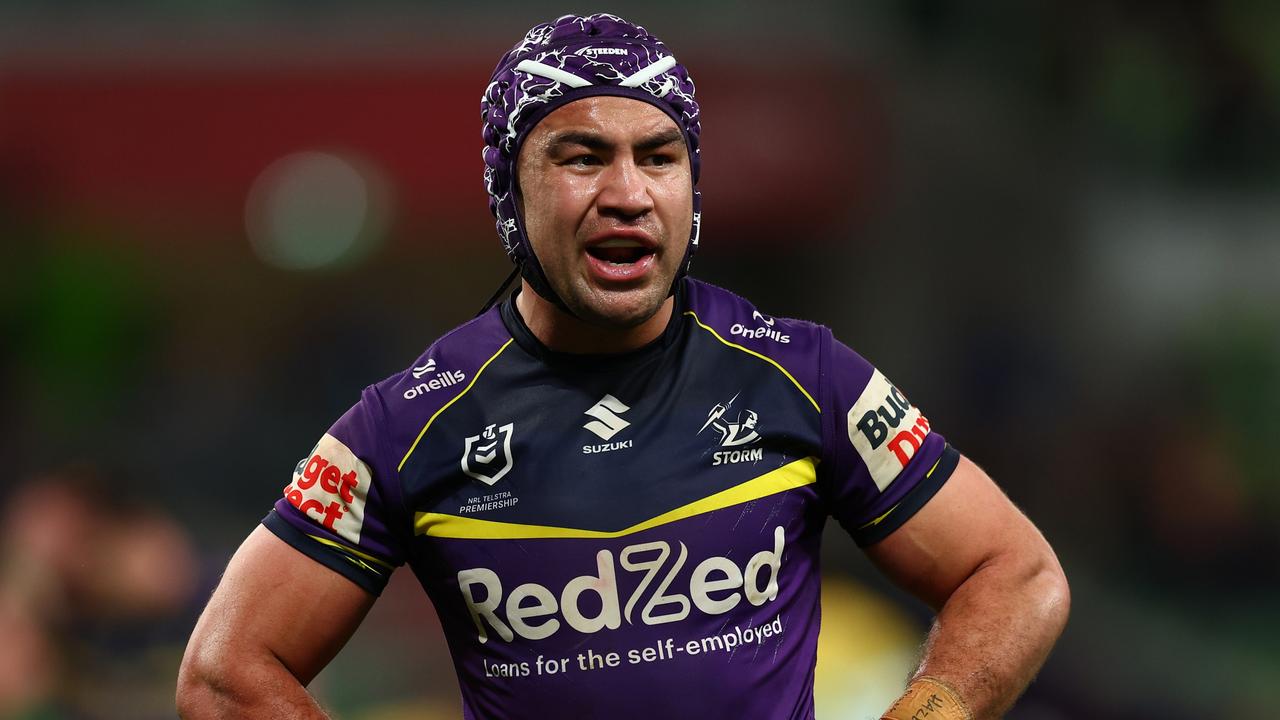
  • ‘I’m here’: Jaydn Su’A shuts down early release rumours as he prepares to return from lengthy ban

    ‘I’m here’: Jaydn Su’A shuts down early release rumours as he prepares to return from lengthy ban

    One of the National Rugby League’s most experienced forwards has put to bed widespread speculation of an early mid-season departure, confirming he will see out the remainder of his contract with the St George Illawarra Dragons before his scheduled move to the Parramatta Eels in 2027.

    Veteran back-rower Jaydn Su’A, who is set to make his return to the Dragons’ starting 17 this weekend after serving a three-match suspension, has already put pen to paper on a three-year deal that will see him join the Sydney-based Eels once his current tenure at the Red V wraps up at the end of the current season. The 28-year-old, who previously plied his trade with the Brisbane Broncos and South Sydney Rabbitohs before a five-season stint with the Dragons, addressed rumours of an early switch that gained traction this week, amid St George Illawarra’s poor run of form that has already ruled them out of 2024 finals contention.

    Speaking to media on Wednesday, Su’a made his position clear, shutting down any talk of an immediate departure. “There have been conversations in-house, but I’m here for the rest of the year,” he said. “I just want to play my best and do whatever I can to help this club get some wins.”

    Su’a has been one of the Dragons’ standout performers throughout the 2024 campaign, but was sidelined after a controversial high tackle on former Rabbitohs teammate Cam Murray in Round 7, which resulted in an immediate send-off. The suspension came just one day after Su’a formally announced his three-year deal with Parramatta, leading to unsubstantiated claims that his decision to leave the club stemmed from dissatisfaction with the development of the Dragons’ young cohort of incoming forwards. The veteran NRL representative pushed back firmly on those claims.

    “I didn’t really ever think like that,” Su’a said. “I was in talks with the club early this year and obviously that stuff broke down, but at the end of the day when your time is done, it’s done. For me, it was time to look elsewhere and look for another opportunity. I’m thankful I got that, but at the end of the day, I’m here for the rest of the year and just want to go out there and put my best foot forward. I’ve been here for five years now, so I just want to go out and play.”

    The former Queensland State of Origin representative also noted that he was open to extending his tenure at the Dragons, but ultimately saw the 2027 move as a critical career step. “I was open (to staying). I’m coming to that age now where the next move I make is probably vital, but I know I’ve still got some good footy left in me. Things happen for a reason and that’s been done now, so as I said, I’m still here for another six months. I’ll do what I do and I’ll give my all like I always do.”

    Reflecting on his half-decade with the club, Su’a acknowledged the many struggles the Dragons have endured during his time in Wollongong, noting that the organisation is finally starting to turn a corner – even if he will not be part of that next chapter. “It’s been hard. I’ve been through a lot of dark days with this club, and you can see the light at the end of the tunnel, but I’m not going to be here. I’m grateful for my time here, thankful to all the people that have helped me along the way, and it is what it is.”

    Much has shifted at the club since Su’a last took the field in Round 7. Former head coach Shane Flanagan has departed the club, with interim boss Dean Young taking the reins – and the side has yet to register a win under his leadership. For this weekend’s clash against the New Zealand Warriors, Young has named Su’a to start at right centre, covering for the injured Moses Suli, who is sidelined with a back issue. Su’a has spent recent weeks training with the Dragons’ NSW Cup feeder side, and has previous experience filling in at the centre position, making him the ideal emergency replacement.

    After a frustrating three weeks on the sidelines, Su’a said he is eager to get back out on the field and contribute to the club for the remainder of the season. “It’s tough, but all I can do is rock up to training with a good attitude and prep the boys as well as I can. I couldn’t really do anything, so I just had to bide my time, train hard, and be ready for when I get called back in.”

  • Sky bridges, citizen science protect endangered Malaysia monkeys

    Sky bridges, citizen science protect endangered Malaysia monkeys

    Against the backdrop of accelerating habitat loss across Southeast Asia, one grassroots conservation initiative in Penang, Malaysia, is turning to low-cost innovation and local community participation to pull the iconic dusky leaf monkey back from the brink of extinction. Listed as endangered by global conservation bodies, the distinct primate—easily identified by the crisp white fur mask that frames its dark eyes—faces three interconnected existential threats: fragmented forest territories cut off by urban development, growing conflict with human communities expanding into historic monkey habitats, and persistent poaching.

    On a recent afternoon, a female dusky langur carefully picked her way across a swaying red rope canopy bridge strung high above a busy residential thoroughfare in Penang, her movements documented by a team of local conservation volunteers who have become the species’ most dedicated advocates. For these primates, survival today hinges on two simple, effective tools: these man-made sky crossings and the growing network of ‘citizen scientists’ who track and protect the langurs day-to-day.

    The work is led by Langur Project Penang (LPP), a community-focused conservation organization founded by wildlife researcher Yap Jo Leen. The idea for the crossing project grew out of a sobering observation Yap made during 2016 fieldwork: langurs were repeatedly risking their lives darting across multi-lane roads to reach coastal foraging areas, since urban development had split their once-continuous forest habitat into isolated pockets.

    “At the time, the idea was wild because no one in Malaysia had actually done it before,” Yap told Agence France-Presse. While canopy bridges had been used successfully to protect other endangered primates across the region—including a recent sighting of orangutans using similar structures in Indonesia—no program had yet tested the model for Penang’s dusky langurs.

    After experimenting with multiple materials, Yap’s team settled on a low-cost, eco-friendly design: upcycled fire hoses twisted to mimic the texture and shape of natural tree branches, suspended between existing trees on one side of the road and custom-installed steel poles on the other. To date, LPP has installed three bridges across the region, including the latest structure added in April in the popular coastal tourist suburb of Batu Ferringhi.

    Early data confirms the approach is working. At one busy crossing site, eight langurs died in vehicle collisions between 2016 and 2018. Since the bridge was installed in 2019, there have been zero recorded road fatalities for the primate population at that location. Beyond saving individual lives, the crossings also reconnect genetically isolated groups of langurs, allowing them to expand their ranges into less populated forest areas higher up Penang’s hills.

    “They have more opportunity to venture closer to the hills… and find their way to a safe haven,” Yap explained. A secondary benefit has been a sharp reduction in human-wildlife conflict: as langurs gain access to more natural foraging territory, fewer hungry groups wander into residential neighborhoods searching for food, cutting down on friction between humans and primates.

    Addressing remaining community tension is the second core pillar of LPP’s work, which leans heavily on local citizen science engagement. The organization recruits residents from all walks of life to train as volunteer citizen scientists, who track langur movements, log population data, and record GPS coordinates using simple tools including spreadsheets and the Wikiloc trail navigation app. In exchange for committing to three months of regular tracking work, volunteers receive a small stipend and hands-on field training.

    The resulting dataset gives researchers critical insight into langur home ranges, feeding patterns, and population dynamics, information that will guide future reforestation and conservation planning. Today, LPP’s volunteer team ranges in age from 17 to 65, and volunteers have affectionately nicknamed themselves the “monkey stalkers” and “monkey whisperers.”

    Teo Hoon Cheng, a 65-year-old former IT manager, signed up more than a decade ago after encountering the langurs on local hiking trails. “You don’t need background knowledge in zoology or biology. Anyone can be a citizen scientist,” he said. For local residents like retired graphic designer Tan Soo Siah, the work extends beyond tracking to mediating communication between unhappy residents and the langur population.

    Many Penang locals complain about loud langurs crossing rooftop structures, or occasional break-ins when residents leave windows open. Tan works directly with communities to explain why langurs are entering residential areas, and shares simple, non-harmful tactics like spraying a light stream of water to gently encourage langurs to leave. The work, he said, has fundamentally shifted his perspective on sharing space with wildlife.

    “Somebody needs to step up to act as a bridge for this communication,” the 64-year-old said. “It’s good that we can use my experience to show how we can live in harmony with the primates.”

    Fellow resident Lim Hock Cheng, 66, noted that community attitudes have gradually shifted as more locals buy into the coexistence model. “We’ve encroached into their habitat… We have to coexist, learn to live with each other,” he said. “The dusky langurs are also part of our society.”

    This reporting is part of a collaborative project between Mongabay and Agence France-Presse.

  • How are the World Cup favourites shaping up?

    How are the World Cup favourites shaping up?

    With just 21 days remaining until the kickoff of the 2026 FIFA World Cup, the first-ever 48-team edition hosted across North America, attention is turning to how the pre-tournament favorites are shaping up ahead of football’s biggest global stage. AFP Sport has broken down the prospects of the leading title contenders, ranked by their current FIFA positions:

    ### France (1st)
    Two-time World Cup winners France enter the tournament with a historic legacy of strong performances, having reached four finals in the last seven editions – though two of those ended in heartbreaking penalty shootout defeats. This tournament will mark the end of an era for Les Bleus, as long-serving manager Didier Deschamps, who has led the national side since 2012, will step down after the conclusion of the competition. “It’s a strange feeling,” Deschamps admitted of his final tournament in charge.

    Unbeaten in nine consecutive matches since June 2025, France have proven their depth and quality in recent outings: in March, they defeated Brazil 2-1 and followed that up with a 3-1 win over Colombia using an entirely changed starting lineup, both matches played on American soil. Their attacking unit is one of the most feared in the competition, featuring reigning Ballon d’Or winner Ousmane Dembele, superstar Kylian Mbappe, rising talents Michael Olise and Rayan Cherki – a combination that many analysts argue will be nearly impossible to contain.

    ### Spain (2nd)
    Current European champions Spain have remained undefeated since claiming the Euro 2024 title, emerging as a well-drilled, consistent unit under manager Luis de la Fuente. The breakout star of their recent run has been 18-year-old Barcelona winger Lamine Yamal, the teenage phenomenon who has redefined what young players can achieve at the highest level. However, injury concerns have cast a shadow over La Roja’s preparations: Yamal is currently sidelined with a hamstring injury, and early reports indicate he could miss Spain’s opening two group stage matches.

    In further bad luck, Yamal’s Barcelona teammate Fermin Lopez will miss the entire tournament with a foot fracture, while Mikel Merino – the Arsenal midfielder who has scored eight goals in 10 Spain appearances since 2025 – has not played since January due to his own injury issue. Despite these setbacks, Spain still retain world-class quality across the pitch, anchored by 2024 Ballon d’Or winner Rodri and creative midfield star Pedri.

    ### Argentina (3rd)
    The 2022 champions are targeting back-to-back World Cup titles under manager Lionel Scaloni, a feat only a handful of nations have ever achieved. The 2022 tournament will forever be remembered as Lionel Messi’s career crowning glory, but questions remain over whether the 38-year-old can replicate that form this summer, just a month out from his 39th birthday.

    Still, Messi has shown no signs of slowing down since joining Inter Miami, notching 12 goals in 13 MLS matches so far this season and feeling fully settled in the United States, where the knockout stage of the tournament will be played. Beyond Messi, Argentina enter the tournament in strong form: they claimed the 2024 Copa America title on American soil and finished top of South American qualifying without breaking a sweat. Their attacking depth remains impressive, with Inter Milan’s Lautaro Martinez, Manchester City’s Julian Alvarez and rising Como attacking midfielder Nico Paz all ready to contribute.

    ### England (4th)
    After three consecutive major tournament deep runs ended in heartbreak under former manager Gareth Southgate – including back-to-back Euro final defeats and quarter-final exit at the 2022 World Cup – the Three Lions are pinning their hopes on German manager Thomas Tuchel to end the nation’s 60-year wait for a major men’s title.

    England cruised through their qualifying campaign and boast arguably the deepest squad of any contender, but lingering question marks remain over their form. The side drew with Uruguay and suffered an unexpected defeat to Japan in March friendlies, while key stars including Jude Bellingham and Cole Palmer have had inconsistent club campaigns this season. All eyes will be on captain Harry Kane, who will look to carry his red-hot Bayern Munich form – 58 goals this season already – to the World Cup.

    ### Portugal (5th)
    Portugal, who have never advanced past the World Cup semi-finals in their history, enter the 2026 edition as legitimate dark horse contenders – though their prospects may hinge on whether the presence of 41-year-old Cristiano Ronaldo, set to play in his sixth World Cup, disrupts the team’s balance.

    Portugal’s greatest strength lies in their elite midfield unit, featuring Vitinha, teen star Joao Neves, Bernardo Silva and Bruno Fernandes, a group that can compete with any in the tournament. They claimed the UEFA Nations League title in 2024, but stuttered during qualifying, suffering a loss to Ireland that saw Ronaldo sent off. The superstar did not feature in Portugal’s most recent outing, a 2-0 friendly win over the United States in Atlanta.

    ### Brazil (6th)
    All eyes will be on how Brazil performs under legendary Italian manager Carlo Ancelotti, who was hired to turn the nation’s footballing fortunes around after years of underperformance. The decision to hire a foreign coach has sparked discussion about Brazil’s ongoing identity crisis, with Ancelotti’s choice to include 34-year-old Neymar – out of international action since 2023 and now playing for Santos back in Brazil – highlighting the Selecao’s current lack of depth in attacking areas. Real Madrid star Vinicius Junior now leads Brazil’s attack as their undisputed first option.

    Brazil have not won the World Cup since their fifth title in 2002, and have only reached one semi-final in that period – the infamous 7-1 home defeat to Germany in 2014. They finished a lowly fifth in South American qualifying this cycle, losing six of their 18 qualifying matches. Ancelotti, however, remains optimistic: “The World Cup won’t be won by a perfect team — because a perfect team doesn’t exist. It will be won by the most resilient team.”

    ### Germany (10th)
    Ranked 10th in the world, behind the Netherlands, Morocco and Belgium, Germany entering the title conversation may seem like a stretch after back-to-back group stage exits in 2018 and 2022, followed by a quarter-final exit as hosts of Euro 2024. But under young manager Julian Nagelsmann, the class of players including Joshua Kimmich, Florian Wirtz and Kai Havertz means the four-time champions should not be written off ahead of the tournament.

  • Taiwan leader says ‘foreign forces’ cannot decide island’s future

    Taiwan leader says ‘foreign forces’ cannot decide island’s future

    In a carefully calibrated address marking the second anniversary of his administration on Wednesday, Taiwan’s leader Lai Ching-te delivered a clear, unwavering message: the democratic island’s future will not be dictated by outside forces, even as cross-Strait tensions and shifting U.S. policy rhetoric create new uncertainty across the Indo-Pacific region.

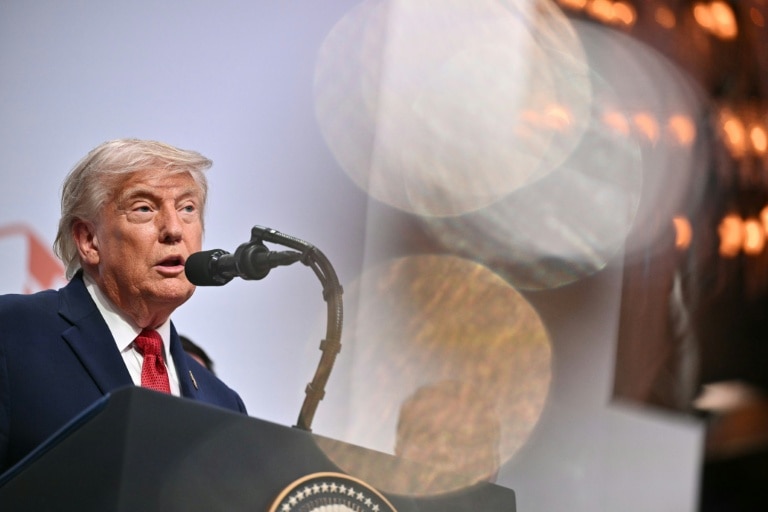
    Lai’s comments come on the heels of controversial remarks from former U.S. President Donald Trump, who recently floated the idea of using long-standing U.S. arms sales to Taiwan as a negotiating leverage with Beijing during conversations following his state visit to China last week. During that visit, Chinese President Xi Jinping pressed Trump to end all U.S. support for Taipei, a demand that has sent ripples through regional security circles. Beijing has for decades claimed Taiwan as an inalienable part of its territory and has repeatedly threatened to take the island by force if it formally declares independence. For decades, Washington has backed Taipei under the One China policy while providing critical security assistance to help Taiwan deter potential aggression, a framework that is now facing new questions after Trump’s comments.

    In his speech, Lai pushed back against both external interference and internal uncertainty. “Taiwan’s future cannot be decided by foreign forces, nor can it be held hostage by fear, division, or short-term interests,” he stated. Echoing the island’s long-standing framing of cross-Strait tensions, Lai repeated the position that China is the ultimate root cause of regional instability in the Taiwan Strait, and characterized U.S. arms sales as a legitimate, legally grounded commitment to defending the island’s democratic system.

    The Taiwanese leader emphasized that his administration has been ramping up defense outlays with a clear, defensive goal: preventing conflict, not provoking one. “Threats are greater than ever before,” Lai noted, adding that “Taiwan must have the capability to protect itself and to uphold peace and stability in the Taiwan Strait.” While he expressed openness to constructive, equal-footed exchanges with Beijing, Lai drew a firm line on core interests, stressing that “we will not sacrifice our sovereignty and democratic way of life.”

    Since Trump returned to the White House, his administration has pressured Taiwan to significantly increase its own defense spending and expand economic investment in the United States, a shift that has pushed Taipei to accelerate military modernization efforts. Despite billions of dollars poured into upgrading domestic military capabilities and building up a local defense industry, the island still remains heavily dependent on U.S. supplies of advanced, high-technology weaponry that would be indispensable in any conflict with China.

    Just recently, Taiwan’s legislature approved a landmark $25 billion defense spending package earmarked specifically for the procurement of U.S. arms. According to local legislative accounts, the fund will cover nearly $9 billion of the $11.1 billion arms deal Washington announced last December, as well as set aside resources for a second phase of proposed sales worth roughly $15 billion that has not yet received final U.S. approval.

    For his part, Trump has called for both Beijing and Taipei to de-escalate tensions, noting that he will make a final decision on the pending arms sales package “over the next fairly short period of time.” He has also raised the possibility of holding a direct phone call with Lai, a move that would represent a major break from decades of U.S. diplomatic protocol. Washington cut formal diplomatic ties with Taipei in 1979 when it switched recognition to Beijing, and any high-level official contact between a U.S. president and a Taiwanese leader would almost certainly trigger a severe rupture in U.S.-China relations.

    Lai addressed the prospect of this conversation directly on Wednesday, saying that if the call goes forward, he will make clear that his administration remains committed to upholding the cross-Strait status quo, and that it is Beijing that has systematically undermined peace and stability in the region. In the days following Trump’s comments on arms sales, Lai’s government has launched a public outreach effort to reassure both domestic audiences and international partners that long-standing U.S. policy toward Taiwan remains unchanged, and that Trump made no binding commitments to Beijing to restrict arms sales during his Beijing visit.

  • Putin, Xi to underscore alliance strength after Trump visit

    Putin, Xi to underscore alliance strength after Trump visit

    Just days after former U.S. President Donald Trump wrapped up his high-profile visit to Beijing, Russian President Vladimir Putin touched down in the Chinese capital this Wednesday for high-stakes talks with Chinese President Xi Jinping — a meeting framed to showcase the unwavering strength of the bilateral strategic partnership amid shifting global geopolitics.

    Trump’s trip last week was marked by elaborate ceremonial pomp, but ended without major breakthroughs on key issues, most notably Chinese assistance to reopen the critical Strait of Hormuz, which has been closed amid ongoing conflict in the Middle East. For Putin, the visit comes at a challenging juncture: years of conflict in Ukraine and sweeping Western sanctions have significantly squeezed Russian energy export revenues, leaving Moscow increasingly economically dependent on Beijing, which has emerged as the primary buyer of sanctioned Russian crude.

    The disruption to global energy supplies caused by the Iran conflict has opened a new window of opportunity for Moscow to court energy-hungry China, and observers widely expect Putin to use the summit to push for accelerated progress on the long-planned Power of Siberia 2 natural gas pipeline. The project, which will carry Russian gas to China via Mongolia, would offer Beijing a land-based alternative to seaborne energy imports from the Middle East, aligning with both nations’ goals of diversifying supply chains away from Western-aligned markets. Back in April, Russian Foreign Minister Sergei Lavrov noted after meeting Xi that Moscow stood ready to “compensate” for any Chinese energy shortages triggered by Middle East supply disruptions.

    In a pre-visit video address released to the Chinese public on Tuesday, Putin emphasized that bilateral ties have reached “a truly unprecedented level”, highlighting that cross-border trade continues to expand. “The close strategic relationship between Russia and China plays a major, stabilising role globally. Without allying against anyone, we seek peace and universal prosperity,” Putin said, in a thinly veiled reference to shared opposition to U.S. global hegemony.

    Under the current era of increasingly unpredictable U.S. foreign policy under the Trump administration, Beijing has moved to shore up strategic alliances with global powers, and Russia has emerged as its closest partner. Ties between Moscow and Beijing have deepened dramatically since Russia launched its full-scale invasion of Ukraine in 2022; with Western nations cutting diplomatic and economic ties with Moscow, Putin has traveled to Beijing annually to strengthen cooperation, and Xi has repeatedly welcomed the Russian leader as an “old friend” — a warm designation he did not extend to Trump during the U.S. president’s visit last week.

    According to the Kremlin, Wednesday’s meeting will kick off with formal welcoming ceremonies, followed by closed-door talks before the two sides sign a joint statement outlining expanded cooperation. Unlike Trump’s visit, which was dominated by large-scale public ceremonial displays, Putin’s meeting will be held in a far more intimate setting, reflecting the deep familiarity and trust between the two leaders. “The Xi-Putin relationship does not require that kind of performative reassurance” that marked Trump’s reception, explained Patricia Kim, a foreign policy expert at the Washington-based Brookings Institution. Both leaders view their bilateral bond as “structurally stronger and more stable” than China’s relations with the United States, she added.

    Ahead of the talks, analysts note that Xi is expected to brief Putin in detail on the outcomes of his recent summit with Trump. The lack of tangible breakthroughs from that meeting is likely a relief for Moscow, as it eliminates any risk that Beijing struck a deal with Washington that would undermine core Russian interests, Kim noted.

    Putin is also traveling to Beijing seeking to lock in deeper Chinese economic commitment, particularly after Trump claimed during his visit that Beijing had agreed to buy more U.S. oil to meet what he called its “insatiable” appetite for energy. With Moscow heavily reliant on Chinese energy purchases to fund its war effort in Ukraine, “Putin does not want to lose that support,” said Lyle Morris, an Asia security expert at the Asia Society. Morris added that Putin will also be eager to learn Beijing’s stance on Middle East policy, after Trump signaled he expects China to take a leading role in resolving the regional standoff.

    Still, analysts point out that China and Russia may hold differing priorities when it comes to the ongoing U.S.-backed conflict in Iran. China’s economy is heavily dependent on open navigation through global key shipping lanes, so Beijing strongly prefers an early end to the standoff in the Strait of Hormuz, explained James Char, a security analyst at Singapore’s Nanyang Technological University. For Russia, by contrast, the conflict has delivered economic benefits: higher global energy prices have allowed Moscow to sell more sanctioned oil at premium rates, meaning it may have less incentive to push for a quick de-escalation.

    Beijing has maintained its long-stated neutral position on the Ukraine conflict, repeatedly calling for negotiated peace while never publicly condemning Russia’s military operation. While Trump and Xi discussed Ukraine during last week’s summit, those talks also ended without any major progress, mirroring the lack of breakthrough on the Strait of Hormuz.

  • Help wanted: Australian conservation group seeks new koala rescue dog

    Help wanted: Australian conservation group seeks new koala rescue dog

    After a decade of life-saving service that cemented his legacy as one of Australia’s most extraordinary animal heroes, Bear the koala detection dog has officially hung up his working collar, leaving the International Fund for Animal Welfare (IFAW) on the hunt for a worthy successor to continue his critical conservation work. Over his 10-year career, Bear became a global icon for his unparalleled work rescuing vulnerable koalas, particularly during the devastating 2019-2020 Black Summer bushfires that tore through Australia’s eastern coast. In that catastrophic event alone, his sharp nose and relentless dedication helped locate more than 100 koalas stranded in burned, damaged habitats, giving the vulnerable marsupials a second chance at survival and recovery.

    Josey Sharrad, head of programs for IFAW Oceania, noted that Bear established an unmatched gold standard for koala rescue detection dogs, saying his departure leaves enormous paw prints to fill. The organization is now launching a search to find a new full-time working dog that can step into Bear’s role, continuing the mission of protecting Australia’s iconic, increasingly endangered koala population.

    In a unique twist that amplifies the goodwill of the mission, IFAW is only accepting applications from rescue dogs currently waiting for permanent homes. The organization frames the model as a true win-win: it gives a shelter dog that may struggle to find a loving home a second chance at a purposeful new life, while also advancing urgent conservation work to protect koalas.

    Russell Miller, Innovation for Conservation director and long-time handler of detection dogs, explained the specific traits the organization is looking for in the ideal candidate. The perfect recruit will be a high-energy dog with what IFAW describes as an “obsessive” personality — a trait that often makes these dogs harder to place in permanent pet homes, but that makes them exceptionally effective at tracking scents during search and rescue work. Additional key attributes include a natural love of play, steady confidence, and a gentle temperament around other animals, a requirement critical for working safely with stressed, injured koalas.

    Size also matters for the role, IFAW’s job posting specifies: the candidate needs to be medium-sized, large enough to navigate rough, dense bushland without difficulty, but small enough that handlers can easily carry them out of difficult terrain when required.

    Initial candidate assessments are being held on Queensland’s Sunshine Coast in eastern Australia, but the organization is also accepting video applications from prospective candidates across the country.

    For his years of service, Bear leaves retirement with a long list of well-earned accolades, including winning Animal of the Year and Australian Dog of the Year from Puppy Tales Photos. His retirement comes as koala populations across eastern Australia continue to face ongoing threats from habitat loss, extreme weather events driven by climate change, and land development, making the work of koala detection dogs more critical than ever to conservation efforts.