标签: Oceania

大洋洲

  • Head? Stokes? Starc? Pick your team of the Ashes

    Head? Stokes? Starc? Pick your team of the Ashes

    As the 2025-26 Ashes series concludes with Australia retaining the urn and holding a commanding 3-1 lead heading into the fifth Test, BBC Sport has launched an interactive fan engagement initiative. The platform is inviting cricket enthusiasts worldwide to select their ultimate combined team from standout English and Australian performers throughout the historic contest.

    The selection process is structured across four distinct categories, requiring participants to strategically assemble their dream XI. Voters must choose two openers from options including Australia’s Travis Head, who leads with 437 runs at an average of 54.62 including two centuries, and England’s Zak Crawley (272 runs at 30.22). The middle order selection presents compelling choices between veteran excellence and emerging talent, featuring England’s Joe Root (306 runs at 43.71 with one century), Harry Brook (310 runs at 44.28), and all-rounder Ben Stokes (183 runs and 13 wickets at 21.69), alongside Australian mainstays Steve Smith and Marnus Labuschagne.

    The wicketkeeper position offers a clear statistical contrast between Australia’s Alex Carey, who has amassed 291 runs at 48.50 with 25 dismissals, and England’s Jamie Smith with 139 runs and 13 dismissals. The bowling department showcases exceptional depth with Mitchell Starc’s series-leading 27 wickets at 18.74 average, complemented by supporting pace from Scott Boland (17 wickets) and England’s Josh Tongue (12 wickets at 18.58). The selection also includes injury-affected stars like Pat Cummins and Mark Wood, who had limited participation.

    The finalized fan selections will be revealed across BBC Sport’s digital platforms, featured on The Ashes Debrief program, and discussed in-depth on the Test Match Special podcast as part of the comprehensive series post-analysis.

  • US allies, foes alarmed by toppling of Venezuela’s Maduro

    US allies, foes alarmed by toppling of Venezuela’s Maduro

    A dramatic U.S. military operation culminating in the capture of Venezuelan President Nicolás Maduro has triggered widespread international condemnation, drawing sharp criticism from both American allies and adversaries alike. The pre-dawn assault on Caracas, which involved airstrikes and special forces, resulted in Maduro and his wife being transported to New York to face serious drug-trafficking and weapons charges.

    President Donald Trump’s declaration that the United States would ‘run’ Venezuela and access its substantial oil reserves, accompanied by an image of a blindfolded and handcuffed Maduro on a U.S. naval vessel, has intensified global scrutiny. The operation has sparked a complex diplomatic firestorm, revealing deep divisions in the international community’s response to unilateral military action.

    Nations with longstanding ties to Caracas, including China, Russia, and Iran, issued swift condemnations. China’s Foreign Affairs Ministry denounced the operation as a ‘clear violation of international law,’ while Russia demanded the immediate release of ‘the legally elected president of a sovereign country.’ Iran similarly condemned what it termed a ‘flagrant violation of national sovereignty.’

    Remarkably, Washington’s traditional European allies expressed significant reservations. France emphasized that no solution to Venezuela’s crisis could be externally imposed, with President Emmanuel Macron advocating for political transition under opposition figure Edmundo Gonzalez Urrutia. Spain warned the intervention ‘pushes the region toward a horizon of uncertainty and militarism,’ while Germany acknowledged the legal complexity of the operation despite recognizing Maduro’s disastrous leadership.

    The European Union collectively urged respect for international law while noting Maduro’s lack of legitimacy, though candidate country North Macedonia and Balkan allies Albania and Kosovo broke ranks to support Washington. Britain adopted a nuanced stance, with Prime Minister Keir Starmer stating the UK would ‘shed no tears’ over Maduro’s demise while planning discussions with U.S. counterparts about the evolving situation.

    Italy’s far-right Prime Minister Giorgia Meloni provided rare European support, characterizing the operation as ‘legitimate and defensive.’ Israel hailed American action as leadership of ‘the free world,’ while Ukraine focused criticism on Maduro’s repressive governance rather than addressing the military operation’s legality.

    Beyond official government reactions, United Nations Secretary-General Antonio Guterres expressed deep alarm, warning the operation could ‘constitute a dangerous precedent’ in international relations. The broader implications for regional stability were emphasized by Mexico and Colombia, with the latter predicting a humanitarian crisis resulting from what it termed an ‘assault on the sovereignty of Latin America.’

  • Sydney airport, hospital, and Qantas flight on alert as NSW records third measles case

    Sydney airport, hospital, and Qantas flight on alert as NSW records third measles case

    Health authorities in New South Wales have issued a renewed public health alert following the confirmation of a third measles case in the state, linked to travelers returning from Southeast Asia. The latest exposure sites include Sydney Airport’s domestic Terminal 3 Qantas arrival hall and a specific interstate flight, significantly expanding the list of potential public exposure venues.

    NSW Health has identified specific exposure windows, urging individuals present at the Terminal 3 domestic arrivals area between 10:30 PM and 11:00 PM on December 29 to monitor for symptoms. Passengers aboard Qantas flight QF748 from Adelaide to Sydney arriving during that same period have also been alerted. Additionally, visitors to Concord Repatriation General Hospital’s Emergency Department between 1:00 PM and 4:10 PM on January 3 are considered at potential risk.

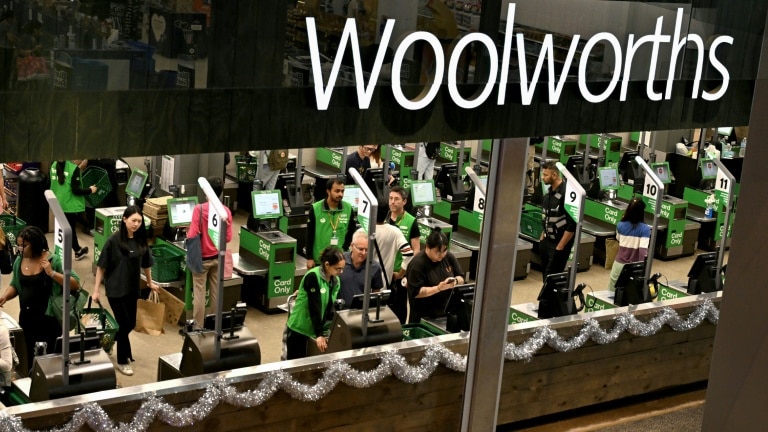
    This development brings the total number of identified exposure locations across NSW to more than 50, spanning from December 3 to January 3. The list includes various restaurants, train services, Woolworths supermarkets in eastern and northern Sydney, multiple healthcare facilities, Sydney Airport’s international terminal, and a children’s play area.

    Health officials emphasize that while there is no continuing risk of exposure at any identified sites, individuals who visited these locations during specified times should remain vigilant for symptoms until January 16 for airport exposures and January 21 for the hospital exposure.

    Measles, a highly contagious vaccine-preventable disease, spreads through airborne transmission when infected individuals cough or sneeze. Initial symptoms typically appear approximately 10 days after exposure and often resemble influenza, including fever, fatigue, cough, runny nose, and red, sore eyes. A distinctive rash usually develops within several days. Approximately one-third of infected individuals experience complications that may require hospitalization, including pneumonia, diarrhea, and ear infections. In severe cases, measles can lead to serious illness or death.

    Dr. Conrad Moreira, Acting Director of Public Health for Western Sydney Local Health District, emphasized the importance of vaccination: ‘The measles vaccine can prevent the disease even after exposure if administered promptly. This situation serves as a critical reminder for all residents to verify their vaccination status, particularly before international travel.’

    Health authorities specifically recommend that anyone born after 1965 ensure they have received two doses of the measles vaccine. The measles-mumps-rubella (MMR) vaccine is available for children as young as six months traveling overseas and is routinely administered to children aged 12-18 months. The vaccine is provided free of charge in NSW for eligible individuals born after 1965 who haven’t previously received two doses.

    The recent cases have been linked to travel to Southeast Asian destinations currently experiencing measles outbreaks, including Indonesia (Bali), Vietnam, Thailand, and the Philippines – all popular vacation spots for Australian tourists.

  • Maduro now in New York jail as Trump says US to ‘run’ Venezuela

    Maduro now in New York jail as Trump says US to ‘run’ Venezuela

    Venezuela has been plunged into a profound constitutional crisis following an unprecedented US military operation that resulted in the capture and extradition of President Nicolás Maduro to face criminal charges in New York. The dramatic pre-dawn raid, executed by American special forces in Caracas, represents one of the most significant interventions in Latin America by the United States in decades.

    According to military officials, approximately 150 aircraft participated in the coordinated operation that targeted multiple strategic locations throughout the Venezuelan capital. General Dan Caine confirmed that intelligence operatives had spent months meticulously tracking Maduro’s routines and personal habits prior to the capture. The Venezuelan leader and his wife were apprehended without resistance and transported via US government aircraft to a military facility before being transferred to New York City.

    The White House released footage showing Maduro handcuffed and wearing sandals while being escorted through a Drug Enforcement Administration facility. The 63-year-old leader was heard remarking ‘Good night, happy new year’ in English during the processing.

    President Trump announced that cabinet members would be designated to assume administrative control of Venezuela while indicating possible extended military deployment. ‘We’re not afraid of boots on the ground,’ Trump stated, adding that US forces would remain until ‘the proper transition can take place.’ Surprisingly, Trump expressed willingness to collaborate with Maduro’s vice president, Delcy Rodriguez, rather than US-backed opposition leader Maria Corina Machado, whom he dismissed as lacking sufficient support.

    The operation has triggered international condemnation, with China denouncing the action as a ‘clear violation of international law’ and demanding Maduro’s immediate release. United Nations Secretary-General Antonio Guterres expressed deep concern that ‘the rules of international law have not been respected,’ while France warned that solutions cannot be ‘imposed from outside.’ The UN Security Council has scheduled an emergency meeting to address the escalating crisis.

    Venezuela’s Supreme Court has subsequently ordered Rodriguez to assume presidential powers in an acting capacity, creating competing claims to legitimate governance. The political vacuum has left the country’s future uncertain despite Trump’s promises that major US oil companies would invest billions to rehabilitate Venezuela’s energy infrastructure.

  • NSW Police suspend search for two swimmers missing from Sydney over New Years

    NSW Police suspend search for two swimmers missing from Sydney over New Years

    Marine rescue operations in Sydney have been officially suspended for two individuals who disappeared in separate maritime incidents during the New Year’s celebrations, marking a devastating start to 2024. The series of tragedies began on New Year’s Eve when emergency services responded to Palm Beach following reports of a capsized vessel near Barrenjoey Headland. While Surf Life Saving personnel successfully retrieved a 47-year-old man who subsequently died at the scene, and a helicopter rescue team saved a 45-year-old man who had climbed onto nearby rocks, a 16-year-old passenger remained unaccounted for despite intensive search efforts.

    In a separate incident on January 1st, a 22-year-old man encountered difficulties while swimming at Coogee Beach approximately at 6:00 AM. Multiple agencies including NSW Police Marine Area Command, NSW Ambulance, Surf Life Saving NSW, and Randwick City Council conducted comprehensive land and sea searches throughout the day, yet were unable to locate the missing individual.

    Authorities have confirmed that both search operations have now been suspended, though the NSW Police Marine Area Command will maintain patrols around Barrenjoey Headland, while Eastern Beaches Police Area Command will continue land surveillance at Coogee until further notice.

    These incidents contributed to a tragic toll of three confirmed drowning deaths across NSW beaches during the holiday period. Additional fatalities included a 25-year-old woman discovered at Maroubra Beach and a 45-year-old woman who drowned at Dunbogan Beach near Port Macquarie on the previous Thursday.

    Surf Life Saving NSW CEO Steven Pearce characterized the events as a ‘terrible’ commencement to the new year, noting that statistical trends indicate triple the likelihood of drowning incidents during this period compared to other times throughout the year. The organization had anticipated heightened operational demands based on historical data indicating increased water-related accidents during holiday celebrations.

  • Shock, disbelief in bombed Venezuelan port

    Shock, disbelief in bombed Venezuelan port

    Twelve hours following a clandestine United States military operation targeting Venezuelan leadership, the port city of La Guaira north of Caracas remained shrouded in smoke, its infrastructure scarred by precision airstrikes. The mission, designed to apprehend and extract President Nicolás Maduro from his stronghold, represents an unprecedented escalation in the protracted geopolitical standoff between Washington and Caracas.

    Eyewitness accounts describe scenes of devastation and collective trauma. Alpidio Lovera, a 47-year-old resident, recounted the terrifying sequence of events: “First we saw the flash and then the explosion,” prompting him to flee with his pregnant wife to higher ground. The force of the strikes deformed shipping containers, blew out windows of public buildings, and ripped roofs from residential houses, though official reports noted no casualties in the area.

    The psychological impact on residents was profound. Linda Unamuno, 39, broke into sobs describing how the blast destroyed her roof, initially mistaking the attack for another natural disaster reminiscent of the catastrophic 1999 landslide that claimed thousands of lives. “I saw the fire from the airstrikes. It was traumatizing,” she stated, adding she “wished it on no-one.”

    While US President Donald Trump publicly confirmed Maduro’s capture with an image of the handcuffed and blindfolded leader aboard a US warship, skepticism persists among segments of the Venezuelan population. Pensioner Alirio Elista, 68, whose water tank was damaged in the strikes, dismissed the news as “fake” and criticized those celebrating the intervention. His weekly pension of under half a dollar “doesn’t pay for anything,” he complained, highlighting the desperate economic conditions that have plagued the country under Maduro’s rule.

    The operation culminates years of US sanctions and alleged coup plots against Maduro, whose administration presided over rampant inflation and critical shortages of fuel, medicine, and basic foodstuffs despite Venezuela possessing the world’s largest proven oil reserves. Trump’s vision of US oil companies revitalizing Venezuela’s crumbling infrastructure contrasts sharply with local expectations of a long recovery. As Elista predicted: “We’ll need at least 15 years to get back to where we were.”

  • ‘At last’: Venezuelans abroad celebrate Maduro ouster

    ‘At last’: Venezuelans abroad celebrate Maduro ouster

    Venezuelan expatriates across the globe erupted in emotional celebrations following the military capture of President Nicolás Maduro by United States forces. The operation, which resulted in Maduro’s extradition to New York to face drug trafficking charges, triggered massive gatherings from Santiago to Madrid as diasporic communities expressed overwhelming relief after years of economic hardship and political repression.

    In Santiago, Chile, thousands congregated in a vibrant sea of yellow, blue, and red national flags. Yurimar Rojas, a local street vendor, encapsulated the collective sentiment shouting over the cheering crowds, “At last we’ll be able to go back home!” This hope was echoed by Yasmery Gallardo, 61, who announced immediate plans to return after eight years abroad. The celebrations carried particular significance in Chile, where many Venezuelans face uncertainty under incoming far-right President José Antonio Kast’s proposed migrant deportation policies.

    Similar scenes unfolded in Miami where revelers chanted gratitude toward former US President Donald Trump, whom they credit for enabling the operation. Ana Gonzalez declared, “Today, the dreams of Venezuelans abroad came true,” while Anabela Ramos celebrated the culmination of a 27-year wait for political change.

    Madrid witnessed profound emotional displays as Pedro Marcano, 47, stated his intention to return home after 11 years, though he cautioned that clarity regarding Venezuela’s political future remained necessary. The gathering observed a moment of silence for a broadcast by opposition leader María Corina Machado, whose message of freedom moved many to tears despite US assertions questioning her capacity to lead.

    While most celebrations continued peacefully, dissenting voices emerged protesting American interventionism. Demonstrators gathered outside US embassies in Mexico City and Buenos Aires, waving anti-war banners and chanting slogans like “Out, Yankees, out!” arguing against perceived American imperialism and resource exploitation.

    The developments leave Venezuela’s political landscape in flux. While Vice President Delcy Rodríguez insisted Maduro remains the legitimate leader and promised to defend national sovereignty, the US administration has committed to overseeing transitional governance. For countless Venezuelans who fled economic collapse and humanitarian crisis, however, the events represent long-awaited justice and the potential for national healing.

  • At least four killed in protest clashes in western Iran: rights groups

    At least four killed in protest clashes in western Iran: rights groups

    Rights organizations reported that at least four individuals were killed on Saturday during violent confrontations between demonstrators and Iranian security forces in the country’s western region. The clashes mark the seventh consecutive day of nationwide protests initially triggered by widespread economic discontent and soaring living costs within the Islamic Republic.

    According to Norway-based Hengaw, which focuses on human rights in Iran, Revolutionary Guards employed live ammunition against protesters in the Malekshahi district of Ilam province. The group confirmed the fatalities involved members of Iran’s Kurdish minority and indicated it was investigating potential additional casualties amid reports of dozens wounded.

    Iran Human Rights NGO, similarly headquartered in Norway, corroborated the death toll while reporting approximately 30 injuries following security forces’ intervention against demonstrations in the same region. The organization released graphic footage purportedly showing bloodied victims at the scene, though independent verification remained challenging due to reporting restrictions.

    Official Iranian media presented contrasting narratives, with Mehr news agency reporting the death of a Revolutionary Guard during alleged attempts by ‘rioters’ to storm a police station. Official sources acknowledged casualties among security personnel, with at least 12 total deaths recorded since Wednesday according to government statements.

    The US-based Human Rights Activists News Agency documented extensive protest activity across 174 locations in 60 cities spanning 25 provinces over the seven-day period. Their assessment indicated at least 582 arrests and 15 protester fatalities, though these figures could not be independently verified.

    The current wave of civil unrest originated last week when merchants shut down Tehran’s historic bazaar, a significant economic center, before spreading to multiple regions and academic institutions. United Nations Special Rapporteur for human rights in Iran Mai Sato expressed concern on Friday about escalating tensions between protesters and security forces, explicitly warning against repeating the violent suppression tactics employed during the 2022-2023 protest movement that resulted in hundreds of deaths.

  • Swiss investigate bar managers after deadly New Year’s blaze

    Swiss investigate bar managers after deadly New Year’s blaze

    Swiss prosecutors have initiated a criminal investigation against the managers of Le Constellation bar in Crans-Montana following a catastrophic New Year’s Eve fire that claimed 40 lives and left 119 injured. Jacques and Jessica Moretti, the French couple who owned and operated the popular alpine establishment, now face charges of negligent manslaughter, negligent bodily harm, and negligent arson.

    The tragedy unfolded in the early hours of January 1st when celebratory sparklers attached to champagne bottles allegedly ignited highly flammable soundproofing foam on the basement ceiling. Security footage circulating on social media shows the rapid propagation of flames across the low wooden ceiling as unsuspecting revelers continued dancing before panic ensued.

    Wallis Chief Prosecutor Beatrice Pilloud confirmed that safety compliance constitutes a central focus of the investigation. While the bar owners maintain that all safety regulations were properly followed, preliminary findings suggest the foam’s extreme flammability potentially caused a flashover—a near-instantaneous combustion of all materials within the enclosed space.

    The human toll continues to emerge with police identifying eight Swiss nationals among the deceased, all under age 24 including two sixteen-year-olds. Italian authorities have confirmed three citizens perished in the blaze, reflecting the resort’s international clientele. Six injured individuals remain unidentified as forensic teams work to establish complete victim identification.

    Switzerland has declared January 9th a national day of mourning, with church bells scheduled to ring across the nation followed by a moment of silence. Psychological support teams from multiple countries have mobilized to assist survivors and grieving families, while makeshift memorials overflow with floral tributes and messages of solidarity near the charred remains of the establishment.

  • Venezuelans in Florida rejoice over Maduro’s fall, fret over future

    Venezuelans in Florida rejoice over Maduro’s fall, fret over future

    Venezuelan expatriates in Florida experienced a wave of emotional whiplash this weekend as celebrations over Nicolas Maduro’s dramatic capture by U.S. forces gave way to apprehension about their homeland’s political future. The community in Doral—where Venezuelans constitute over 40% of the population—initially erupted in spontaneous celebration upon learning of the pre-dawn military operation that apprehended the controversial leader.

    The scenes outside El Arepazo restaurant reflected both catharsis and anxiety. Douglas Zarzalejo, a 55-year-old who fled Venezuela eleven years ago, captured the prevailing sentiment: “We woke to news that justice finally prevailed, yet we recognize our nation’s recovery has merely begun.” Many waved Venezuelan flags and embraced strangers, their celebrations representing years of pent-up frustration with Maduro’s administration, which they blame for transforming an oil-rich nation into an economic catastrophe characterized by widespread shortages and political repression.

    President Trump’s subsequent remarks at Mar-a-Lago tempered the initial euphoria. His announcement that the U.S. would administer Venezuela temporarily and his endorsement of Maduro’s vice president, Delcy Rodriguez, as a cooperative partner generated concern. More startling was his dismissal of opposition leader Maria Corina Machado, whom the diaspora considers their legitimate representative. This contradicted international consensus that Edmundo Gonzalez Urrutia—Machado’s substitute candidate—had rightfully won the 2024 election.

    The emotional complexity was palpable. Liz Vivas, 39, wept while recalling her husband who disappeared after criticizing Maduro’s government in 2018. “Though I never received closure,” she stated, “I finally feel justice has been served.” Yet others like Raul Chavez expressed reservations: “I possess conflicting emotions. While desperately wanting freedom for Venezuela, I equally value its independence from foreign control.”

    The developments reveal a diaspora torn between gratitude for Maduro’s removal and skepticism about America’s subsequent intentions, particularly regarding Venezuela’s oil resources. The community now watches anxiously to see whether this intervention will yield genuine self-determination or merely substitute one form of external influence for another.