标签: Oceania

大洋洲

  • Rescuers search for survivors after powerful Japan quake kills 13

    Rescuers search for survivors after powerful Japan quake kills 13

    Just one day after a powerful 7.1-magnitude earthquake struck Japan’s southwestern Kumamoto Prefecture on Kyushu Island, officials have confirmed at least 13 fatalities, with emergency crews racing against time to reach potential survivors trapped beneath collapsed infrastructure across the disaster zone.

    The tremor, which hit at 4:27 pm local time (0727 GMT) on Tuesday, registered the highest possible rating on Japan’s domestic Shindo seismic intensity scale. The U.S. Geological Survey recorded the event at a slightly lower magnitude of 6.8, placing its epicenter 10 kilometers below the Earth’s surface. Widespread destruction followed in the quake’s wake: multiple buildings collapsed, dozens of small fires broke out, more than 36,000 households and public facilities were left without electricity, and key transport links were severely damaged.

    Japanese Prime Minister Sanae Takaichi confirmed the death toll to reporters on Wednesday, noting that authorities are still working to verify that all fatalities are directly linked to the seismic event. “Extensive damage has been confirmed, including casualties, collapsed buildings, fires and damage to roads,” Takaichi said. Early data from the Fire and Disaster Management Agency shows the victims include two women killed at a local shopping mall in Kashima and three others killed across other parts of the prefecture, with seven more people suffering severe injuries.

    The Kashima Aeon shopping mall suffered catastrophic damage after a gas explosion triggered by the quake collapsed ceilings and internal walls, according to government sources cited by Kyodo News. A spokesperson for Aeon confirmed that the explosion took place after all customers and staff had completed an emergency evacuation, but local officials say eight people were pulled from the rubble of the mall, five with injuries. Early unconfirmed reports suggested 20 to 30 people could be trapped inside, but Japanese public broadcaster NHK quoted police Wednesday morning stating that the actual number of trapped people is lower than initial estimates. “The exact number is not known. It is certain that staff members are trapped, but it is unclear whether any members of the public are among them,” NHK reported police as saying. As of Wednesday, rescue teams had still not gained safe access to the damaged mall structure, delaying full search operations.

    At a second major disaster site, the Nippon Paper Industries factory in Yatsushiro, nine people remain unaccounted for after a partial collapse of the facility’s smokestack.

    Witness accounts and verified video footage paint a picture of widespread chaos and fear when the quake struck. Chiharu Hara, a 35-year-old recruitment agent working in Kumamoto, told AFP she was terrified as the office building she was in swayed violently. “The office swayed violently side to side. I was afraid it would collapse. Everyone panicked,” Hara said.

    Verified footage shows heavy construction equipment, streetlights and traffic signals shaking violently during the tremor. Part of a historic wall at the centuries-old Kumamoto Castle collapsed, and multiple sections of major roads buckled, forcing vehicles to navigate dangerous, damaged sections. A pedestrian bridge partially collapsed into a local river, a freight train was capsized, and all high-speed shinkansen services through the region were suspended. Kumamoto Airport was closed for several hours after the quake but reopened Tuesday evening. As of Wednesday morning, hundreds of roads across the prefecture remained closed to traffic.

    This is not the first major seismic disaster to hit Kumamoto: in 2016, two large quakes in the same region killed 273 people. Japan is one of the most seismically active countries on Earth, located atop four major tectonic plates along the Pacific Ring of Fire. The country of 125 million people experiences an average of hundreds of small to medium quakes every year, accounting for roughly 18 percent of the world’s total seismic activity. Most tremors are mild, but major quakes have had devastating impacts on the country in recent decades, most notably the 9.0-magnitude 2011 Tohoku undersea quake that triggered a massive tsunami, killing nearly 18,500 people and causing a catastrophic meltdown at the Fukushima Daiichi nuclear power plant.

    In response to the latest disaster, Japanese authorities have deployed extensive emergency resources: Defense Ministry officials confirmed that 3,600 military personnel have been mobilized for search and rescue operations, and 20 military aircraft have been deployed to conduct aerial damage assessments across the impacted region.


  • Angus Taylor says ‘no payments’ to NSW Liberal ‘reformers’ after ICAC naming

    Angus Taylor says ‘no payments’ to NSW Liberal ‘reformers’ after ICAC naming

    An ongoing high-stakes anti-corruption investigation into the upper ranks of New South Wales’ Liberal Party has thrust Australian Federal Opposition Leader Angus Taylor into the spotlight, after his name was linked to alleged prohibited factional donations during public hearings this week.

    The Independent Commission Against Corruption (ICAC), New South Wales’ top anti-corruption watchdog, launched an eight-week probe into claims that a coordinated conservative faction calling itself “the Reformers” actively solicited and accepted unlawful political donations — including from prohibited sources — to pack party branches with ideologically aligned members and shift the state party’s overall policy direction. Named as persons of interest in the scheme are Jean-Claude Perrottet, brother of former New South Wales Premier Dominic Perrottet, alongside three influential Liberal Party powerbrokers: Christian Ellis, Jeremy Greenwood and Robert Assaf.

    The inquiry’s most recent development came when former Liberal Party member Dylan Whitelaw, who also previously worked for Catholic Schools New South Wales, told the hearing on Tuesday that he had shared a message in a private group chat for the Reformers claiming that former Catholic Schools NSW CEO Dallas McInerney had secured a commitment from Taylor for a $15,000 one-time donation plus a recurring $3,000 monthly contribution to the faction. Whitelaw has since walked back that claim, telling the inquiry on Wednesday he has no independent recollection of Taylor actually making any such payment, admitting that “potentially Dallas had told me something that was incorrect.” He added that he would be “very surprised” if Taylor had contributed financially to the group, though he could not rule out non-financial assistance from the opposition leader off the top of his head.

    Counsel assisting the inquiry Juliet Curtin however flagged evidence that Whitelaw personally secured Taylor’s support to speak at a Reformers-aligned event in Goulburn that Whitelaw organized. A message Whitelaw sent to the Reformers group chat, unearthed during the hearing, reads: “FYI Angus Taylor locked in for an event in Goulburn, will confirm a date for it tomorrow. Hopefully the beginning of our work in the southern country.” Whitelaw told the inquiry he has no memory of arranging the event.

    Taylor, who has not been accused of any wrongdoing in the inquiry, issued a flat denial of all donation allegations during a press appearance in Queensland on Wednesday. “I’m not a party to the proceedings. No payment was made,” he said. When asked whether he would agree to testify as a witness if called by ICAC, Taylor noted that the commission had not reached out to him, and declined to comment on hypothetical scenarios. “I haven’t been approached by the commission and I’m not going to give a running commentary,” he added. A spokesperson for Taylor issued a similar statement a day earlier, saying the inquiry “should be allowed to run their course free from political interference or commentary” and that all donations and fundraising activity are properly declared per existing rules, falling under the jurisdiction of the party itself.

    Beyond the factional donation claims involving Taylor, the sprawling eight-week inquiry is also investigating multiple other serious allegations. These include ties between the accused group and fugitive property developer Jean Nassif, who is accused of funneling donations to undermine the political career of sitting Liberal MP David Elliott and force the removal of Building Commissioner David Chandler. The inquiry is also examining donations from prominent NSW hotelier Michael O’Hara and from McInerney, who stepped down from his role at Catholic Schools NSW after the allegations emerged. Catholic Schools NSW has stated it had no knowledge of McInerney’s alleged actions.

    The probe is also investigating claims that two Labor councillors for the NSW district of Strathfield — Sharangan Maheswaran, an employee of Nassif, and Karen Pensabene — breached public trust, allegedly engaging in blackmail and violating state surveillance device laws. Maheswaran is specifically accused of helping Nassif discredit Chandler, and of using the same private investigator hired by Nassif to build a “dirt file” on independent rival councillor Matthew Blackmore, threatening professional retaliation if Blackmore did not comply with his demands.

    Notably, ICAC does not have the authority to make formal findings of criminal conduct. Once the public hearings conclude, the commission will refer individuals and cases to the New South Wales Director of Public Prosecutions if it finds sufficient evidence of criminality. To date, neither Dominic Perrottet, Taylor, nor any other individual named in the allegations has been found guilty of wrongdoing; the inquiry is currently testing the veracity of the claims brought forward.

  • France needs more Canadair water bombers but building them is painfully slow

    France needs more Canadair water bombers but building them is painfully slow

    As French firefighters battle the most devastating wildfires in modern history, they are constrained by a critical shortage of the aerial fire-fighting tools most effective against large blazes: just 12 Canadair water bombers remain in France’s active fleet, and new aircraft will not arrive for years due to slow, painstaking production thousands of kilometers away in a Canadian manufacturing facility. Canadair water bombers are widely recognized as one of the most powerful weapons for containing wildfires spreading across rugged, hard-to-access terrain, capable of skimming along the surface of lakes to scoop up nearly 6,000 liters of water in just 12 seconds before dumping it on advancing blazes. But building these specialized aircraft is an extraordinarily slow process, complicated by a nine-year gap in production that shattered the global supply chain for custom parts needed for assembly.

    Current manufacturer De Havilland Aircraft of Canada only restarted Canadair production in 2024, after the program was halted by previous owner Bombardier in 2015. Even with production now back online, the first two next-generation DHC-515 water bombers bound for France will not be delivered until at least 2028, with two additional aircraft ordered by France in June 2025 not scheduled for handover until 2032 or 2033.

    During an on-site visit to De Havilland’s Calgary assembly plant by Agence France-Presse, the labor-intensive nature of the production process was on clear display. Unlike modern commercial aircraft manufacturing that relies heavily on automated assembly lines, almost all work on the Canadair fuselage is done by hand: every hole is drilled individually, and every rivet is set manually by skilled technicians. This low level of automation caps the facility’s annual output at just 10 aircraft total, even as demand for the specialized fire-fighting planes surges across fire-prone Europe.

    “On the fuselage, everything is done manually, so every hole, every rivet you see on the fuselage is being done manually,” Victor Ocadiz, the plant’s Operations Director, told AFP.

    The crippling shortage of aircraft and years-long wait for new reinforcements has sparked intense political controversy in France, where opposition parties have blamed national government budget cuts for slowing efforts to expand the fire-fighting fleet ahead of record-breaking wildfire seasons driven by climate change. But De Havilland leaders say the core of the delay traces back to the decade-long production pause that gutted the program’s supply base.

    Production only restarted this year after the European Union and six member states — France, Spain, Italy, Greece, Portugal and Croatia — placed an initial collective order for 22 planes. That order book has since expanded to 40 aircraft globally, as southern European nations scramble to boost their wildfire response capacity amid rising temperatures and longer fire seasons.

    Jean-Philippe Cote, De Havilland’s Head of Strategy, explained that the nine-year gap between production halts and restart left the company forced to rebuild the entire supply chain from scratch. “We have had to put more than 50,000 different parts back into production and select new suppliers because the previous suppliers no longer existed,” Cote said.

    The first modernized DHC-515 water bomber off the line will actually go to Greece, with delivery scheduled for early 2028, Cote confirmed. French Interior Minister Laurent Nunez has said the first two French aircraft are scheduled for delivery in April and November 2028, and has stressed that the manufacturer must stick to this timeline. De Havilland has declined to confirm specific delivery dates beyond saying the timeline remains aligned with official forecasts.

    While the supply chain rebuild has delayed new deliveries, it comes with a hidden benefit for the more than 160 older-generation Canadair water bombers already in service around the world — half of which are operated in Europe, and many of which are more than 30 years old. With production restarted and parts manufacturing back online, Cote noted that repair and maintenance has become far faster for existing fleets. “If an aircraft is damaged, we can quickly take a part from the production line and send it to France. It is becoming increasingly easy for us to meet repair needs,” he said.

  • Major banks repay $55m to Aussie mortgage holders over costly offset account failures

    Major banks repay $55m to Aussie mortgage holders over costly offset account failures

    Australia’s financial regulator has uncovered systemic banking errors that have left thousands of mortgage borrowers overpaying on their home loans, forcing eight major national and international lenders to issue $55 million in compensation to affected customers. The Australian Securities and Investments Commission (ASIC), the country’s corporate financial watchdog, launched a targeted review of 204,000 home loans finalized between March and August 2023, examining accounts across eight leading institutions: AMP Bank, ANZ, Commonwealth Bank, Great Southern Bank (formerly CUA), HSBC, ING, Macquarie, and Westpac.

    The review revealed critical flaws in how banks managed mortgage offset accounts – financial products marketed to customers as a reliable tool to cut long-term interest costs by linking a savings account balance directly to a home loan principal. ASIC found that many lenders lacked functional systems to track whether customers had actually requested an offset account, while others relied on clunky, manual data processes that were prone to human error.

    One glaring example highlighted in the report underscores the hidden harm of these mistakes: when a bank processed a routine modification to a customer’s home loan in April 2023, an administrative error incorrectly disconnected the customer’s offset account from their loan principal. Unbeknownst to the borrower, this mistake led to more than $3,500 in unnecessary extra interest charges over time. In another case, a bank identified a procedural gap that delayed offset account linking by up to 21 days, but failed to update its flawed process for nearly two full years. The regulator also noted that most banks were unnecessarily slow to resolve confirmed errors and issue compensation to wronged customers.

    Offset accounts have grown to become one of the most popular home loan features in Australia. Recent industry data from the Australian Prudential Regulation Authority (APRA) shows that 55% of all Australian mortgages – totaling 1.8 million loans – include an offset account, with a collective $349 billion in customer savings held in these products. That figure marks a record high for both the total value of funds and the share of mortgages with offset access.

    While the $55 million in remediation already paid by banks marks a significant correction, ASIC has warned that the low number of failures self-reported by banks may not reflect the full scale of the problem. Many affected borrowers have no idea they are being overcharged, because monthly repayment amounts often remain unchanged – the only difference is a higher total interest paid over the life of the loan and a slower payoff timeline. ASIC Chair Sarah Court emphasized that this hidden impact creates a double burden for customers.

    “When offset accounts don’t operate correctly, the harm can be hidden. Loan repayments stay the same, while customers unknowingly pay more interest and take longer to repay their loan,” Court explained. “Customers are doubly hit – not only losing promised interest savings but also the opportunity to use that money elsewhere.” Court added that offset accounts often come with additional costs for customers, making it all the more critical that banks deliver on the benefits they promise. She called on all Australian lending institutions to implement stronger internal controls to correctly set up and manage offset accounts, proactively identify existing errors, and fully compensate any customers who have been harmed.

    Industry observers have echoed the regulator’s concerns, urging all mortgage holders to proactively check their own offset account status. Sally Tindall, director of data insights at comparison site Canstar, described the ASIC findings as deeply worrying, noting that customers put enormous trust in banks to correctly manage their largest regular monthly expense. “The report is a disappointing but important reminder that borrowers shouldn’t assume everything is ticking along in the background,” Tindall said.

  • Airbus completes record 24-hour flight with plane to be used by Qantas

    Airbus completes record 24-hour flight with plane to be used by Qantas

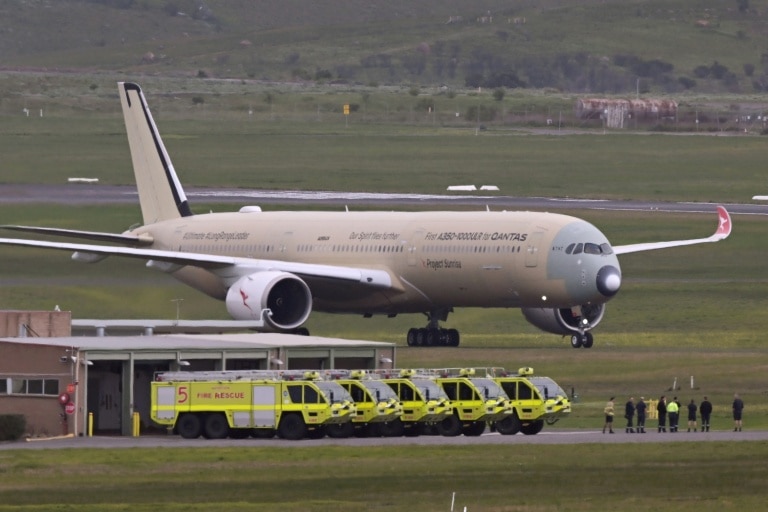
    A specially adapted Airbus A350-1000ULR has completed a historic 24-hour-plus non-stop test flight, landing in Toulouse, France on Tuesday after departing from Melbourne, Australia. The milestone flight clears a key regulatory and technical hurdle ahead of the aircraft’s entry into Australian carrier Qantas’ fleet starting next year, bringing the airline’s decade-long ambition of offering non-stop service between Australia and major Western hubs one step closer to reality.

    The aircraft covered 23,076 kilometers (14,339 miles) across three continents and two oceans, experiencing two full sunset and sunrise cycles during the journey. The flight drew widespread global aviation industry attention, becoming one of the most tracked routes on popular flight monitoring platform Flightradar24.

    The “ULR” designation on the plane stands for “ultra long range”, a capability enabled by a custom 20,000-litre rear center fuel tank added to the base A350-1000 airframe. The return Melbourne-to-Toulouse flight logged a total flight time of exactly 24 hours and 24 minutes, following an initial outbound leg from Toulouse to Melbourne one week earlier that covered 17,000 kilometers in 19 hours and 12 minutes. The return itinerary was intentionally designed to replicate the flight path the aircraft will follow when it enters commercial passenger service.

    Qantas has scheduled delivery of its first A350-1000ULR for April 2024, with 11 additional aircraft set to join the fleet afterward. The jets will power the airline’s long-planned “Project Sunrise”, which aims to launch non-stop commercial service between Sydney and London by October 2027, followed by a second non-stop route linking Sydney and New York City.

    The 12-person test crew included eight Airbus test pilots, two Qantas operating pilots, and two Airbus aeronautical engineers. During the flight, the team collected data on a series of key technical metrics: the structural integrity of the modified airframe built to accommodate the extra fuel tank, the performance of new cabin soundproofing modifications, and the efficiency of the aircraft’s in-cabin air circulation system.

    Qantas first announced Project Sunrise nine years ago, but the initiative has faced repeated delays amid regulatory reviews and supply chain disruptions. Currently, the world’s longest active commercial flight is Singapore Airlines’ non-stop route between Singapore and New York, which covers 15,350 kilometers with a flight time of more than 18 hours, operated by a different variant of the A350 family. Once launched, Qantas’ new ultra-long-haul routes will extend the world’s longest commercial flight time by more than six hours, opening a new era of long-distance air travel.

  • AFL: Ross Lyon vows St Kilda will not trade injured star Max King

    AFL: Ross Lyon vows St Kilda will not trade injured star Max King

    AFL club St Kilda has publicly reaffirmed its full commitment to star forward Max King, with senior coach Ross Lyon pushing back against widespread external speculation to promise the injury-stricken player the club remains “all in” on his long-term future at the club.

    King’s long-awaited return to competitive AFL action last week, which came after two full years sidelined by a brutal run of soft tissue injuries, ended in devastating disappointment: the 24-year-old reinjured his hamstring during the third quarter of his comeback game, where he recorded just two disposals (one kick and one handball). The setback sparked intense media scrutiny, with questions raised over King’s future at the club and Lyon’s handling of the situation after the coach left Marvel Stadium earlier than the rest of his playing group post-match.

    Addressing the controversy at a press conference on Wednesday, Lyon opened up about the emotional toll of King’s latest setback, acknowledging the forward’s utter devastation after putting in months of relentless preparation to earn his comeback spot. “If you’ve given everything and it doesn’t work out, well, you are devastated,” Lyon said. “I’ve been there on grand final days. In Max’s case, he’s given everything, given himself the best chance and then because you are emotionally vulnerable, you’ve left nothing on the table.”

    Lyon also pushed back against criticism over his early exit from the stadium after the match, joking that while some expected him to rush straight to King’s Brighton home immediately after the final siren, skipping the post-match press conference was never a realistic option. The coach added that he and King had already held a constructive, honest conversation on Monday, where he pledged the club’s full support through another grueling rehabilitation process.

    King’s injury nightmare stretches back across two years, with the forward undergoing three knee surgeries in 2025 before suffering calf and hamstring strains earlier this 2026 season. After escaping Melbourne’s strict pre-season training bubble to accelerate his recovery with specialized work on the Gold Coast, the latest hamstring tear has forced him back into another extended rehabilitation period. But Lyon pushed back against framing the setback as a career-altering catastrophe, pointing to a long list of elite AFL players who have overcome repeated hamstring issues to return to top form.

    “Charlie Curnow played two games in two years, so is it ideal? No. Will we get him right? Yes,” Lyon said. “His knee is in great shape, what’s good is we all saw what he looks like and what it feels like, he smelt it. Mate, we’re on our knees, but we’re not bowed, we’ll be back and I’m with you, we’re not trading you.”

    Lyon emphasized that only the club’s board, the coaching staff, King, his family and his management have a say in the forward’s future, dismissing all outside speculation as unhelpful “noise”. “Those with a seat at the table – our board, me, Max, his parents and his manager – we’re all in. Everyone else is just making noise. You haven’t got a seat at the table, you have no influence, you have no say. We’re in it together with Max and we’ll get through this.”

    To give King the best possible chance of a full and lasting recovery, Lyon confirmed the club is willing to explore every available option, including sending the forward overseas for specialized rehabilitation. Potential destinations include high-altitude training hubs in Dubai and the elite Red Bull training facility in the United States, which has previously been used by star AFL players Christian Petracca and Travis Boak to accelerate recovery from long-term injuries.

    King was already meeting with a specialist to assess his injury on Wednesday, when Lyon spoke to the press. The coach explained that the root of King’s repeated injury issues stems from deconditioning after knee cartilage repair surgery, which left the forward out of full training for four months before his comeback. “The real issue is the underlining deconditioning of an athlete after repairing cartilage, four months of no work, build him up for four months and then it tears,” Lyon explained. “All players will tell you, if you get in the main program you become bulletproof almost, and if you’re out of it like this, it’s like a yoyo and you just need a bit of luck to get continuity.”

    Lyon added that the extended rehabilitation window will now allow King to complete a full off-season pre-season program, putting him on track to be ready for the first day of pre-season training ahead of next year’s AFL campaign. The coach also addressed growing concerns over King’s mental health, noting that stepping away from the constant media spotlight will give the forward space to focus on his recovery without additional pressure.

  • Eseme, Hobbs shine in Glasgow rain to win 100m Commonwealth gold

    Eseme, Hobbs shine in Glasgow rain to win 100m Commonwealth gold

    Glasgow’s Commonwealth Games delivered a night of unforgettable drama and historic performances on Tuesday, as persistent torrential rain turned the Scotstoun track into a slippery, challenging battleground that tested every athlete’s resolve. Despite the hazardous conditions that forced delays to field events and reshaped race strategies, two 100m sprinters rose to the occasion to claim the sport’s most prestigious gold medals, while Australia continued its dominant run across swimming and athletics.

    Cameroon’s Emmanuel Eseme, a late bloomer who only began his track and field career eight years ago at age 24, defied all expectations to storm to victory in the men’s 100m final. Crossing the line in a blistering 9.83 seconds, the 32-year-old shattered a Commonwealth Games record that had stood for 28 years, previously held by Trinidadian sprint legend Ato Boldon from the 1996 Kuala Lumpur Games. “That was a crazy race! I’m surprised at the time,” Eseme told reporters after the win. Acknowledging the difficult conditions, he added: “The weather I didn’t want to be a setback, you know, because we’re all competing in the same environment, so I can’t have a complaint.”

    In the women’s 100m, New Zealand’s Zoe Hobbs pulled off one of the biggest upsets of the Games, surging out of the starting blocks and holding off pre-race favorites to claim gold. Both Hobbs and her top two challengers — England’s Amy Hunt and Australia’s Torrie Lewis — finished the race under 11 seconds, a rare feat that highlighted the intensity of the competition. Hobbs, who clocked a new personal best to take the win, described the moment as surreal. “I mean it’s a dream scenario to walk away with a PB and a gold medal. It was just surreal,” she said. “You can see it in my eyes. I’ve probably got mascara all over my face but I just need time to process what’s happened.”

    The persistent rain had a more pronounced impact on distance events, shaking up the men’s 10,000m podium. Australia’s Ky Robinson claimed gold, followed by India’s Gulveer Singh and the Isle of Man’s David Mullarkey, with traditional long-distance powerhouses Kenya and Ethiopia failing to place any athletes on the podium. Other athletics results saw Canada’s Olympic champion Camryn Rogers secure a dominant win in the women’s hammer throw, finishing more than five meters ahead of her nearest competitor. The women’s high jump, delayed for hours by wet conditions, stretched over three hours before Australia’s Eleanor Patterson edged out teammate Nicola Olyslagers to take gold.

    In the swimming pool, Australia continued its unprecedented dominance, matching its total gold medal haul from the 2022 Birmingham Commonwealth Games (28 golds) with one full day of competition still remaining. Distance star Lani Pallister added an 800m freestyle gold to her earlier titles in the 400m and 1500m, breaking the Commonwealth Games record in the process. “It’s been incredible. I think we’ve really shown our depth and dominance this week in Australian swimming,” Pallister said.

    Jenna Forrester claimed her third gold of the Games in the women’s 200m individual medley, while Flynn Southam took top honors in the men’s 100m freestyle. Australia also set a new Games record to win gold in the men’s 4x100m medley relay. The standout swimming story of the night, however, belonged to Filip Nowacki, who won Jersey’s first ever Commonwealth Games swimming gold medal in the 200m breaststroke. Nowacki, who also took silver in the 100m breaststroke ahead of British star Adam Peaty, said: “Coming from an island like Jersey and competing against athletes from Australia, Canada, England and the other home nations is very special.”

    On the final day of gymnastics competition, Canada’s Felix Dolci capped off a phenomenal Games, adding two more golds and a bronze to bring his total medal haul to six, including four gold medals. The 24-year-old already won gold in the team event and rings final, before adding titles in the vault and horizontal bar. When asked about his celebration plans, Dolci joked: “Definitely a couple of beers, some great food and maybe a little dessert, why not?” Wales’ Ruby Evans closed out the gymnastics competition with gold in the women’s floor final, saying she had “come out fighting” after a turbulent Games to claim the top prize.

  • US government bans humanoid robots manufactured abroad

    US government bans humanoid robots manufactured abroad

    In a sweeping move tied to long-running national security priorities and a broader push for domestic manufacturing, the Trump administration announced Tuesday it is blocking imports of most foreign-built humanoid and quadruped robots into the United States. The new restriction, added to an existing list of prohibited high-tech imports by the Federal Communications Commission (FCC), covers two-legged humanoid models and four-legged animal-inspired robots, which the regulator classifies as advanced mobile robotic devices.

    Existing import bans already target a range of foreign technology, including certain unmanned drones and major Chinese telecommunications firms Huawei and China Telecom. The new extension of the ban follows a formal review by a White House-convened task force, which determined that foreign-built robotic devices pose unaddressed cybersecurity threats to U.S. critical infrastructure and the personal safety of American citizens.

    Currently, the vast majority of humanoid robots sold in the U.S. market are manufactured overseas, with China accounting for a large share of global production. To address specific operational needs, the policy carves out exceptions: the U.S. Department of Defense and Department of Homeland Security retain authority to grant individual exemptions to the ban for use cases that serve national interests.

    The task force pointed to a high-profile data access incident to back up its security concerns: French programmer Sammy Azdoufal was able to extract user data from thousands of robotic vacuum cleaners produced by Chinese manufacturing giant DJI, a case that policymakers framed as evidence of the risk posed by connected foreign-built robotic devices. Notably, the ban only applies to new robot models seeking import authorization; units already sold or cleared for operation in the U.S. will not be affected by the new rule.

    Alongside robotic devices, the FCC added foreign-made power inverters to the prohibited import list. These devices, which convert direct current from batteries or solar arrays into grid-compatible alternating current, are a core component of renewable energy and battery storage systems, making their security a key priority for national infrastructure planners.

    The policy aligns with the Trump administration’s broader goal of expanding domestic advanced manufacturing in the robotics sector, and several U.S.-based and foreign-owned firms already have domestic production plans in motion. South Korean automotive conglomerate Hyundai, which completed its acquisition of Boston Dynamics earlier this month, is moving forward with plans to open a new U.S. robotic manufacturing facility with an annual production capacity of 30,000 units. Electric vehicle maker Tesla aims to launch mass production of its in-house developed Optimus humanoid robot imminently at two of its U.S. factories, with long-term targets of producing 1 million units annually at its Fremont, California campus and 10 million units per year at its Austin, Texas facility – though the company will rely on partial assembly rather than full domestic manufacturing of all components.

    Other domestic players already have operational production capacity in the U.S. Growing startup Figure AI currently assembles its humanoid models at a facility in San Jose, California, while Oregon-based Agility Robotics operates a production plant in Salem that can turn out 10,000 units per year. A senior Trump administration official clarified the scope of the new rule: the ban applies not only to fully assembled robots imported from abroad, but also to units assembled within the U.S. that source more than 35 percent of their components from foreign manufacturers.

  • Netanyahu holds first White House talks with Trump since Iran war began

    Netanyahu holds first White House talks with Trump since Iran war began

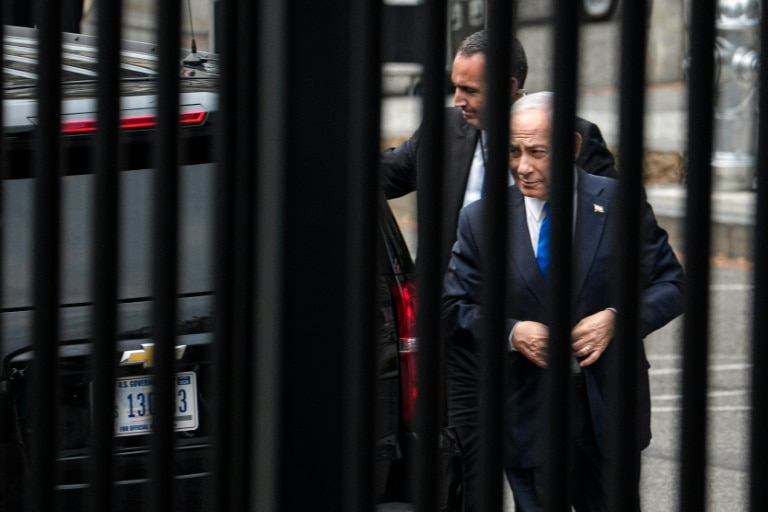
    Israeli Prime Minister Benjamin Netanyahu traveled to Washington D.C. on Tuesday to hold his first face-to-face meeting with U.S. President Donald Trump at the White House since the outbreak of open hostilities with Iran, a gathering that came as U.S. military forces confirmed they had intercepted a fresh volley of ballistic missiles launched by Iranian operatives against American personnel in the Middle East.

    The closed-door discussions, which the White House characterized as “positive and productive,” ran for approximately 90 minutes. The meeting was intentionally scheduled to repair visible public rifts between the two leaders over the conduct of the war against Iran, which erupted in late February following coordinated U.S.-Israeli airstrikes on Iranian targets. A temporary ceasefire has held in recent days, as the U.S. has signaled it is willing to create space for diplomatic negotiations to de-escalate the conflict.

    Shortly after wrapping up the talks, Netanyahu released a video statement praising the discussion, calling it “one of the best conversations I’ve ever had with the president of the United States.” He added that the talks centered on the two sides’ shared core objective: preventing the Islamic Republic from acquiring a functional nuclear weapons arsenal.

    Even as the two leaders met, new signs of regional instability linked to the Iran conflict emerged. On Tuesday, Yemen’s Iran-aligned Houthi movement announced it had launched a ballistic missile attack on the Saudi oil tanker NCC Ghazal in the Red Sea, accusing the vessel of breaking a Houthi-imposed blockade on Saudi commercial ports. While Riyadh had not issued an official response to the tanker attack claim by Tuesday evening, Saudi defense officials confirmed they had intercepted a drone assault targeting eastern Saudi oil infrastructure, blaming the attack on pro-Iranian militias operating out of Iraq.

    U.S. Central Command also released a formal statement Tuesday confirming that “Islamic Revolutionary Guard Corps forces launched multiple ballistic missiles from Iran in an attempted surprise attack on US forces based in the Middle East.” The command added that all incoming missiles were successfully intercepted before they could reach their targets, with no casualties or damage reported. This recent attempted attack came after nearly two weeks of sustained nightly U.S. airstrikes on Iranian targets, paired with repeated missile and drone strikes from Tehran targeting U.S. allies across the Persian Gulf. A mutual ceasefire held over the weekend, after the previous ceasefire brokered in April collapsed earlier this month, reigniting open hostilities that Israel has opted not to join in this latest round.

    Tuesday’s meeting marked the eighth face-to-face encounter between Netanyahu and Trump since Trump returned to the U.S. presidency in early 2025. The gathering also comes as both leaders face critical electoral contests later this year: Israel will hold national legislative elections, while Trump will lead Republican efforts in U.S. midterm congressional polls.

    Ahead of the official talks, Netanyahu participated in a private memorial dinner in Washington Monday night honoring the late U.S. Senator Lindsey Graham, a long-standing outspoken supporter of Israel. He also attended a formal public memorial service for the senator earlier Tuesday.

    Relations between the two leaders hit a public low point during April ceasefire negotiations with Iran, when multiple reports confirmed Trump launched a profane public tirade against Netanyahu, later describing the Israeli prime minister as a “very difficult guy” in a media interview. Netanyahu has sought to downplay the friction, framing the exchange as nothing more than “tactical disagreements” and insisting the two sides remain fully aligned on the core goals of the war against Iran.

    In comments ahead of Tuesday’s talks, Israeli officials emphasized that there has been no lasting rift in the U.S.-Israeli alliance. On the agenda for the meeting was discussion of implementing the U.S.-brokered framework agreement between Israel and Lebanon signed last month, an agreement that has faced significant challenges in on-the-ground execution. Leaders also planned to address the ongoing stalemate in Gaza, where international diplomatic efforts to launch reconstruction of the war-ravaged Palestinian territory have stalled entirely.

    Nearly three years after the outbreak of the Israel-Hamas war, the humanitarian situation in the Gaza Strip remains catastrophic, with widespread food insecurity, collapsing healthcare infrastructure, and ongoing Israeli military operations targeting individuals the Israeli Defense Forces identify as Hamas militants.

    Israel’s United Nations Ambassador Danny Danon told reporters Tuesday that Netanyahu’s visit came at a “critical time for the Middle East,” arguing that Iran continues “to choose terrorism over negotiations” and has blocked the Strait of Hormuz, one of the world’s most critical global oil shipping chokepoints.

    Yonatan Freeman, an international relations scholar at the Hebrew University of Jerusalem, told Agence France-Presse that the core goal of the White House meeting was to push back against widespread media reports that the U.S.-Israeli alliance was fraying. “I think that the main issue…is to show the world, to show Iran, and also even Lebanon and others…that there is no break or any kind of major disagreement between the United States and Israel,” Freeman explained.

  • Australia Post report finds online spending rose 14 per cent as shoppers waited for sales and discounts

    Australia Post report finds online spending rose 14 per cent as shoppers waited for sales and discounts

    Against a backdrop of persistent cost-of-living strain across Australian households, new data has revealed that the nation’s eCommerce sector continues to grow robustly, with consumers pouring $21.9 billion into online purchases over the final quarter of the 2025-26 financial year.

    Released by Australia Post in its latest Quarterly eCommerce Report, the figures show a 14% year-on-year increase in total online spending, a surge driven largely by popular end-of-financial-year discount events and a permanent industry shift toward deal-focused consumer behavior. Over the three-month survey period, roughly 9.3 million Australian households made at least one online purchase, underscoring how deeply digital shopping has become embedded in daily life even as ongoing budget pressures force families to rethink how they allocate their disposable income.

    Chelsea O’Reilly, Australia Post’s general manager of parcel, post and eCommerce services, noted that today’s Australian shoppers are approaching every purchase with far greater intentionality than in years past. “Shoppers are thinking more carefully about every purchase. They’re comparing options, chasing value, waiting for the right offer and expecting convenience at every step,” O’Reilly explained. This new, deliberate approach to spending is clearly visible in checkout data, which shows the average online transaction size has dropped to a record low of $90 per basket.

    “Average basket sizes have fallen to a record low, showing consumers remain willing to spend, but they’re becoming far more deliberate about how they do it,” O’Reilly added.

    The shift toward value-focused shopping has also reshaped how consumers interact with seasonal sales. New survey data included in the report finds that nearly 60% of Australian shoppers now refuse to buy most items at full price, while a matching 58% say they actively enjoy building anticipation for major national discount events. These patterns indicate that planned discount periods are no longer an occasional opportunity for savings, but a core part of how most households structure their monthly and quarterly spending budgets.

    Breaking down spending by category, online marketplaces captured the single largest share of consumer expenditure over the quarter, pulling in $5.1 billion to account for 42% of all online purchases. Food and liquor ranked as the second-largest category with $4.4 billion in online spending, followed by fashion goods at $3.1 billion.

    The report also confirms the growing impact of the so-called “Lipstick Effect” in Australian retail – a well-documented economic pattern where consumers pull back on big-ticket discretionary purchases, but continue to spend on small, low-cost indulgences that boost mood without straining tight budgets. In the current climate, this translates to many households postponing large, expensive purchases like new appliances or furniture while still treating themselves to affordable small items that fit within their adjusted budgets.

    When sorted by generation, millennials remain the largest group of online spenders in Australia, contributing a total of $7.8 billion in online expenditure over the quarter. Gen X followed closely with $6 billion in spending, while Gen Z consumers spent $3.8 billion. Interestingly, the fastest growth in online spending was recorded among the oldest cohort of Australians, those born before 1946, who posted an 18% year-on-year increase in online spending – outpacing every other demographic group.

    Taken as a whole, the data makes clear that while consumer demand for online retail remains strong in Australia, that demand is evolving to become far more price-conscious and strategically planned than in previous economic cycles. Modern shoppers are devoting more time to comparing product and price options, waiting intentionally for discount events to make purchases, and expecting seamless, convenient service from retailers every time they shop online.

    O’Reilly emphasized that retailers who adapt to these new consumer expectations will be best positioned for long-term success in the shifting market. “Retailers that make shopping simple, deliver on their promises and give customers a reason to come back will be the most successful,” she said. She added that Australia Post is proactively adapting to the changing sector alongside retailers, investing in upgraded services and delivery solutions to support the continued expansion of Australia’s eCommerce ecosystem.