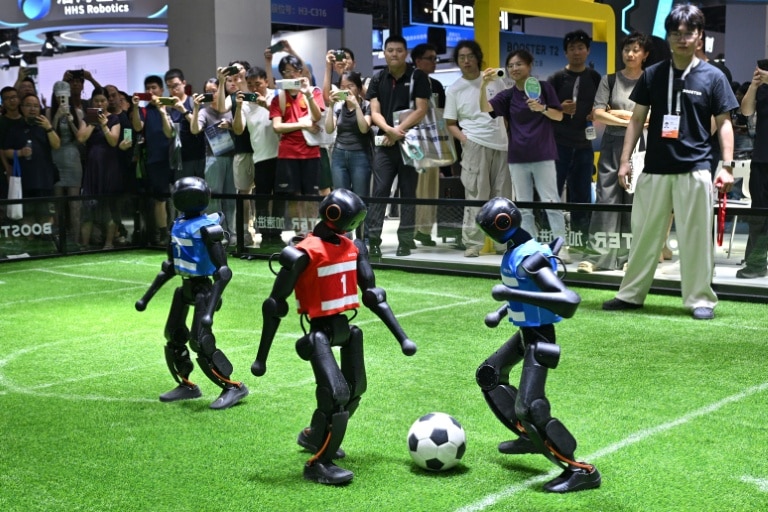
In a sweeping move tied to long-running national security priorities and a broader push for domestic manufacturing, the Trump administration announced Tuesday it is blocking imports of most foreign-built humanoid and quadruped robots into the United States. The new restriction, added to an existing list of prohibited high-tech imports by the Federal Communications Commission (FCC), covers two-legged humanoid models and four-legged animal-inspired robots, which the regulator classifies as advanced mobile robotic devices.
Existing import bans already target a range of foreign technology, including certain unmanned drones and major Chinese telecommunications firms Huawei and China Telecom. The new extension of the ban follows a formal review by a White House-convened task force, which determined that foreign-built robotic devices pose unaddressed cybersecurity threats to U.S. critical infrastructure and the personal safety of American citizens.
Currently, the vast majority of humanoid robots sold in the U.S. market are manufactured overseas, with China accounting for a large share of global production. To address specific operational needs, the policy carves out exceptions: the U.S. Department of Defense and Department of Homeland Security retain authority to grant individual exemptions to the ban for use cases that serve national interests.
The task force pointed to a high-profile data access incident to back up its security concerns: French programmer Sammy Azdoufal was able to extract user data from thousands of robotic vacuum cleaners produced by Chinese manufacturing giant DJI, a case that policymakers framed as evidence of the risk posed by connected foreign-built robotic devices. Notably, the ban only applies to new robot models seeking import authorization; units already sold or cleared for operation in the U.S. will not be affected by the new rule.
Alongside robotic devices, the FCC added foreign-made power inverters to the prohibited import list. These devices, which convert direct current from batteries or solar arrays into grid-compatible alternating current, are a core component of renewable energy and battery storage systems, making their security a key priority for national infrastructure planners.
The policy aligns with the Trump administration’s broader goal of expanding domestic advanced manufacturing in the robotics sector, and several U.S.-based and foreign-owned firms already have domestic production plans in motion. South Korean automotive conglomerate Hyundai, which completed its acquisition of Boston Dynamics earlier this month, is moving forward with plans to open a new U.S. robotic manufacturing facility with an annual production capacity of 30,000 units. Electric vehicle maker Tesla aims to launch mass production of its in-house developed Optimus humanoid robot imminently at two of its U.S. factories, with long-term targets of producing 1 million units annually at its Fremont, California campus and 10 million units per year at its Austin, Texas facility – though the company will rely on partial assembly rather than full domestic manufacturing of all components.
Other domestic players already have operational production capacity in the U.S. Growing startup Figure AI currently assembles its humanoid models at a facility in San Jose, California, while Oregon-based Agility Robotics operates a production plant in Salem that can turn out 10,000 units per year. A senior Trump administration official clarified the scope of the new rule: the ban applies not only to fully assembled robots imported from abroad, but also to units assembled within the U.S. that source more than 35 percent of their components from foreign manufacturers.