标签: Oceania

大洋洲

  • Italy on red alert as heatwave bakes Europe

    Italy on red alert as heatwave bakes Europe

    An unprecedented early-season heatwave, driven by a stationary high-pressure heat dome, has engulfed Western Europe, forcing governments across the continent to activate emergency heat protocols and leaving millions of residents and visitors grappling with sweltering conditions. Italy became the latest nation to roll out urgent safety measures Thursday, when civil protection authorities issued the country’s first red heat alert of 2024 for five major urban centers, including the capital Rome, as well as Florence, Bologna, Brescia and Turin.

    The alert, the highest level of heat warning in Italy’s national system, cautions that even otherwise healthy people engaging in outdoor activity face significant risks of adverse health impacts. For tourists flocking to Rome’s iconic landmarks, the 32-degree Celsius temperatures recorded Thursday have forced drastic adjustments to sightseeing plans. Spanish visitor Nana Martinez Garcia told reporters she and her travel companion have prioritized staying hydrated and sticking to shaded routes whenever possible. “We’re sweating a lot,” Garcia explained outside the Colosseum. “We’re drinking a lot of water so we can cool down.” Her friend Maria Angeles Mellinas Tello added that the pair seek out shade at every opportunity to avoid heat exhaustion. American tourist Josh Ren shared that he restructured his entire itinerary to beat the heat, waking before dawn to explore outdoor sites, then retreating to air-conditioned museums or restaurants during the midday peak when temperatures climb highest.

    Italy had avoided the most extreme temperatures earlier in the week, but the heat dome has shifted south, bringing soaring conditions to the Italian peninsula. The heatwave first shattered long-standing temperature records across Britain and France earlier this week, with both countries logging their hottest May temperatures in recorded history. Tragically, the extreme heat has already claimed lives: authorities have linked multiple fatalities in both Britain and France to the heatwave, most occurring in drowning incidents as people sought relief from sweltering conditions in open water.

    While the most intense heat has begun to ebb in Britain, France remained in the grip of extreme temperatures Thursday. In the southwestern Landes region, extreme heat forced a local school to close early for the week, after corridor temperatures spiked to 53 degrees Celsius on Tuesday, leaving multiple students ill. Landes official Florian Deygas confirmed that several pupils experienced severe heat-related illness, including one case of fainting and vomiting. National meteorological service Meteo France maintained an orange heat alert for Paris, where forecasters predicted temperatures would hit 34 degrees Celsius following the record-breaking heat that baked the country earlier that week.

    The ongoing heat has also disrupted major sporting events underway in the French capital. At the Roland Garros French Open tennis tournament, located on the outskirts of Paris, competing players have struggled to cope with oppressive court conditions, with one athlete collapsing mid-venue after finishing a grueling, multi-hour match. Tournament maintenance staff have adopted extraordinary measures to keep the clay courts manageable, spraying water between every set and fully flooding the surface after daily play concludes to rehydrate the layered clay. “We flood the courts, we soak them, so as to replenish with water the different layers that make up the clay,” explained head maintenance worker Philippe Vaillant.

    Further south, Spain has also rolled out heat alerts for regions in the country’s northeast and north, forecasting temperatures could climb as high as 37 degrees Celsius on Friday. National weather agency Aemet noted in a social media statement that current temperatures are “extraordinarily high” for the month of May, matching the extreme heat levels normally not seen until the height of summer. The agency forecasts a noticeable drop in temperatures across the country next week as the heat dome begins to break down.

    Climate scientists have repeatedly emphasized that human-caused climate change is amplifying the frequency and intensity of extreme weather events globally, including early-season heatwaves, droughts, and catastrophic flooding, a trend that is expected to continue without dramatic reductions in greenhouse gas emissions.

  • One in five NSW public sector workers spending over half their pay on housing, damning report finds

    One in five NSW public sector workers spending over half their pay on housing, damning report finds

    Across Australia’s New South Wales (NSW), a shocking new survey has laid bare the crippling housing affordability crisis that is pushing even full-time public sector workers to the financial edge. The groundbreaking study, conducted by the Public Service Association (PSA) which surveyed more than 5,100 of its members, paints a grim picture of financial precarity for workers who keep the state’s essential public services running every day.

    According to the survey results, 65 percent of respondents qualify as experiencing severe housing stress—defined as spending more than 30 percent of total pre-tax income on rent or mortgage repayments. Most alarmingly, one in five public workers devotes over half of their entire paycheck to covering housing costs, with four respondents confirming they are currently experiencing homelessness. A quarter of all participants reported feeling no security in their current housing, and 94 respondents stated they face imminent risk of eviction or losing their homes.

    The crisis does not discriminate by age, but it hits vulnerable groups particularly hard: more than 1,000 women over the age of 45 surveyed spend more than 30 percent of their income on housing, and many workers across all age groups fear they will be trapped in lifelong renting or retire into poverty. Many workers report making extreme personal and professional sacrifices just to keep a roof over their heads, cutting back on basic needs to cover housing costs. The survey found that many workers have skipped meals, delayed critical medical treatment, and put off major life milestones like marriage and starting a family, all due to skyrocketing housing costs.

    Elena, one public sector worker who shared her story with reporters, is one of thousands making extreme trade-offs to access home ownership. To save for a down payment on her first home, Elena and her partner moved back into her parents’ home in Newcastle, more than three hours from her workplace in central Sydney. The arrangement meant a grueling seven-hour round-trip commute every single working day, a burden that forced her to accept long-term career sacrifices to keep her public service role. Even after following all the conventional advice—lowering their expectations, buying a smaller starter home outside the city rather than a permanent home in Sydney—Elena said the struggle remained overwhelming. The home they were finally able to purchase in Lake Macquarie needed urgent repairs including a full kitchen replacement and fixing major water leaks, but the couple had no money left to cover the work after the down payment and closing costs. Despite achieving the milestone of home ownership, Elena said the system feels fundamentally unfair. She added that she is far from alone: the early morning 5.55am train from Newcastle to Sydney is consistently packed with other workers making the same sacrifice to afford housing. “It is still such a struggle, it felt like we did everything that people said to me,” Elena explained. “I feel like it’s just reached a point that’s so unfair for everyone, and it’s not even a generational thing anymore, people of all different age groups going through similar things.”

    PSA General Secretary Stewart Little emphasized that the survey confirms what many have suspected for months: the housing affordability crisis is no longer limited to low-income earners, and is now impacting even stable, full-time public sector employees. “Public sector workers are doing everything society asks of them, they are working hard, serving their communities and keeping essential services running, yet thousands are being pushed to the financial brink,” Little said. He added that state and federal governments cannot continue to ignore the far-reaching impact of this crisis on the public workforce and the communities that depend on their services. Little is calling for urgent government intervention: increased investment in public and affordable housing, and targeted housing assistance programs specifically for essential public sector workers. “No worker serving the public should be wondering whether they can afford dinner, a doctor’s appointment or a roof over their head,” he said.

  • Young Australians back themselves to beat cost-of-living crunch

    Young Australians back themselves to beat cost-of-living crunch

    Against a backdrop of persistent cost-of-living strains, slowing wage growth and ongoing global economic uncertainty, a surprising new trend has emerged in Australia: the nation overall, and its youngest generations in particular, remain far more optimistic about their 12-month financial outlook than many experts would have predicted. This finding comes from new proprietary research conducted by ING, which surveyed more than 2,075 Australian adults aged 18 and over to gauge current consumer sentiment.

    The data reveals a stark generational divide in optimism levels. A full 82% of Gen Z respondents and 74% of millennials reported feeling optimistic about the year ahead, compared to just 52% of Gen X and 49 per cent of baby boomers. Matt Bowen, head of consumer and market research at ING, explained the key driver behind this generational gap: time. While younger Australians are not immune to the pinch of rising prices and higher interest rates, they have far more room to adjust their financial trajectories over their working lives compared to older cohorts nearing retirement.

    “The younger you are, the more time you have to course correct,” Bowen noted. “Things might feel really tough now, but over the course of a lifetime you can catch up.” For older Australians approaching retirement, by contrast, financial pressures are compounded by tighter time horizons and more complex household financial obligations, leaving less room to recover from unexpected economic setbacks. Today’s economic landscape gives consumers no shortage of causes for concern: inflation remains well above the Reserve Bank of Australia’s 2-3% target range, geopolitical conflicts continue to roil global markets, and wage growth has failed to keep pace with rising living costs for most households. Even as annual headline inflation edged down from 4.6% in March to 4.2% in April, according to Australian Bureau of Statistics data, the RBA’s preferred trimmed mean inflation rate – which strips out volatile price swings to show underlying economic pressure – rose to 3.4% for the 12 months to April, confirming that persistent inflationary pressure remains embedded in the Australian economy.

    Despite these headwinds, Bowen argues that years of navigating economic volatility have taught Australian households critical resilience skills, particularly among younger generations who have come of age during an unprecedented period of overlapping crises. “Younger generations in particular entered adulthood through Covid, a couple of wars, geopolitical tensions, and the shift from low to high interest rates,” Bowen said. “Their experience of the economic cycle has been quite compressed over the last little while, and as a result they’ve learnt these things happen, but what is most important is the choices they make within their individual circumstances to get ahead.” This adaptive approach has given rise to what ING dubs the “small wins economy”: instead of making dramatic overhauls to their finances, Australians are focusing on consistent, incremental adjustments to control their costs and build small gains. For example, while 88% of survey respondents reported a rise in grocery costs over the past year – with average weekly grocery spend climbing just $7 from $162 in 2023 to $169 in 2024 – the 7% jump is far more modest than official inflation rates would suggest, thanks to deliberate spending cuts and cost-saving strategies by consumers.

    A key cost-saving tool for many households is loyalty programs, which the research found save the average Australian household $255 per year. Beyond grocery savings, Australians are adopting a suite of repeatable, practical financial habits: careful budgeting, prioritizing value when shopping, auditing and cutting unused subscriptions, and comparing financial products across multiple apps. These small steps, Bowen says, add up to a greater sense of control that supports overall optimism, even when big-picture economic conditions remain challenging. Crucially, the research also found that cost-of-living pressures have not shifted Australians’ core long-term financial goals, only changed the timelines and strategies households use to reach them.

    Around 34% of all respondents plan to adjust their living situation over the next 12 to 24 months: 10% plan to move into new rental accommodation, 7% aim to purchase a home independently, another 7% plan to buy a home with family members, and 4% are pursuing rentvesting, a strategy where households rent in their desired location while purchasing an investment property in an affordable area. Bowen notes that while traditional milestones like home ownership still matter to most Australians, they are now balanced with new personal priorities that include flexibility, life experience and individual agency. “We’re making more deliberate trade-offs, balancing financial realities with a clear intent to protect the parts of life they value most,” he explained.

    Investment also remains a core financial priority for many Australians, especially younger cohorts. Overall, 30% of survey respondents said they plan to invest in shares or exchange-traded funds over the next 12 months. That share jumps to 46% for Gen Z and 43% for millennials, many of whom see investment as a strategic tool to offset cost-of-living pressures, build long-term retirement savings, and capitalize on current market conditions.

  • US, Iran trade strikes in most serious clash since truce began

    US, Iran trade strikes in most serious clash since truce began

    Four months after a fragile ceasefire paused open hostilities between the United States and Iran, a new round of mutual strikes has shattered the relative calm, triggering fresh fears of a wider regional conflict and roiling global energy markets already on edge over the future of the Strait of Hormuz.

    The escalation unfolded Thursday, marking the most serious confrontation between the two adversaries since the truce took hold in April, and came as violence surged along the Lebanon-Israel border, where Iran-backed Hezbollah has been locked in continuous low-intensity conflict with Israeli forces. The clash also drew in Kuwait, a key US ally in the Gulf, which activated its air defense systems to intercept incoming fire shortly after the exchange of attacks began.

    According to Iran’s state-run broadcaster IRIB, Iranian forces opened fire on four commercial vessels attempting to transit the Strait of Hormuz, the strategic waterway that Iran has fully blockaded since the war began in late February, when US and Israeli forces launched a coordinated attack on Iranian targets. In response, a US official confirmed that American military forces targeted an Iranian ground control station located in the port district of Bandar Abbas, Iran’s primary Gulf shipping hub.

    Minutes after the US strike, IRIB quoted Iran’s Islamic Revolutionary Guard Corps (IRGC) confirming that it had retaliated against the American air base that launched the original attack. The IRGC declined to publicly disclose the base’s location, but the confirmation of a counterstrike aligned with Kuwait’s announcement that it was responding to an incoming attack on its territory, which hosts large contingents of US military personnel.

    Iranian foreign ministry spokesman Esmaeil Baqaei issued a formal condemnation of the US action, framing the strikes as a clear violation of the April ceasefire and emphasizing that Iran would take “all necessary measures” to protect its territorial integrity and national sovereignty. The US pushed back on this framing, with an unnamed official characterizing the American strike as a purely defensive action taken to preserve the terms of the existing truce.

    The latest escalation has cast deep uncertainty over the stuttering diplomatic negotiations aimed at reaching a permanent peace deal to end the conflict that began on February 28. While neither Washington nor Tehran has signaled a willingness to return to full-scale open war, the clash has reinforced fears that the fragile truce could collapse entirely. For ordinary Iranians, that uncertainty has become a constant part of daily life. “I feel like nothing is certain yet,” said Amir, a 27-year-old software developer based in Tehran, speaking before Thursday’s strikes. “The daily question is: Will there be missile strikes tonight?”

    At the heart of the ongoing diplomatic talks is the future of the Strait of Hormuz, the waterway that carries roughly a fifth of global oil and gas supplies. The Iranian blockade has cut off that key transit route, leaving global energy markets grappling with constrained supplies and volatile pricing. Thursday’s strike news sent oil prices jumping higher, erasing most of the gains from the previous session, which had risen on growing optimism that a peace deal to reopen the strait was close.

    The diplomatic wrangling over Hormuz took a dramatic turn this week when US President Donald Trump issued an unusual threat against Oman, another Gulf nation that has served as a neutral mediator in the conflict and has itself been targeted by Iran in recent months. When asked about a proposed short-term arrangement that would let Oman and Iran jointly manage transit through the strait, Trump rejected the idea outright. “No, the strait is going to be open to everybody,” Trump said. “It’s international waters and Oman will behave just like everybody else or we’ll have to blow them up.”

    Baqaein condemned the threat against Oman, calling it “a worrying sign of the normalisation of anarchy and intimidation in international relations.” The verbal threat came one day after the US Treasury Department announced new sanctions against Iran’s Persian Gulf Strait Authority, the new Tehran-led agency established to collect transit fees from ships passing through the blockaded waterway.

    Beyond the Gulf, the violence has also escalated sharply in Lebanon, where a separate ceasefire between Israel and Hezbollah has failed to stop continuous skirmishes that have intensified over the past week. On Thursday, the Israeli military launched new airstrikes against Hezbollah infrastructure around the southern Lebanese city of Tyre, a day after it issued a sweeping order declaring all territory south of the Zahrani River — roughly 25 miles from the Israeli border — an active combat zone and ordering all civilian residents to evacuate immediately.

    The evacuation order, the first large-scale such warning since the April 17 ceasefire between Israel and Hezbollah went into effect, interrupted Eid al-Adha celebrations for thousands of Lebanese families in the region. Lebanon’s official National News Agency reported multiple airstrikes targeting residential areas in the city of Nabatieh, causing what it described as “huge destruction” to civilian property.

    As of Wednesday, Lebanon’s health ministry reported that the total death toll from the conflict that began on March 2 stands at 3,269 people. On Thursday, the Israeli military confirmed that one additional soldier was killed in a Hezbollah drone attack along the Lebanese border the previous day, bringing the total number of Israeli troops killed in the conflict with the Iran-backed group to 24. Iranian officials have insisted that any final peace deal between Tehran and Washington must also include a permanent ceasefire and resolution for the Lebanese front.

  • Man cops $45,000 fine for distributing anonymous, illegal election pamphlets targeting Allegra Spender

    Man cops $45,000 fine for distributing anonymous, illegal election pamphlets targeting Allegra Spender

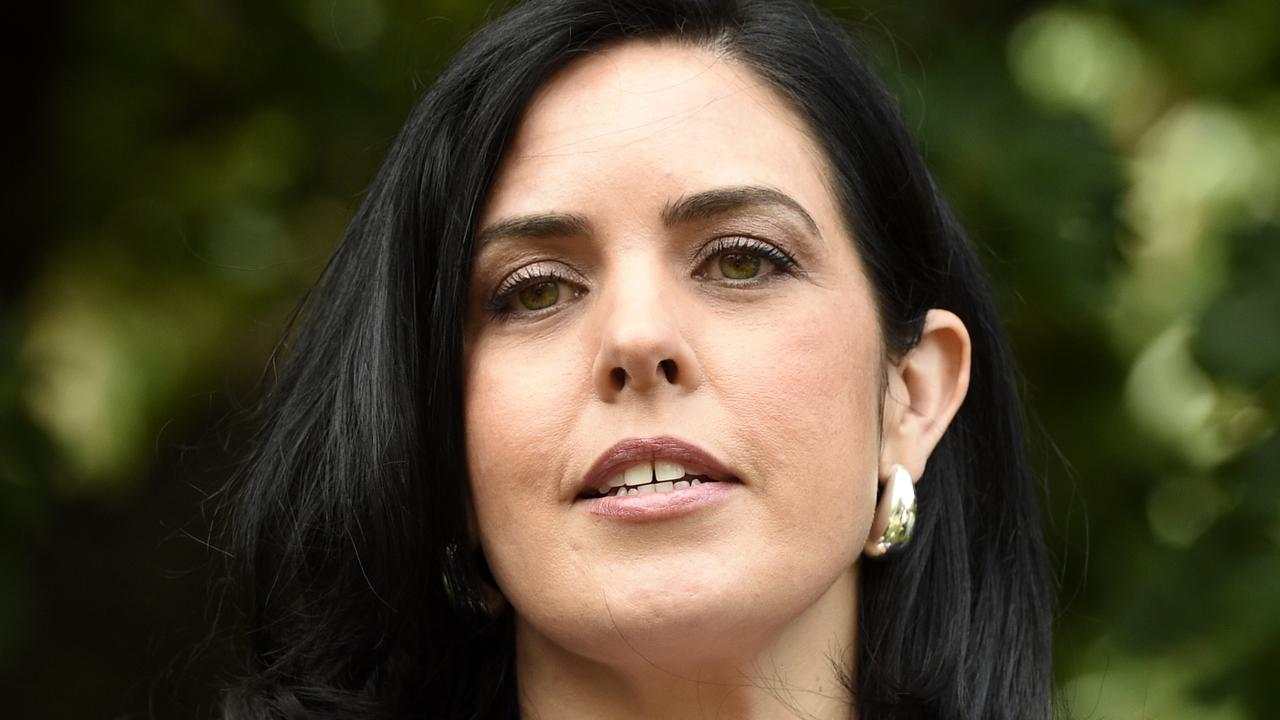
    A New South Wales man has received a substantial combined penalty of $45,000 after admitting to distributing tens of thousands of unauthorised, anonymous election pamphlets targeting sitting independent Member of Parliament Allegra Spender, in a case electoral officials have called one of the most blatant violations of Australian federal electoral law in recent memory.

    Jarrod Davis, a resident of the Wentworth electorate where Spender holds office, was ordered to pay $30,000 in civil penalties by the Federal Court on Thursday, following more than six months of legal proceedings initiated by the Australian Electoral Commission (AEC). In addition to the penalty, Davis was also required to cover $15,000 of the AEC’s legal costs associated with the case, bringing the total financial penalty to $45,000.

    The illegal distribution of pamphlets took place in the lead-up to Australia’s upcoming 2025 federal election, across Spender’s Wentworth constituency. Davis disseminated approximately 47,000 anonymous leaflets, all targeted at the independent MP. According to an official statement from the AEC, the pamphlets failed to include the mandatory authorisation attribution required by federal electoral law, making their distribution a direct violation of national election regulations.

    Spender has publicly condemned the campaign, noting that the anonymous materials spread false, misleading, and deeply offensive claims about her record and policy positions. “This anonymous and misleading campaign is designed to undermine me and to benefit my political opponents,” Spender said in an official statement, adding that the lack of transparency around the pamphlets represented an attack on the integrity of local electoral contest.

    Despite the clear anti-Spender messaging in the distributed materials, the AEC has confirmed that it found no evidentiary link connecting Davis to any registered political party or opposing candidate standing for the Wentworth seat in the 2025 election. AEC Electoral Commissioner Jeff Pope emphasized that the court’s ruling sends a strong message about the importance of transparency in federal election campaign material.

    “Australian voters have a right to know the source of campaign material at a federal election, and today’s result reinforces this expectation as a fundamental aspect of electoral law,” Pope said. Legal observers note that the size of the penalty handed down in this case signals a firm stand by the courts against hidden, unregulated campaign activity that seeks to influence election outcomes without public accountability. The ruling also sets a clear precedent for future enforcement of electoral transparency rules ahead of the 2025 federal poll.

  • US-Iran tensions spark $45bn wipe-out on Australian sharemarket

    US-Iran tensions spark $45bn wipe-out on Australian sharemarket

    Just days after former US President Donald Trump declared that peace talks between Washington and Tehran were “largely negotiated,” a sudden escalation of hostilities between the two powers sent shockwaves through global financial markets on Thursday, triggering a $45 billion wipe-out of Australian equities and a sharp jump in international crude prices.

    The escalation began when the US launched targeted strikes near Iran’s Bandar Abbas port Wednesday, reportedly targeting the head of the Islamic Revolutionary Guard Corps Navy. The following day, the US confirmed it had shot down four Iranian drones over the strategic Strait of Hormuz and destroyed a Iranian drone control tower. In response, Iran claimed it had carried out a retaliatory strike against a US air base in Kuwait and issued a stark warning of more severe reprisals if US offensive operations continued.

    The sudden flare-up of geopolitical risk immediately roiled regional and global markets. For Australian investors, it was one of the toughest trading sessions in recent weeks: the benchmark ASX 200 plunged 124.80 points, or 1.43%, to close at 8592.90, while the broader All Ordinaries index dropped 125.60 points, or 1.40%, to settle at 8819.60. The Australian dollar also weakened against the US dollar, edging 0.16% lower to 71.22 US cents by market close.

    Nine out of the 11 tracked market sectors ended the day in negative territory, with only consumer-facing segments bucking the broader sell-off trend. The materials sector, which had enjoyed a five-day winning streak leading into Thursday’s session, led the market declines. Major mining stocks all posted heavy losses: BHP fell 1.19% to $60.55, Rio Tinto dropped 2.53% to $183.46, and Fortescue Metals declined 1.18% to $21.78. Gold mining stocks suffered even steeper falls, dragged down by a 1.83% drop in spot gold prices to US$4373 per ounce: Northern Star Resources sank 7.47% to $18.20, while Evolution Mining closed 7.76% lower at $11.65.
    Australia’s major banking group was also caught up in the broad sell-off, with the entire financial sector shedding 1.64% over the session. Commonwealth Bank of Australia led the declines among the big four banks, dropping 2.06% to $161.41, while ANZ fell 1.91% to $34.89, National Australia Bank declined 1.72% to $37.10, and Westpac ended the day down 1.29% at $35.92.

    Geopolitical uncertainty drove a sharp rally in global oil prices, as investors priced in greater risk of supply disruptions through the Strait of Hormuz, a critical chokepoint for 20% of the world’s daily oil shipments. Benchmark Brent crude jumped as much as 4.3% to hit US$98.20 per barrel, while US West Texas Intermediate crude rose 2.56% to US$91.70 per barrel. Tony Sycamore, a market analyst with IG, noted that while the US administration has signaled it remains committed to moving forward with peace talks, markets reacted instantly to the escalation. “This reignited inflation and fuel security fears, while also sending bond yields and the safe haven US dollar higher,” Sycamore explained.

    Against the broader market downturn, two sectors managed to post gains: consumer staples and consumer discretionary stocks. Australia’s two major supermarket chains led the consumer staples rally: Woolworths added 0.92% to close at $34.94, while Coles Group gained 0.75% to end the session at $21.52. Sycamore attributed this outperformance to a better-than-expected national inflation reading released Wednesday, which showed headline inflation rose just 4.2% – lower than market forecasts. “Capitalising on its defensive qualities and coupled with yesterday’s cooler-than-expected inflation reading — which likely gives the Reserve Bank of Australia cover to keep interest rates on hold at 4.35% next month — the Consumer Staples sector emerged as today’s best performer,” Sycamore said. Even with the market turmoil, Sycamore noted that the US is still widely expected to prioritize de-escalation and work toward ending the ongoing regional conflict, leaving the long-term market outlook for now uncertain.

  • ‘Principled’: AFP Commissioner Krissy Barrett defends Ben Roberts-Smith arrest

    ‘Principled’: AFP Commissioner Krissy Barrett defends Ben Roberts-Smith arrest

    Australia’s top federal law enforcement official has publicly outlined why authorities rejected a proposed voluntary surrender from former elite SAS soldier Ben Roberts-Smith, amid growing political scrutiny over the high-profile war crime arrest that has gripped national attention.

    In a defiant address during a Thursday Senate estimates hearing, Australian Federal Police (AFP) Commissioner Krissy Barrett defended the agency’s April decision to arrest Roberts-Smith at Sydney Domestic Airport, pushing back against widespread public and political backlash over the handling of the case.

    Barrett stressed that all investigative and procedural choices made by the AFP and the Office of the Special Investigator (OSI) were rooted in principle, aligned with federal legislation and governance frameworks, and guided solely by evidence – not the notoriety or public standing of any individual.

    “We take an oath that we will faithfully and diligently carry out our duties without fear or favour, without affection or ill will. This is an extremely important point the Australian public can know,” Barrett told the hearing. “The AFP will determine cases on the evidence in front of us, and not because of name, fame, or background of any individual.”

    The hearing comes after days of questioning from Liberal Senator Michaelia Cash, who has challenged law enforcement officials over their approach to the Roberts-Smith case. In her detailed opening remarks, Barrett broke down the operational logic behind arresting Roberts-Smith at the Sydney airport rather than allowing him to turn himself in, or arresting him in the state of Queensland.

    Barrett explained that airports are classified as “sterile environments” with mandatory passenger screening and contained perimeters, factors that make arrest operations far safer for both responding officers and members of the public. Investigators also confirmed they had intelligence that Roberts-Smith had no known permanent address and was actively planning to relocate overseas, eliminating the option of waiting for a voluntary surrender. The choice of Sydney over Brisbane was a collaborative operational decision reached with partner agencies, Barrett added, dismissing widespread media speculation about hidden motives for the location as entirely inaccurate. She also noted that OSI officers were deployed specifically to the airport to provide support for Roberts-Smith’s family members who were travelling with him at the time of arrest.

    Addressing reports that Roberts-Smith had offered to hand himself in voluntarily ahead of the airport operation, Barrett confirmed that law enforcement had ultimately ruled the proposal unworkable. Citing the gravity of the charges against the former soldier – five counts of war crime-related murder, each carrying a maximum sentence of life imprisonment – Barrett said the surrender option was never considered a viable path for the investigation.

    Barrett also addressed unconfirmed reports of sensitive investigative information being leaked to media outlets ahead of the arrest. While she stressed there is no concrete evidence the AFP leaked any details, she confirmed the matter has been referred to the National Anti-Corruption Commission as a precautionary measure. “If the date of the individual’s arrest or other sensitive information was disclosed to anyone in the media, this could be an unauthorised disclosure, and in my view, anyone who disclosed that information should face consequences,” she said.

    Roberts-Smith was granted strict conditional bail earlier this year following his arrest. He has consistently maintained his innocence on all charges, has not entered any formal pleas, and his court proceeding remains ongoing.

  • AFL 2026: Collingwood to try ‘something different’ with Darcy Moore’s soft-tissue rehab

    AFL 2026: Collingwood to try ‘something different’ with Darcy Moore’s soft-tissue rehab

    AFL side Collingwood is preparing to adopt an unconventional, progressive rehabilitation strategy for its captain Darcy Moore after yet another soft tissue injury sidelined the star skipper, extending what has already been a devastating run of injuries for the club’s leader. Moore sustained a new hamstring injury during last weekend’s match against the West Coast Eagles, an issue that is expected to keep him off the pitch for as long as eight weeks. This latest setback is just one in a long string of health problems for Moore in the 2024 campaign: he already dealt with a pre-season calf injury, hamstring tightness in Round 1, combined knee bursitis and hamstring trouble in Round 3, and a concussion in Round 9. Moore is no stranger to navigating repeated soft tissue setbacks; early in his professional career, he traveled across the globe to Europe to consult leading specialists in soft tissue recovery to address his recurring issues. Speaking to reporters this week, Collingwood head coach Craig McRae acknowledged that the club’s current recovery approach has not worked, and a new path forward is non-negotiable to get Moore back to elite playing condition. “It’s been a frustrating year for him to get on the paddock and then back out on the field,” McRae said. “Clearly we need to do something different because what we’re doing right now – given his body feedback – he’s not capable of doing it at the level which is required. We’ll be progressive around his rehab.” The coach added that this unorthodox approach could include a controlled, limited stint in the Victorian Football League (VFL), Collingwood’s reserve-grade competition, as Moore builds his fitness back up. “We might just weigh up what that means in terms of, ‘OK does he need to train for a bit longer to be fit and available? Does he need to play a VFL game?’” McRae explained. “I don’t know yet, (but) we’ve got to work all that out.” A restricted run in the reserves is not off the table as the club maps out Moore’s comeback, the coach confirmed. Unfortunately for Collingwood, Moore’s injury is not the only bad news the club received this week. The Magpies’ training and medical facility became a revolving door for scans this week, with multiple key players requiring assessment. Veteran forward Jamie Elliott has been ruled out for the remainder of the season after scans confirmed he suffered an anterior cruciate ligament (ACL) injury. Rising young star Nick Daicos also underwent assessment for a sore foot, but McRae delivered positive news on that front: Daicos has been cleared fit to line up against the Western Bulldogs in this weekend’s primetime match. Even McRae himself was caught up in the injury wave sweeping the club, revealing he also underwent scans on a sore shoulder this week. “I think everyone went in for scans this week, I popped in for a couple on my shoulder as well. That (clinic) was a revolving door,” McRae joked. Despite the season-ending injury, McRae added that Elliott remains in good spirits as he prepares for his recovery and reconstruction surgery.

  • Woman charged after ISIS bride return, new evidence, AFP Commissioner says

    Woman charged after ISIS bride return, new evidence, AFP Commissioner says

    Australia’s national top law enforcement official has publicly confirmed that counter-terrorism units are currently running eight independent investigations into women and children with known ties to ISIS fighters, a disclosure that comes amid a fresh wave of repatriations from Syrian detention camps and a high-profile recent terrorism charge.

    Australian Federal Police (AFP) Commissioner Krissy Barrett outlined the scope of ongoing investigations during a Thursday appearance before a Senate estimates hearing, noting that probes are not limited to people who have already returned to Australian territory — a number of subjects of interest still remain overseas.

    The confirmation of the eight active investigations follows the charging of 34-year-old Rayann El Houli earlier the same day. El Houli, who returned to Australia from Syria last year, faces two criminal allegations: entering and staying in a declared terrorist active zone, and formal membership of a proscribed terrorist organization. She made her first court appearance on the same day charges were filed.

    One of the largest ongoing probes, codenamed Operation Howth, centers on three people — one man and two women — who are accused of traveling to Syria between 2013 and 2024 to join the Islamic State terror group. Commissioner Barrett told the hearing that two of the subjects, the women, returned to Australia with their children in September 2025 from the al-Hawl detention camp in northern Syria, a facility that has held thousands of family members of alleged ISIS fighters for years. The third subject, the man linked to the two women, remains imprisoned in a Middle Eastern prison, per police accounts.

    After the two women’s 2025 repatriation, the Commonwealth Director of Public Prosecutions initially concluded there was not enough admissible evidence to bring criminal charges against them. In line with that guidance, the Victorian Joint Counter Terrorism Team — a multi-agency unit made up of local Victoria Police, the AFP, and Australia’s national intelligence agency ASIO — chose to keep Operation Howth active while the women integrated into Australian communities.

    Barrett explained that over the course of the ongoing six-month domestic investigation, and following the repatriation of another four women and their children from Syria just three weeks ago, investigators have obtained significant new evidence that ties back to the original Operation Howth probe, renewing its momentum.

    Beyond Operation Howth, Barrett confirmed that a total of eight separate Joint Counter Terrorism Team investigations are active across the country, targeting family groups that either have returned from Syrian detention camps or still remain outside Australia. She pushed back against any assumptions that delays in filing criminal charges signal that investigations have been abandoned, pointing to El Houli’s charging as a clear example of how probes can take time to yield charges.

    “Any perceived delay in charges does not indicate investigations have ceased. Today’s arrest and charge is a case in point,” Barrett told the hearing.

    The commissioner outlined three core messages the AFP and its partner agencies want to communicate to the Australian public. First, the national force and its counter-terrorism partners remain fully committed to protecting community safety. Second, any alleged victims or witnesses with relevant information are still able to come forward to cooperate with investigations. Third, all individuals who have returned to Australia from conflict zones tied to ISIS remain subject to a broad range of active investigation strategies, regardless of whether charges have been filed yet.

    Since 2019, a total of ten Australian citizens have been charged with terrorism-related and foreign incursion offences linked to travel to conflict zones: seven men and three women. Three of those women were charged earlier this year immediately after their return from Syria, and are currently before the courts facing a series of serious charges, including crimes against humanity and the possession of an individual as a slave.

  • Police crackdown on protest could have put Australia on ‘different trajectory’, anti-Semitism envoy says

    Police crackdown on protest could have put Australia on ‘different trajectory’, anti-Semitism envoy says

    In testimony before a Senate estimates hearing on Thursday, Australia’s Special Envoy on Antisemitism Jillian Segal has drawn a direct link between the police handling of a high-profile post-October 7 protest outside Sydney Opera House and the sharp rise of antisemitic sentiment across the country, arguing the nation could have avoided its current trajectory if the demonstration had been addressed differently. The protest, held on October 9 2023 just two days after Hamas’ surprise cross-border attack on Israel that killed more than 1,200 people, drew hundreds of demonstrators gathering near one of Australia’s most iconic cultural landmarks, in response to both the initial assault and Israel’s subsequent military retaliation in Gaza. According to Segal, multiple participants chanted deeply hateful rhetoric targeting Jewish people during the event, which included the burning of an Israeli flag. While Segal acknowledged ongoing public debate over unconfirmed claims that protesters chanted the phrase “gas the Jews”, she emphasized the demonstration marked an unambiguous turning point where blatant hatred toward Australia’s Jewish community was aired publicly. Segal told the hearing that if law enforcement had adopted a far firmer approach — rather than the protective posture officers took toward demonstrators — it would have sent a clear, uncompromising message that antisemitic speech has no place in Australian public life. “If it had been stopped and people had said ‘this is unacceptable’, and the police instead of protecting those protesters had indeed taken them, even if not arresting them, but asked them to move on … If there had been a completely different policing approach, I do think it would have sent a very different message and possibly a different trajectory,” Segal said. “As I say, you can’t look backwards, but I do see and I think the Jewish community generally, when I’ve spoken to them about it, they see that as a critical moment.” Segal added that the surge in antisemitic incidents across Australia following the October 7 attack caught the nation off guard, after decades of growing complacency built on widespread pride in the country’s multicultural values and commitment to open civic freedoms. “We were caught up in our enjoyment of the freedoms and the Australian values and multiculturalism, and perhaps we’re not as aware of the issue until it really became an issue for us,” she said, noting that her core mandate is to push antisemitism back to the margins of Australian society. The hearing also touched on ongoing tensions over the adoption of the International Holocaust Remembrance Alliance (IHRA) working definition of antisemitism, a widely-endorsed framework that Segal has pushed for nationwide adoption. Earlier this month, two of Australia’s leading public broadcasters, the ABC and SBS, announced they would not adopt the definition, a decision Segal said directly contradicts the policy guidance she has put forward to Australian institutions. “I’m hopeful that, with further discussion, we can talk to the ABC and SBS,” she said. “I have had various meetings with them, but so far I haven’t managed to convince them about it, about these issues. But, you know, I do think that it’s important that the ABC and SBS understand their important role in this country.” On the topic of public sector antisemitism literacy, Segal confirmed that targeted training is currently being trialed for the Australian Public Service (APS), with a focus on delivering tailored education for senior public servants first. She rejected a one-size-fits-all approach to the training, arguing that depth of antisemitism education should be scaled to the role and responsibilities of each public servant, while noting she expects a “significant” portion of APS staff will complete the program once it rolls out fully.