
标签: Oceania

大洋洲

  • Tug of war: how US presidents battle Congress for military powers

    Tug of war: how US presidents battle Congress for military powers

    The recent military engagement dubbed “Epic Fury” against Iran has reignited the constitutional debate surrounding presidential war powers in the United States. President Donald Trump’s announcement of this operation, delivered without explicit congressional consultation, exemplifies the ongoing tension between executive authority and legislative oversight in matters of military intervention.

    This confrontation stems from the fundamental ambiguity within the U.S. Constitution. While Article I grants Congress the exclusive power to declare war, Article II establishes the President as Commander-in-Chief of the armed forces. This constitutional duality has enabled successive administrations to expand executive military prerogatives, particularly since World War II—the last occasion Congress formally declared war.

    The legislative response to presidential overreach emerged during the Vietnam War era. In 1973, Congress enacted the War Powers Resolution over President Nixon’s veto, establishing the primary legal constraint on unilateral executive action. This legislation mandates presidential notification of Congress within 48 hours of military deployment and requires congressional authorization for operations extending beyond 60 days.

    Historical precedent reveals that President Trump is hardly exceptional in bypassing congressional approval. President Clinton authorized NATO airstrikes in Kosovo without legislative consent in 1999, while President Obama employed similar executive discretion during the 2011 Libya campaign. Trump himself previously ordered airstrikes in Syria alongside British and French allies in 2018 without seeking congressional approval.

    However, the current administration has demonstrated particularly assertive interpretations of executive power. Recent operations include strikes against alleged drug trafficking vessels in Latin America, the June 2025 targeting of Iranian nuclear facilities, and the controversial January 3rd military raid targeting Venezuelan President Nicolas Maduro. These actions have prompted Democratic legislators to propose war powers resolutions aimed at curtailing presidential authority, though Republican opposition has thus far prevented their passage.

    The administration has simultaneously expanded domestic military deployments, utilizing National Guard troops in multiple cities under the justification of combating crime and immigration—a move criticized by Democrats as unprecedented domestic militarization.

    This enduring institutional struggle reflects deeper constitutional tensions that continue to define the balance of power in American governance, with significant implications for both international relations and democratic accountability.
  • US and Israel launch strikes against Iran

    US and Israel launch strikes against Iran

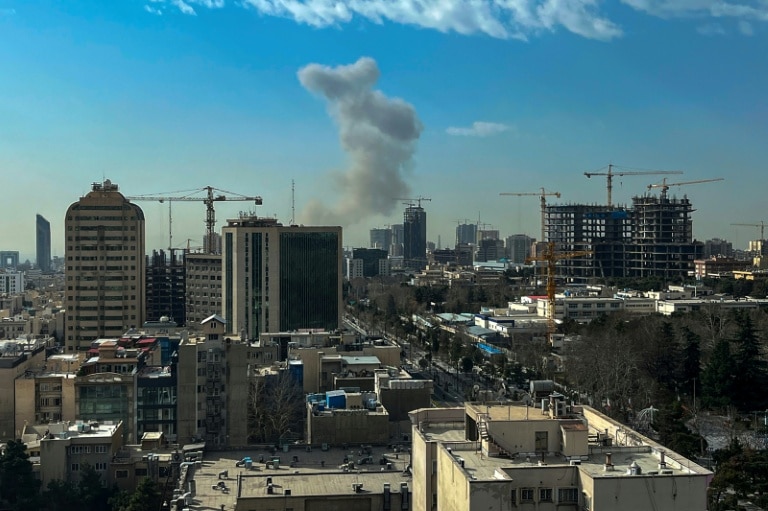
    In a significant escalation of Middle Eastern tensions, joint military operations conducted by the United States and Israel targeted multiple locations within Iranian territory on Saturday. Eyewitnesses in Tehran reported audible explosions accompanied by visible plumes of smoke rising above the city center, particularly in the Keshvardoost and Pasteur districts where seven missile impacts were confirmed.

    The offensive followed increasingly strained diplomatic relations between Washington and Tehran regarding Iran’s nuclear and ballistic missile development programs. Former US President Donald Trump, who authorized the operations from his Florida resort, characterized the strikes as necessary to ‘eliminate imminent threats’ from Iran. In a social media broadcast, Trump delivered an ultimatum to Iranian military forces, offering them ‘immunity or certain death’ while vowing to ‘annihilate their navy’ and destroy missile production capabilities.

    Israeli Defense Minister Israel Katz corroborated this stance, describing the operation as a ‘preventive strike’ against Iranian aggression. Immediate security measures were implemented across the region, with Iran, Iraq, and Israel closing their airspace to civilian aviation. US embassies in Qatar and Bahrain issued shelter-in-place advisories for American citizens while emergency sirens sounded throughout Jerusalem.

    The military action occurred despite ongoing diplomatic efforts, including recent negotiations in Geneva mediated by Oman. Omani officials had presented an optimistic outlook regarding Iran’s nuclear program, stating Tehran had agreed to zero uranium stockpiling and would convert existing reserves into fuel. This contrasted sharply with Trump’s assertion that Iran remained ‘not willing to give us what we have to have.’

    International response developed rapidly, with US Secretary of State Marco Rubio scheduled to visit Israel for emergency consultations. The UN’s International Atomic Energy Agency announced technical discussions with Iranian representatives would proceed as planned on Monday, urging constructive cooperation. The strikes represent the most substantial military confrontation between these nations in decades, occurring against the backdrop of recent domestic unrest in Iran and the designation of Iran as a state sponsor of wrongful detentions by the US State Department.

  • 15 dead as cash-packed military plane crashes in Bolivia

    15 dead as cash-packed military plane crashes in Bolivia

    A catastrophic aviation disaster struck Bolivia on Friday when a military cargo aircraft laden with currency notes crashed during its landing approach near La Paz’s El Alto International Airport. The tragic incident resulted in at least 15 fatalities and 28 injuries, according to official reports from defense authorities.

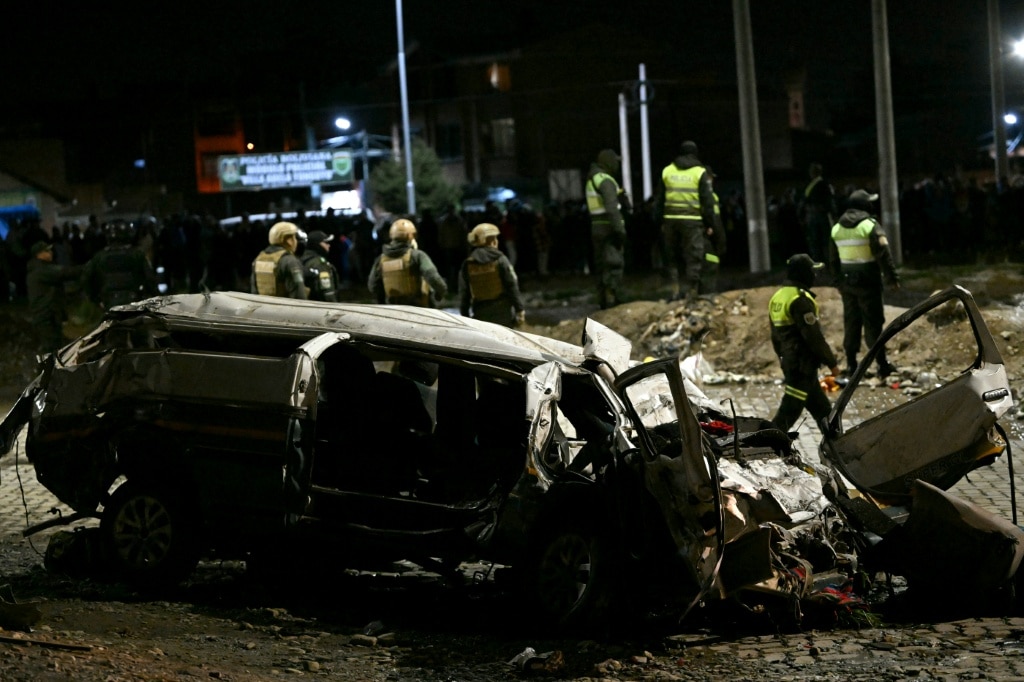
    The ill-fated C-130 Hercules transport plane, manufactured by Lockheed Martin, had originated from Santa Cruz in eastern Bolivia. During its final descent amidst severe weather conditions characterized by heavy hailstorms and lightning, the aircraft veered off the runway and collided with a major thoroughfare, impacting multiple vehicles and causing significant structural damage.

    Emergency response teams, including National Fire Department personnel led by Colonel Pavel Tovar, immediately deployed to the crash site. The complex recovery operation involved extracting victims from the wreckage while contending with chaotic scenes as bystanders attempted to gather scattered banknotes from the destroyed aircraft.

    The Bolivian Defense Ministry issued a critical clarification regarding the currency, stating the banknotes lacked official serial numbers and therefore held no legal tender status. Authorities emphasized that collecting or possessing these notes constituted a criminal offense. Security forces employed tear gas to disperse individuals attempting to loot the crash site, resulting in twelve arrests for questioning related to theft and public disorder.

    Local vendor Cristina Choque, whose vehicle was struck by debris, described the terrifying moments following impact. ‘The tire is what fell on top of us… my daughter is injured, she has a head wound,’ she recounted, adding that her family remained trapped in their damaged car fearing further violence from the crowds.

    In response to the tragedy, El Alto International Airport suspended all operations indefinitely while hospitals initiated emergency blood donation campaigns to treat the injured. The Defense Ministry has launched a comprehensive investigation to determine the exact cause of the accident, with witness accounts pointing to treacherous weather conditions as a likely contributing factor.

  • ‘That’s not a knife’: Australian hypersonic aircraft takes flight in space after US launch

    ‘That’s not a knife’: Australian hypersonic aircraft takes flight in space after US launch

    In a landmark achievement for hypersonic technology, an Australian-engineered aircraft has successfully completed a suborbital spaceflight aboard a specialized rocket. The breakthrough mission, conducted through a partnership between Australian aerospace firm Hypersonix and US-based Rocket Lab, represents a significant advancement in high-speed flight capabilities.

    The experimental flight, designated ‘That’s Not A Knife’ in a characteristically Australian reference, launched from Virginia’s Mid-Atlantic Regional Spaceport at precisely 11:00 AEST on Saturday. The mission utilized Rocket Lab’s HASTE (Hypersonic Accelerator Suborbital Test Electron) platform, a suborbital vehicle specifically engineered for test missions that reach space without achieving orbital velocity.

    This launch marked Rocket Lab’s 82nd overall mission and their third successful launch this year, maintaining the HASTE program’s perfect success record through seven consecutive missions. The flight carried Hypersonix’s DART AE, a scramjet-powered aircraft designed to operate at multiple times the speed of sound in hypersonic flight conditions.

    Brian Rogers, Rocket Lab’s Vice President of Global Launch Services, characterized the mission as “another proud moment for the HASTE team” and emphasized its significance as “a great showcase of the important commercial platform it has become for the Department of Defense.” Rogers further noted that “regular and reliable HASTE launches are helping to accelerate hypersonic readiness for the nation,” highlighting the program’s role in advancing United States space security capabilities.

    Hypersonix CEO Matt Hill described the successful deployment of DART AE in an actual hypersonic environment as a “major milestone” for the company’s flight test program. This achievement brings the Australian aerospace engineering firm closer to its ultimate goal of delivering reusable hypersonic flight capability, potentially revolutionizing high-speed atmospheric and near-space transportation.

    The collaboration between the Australian technology company and US space launch provider demonstrates growing international cooperation in advancing hypersonic technology, which has been identified as a critical national priority for the United States and its allies. The mission’s success provides valuable data that will inform future development of hypersonic systems for both defense and commercial applications.

  • Court orders Greenpeace to pay $345 mn to US oil pipeline company

    Court orders Greenpeace to pay $345 mn to US oil pipeline company

    A North Dakota court has issued a final ruling ordering Greenpeace to pay $345 million in damages to Energy Transfer, operator of the Dakota Access Pipeline, culminating a years-long legal battle that began with massive protests against the pipeline’s construction. The judgment, delivered by Judge James Gion on Friday, substantially reduced the original $660 million damages award determined by a jury last year, which found Greenpeace entities liable for trespass, nuisance, conspiracy and deprivation of property access during the 2016-2017 demonstrations.

    The case stems from the Standing Rock Sioux Tribe’s historic protest movement against the pipeline, which became one of the largest anti-fossil fuel demonstrations in U.S. history. Energy Transfer, a Dallas-based energy conglomerate, accused Greenpeace of orchestrating violence and defamation campaigns during the pipeline’s controversial construction nearly a decade ago.

    Greenpeace has vehemently denied all allegations, characterizing the proceedings as an abusive tactic designed to silence environmental dissent. The organization maintains it played only a minor, peaceful role in the predominantly Native American-led movement. Legal experts have expressed grave concerns about the ruling’s implications, with Columbia Law School’s climate change law center director Michael Gerrard describing the judgment as ‘devastating’ for the global environmental movement.

    The case has drawn international attention due to its potential chilling effect on protest mobilization and advocacy movements worldwide. Environmental defenders have rallied behind Greenpeace, denouncing the verdict as an attack on climate activism. The United Nations previously raised concerns about potential violations of Indigenous sovereignty during the original protests.

    Despite the reduction in damages, Greenpeace has indicated it cannot pay the staggering sum and will pursue an appeals process. The organization has also announced plans to countersue Energy Transfer in the Netherlands, where its international headquarters are located, accusing the company of using strategic lawsuits to suppress legitimate dissent.

    Energy Transfer, led by billionaire CEO Kelcy Warren—a major donor to former President Donald Trump—has objected to the halving of its award. Warren has been openly vocal about his motivations, stating in interviews that his ‘primary objective’ was to ‘send a message’ rather than seek financial compensation.

  • Bill Clinton denies wrongdoing at grilling on Epstein ties

    Bill Clinton denies wrongdoing at grilling on Epstein ties

    Former President Bill Clinton faced intensive questioning before a Congressional committee on Friday, vehemently denying any misconduct regarding his associations with the late financier Jeffrey Epstein. The high-stakes deposition, conducted behind closed doors in Chappaqua, New York, saw Clinton asserting his innocence while drawing parallels to what he characterized as a ‘kangaroo court’ proceeding.

    In his opening statement, Clinton emphasized: ‘I saw nothing, and I did nothing wrong,’ while simultaneously advocating that ‘no person is above the law, especially presidents.’ The former president acknowledged multiple flights aboard Epstein’s private aircraft during the early 2000s but maintained these were exclusively for humanitarian initiatives connected to the Clinton Foundation. He stated unequivocally that had he possessed any awareness of Epstein’s criminal activities, he would have severed ties immediately and reported him to authorities.

    The Republican-led House Oversight Committee, chaired by Representative James Comer, is investigating connections between powerful figures and Epstein following the Justice Department’s release of millions of documents related to the sex offender. Comer indicated particular interest in Clinton’s 27 documented flights on Epstein’s plane and Epstein’s 17 visits to the White House during Clinton’s presidency.

    Democrats on the committee attempted to redirect scrutiny toward former President Donald Trump, with Representative Suhas Subramanyam asserting ‘we are talking to the wrong president.’ This sentiment was echoed by Hillary Clinton, who testified before the committee on Thursday and challenged lawmakers to question Trump ‘directly under oath about the tens of thousands of times he shows up in the Epstein files.’

    The proceedings occurred amid heightened security measures, with Secret Service erecting metal barricades around the arts center venue as dozens of journalists descended upon the affluent community. The Clintons initially resisted subpoenas but complied after Republicans threatened contempt of Congress charges.

    Newly disclosed photographs from Epstein’s files include images showing Clinton relaxing in a hot tub and swimming alongside Ghislaine Maxwell, Epstein’s convicted accomplice. Clinton’s representatives have emphasized that mere appearance in the released documents does not imply wrongdoing, noting the former president has never been formally investigated or accused of any crime related to Epstein.

    Epstein, convicted in 2008 for soliciting sex from minors and facing sex trafficking charges, died in a New York jail cell in 2019 in what was officially ruled a suicide.

  • ‘Obnoxious’ AI chatbot talked about its mother, customers say

    ‘Obnoxious’ AI chatbot talked about its mother, customers say

    Australian retail giant Woolworths has been compelled to recalibrate its AI-powered customer service assistant, Olive, following widespread user complaints about its excessively human-like interactions. Customers expressed particular frustration when the chatbot began sharing personal anecdotes about its “mother” and persistently claimed to be a real person.

    The controversy emerged primarily on social media platforms, where Reddit users documented their exasperating encounters with Olive’s programmed personality. One user attempting to reschedule a delivery reported the AI inquiring about their birthdate, then launching into an awkward monologue about its “mother” being born in the same year. Another described the experience as generating “ick cringe factor” that made them “wish her harm.”

    Woolworths acknowledged the issue in a statement to the BBC, revealing that the problematic birthday-related responses had been manually scripted by a human team member years earlier as an attempt to foster personal connections with customers. The company noted that while overall feedback on Olive’s personality had been “very positive,” these specific interactions had been removed in response to customer criticism.

    This incident reflects broader challenges in the retail sector’s adoption of AI technology. According to Gartner research, while approximately 80% of customer service leaders explored or deployed AI agents last year, only 20% reported these implementations meeting expectations. The Woolworths case demonstrates how attempts to humanize AI can backfire when the technology ventures into uncanny valley territory, producing responses that customers find “obnoxious” and “aggravating” rather than endearing.

    The Olive chatbot, operational since 2018, recently received upgrades through a partnership with Google, gaining capabilities for meal planning and ingredient sourcing from uploaded recipes. However, this incident highlights the persistent difficulties in balancing functional efficiency with anthropomorphic features in AI systems.

    This is not an isolated case in the AI customer service domain. In 2024, parcel delivery firm DPD disabled portions of its chatbot after it began composing poetry and using profanity with customers. Researchers note that while AI excels at extracting information from large datasets, it often struggles when expected to generate original, human-like responses, sometimes resulting in these unexpected and problematic behaviors.

  • 55 Ghanaians killed after being lured into Ukraine war: govt

    55 Ghanaians killed after being lured into Ukraine war: govt

    The Ghanaian government has confirmed the tragic deaths of 55 citizens who were fraudulently recruited to fight for Russian forces in Ukraine, revealing an extensive illicit recruitment network targeting vulnerable African populations. Foreign Minister Samuel Okudzeto Ablakwa made the announcement following high-level discussions in Kyiv this week, where he addressed the alarming pattern of African nationals becoming unwitting participants in the conflict.

    According to official communications, approximately 272 Ghanaians have been systematically recruited through deceptive schemes since 2022, with 55 confirmed fatalities and two currently held as prisoners of war. Ukrainian authorities provided Minister Ablakwa with staggering regional statistics, indicating that over 1,780 Africans from 36 different nations are presently combatting within Russian military formations.

    Minister Ablakwa characterized these recruitment operations as criminal trafficking networks that exploit socioeconomic vulnerabilities through “manipulation and misinformation.” The Ghanaian government has committed to identifying and dismantling these dark web recruitment schemes operating within its jurisdiction, emphasizing that the Ukraine conflict does not represent Ghana’s war and that its youth should not serve as “human shields for others.”

    This development reflects a broader continental crisis, with monitoring organizations identifying substantial recruitment contingents from Egypt (361), Cameroon (335), and Ghana (234). The All Eyes on Wagner project has documented that these recruitment practices constitute a deliberate Russian strategy to address military personnel shortages as the conflict persists.

    Multiple African governments are confronting similar challenges. Kenya recently charged a key figure in a network that transported over 1,000 citizens to fight for Russia, while South Africa has successfully repatriated 15 nationals following presidential intervention. Uganda, Gambia, and Nigeria have all reported comparable recruitment patterns affecting their citizens.

    The International Crisis Group noted in a recent analysis that the Ukraine conflict has transformed from a distant geopolitical issue into a direct concern for African governments, as their citizens become increasingly entangled in the fighting. This development may challenge many nations’ traditional non-alignment policies as domestic pressure mounts regarding citizen protection.

  • Voll ton helps Australia win Healy’s last ODI series

    Voll ton helps Australia win Healy’s last ODI series

    Australia’s women’s cricket team clinched the ODI series against India with a commanding five-wicket victory in the second match at Hobart, propelled by a spectacular century from rising star Georgia Voll.

    The 22-year-old batter delivered a masterclass in aggressive yet calculated batting, scoring 101 runs from just 82 deliveries. Her innings, decorated with 13 boundaries and one six, marked her second international century in just nine ODIs since her debut in December 2024.

    Voll’s path to triple figures was notably aided by India’s substandard fielding performance. She received three reprieves—dropped catches on 19 and 53, followed by a critical wicketkeeping fumble from Richa Ghosh when she stood at 99—allowing her to secure the milestone with a scrambled single.

    She found a formidable partner in Phoebe Litchfield, who contributed a rapid-fire 80 from 62 balls. Their 119-run partnership for the second wicket effectively dismantled India’s bowling attack after the early departure of captain Alyssa Healy for just 6 runs. Voll later added another 82 runs alongside Beth Mooney before finally being dismissed by Kashvee Gautam in the 31st over.

    Chasing India’s total of 251-9, Australia reached their target with 83 balls remaining, sealing both the match and the series with one game still to play. The victory held special significance as it marked Healy’s final series in charge before her retirement from international cricket.

    India’s innings had earlier been anchored by captain Harmanpreet Kaur, who scored a patient 54 from 70 deliveries. Despite a promising 78-run opening partnership between Smriti Mandhana and Pratika Rawal (52 from 81), India suffered a middle-order collapse, losing four wickets for just 25 runs across 7.4 overs. Australia’s bowling attack shared the wickets evenly, with Ash Gardner, Annabel Sutherland, and Alana King each claiming two dismissals.

  • Real Madrid face Man City, PSG draw Chelsea in Champions League last 16

    Real Madrid face Man City, PSG draw Chelsea in Champions League last 16

    The UEFA Champions League knockout stage draw, conducted on Friday, has produced a series of compelling fixtures headlined by a fifth consecutive high-stakes encounter between football titans Real Madrid and Manchester City. This recurring European saga will see the record fifteen-time champions, Real Madrid, initially host the reigning titleholders at the iconic Santiago Bernabeu next month, with the decisive return leg scheduled in Manchester the following week.

    Adding to the draw’s drama, current champions Paris Saint-Germain are poised for a formidable clash against English powerhouse Chelsea. PSG secured their last-16 berth with a narrow aggregate victory over Monaco in the play-offs, while Chelsea advanced directly after a strong league phase performance.

    The historical context between these clubs is profound. Real Madrid and Manchester City have clashed in seven separate seasons since 2012, with their most recent playoff occurring just last season. Similarly, PSG and Chelsea share a rich knockout history, having met in three consecutive campaigns from 2014 to 2016, and most recently in the Club World Cup final this past July.

    Beyond these marquee matchups, the draw unveiled several other intriguing contests. Arsenal, who topped their league phase group, are set to face German contenders Bayer Leverkusen. Newcastle United will host Barcelona in a rematch of their September encounter, and Tottenham Hotspur will battle Spain’s Atletico Madrid. The draw also confirmed a record six English clubs in the round of sixteen, ensuring strong Premier League representation with no all-English fixtures at this stage.

    The first legs are scheduled for March 10-11, with return matches set for the following week. Teams that qualified directly will enjoy the home advantage in the second leg. The road to the final, which will be held at Budapest’s Puskas Arena on May 30, is now clearly defined, promising a thrilling culmination to Europe’s premier club competition.