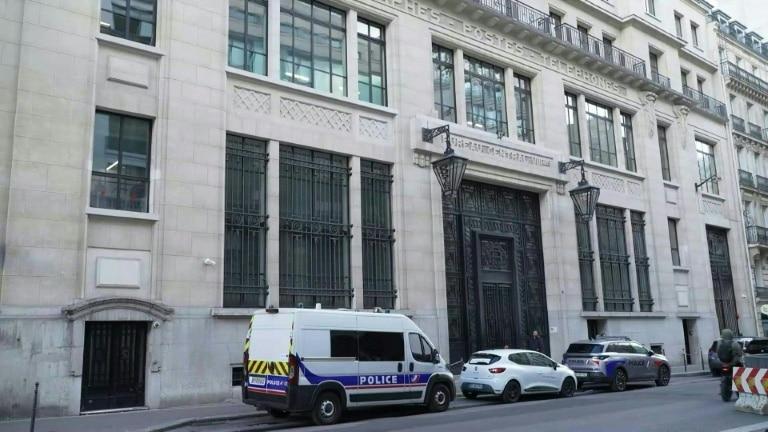
French authorities have intensified counter-terrorism operations following the interception of a planned explosive attack targeting Bank of America’s Paris headquarters. The Domestic Security Service (DGSI) confirmed two additional arrests on Sunday, expanding the investigation into what appears to be a coordinated sabotage attempt.
The incident unfolded in the early hours of Saturday when law enforcement apprehended a primary suspect, believed to be a minor from Senegal, while allegedly positioning an improvised explosive device near the bank’s premises adjacent to the iconic Champs-Élysées. An accomplice, documented the operation through mobile photography before fleeing the scene during police intervention.
Forensic analysis revealed the device contained five liters of combustible liquid integrated with an ignition mechanism, suggesting sophisticated malicious intent. According to judicial sources, the primary detainee confessed to being recruited via Snapchat messaging platform, offered €600 ($692) to execute the bombing operation.
Interior Minister Laurent Nunez presented preliminary assessments connecting the attempted attack to escalating Middle Eastern conflicts, specifically referencing potential Iranian proxy involvement. This development coincides with intensified military actions between US-Israeli forces and Iranian interests, creating regional instability that now manifests in European security concerns.
French security agencies maintain that while national territory isn’t the primary target, American and Israeli assets within France face elevated risks. The Counter-Terrorism Prosecutor’s Office has formally initiated investigation into ‘attempted damage through incendiary methods’ with DGSI and judicial police collaborating on the case.
Minister Nunez has mandated heightened security protocols across transportation hubs and public spaces, emphasizing ‘extra-vigilance’ against potential copycat actions. The Bank of America, headquartered in North Carolina, represents significant American financial interests globally, making its international branches potential symbolic targets during geopolitical tensions.