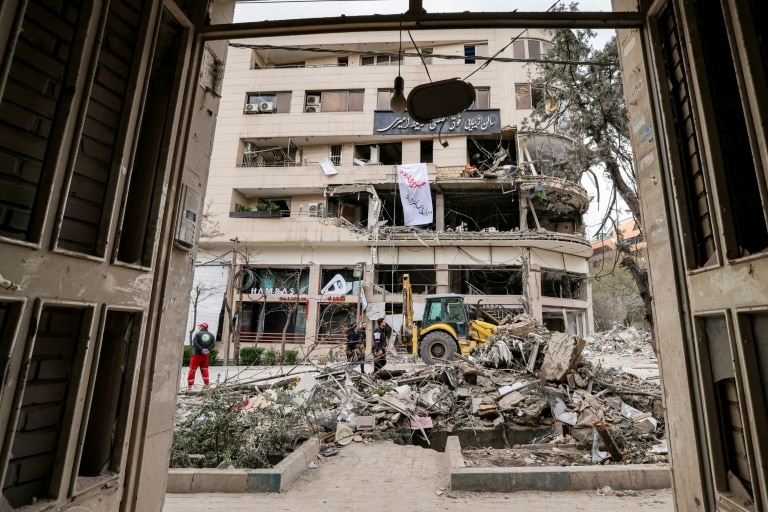
The Middle East conflict has entered a new phase of heightened escalation with a series of significant military and diplomatic developments unfolding across the region. Overnight, Israeli forces targeted a key ballistic missile production facility in Tehran operated by Iran’s defense ministry, marking the latest in a series of strikes against Iranian military infrastructure since hostilities began on February 28.
The conflict has expanded beyond direct Iran-Israel engagements, with Yemen’s Houthi rebels launching missiles and drones toward Israeli targets, drawing condemnation from France for further escalating regional tensions. In response to the widening conflict, Bahrain implemented a maritime curfew from 6:00 pm to 4:00 am local time to enhance coastline security against what it termed ‘blatant Iranian aggression.’
Diplomatic efforts are underway as foreign ministers from Pakistan, Saudi Arabia, Egypt, and Turkey initiated talks with Islamabad mediating between the United States and Iran. The multilateral discussion aims to address the evolving regional situation and mutual concerns among Muslim nations.
Iranian officials have made several significant threats, with Parliament Speaker Mohammad Bagher Ghalibaf accusing the United States of secretly planning ground operations despite public diplomatic efforts. Separately, Iran’s navy chief warned that the USS Abraham Lincoln aircraft carrier would be targeted if it enters Iranian range.
The conflict has taken a toll on media personnel, with Qatari news network Al Araby TV reporting its Tehran office building was struck by an Israeli missile, wounding ten people according to the Iranian Red Crescent. The network condemned the attack on a civilian commercial building as a violation of international law. Meanwhile, Lebanon held funerals for three journalists killed by an Israeli strike, drawing criticism from French officials who called potential deliberate targeting of journalists ‘extremely serious.’
Religious tensions emerged as Israeli police prevented Jerusalem’s Latin Patriarch from celebrating Palm Sunday at the Church of the Holy Sepulchre, prompting condemnation from Italian and French leaders who cited violations of religious freedom. Israeli Prime Minister Benjamin Netanyahu later stated the action was taken out of concern for the cardinal’s safety.
Additional strikes hit the Iranian port city of Bandar Khamir near the strategic Strait of Hormuz, killing five people according to Iranian state media. The Revolutionary Guards claimed retaliatory strikes on aluminum plants in Bahrain and the UAE, describing them as facilities connected to US military and aerospace sectors.
The human cost continued to mount with the Israeli army announcing the death of a fifth soldier in combat in south Lebanon. Iran’s Revolutionary Guards also threatened US universities in the Middle East following claims that US-Israeli strikes destroyed two Iranian universities, prompting the American University of Beirut to move to online instruction.
Amid the tensions, two Indian-flagged LPG tankers successfully navigated through the Strait of Hormuz—a critical chokepoint that Iran has largely closed to maritime traffic—carrying approximately 94,000 tonnes of combined cargo toward India’s coast.