标签: Oceania

大洋洲

  • Russell leads Mercedes 1-2 for Australian GP as Verstappen crashes

    Russell leads Mercedes 1-2 for Australian GP as Verstappen crashes

    In a stunning turn of events at Melbourne’s Albert Park, George Russell clinched pole position for Mercedes at the Australian Grand Prix, leading a remarkable team one-two finish alongside rookie teammate Kimi Antonelli. The qualifying session, however, was overshadowed by a shocking early exit for reigning world champion Max Verstappen.

    Russell delivered a masterful performance with a blistering lap time of 1:18.518 on soft tires, outpacing Antonelli by 0.293 seconds. The British driver expressed elation with his car’s potential, particularly praising his team’s exceptional garage work throughout the day.

    The session took a dramatic turn when Verstappen’s Red Bull violently collided with the barriers at Turn 1 during his first flying lap in Q1. The Dutch driver radioed his frustration, citing sudden rear axle locking that prematurely ended his qualifying attempt and likely his victory prospects.

    Antonelli’s performance proved equally spectacular given his earlier misfortune. The 19-year-old Italian miraculously qualified second despite writing off his Silver Arrow during final practice. Mercedes mechanics performed what Russell termed ‘heroic’ work to rebuild the damaged car within hours.

    Red Bull’s Isack Hadjar secured third position ahead of Ferrari’s Charles Leclerc, while McLaren’s Oscar Piastri and Lando Norris will start fifth and sixth respectively. The session marked the first full qualifying under Formula 1’s radical new technical regulations, presenting drivers with unprecedented energy management challenges.

    Several notable eliminations occurred throughout the session. Williams’ Carlos Sainz missed qualifying entirely after mechanical failure in third practice, while Aston Martin’s Lance Stroll also failed to appear due to persistent power unit vibrations. Both Cadillac drivers were eliminated in Q1 during the American team’s maiden Grand Prix weekend.

  • Russia rains missiles and drones on Ukraine, killing six

    Russia rains missiles and drones on Ukraine, killing six

    Ukrainian officials reported a devastating wave of Russian aerial assaults overnight, resulting in significant civilian casualties and widespread damage across multiple regions. The attacks, which combined ballistic missiles, artillery, and drone strikes, represent one of the most extensive bombardments in recent weeks.

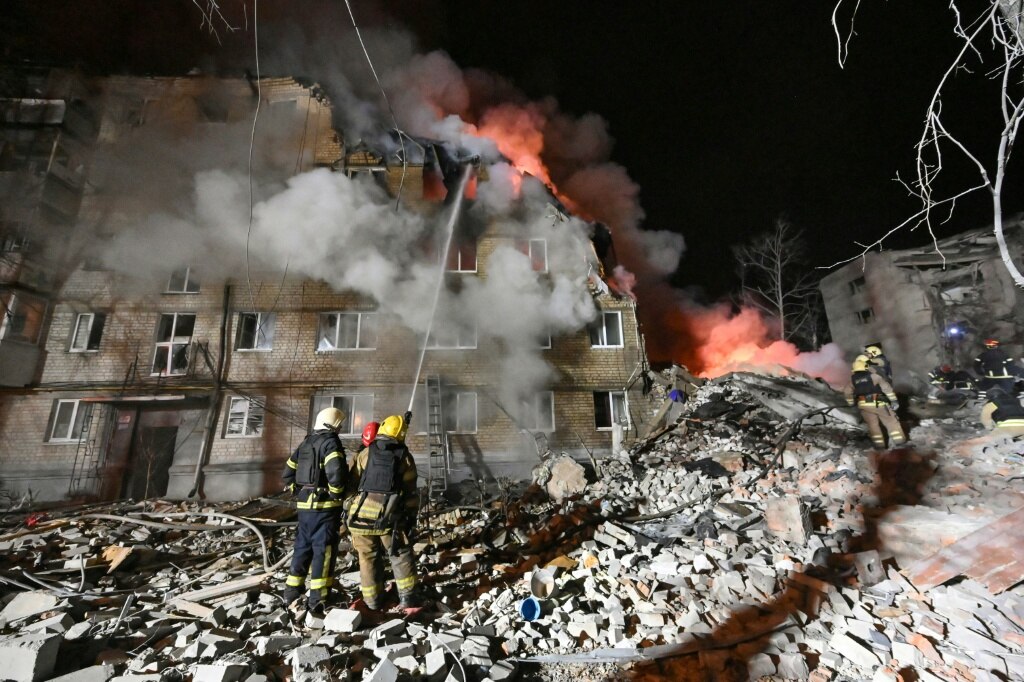
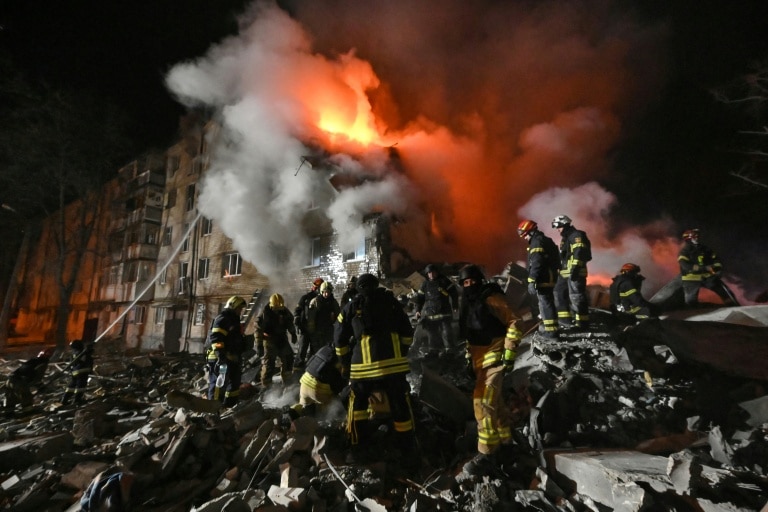
    In the eastern Kharkiv region, a residential apartment block in the Kyivsky district suffered catastrophic damage from a ballistic missile impact. Regional military administration head Oleg Synegubov confirmed that the five-story building was nearly obliterated, with an adjacent structure also sustaining substantial damage. Emergency crews recovered five fatalities from the rubble, while ten individuals sustained injuries—including three children aged six, eleven, and seventeen.

    Further south in the Dnipropetrovsk region, regional administrator Oleksandr Ganzha reported one civilian killed and another wounded during approximately twenty separate attacks targeting the Nikopol district. The assault employed a combination of drone warfare, artillery barrages, and rocket systems.

    The southern Zaporizhzhia region witnessed additional violence as a Russian drone strike injured an infant, according to regional head Ivan Fedorov. Meanwhile, in Chuguiv within the Kharkiv region, Mayor Halyna Minayeva confirmed two civilians were wounded when drones targeted a residential home in the city center.

    The coordinated attacks triggered nationwide air raid alerts throughout Ukraine, with the Polish air force subsequently scrambling military aircraft to secure airspace along its Ukrainian border—a standard precautionary measure during large-scale Russian offensive operations.

  • Rising US fuel prices risk sparking domestic wildfire for Trump

    Rising US fuel prices risk sparking domestic wildfire for Trump

    American consumers are confronting a sharp increase in fuel costs as geopolitical tensions in the Middle East trigger a chain reaction affecting household budgets nationwide. The recent U.S.-Israel military action against Iran has provoked Tehran to effectively blockade the Strait of Hormuz, causing global oil prices to spike dramatically. This development has translated into an 11% surge in average U.S. gasoline prices within just one week, according to the latest data from the American Automobile Association.

    In Washington D.C., educator Sean Robinson expressed shock upon encountering the $3.27 per gallon price at his local station. “This significant jump will force me to reconsider my daily routines,” Robinson noted, indicating he would limit non-essential travel and entertainment expenses. This sentiment echoes across income brackets, with finance professional Toloria Washington describing the situation as pushing households into “survival mode” as families reassess spending priorities.

    The timing presents considerable political challenges for the Trump administration with midterm elections approaching. President Trump, who previously celebrated declining energy costs during his tenure, now faces voters grappling with renewed inflationary pressures. The Republican Party’s narrow congressional majority appears increasingly vulnerable as economic concerns mount.

    Economists warn that sustained energy price increases could compel the Federal Reserve to maintain elevated interest rates, potentially slowing economic growth. KPMG chief economist Diane Swonk characterized the situation as a “dueling mandate” for the central bank, balancing inflation control against employment objectives. While Fed Governor Christopher Waller suggested energy price impacts might be transient, many Americans already feel besieged by consecutive economic shocks.

    As November elections approach, analysts suggest voter frustration over diminishing purchasing power and shrinking middle-class stability could significantly influence political outcomes. The convergence of geopolitical conflict, economic pressure, and electoral politics creates a volatile landscape for both policymakers and citizens alike.

  • Venezuela inflation hit 475% in 2025, the world’s highest level

    Venezuela inflation hit 475% in 2025, the world’s highest level

    Venezuela has recorded the world’s highest inflation rate at 475% for 2025, according to figures released by the country’s central bank on Friday. This staggering number significantly surpassed the International Monetary Fund’s projection of 269.9%, highlighting the severity of the nation’s ongoing economic turmoil.

    The primary catalyst for this economic distress was identified as the tightening of U.S. sanctions throughout 2025, part of a ‘maximum pressure’ campaign by the Trump administration targeting the government of then-leader Nicolas Maduro. The economic situation remains precarious, with accumulated inflation for the first two months of 2026 already reaching nearly 52%. The central bank, which had not published official inflation data for over a year, declined to issue a forecast for the remainder of 2026.

    In a dramatic geopolitical shift, U.S. special forces deposed authoritarian socialist leader Maduro in a raid on Caracas on January 3rd. Following his ouster, Washington has moved to ease sanctions, and both nations have pledged to restore full diplomatic relations. A central component of this rapid diplomatic thaw includes plans to jointly develop Venezuela’s extensive oil and mineral reserves.

    Despite these political developments, ordinary Venezuelans continue to struggle under the weight of exorbitant prices for basic necessities. Food and beverage prices alone skyrocketed by 532% in 2025, while rent increased by 340% and healthcare costs rose by 445%. With average monthly incomes ranging between $100 and $300—far below what is needed to cover basic food requirements—citizens like 58-year-old accountant Alix Aponte express frustration, stating, ‘I have to hop from one supermarket to another. It shouldn’t be like this.’

    The current acting leader, Delcy Rodriguez—Maduro’s former deputy who was approved by Washington—has implemented a series of ambitious economic reforms. Her stabilization measures have included introducing greater fiscal discipline, halting the printing of money, relaxing exchange controls, and decriminalizing the use of the U.S. dollar, which has become Venezuela’s de facto currency. Rodriguez has also opened the vital oil sector to private investment and plans to overhaul mining laws to attract foreign capital.

    Economists are cautiously optimistic about the future, with Tamara Herrera of Sintesis Financiera consulting firm predicting inflation could fall to just over 100% this year. Economist Jesus Palacios noted, ‘Going forward, the inflation expectation is toward moderation,’ signaling potential economic improvement following years of hyperinflation that peaked at 130,000% in 2018 and pushed millions to emigrate.

  • Russian strike on Kharkiv appartment block kills three

    Russian strike on Kharkiv appartment block kills three

    A pre-dawn Russian missile assault on the northeastern Ukrainian city of Kharkiv resulted in a catastrophic collapse of a residential building, claiming at least three lives and leaving a trail of destruction on Saturday, March 7th. The strike has escalated regional tensions, prompting a swift military response from neighboring NATO member Poland.

    The targeted five-story apartment block in the city’s Kyivskyi district was reportedly ‘practically destroyed’ by the impact, trapping numerous residents beneath tons of rubble. Kharkiv Mayor Igor Terekhov confirmed that emergency responders had recovered the bodies of three individuals from the debris. The search and rescue operation remains active, with authorities fearing that up to ten people, including one child, may still be buried in the ruins.

    Regional military administration head, Oleg Synegubov, provided details on the casualties via Telegram, stating that ten people were wounded in the attack. The injured include two young boys, aged six and eleven, and a 17-year-old girl. It was not immediately clarified if the deceased were among this count of the wounded.

    The severity of the attack triggered a nationwide air alert across Ukraine. Simultaneously, in a significant development highlighting the conflict’s spillover effect, the Polish Armed Forces Operational Command announced the activation and scrambling of its military aircraft within national airspace. The command explicitly cited ‘missile attacks by the Russian Federation on Ukrainian territory’ as the reason for this defensive measure in a post on the social media platform X.

    In a separate but related incident within the broader Kharkiv region, the mayor of Chuhuiv, Galyna Minaeva, reported that an ‘enemy drone attack’ on a residential house wounded two individuals, indicating a broader assault on civilian areas beyond the main strike in Kharkiv city.

  • Grabbing the bull by the tail: Venezuela’s cowboy sport

    Grabbing the bull by the tail: Venezuela’s cowboy sport

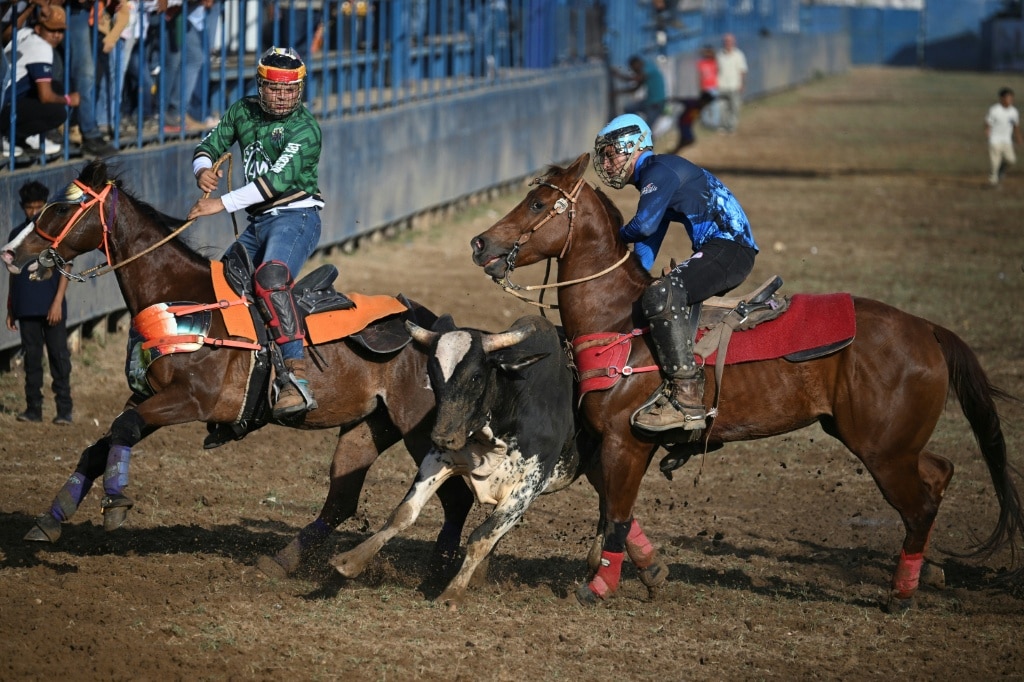
    In the tropical grasslands of Venezuela’s llanos, an adrenaline-fueled cowboy tradition known as coleo continues to thrive despite mounting criticism from animal welfare organizations. This distinctive sport, deeply embedded in the nation’s cultural fabric, showcases mounted cowboys pursuing bulls not by their horns but by their tails in a dramatic display of equestrian skill.

    The annual llanera fair in San Fernando de Apure serves as the premier venue for coleo competitions, where approximately 200 participants don protective gear including hockey helmets and limb padding. During four-minute matches, riders spur their horses alongside charging bulls, executing acrobatic maneuvers to grasp the animal’s tail and flip it to the ground. Scoring systems award points based on the bull’s tumbling technique, with additional marks for achieving all four legs in the air.

    Historical experts trace coleo’s origins to Spanish colonial cattle herding practices, with the tradition now extending beyond Venezuela to neighboring Colombia, Brazil, and Mexico. Most competitors learn the sport through family lineages, with participants ranging from children to seasoned veterans like 35-year-old Rafael Delgado, who began competing at age ten.

    Proponents defend coleo as an essential component of Venezuelan identity, with judge Neomar Sanoja even declaring it the nation’s true national sport despite baseball’s overwhelming popularity. Supporters like rider Luis García criticize opponents as hypocritical, noting that most critics consume meat from industrial farming operations without similar outrage.

    However, animal rights organizations including AnimaNaturalis and Venezuela’s Napda Foundation have launched vigorous campaigns against coleo, condemning it as ‘cruelty and abuse of power against defenseless animals.’ Their concerns intensified following viral videos showing spectators kicking and throwing objects at bulls to force them back to their feet during competitions.

    The cultural divide highlights the complex intersection of tradition, entertainment, and animal welfare in contemporary Venezuelan society, with no immediate resolution in sight for this deeply polarized issue.

  • Sinner, Sabalenka make dominant starts in quest for first Indian Wells titles

    Sinner, Sabalenka make dominant starts in quest for first Indian Wells titles

    The Indian Wells ATP/WTA Masters 1000 tournament witnessed commanding performances from top contenders as they launched their campaigns for the coveted desert crown. World No. 2 Jannik Sinner delivered a masterclass performance, dismantling Czech qualifier Dalibor Svrcina 6-1, 6-1 in just 64 minutes. The Italian sensation demonstrated complete court control, facing merely one break point throughout the match as he began his pursuit of a first Indian Wells title after missing last year’s edition.

    On the women’s side, world No. 1 Aryna Sabalenka showcased similar dominance in her opening match against Japanese qualifier Himeno Sakatsume, securing a 6-4, 6-2 victory. The Belarusian powerhouse, competing in her first tournament since her Australian Open final appearance, displayed formidable serving and aggressive baseline play that left her opponent with limited response options.

    Fourth-seeded Alexander Zverev joined the parade of straight-set victories, overcoming Italian Matteo Berrettini 6-3, 6-4 without confronting a single break point. The German expressed renewed confidence following previous early exits at the California desert event.

    The tournament witnessed its first significant upset as Hungarian veteran Marton Fucsovics ousted fifth-seeded Italian Lorenzo Musetti 7-5, 6-1. Musetti’s early departure marked another competitive setback following his Australian Open injury withdrawal against Novak Djokovic.

    American contenders faced more challenging paths to advancement. Eighth seed Ben Shelton survived an all-American battle against Reilly Opelka, prevailing 6-7(3), 7-6(4), 6-3 after a grueling contest. Women’s fourth seed Coco Gauff demonstrated resilience by rallying from two breaks down in the second set to defeat qualifier Kamilla Rakhimova 6-3, 7-6(5).

    Japanese superstar Naomi Osaka made a successful return to competition following her Australian Open abdominal injury, defeating qualifier Victoria Jiménez Kasintseva 7-5, 6-2 in her opening match. The tournament continues with heightened anticipation as top contenders establish their early form on the hardcourts.

  • Questions over AI capability as tech guides Iran strikes

    Questions over AI capability as tech guides Iran strikes

    The recent escalation of military operations involving the United States, Israel, and Iran has witnessed an unprecedented integration of artificial intelligence into combat strategies, sparking intense debate about the technology’s role in modern warfare. According to defense analysts, AI systems have been deployed to process intelligence and identify targets with remarkable efficiency, marking a significant evolution in military tactics.

    Multiple reports indicate sophisticated AI algorithms have guided Israeli operations in Gaza and assisted in the capture of Venezuelan leader Nicolas Maduro during an American-led mission. Military experts further suggest artificial intelligence has played a crucial role in selecting targets for thousands of U.S. and Israeli strikes on Iranian positions since late February, though specific operational details remain classified.

    Laure de Roucy-Rochegonde of the French Institute of International Relations (IFRI) notes that “every military power of any significance invests hugely in military applications of AI,” emphasizing that “almost any military function can be boosted with AI”—from logistics and reconnaissance to electronic warfare and cybersecurity. The technology has been integrated into semi-autonomous attack drones and various weapon systems, with one of its most significant applications being the dramatic reduction of the “kill chain”—the critical timeframe between target detection and engagement.

    Among the prominent systems in use is the Maven Smart System (MSS) developed by Palantir, designed to identify and prioritize potential targets. Recent reports from The Washington Post indicate that Anthropic’s Claude generative AI model has been integrated with Maven to enhance its detection and simulation capabilities, though neither company responded to requests for comment.

    Bertrand Rondepierre, head of the French army’s AI agency AMIAD, explains that AI algorithms “allow us to move much faster in handling information, and above all to be more comprehensive” by processing enormous datasets including satellite imagery, radar signals, electromagnetic waves, audio recordings, and real-time video feeds.

    However, the deployment of AI in combat scenarios raises profound ethical and legal questions regarding human oversight. The controversy gained prominence during Gaza operations where Israeli forces utilized the “Lavender” targeting system, which operated within defined error margins. While effective in limited areas with extensive surveillance infrastructure, experts question whether similar systems could be reliably deployed in Iran without comparable data networks.

    Peter Asaro, chair of the International Committee for Robot Arms Control, highlights the accountability dilemma: “If something does go wrong, then who’s responsible?” He cites the widely reported bombing of an Iranian school—which local authorities claim killed 150 people—as a potential case of mistaken AI targeting. The proximity of the site to facilities controlled by Iran’s Islamic Revolutionary Guard Corps raises questions about whether targeting errors stemmed from human judgment, algorithmic failure, or outdated intelligence.

    Rondepierre maintains that fully autonomous AI systems operating without human supervision remain “science fiction” in military applications, emphasizing that French military commanders retain central control over targeting decisions. He insists that “no military decision-maker would agree to use an AI if he didn’t have trust in and control over what it’s doing.”

    Benjamin Jensen of the Center for Strategic and International Studies suggests the current implementation represents merely the “beginning” of AI’s military application, noting that armed forces worldwide “haven’t fundamentally rethought how we plan, how we conduct operations, to take advantage” of AI’s capabilities. He predicts it will take “a generation for us to really figure this out” as military institutions gradually adapt to incorporating artificial intelligence into strategic frameworks.

  • Massive $20bn airport upgrades set to drive up flight and parking costs

    Massive $20bn airport upgrades set to drive up flight and parking costs

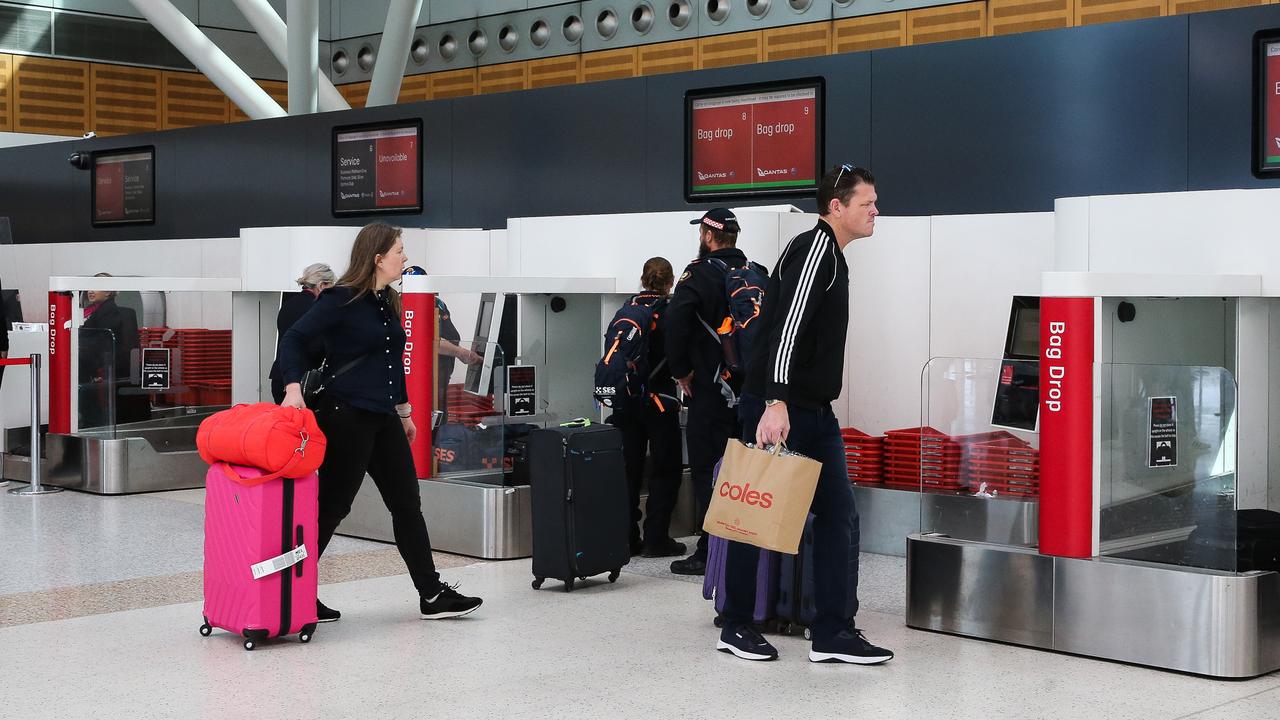
    Australian travelers face significant increases in airfare and airport service costs as the nation’s major airports embark on an unprecedented $20 billion infrastructure modernization program. The Australian Competition and Consumer Commission (ACCC) reveals that Brisbane, Melbourne, Perth, and Sydney airports—which collectively handled approximately 120 million passengers in 2024-25—are initiating massive capital projects that will fundamentally transform the travel experience.

    ACCC Commissioner Anna Brakey confirms that consumers will ultimately bear the financial burden of these developments. ‘Substantial capital programs will inevitably create upward pressure on airport charges paid by airlines,’ Ms. Brakey stated. ‘These costs will likely be passed through to passengers via increased airfares as airports seek to recoup their investments.’

    The infrastructure blueprint includes Perth Airport’s new terminal and runway development, Melbourne Airport’s third runway project, Sydney Airport’s integration of T2 and T3 domestic terminals, and a third terminal at Brisbane Airport. These projects represent the most significant aviation infrastructure investment in Australia’s history.

    Despite the impending cost increases, airports are already demonstrating strong financial performance. The ACCC’s monitoring report indicates the four major airports collectively generated $2.9 billion in aeronautical revenues during 2024-2025, with aeronautical asset margins climbing to 20.8%—the highest level in over two decades.

    Sydney Airport emerged as the most profitable facility, earning $584.3 million in aeronautical operating profit, attributed partly to its higher proportion of international passengers who typically generate greater revenue. Perth Airport recorded the most dramatic year-on-year improvement, with aeronautical profit surging 73.7% to $130.6 million.

    Parking services also contributed significantly to airport revenues, with the four airports collectively earning $402.1 million in operating profits from parking alone. Margins at Brisbane, Perth, and Sydney airports remained above 60%, prompting the ACCC to advise travelers to book parking online in advance or consider off-airport alternatives for extended stays.

    The Australian Airports Association (AAA) defended the investment program as essential for meeting growing passenger demand and maintaining service standards. ‘Major airport infrastructure such as runways and terminal expansions can take many years to plan, approve, and construct,’ said AAA chief executive Simon Westaway. The association emphasizes that airports contribute over $105 billion annually to the Australian economy and support approximately 690,000 full-time equivalent jobs.

  • Nepal’s rapper-turned-politician looks set for landslide win

    Nepal’s rapper-turned-politician looks set for landslide win

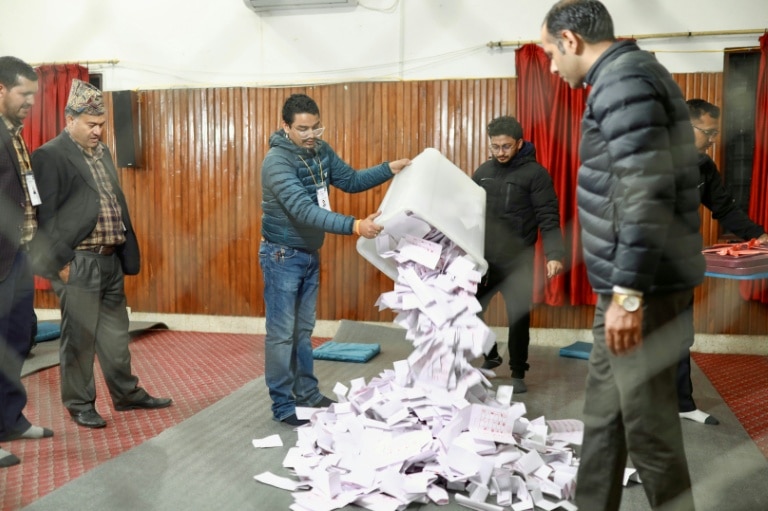
    Early electoral returns from Nepal’s parliamentary elections indicate a potential political earthquake as Balendra Shah’s centrist Rastriya Swatantra Party (RSP) surges toward a supermajority victory. With counting operations continuing across the Himalayan nation, preliminary data from Nepal’s Election Commission reveals Shah’s party leading in 99 of 165 direct election constituencies while securing over half of proportional representation votes tallied thus far.

    The 35-year-old musician-turned-politician has achieved a remarkable political ascent, currently outpacing veteran Marxist leader KP Sharma Oli in his own constituency. This electoral contest symbolizes a generational clash between Nepal’s political establishment and youth-driven demands for systemic change. The high-stakes November election followed deadly anti-corruption protests six months earlier that resulted in 77 fatalities and toppled the previous government.

    Election Commission spokesperson Narayan Prasad Bhattarai confirmed that while only 24 seats had been formally declared by Saturday morning—with RSP capturing 18—the emerging pattern suggests a potential two-thirds majority in the 275-member House of Representatives. The proportional representation counting process, determining 110 additional seats, may require approximately one week for completion according to commission estimates.

    Despite enthusiastic celebrations by RSP supporters in Kathmandu streets, party leadership has urged restraint pending final results. Deputy Chairman DP Aryal emphasized via social media that while electoral trends appear favorable, official celebration should await conclusive outcomes. The electoral process continues unimpeded from high-altitude mountain regions to southern plains bordering India, with full direct election results anticipated by Monday.