
Just 65 kilometers outside the bright skyline of New York City, an overgrown vacant lot dotted with construction rubble sits quietly between a working railway line and a cluster of residential homes in New Brunswick, New Jersey. What was once slated to become a sprawling multi-building data center complex for Florida-based Amzak Capital Management, built on the grounds of a shuttered automotive plant, now stands as an unlikely symbol of grassroots people power — and a rallying cry for community resistance spreading across the United States.
标签: Oceania
大洋洲
-

‘Kick up the a**e I needed’: Bronson Xerri vows to see out his Bulldogs deal in raw interview after NRL recall
For Canterbury Bulldogs centre Bronson Xerri, the past four weeks have been one of the most turbulent stretches of his recent NRL career – a period clouded by demotion, swirling exit rumours and public speculation about his future at the club. Now, back in first grade following a stint in the NSW Cup, the 25-year-old has broken his silence on the controversy, framing his reserve-grade drop as the reality check he needed to reignite his focus on the team.
The drama began immediately after Canterbury’s opening-round win in Las Vegas, where Xerri was sensationally dropped from the top squad in a move that shocked fans and pundits alike. Conflicting reports emerged in the aftermath of the decision, with some claiming the demotion stemmed from poor on-field form, others pointing to questions over his attitude, and many suggesting the shift came after Xerri pushed back against playing on the right edge following captain Stephen Crichton’s move to the left side of the pitch.
Over two matches in reserve grade, Xerri turned out for the Bulldogs’ feeder side, notching an early try against the Canberra Raiders – but off the field, speculation about his desire to force a contract release dominated rugby league headlines. Canterbury head coach Cameron Ciraldo initially made clear he was disappointed by how Xerri reacted to the demotion, but in recent days has shifted to praise for the 25-year-old’s turnaround.
A further point of confusion emerged on Good Friday, when Ciraldo brought on halfback Sean O’Sullivan to replace the injured Crichton rather than turning to a specialist centre like Xerri, leading many to assume Xerri had fallen completely out of the club’s favour. It has since been revealed that the decision was rooted in club medical staff’s initial assessment that Crichton’s injury was not severe enough to require a permanent positional shift, not a snub to the out-of-favour centre.
Xerri made his return to first grade last Thursday, where the Bulldogs pulled off a stunning upset win over reigning premiers Penrith. In post-match comments, he acknowledged the past month had been a difficult stretch, but pushed back on the widespread reports of a rift, saying his only focus has always been doing what is best for Canterbury.
“It’s been tough,” Xerri told reporters after the game. “But as long as the boys within the four walls and the staff know my intentions here, I’m happy. Whatever was reported was out of my control. As long as the team and all the boys knew my intentions with everything, that’s all that matters.”
When asked point-blank whether he had ever requested a release from the final year of his current Bulldogs contract, Xerri declined to comment, saying “I’m not going to say anything, sorry.” But he was open about reflecting on the past few weeks, noting that the current turbulence pales in comparison to the four-year doping suspension he served after a positive drugs test in 2019 – an experience that taught him how to navigate professional adversity.
“I went home and asked some hard questions about myself and came back, got the opportunity tonight and tried to take it with both hands,” he said. “I have a really good support system with my family. I’ve been through something similar with this – much worse to be fair – so I know how to handle these things.”
While the exact root cause of his initial demotion remains unconfirmed, Xerri said the drop to reserve grade was a necessary wake-up call that exposed his own complacency in training. “I just got a bit comfortable in myself. I wasn’t really giving it my all at training. So it was that kick up the arse I needed,” he explained. “I’m a true believer in that everything happens for a reason. Me and ‘Ciro’ had some tough conversations, but I’ve got nothing but love and respect for Ciro and this club.”
The stint in reserve grade also reinforced what he stands to lose, he added: “When it’s all gone, you don’t realise what you’ve got. When I was playing NSW Cup, I was like ‘This is not where I belong, this is not where I want to be’. I came into training and just put my best foot forward.”
Xerri thanked his teammates for checking in on his mental health throughout the stretch, saying “it was good to be back where I belong” after his stint in the lower grade. Against Penrith, he set up a try on his preferred left edge, but stressed he is willing to adapt to any role the coaching staff needs, even playing on the right side when Crichton returns from injury.
“I definitely feel more natural on the left,” he admitted. “But I am capable of doing the job on the right. Ciro has spoken about that. I’ve always said to Ciro that I’ll do what’s best for the team, so wherever he wants to put me, that’s where I’ll play.”
With one year remaining on his current contract, Xerri reaffirmed his intention to see out the full deal at Belmore. For his part, Ciraldo said he was thrilled with Xerri’s performance and maturity in his first game back, highlighting an underrated improvement that flew under the radar for spectators.
“The most pleasing thing which no one would have seen is how well he was communicating out there. The players in there were all talking about that, and that was something he needed to go and work on,” Ciraldo said. “People in the stands might not see that or value that as much as we do, but it’s awesome to see that he’s brought that into his game.”
-
Bendigo Bank signals third interest rate hike for 2026 won’t be until August
In a provocative deviation from consensus economic forecasts among Australia’s largest financial institutions, Bendigo Bank has staked out a contrarian position, predicting a third Reserve Bank of Australia (RBA) cash rate increase will land in August 2026 rather than the May timeline widely expected by the country’s biggest banks. The unusual forecast comes alongside the regional lender’s strong quarterly profit results that have lifted its stock, even as it cuts hundreds of roles to align with new long-term tech partnerships.
Bendigo Bank’s chief economist David Robertson outlined the forecast in a public statement Tuesday, confirming that the bank joins the broader market in expecting the RBA to hold interest rates steady at its upcoming May monetary policy meeting. But unlike rival national lenders ANZ, Commonwealth Bank of Australia and National Australia Bank, which all project a 25-basis point hike at the May gathering, Robertson said persistent economic pressures tied to global energy market disruptions will force the RBA to act three months later.
The RBA last lifted the cash rate by 25 basis points at its March meeting, pushing the benchmark rate to 4.1% amid ongoing efforts to cool stubbornly high inflation. Robertson noted that the RBA’s May decision will hinge on how policymakers balance the risks of supply-demand imbalances stemming from the ongoing Middle East conflict against the threat of tipping the domestic economy into a technical recession.
The call for a delayed rate hike, Robertson explained, is rooted in two competing forces shaping Australia’s current economic trajectory: a surprisingly resilient domestic labour market that has kept consumer spending steady, and growing inflationary risks spurred by geopolitical tension in the Middle East. With key global shipping chokepoint the Strait of Hormuz facing ongoing disruption amid regional conflict, Bendigo Bank warns that constrained energy supplies and sustained elevated commodity prices will create a domino effect that keeps inflation above the RBA’s 2-3% target range. Robertson added that all global energy shocks carry inherent risk of stagflation, a toxic combination of slow growth and persistent rising prices that would force central bank action.
The interest rate forecast was released alongside a separate major announcement from Bendigo Bank this week, confirming the lender would cut a significant share of its workforce after locking in multi-million-dollar long-term partnership deals with global technology services firms Infosys and Genpact. The partnerships run for seven and six years respectively, with the bank stating the agreements will bring specialized expertise in process optimization and delivery, boost long-term productivity, and strengthen the bank’s enterprise risk management frameworks.
Despite the controversy of workforce cuts, Australian equity markets reacted positively to the bank’s updates. Bendigo Bank ranked among the top-performing stocks on the Australian Securities Exchange following the announcements, climbing 8.41% in intraday trading. The regional lender also delivered better-than-expected financial results for the March quarter, reporting cash profit of $138 million that beat consensus market forecasts by 12%, reinforcing investor confidence in the bank’s strategic shift.
-

‘I’m not ashamed’: Scott Sorensen tipped to lead the Bears next year as Panthers veteran reveals emotional meeting where tears flowed
As the Penrith Panthers enter the final stretch of another competitive NRL season, one of their most beloved veteran forwards is preparing to close a cherished chapter of his career, with an iconic new leadership opportunity waiting on Australia’s west coast. Thirty-three-year-old Scott Sorensen, a four-time premiership champion with the Panthers since joining the club in 2021, confirmed he will depart Penrith at the end of the current season to join newly expanded NRL franchise Perth Bears on a two-year deal. Industry insiders and teammates alike have already thrown their full support behind Sorensen to take up the historic role of the Bears’ first ever club captain, when the side makes its competition debut in 2025.
The news of Sorensen’s departure delivered an emotional moment for the entire Panthers squad last week, when the fan-favourite forward gathered his teammates to share his decision. In comments made to reporters ahead of this weekend’s NRL double-header in Perth, Sorensen opened up about the raw, tearful meeting, making no attempt to hide the depth of his connection to the Penrith organisation. “Absolutely there were tears. I’m not ashamed of that at all,” Sorensen said. “It was tough. Everyone in this organisation knows how much I love this place. That’s why saying I was leaving hit me so hard.”
Despite the sadness of leaving a club where he has built so many memories and claimed four of the league’s top titles, Sorensen said he remains grateful for his time in Penrith and enthusiastic about the next step of his career. “I’ve been given an incredible opportunity to join the Bears and I’m very excited about that,” he explained. “I’m absolutely so grateful and love my journey here, and I continue to enjoy my journey here. So it was very difficult and very emotional, but I’ve still got a few games yet, so I’m going to enjoy those.”
Sorensen revealed he had been weighing up the move since the Christmas holiday period, noting that proximity to his wife’s family based in Western Australia was a major factor in his final decision to accept the Bears’ offer. For the expansion franchise, which has been steadily building its inaugural playing squad over the past 18 months, sports analysts compare Sorensen’s expected leadership role to that of experienced veteran Jesse Bromwich, who anchored the Dolphins during their successful expansion entry into the NRL.
Teammates have been quick to praise Sorensen’s leadership credentials and back his potential as the Bears’ first captain. Paul Alamoti, a young Panthers centre who credits Sorensen with shaping his early NRL career, said the announcement of Sorensen’s departure moved the entire squad. “When I first came into the NRL squad, he was the leader among the left edge and I slotted into that position outside him, and he pushed me to my limits,” Alamoti recalled. “When he broke the news to the squad as a whole, I did get touched by it because his influence on my career has been immense. I have no doubt he’d be a great captain. He has so much passion and he’s a true competitor.”
Like all expansion sports franchises, the Perth Bears face lingering questions about whether their newly assembled squad can compete at the highest level from their first season, particularly as the club has not yet signed a high-profile marquee player. Sorensen, however, is unflinching about the scale of the challenge ahead, framing it as an exciting new adventure that echoes his 2021 move to Penrith, when he stepped into an unknown environment that ultimately led to multiple premiership wins.
“I’m not going to shy away from that,” Sorensen said. “We know it’s a massive challenge going into the unknown, which I understand. But I suppose in a way, I went into the unknown coming here at Penrith in 2021. I didn’t know what was going to happen, and that was exciting, that was motivating. I guess it’s the same thing going to the Perth Bears. Being given an opportunity and going into the unknown a little bit, that’s exciting and that’s something I’m looking forward to.”
-
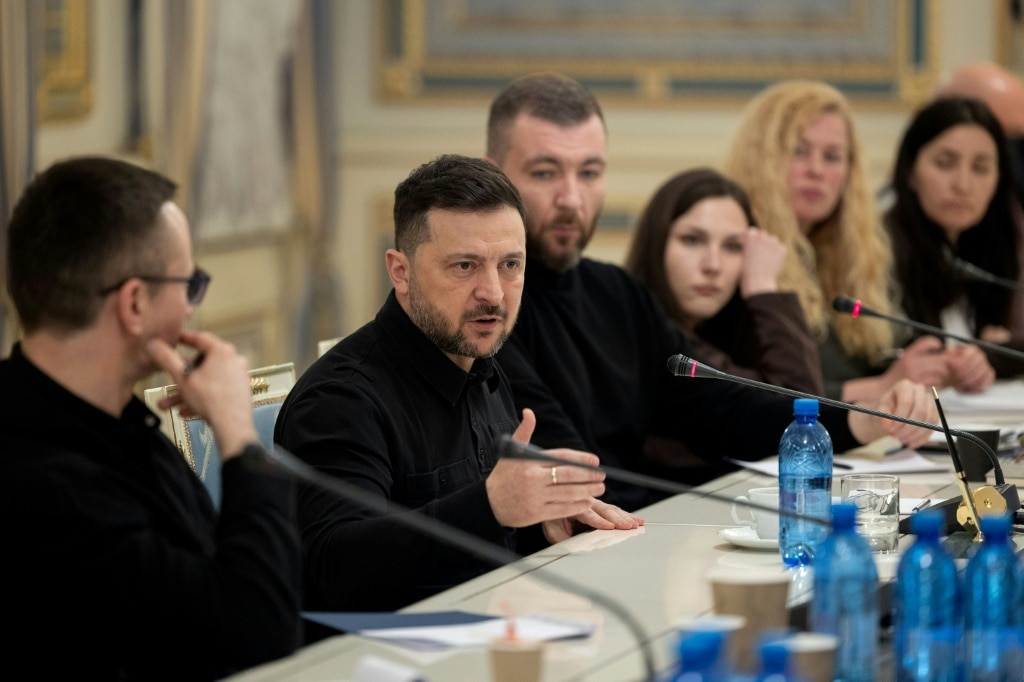
Ukraine and Russia will cease fire for Orthodox Easter
Four years into the deadliest European conflict since World War II, Russia and Ukraine have agreed to a historic 32-hour ceasefire for the Orthodox Easter holiday, a rare pause in fighting that has already claimed hundreds of thousands of lives and displaced millions. The dual announcements made by both nations’ leaders on Thursday mark one of the few coordinated truces in a conflict defined by broken agreements and near-constant frontline combat.
The ceasefire will take effect at 13:00 GMT on April 11 and remain in place through the end of April 12, 2026, according to a late Thursday statement from the Kremlin. Russian President Vladimir Putin ordered the halt to all offensive operations across every frontline sector in honor of the upcoming Orthodox Easter celebration, the statement confirmed, while directing Russian troops to remain on high alert to respond to any potential Ukrainian provocations. The Kremlin also expressed its expectation that Ukraine would honor the truce reciprocally, but made no mention of Kyiv’s earlier truce proposal that set the agreement in motion.
Hours after the Kremlin’s announcement, Ukrainian President Volodymyr Zelenskyy confirmed that Kyiv would match Russia’s ceasefire, noting that Ukraine had first floated the idea of a holiday truce earlier this year through U.S. mediation. “People deserve an Easter free from the constant threat of shelling and attack,” Zelenskyy said. “This ceasefire gives Russia a genuine chance to step back from hostilities and move toward real progress in peace talks, rather than resuming fighting once the holiday ends.”
The path to this truce has been complicated by shifting global priorities, with long-stalled peace negotiations pushed off track by ongoing conflict in the Middle East. Multiple rounds of U.S.-led talks have failed to bridge core divides between the two sides: Moscow currently occupies roughly 19 percent of Ukrainian territory, most seized in the opening weeks of the 2022 invasion, and demands territorial and political concessions that Zelenskyy has repeatedly rejected as a demand for unconditional surrender. With U.S. foreign policy attention now focused heavily on Iran, no major breakthrough in formal peace talks is expected in the near term.
Frontline fighting has drifted into a near stalemate in recent years, with Russia making incremental territorial gains at the cost of massive casualties, according to open-source military analysis from the Washington-based Institute for the Study of War (ISW). Since late 2025, however, Russian advances have slowed considerably, a shift analysts attribute to two key factors: successful Ukrainian counterattacks in southeastern Ukraine, and restrictions that have cut Russian forces off from critical communications infrastructure. Russia’s military was blocked from accessing SpaceX’s Starlink satellite network, and Moscow’s own domestic crackdown banned the widely used Telegram messaging app — tools that Russian troops had relied on to coordinate frontline operations and drone strikes, which have become a defining feature of the conflict. Despite this slowdown, ISW notes that the tactical situation remains heavily unfavorable for Ukraine in eastern Donetsk Oblast, particularly around the strategic cities of Kramatorsk and Sloviansk, which Moscow has demanded Kyiv surrender as a condition of any final peace deal.
In recent weeks, Ukraine has ramped up long-range strikes on Russian energy infrastructure, particularly targeting oil export terminals, after global energy prices spiked following the escalation of conflict in the Middle East. Past short truces between the two nations have quickly collapsed, with both sides blaming each other for almost immediate violations, leaving observers cautious about whether this holiday pause will lead to any longer-term de-escalation.
-

Russia bans Nobel-winning rights group, raids independent newspaper, in one day
In a sweeping new escalation of its post-invasion crackdown on independent civil society, Russia has implemented a full ban on Nobel Prize-winning human rights organization Memorial and launched a law enforcement raid on the Moscow offices of iconic independent newspaper Novaya Gazeta, actions that mark one of the sharpest blows to remaining dissident voices in the country in recent years.
Both institutions, rooted in the collapse of the Soviet Union, have stood as Russia’s most respected and high-profile watchdogs documenting systemic human rights abuses for decades. Since Moscow launched its full-scale military incursion into Ukraine four years ago, the Kremlin has rapidly rolled back civil liberties, implementing a nationwide crackdown on dissent that has no precedent since the final decades of Soviet rule.
Memorial was first founded in the late 1980s with a core mission: to preserve the memory of millions of people killed in the Soviet Union’s Gulag penal system and document the fates of those targeted by political repression. The organization faced near-constant government pressure from its earliest days, and was formally ordered to liquidate its Russian operations by the Supreme Court in 2021, forcing most of its work to shift abroad.
Thursday’s court ruling reclassifies the entire organization as “extremist,” a designation that effectively outlaws any form of collaboration with Memorial across Russia. Any individual found supporting the group now faces criminal prosecution, eliminating even the quiet grassroots work the organization had managed to maintain inside the country since 2021.
Novaya Gazeta, Russia’s preeminent independent newspaper for nearly 30 years, was established in 1993 by a group of veteran journalists led by Nobel Peace Prize laureate Dmitry Muratov. For decades, the outlet drew relentless government targeting for its unflinching investigative reporting on human rights violations, high-level corruption, and Kremlin policy. Early backing for the paper came from Mikhail Gorbachev, the final Soviet leader who oversaw the perestroika reforms that opened the Soviet Union to greater political freedom.
Muratov, who shared the 2021 Nobel Peace Prize with Memorial, was forced to step down as editor-in-chief in 2023 after being labeled a “foreign agent” — a designation that effectively brands recipients as enemies of the Russian state. After the full-scale invasion of Ukraine began, Novaya Gazeta cut its print circulation inside Russia drastically, and many of its leading journalists went into exile to launch an independent European edition, Novaya Gazeta Europe, based outside the country. But the outlet’s original Russian website remained accessible to domestic readers despite repeated court orders to take it down.
On Thursday, law enforcement agents entered Novaya Gazeta’s Moscow offices in early morning and carried out raids that stretched into the evening. During the operation, officers detained senior investigative reporter Oleg Roldugin, who has led high-profile probes into corruption among Russia’s top political leaders, including former president Dmitry Medvedev and Chechen Republic head Ramzan Kadyrov. Police claimed the detention was tied to allegations of illegal access to personal data.
In a statement posted to social media after the raid, Novaya Gazeta said: “We are concerned about the condition of our colleagues and demand an end to this lawlessness.” The outlet has a long history of targeted violence against its reporters: more than a dozen of its journalists have been killed in attacks widely linked to their critical work, most notably Anna Politkovskaya, who exposed military abuses in Chechnya and was gunned down in her Moscow apartment building on Vladimir Putin’s birthday in 2006.
Led originally by iconic Soviet dissident and Nobel laureate Andrei Sakharov, Memorial built the world’s largest publicly accessible database of Gulag victims, preserving a historical record that successive Russian governments have sought to downplay. Emerging as a defining symbol of hope during Russia’s turbulent transition to democracy in the 1990s, the organization in recent decades shifted to documenting the gradual erosion of political freedoms under President Putin, as well as ongoing human rights violations across the country and in Russia’s military conflicts.
As of 2026, Memorial’s ongoing research documents more than 1,000 political prisoners held in Russia — a dramatic jump from just 46 recorded in 2015, reflecting the accelerating pace of repression amid the Ukraine war. The list includes opponents of the invasion, critics of Putin, and people targeted for their religious beliefs, including more than 200 imprisoned Jehovah’s Witnesses. Memorial has also documented abuses against Ukrainian prisoners of war and rights violations tied to Russia’s military campaigns in Chechnya and Syria.
Natalia Sekretaryeva, head of Memorial’s legal department, told AFP Thursday that the Supreme Court’s ruling was “absurd” but had been widely expected by the group’s leadership. Outside the Supreme Court building during the ruling, a lone protester held up a sign reading: “Hands off Memorial. Freedom to political prisoners,” a small act of resistance that underscored the growing risk to any open dissent in contemporary Russia.
-
IMF chief urges nations to ‘do no harm’ in fiscal response to Iran war
As the ongoing conflict between the United States and Israel and Iran sends shockwaves through the global economy, the head of the International Monetary Fund (IMF) has issued an urgent call to governments worldwide: prioritize disciplined, targeted fiscal measures to avoid worsening the crisis, while the multilateral lender prepares to roll out up to $50 billion in emergency support for the hardest-hit nations.
Speaking to Agence France-Presse (AFP) on the sidelines of the kickoff for the IMF’s annual Spring Meetings, Managing Director Kristalina Georgieva acknowledged that the conflict’s fallout — from skyrocketing energy prices to snarled global supply chains — has already brought unavoidable economic pain, especially for the world’s most vulnerable populations. Low-income countries, which already operate with extremely constrained national budgets, are bearing the brunt of the instability, she emphasized.
The war, which began on February 28 after Iran effectively blocked the Strait of Hormuz, a critical global chokepoint for oil and gas shipments, has sent crude prices surging and disrupted trade routes across the Middle East. While a temporary ceasefire is currently in place, both sides have traded accusations of violations, with new negotiations aimed at forging a lasting peace scheduled to take place this Saturday.
Georgieva laid out clear guidance for fiscal policymakers, who she noted are stuck between a rock and a hard place: acting to ease public hardship can force central banks to maintain restrictive monetary policies longer, triggering a harmful new demand shock, while inaction leaves vulnerable citizens to suffer. “There is no upside scenario at that moment,” she said, stressing that broad, unfocused policies such as blanket price controls, universal subsidies, or widespread export restrictions do more harm than good. Instead, she urged leaders to adopt what she called “restrictive, targeted, temporary actions” that prioritize support for low-income households, preserving limited fiscal space and avoiding additional pressure on monetary authorities.
“My message is going to be: have the discipline on the fiscal front. You don’t have much fiscal space. Use it very wisely, don’t make the job of central bankers harder,” Georgieva said. She added that the Spring Meetings, which will bring together top economic policymakers from every region of the world next week, will center entirely on coordinating a global response to the conflict’s economic fallout, with a goal of helping leaders build collective consensus to navigate the crisis.
In addition to her policy guidance, Georgieva announced that the IMF is preparing to deploy between $20 billion and $50 billion in immediate emergency assistance to member states hit hardest by the conflict. As of Thursday, the Fund has already received two formal requests for emergency financing, with multiple other countries signaling they intend to seek support in the coming days. She did not disclose the names of the countries that have submitted requests, but noted that nations in Asia, sub-Saharan Africa, and small island developing states face particularly acute risk.
Next week’s meetings will include intensive, country-by-country discussions to tailor support to individual needs, she said. In some cases, this will involve adjusting existing IMF loan programs — accelerating fund disbursements or adding additional financing to account for new shocks. Georgieva confirmed that the Fund is already in talks to recalibrate existing programs for a slate of vulnerable nations, including Sri Lanka, Bangladesh, Egypt, Jordan, and Pakistan.
The IMF chief also confirmed that the Fund will downgrade its already-modest global growth forecast in response to the conflict, warning that the economic damage already done cannot be reversed even if hostilities end immediately. More than five weeks of disrupted oil and gas supplies have already left a permanent mark on global economic performance, she explained.
While she acknowledged that maintaining fiscal discipline amid widespread public hardship is an enormous challenge for governments, Georgieva argued it is a necessary step to preserve long-term economic stability. “In a world of more shocks, of exogenous forces, they have no control over, what they have control over is getting the economy in good shape,” she told AFP. “It is hard, but countries have to face it.”
-

Melania Trump blasts ‘lies’ linking her to Epstein
In an unexpected and rare public appearance at the White House on Thursday, U.S. First Lady Melania Trump delivered a forceful rejection of all lingering online claims that tie her to disgraced convicted sex offender Jeffrey Epstein, shutting down years of false speculation about her connections to the late financier’s sex trafficking scandal.
The 55-year-old former model, who rarely makes unscripted on-camera statements of this nature, lashed out at the spread of misinformation linking her name to Epstein’s crimes. “The lies linking me with the disgraceful Jeffrey Epstein need to end today,” she stated firmly. “The individuals lying about me are devoid of ethical standards, humility and respect.”
Addressing the most persistent false claims circulating across social media platforms, Melania Trump directly refuted the widespread rumor that Epstein introduced her to her husband, former President Donald Trump. “I am not Epstein’s victim. Epstein did not introduce me to Donald Trump,” she clarified, noting that she had begun her relationship with Donald Trump two full years before she ever encountered Epstein. For years, fake doctored images and baseless claims about her ties to Epstein have circulated online, she added, warning the public that “these images and stories are completely false.”
The First Lady also addressed Epstein’s pattern of abuse, stating she had never had any awareness of his harm against victims, never participated in any of his activities, never traveled on his private plane, and never visited his infamous private island. “I have never been legally accused or convicted of a crime in connection with Epstein sex trafficking, abuse of minors and other repulsive behavior,” she emphasized.
While Melania Trump did not reference any specific new allegations that prompted her sudden statement, her comments come amid a fresh wave of public attention on the Epstein case, after the U.S. Department of Justice released thousands of pages of court documents related to Epstein over the past year. A well-known photograph included in the released files shows Donald and Melania Trump alongside Epstein and his accomplice Ghislaine Maxwell at the Trumps’ Mar-a-Lago resort in Florida. Donald Trump has previously denied any connection to Epstein’s criminal activities, and the scandal has repeatedly disrupted his second presidential term.
In a surprising turn, Melania Trump also called on congressional leaders to organize a public hearing for Epstein’s surviving victims, saying the move would “give these victims their opportunity to testify under oath.”
Social media observers have been quick to speculate about the timing of the statement, which comes just two days after Donald Trump announced a ceasefire between Israeli and Iranian forces, a deal that has faced heavy criticism for failing to resolve the ongoing closure of the strategic Strait of Hormuz by Tehran. However, the First Lady has long maintained a relatively private, low-profile role during her time in the White House, and her public interventions are uncommon. Her last high-profile public appearance alongside the president was just three days prior, at the annual White House Easter Egg Roll with hundreds of children.
Epstein, who was awaiting trial on federal sex trafficking charges involving underage minors, died by suicide in federal custody in 2019, but conspiracy theories and lingering connections to high-profile figures have kept the scandal in public view for more than five years.
-

Venezuela police tear-gas protesters demanding salary rises
On April 8, 2026, a massive demonstration of roughly 2,000 Venezuelans marched through central Caracas toward the Miraflores Presidential Palace, demanding urgent increases to stagnant baseline salaries and pensions – only to be dispersed with tear gas by riot police, according to on-the-ground reporting from Agence France-Presse.
The confrontation marks the largest show of public dissent against interim President Delcy Rodriguez’s administration since August 2024, reflecting a sharp shift in public mood: after years of violent crackdowns on opposition under ousted former president Nicolas Maduro that deterred public protest, Venezuelans have begun to openly voice their long-simmering frustrations with economic hardship. As protesters pushed forward within kilometers of the presidential compound, helmeted riot police officers equipped with shields moved to block their path, triggering scattered clashes between demonstrators and law enforcement.
Rodriguez, who took power in January 2026 after Maduro was ousted and captured during a U.S. military raid, has already faced mounting criticism for failing to address Venezuela’s crippling cost-of-living crisis, which has left most working and retired citizens unable to cover basic needs. Just one day before the protest, Rodriguez addressed the nation on television to confirm a planned wage increase would take effect on May 1 – but she declined to reveal the size of the adjustment, a choice that further fueled public anger.
Venezuela’s official monthly minimum wage has remained frozen at 130 bolivars, equivalent to just $0.27 USD, since 2022. This figure is roughly 330 times lower than the United Nations’ $90 per month (equaling $3 per day) extreme poverty threshold. Even public sector workers, who earn up to $150 per month when including state-mandated bonuses, still take home far less than the $645 per month that independent economic estimates calculate a Venezuelan family needs to cover basic food costs alone. The nation currently grapples with annual inflation exceeding 600%, eroding any limited purchasing power workers have managed to retain.
Protesters emphasized that they are demanding increases to base salaries, not just adjustments to one-time or monthly bonuses – a workaround past administrations have repeatedly used to claim wage growth while leaving core pay stagnant. “Enough of this deception about salary increases. They want to pass off our government bonuses as a salary. That is completely unheard of,” 71-year-old retiree Mauricio Ramos told AFP, echoing the sentiment of many demonstrators.
The interim administration has framed its cautious approach to wage hikes as a measure to avoid worsening already sky-high inflation, a policy shaped in large part by U.S. influence. After the January raid, former vice president Rodriguez was endorsed by then-U.S. President Donald Trump to take power, in exchange for granting Washington expanded access to Venezuela’s vast oil reserves. Since taking office, she has followed through on commitments to roll back repressive policies from the Maduro era, granting amnesty to political prisoners and rolling out a series of market-aligned economic reforms. But these changes have yet to deliver tangible relief to everyday Venezuelans, who continue to struggle to afford essential goods including food and medicine.
Thursday’s demonstration signals a new wave of public assertiveness in Venezuelan politics. After the brutal crackdown on anti-Maduro protests that followed his disputed 2024 presidential election victory, public protests had largely ceased for nearly two years as citizens feared state repression. With the previous regime removed, that fear has begun to fade, allowing long-unmet demands for economic justice to move back into the public sphere.
-

Sinner and Alcaraz wobble but advance to Monte Carlo quarter-finals
The 2025 Monte-Carlo Masters third round delivered high-stakes drama on Thursday, as two of men’s tennis’ leading title and ranking contenders overcame mid-match stumbles to secure their places in the quarter-finals. World No. 2 Jannik Sinner and defending champion Carlos Alcaraz are locked in a tight battle for the ATP’s top ranking this week, and both players mirrored each other’s rocky paths to the last eight, each dropping a set before grinding out three-set wins.
Sinner, the Italian sensation who entered the clay-court Masters on a 18-match ATP Masters winning streak after back-to-back titles at Indian Wells and Miami, got off to a blistering start against Czech qualifier Tomas Machac, wrapping up the first set in just 26 minutes with a dominant 6-1 score. But the second set brought an unexpected shift in momentum, with Sinner admitting after the match that fatigue drained his energy levels after a high-intested start to the season. “I felt great before the match, but in the second set I struggled a bit with trying to find the right energy,” Sinner told reporters. “This can happen. I tried to push myself through which I’ve done.”
Machac, ranked 45th in the world, kept firing aggressive, high-risk winner attempts, and despite squandering two set points on his own serve at 5-4, he dominated the subsequent tie-break 7-3 to force a deciding set. The result also ended Sinner’s 36-consecutive-set winning streak in Masters 1000-level events, an achievement that will now go down in the ATP record books. But the Italian kept his cool, and a brilliant break to love in the third game of the final set handed him the initiative. Sinner closed out the two-hour and one-minute victory with another break to love, extending his unbeaten Masters run to 19 matches.
Up next for Sinner in the quarter-finals is sixth seed Felix Auger-Aliassime of Canada, who advanced far more easily after Norwegian opponent Casper Ruud retired from their match with the score at 7-5 2-2 in Auger-Aliassime’s favor. Looking ahead to his next match, Sinner said he would prioritize recovery to be ready for the next challenge.
Alcaraz, the world No. 1 and defending Monte Carlo champion, followed an almost identical script to Sinner on the iconic center court. The Spaniard also raced through the opening set 6-1, saying he rated his hitting a perfect ten out of ten in the first frame. But just like Sinner, he lost his rhythm in the second set, committing 23 unforced errors and failing to convert a break point chance that would have put him in control. Etcheverry, a powerful clay-court specialist from Argentina, seized his opening, won the second set 6-4 to level the match.
The top seed reclaimed control early in the deciding set, breaking Etcheverry in a marathon second game, but struggled with first serve consistency throughout the final set. He saved a critical break point to hold for 5-2, then needed three match points to close out the two-hour and 23-minute win, booking his place in the quarter-finals with a 6-1 4-6 6-3 scoreline. Alcaraz credited his opponent for forcing the battle, saying “Especially on clay he’s a great fighter. It’s been a great day, a great battle.”
The defending champion will face Kazakhstan’s Alexander Bublik for the first time in his quarter-final match. Bublik, who defeated Jiri Lehecka 6-2 7-5 to reach the last eight, shares Alcaraz’s reputation for world-class drop shot skills, and the pair have even practiced together in the past. “It’s going to be fun to play,” Alcaraz said. “Let’s see who has the best drop shot.”
The day also delivered a breakthrough story for young tennis talent: 19-year-old Joao Fonseca of Brazil became the youngest player to reach the Monte-Carlo Masters quarter-finals in two decades, after a confident 6-3 6-2 win over Italy’s Matteo Berrettini. The last player younger than Fonseca to reach this stage of the event was Rafael Nadal, who achieved the feat alongside Richard Gasquet back in 2005.
“It is super special,” Fonseca said on court after his win. “Of course I want more. I am very confident and focused.” The teenager will face third seed Alexander Zverev of Germany in the quarter-finals, after Zverev beat Belgian qualifier Zizou Bergs 6-2 7-5. Zverev said he was looking forward to the matchup with the rising star. “He is a young upcoming talent and I think we will play each other a lot more in the next couple of years,” Zverev said.
For Sinner, the week already guarantees a shot at history: he served a provisional ban last year that has left him with no ranking points to defend at this event, meaning he will overtake Alcaraz as the new world No. 1 if he outperforms the Spaniard in Monte Carlo. Both players have now advanced to the last eight, keeping the tense ranking battle alive heading into the weekend.