
Collingwood Football Club faces a significant selection headache ahead of its crucial AFL matchup against Brisbane, with veteran star Scott Pendlebury officially ruled out and captain Darcy Moore considered highly doubtful due to fresh injury concerns. The developments emerged following the Magpies’ 33-point victory over GWS Giants at Marvel Stadium on Friday night, where both players experienced physical setbacks that have put their immediate playing futures in jeopardy. Coach Craig McRae provided detailed insights into both situations during post-match assessments. Pendlebury’s absence stems from Achilles tightness that forced his early exit during the third quarter, a predetermined management plan according to McRae. The situation surrounding Moore appears more complex—the skipper displayed visible discomfort throughout the contest despite attempting to play through what the coach described as ‘hamstring awareness.’ Moore had only just returned from a calf injury that sidelined him for the season’s opening matches. McRae defended the controversial decision to keep Moore on the field, characterizing it as a ‘throw at the stumps within reason’ given the early stage of the season. The coach emphasized his philosophy of calculated risk-taking while acknowledging medical staff would never expose players to significant danger. Despite the injury concerns, Collingwood improved their season record to 2-1 with their fifth consecutive victory at Marvel Stadium. McRae noted improvements in center clearances and inside-50 entries—areas that had concerned the coaching staff during the opening rounds—though he acknowledged further refinement was needed. The club now faces six days to assess Moore’s condition before traveling to face Brisbane, with medical investigations determining the extent of his hamstring issue.
标签: Oceania
大洋洲
-

Oil climbs, stocks fall as markets see no end to war
Financial markets descended into turmoil on Friday as fading optimism over diplomatic resolutions triggered significant commodity spikes and equity selloffs. The initial market relief following US President Donald Trump’s extension of the deadline for military action against Iran’s energy infrastructure proved ephemeral, giving way to grim realizations about sustained regional instability.
President Trump’s decision to postpone the confrontation deadline from Friday to April 6 failed to alleviate market concerns as Iran maintained its strategic control over the Strait of Hormuz. This critical waterway, responsible for transporting approximately 21% of global petroleum consumption, remains effectively blockaded, creating persistent supply chain disruptions.
Commodity markets reflected the escalating tensions with Brent crude surging 2.6% to $104.49 per barrel while West Texas Intermediate jumped 4.1% to $98.39. Equity markets suffered substantial losses with Wall Street indices declining over 1% during afternoon trading. European benchmarks followed suit with Frankfurt’s DAX dropping 1.4% and Paris’s CAC 40 falling 0.9%. Asian markets closed mostly lower, though Hong Kong and Shanghai posted modest gains.
Market analysts observed diminishing presidential influence on investor sentiment. FOREX.com analyst Fawad Razaqzada noted, ‘Investors no longer accept statements at face value—they’re strategically trading against announcements, demanding tangible evidence before committing.’ This sentiment was echoed by XTB research director Kathleen Brooks, who emphasized that ‘the stark reality of closed shipping lanes with no resolution in sight is driving pessimistic positioning.’
The geopolitical landscape showed little promise of de-escalation. While Trump maintained that Iran sought diplomatic solutions, Iranian leadership continued retaliatory operations against Israeli targets and Gulf infrastructure. Kuwait confirmed drone damage to its primary commercial port, while Iran’s Tasnim news agency reported consideration of Washington’s 15-point peace proposal alongside demands for war reparations and sovereign control recognition.
Compounding market anxieties, China initiated investigations into US trade practices, reviving concerns about renewed economic tensions between the world’s largest economies. Meanwhile, governments worldwide implemented emergency measures to counter soaring energy costs, including Vietnam’s environmental levy waiver, India’s fuel tax reductions, and Japan’s potential relaxation of coal power restrictions.
Trade Nation analyst David Morrison summarized the prevailing outlook: ‘Market sentiment will remain bearish indefinitely while the Strait of Hormuz remains compromised and under Iranian authority.’ This assessment was reflected across currency markets where the yen strengthened against the dollar amid safe-haven demand.
Key financial indicators at 1630 GMT confirmed the risk-off environment with broad-based equity declines and energy commodities sustaining elevated pricing levels amid supply uncertainty.
-
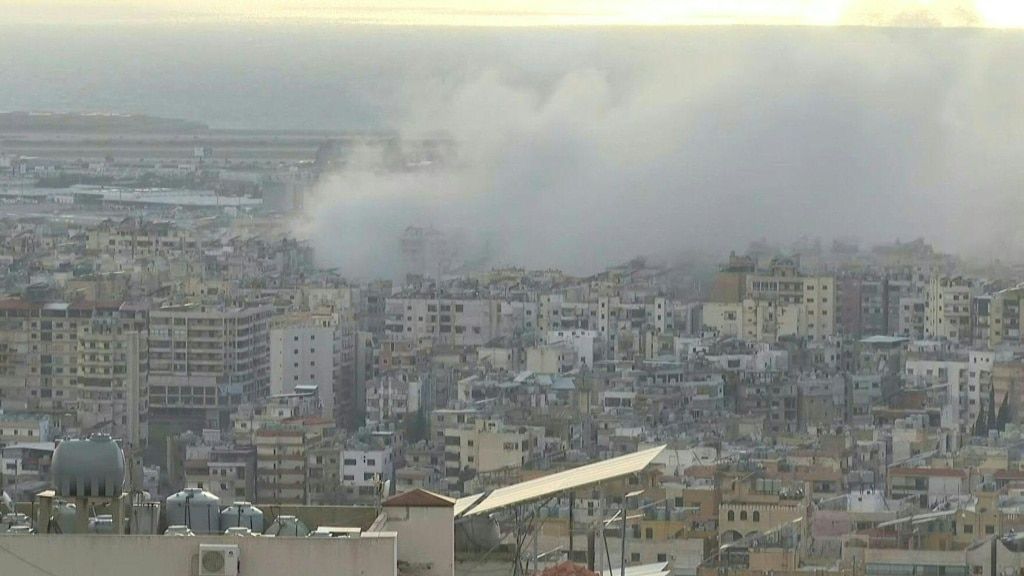
Lebanon at risk of ‘humanitarian catastrophe’: UN
The United Nations has issued a grave warning that Lebanon stands on the brink of a full-scale humanitarian catastrophe as the Middle East conflict enters its fourth week. UN agencies report that over one million residents—representing approximately 20% of the population—have been forcibly displaced from their homes since hostilities escalated on March 2.
Karolina Lindholm Billing, UNHCR’s representative in Lebanon, described the situation as ‘extremely worrying’ during a virtual briefing from Beirut to journalists in Geneva. ‘We are witnessing a rapidly deepening humanitarian crisis on the ground,’ she stated, emphasizing that ‘the risk of a humanitarian catastrophe is real.’
The displacement crisis has overwhelmed Lebanon’s infrastructure, with more than 136,000 displaced individuals crammed into 660 collective shelters, primarily school facilities operating far beyond their intended capacity. Conditions in these shelters remain dire, with limited access to sanitation facilities and elderly residents struggling to sleep on classroom floors.
Complicating relief efforts, Israel’s destruction of critical bridges in southern Lebanon has isolated over 150,000 people and severely restricted humanitarian access to the most affected regions. UN Women reports that pregnant women are giving birth in temporary shelters with inadequate medical care, while women throughout the displacement camps describe constant fear, sleeplessness, and exhaustion as they comfort frightened children.
The crisis has particularly affected children, with UNICEF reporting that more than 370,000 Lebanese children have been displaced with ‘no safe place’ to go. Marcoluigi Corsi, UNICEF’s Lebanon representative, characterized the situation as ‘a sudden, chaotic mass displacement tearing families apart and hollowing out entire communities,’ noting that the mental and emotional toll on children is ‘devastating.’
UNHCR has appealed for over $60 million to scale up its response operations, warning that needs are escalating faster than available resources. The crisis compounds Lebanon’s existing multidimensional challenges, placing immense strain on families and already strained public services.
Despite the organized relief efforts—including the World Health Organization’s first humanitarian convoy reaching Lebanon via Syria and the Lebanese Red Cross distributing essential supplies—humanitarian workers face extreme dangers. The International Federation of Red Cross and Red Crescent Societies reported that one Lebanese Red Cross volunteer has been killed and several others wounded during ambulance missions conducted between March 2-23.
The overwhelming sentiment among the displaced population, according to UN officials, is a simple but powerful desire: ‘They simply want to go home.’
-
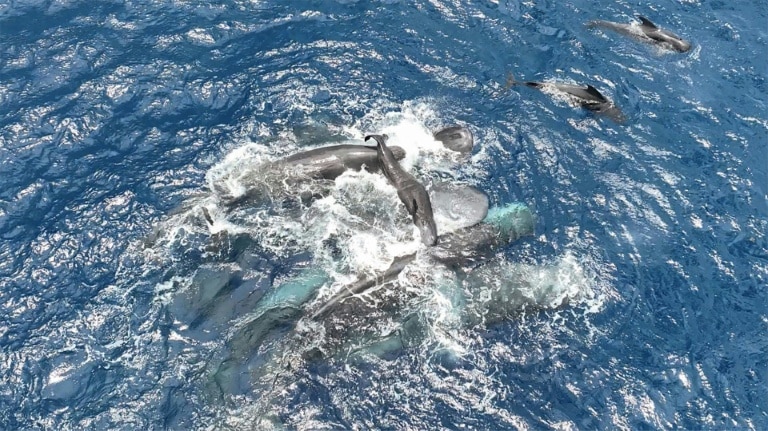
Whale filmed giving birth, with a little help from her friends
In a groundbreaking scientific observation, researchers have documented the first known instance of non-primate birth assistance among marine mammals. The extraordinary event occurred on July 8, 2023, when an international team from Project CETI witnessed a 19-year-old sperm whale named Rounder giving birth off the coast of Dominica while receiving active support from both related and unrelated pod members.
During the 34-minute birthing process, multiple adult females demonstrated remarkable cooperative behavior. They positioned themselves beneath Rounder’s dorsal fin, often swimming on their backs with their heads oriented toward her genital slit. Immediately following the birth, the entire pod of 11 whales underwent a dramatic behavioral shift, with all adults actively engaging with the newborn through physical contact and coordinated pushing motions.
The research team, which published its findings in both Scientific Reports and Science journals, captured the event using drone footage, boat observations, and underwater audio recordings over nearly five and a half hours. This documentation represents an exceptional rarity in marine biology, as only nine of 93 cetacean species have been observed giving birth in wild conditions.
Notably, the assisting whales included both family members and unrelated individuals—the first documented evidence of such behavior outside primate species. Researchers noted that the whales’ evolutionary history as land mammals that returned to the ocean approximately 36 million years ago necessitated specialized birthing adaptations. Unlike terrestrial mammals, whale calves emerge tail-first and require immediate assistance to prevent drowning before developing swimming capabilities.
The team also recorded significant vocalization changes during key moments, suggesting sophisticated communication coordination among pod members. The newborn calf, measuring approximately four meters at birth, was spotted over a year later with other young pod members, indicating successful survival through the critical first year—a positive indicator for reaching adulthood.
-

France calls Olympic gender test ‘a step backwards’, other countries approve
A profound schism has emerged within the international sporting community following the International Olympic Committee’s (IOC) landmark decision to reintroduce mandatory gender verification testing for the female competition category. The policy, announced Thursday and set for implementation at the 2028 Los Angeles Games, mandates that only ‘biological females’ may participate in women’s events, effectively excluding transgender women and many athletes with Differences in Sexual Development (DSD).
France has positioned itself as the policy’s most vocal critic. French Sports Minister Marina Ferrari condemned the move as a ‘regressive step,’ highlighting its conflict with French law, which prohibits such testing. Minister Ferrari articulated major concerns that the policy ‘specifically targets women by introducing a distinction that undermines the principle of equality.’ She further noted that the IOC had abandoned a similar protocol in 1999 due to significant scientific reservations regarding its utility and ethical standing.
Conversely, several national Olympic committees have endorsed the IOC’s framework. New Zealand’s Olympic Committee (NZOC) chief executive Nicki Nicol stated the ruling would provide ‘greater clarity, consistency and fairness to eligibility for the female category.’ This perspective is notable given New Zealand’s prior inclusion of transgender weightlifter Laurel Hubbard in the 2020 Tokyo Olympics, a decision that generated substantial controversy. Similarly, Australian Olympic Committee president Ian Chesterman supported the move, acknowledging the IOC’s comprehensive investigation into this ‘complex issue.’
The policy also received significant backing from high-profile figures outside sports. Author J.K. Rowling, a staunch advocate for defining womanhood by biological sex, celebrated the decision on social media platform X. She hailed it as a ‘welcome return to fair sport for women and girls,’ while simultaneously criticizing the handling of a gender eligibility controversy involving Algerian boxer Imane Khelif at the recent Paris Games.
Logistically, the IOC will determine eligibility through genetic testing for the SRY gene, a key determinant of biological male sex. This test, conducted via cheek swab or blood sample, will be a one-time requirement in an athlete’s career. IOC President Kirsty Coventry acknowledged the legal complexities, confirming that athletes from nations where such testing is illegal, like France, would be tested during international travel to other competitions. President Coventry defended the policy as one ‘supporting equality and fairness and the protection of the safety on the field of play.’
The IOC’s stance aligns with an executive order issued previously by former U.S. President Donald Trump, who claimed credit for the shift, stating it was ‘only happening because of my powerful Executive Order.’ The decision signifies a pivotal and contentious turning point in the ongoing global debate over inclusivity, fairness, and the very definition of sex in elite athletics.
-
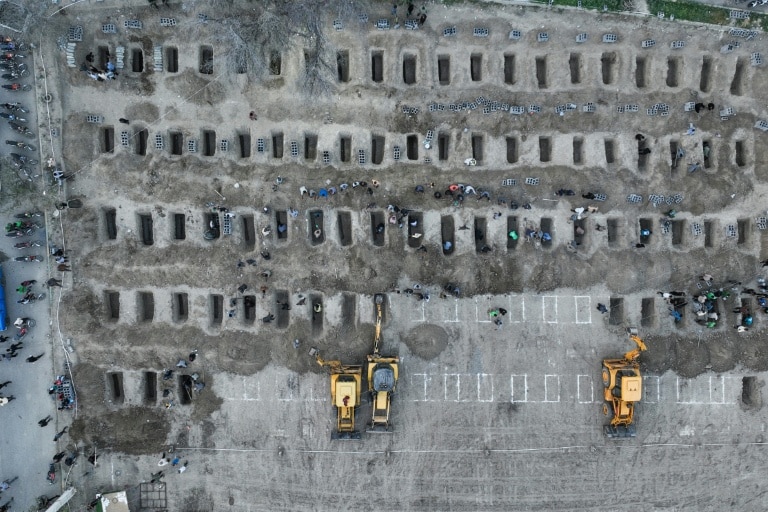
Tehran accuses US of ‘calculated’ assault on school
At an urgent session of the United Nations Human Rights Council, Iran’s Foreign Minister Abbas Araghchi delivered a scathing condemnation of a February 28th airstrike that devastated an elementary school in Minab. He characterized the attack, which occurred on the opening day of broader Middle East hostilities, as a ‘calculated, phased assault’ by the United States that resulted in the deaths of ‘more than 175 students and teachers.’
The session, convened at the request of Iran, China, and Cuba, served as a platform for Araghchi to formally accuse the US of ‘a war crime and a crime against humanity,’ demanding unequivocal condemnation and accountability. The emotional weight of the debate was amplified by Mohaddeseh Falahat, a mother who lost two children in the bombing, who pleaded with diplomats via video link not to let the tragedy be forgotten.
The US military’s preliminary investigation, as reported by The New York Times, pointed to a catastrophic targeting error. A Tomahawk cruise missile, intended for an adjacent Iranian military base, struck the school instead due to the use of outdated coordinates, as the school building was formerly part of the base complex. This explanation was met with deep skepticism from Iranian officials. Araghchi argued that given the US military’s access to advanced precision technology, the incident ‘cannot be believed to be anything other than deliberate and intentional.’
UN Human Rights Chief Volker Turk described the bombing as evoking ‘visceral horror’ and emphasized the necessity for a prompt, impartial, and transparent investigation, calling for the US to swiftly conclude its probe and publicize the findings. The debate also saw widespread condemnation from numerous nations, including China and Cuba, who criticized the US and Israel for initiating broader conflict without Security Council authorization. Simultaneously, Turk and several member states raised concerns over Iran’s reported domestic crackdown on rights amidst the ongoing conflict, noting that war does not absolve Tehran of its human rights obligations.
-
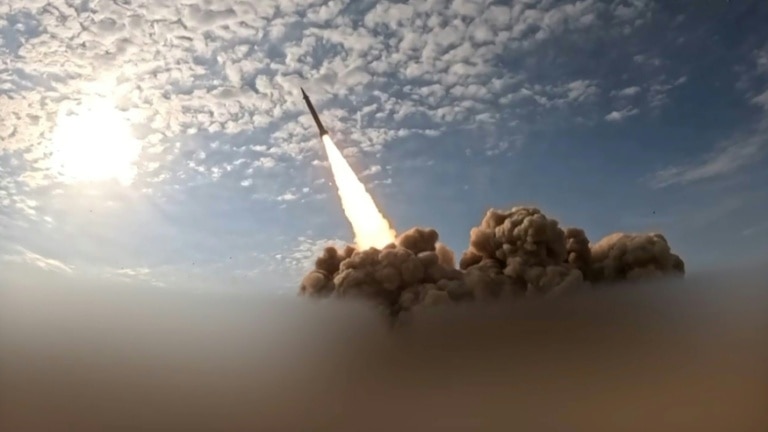
War in the Middle East: latest developments
The Middle East conflict has entered a perilous new phase with Iran issuing explicit warnings targeting US military personnel and regional shipping, while diplomatic channels show signs of activation. The Iranian Revolutionary Guards declared that hotels housing American soldiers throughout the region are now considered legitimate military targets, with armed forces spokesman Abolfazl Shekarchi stating on state television that ‘when all American forces go into a hotel, from our perspective that hotel becomes American.’
Simultaneously, Iran has enforced a naval blockade in the strategic Strait of Hormuz, with Revolutionary Guards turning back three vessels attempting transit and declaring the waterway closed to ships traveling to or from ports linked to ‘Zionist-American enemies.’ This maritime escalation coincides with reports of direct US-Iran negotiations being prepared, with German Foreign Minister Johann Wadephul revealing that talks are ‘expected to take place in Pakistan very soon.’
The conflict’s regional impact continues to expand with Kuwait’s main commercial port at Shuwaikh sustaining damage from a dawn drone attack, though authorities reported no casualties. Saudi Arabia’s defense ministry confirmed intercepting and destroying four drones over the kingdom’s eastern region, while Ukraine and Saudi Arabia signed a significant air defense agreement during President Zelensky’s visit, aimed at countering Iranian drone capabilities.
Cultural casualties mount as well, with Tehran city council’s cultural heritage committee head Ahmad Alavi reporting that US and Israeli strikes have damaged at least 120 museums and historical sites across Iran since the conflict began. The UN Security Council prepared for closed-door consultations requested by Russia to discuss attacks on Iranian civilian infrastructure, including educational and healthcare facilities.
Meanwhile, G7 allies pressed US Secretary of State Marco Rubio for clarity on American strategy toward Iran during talks outside Paris, with UK Foreign Minister Yvette Cooper urging a ‘swift resolution to this conflict that restores regional stability.’ The conflict’s expansion continued as Lebanese media reported Israeli strikes hitting Beirut’s southern suburbs early Friday, with AFP correspondents documenting multiple explosions in the Hezbollah stronghold.
-
‘I’ll never be the same’: Iranians recount one month of war
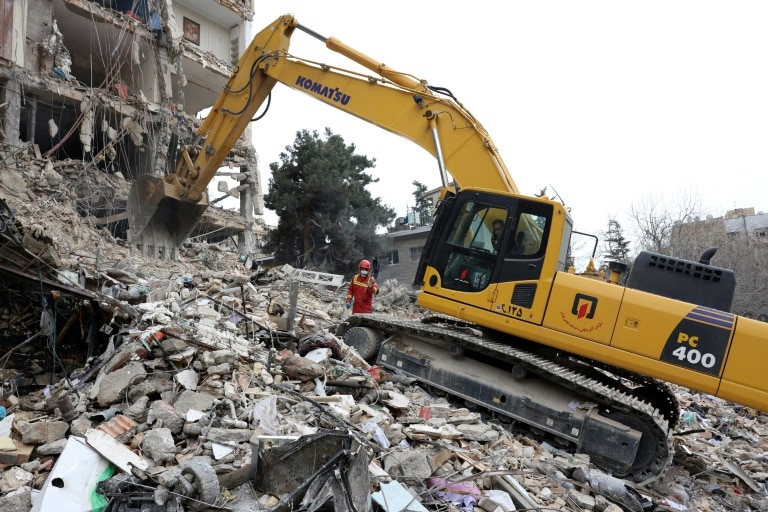
Iranian citizens are revealing the profound transformations in their daily lives following one month of sustained military engagement with Israel and the United States. Despite government restrictions on communication and extensive internet blackouts, numerous Iranians have managed to share their experiences with international media through covert channels.
The economic landscape has deteriorated dramatically since hostilities began. Previously struggling under international sanctions, Iran now faces hyperinflation and widespread industrial paralysis. Golnar, a 29-year-old Tehran resident, reported complete loss of income from her online business. “Even with multiple family members working and no rent expenses, we cannot consider dining out or leisure activities,” she explained. “We’re barely covering essential living costs.”
Tourism-dependent regions have suffered particularly severe impacts. Sadeq, a 42-year-old from Qeshm island, described how normally bustling Nowruz holiday celebrations yielded few visitors. “Our hotels and cafes operate at half-capacity,” he noted. “Many residents extend stays indefinitely awaiting conflict resolution, while fuel shortages create hours-long queues.”
Beyond economic hardship, Iranians describe adapting to extraordinary circumstances. Shayan, a 40-year-old Tehrani, acknowledged maintained infrastructure: “Basic amenities remain available—gasoline, water, electricity. Cafes operate and social gatherings continue, but pervasive helplessness dominates our psyche.” Another resident from Iran’s Kurdish region reported normalization of violence: “Explosions and missiles become routine aspects of daily life. Our primary concern now targets potential attacks on oil infrastructure.”
The conflict has accelerated existing emigration trends. Katayoon, a yoga instructor who recently fled to Turkey, cited compounded reasons for departure: “While airstrike blast waves physically threw me from bed, my decision stemmed from decade-long fears—from mandatory hijab enforcement to prohibited cross-gender teaching.” She emphasized economic desperation: “People lack food money. Life becomes impossible.”
Psychological impacts appear profound and permanent. Ensieh, a 46-year-old Tehran dentist, confessed: “I lose more hope daily. Caught between three mad powers, war terrifies. I’ll never regain my former self—conflict has torn away irreplaceable parts of me.”
Concurrently, Iranian authorities have intensified domestic surveillance and suppression. Citizens report heightened street security with frequent checkpoints involving vehicle searches and electronic device inspections. Kaveh, a 38-year-old artist, described armed forces patrolling nightly while “honking and carrying flags.” Opposition gatherings express concern about potential US-clerical regime agreements, fearing intensified persecution should diplomatic resolutions emerge.
-
G7 allies press Rubio on US Iran plans
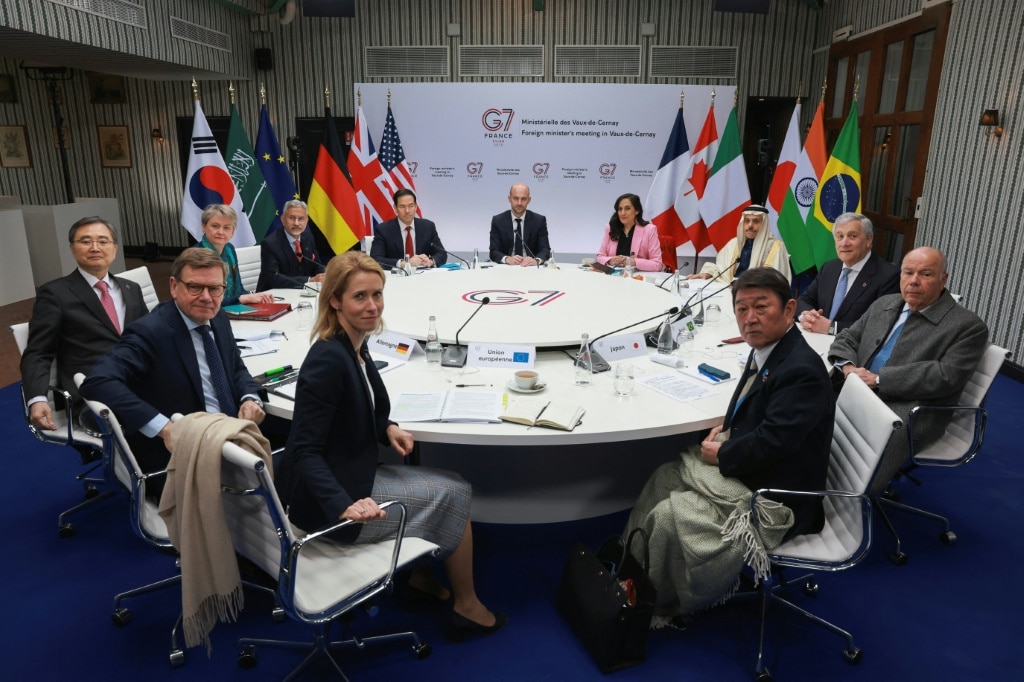
At the G7 foreign ministers’ gathering outside Paris, allied nations intensified their pressure on U.S. Secretary of State Marco Rubio for detailed explanations regarding American strategy toward Iran, nearly one month into the escalating Middle Eastern conflict. The meeting, held at the historic Vaux-de-Cernay Abbey, convened top diplomats from the world’s leading industrialized democracies amid growing international anxiety over economic repercussions from Iran’s blockade of the Strait of Hormuz.
German Foreign Minister Johann Wadephul emphasized the necessity for allied coordination, stating ahead of discussions that partners required clear understanding of “how the U.S. will proceed” in the ongoing confrontation that commenced with February airstrikes resulting in the death of Iranian Supreme Leader Ali Khamenei. Despite repeated assertions from President Donald Trump regarding ongoing negotiations with Tehran, specifics remain conspicuously absent from Washington’s communications.
The economic implications of Iran’s strategic closure of the vital maritime passage have reverberated across global markets, with oil prices surging and commercial vessels accumulating at the energy transit chokepoint. U.K. Foreign Minister Yvette Cooper articulated collective concerns, emphasizing that “Iran cannot be able to just hold the global economy hostage” through control of international shipping routes.
Secretary Rubio, undertaking his first international journey since hostilities began, maintained before departure that securing reopened access to the Strait represented a fundamental “interest” for all G7 members. Regarding diplomatic channels with Iran, he acknowledged progress through intermediary nations facilitating communication exchanges.
In a notable departure from standard diplomatic protocol, the meeting concluded without issuing a joint communiqué—a telling indication of policy divergences between the United States and its traditional allies. Instead, the French presidency arranged for a singular statement reflecting discussions.
The assembly additionally addressed continued support for Ukraine amid Russian aggression, with European ministers ensuring the conflict remained prioritized within multilateral agendas. France’s orchestration of the event included expanded participation from emerging economies, with invitations extended to diplomatic representatives from Brazil, India, Saudi Arabia, and South Korea.
Controversy emerged regarding summit invitations when South African leadership alleged American pressure to exclude President Cyril Ramaphosa from upcoming June meetings in Évian. French officials categorically denied yielding to external influence, clarifying that Kenya—not South Africa—had received invitation to the forthcoming gathering.
-
Iran Guards warn civilians after Trump pushes Hormuz deadline
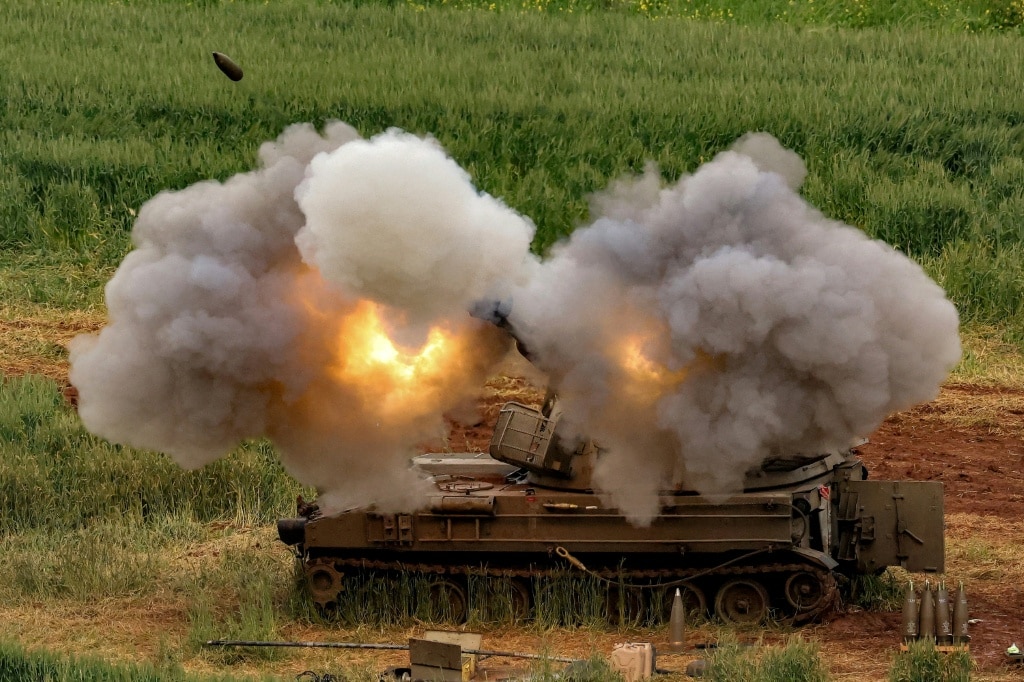
The Iranian Revolutionary Guards issued a stark warning to civilians across the Middle East on Friday, urging them to avoid proximity to American military installations. This advisory emerged shortly after President Donald Trump extended the deadline for Iran to reopen the strategic Strait of Hormuz, moving it from Friday to April 6.
Trump asserted the extension responded to Tehran’s request for additional negotiation time, stating that talks to conclude the month-long regional conflict were progressing positively. However, Iran’s military posture indicated no de-escalation, with continued reprisal operations against Israeli targets and Gulf assets.
The Revolutionary Guards accused ‘cowardly American-Zionist forces’ of employing human shields and explicitly warned regional civilians: ‘We recommend that you urgently leave locations where American forces are stationed so that no harm comes to you.’ This statement followed Iran’s threat to target hotels accommodating U.S. military personnel throughout the region.
Concurrently, Kuwait reported damage to its primary commercial port from a dawn drone attack. The Guards additionally declared the Strait of Hormuz ‘closed’ to vessels traveling to and from enemy ports, claiming to have turned back three container ships attempting passage.
Global economic repercussions intensified as oil prices and stock markets showed mixed responses to Trump’s deadline extension. Japan announced temporary easing of restrictions on coal-fired power plants to address energy shortages, while Vietnam implemented temporary fuel tax waivers.
Diplomatic efforts continued as U.S. Secretary of State Marco Rubio met with G7 counterparts in France. British Foreign Minister Yvette Cooper emphasized the necessity for swift conflict resolution, stating ‘Iran cannot be able to just hold the global economy hostage.’
Negotiations center on a 15-point U.S. proposal delivered through Pakistani intermediaries, with Iran reportedly demanding war reparations, recognition of its sovereignty over the Strait of Hormuz, and cessation of attacks on Iranian territory and allied regional groups including Lebanon’s Hezbollah.
UN Human Rights Chief Volker Turk urged Washington to complete its investigation into a deadly strike on an Iranian elementary school that occurred during the conflict’s initial days, calling for accountability for ‘the terrible harm done.’
Meanwhile, Israeli forces conducted fresh strikes in Tehran, Qom, and Urmia, targeting infrastructure. The attacks occurred amid concerns voiced by Israeli opposition leader Yair Lapid regarding the military being ‘stretched to the limit and beyond’ after weeks of sustained operations.