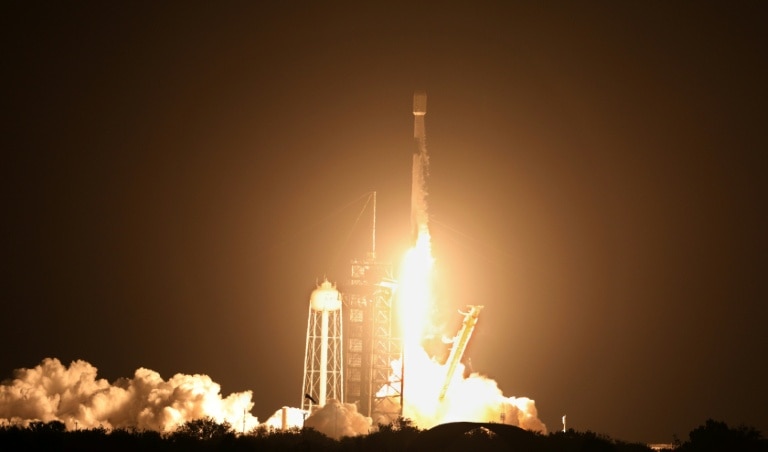
An unplanned collision between the discarded upper stage of a SpaceX Falcon 9 rocket and the lunar surface is set to take place this week, an event that carries no risk to life or infrastructure on Earth but promises to deliver valuable new insights for lunar research. The 4,000-kilogram booster section, left adrift in space after launching a mission carrying two lunar landers in January 2022, is on track to strike the Moon’s northern hemisphere near the iconic Einstein Crater at roughly 06:35 GMT on Wednesday, hurtling toward the surface at 8,690 kilometers per hour. Once impact occurs, researchers expect a bright, sunlit plume of dust, rubble and ejecta to burst outward from the crash site — a phenomenon that both professional scientists and amateur astronomers around the world are being encouraged to observe and document. Benjamin Fernando, a researcher at Los Alamos National Laboratory in New Mexico and lead author of a recent pre-print paper analyzing the upcoming impact, notes that the brightness of the ejecta plume remains unpredictable, which makes this unplanned event all the more valuable for the research community. “It might be possible for folks with a telescope to observe the plume of ejecta created by the impact,” Fernando told Agence France-Presse. “It is unclear how bright it will be, which is one of the reasons why we are looking to study this event.” The crash will leave a new, permanent crater on the lunar surface, and NASA has confirmed it will track the rocket body through its final approach for training purposes, then study the impact site after the collision to advance scientific understanding of lunar dynamics. In an official statement, NASA spokesperson Jimi Russell emphasized, “There is no danger to Earth.” SpaceX’s director of NASA Science and Dragon Programs, Julianna Scheiman, explained at a Monday press briefing that standard protocol is followed for all high-energy deep space missions to dispose of second stages in compliance with global space regulations. “We did that,” Scheiman said, confirming that the planned disposal maneuver was executed correctly. However, “what has happened is essentially a mixture of solar activity and gravity forces have put it on a path towards the Moon.” Like many researchers and space enthusiasts, Scheiman added that she is eager to see observations of the rare event. The research team behind the pre-print paper notes that the unplanned impact offers a rare chance to test core systems for future lunar exploration. The event will help scientists refine their methods for locating impact craters on the lunar surface, which will support upcoming planned lunar seismic experiments. It also offers an unmatched opportunity to study how dust and ejecta behave during high-velocity impact events on the Moon, and to improve assessments of the hazard artificial space debris poses to future lunar infrastructure. With NASA targeting the late 2020s to establish a long-term sustained human presence on the Moon through its Artemis program, understanding the distribution and behavior of artificial debris in lunar orbit has become a critical priority for space agencies worldwide. While the Moon is constantly impacted by natural space debris such as meteoroids, collisions with large artificial objects are far less common. The last major intentional artificial impacts were carried out by NASA decades ago during the Apollo program, when the space agency deliberately crashed mission stages into the Moon to collect seismic data from the Apollo seismometers left on the surface. Unlike those planned tests, this unplanned event gives the modern research community a chance to study an impact with current observational technology, filling gaps in knowledge that will support the next generation of lunar exploration.
标签: Oceania
大洋洲
-

Fortescue shares hit by Morningstar downgrade over project cost blow outs
For millions of Australian workers holding superannuation savings, a key mining investment tied to their retirement accounts faces fresh downward pressure after independent rating agency Morningstar cut its fair value assessment for Fortescue Metals Group by 4% this week.
The new fair value estimate for Fortescue shares now sits at AU$15.50, a marked downward adjustment that comes ahead of the miner’s highly anticipated full-year financial results release, scheduled for August 24 on the Australian Securities Exchange. At the time of the downgrade, Fortescue was positioned to open trading at AU$18.08 – a full 16% above Morningstar’s calculated intrinsic value of the stock.
The core catalysts behind the downgrade tie directly to two major headwinds facing the iron ore producer: near-term forecasts for slowing global steel sales that would pressure commodity demand, and persistent, spiraling cost overruns at the company’s high-profile Iron Bridge magnetite project located in Western Australia’s remote Pilbara region.
The Iron Bridge project was designed to extract low-grade ore and process it into premium magnetite concentrate using energy-intensive methods, positioned adjacent to Fortescue’s existing operational mine, rail network and port infrastructure – advantages that were supposed to keep costs contained. But since the project’s initial 2019 budget of AU$4 billion, total projected costs have ballooned to AU$6.2 billion, as the company has struggled to ramp up production at the magnetite processing plant.
Just last month, Fortescue was forced to take a AU$1.1 billion pre-tax impairment write-down on the project’s value and abandon its long-held target of reaching full production capacity by 2028. That sudden write-down signaled to markets just how severe the ongoing challenges at Iron Bridge have become.
In the analysis note released alongside the downgrade, Morningstar analyst Jon Mills outlined that overlapping headwinds have already eroded near-term profitability for the miner. “Cost inflation and lower volumes meant unit cash costs rose 19 per cent in the quarter, to US$19.40 per metric ton, while problems at Iron Bridge persist,” Mills wrote. He added that the current market premium on Fortescue shares is driven by investor expectations that elevated iron ore prices, hovering around US$100 per metric ton, will hold steady for longer than Morningstar’s projections anticipate.
Beyond the immediate downgrade, Morningstar has reaffirmed its “no-moat” rating for Fortescue, concluding the company does not hold a durable competitive advantage over its largest industry rivals. Comparing Fortescue’s margins to global mining giants BHP, Rio Tinto and Vale, Mills noted that Fortescue’s profit margins land well below industry leaders, placing the company in the second half of the global iron ore cost curve at roughly the 75th percentile. “This is a primary driver of our no-moat rating,” Mills explained.
As millions of Australians hold Fortescue shares indirectly through their superannuation balances, the downgrade has drawn attention to potential downside risk for retirement savings tied to the volatile iron ore sector, with market participants now looking to the upcoming full-year results for further clarity on the miner’s path forward.
-

Colombian ex-guerrillas fear for future under hardline president
After more than 60 years of brutal armed conflict that tore apart communities across Colombia, dozens of former rebels who recently laid down their weapons to embrace civilian life now stand on edge, their hard-won transition at risk of unraveling as a hardline right-wing administration prepares to take power.
Derlis Aizama, 24, and Daniel Paredes, a former guerrilla couple who met while fighting together with the National Coordinating Committee of the Bolivarian Army, traded their arms for a quiet domestic life just two months ago. They are among 99 ex-combatants from the group — which controls strategic cocaine-producing territories along Colombia’s border with Ecuador — who finalized a disarmament agreement with outgoing leftist President Gustavo Petro, marking the most significant success of Petro’s signature “total peace” initiative. That initiative aimed to end decades of violence by negotiating with fragmented remaining armed groups, building on the landmark 2016 peace deal that disbanded the once-formidable FARC rebel army.
But when US-backed president-elect Abelardo de la Espriella is inaugurated this Friday, that hard-won agreement will hang in the balance. De la Espriella campaigned on a hardline security platform, tapping into widespread public anxiety over a recent surge in violence that has reached its highest level in a decade. He has explicitly pledged to abandon Petro’s negotiation strategy, promising instead to launch an all-out military offensive against remaining armed groups. He has also announced plans to dismantle the special transitional court established by the 2016 peace deal, which was created to try the conflict’s worst atrocities, and eliminate the government peace office that oversees negotiations with armed groups.
For the ex-combatants waiting in a special reintegration zone in Colombia’s southern Putumayo region, the incoming administration’s policies have created a climate of deep fear and uncertainty. De la Espriella has given all active combatants until inauguration day to surrender, warning those who do not will face only “death or prison.”
“We are here because we want to rebuild our lives, to create a home,” Aizama told AFP in an interview from the reintegration zone, adding that she already feels unsafe amid the looming policy shift.
Darwin, a 32-year-old ex-guerrilla who declined to share his surname for security reasons, said he joined the group decades ago because a lack of economic opportunity in his coca-growing region left him with few other options. Since laying down his weapon, he has thrown himself into reading — counting the classic fairy tale *Cinderella* among his favorite works — and has no interest in returning to armed conflict. Still, he admitted, “It makes us a little nervous.”
Mauricio Zambrano, another ex-combatant in the zone, has built a makeshift gym using cement blocks and metal pipes as weights to help fellow former fighters distract themselves from the uncertainty. He noted that de la Espriella made “very drastic comments” after his election victory, though the incoming president has not issued any specific statements about the 99 disarmed ex-combatants in Putumayo.
Many ex-fighters in the zone are continuing their education, working to finish high school while trapped in a legal limbo, waiting for clarity on their future. Armando Novoa, the government negotiator who brokered the June disarmament deal, has tried to reassure the group that existing legal protections will shield their agreement. Under international humanitarian law, Novoa argued, the disarmed ex-combatants — who are now defenseless and no longer engaged in combat — are entitled to legal protection. “It would be true institutional suicide to ignore this reality and throw 99 people back into the arms of violence and weapons,” he told AFP.
Critics of Petro’s peace strategy argue that armed groups have used negotiation periods to consolidate power and expand their territorial control, a criticism that helped fuel public support for de la Espriella’s hardline platform. For the 99 ex-combatants who have already given up their weapons, however, the incoming policy shift leaves their dream of a peaceful civilian life hanging in the balance.
-

Cuba’s famed resilience comes at a growing mental cost
For decades, Cubans have cultivated a well-earned reputation for weathering systemic hardship with quiet resilience and creative resourcefulness — a point of national pride that has carried communities through decades of challenges. But as the island enters its latest phase of prolonged crisis, fueled by a U.S. energy blockade that has sent living conditions plummeting since January, that long-held fortitude is coming at a devastating psychological cost that is leaving millions in a state of persistent exhaustion and uncertainty.
-
Italian garbagemen help recover lost 1 mln euro lottery ticket
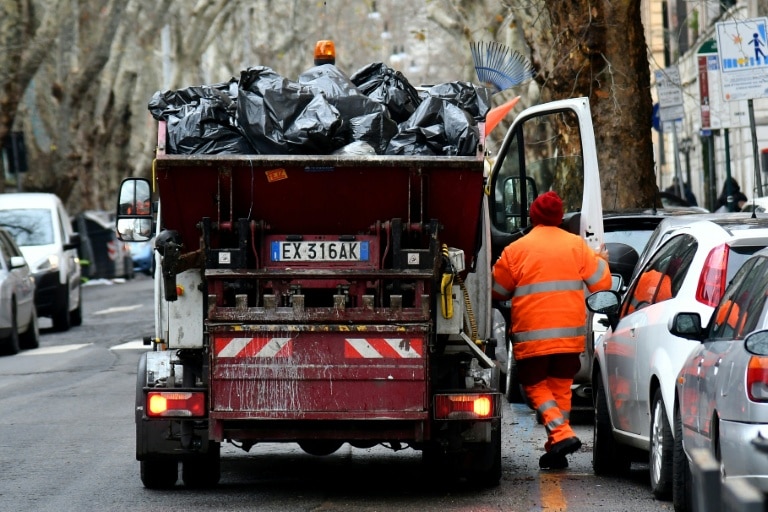
A frantic anonymous woman in southern Italy has walked away with a €1 million ($1.09 million) lottery jackpot, thanks to the dedicated work of local garbage collectors who sifted through tons of waste to retrieve her accidentally discarded winning ticket.
The dramatic search unfolded in Bitonto, a small town outside Bari in the Puglia region, after a series of misunderstandings nearly cost the woman a life-changing windfall. As detailed by Roberto Nicola Toscano, administrator of local public waste management agency SANB, the winner had played the same set of numbers for years, which held personal meaning tied to a loved one. After the draw, she visited her local convenience store to check her ticket, where the shop’s terminal marked the slip as “non-payable” — a standard result for large jackpots, as small retailers are only authorized to redeem smaller prizes. Unaware of this policy, the woman assumed her ticket was a loser and threw it away before the trash was collected by SANB crews.
It was only when she returned home that a family member checked the official winning numbers and realized she had taken home the top prize. In a panic, the woman contacted SANB directly to beg for help recovering the ticket before the waste could be processed.
\“We mapped the route the ticket would have taken, and we didn’t hold out much hope — it had already been loaded onto a garbage truck, so the odds of finding it intact felt almost impossible,” Toscano told Agence France-Presse in an interview Tuesday. But a stroke of initial good fortune worked in the search team’s favor: crews were able to quickly identify the exact truck that had collected trash from the shop’s bin and pulled the vehicle over before it completed its route.Due to health and safety risks posed by hazardous materials that can turn up in municipal waste, the truck was taken to a specialized waste processing facility equipped to support a targeted search. Over more than 24 hours, SANB workers sorted through mounds of garbage, sorting through dozens of discarded tickets and stubs before finally locating the winning slip. Toscano confirmed that the ticket was “miraculously still in one piece” when it was found, despite being mixed in with general household and commercial waste.
When Toscano called the winner with the news of the recovery, she broke down in tears of relief. “I would have hugged her, but we were on the phone,” he told reporters.
The successful recovery did come with a cost. Because SANB is a public agency, unplanned search operations would normally fall to local taxpayers to fund. Toscano said he required the winner to sign an agreement committing her to cover all additional costs incurred from the 1-day search — a small price to pay for a jackpot that has been confirmed as valid and ready for payout.
-
EU nations patch things up after Ceuta migration discord
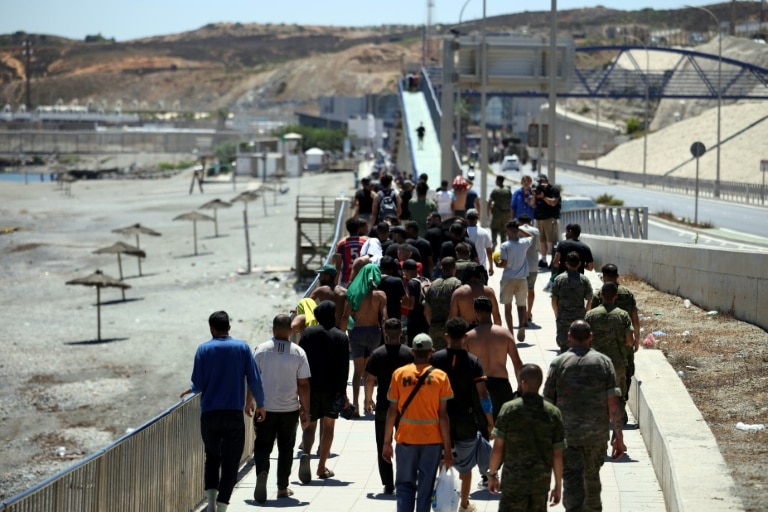
A weeks-long migration dispute that exposed deep internal divisions within the European Union has been de-escalated, after EU interior ministers reached a fragile compromise during tense talks in Brussels this Tuesday. The conflict was triggered last week when more than 72,000 migrants crossed from Morocco into Ceuta, a Spanish sovereign enclave on the North African coast, triggering one of the bloc’s worst border security crises in recent years. Speaking to journalists after three hours of closed-door negotiations, Magnus Brunner, the EU’s top migration official, framed the incident as a major stress test for three core pillars of European integration: the bloc’s external border management, its ability to counter disinformation, and the principle of solidarity between member states.
Brunner claimed that the bloc ultimately emerged from the challenge successfully, stating, “It was a crisis, but now fortunately, it has been resolved.” Spanish authorities have moved rapidly to repatriate the vast majority of the new arrivals, confirming Tuesday that just 2,000 of the 72,000 crossers remain in Ceuta. Officials also updated the death toll for the crossing Tuesday, raising the confirmed number of migrants who died attempting to reach the enclave from 72 to 75.
Images of tens of thousands of migrants flowing across the border became immediate political fodder for right-wing groups across Europe and North America, who framed the crisis as proof that the continent faces an existential threat from uncontrolled immigration. The incident left the Spanish government of Prime Minister Pedro Sanchez isolated within the bloc, with 22 of the 27 EU member states backing a joint statement calling for stricter action on irregular migration that implicitly blamed Spain’s more open migration approach for the crisis. Hardline governments including Italy and Denmark even called for Spain to be suspended from the Schengen Area, the bloc’s border-free travel zone – a proposal that Madrid rejected firmly, noting that such a suspension is not permitted under existing EU law. Sanchez lashed out at other member states over the weekend in a letter to EU institutional leaders, calling their response to the crisis selfish.
Many had expected Tuesday’s meeting to devolve into an acrimonious public showdown, but leaders across the bloc instead moved to downplay divisions and emphasize unity. Spanish Interior Minister Fernando Grande-Marlaska described the tone of the talks as “absolutely constructive”, while French interior official Laurent Nunez echoed that “all member states, without exception, affirmed their solidarity with Spain”. France had previously refused to join the 22-nation statement, arguing it exploited the crisis for domestic political gain.
Hardline states struck a more conciliatory tone as well: Denmark’s immigration minister Morten Bodskov said his country was “very satisfied” with Spain’s handling of the emergency, though he reiterated that the event underscored the need for strict control of the EU’s external borders. Italian Prime Minister Giorgia Meloni has been one of the most vocal critics of Sanchez’s policy, particularly its plan to grant legal status to undocumented migrants already residing in Italy. Still, Italian Interior Minister Matteo Piantedosi opened his remarks by expressing “sincere solidarity” with Spain before doubling down on his government’s call for stricter migration rules.
Over the past several months, pressure from hardline governments including Italy has pushed the EU to tighten its migration framework significantly, including new rules that allow member states to transfer failed asylum seekers to off-shore “return hubs” outside the bloc’s borders. Piantedosi used Tuesday’s meeting to push for a broader expansion of this model, calling on all EU states to adopt the framework of Italy’s recent deal with Albania to host off-shore return centers. He also argued that the bloc should use trade leverage to pressure Morocco, which he accused of failing to cooperate on migrant repatriation while benefiting from preferential trade access to the European single market.
The final joint statement issued after the meeting praised Spain for its “swift and effective” response to the crisis, noting that no migrants had moved onward from Ceuta to mainland Spain or other EU member states. However, the statement also implicitly acknowledged missteps in the bloc’s collective response, admitting that cross-member communication during such crises could be made “more coherent”, confirming that the EU’s initial response fell short of this standard.
-
Michigan primary puts Democratic divide on the ballot
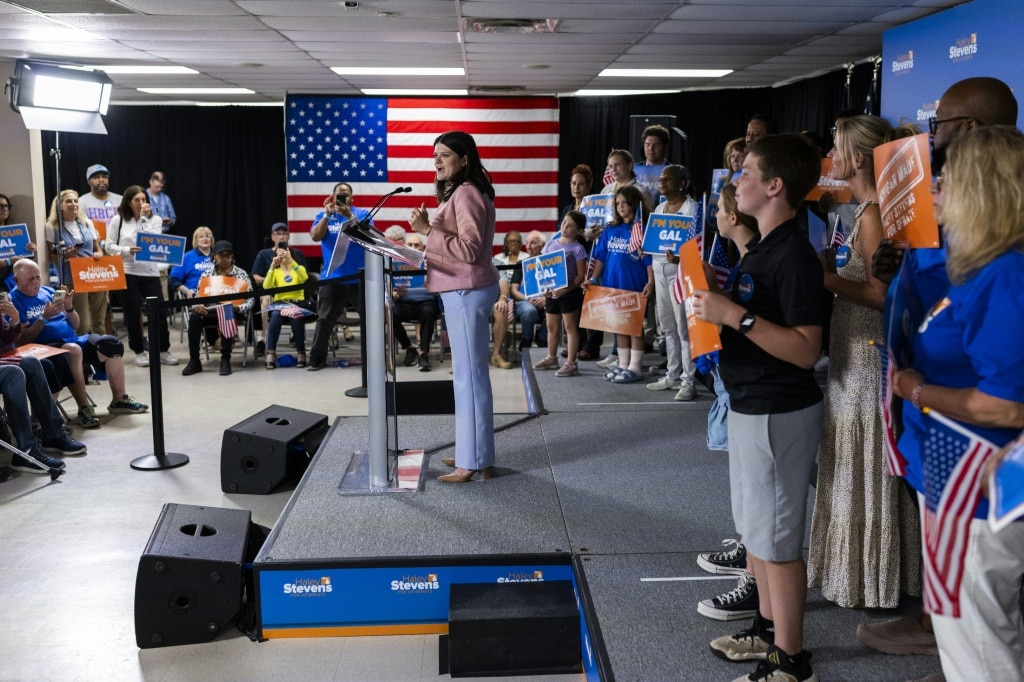
On Tuesday, voters across Michigan headed to the polls for one of the most closely watched Democratic Senate primaries in recent memory, a contest that has escalated into a proxy battle shaping the ideological future of the national Democratic Party, its stance on the Israel-Gaza conflict, and its fight to win control of the U.S. Senate. The seat up for grabs was left open by retiring Democratic Senator Gary Peters, and the winner will go head-to-head with former Republican Congressman Mike Rogers in the general election this November. For Democrats, the path to Senate majority hinges on this race: the party must hold onto the competitive Michigan seat while flipping four currently Republican-held districts to claim control of the upper chamber, turning a local primary into a high-stakes national contest. Michigan has emerged as a key swing state in recent presidential and congressional elections, making the outcome of this primary far more than a purely ideological exercise.
Political analysts broadly agree that the results will answer a critical question facing national Democrats: can the rising leftist wave currently reshaping the party break out of deep-blue safe seats and win competitive battleground states, or will the long-standing Democratic establishment retain its grip on power in critical swing regions? The race features two starkly different candidates, each backed by competing wings of the party.
Abdul El-Sayed, the former director of the Wayne County Health Department, has earned endorsements from high-profile progressive leaders including Senator Bernie Sanders and Representative Alexandria Ocasio-Cortez. He has positioned his campaign as a movement for working-class Michiganders, framing himself as an outsider prepared to challenge corporate power, establishment party leadership, and the increasingly unpopular pro-Israel donors that shape national Democratic politics. His opponent, Haley Stevens, a four-term incumbent congresswoman representing Detroit’s suburban districts, has centered her campaign around proven governing experience, support for Michigan’s critical manufacturing sector, and broad electability in a general election. She boasts backing from top establishment figures, ranging from Senate Democratic Leader Chuck Schumer to popular Michigan Governor Gretchen Whitmer.
Recent public polling has shown El-Sayed holding a narrow lead, a shift that has raised the possibility of a landmark progressive victory in a 2024 primary season already defined by a string of anti-establishment wins. El-Sayed’s allies argue that the grassroots volunteer energy fueling his campaign proves progressives can build a winning statewide coalition without relying on Washington’s traditional, big-money donor networks. For her part, Stevens argues that her core base of support – including Black voters, older Democratic voters, and voters without college degrees – is significantly underrepresented in public opinion polling. After casting her own ballot in Birmingham, a small city northwest of Detroit, Stevens told reporters that her campaign’s outreach remained strong. “We’re still getting a ton of votes. We’re firing people up,” she said. “My phone’s been ringing off the hook with people who are excited to go to the polls, to see a campaign like mine go forward for November.”
The deepest and most bitter rift between the two candidates centers on U.S. policy toward Israel. Stevens has defended longstanding U.S. military support for Israel and has rejected claims that Israel has committed genocide against Palestinian civilians in Gaza. El-Sayed, by contrast, has called for an end to unconditional U.S. military aid to Israel, openly criticized the lobbying power of the American Israel Public Affairs Committee (AIPAC), and stated that Israel should not exist exclusively as a Jewish state. With a large Arab American population that has expressed widespread anger over Israel’s military campaign in Gaza, and AIPAC spending more than $90 million on advertising and outside spending to influence the race, Michigan has become another national test of how much power the pro-Israel lobby holds over Democratic primary outcomes.
The campaign has devolved into increasingly personal attacks: El-Sayed has labeled Stevens “the least capable candidate in America,” while Stevens has accused El-Sayed of unfairly scapegoating Jewish Americans for political gain. Longtime Michigan Democratic Congresswoman Debbie Dingell, who has remained neutral in the primary, has warned that the “brutality” and “ugliness” of the contest could leave lasting divisions that make it harder for the party to unite ahead of the general election. Both campaigns, however, maintain that their candidate offers the strongest chance of beating Rogers in November. Stevens points to Michigan’s long history of electing pragmatic, centrist Democrats, while El-Sayed argues that grassroots enthusiasm will drive higher turnout among working-class and younger voters, key blocs for Democratic success in the state.
The stakes of a divided party are already clear: Michigan narrowly voted for former President Donald Trump in the 2024 presidential election, even as Democratic candidate Elissa Slotkin won a narrow victory over Mike Rogers in that year’s Senate race, underscoring both the state’s status as a highly competitive toss-up and the real risk that internal division could cost Democrats the seat in November.
-

Infantino’s problems mount as Wenger and key FIFA ally turn on him
Pressure on FIFA President Gianni Infantino has escalated dramatically this week, as once-trusted allies have turned against the embattled leader following the collapse of his controversial plan to open World Cup governance to private investment. The scheme, which was officially scrapped over the weekend after triggering global backlash within football’s governing circles, has left Infantino fighting to retain control and shore up support ahead of next year’s scheduled leadership election.
The most stinging rebukes came from two figures long seen as core members of Infantino’s inner circle: Arsène Wenger, FIFA’s chief of global football development hand-picked by Infantino for the role in 2019, and FIFA Secretary-General Mattias Grafstrom. In an official statement released Tuesday, Wenger made clear his view that pulling the plug on the proposal was not just necessary but unavoidable. “The decision to withdraw the project was absolutely necessary and beyond question,” the former Arsenal manager said, adding that he had no prior involvement in the plan and only learned of its existence through media reports.
Grafstrom’s rebuke came in an internal email to FIFA staff obtained by Agence France-Presse, in which the secretary-general explicitly distanced himself from the initiative. He called the chaotic rollout and collapse of the private investment plan “a sad and reproachable series of events,” adding in a subtle rebuke of Infantino’s leadership that “Individuals, unstable moments and unfortunate episodes come and go. The institution, its mission and its responsibility towards world football continue.”
The ill-fated proposal was first unveiled by FIFA a week prior, which sought to raise $4.2 billion through a new commercial subsidiary named FIFA Forward Enterprise (FFE). Under the plan, FFE would take over operational and commercial control of flagship events including the men’s World Cup and the expanded Club World Cup, valuing the new entity at $20 billion. But the plan immediately sparked fierce pushback, with European governing body UEFA threatening to deploy the ultimate sanction: a full boycott of all FIFA competitions, including the 2026 World Cup. By Saturday, facing overwhelming opposition, Infantino was forced into a humiliating climbdown, announcing the project was being scrapped entirely.
Far from resolving the crisis, the withdrawal has only deepened challenges to Infantino’s leadership. European football’s governing body has not backed down: through its U.S.-based legal counsel, UEFA sent a formal legal notice to Infantino last Friday, seen by AFP, warning that it is actively considering litigation, arbitration and regulatory complaints over what it calls the “shabby, backroom, opaque deal.” The notice orders Infantino and FIFA to immediately preserve all documents and electronic records related to the FFE proposal, naming Wenger, Grafstrom and FIFA Chief Operating Officer Kevin Lamour (who publicly criticized the plan last Friday) as parties with knowledge of the scheme who must retain all relevant materials.
Support for Infantino among FIFA’s member associations is also crumbling. Four UEFA member unions – Wales, Finland, Sweden and Serbia – have already withdrawn their public endorsements of Infantino ahead of the March 2025 presidential election in Rabat, where he was long expected to win an unopposed fourth and final term. The Football Association of England is widely reported to be on the brink of pulling its support as well.
Infantino has retained a small core of backing, including from Morocco, co-host of the 2030 World Cup, Kuwait, Qatar (where Infantino owns a personal residence) and Lebanon, which granted him honorary citizenship earlier this year. However, the public break from Wenger and Grafstrom – who accompanied Infantino at every major event through the 2022 Qatar World Cup – has dealt a fatal blow to the narrative that the president retains the confidence of FIFA’s internal leadership. This marks the second high-profile defection in days: last Friday, Infantino’s special advisor Carlos Cordeiro, a close associate of former U.S. President Donald Trump, resigned from his post over the proposal.
For Infantino, the crisis shows few signs of abating. When he announced the withdrawal of the FFE plan, he framed the decision as a step to unify global football. But as opposition grows within FIFA’s own ranks and among leading member associations, that unifying goal appears increasingly out of reach – and Infantino’s grip on the FIFA presidency is now far shakier than it was just one week ago.
-
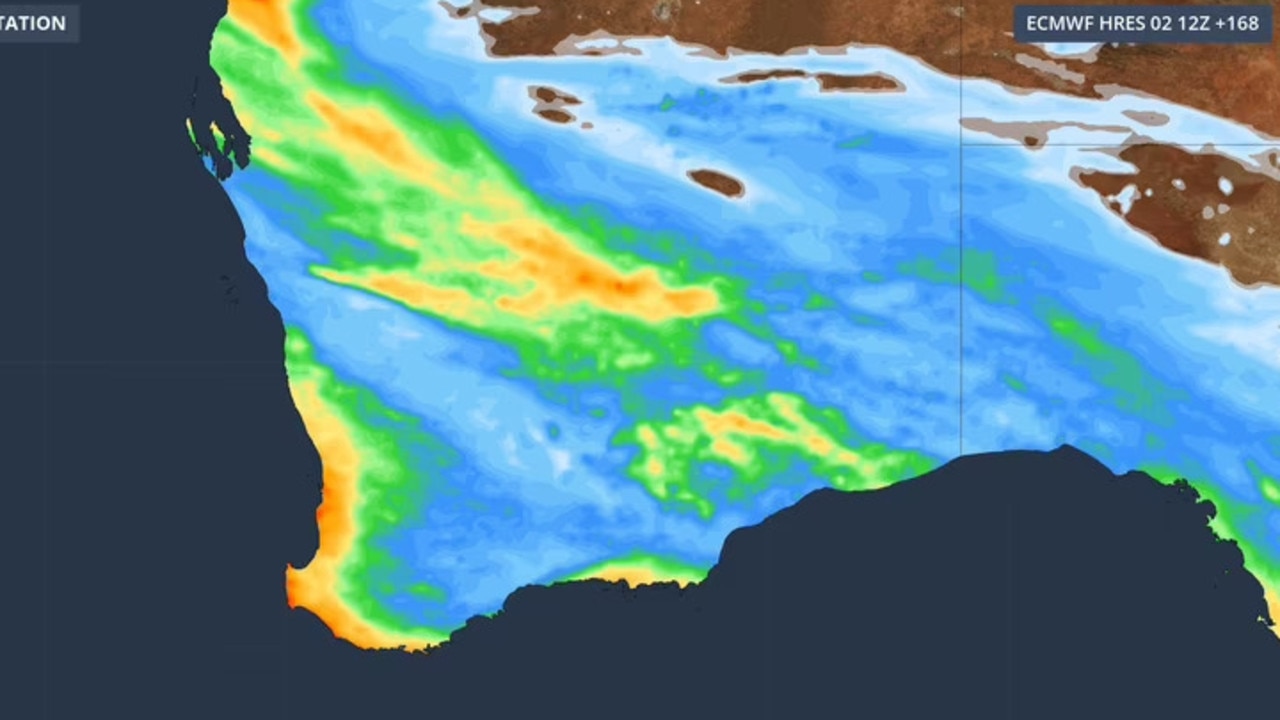
Heavy rain, back-to-back cold fronts to hit Perth in end to Western Australia’s long dry spell
After marking its second driest July in recorded history, Western Australia’s prolonged dry period is on the cusp of ending, as successive cold fronts carrying heavy downpours and thunderstorms are predicted to sweep across the state over the coming week.
Data from Weatherzone confirms that the southwest region of WA recorded just 42.05 millimeters of average rainfall across July 2024, a figure that falls just 2.07 millimeters above the all-time low set in 2012, when the regional average hit only 39.98 millimeters. Climate scientists have long documented that the southwest corner of Western Australia has faced a consistent, decades-long decline in annual rainfall, a trend widely attributed to the impacts of human-caused climate change.
For communities parched by weeks of below-average precipitation, the latest meteorological forecasts bring a long-awaited shift: multiple cold fronts are expected to roll through the state over the next seven days, bringing accumulated rainfall that will finally snap the dry stretch. Between Friday and Saturday, the heaviest widespread totals, ranging from 5 to 15 millimeters, are expected to fall along the corridor stretching from Perth in the west to Albany in the south. Some isolated coastal areas could see even more intense downpours, and Bureau of Meteorology meteorologist Caroline Crow warned that small hail is also a possibility across southern coastal districts.
Right now, a broad cloud band stretches from the Western Pilbara region down through the state’s central and southeastern districts, Crow explained, bringing scattered, patchy rain across that swathe of land. That system is forecast to gradually weaken through Wednesday evening, with lingering patchy precipitation expected to persist across parts of the state for the rest of the week. A second cold front is already on track to reach the southwest division of WA early next week, bringing additional wet conditions across Monday and Tuesday to wrap up the period of rain that will end the state’s prolonged dry spell.
-
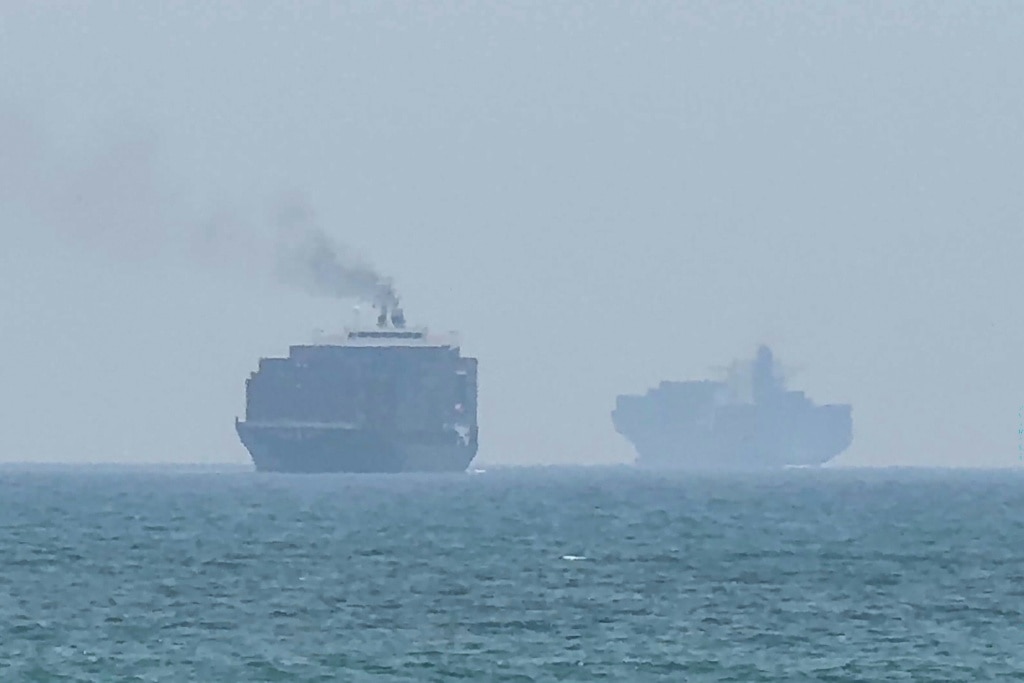
Cargo ship hit after Trump insists Iran talks could reopen Hormuz today
Tensions flared again in the strategically critical Strait of Hormuz on Tuesday, after an unidentified projectile hit an unspecified cargo ship just hours after US President Donald Trump claimed ongoing negotiations with Iran could see the vital global energy chokepoint reopened within 24 hours. The incident comes amid a bitter five-month conflict between Washington and Tehran, marked by shifting diplomatic overtures, repeated threats of violence, and public disagreement over whether talks are even taking place.
The current confrontation between the US, backed by Israel, and Iran erupted on February 28 with a surprise joint attack. While a ceasefire and preliminary agreement were reached in the months that followed, diplomatic efforts have failed to reach a lasting settlement to end the hostilities. The Strait of Hormuz, through which roughly a fifth of the world’s daily oil supplies pass, has repeatedly emerged as the flashpoint that reignites violence.
The core dispute over the waterway centers on new demands from Iran: Tehran now claims full control over the strait and seeks to impose tolls on transiting vessels, powers it did not exercise before the outbreak of war. The US has fiercely rejected these demands, setting the two sides at an impasse.
President Trump has followed a familiar pattern of shifting rhetoric in recent weeks. Last week, he issued a stark warning that the US would strike Iran “very hard”, even floating the possibility of targeting civilian infrastructure, before pulling back on Saturday to announce that the basic framework of a deal had already been outlined. On Monday, speaking from the White House, he blended unshakable optimism about a diplomatic breakthrough with new bellicose threats, calling this Iran’s “last chance before decapitation”.
Trump told reporters he had agreed to continue negotiations at the request of key Gulf nations including Saudi Arabia, the United Arab Emirates and Qatar. He insisted that talks were active “right now” focused on two key priorities: reopening the Strait of Hormuz, which he claimed could happen “literally by tomorrow”, and the denuclearization of Iran, a process he acknowledged would “take a little while”. “I expect we’ll know one way or the other how these talks go by Tuesday,” he said, adding “it’s not very complex.”
Hours before that statement, Trump took to social media to accuse Iran of being duplicitous for denying talks were underway. “Whether Iran wants to admit it or not, we are, in fact, talking of a solution to a problem that they have caused, for decades,” he wrote. He also highlighted the US-led counter-blockade of Iranian ports, saying “Nothing gets through to Iran, unless we want it to, and nothing will get through, unless a Deal, or Total Surrender, is accomplished.”
Iran has flatly contradicted Trump’s claims of active negotiations. Iranian foreign ministry spokesman Esmaeil Baqaei confirmed that Tehran is in discussions with Omani authorities in Muscat over a new southern shipping route through the strait, but emphasized these talks are not related to a broader deal to reopen Hormuz. Tehran has long maintained that its nuclear program, a key US demand for dismantling, is strictly for civilian energy and research purposes, despite repeated claims from Western nations that it is aimed at developing nuclear weapons.
Five months into the conflict, which has already cost the US billions of dollars, Iran still retains the capability to launch missile and drone strikes against US and allied targets across the Middle East, and continues to hold stockpiles of enriched uranium.
Early Tuesday, the UK Maritime Trade Operations (UKMTO) agency confirmed the latest incident: a cargo ship was hit by an “unknown projectile” in the Strait of Hormuz, off the Omani coast. The agency declined to name the vessel, and gave no details on damage or casualties, only noting that authorities were launching an investigation into the attack.
Currently, Iran enforces an effective blockade of the strait, requiring all transiting ships to coordinate passage with Iranian authorities and use a route close to the Iranian coast. In response, many commercial vessels have opted to reroute through the southern corridor of the strait, closer to Omani territorial waters.