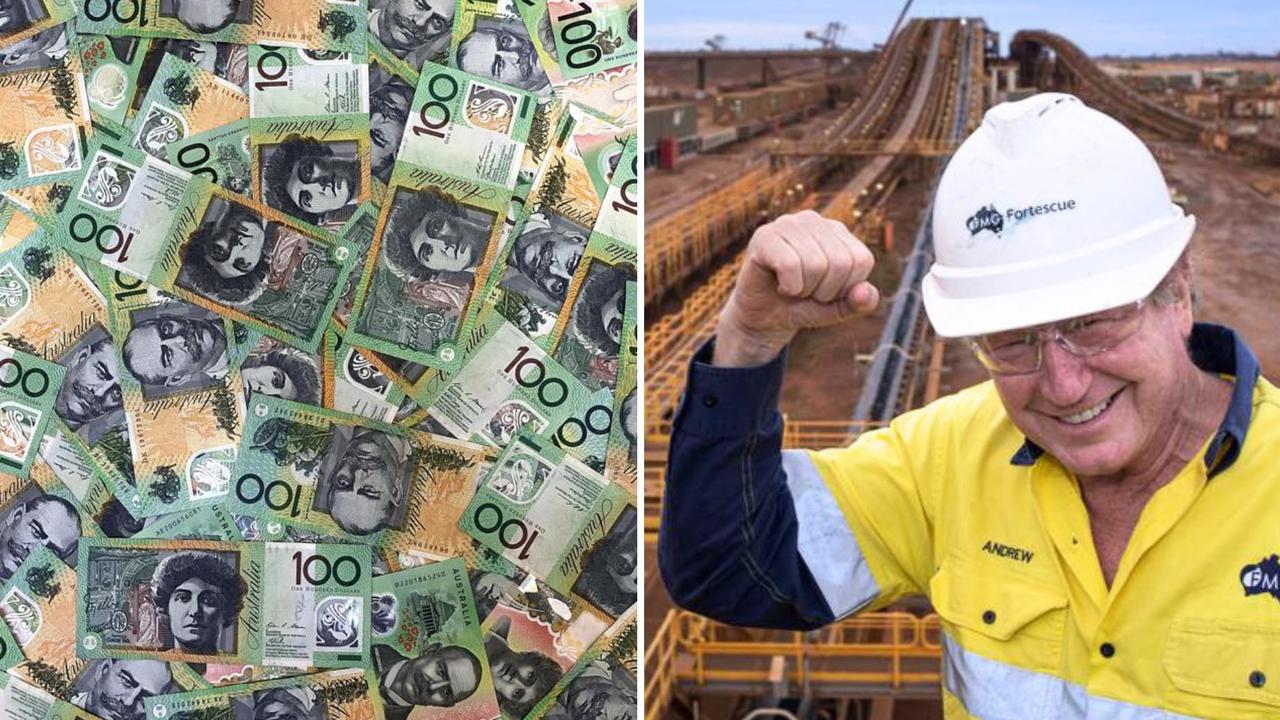
For millions of Australian workers holding superannuation savings, a key mining investment tied to their retirement accounts faces fresh downward pressure after independent rating agency Morningstar cut its fair value assessment for Fortescue Metals Group by 4% this week.
The new fair value estimate for Fortescue shares now sits at AU$15.50, a marked downward adjustment that comes ahead of the miner’s highly anticipated full-year financial results release, scheduled for August 24 on the Australian Securities Exchange. At the time of the downgrade, Fortescue was positioned to open trading at AU$18.08 – a full 16% above Morningstar’s calculated intrinsic value of the stock.
The core catalysts behind the downgrade tie directly to two major headwinds facing the iron ore producer: near-term forecasts for slowing global steel sales that would pressure commodity demand, and persistent, spiraling cost overruns at the company’s high-profile Iron Bridge magnetite project located in Western Australia’s remote Pilbara region.
The Iron Bridge project was designed to extract low-grade ore and process it into premium magnetite concentrate using energy-intensive methods, positioned adjacent to Fortescue’s existing operational mine, rail network and port infrastructure – advantages that were supposed to keep costs contained. But since the project’s initial 2019 budget of AU$4 billion, total projected costs have ballooned to AU$6.2 billion, as the company has struggled to ramp up production at the magnetite processing plant.
Just last month, Fortescue was forced to take a AU$1.1 billion pre-tax impairment write-down on the project’s value and abandon its long-held target of reaching full production capacity by 2028. That sudden write-down signaled to markets just how severe the ongoing challenges at Iron Bridge have become.
In the analysis note released alongside the downgrade, Morningstar analyst Jon Mills outlined that overlapping headwinds have already eroded near-term profitability for the miner. “Cost inflation and lower volumes meant unit cash costs rose 19 per cent in the quarter, to US$19.40 per metric ton, while problems at Iron Bridge persist,” Mills wrote. He added that the current market premium on Fortescue shares is driven by investor expectations that elevated iron ore prices, hovering around US$100 per metric ton, will hold steady for longer than Morningstar’s projections anticipate.
Beyond the immediate downgrade, Morningstar has reaffirmed its “no-moat” rating for Fortescue, concluding the company does not hold a durable competitive advantage over its largest industry rivals. Comparing Fortescue’s margins to global mining giants BHP, Rio Tinto and Vale, Mills noted that Fortescue’s profit margins land well below industry leaders, placing the company in the second half of the global iron ore cost curve at roughly the 75th percentile. “This is a primary driver of our no-moat rating,” Mills explained.
As millions of Australians hold Fortescue shares indirectly through their superannuation balances, the downgrade has drawn attention to potential downside risk for retirement savings tied to the volatile iron ore sector, with market participants now looking to the upcoming full-year results for further clarity on the miner’s path forward.