标签: Oceania

大洋洲

  • Trump confirms mass rally, scrapping US 250th concerts

    Trump confirms mass rally, scrapping US 250th concerts

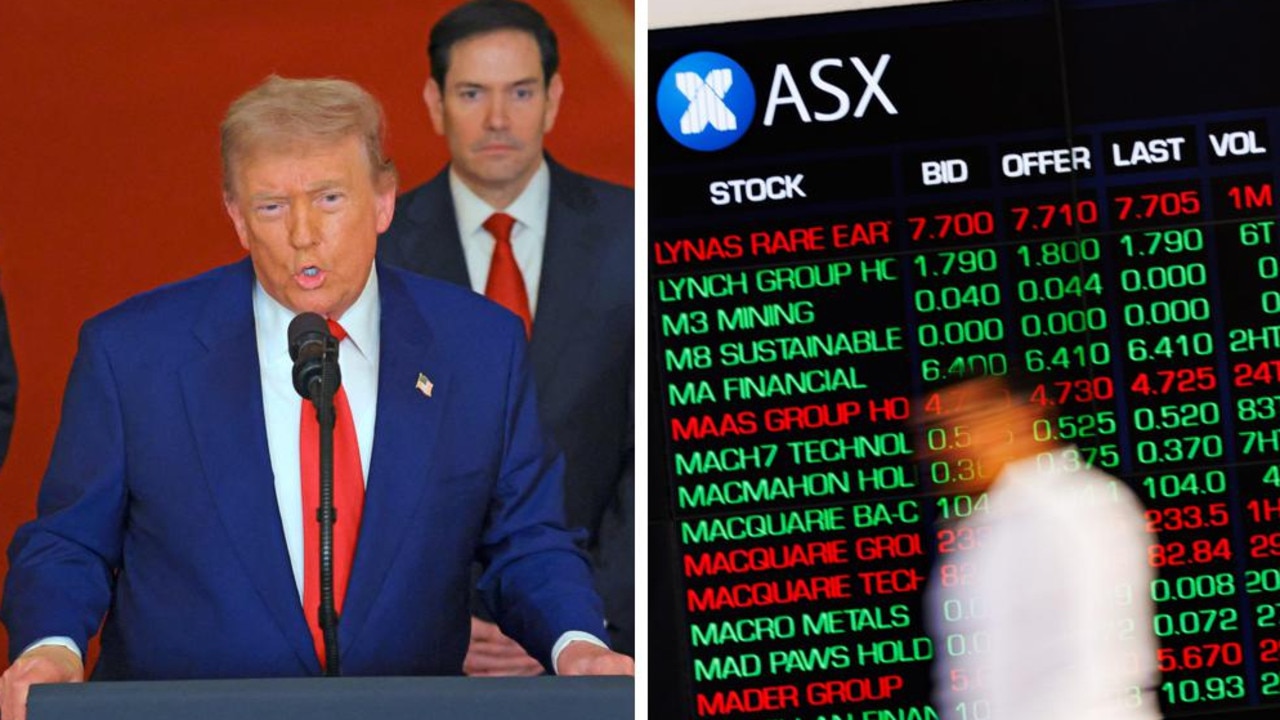
    U.S. President Donald Trump made a key announcement Thursday, confirming plans for a large-scale public rally in Washington D.C. on June 24 to mark the 250th anniversary of American independence, while confirming he had scrapped the planned series of anniversary concerts after multiple high-profile performers dropped out of the lineup.

    Speaking on his personal social platform Truth Social, Trump framed the upcoming gathering as a historic event for the nation. “In celebration of our Country’s 250 Year History, we will be bringing you, LIVE, the Greatest Rally, EVER! It will be special at every level — A Rally to end all Rallies!” the 79-year-old Republican incumbent wrote.

    Responding to the wave of artist withdrawals, Trump pushed back against the original concert format, arguing that big-name performers demanded exorbitant fees while offering little in terms of engaging performance. “We don’t want singers with no talent, but big fees to put you to sleep, we’ve told them all to stay home,” he said. “All we want is you, me, a few speakers, and the Greatest Music ever played, the same Music you have listened to for years!”

    Trump confirmed that the rally will still feature musical performances, including from Lee Greenwood — the artist behind “God Bless the USA,” a long-standing staple of Trump’s political campaign rallies. The event will also include sets from U.S. military bands and choruses, he added, ending with a speech from himself, whom he described as “a fine and highly dignified gentleman known as, President DONALD J. TRUMP!”

    While Trump had previously teased that the gathering would double as a rally for his “Make America Great Again” (MAGA) movement, he made no mention of the slogan or movement in Thursday’s official announcement.

    The 250th anniversary celebrations have been a priority for Trump, who has sought to tie his presidency to the milestone. His most high-profile planned addition to the calendar is a mixed martial arts UFC fight, scheduled for June 14 — Trump’s 80th birthday — held in a custom-built arena constructed on the White House South Lawn. Construction work on that purpose-built venue is still ongoing as of this report.

    Troubles have mounted for the anniversary celebrations in recent weeks, however. Shortly after being named as performers for a series of concerts tied to the July 4 holiday, multiple musical acts pulled out of the lineup, with several publicly citing concerns over the event’s heavy politicization. Among the high-profile withdrawals are popular country artist Martina McBride and Bret Michaels, lead vocalist of iconic 1980s rock band Poison.

    The concerts were originally scheduled to launch June 25 on the National Mall, as part of a slate of official anniversary events organized by Freedom 251 — a public-private partnership group backed directly by Trump. After the wave of withdrawals, the remaining lineup is made up almost entirely of acts whose mainstream popularity peaked decades ago, including 1990s rapper Vanilla Ice and 1990s dance group C+C Music Factory. The truncated lineup has sparked widespread sarcasm and criticism across social media platforms from users and political observers.

  • Trump announces $700 mn support for US coal projects

    Trump announces $700 mn support for US coal projects

    U.S. President Donald Trump made a sweeping policy announcement Thursday, invoking a 75-year-old Cold War-era emergency law to unlock $700 million in public funding for a nationwide slate of coal development projects, marking his most aggressive step yet to ramp up production and use of the world’s most carbon-intensive fossil fuel.

    Under the plan, the allocated funding will support operations across 10 U.S. states, extending the lifespan of more than a dozen existing coal-fired power plants and 42 active coal mines. It also paves the way for construction of two brand-new coal facilities and a large-scale coal export terminal on California’s coast, which Trump says will have annual handling capacity of 12 million tons of the fossil fuel. To redirect funds toward the new projects, the Trump administration is shifting $200 million originally earmarked for climate change initiatives—with portions going to a coal plant in Maryland, and the two new facilities in Alaska and West Virginia respectively.

    The funding drawdown is authorized through the Defense Production Act (DPA), a 1950 law that grants sitting U.S. presidents broad emergency authority over domestic industrial production. In remarks at the announcement, Trump framed the initiative as a win for working-class households, claiming it would cut energy prices and reduce cost-of-living burdens for all Americans. Echoing language he has used throughout his political career, he referred to coal as “clean, beautiful” — a characterization that directly contradicts established climate science that labels coal the largest single source of greenhouse gas emissions driving global warming.

    This move is consistent with the Trump administration’s broader energy agenda, rolled out after he returned to the presidency last year. A long-time skeptic of anthropogenic climate change, Trump has repeatedly dismissed the scientific consensus that human activity causes global warming as a “hoax”, and has moved systematically to roll back decades of federal environmental regulations that restrict fossil fuel extraction and use. Thursday’s announcement is not the first pro-coal action his administration has taken in 2025: on February 11, he signed an executive order directing Defense Secretary Pete Hegseth to negotiate long-term coal supply contracts with domestic power plants. At that public White House event, Trump was surrounded by hard-hatted coal miners and celebrated as the “undisputed champion” of the U.S. coal industry. The very next day, he repealed the Environmental Protection Agency’s 2009 “endangerment finding”, a foundational regulatory ruling that has underpinned all federal U.S. climate policy for 16 years. That rollback is already facing legal challenge from a broad coalition of environmental and public health groups.

    Industry and climate data underscores how far the Trump administration’s policy deviates from global trends. Analysis from energy research group Global Energy Monitor shows that while the world added more coal power capacity in 2025, overall coal consumption declined across most major economies — with the United States standing alone as the only large economy to register a substantial increase in coal-fired electricity generation. As of 2025, federal U.S. Energy Information Administration data puts coal’s share of domestic power generation at 17 percent.

    The announcement comes as global climate leaders have issued renewed warnings about the risks of expanding coal use. Just last week, the United Nations warned that global average temperatures are on track to remain at or near record highs over the next five years. UN Climate Change Executive Secretary Simon Stiell reiterated that the primary driver of anthropogenic global warming is the continued burning of fossil fuels — with coal identified as the single largest contributor to rising temperatures. U.S. Energy Secretary Chris Wright defended the administration’s policy in comments on the initiative, framing coal as “a critical source of our electricity, also a critical source for our industry.”

  • SpaceX IPO: rockets, AI losses and Musk in control

    SpaceX IPO: rockets, AI losses and Musk in control

    As Elon Musk’s aerospace and technology firm SpaceX moves toward one of the most highly anticipated initial public offerings (IPOs) in modern history, it is asking investors to place a massive bet on the billionaire’s long-term vision: interplanetary human settlement on Mars and a new generation of artificial intelligence data centers orbiting Earth. But for all the excitement surrounding the offering, the deal comes with a series of unusual caveats, steep ongoing losses, and structural safeguards that cement Musk’s permanent control over the company, even as it opens its doors to billions in new public capital.

    For decades, Musk’s track record of turning once-skepticized projects like Tesla into global industry giants has earned him a reputation as a visionary who can anticipate the next technological shift and build sustainable, world-leading businesses around it. It is this reputation that underpins SpaceX’s sky-high pre-IPO valuation of nearly $1.8 trillion, a figure that hinges entirely on investor expectations that Musk will pull off his most ambitious goals yet. Yet current financial results tell a far more uncertain story: while the company is growing rapidly, it is burning through cash at an unprecedented rate. In 2025, SpaceX posted $18.7 billion in annual revenue, a 33% jump from the prior year, but rising operating costs pushed its net loss to $4.9 billion. That downhill trajectory accelerated in the first quarter of 2026, where the company recorded another $4.3 billion in losses, on track for a full-year deficit that could exceed $15 billion.

    Despite these ongoing losses, SpaceX’s IPO projection forecasts that annual revenue could eventually surge past $28.5 trillion. The company frames its future profit streams as rooted first in Starlink, its growing satellite internet constellation, and ultimately in space-based AI data centers, a new market that Musk argues will outcompete terrestrial infrastructure for low-latency AI workloads. That said, Musk’s standalone AI subsidiary xAI has so far failed to keep pace with leading industry rivals: current annual AI revenue for the firm sits at roughly $500 million, a tiny fraction of the top-line revenue posted by OpenAI and Anthropic.

    One of the most defining structural features of the post-IPO SpaceX is that Musk will retain absolute control over all major company decisions, even after thousands of new investors buy into the stock. The company uses a dual-class share structure, a system adopted by other major tech giants including Google, Meta, and Snap to preserve founder control after going public. Ordinary retail and institutional investors will purchase Class A shares, which grant one vote per share. Musk, by contrast, holds Class B shares that carry 10 votes per share, putting roughly 82% of the company’s total voting power firmly in his hands, enough to override any collective decision from other shareholders.

    Having weathered years of shareholder lawsuits against his other publicly traded firm Tesla, Musk has also built an unprecedented legal fortress around SpaceX to limit investor legal recourse. All shareholder disputes against the company must be filed in a specialized Texas business court under the terms of the IPO filing. If a judge declines to hear the case, disputes are pushed into private arbitration, which eliminates the right to a jury trial and blocks class-action lawsuits – the primary legal tool that shareholders use to hold large corporations accountable for misconduct. The filing explicitly acknowledges that courts could eventually strike down these provisions if they are challenged, but they will remain in effect unless a ruling overturns them.

    In a break from traditional IPO structures that reserve the vast majority of offering shares for large Wall Street institutional investors, SpaceX has set aside 30% of its IPO shares for everyday retail investors, opening up access to the offering directly to Musk’s large global fanbase. This unusual allocation shifts the composition of early ownership away from hedge funds and mutual funds, some of which have already expressed skepticism about the company’s lofty valuation and ongoing losses. However, the broader access to retail investors also carries a notable downside: it could increase early stock volatility, as large numbers of enthusiastic retail buyers rushing to acquire shares could spark a sharp initial price spike.

    Beyond the enthusiasm of retail investors, a quirk of index fund rules guarantees a massive wave of automatic buying for SpaceX stock once it goes public. More than 60% of all U.S. stocks are held by passive index funds that track major benchmarks such as the Nasdaq 100. In a change that benefited SpaceX directly, Nasdaq revised its rules in May to cut the waiting period for new listed companies to join the index from three months to just 15 trading days. That means the trillions of dollars held in Nasdaq 100 index funds – which count millions of U.S. retirement plans among their investors – will be required to purchase SpaceX shares almost immediately after its IPO to keep their funds aligned with the index. Compounding this forced buying pressure is the fact that only 4% of SpaceX’s total $1.8 trillion valuation will be made available for public purchase, an extremely thin float that leaves far more buyer demand than available shares. The combination of forced index buying, retail enthusiasm, and limited supply could push SpaceX’s share price to sharply elevated levels in the first days of trading, even as the company continues to post billions in annual losses.

  • In open letter to Putin, Zelensky calls for meeting and ceasefire

    In open letter to Putin, Zelensky calls for meeting and ceasefire

    In an unprecedented public diplomatic move that marks one of the highest-profile direct outreach attempts from Kyiv to the Kremlin since Russia launched its full-scale invasion of Ukraine in 2022, Ukrainian President Volodymyr Zelensky formally proposed a face-to-face negotiating meeting with Russian President Vladimir Putin alongside a temporary full ceasefire for the duration of talks in an open letter published Thursday. The appeal landed just hours after Putin acknowledged growing gaps in Russia’s air defense networks, amid a sharp uptick in long-range Ukrainian drone strikes penetrating deep into Russian territory, including attacks on targets in Saint Petersburg this week.

    Zelensky’s public letter laid out the core terms of his proposal clearly: an immediate, full ceasefire that would remain in place throughout the negotiations, and a set meeting date for direct talks between the two heads of state. “Ukraine proposes ending this war through direct engagement between us — you and me. I am proposing a meeting,” the letter read. “I propose to set a clear date for such a meeting. Ukraine is ready for a full ceasefire for the duration of the negotiations.” The Ukrainian president also issued a stark warning: “If you do not personally come to the conclusion that it is time to end this war, Ukraine will continue fighting for its existence.”

    The timing of the appeal was significant: it came one day after Ukrainian drones carried out strikes in Saint Petersburg, Putin’s hometown, which was playing host to the high-profile Saint Petersburg International Economic Forum (SPIEF), a landmark annual event often called Russia’s equivalent of the World Economic Forum in Davos. This direct public address to Putin from Zelensky remains a rare occurrence, even after more than three years of open conflict. Zelensky has long held that only direct, face-to-face talks with the Russian leader can produce a viable territorial peace agreement, after months of US-facilitated indirect negotiations failed to bring the two warring parties any closer to a breakthrough deal.

    Russia has set hard preconditions for any formal peace talks, demanding that Ukraine withdraw all its military forces from the entirety of the Donbas region in eastern Ukraine, large swathes of which remain under Kyiv’s control more than three years into the invasion. Ahead of the publication of Zelensky’s letter, Putin spoke to international reporters in Saint Petersburg and repeated longstanding Russian questions over Zelensky’s constitutional legitimacy, arguing that the expiration of Zelensky’s original five-year presidential term in 2024 required further “analysis” of his status. Ukraine has held that the country’s martial law, which bans national elections during wartime, gives the current administration full legal standing, and Zelensky has previously offered to hold a public vote or referendum on any final peace settlement once a full ceasefire is implemented.

    Kremlin spokesman Dmitry Peskov responded to the letter publicly shortly after its release, noting that Putin had not yet been presented with the document, but claimed that “Zelensky can come at any time to Moscow” for talks. This proposal was already explicitly rejected by Zelensky in his original letter, ruling out any meeting on Russian territory. Putin has for months maintained that he will only meet Zelensky to sign off on a fully pre-negotiated deal, refusing to hold open-ended talks before an agreement is already finalized.

    The public exchange comes amid shifting battlefield dynamics that have worked in Ukraine’s favor in recent months. After accelerating its long-range retaliatory strikes against Russian military and energy infrastructure in response to relentless Russian nightly missile barrages across Ukraine, Kyiv has managed to recapture more territory than it lost to Russian forces for two consecutive months, according to an Agence France-Presse analysis of data from the Washington-based Institute for the Study of War. Russia’s overall offensive advance across the front line has slowed sharply since late 2025, with Ukrainian forces pushing back in multiple sectors.

    During his forum address in Saint Petersburg, Putin struck a defiant tone amid shifting realities, hailing what he called his forces’ battlefield achievements and rejecting suggestions that the full-scale invasion has become a strategic failure for Russia. “We are advancing along the entire line of contact,” he told reporters, adding that “We are absolutely ready and willing to reach an agreement with Ukraine through peaceful means.” At the same time, he conceded the urgent need to upgrade and reinforce Russia’s air defense networks in the wake of the Saint Petersburg drone strikes: “Russia has an air defence system. Yes, we must improve it. Yes, we must strengthen it. And we will do so.”

  • Liverpool appoint Spaniard Iraola as new boss

    Liverpool appoint Spaniard Iraola as new boss

    English Premier League giant Liverpool has confirmed the appointment of Spanish manager Andoni Iraola as its new first-team head coach, ending a week of speculation following the shock dismissal of predecessor Arne Slot after a catastrophic failed title defence. The 43-year-old Basque-born coach steps into the role having just wrapped up a historic spell at Bournemouth, where he guided the south coast club to its first ever European qualification with a surprise sixth-place finish this season. While Liverpool has not officially confirmed the length of Iraola’s contract, reports from mainstream British football media indicate the new boss has put pen to paper on a two-year deal at Anfield.

    Speaking to Liverpool’s official club website following his appointment, Iraola expressed his overwhelming excitement at taking charge of one of the world’s most iconic football institutions. “Really excited, really excited, because obviously you know about Liverpool, you know that it’s a big club, a massive club, one of the biggest in the world,” he said. “But feeling inside and understanding a little bit more of this club, I always thought it’s a special club. You don’t need a lot of things to get attracted by Liverpool. Liverpool is Liverpool.”

    Iraola’s appointment comes as Liverpool’s fanbase and squad have openly called for a return to the energetic, front-foot football that defined Jurgen Klopp’s legendary nine-year tenure at the club, which ended with the German lifting the Premier League and Champions League before stepping down in 2024. Slot, the former Feyenoord manager, delivered a stunning debut season in 2024/25, guiding the Reds to a joint-record 20th English top-flight title with star forward Mohamed Salah notching 29 goals. But his second season crumbled into disappointment, marked by flat, underwhelming performances that left the club trophyless and 25 points adrift of 2025/26 champions Arsenal in a limp fifth-place finish.

    Multiple factors contributed to Slot’s downfall: the tragic death of key forward Diogo Jota in a car crash last July left an irreplaceable void in the squad, a £450 million ($605 million) spending spree on new transfers failed to deliver on expectations, relationships between Slot and Salah deteriorated sharply, and fans grew increasingly frustrated with the team’s lifeless on-pitch displays. Even before the end of the season, Salah publicly called for a return to Klopp’s famous “heavy metal football”, piling additional pressure on the already beleaguered manager, who was sacked a week after the final league match.

    Iraola, by contrast, has built a reputation for the high-intensity, pressing and attack-focused style of play that Liverpool supporters are eager to see return, in direct contrast to Slot’s more methodical, controlled tactical approach. After joining Bournemouth from La Liga side Rayo Vallecano in 2023, he oversaw steady, year-on-year improvement at the club: the Cherries finished 12th in his first season, ninth the next, and hit a new historic high of sixth this term to secure a spot in next season’s UEFA Europa League. Beyond results, Iraola also won widespread acclaim for his sharp tactical acumen and his success in nurturing young talent, including rising stars Eli Junior Kroupi and Alex Scott. Before his move to Bournemouth, he held managerial roles at Mirandes in Spain and Cypriot side AEK Larnaca, cutting his teeth in the professional game after a decorated playing career.

    As a player, Iraola made more than 500 first-team appearances for his boyhood club Athletic Bilbao in Spain’s top flight, before finishing his playing career with a stint at Major League Soccer side New York City, where he shared the dressing room with football legends Frank Lampard and Andrea Pirlo. Now, he arrives on Merseyside at a pivotal crossroads for Liverpool, tasked with rebuilding the squad and restoring the club’s status as England’s dominant football force after a turbulent season that fell well short of expectations. While fifth place was enough to secure Liverpool’s spot in next season’s Champions League, the club and its fanbase are hungry for a return to title-contesting football that matches the glory days of Klopp’s reign, a challenge Iraola has already been framed as the right man to meet.

  • Qualifier Chwalinska sets up Andreeva French Open final clash

    Qualifier Chwalinska sets up Andreeva French Open final clash

    The 2025 French Open has delivered one of the most stunning underdog stories in Grand Slam history, as Polish world No. 114 Maja Chwalinska etched her name into the Roland Garros record books on Thursday, becoming the first qualifier in the professional Open era to advance to the women’s singles final. Her run sets up a blockbuster title clash against 19-year-old Russian rising star Mirra Andreeva, who booked her own first-ever Grand Slam final spot with a dominant semi-final win earlier the same day.

    Chwalinska claimed her place in Saturday’s decider with a hard-fought 7-6(4), 6-4 victory over 25th seed Diana Shnaider, a result that comes on the back of a grueling nine-match campaign that stretches back to the qualifying rounds three weeks ago. The 24-year-old Pole, who was making her first main draw appearance at Roland Garros, had to win three qualifying matches just to earn her spot in the main draw, and has defied all pre-tournament odds to reach the final stage. A win this weekend would make her only the second women’s qualifier to claim a Grand Slam singles title since the Open Era began, following Emma Raducanu’s fairytale 2021 US Open victory.

    Fresh off her upset win over world No. 1 Aryna Sabalenka in the quarter-finals, Shnaider pushed Chwalinska to the limit in a contest that lasted two hours and 10 minutes. After a tightly contested first set that went to a tiebreak, the second set remained on serve until Shnaider called a medical time-out for a back massage at 3-4. When play resumed, Chwalinska found another gear, winning three straight games to close out the match and secure her place in history. Speaking to the crowd after the match on Court Philippe Chatrier, an emotional Chwalinska described her run as nothing short of a dream. “I don’t know what’s going on, I just, I dunno what to say. I’m sorry, I’m just very happy,” she told the raucous crowd, admitting that after nine matches of high-stakes tennis, her physical condition was far from ideal. But she brushed off any complaints, adding: “It’s so challenging to play against the best players in the world day by day, but it’s a Grand Slam so you just have to give your best day by day. But I’m not complaining at all!”

    Chwalinska’s historic run has been marked by a string of stunning upsets that began in the very first round of the main draw, where she knocked out Olympic medalist Zheng Qinwen. She went on to upset 23rd seed Elise Mertens, former world No. 3 Maria Sakkari, French hometown favorite Diane Parry, and 22nd seed Anna Kalinskaya to reach the semi-finals. Before this tournament, Chwalinska had only ever won one Grand Slam main draw match (at the 2022 Wimbledon Championships) and just two tour-level matches on clay in her entire career. Regardless of the result in the final, her standout performance is projected to lift her to at least a new career-high ranking of No. 21 in the world when the new rankings are released next week. For her part, Shnaider praised Chwalinska after the match, acknowledging she had produced a level of play that was unbeatable on the day. “Very proud of myself, what I achieved here,” Shnaider said of her own career-best Grand Slam run. “(Chwalinska) played unreal, and she definitely deserved this win today and to be in the final.”

    Earlier in the day, Andreeva delivered a dominant performance of her own to dispatch Ukraine’s Marta Kostyuk 6-1, 6-3 and book her spot in her first major final. The 19-year-old 15th seed, who had lost twice to Kostyuk already this season including in the Madrid Open final, completed her lopsided revenge win in just 76 minutes, saying her focus was so sharp that she could make out individual hairs on the ball during rallies. “I’m super happy with the way I played and then that I got revenge for Madrid final and I’m happy that I’m in my first-ever Grand Slam final,” Andreeva said after the match.

    Kostyuk came into the semi-final riding a 17-match winning streak on clay, fresh off her own massive upset win over four-time defending French Open champion Iga Swiatek in the quarter-finals. But the 23-year-old Ukrainian, who was also playing in her first Grand Slam semi-final, struggled with unforced errors all afternoon, finishing the match with 34 unforced errors that derailed her run. “Obviously not the greatest match from me today,” she admitted after the match. Despite the loss, Kostyuk can take pride in a breakout clay-court season that includes titles in Rouen and her first WTA 1000 title in Madrid. For Andreeva, the win extended her 2025 tour-leading win total to 35 match victories for the season, cementing her status as one of the most in-form players on the tour this year. Saturday’s final will now pit two of the tour’s most surprising breakout stars against each other, with one set to claim the most prestigious clay-court title in the sport.

  • Qualifier Chwalinska downs Shnaider to reach French Open final

    Qualifier Chwalinska downs Shnaider to reach French Open final

    Roland Garros witnessed one of the most remarkable underdog stories in modern Grand Slam tennis on Thursday, when Poland’s unseeded world number 114 Maja Chwalinska outlasted Russia’s 25th seed Diana Shnaider in straight sets to etch her name into French Open history books. The 24-year-old secured a 7-6 (7/4), 6-4 victory to become the first qualifier in the Open (professional) era to advance all the way to the women’s singles final at Roland Garros.

    This historic run is far more than a one-tournament upset: Chwalinska is competing in just her third main draw appearance at any major tournament, and her first ever main draw start in Paris. She also joins an elite club, becoming only the second woman to navigate qualifying and reach a Grand Slam singles final in the Open era, following Emma Raducanu’s legendary title-winning run at the 2021 US Open. Having failed to qualify for Roland Garros on three previous attempts, Chwalinska has now won nine consecutive matches across three weeks of qualifying and main draw play, putting her one win away from the sport’s most prestigious clay-court title.

    The match itself pitted Chwalinska’s versatile, crafty all-court game against Shnaider’s signature power hitting. The Pole claimed an early break to go up 3-1, capitalizing on deft touch: a well-placed drop shot followed by a cleverly disguised deep backhand slice created three break opportunities, which she converted when Shnaider sent a forehand wide. Shnaider responded quickly, breaking right back to level the set, even earning an impressed thumbs-up from Chwalinska after a perfectly weighted drop shot of her own.

    In the opening-set tiebreak, a wild off-target forehand from Chwalinska put Shnaider ahead 4-1, but the patient Pole flipped the script, winning six of the next seven points to close out the first set. To open the second set, the two players traded breaks of serve under partially cloudy skies that left the centre court roof partially open. When Shnaider held a 4-3 lead, she called a medical timeout to receive treatment for back tightness. Chwalinska adjusted her game plan after the break, extending rallies to tire her opponent, and broke Shnaider in the very next service game to move within one game of the upset. She sealed her historic spot in the final with a clean forehand winner.

    Minutes after the match concluded, Chwalinska told reporters on Court Philippe Chatrier that her breakthrough run feels nothing short of miraculous. “It’s like a dream,” she said. “I don’t know what’s going on, I just… I don’t know what to say. I’m sorry, I’m just very happy.” The statement drew raucous applause from the packed centre court crowd. When asked about the ice-cold composure she has displayed throughout her underdog run, Chwalinska admitted her outward calm hides a flurry of emotion. “I’m crazy sometimes also, yeah,” she said. “But I try to stay composed because I know it’s the best way for me… But inside there’s a storm believe me.”

    Chwalinska will next face Russian eighth seed Mirra Andreeva in Saturday’s championship match, for what will be her 10th and final match of the tournament. When asked about her preparations for the title decider, Chwalinska said she plans to savor the moment before turning her focus to recovery. “I will give my all, it’s a Grand Slam final,” she said. “Let me enjoy this moment for now… I just want to breathe a little, enjoy it today then just recover as best I can.”

  • UN nuclear watchdog raises ‘proliferation’ fears over Iran sites

    UN nuclear watchdog raises ‘proliferation’ fears over Iran sites

    The head of the United Nations’ International Atomic Energy Agency (IAEA) Rafael Grossi has issued an urgent call for Iran to grant international inspectors immediate access to its bomb-damaged nuclear facilities, amid growing global fears over nuclear proliferation risks. In a confidential IAEA report obtained by Agence France-Presse (AFP) and released Thursday, the watchdog reaffirmed that its prolonged inability to access and verify Iran’s nuclear stockpiles constitutes a serious proliferation concern, urging Tehran to cooperate with inspectors in a constructive manner.

    Diplomatic insiders familiar with the report’s contents note that satellite imagery analysis has detected no visible activity at Iran’s key nuclear sites since the outbreak of the latest regional Middle East conflict. However, the IAEA has been completely locked out of most critical Iranian nuclear facilities since joint Israeli-U.S. military strikes targeting nuclear installations during a 12-day conflict in June 2025. Additional strikes against Iranian nuclear infrastructure during the war that began on February 28 have further complicated inspection efforts, and the agency has repeatedly requested unfettered access over the past months with no result.

    This development aligns with a recent CNN report from Sunday, which cited satellite data showing Iran has reopened 50 of the 69 tunnel entrances destroyed by U.S. and Israeli strikes at 18 underground missile facilities. Beyond that, the IAEA confirmed this week it was only able to carry out a limited inspection at the Bushehr nuclear power plant – the only Iranian nuclear site accessible to inspectors so far. Bushehr, which was originally built and operates with Russian support for civilian energy purposes, was also hit during the 2025 military strikes.

    In the official report, the IAEA acknowledged that repeated military attacks on Iranian nuclear infrastructure have created an unprecedented, complex situation for verification work. Even so, the agency emphasized that immediate access to carry out full verification activities across all Iranian sites remains critical. The findings of the confidential report will be the focus of discussion at the upcoming IAEA Board of Governors meeting scheduled for next week.

    Before the June 2025 U.S. strikes, IAEA analysts calculated that Iran held approximately 440 kilograms of uranium enriched to 60 percent purity. This level is extremely close to the 90 percent enrichment required to build a functional nuclear weapon, and far exceeds the 3.67 percent limit set by the 2015 Joint Comprehensive Plan of Action (JCPOA) – the now-defunct nuclear agreement between Iran and world powers. Since the 2025 strikes, the exact location and status of this large enriched uranium stockpile has remained completely unknown to international inspectors.

    “The agency’s lack of access to verify the previously declared highly enriched uranium and low enriched uranium for nearly a year — which is long overdue according to standard safeguard practices — is a matter of proliferation concern,” the report stated. Grossi’s official call to Iran, included in the report, stressed “utmost urgency” for Tehran to engage constructively with the IAEA to enable full, effective implementation of international nuclear safeguard protocols across the country.

    Israel and the United States have long maintained that Iran harbors secret ambitions to develop a nuclear weapons arsenal. U.S. President Donald Trump has cited this alleged threat as the core justification for launching military strikes against Iranian nuclear and military infrastructure. In any potential peace deal to end the ongoing conflict, Trump has insisted Iran must agree to two non-negotiable terms: permanent abandonment of any nuclear weapons program, and full destruction of its existing enriched uranium stockpile.

    For its part, the Iranian government in Tehran has repeatedly denied any intention to pursue military nuclear applications, maintaining that all of its nuclear research and development activities are strictly for peaceful civilian purposes, and that Iran retains an inherent right to develop nuclear energy under international non-proliferation treaties.

  • ‘Blood gold’: how gangs took control of Venezuela’s mines

    ‘Blood gold’: how gangs took control of Venezuela’s mines

    When Venezuela opened its massive untapped mineral reserves to private international investment in April 2025, global markets reacted with optimism, marking another step in the country’s post-regime shift following the January ousting of long-ruling leftist leader Nicolas Maduro. What the market excitement overlooks, however, is a deep-rooted security and governance crisis: heavily armed criminal groups have controlled the bulk of the nation’s mining sector for more than a decade, creating a major barrier to legitimate economic development.\n\nVenezuela, already famous for holding the world’s largest proven crude oil reserves, sits on an extraordinary wealth of other critical commodities. The South American nation holds abundant deposits of gold, diamonds, bauxite, and coltan—a mineral critical to modern electronics and defense manufacturing, classified as a strategic critical resource by Western governments—alongside key rare earth elements. Most mining activity is concentrated in the 112,000-square-kilometer Orinoco Mining Arc in eastern Venezuela, with additional mining operations spread across the southern states of Amazonas and Bolivar.\n\nResearcher Lisseth Boon, author of *Oro malandro* (Bandit Gold), an investigative work on Venezuela’s unregulated mining regions, has labeled the country’s illicitly mined gold “blood gold”, a reference to the conflict-fueled “blood diamonds” that funded wars across several African nations. Nearly all active mining operations in Venezuela are under the control of local criminal gangs or Colombian guerrilla groups that operate under the name “sindicatos”, or syndicates, which rule mining territories through a pervasive system of violence and intimidation.\n\n“The syndicates control everything, it’s complicated,” an anonymous local resident from a gang-held territory told AFP, echoing the fear that keeps most locals from speaking out publicly.\n\nSecurity analysts explain that the sindicatos generate massive illicit revenue through systemic extortion of both local residents and mining workers. In many isolated mining regions, the gangs do not just extract profit—they act as de facto government, serving as judge, jury and executioner for local disputes, meting out punishments ranging from brutal beatings to torture for alleged offenses ranging from theft to murder.\n\nYet for some residents in long-neglected mining communities, gang rule has brought a warped form of order. El Dorado, a gritty gold mining town at the center of the Orinoco Mining Arc, is controlled by a notorious gang leader known only by his first name, Fabio—a charismatic figure who has cultivated local support through public charity works, echoing the populist tactics of infamous Colombian drug lord Pablo Escobar.\n\n“Before, if you found a big gold nugget, other miners could kill you for it…Now everyone refrains from doing bad things,” one El Dorado resident told AFP in an interview in Caracas. The resident outlined the patronage system Fabio has built: “When someone is sick he signs a piece of paper and the person goes to the pharmacy and gets everything they need. He buys medicine for hospitals, renovates football grounds, has roads paved and buys food for residents and teachers.”\n\nUnlike small-scale artisanal miners, who make up a large share of the mining workforce and smuggle most of their output out through neighboring Brazil and Colombia, the syndicates generally avoid direct confrontation with large foreign firms, the resident added, allowing new legitimate operations to operate while the groups focus on extracting and smuggling their own illicit gold production.\n\nA 2025 report from Transparency International’s Venezuelan chapter lays bare the scale of criminal and elite collusion in the sector. The report estimates that armed groups, many with direct links to state authorities, control roughly 20 percent of Venezuela’s annual gold output. Overall, 66 percent of the $5.5 billion in annual revenue generated by Venezuelan mining is controlled by political elites who partner with organized crime through opaque informal public-private “strategic alliances”.\n\n“We don’t know the criteria used (by the state) to select partners, their obligations, the duration of the agreements, level of production, the contracts nor the amount of minerals,” Transparency International said, noting a complete lack of transparency around new mining partnerships. The organization also found that while national gold production has surged over the past decade, government revenue from gold mining has not increased, with nearly all profits flowing to criminal networks and corrupt elites.\n\nThe current criminal takeover of Venezuela’s mines traces back to policy decisions made more than a decade ago, Boon explains. When late socialist leader Hugo Chavez suspended all foreign mining concessions in 2011, it created a governance vacuum that criminal syndicates were quick to exploit.\n\n“There was a vacuum. That’s when the syndicates began to force their way in,” Boon said. Over the past 10 years, the violent battle for control of mining revenues has left dozens dead across Venezuela’s mining regions. One of the deadliest single incidents came in 2016, when 17 miners were shot execution-style and buried in a mass grave in the eastern mining town of Tumeremo, but targeted individual killings are an almost daily occurrence across the region.\n\nBoon accuses successive Venezuelan governments of direct complicity in the lawlessness that has consumed the mining sector. “A criminal system of governance was installed….with tacit accords between the syndicates and the state,” she said.\n\nRegional organized crime think tank Insight Crime has echoed these findings, warning that the syndicates exert “deep control” over vast swathes of mining territory. The organization highlighted the Las Claritas syndicate in Bolivar state, which imposes a mandatory “tax” on all mining activity and extracts protection money – colloquially called “vacunas”, or vaccines, from miners and traders in exchange for allowing them to operate.\n\nBoon argues that the syndicates hold local mining communities in a state of “modern-day slavery”, and that dislodging the criminal groups will require unprecedented, unwavering political will from Venezuela’s new transitional government, a challenge that threatens to derail the country’s hopes of revitalizing its battered economy through new private mining investment.

  • Mourinho takes Turkey to top Europe rights court over sanctions

    Mourinho takes Turkey to top Europe rights court over sanctions

    One of football’s most high-profile and controversial managers, Jose Mourinho, has taken his battle with Turkish football authorities to Europe’s highest human rights court, arguing that disciplinary sanctions imposed on him during his tenure at Turkish powerhouse Fenerbahce violated his fundamental rights. The case was originally lodged with the European Court of Human Rights (ECHR) in March 2025, almost half a year before the Portuguese manager was dismissed from the Istanbul-based Super Lig club following its failure to secure a spot in the UEFA Champions League.

    New details of the legal challenge, first obtained by Agence France-Presse via court documents on Thursday, confirm the lawsuit centers on disciplinary action handed down by the Turkish Football Federation (TFF), which penalized Mourinho for what it labeled unsportsmanlike conduct. The controversy dates back to November 2024, when Mourinho made public comments about fans of a rival Turkish club and the country’s match officials. Those remarks triggered an immediate five-match suspension and two separate fines totaling approximately $21,000.

    According to an ECHR document dated May 13, Mourinho has raised two core legal complaints rooted in the European Convention on Human Rights. First, under Article 6 of the convention, he argues that the disciplinary dispute against him was not adjudicated by an independent and unbiased judicial body. Second, he claims he never received formal notification of the TFF’s final ruling, and that the penalties imposed on him directly infringed on his right to freedom of expression protected under Article 10 of the convention.

    The Strasbourg-based court has already moved forward with the case, confirming it will accept the complaint and issuing a formal list of questions for Turkish state authorities to answer as the legal process progresses.

    Mourinho’s 14-month spell at Fenerbahce was marked by fan excitement from the very start, but ultimately ended in disappointment. When the self-styled “Special One” first arrived in Istanbul in June 2024, he was greeted by thousands of cheering supporters clad in the club’s iconic yellow and black kit, reception comparable to that of a global rock star. Despite the high expectations, Mourinho failed to deliver on the club’s top priority: ending a 10-year league title drought that stretches back to Fenerbahce’s last Turkish Super Lig championship in 2014.

    Since his departure from Fenerbahce, Mourinho has already taken up a new post as head coach of Portuguese top-flight club Benfica. Recent industry reports, however, suggest the veteran manager could be on the move again within days, with speculation mounting that he will return to Real Madrid, the Spanish giant he managed from 2010 to 2013, to retake the club’s head coaching position.