标签: Oceania

大洋洲

  • Mortgage holders warned to brace for more pain as interest rate rise looms

    Mortgage holders warned to brace for more pain as interest rate rise looms

    Ahead of the Reserve Bank of Australia’s (RBA) upcoming May policy meeting, three-quarters of leading Australian economists and financial industry experts are sounding the alarm: mortgage-holding households across the country are set to face another round of interest rate increases that will stretch household budgets even further.

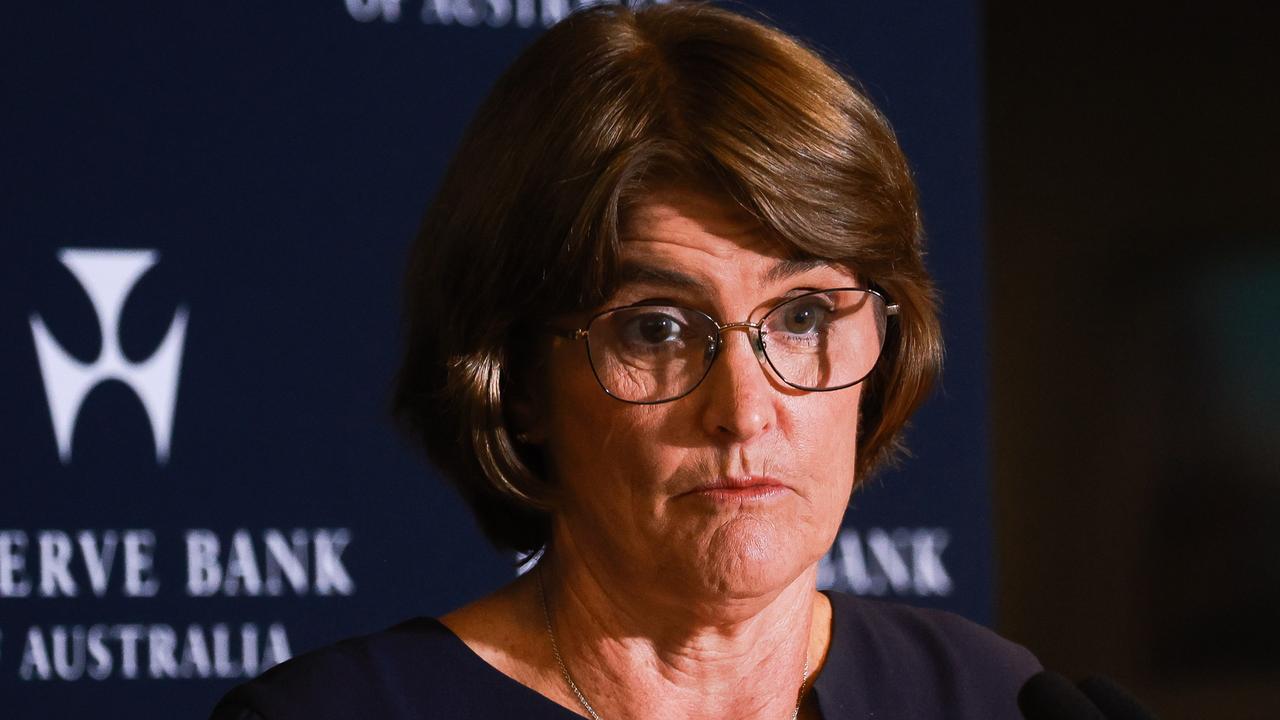
    A recent nationwide poll conducted by comparison platform Finder, which surveyed 36 financial experts and economists, found 27 respondents are convinced RBA Governor Michele Bullock will have no alternative but to greenlight another cash rate hike when the board meets next Tuesday. If this prediction holds, the increase will mark the RBA’s third consecutive rate rise following hikes in February and March, undoing the temporary cash rate relief Australian borrowers enjoyed in 2025.

    The RBA already lifted the cash rate by a combined 50 basis points across its first two meetings of 2026, pushing the benchmark rate up to 4.10%. Should policymakers opt for a further 25 basis point increase in May, Australians holding the country’s average $736,259 home loan will see their annual mortgage repayments jump by an extra $2,657, according to Finder’s calculations.

    The calls for another rate hike come after hotter-than-expected March quarter inflation data released this week gave policymakers more justification to tighten monetary policy. New figures from the Australian Bureau of Statistics (ABS) show headline inflation climbed 1.1% over the three months to March, driven largely by skyrocketing global oil prices that have hit Australian motorists hard for months. Annual inflation hit 4.6% in the 12 months ending March 2026, marking the highest annual inflation rate Australia has seen since September 2023, when the national economy was in its post-COVID-19 rebound phase.

    Petrol costs alone surged 32.8% in March, pushing the broader transportation category up 9.2% month-on-month. Even the RBA’s preferred core inflation measure, the trimmed mean — which strips out volatile price swings to give a clearer view of underlying inflation pressures — came in at 3.3% over the 12 months to March, holding steady at the same level recorded in previous readings.

    Wealth Within Group chief investment analyst Dale Gillham, one of the experts predicting a hike, said stubbornly rising inflation leaves the RBA with little room to hold rates steady. “I don’t think they have much choice, given inflation is still rising,” he noted, though he added he does not support the move, arguing that government overspending is the root cause of Australia’s persistent inflation.

    AMP chief economist Shane Oliver echoed that view, pointing out that core inflation already sits well above the RBA’s 2-3% target range, even before the full flow-on effects of higher oil prices filter through to other sectors of the economy, including airfares, fertiliser, plastics and broader retail transport costs. “And there is a rising risk that inflation expectations are rising again impacting wage claims,” Oliver said. “So the RBA is likely to hike again to improve its confidence that inflation will fall back to target on a reasonable timeframe.”

    Not all experts are convinced a hike is on the cards, however. Queensland University of Technology adjunct professor and personal finance specialist Noel Whittaker argues the RBA will choose to hold rates steady, pointing to the extreme financial pressure already crushing Australian households. “To me, it would be economic madness to raise rates in this time of uncertainty,” Whittaker said, noting that while a recession has been forecast for months, it has not yet materialized, meaning the central bank also has no reason to cut rates in the near term.

  • ‘Kick it now!’: How Jesse Southwell overcame a blocked shot to ice the biggest moment of her career

    ‘Kick it now!’: How Jesse Southwell overcame a blocked shot to ice the biggest moment of her career

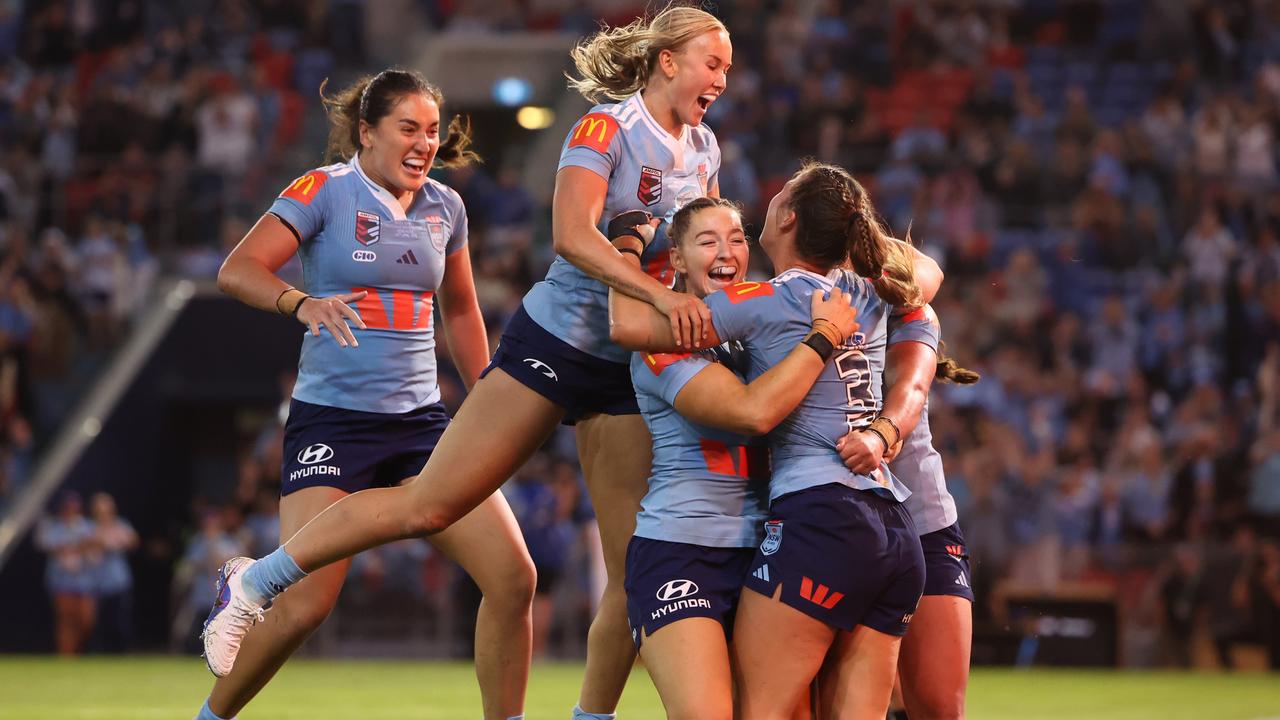
    In a storybook ending to her four-season tenure with the Newcastle Knights, 21-year-old NRLW star Jesse Southwell delivered a moment that will go down in State of Origin folklore on Thursday night: a match-winning, career-first field goal that carried the NSW Blues to an 11-6 win over Queensland Maroons in the series opener. The fairytale victory came just two days before Southwell relocates to Brisbane to join the back-to-back defending champion Broncos on a two-year contract, turning the critical late-game score into the ideal send-off for the Newcastle faithful that has supported her since she turned pro.

    Southwell has already built an impressive resume in her young career, claiming two NRLW premiership titles with the Knights and earning representative honors at both the state and national level. But heading into Thursday’s clash at Newcastle’s Hunter Stadium, one milestone had eluded her: she had never attempted a field goal in 40 career top-flight games, let alone nailed one under playoff pressure.

    The stage was set in the final 10 minutes of the clash, with neither side able to break through for a decisive score, locking the game at 6-all. After her first attempt at a one-pointer was charged down by Maroons forward Destiny Brill, Southwell got a second chance, thanks in large part to teammate Olivia Kernick. The pair had discussed a potential field goal setup earlier in a break in play, and after the first blocked attempt, Kernick again encouraged Southwell to step up for the second opportunity. This time, Southwell split the posts, putting the Blues ahead for good.

    “ I’ve never kicked a field goal in a game before, in a real game I mean. But that was cool,” Southwell told reporters after the match. “It was actually Kernick at that point. We had a discussion earlier when there was a break in play about setting up for a field goal. I went to the first one, she actually told me to do that one as well which was so good, and then I missed that one. And then the second one came around and she was like, ‘Jesse, kick it now’. I was like, ‘Sweet’.”

    NSW head coach John Strange said he never doubted Southwell’s ability to step up to the pressure moment, even after the first failed attempt, pointing to the young halfback’s signature mental toughness as the key to the historic play.

    “The fact that she did that after the first time is just a testament to who she is. She’s got a really strong positive mindset as a young half, which you obviously need,” Strange said. “She backs herself. For me as a coach, I want all these players to back themselves, that’s why they’re in this team. All 17 players that played tonight are exceptional athletes and very good footy players. For me, it’s about them backing their ability. Jesse is obviously guiding the team around, but icing a moment like that when it turns up is exactly what you want.”

    Playing the match on the home ground she called home for four seasons with the Knights added an extra layer of meaning to the play, and Southwell showed a maturity far beyond her 21 years when asked about her emotions in the aftermath of the kick. Rather than celebrating immediately, she shifted her focus to closing out the win, well aware of Queensland’s history of late match-winning plays against NSW in both men’s and women’s Origin contests.

    “I was just thinking about my next job because there were still a few minutes left, and I just knew the game wasn’t over yet,” she explained. “Queensland have done it to NSW in the men’s game and the women’s game time and time again (when they win it late), so I was honestly just thinking about the next job and not losing the game from there.”

    The fairytale send-off lines up with the next chapter of Southwell’s career: she confirmed she will pack her bags and relocate to Brisbane this Sunday, and will begin orientation and pre-season commitments with the Broncos in the coming week. She has already been commuting between Newcastle and Brisbane in recent weeks to ease the transition.

    With the first game of the three-match series secured, Southwell and the NSW Blues will now head to Suncorp Stadium for the second Origin clash on May 14, where they will look to lock in the series win and claim the 2025 State of Origin title.

  • ‘Uncharted’: US court ruling shakes up battle for Congress

    ‘Uncharted’: US court ruling shakes up battle for Congress

    A recent landmark decision by the U.S. Supreme Court has dramatically reshaped the national fight over congressional redistricting, rolling back key protections for minority voters and setting off a frantic partisan scramble to redraw electoral boundaries that will determine partisan control of Capitol Hill for the next decade. The high court’s ruling, released Wednesday, significantly raises the legal bar for challenging partisan maps that dilute the voting power of racial minority groups — a move that weakens a core provision of the 1965 Voting Rights Act, the landmark civil rights legislation designed to dismantle the enduring legacy of systemic anti-Black disenfranchisement. The decision immediately emboldened Republican leaders across the American South to move forward with aggressive new district map proposals that are expected to tilt legislative power in the G.O.P.’s favor, though nonpartisan analysts widely agree the immediate impact on November’s upcoming midterm elections will be sharply limited. With party primaries already underway or scheduled imminently in most states, and protracted legal challenges all but guaranteed, there is virtually no time to implement sweeping redistricting changes before voters cast their ballots this fall. Even under the most aggressive partisan scenarios, political experts project the ruling could net Republicans just a handful of additional House seats in 2026. While that gain could be enough to tip control of the narrowly divided chamber, it falls far short of a transformative partisan shift. Analysts Amy Walters and Matthew Klein of the nonpartisan Cook Political Report described the new political landscape created by the ruling as “uncharted waters” in their post-decision analysis. They noted that while Republicans could gain a small number of seats through targeted redraws ahead of 2026, the ultimate number of new maps that actually take effect remains unclear given tight legal timelines and the wave of litigation that is expected to follow. Despite these constraints, the national partisan scramble to revise district lines is already underway. Republican officials in Southern states including Alabama, Tennessee, and South Carolina have already called for urgent special legislative sessions to redraw congressional maps, targeting majority-Black districts that were previously protected from partisan manipulation under the Voting Rights Act. Louisiana, the state at the center of the original Supreme Court case, has already suspended its upcoming primary elections to allow time for the legislature to pass a new electoral map, underscoring the urgency with which conservative leaders are moving to capitalize on the ruling. The decision is broadly viewed by political strategists on both sides as a significant long-term advantage for the Republican Party, particularly in the South, where majority-Black districts have for decades helped elect Democratic candidates to Congress. By weakening legal safeguards against vote dilution, the court has cleared the way for Republican-led legislatures to break apart or redraw these Democratic-leaning districts to benefit G.O.P. candidates. Veteran Republican political strategist Matt Klink called the ruling a transformative win for his party, noting that “if not for 2026, it is certainly huge for 2028. It will force states, primarily in the South, to redraw as many as 18 districts.” Democrats have already signaled they will respond in kind, indicating they may use the same legal logic established by the Supreme Court ruling to advance their own partisan redraws in blue-leaning states including New York and California to maximize their own congressional gains. Former President Donald Trump, whose party holds narrow majorities in both chambers of Congress, has publicly praised the ruling, though it remains unclear how aggressively he will pressure state Republican leaders to implement new maps ahead of November. Timing remains the single biggest constraint on immediate changes to district maps. In multiple key battleground states including Texas, North Carolina, and Mississippi, primaries have already concluded, effectively locking in current electoral boundaries for this cycle. Even in Alabama, a top target for Republican redistricting efforts, Governor Kay Ivey has acknowledged the state is “not in a position” to convene a special session to revise maps this year. Even in states where changes are still technically possible, steep legal and logistical barriers remain. Any new redistricting plan almost always triggers immediate court challenges, and federal judges are generally reluctant to approve last-minute map changes that would disrupt the orderly administration of upcoming elections. “With the midterm elections only six months away, the decision’s immediate impact will be muted,” Michael R. Dimino, a law professor at Pennsylvania’s Widener University, told Agence France-Presse. “But the decision is very significant for the future — particularly in the redistricting that will follow the 2030 census, as it will remove an unfair advantage for Democrats.” For Democratic and voting rights advocates, however, the ruling’s greatest danger lies not in its immediate electoral impact but in what it signals about the Supreme Court’s willingness to allow states to erode minority voting power. Caroline Welles, a Democratic political strategist focused on electing first-time women candidates to state office, argued the decision creates lasting structural barriers for Democrats and underrepresented communities. “Voting rights litigation has been the main way to challenge rigged maps since 2013. If that tool gets blunted, Democrats are looking at structural disadvantages that feel insurmountable,” she said. “Communities of color will continue to be systematically underrepresented in the places where they have the numbers to elect candidates of their choice.”

  • Wear a bulletproof vest? I don’t want to look fat, says Trump

    Wear a bulletproof vest? I don’t want to look fat, says Trump

    U.S. President Donald Trump has publicly stated he is reluctant to adopt a bulletproof vest for personal protection, even after a third alleged assassination plot targeting him in just two years, citing concerns that the bulky protective gear would add unnecessary visual bulk to his frame.

    During a press question-and-answer session Thursday, the 79-year-old Republican leader addressed growing speculation that the U.S. Secret Service had begun considering mandatory protective vest use following the foiled attack at a Washington D.C. gala over the weekend. When asked about internal discussions on the policy change, Trump told reporters: “I don’t know if I can handle looking 20 pounds heavier.”

    The latest alleged assassination attempt unfolded Saturday night at the annual White House Correspondents’ Association Dinner held at the Washington Hilton hotel. Authorities confirm a male suspect was taken into custody before he could reach the event’s main ballroom, where Trump was in attendance, after Secret Service agents quickly intervened to tackle the would-be attacker. The suspect now faces formal charges related to the plot.

    This foiled attempt marks the third time Trump has been targeted for assassination since 2023. The most severe incident occurred during a 2024 campaign rally in Butler, Pennsylvania, where a gunman struck Trump in the ear with a bullet and killed one member of the attending audience. Trump survived the attack and went on to win his second presidential term later that year.

    Long known for his intense sensitivity around public perceptions of his appearance, Trump’s weight has long been a topic of public discussion. Though he has slimmed down since taking office for his second term, the president — who has openly described himself as a fast food enthusiast — recorded a weight of 224 pounds (around 101.6 kilograms) during his most recent full annual medical examination in April 2025. That marked a 19-pound drop from his recorded weight in 2019, during his first term in office.

    Beyond appearance concerns, Trump also framed his reluctance around a broader ideological perspective, noting that agreeing to regular bulletproof vest use could be seen as giving in to dangerous extremist elements that oppose his presidency. “I guess it’s something you consider,” he said of the proposal. “In one way, you don’t like to do it because you’re giving in to a bad element. And so, I don’t know. But I have been asked about it.”

  • PGA Tour golfers take wait-and-see approach amid LIV turmoil

    PGA Tour golfers take wait-and-see approach amid LIV turmoil

    The world of professional golf was rocked Thursday by a pair of connected announcements that cast deep uncertainty over the future of the breakaway LIV Golf league, leaving PGA Tour-based players adopting a cautious, watch-and-wait approach as speculation swirls about a potential wave of returning defectors.

    Saudi Arabia’s Public Investment Fund (PIF), the deep-pocketed backer that launched LIV Golf in 2021 and lured top talent with blockbuster contracts, confirmed it will withdraw all financial support for the circuit following the 2026 season. The confirmation came just hours after LIV Golf itself released a statement acknowledging it was actively pursuing new long-term financial partners to sustain its operations.

    The dual disclosures immediately sparked widespread industry speculation that dozens of golfers who abandoned the PGA Tour to join the rival league — and who lost their PGA membership in a bitter, years-long split that spawned multiple high-profile lawsuits and fractured the global golf community — could soon rush to secure a path back to the sport’s top traditional tour.

    Speaking to reporters ahead of the PGA Tour’s Cadillac Championship at Trump National Doral in Miami, 2023 British Open champion Brian Harman, a longstanding PGA Tour loyalist, shared his perspective on the unfolding situation. The 39-year-old American said he believes a pathway for readmission will eventually open for LIV golfers, but he stressed that it remains far too early to outline what terms that re-entry might include.

    “I would think that the fans want everyone to be playing together and, you know, time heals all wounds,” Harman said. He added, however, that lingering hard feelings from the acrimonious legal battle remain a major barrier to reconciliation. “There is still some sentiment out here, especially with all the lawsuit stuff. That stuff’s going to be tough to get past.”

    The rift between the two circuits dates back to 2022, when 11 high-profile LIV defectors — including six-time major champion Phil Mickelson — filed an antitrust lawsuit against the PGA Tour, challenging the tour’s decision to suspend players who signed with the new breakaway league.

    To date, one of the sport’s biggest names, five-time major winner Brooks Koepka, has already rejoined the PGA Tour under an existing readmission program that requires participating players to pay steep financial penalties. Harman made clear that he supports maintaining meaningful consequences for any other LIV golfers who seek to return in the wake of PIF’s funding withdrawal.

    “I think there has to be something,” he said, adding that such penalties would help ease long-running “bad blood and resentment” among players who remained loyal to the PGA Tour. Even so, Harman pushed back on assumptions that a mass exodus from LIV is imminent, noting that the end of PIF backing does not guarantee LIV Golf will cease operations entirely.

    “I’m not sure that they’re closing shop. The funding’s drying up. They could secure funding from somewhere else and keep going. They have got a lot of big name players over there, guys that move the needle,” Harman explained. “Until it’s all done, until you’ve got guys that are actually calling and trying to come back to the tour, it’s not really a problem that we’re dealing with currently.”

    Three-time major winner Jordan Spieth echoed Harman’s cautious tone, saying he was relieved not to be part of the group tasked with negotiating readmission terms for returning LIV golfers. Spieth noted that the PGA Tour already extended offers of readmission to defectors several months ago, and Koepka was among those who took advantage of that opportunity.

    “I know olive branches were given out, you know, a couple months ago. Brooks took ’em up on it. So I’m not sure what would now change,” Spieth said. Like Harman, he emphasized that the end of Saudi funding does not automatically mean LIV Golf will fold. “That doesn’t necessarily mean that LIV’s not going to still move on, too. I think there’s just too many unknowns for me to have a good gauge on what would happen there.”

    Spieth added that the acrimony of the past four years has made the question of LIV golfer readmission an incredibly charged issue, and he has no desire to be involved in shaping its outcome. “There’s just a lot of different things that happened over the last four years. I’m kind of glad I’m not in that room.”

    Former U.S. President Donald Trump, a noted golf enthusiast whose company owns multiple courses that host events for both tours, weighed in on the developments Thursday. Trump said he wants to see the sport reunited, with top PGA Tour loyalists like Masters champion Rory McIlroy competing regularly against LIV stars such as Bryson DeChambeau and Jon Rahm.

    “Now they’ll all be accepted by the tour … they’ll all be back on tour and it’ll be great,” Trump said. He also noted that LIV Golf remains active for the time being, with its next tournament scheduled to take place in two weeks at his Trump National Golf Club, located on the Potomac River in suburban Washington D.C. “I’m not sure what’s happening with LIV, but they are playing at my course in two weeks.”

  • FIFA to review ticket strategy for 2030 World Cup

    FIFA to review ticket strategy for 2030 World Cup

    Global football governing body FIFA announced Thursday it will conduct a full review of its ticketing framework for the 2030 World Cup, responding to intense public backlash over the exorbitant ticket costs for the upcoming 2026 tournament co-hosted by Canada, Mexico, and the United States.

    Speaking to journalists on the sidelines of the FIFA Congress wrapped up in Vancouver, FIFA Deputy Secretary General Mattias Grafstrom framed the steep 2026 ticket prices as a reflection of North America’s unique market dynamics. “I will always have understanding for fans and their opinions, but I think there are quite a wide array of ticket prices — some are cheap, some are more expensive,” Grafstrom told reporters. “But of course, you know, we listen, we take into the account the comments, and of course, as for every World Cup, we will review and see how we do it for the next one.”

    The organization has faced relentless criticism from fan groups since 2026 ticket sales launched. Football Supporters Europe (FSE), a prominent pan-European fan advocacy organization, has labeled the current pricing structure “extortionate” and a “monumental betrayal” of the global football community. Last month, the group escalated its pushback by filing a formal complaint with the European Commission over what it calls FIFA’s “excessive ticket prices” for the 2026 tournament.

    FIFA leadership has pushed back against the criticism, arguing that soaring prices are driven largely by overwhelming market demand. FIFA President Gianni Infantino has pointed to dynamic pricing models common in the North American events industry as a core factor behind the fluctuating costs, noting that prices adjust up or down based on demand for individual matches.

    Recent data from resale platforms has underscored just how extreme the pricing has become: this week, four tickets to the 2026 World Cup final at New Jersey’s MetLife Stadium, scheduled for July 19, were listed on FIFA’s official resale exchange for a staggering $2 million per seat, according to multiple reports. Third-party resale platforms routinely list final tickets for tens of thousands of dollars, putting the sport’s biggest match out of reach for most ordinary fans.

    When asked whether fan anger over ticket pricing could damage the long-term legacy of the 2026 World Cup, Grafstrom defended the tournament’s financial model, noting that projected total revenues of up to $13 billion will be reinvested into global football development through FIFA’s Forward program. “I think, you know, the legacy is also what we’ll be able to do with the money that it generates,” he said. “This is a true legacy through the (FIFA) Forward program and in order to really develop the game of football in our member associations, and this will have a true impact.”

  • AFL 2026: Hawthorn, Collingwood coaches ‘unsure how to feel’ after dramatic draw

    AFL 2026: Hawthorn, Collingwood coaches ‘unsure how to feel’ after dramatic draw

    In a nail-biting Australian Football League clash at the Melbourne Cricket Ground on Thursday night, Collingwood and Hawthorn battled to a thrilling draw that left both coaches with conflicting emotions after the final siren.

    The Hawks, who had trailed by as much as 23 points midway through the second quarter and were still seven points down with just 60 seconds left on the clock, pulled off a stunning late equalizer. Forward Dylan Moore nailed a difficult goal right after the final siren sounded, locking in the two-point split for both sides that capped off a rollercoaster 90 minutes of play.

    For Sam Mitchell, the encounter marked his first draw as Hawthorn’s head coach, and he admitted post-match that he could not pinpoint exactly how he felt about the result. The Hawks dominated key statistical categories throughout the game, outpacing Collingwood 62-34 in forward 50 entries and 39-23 in total clearances, with a particularly dramatic 19-5 win in centre bounce clearances — an area the club has invested heavily in improving over recent weeks. But that on-field dominance failed to translate to scoreboard points, thanks to persistent inaccuracy in front of goal. Hawthorn managed just 5.10 (goals-behinds) in the first half, and finished the full game with a underwhelming 13.15 total that wasted their plentiful attacking opportunities.

    “I don’t know how to give a name to the emotion,” Mitchell told reporters after the match. “There is a part of me that thinks, you look at the numbers and go, ‘How did we only come away with two points’ and then with two minutes to go, ‘How did we get two points’, so I’m unsure how to feel.”

    Mitchell acknowledged that Collingwood’s tight defensive structure and clinical attacking efficiency made the result tough to crack, adding that his squad still needs holistic improvement to turn their territorial dominance into wins. While the club’s work on centre bounce clearances paid off, other reliable areas of Hawthorn’s game fell flat on Thursday, leaving Mitchell frustrated by the missed chance to claim a full four competition points. “But then to not be able to maximise it in the front half, you get frustrated with that. So the glass is exactly in the middle for me which is why it’s a difficult feeling,” he said.

    For Collingwood coach Craig McRae, the result also left room for reflection, particularly around his side’s tendency to concede late goals in every quarter. The Magpies conceded goals on the siren at half-time, three-quarter time, and full time, a pattern McRae flagged as a key area for improvement heading into future rounds. “When you’re in front by a goal with 40 seconds to go, you’d think you would hang onto those,” McRae said. “I think we got some work to do with our late-quarter decision-making.”

    Even with the late collapse that cost Collingwood a win, McRae struck a measured tone with his squad after the match, framing the draw as a credible performance against one of the league’s top contenders. “But fundamentally, I said to the boys, ‘We didn’t win tonight, but we definitely didn’t lose’,” he said. “It’s important to acknowledge that we played some really good footy against arguably the best team in the competition. We come here tonight to see how our game stacks up and I think most of our fans would have been pretty happy.”

  • Qantas and Jetstar extend flight schedule changes into first quarter FY27 amid fuel price pressures

    Qantas and Jetstar extend flight schedule changes into first quarter FY27 amid fuel price pressures

    The global aviation sector is facing mounting systemic pressures that are forcing major carriers to reshuffle their operational plans well into the next financial year, and Australia’s Qantas Group — which owns both Qantas and budget subsidiary Jetstar — is the latest airline to extend network adjustments to navigate ongoing headwinds. The two biggest challenges driving the changes are persistently sky-high jet fuel prices and ongoing travel market disruption stemming from conflict in the Middle East, which have combined to reshape international travel demand across the Asia-Pacific region.

    In an official statement, Qantas Group confirmed it is continuing to reconfigure its route network to two key ends: first, to mitigate the financial and operational fallout of Middle East tensions and sustained elevated fuel costs, and second, to capitalize on the unbroken strong consumer demand for travel between Australia and Europe.

    The carrier group has chosen to extend the network adjustments it first announced earlier, rolling the changes through the July-to-September period of 2026 and into the first quarter of fiscal year 2027. A core part of the international reshuffle is the redeployment of existing aircraft to boost capacity on Australian-European routes, an adjustment that also gives customers booked with Qantas’ partner airlines greater flexibility to rebook onto alternative services if their original plans are disrupted.

    A key addition to the expanded capacity is the extension of extra Perth-Rome return services through the end of October 2026. By contrast, Sydney-to-Paris services will scale back to three weekly return trips starting in August 2026, as previously scheduled; all Paris services will continue to operate out of Sydney with a stopover in Singapore. Overall, the combined adjustments add approximately 2,000 additional seats per week for travel between Australia and Europe, matching the ongoing robust demand on the corridor.

    Not all routes are seeing growth, however. Qantas will temporarily suspend its direct Sydney-Bengaluru service starting in August 2026, with a planned resumption of operations at the end of October. Both Qantas and Jetstar have also cut available capacity on trans-Tasman routes connecting Australia and New Zealand. Altogether, the changes reduce the Qantas Group’s previously planned international capacity by 2% for the first quarter of FY27.

    On the domestic front, the group is extending a previously announced 5% cut to overall domestic capacity through the end of September 2026, with the reductions largely concentrated on high-volume routes between major Australian capital cities. Qantas Group noted that all customers whose bookings are affected by the schedule changes are being contacted directly, with options to rebook onto alternative flights or receive a full refund for their tickets.

    Industry analysts note that this latest round of extended schedule adjustments underscores how the lingering impacts of post-pandemic supply chain disruptions, combined with new geopolitical and commodity price shocks, continue to create uncertainty for airline profitability and planning across the globe.

  • AFL 2026: Michael Voss backs Luke Beveridge’s rule change criticism

    AFL 2026: Michael Voss backs Luke Beveridge’s rule change criticism

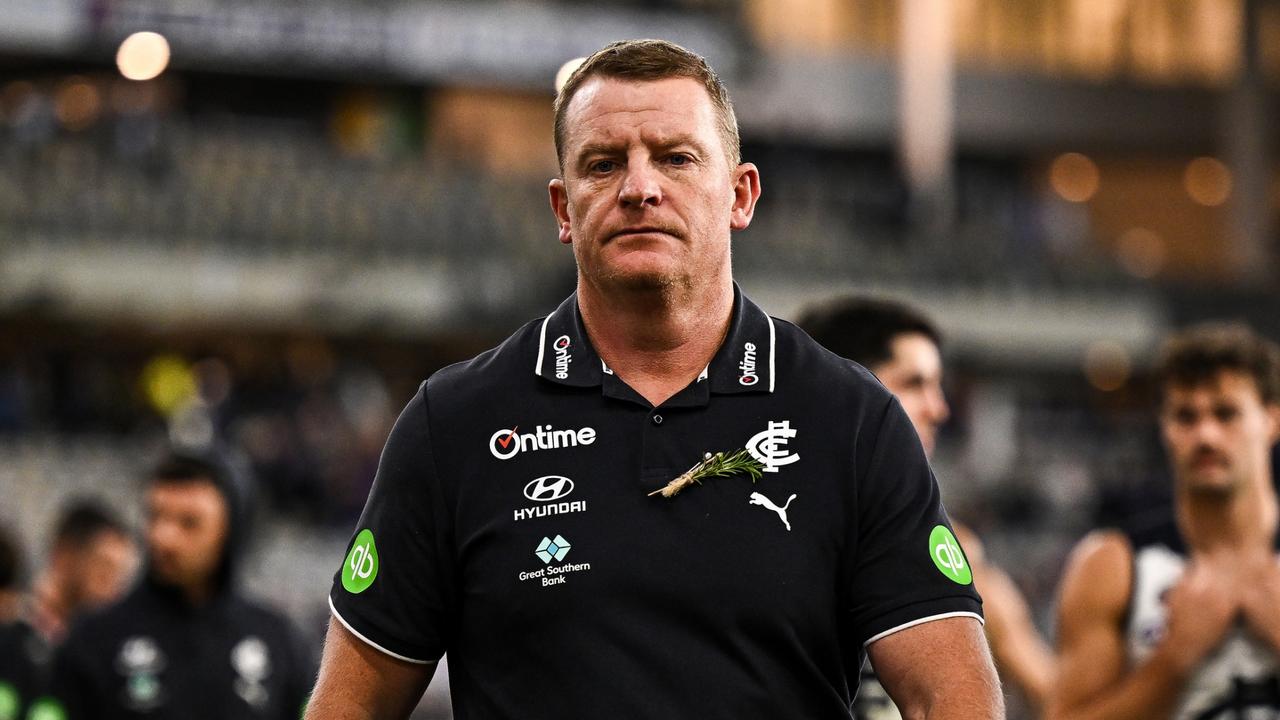
    Ahead of a highly anticipated Saturday night fixture against St Kilda at Marvel Stadium, Carlton Football Club senior coach Michael Voss has added his voice to growing criticism of the Australian Football League’s (AFL) current approach to rule enforcement and in-game officiating, aligning with recent remarks from Western Bulldogs head coach Luke Beveridge.

    Last week, Beveridge drew widespread attention when he delivered a three-minute monologue slamming the state of the modern AFL, arguing the current rule set has turned the competition into a “ping pong” style of play prioritizing broadcast revenue over natural, flowing game action. Voss, a long-time respected figure across the league, has echoed that critique, calling on the governing body to adopt clearer, less ambiguous standards for simple calls and cut back on excessive reviews by the AFL Review Centre (ARC).

    Voss specifically called out inconsistencies around the new last-disposal rule for balls kicked out of bounds. Under current protocols, any close call triggers a lengthy ARC review to determine which player touched the ball last before it went out of play. Voss argued that this process directly undermines the AFL’s stated goal of speeding up match play. He insisted that for any unclear last-touch calls, the straightforward solution of a boundary throw-in should be used immediately, eliminating the 25-second delays caused by constant reviews.

    “I think the less we use the ARC, the better we are,” Voss told reporters this week. “The ball goes out of bounds and it takes us 25 seconds to review. Please don’t do that. If you’re unsure, throw it in. Our intention was to quicken up the game and we’re slowing it down by continually reviewing everything. For that part, if the intention is to make the game faster, let’s go down that path, but let’s not slow it down by analysing whether the ball came off my foot or my hand. I think we can be better than that, we can be much more black and white on the simple things.”

    On the topic of recent draft adjustments that force Carlton to pay a higher selection price to secure father-son recruit prospect Cody Walker at the end of the current season, Voss played down the impact of the mid-season change, acknowledging that rule and system adjustments naturally bring discomfort but that the core demand from coaching staff is simply greater clarity around the league’s decisions.

    Beyond rule discussions, Voss turned his focus to Saturday’s upcoming match, which holds extra narrative weight as it marks the first time Carlton will face St Kilda following the off-season off-field player moves that saw Tom De Koning and Jack Silvagni switch clubs. De Koning, who will suit up against his former side for the first time this weekend, is already expected to be a focal point of the matchup. Voss admitted that friendly banter between former teammates is likely inevitable in the lead-up, but said he expects both sides to set personal friendships aside when the ball is bounced.

    “Not that I’ve heard but I am not going to pretend there probably hasn’t been a little bit of banter that’s been exchanged,” Voss said. “I am really not too sure what Cotts (Matthew Cottrell) gets up to, so he’s the quiet assassin in all of this. It’s a bit of wait and see but look, I hope for whatever it’s worth that we walk out as competitors, really. They put the friendships aside. We’ve got jobs to do and our boys have a job to do for our team and clearly they’re going to be locked in on what they need to be able to get done. But maybe turn the microphones up (because) there might be a bit of banter between the two.”

    For Carlton, the match comes after a far less turbulent week than the club experienced in the previous round, with the Blues still chasing a much-needed victory to boost their position in the 2025 AFL ladder.

  • Violence in Australian town after arrest of man over girl’s murder

    Violence in Australian town after arrest of man over girl’s murder

    A wave of collective grief erupted into violent public unrest outside a regional Australian hospital this week, after authorities discovered the body of a 5-year-old Aboriginal girl who had been missing for five days. The incident has cast a harsh light on deep-seated community tensions in Central Australia’s Northern Territory, following the tragic death of the young child, identified publicly only as Kumanjayi Little Baby to respect Indigenous cultural mourning protocols that restrict using the full names of deceased people without family approval.\n\nThe girl was last seen alive late on Saturday night, when she was put to bed at Old Timers Camp, a government-designated Aboriginal accommodation camp on the outskirts of Alice Springs. Her body was recovered early Thursday, triggering immediate shock and anger across the local community. By Thursday evening, local residents had located Jefferson Lewis, the 47-year-old man who had been the prime suspect in the case, who had been released from prison just six days before the girl disappeared. Community members confronted Lewis, reportedly assaulting him before police arrived to take him into custody.\n\nWhen word spread that Lewis would receive medical treatment at Alice Springs’ main hospital, hundreds of local Aboriginal people gathered outside the facility to demand justice under traditional Indigenous law, a practice known locally as “payback”. Footage captured from the scene shows crowds of up to 400 demonstrators throwing projectiles at police officers, leaving multiple police vehicles damaged and several people—including emergency responders—with minor injuries. Northern Territory Police Commissioner Martin Dole told the Australian Broadcasting Corporation (ABC) that when officers located Lewis, he was already unconscious from the attack by community members. When police and paramedics attempted to move Lewis for emergency care, roughly 200 demonstrators confronted the emergency teams, forcing officers to deploy tear gas to disperse the crowd.\n\nProtesters repeatedly chanted that Lewis should be killed for the alleged crime, and accused police of deliberately protecting the suspect from traditional punishment. Commissioner Dole acknowledged the overwhelming grief that drove the unrest, but condemned the violence, saying the chaotic scenes outside the hospital “are not acceptable” and do not “reflect what we’ve seen from the community of Alice Springs in the last five days”. In a remark that echoed the shared devastation of everyone involved in the search, Dole added, “Everyone involved in the search for her had been holding out hope of finding her alive. When we made that discovery yesterday it was absolutely devastating for everybody involved.”\n\nShortly after the unrest, authorities airlifted Lewis from Alice Springs to a hospital in Darwin, where he is now formally in police custody. Prosecutors confirm formal murder charges are expected to be filed in the coming days, as forensic teams continue work to confirm the girl’s identity and exact cause of death, with examinations set to continue through Friday.\n\nIn a written statement released through authorities, Kumanjayi Little Baby’s mother, who has requested to remain anonymous, shared a heartfelt tribute to her daughter, saying, “It is going to be so hard to live the rest of our lives without you. We know you are in heaven with the rest of the family and Jesus. Me and your brother will meet you one day.” She also extended gratitude to the hundreds of local community members, police officers, and civilian volunteers who worked around the clock for five days to search the surrounding bush and outback terrain for the missing child.\n\nNorthern Territory Chief Minister Lia Finocchiaro echoed the widespread national sorrow over the tragedy, saying, “For five days every Territorian has had their heart in their throat waiting for the moment when we got the announcement that she had been found safe and well… Everyone is incredibly devastated.” As of Friday morning, no arrests have been made in connection with the violent unrest outside the hospital, and investigations into both the girl’s death and the public disorder are ongoing.