标签: Oceania

大洋洲

  • ‘No going back’ for Colombia’s workers as the right eyes return

    ‘No going back’ for Colombia’s workers as the right eyes return

    As Colombia prepares to head to the polls on May 31 to elect a successor to its historic first leftist government, working-class voters and left-wing political leaders are drawing a firm line in the sand: there will be no return to the old order that dominated the country for generations.

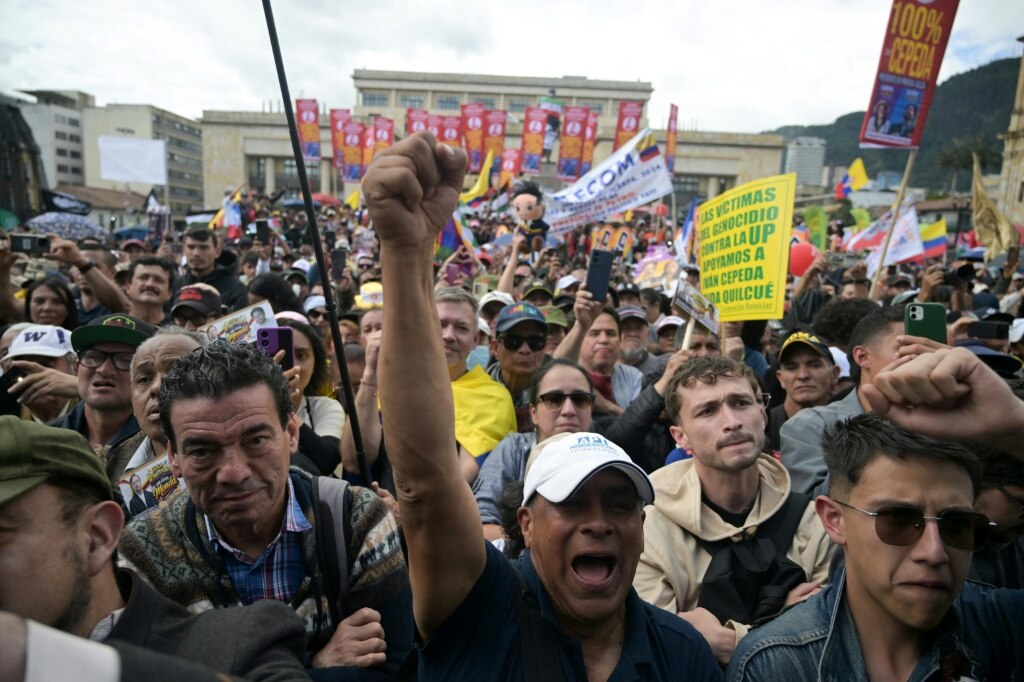
    Four years after former guerrilla Gustavo Petro made history by winning the presidency, breaking a century of conservative and elite rule, two right-wing contenders are fighting to flip the executive branch and roll back the progressive social and labor reforms Petro enacted during his term. But at a raucous May Day rally held in central Bogota on Friday, thousands of working-class supporters packed the plaza outside Congress to rally behind Petro’s handpicked political heir, Senator Ivan Cepeda, who is currently leading polls in the race’s first round.

    Cepeda used the address to warn attendees that hard-won labor gains—including an unprecedented 23% increase to the national minimum wage, and expanded overtime pay for night and weekend shifts enacted as part of Petro’s landmark 2024 labor reform—would be immediately rolled back if a right-wing government took power. He slammed his two leading rivals, ultra-right lawyer Abelardo de la Espriella and conservative Senator Paloma Valencia, as standard-bearers for the same neoliberal model that concentrated wealth in the hands of a small, unproductive elite for decades before Petro took office in 2022. “Comrades, don’t allow them to take away what we have achieved!” Cepeda told the cheering crowd under the hot Andean sun. Former Health Minister Carolina Corcho echoed the rallying cry, telling supporters: “The people have awoken. There’s no going back.”

    Just a few months ago, political analysts widely predicted a right-wing wave would wash over Colombia, following a regional trend that saw voters oust left-wing governments across Latin America from Argentina to Chile and Bolivia, with critics faulting incumbents for mismanaging economies, failing to curb rising crime, and tolerating corruption. Petro himself faced intense scrutiny from U.S. President Donald Trump earlier this year, who threatened the Colombian leader after he supported ousted Venezuelan left-wing president Nicolas Maduro. But a diplomatic reset during a recent White House meeting between the two leaders, paired with the popular minimum wage hike, has sent Petro’s approval ratings soaring—and lifted Cepeda’s polling numbers with them.

    For ordinary working Colombians, the labor reforms have delivered tangible change. Alejandro Guayara, a 38-year-old doorman at a Bogota apartment building and father of two who struggled to make ends meet for years, said the minimum wage increase brought his family much-needed “peace of mind.” While only 2.4 million Colombians earn the federal minimum wage, millions more have benefited from the overtime pay expansions included in Petro’s labor overhaul. “People have experienced new-found hope with this president because ordinary people are being taken into account,” Guayara said. Jose Cruz, a 60-year-old former member of the M-19 guerrilla group that Petro belonged to in his youth, echoed that sentiment, telling Agence France-Presse: “Today the power is in our hands, that of the people.”

    Still, Petro’s administration has faced persistent criticism over a sharp rise in guerrilla and dissident violence across the country, a issue the right-wing candidates have centered their campaigns on. Critics have long used Petro’s past as a member of M-19, which disarmed in 1990, to accuse him of being too soft on the dozens of armed groups and cocaine trafficking networks that control large swathes of northeastern and southern Colombia. Last year was the most violent Colombia has seen in the decade since the FARC Marxist rebel army signed a historic peace deal ending a 50-year civil war, and just last weekend, a dissident FARC faction opposed to the 2016 peace deal bombed a southern Colombian highway, killing 21 people—a attack the faction later called an “error.”

    Yann Basset, a political science professor at Bogota’s University of Rosario, noted that for decades, Colombia’s left was tarred by its public association with leftist guerrilla violence. But today, he said, “a large part of the population associate it with something else, with the social reforms of the Petro government in particular, and much less with violence.” Still, the surge in violence has eroded support for Cepeda, who was a key architect of Petro’s peace negotiation strategy with armed groups, among some left-leaning voters. The security crisis has also boosted support for the right-wing candidates’ signature “mano dura” (hard hand) crackdown policy, which calls for harsher prison sentences and aggressive policing of armed groups. For many younger voters like 18-year-old engineering student Juan Manuel Cespedes, the security situation has become untenable. “Security has been terrible in recent years,” Cespedes said, echoing the right’s call for harsher penalties.

    Polling currently shows Cepeda leading the first round of voting, but no candidate is projected to hit the 50% threshold needed to win outright, meaning the race will almost certainly go to a run-off. It remains unclear whether Cepeda can hold onto his lead against either de la Espriella or Valencia in a head-to-head race, leaving Colombia’s political future hanging in the balance as voters head to the polls next week.
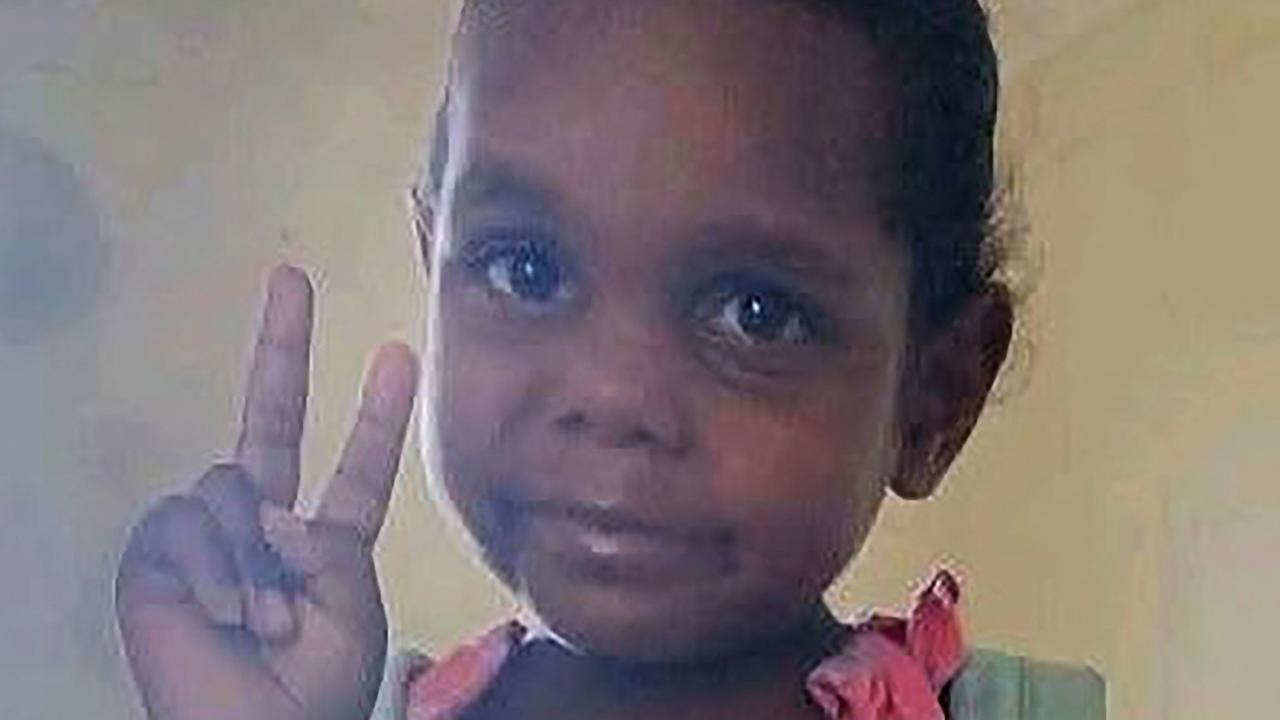

  • ‘Silence does not protect anyone’: Leaders call for inquiry into conditions at Alice Springs town camps after 5yo’s alleged abduction, murder

    ‘Silence does not protect anyone’: Leaders call for inquiry into conditions at Alice Springs town camps after 5yo’s alleged abduction, murder

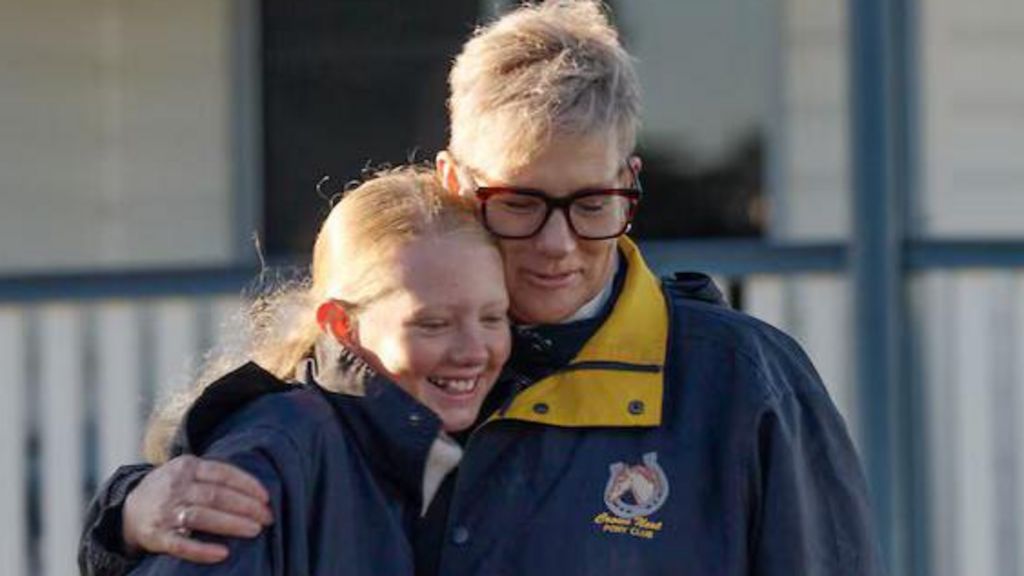
    The horrific alleged abduction and murder of 5-year-old Kumanjayi Little Baby from an Alice Springs town camp has sparked widespread community outrage and urgent demands for a full independent investigation into the systemic failures that allowed the tragedy to occur. The young girl was last seen by her family at their home in Old Timers Camp, located on the outer edge of Alice Springs, on Saturday evening. Days later, early this week, her body was discovered along the banks of the Todd River, just five kilometers from the residence she was taken from.

    By Thursday night, police had taken 48-year-old Jefferson Lewis, the prime suspect in the case, into custody. Immediately following his arrest, hundreds of angry community members gathered outside Alice Springs Hospital, where Lewis was receiving care for life-threatening injuries. The peaceful gathering quickly escalated into civil unrest: protesters threw rocks at law enforcement, lit dumpsters and vehicles on fire, forcing police to deploy riot shields, tear gas and rubber bullets to disperse the crowd.

    In the wake of the senseless killing, Northern Territory Senator Jacinta Price has emerged as a leading voice demanding a sweeping independent inquiry, not just into the specific circumstances of Kumanjayi’s death, but into the chronic dangerous conditions that have plagued Alice Springs’ town camp communities for decades. In an opinion piece published in *The Australian*, Price argued that these overcrowded, under-resourced settlements have been ignored by policymakers for far too long, creating environments that put vulnerable children at extreme risk.

    She noted that unregulated movement of people, including repeat violent offenders, is common across the camps, while existing alcohol restrictions are rarely enforced. Many settlements lack basic infrastructure, proper maintenance and effective oversight. Price, who has personal ties to Old Timers Camp that extend beyond this tragedy, shared that she has already lost multiple family members to violence and accidents in the camp.

    “These are not new observations,” Price wrote. “Not only into the circumstances surrounding this case, but into the broader conditions that allow such vulnerability to persist. That includes the governance of town camps, the role of organisations responsible for their upkeep, and whether current laws and enforcement mechanisms are adequate to protect the most vulnerable. Because if they are not, they must change.” She also raised urgent questions about transparency and accountability for the large amounts of public funding allocated to town camp management, calling for greater scrutiny of how those funds are spent.

    Opposition Leader Angus Taylor backed Price’s calls, telling Sky News that the tragedy was the inevitable result of decades of willful denial of the crisis in remote Indigenous communities. He noted that the Coalition took a proposal for a full royal commission into endemic sexual violence and abuse in these communities to the last federal election, and that that recommendation remains just as urgent today. “It’s the denial that has led us to this place where people aren’t prepared to have honest conversations about the state of affairs in our town camps and what options there are to address it,” Taylor said.

    Sue-Anne Hunter, National Commissioner for Aboriginal and Torres Strait Islander Children and Young People, added another layer to the calls for investigation, demanding an inquiry into the correctional system processes that led to Lewis being released from custody prior to the alleged murder. “We call for a wider investigation into the correctional systems that led to his release,” Hunter said.

    However, Indigenous Australians Minister Malarndirri McCarthy has pushed back on the demands for an immediate inquiry, arguing that the current moment should be focused on community mourning and supporting Kumanjayi’s grieving family. “Now’s the time to come together as a community in sorry business and be with this mum and her son as they prepare to bury their daughter,” McCarthy told the ABC.

    Across Alice Springs and the nation, the tragedy has left the tight-knit community in deep mourning. Flowers and handwritten tribute cards have piled up at the Old Timers Camp gate where Kumanjayi disappeared, as friends, neighbors and strangers grieve the loss of the young girl. In a heartbreaking public statement released after the discovery of her body, Kumanjayi’s mother and older brother shared their devastating grief. “To Kumanjayi Little Baby, me and Ramsiah miss and love you,” the statement reads. “I know you are in heaven with the rest of the family with Jesus and the Father, Son and Holy Spirit. Me and your brother will meet you one day. We are giving our lives to Jesus. It is going to be so hard to live the rest of our lives without you. Ramsiah wants to tell you that when he sees you in heaven, he is going to give you the biggest hug ever. Love from Mum and Ramsiah.”

  • AI actors and writers not eligible for Oscars: Academy

    AI actors and writers not eligible for Oscars: Academy

    In a landmark decision addressing one of the entertainment industry’s most contentious modern challenges, the Academy of Motion Picture Arts and Sciences announced sweeping new policy updates on Friday that explicitly bar AI-generated performances and screenplays from Oscar eligibility, alongside major reforms to the Best International Feature Film nomination process. The regulatory changes mark the Academy’s most high-profile intervention into the growing use of artificial intelligence in Hollywood, a technology that has sparked widespread anxiety among creative workers over job security and artistic integrity. Under the new framework, only roles performed by consenting human performers that are officially credited in a film’s legal billing can be considered for nomination in any acting category. For writing categories, the rules have been formally codified to require that all submitted screenplays must be human-authored to qualify for awards consideration. The announcement arrives just days after an AI-generated recreation of late Hollywood star Val Kilmer was publicly revealed to a gathering of cinema industry leaders. One year after Kilmer’s passing, a digitally recreated youthful version of the actor appears in the trailer for the upcoming archaeological action film *As Deep as the Grave*. The project was developed with full support from Kilmer’s family, who provided access to the actor’s personal video archive to help reconstruct his likeness at multiple points throughout his life and career. Unregulated AI development has been one of the most divisive issues in global entertainment for years, and it served as the core sticking point during the 2023 Hollywood strikes that brought major film and television production to a standstill. During the work stoppage, striking actors and writers repeatedly warned that unregulated adoption of AI would threaten long-term career stability for millions of creative professionals by enabling studios to replace human workers with digital alternatives. Beyond its AI policy reforms, the Academy also introduced significant changes to the eligibility rules for the Best International Feature Film category, a revision designed to address longstanding criticism of the old selection system. Prior to this update, only films officially selected by a recognized national governing body in their country of origin could be entered into the category. This requirement created a major barrier for acclaimed filmmakers working in authoritarian states, where government-backed bodies often block politically critical works from submission. A high-profile example of this gap came earlier this year, when Iranian dissident director Jafar Panahi’s film *It Was Just an Accident* was ultimately submitted as an entry from France rather than his home country. Under the new rules, non-English language films can now qualify for submission to the category if they win a qualifying award at one of five major international film festivals: Cannes, Berlin, Busan, Venice, and Toronto. Additionally, the Academy has revised attribution protocols for the category: moving forward, the film itself will be recognized as the nominee rather than the submitting country, and the director’s name will be listed on the statuette plaque directly after the film title, with the country of origin included only when applicable.

  • Australia wants to be first nation in the world to eliminate a cancer – can it?

    Australia wants to be first nation in the world to eliminate a cancer – can it?

    Twelve years ago, Chrissy Walters’ life changed forever. Six months after welcoming her long-awaited first daughter into the world following years of fertility struggles, the Toowoomba resident was rushed to hospital with a severe internal bleed. After multiple tests, biopsies and specialist appointments, the 39-year-old received a devastating diagnosis: advanced cervical cancer.

    Today, after more than a decade of grueling, invasive treatments, Walters’ cancer has spread throughout her body, and her condition is terminal. For her 12-year-old daughter, cervical cancer has been a constant presence throughout her life – the family began having open conversations about Walters’ mortality when the girl was just three years old. Now, as her daughter reaches the age Australia’s national immunization program targets for HPV vaccination, Walters holds onto the hope that her daughter’s generation will be the first to grow up free of the disease that is taking her life.

    Australia is well on its way to making that hope a reality. On track to become the first country in the world to eliminate cervical cancer as a public health threat – potentially beating its 2035 target – the nation has built on decades of local innovation and public health investment to reach this historic cusp. The story of Australia’s progress begins in 2006, when University of Queensland scientists Ian Frazer and Jian Zhou developed Gardasil, the world’s first effective vaccine against human papillomavirus (HPV), the most common high-risk cause of cervical cancer. A year later, Australia became the first country to roll out a national HPV vaccination program for adolescent girls, expanding the program to include boys (who can be asymptomatic carriers of the virus) in 2013.

    Alongside widespread vaccination, Australia has implemented a world-leading screening program that has drastically improved early detection. In 2017, it became one of the first nations to replace traditional pap smears with more sensitive HPV-based screening, which only needs to be completed once every five years. It also introduced the option of self-collected samples, a change public health officials call a game-changer for people who avoid screening due to anxiety about pelvic exams, or barriers like limited time or geographic distance from healthcare services.

    Public health experts define elimination of cervical cancer as fewer than four new cases per 100,000 people annually. As of the latest data, Australia already records 6.3 new cases per 100,000 women, down from double that rate when national record-keeping began in 1982. Most notably, 2021 data recorded zero new diagnoses of cervical cancer in women under 25 – a landmark that would have been unthinkable a generation ago. Karen Canfell, a leading epidemiologist at the University of Sydney and global pioneer in cervical cancer control, says the end of cervical cancer as a widespread public health threat is in sight. “It’s not all women of all ages yet, but you can see that concept of elimination being realised,” she notes.

    Canfell adds that Australia’s early investment in vaccination and screening has served as a blueprint for the World Health Organization’s global elimination strategy, making the country a trailblazer in the first global effort to eliminate any form of cancer. “Public health innovations in Australia sort of gave a general exemplar for WHO to follow,” she says.

    Despite this remarkable progress, significant challenges remain. The latest progress report highlights a small but concerning decline in vaccination coverage across the country, with stark disparities for First Nations communities. Aboriginal and Torres Strait Islander women currently face twice the rate of cervical cancer diagnoses and three times the mortality rate of non-Indigenous Australian women, due to long-standing barriers to healthcare access that often lead to late detection. On current trends, cervical cancer elimination for Indigenous Australian women will not come until 2047 – 12 years after the national 2035 target.

    Researchers add that other barriers, including lingering vaccine hesitancy in the wake of the COVID-19 pandemic, rising healthcare costs, and missed school-based vaccinations among students who have missed class time, are slowing progress. Many families also remain unaware that the HPV vaccine is fully free under Australia’s universal healthcare system, and there is no systematic national program to help children catch up on missed doses. “There’s not a lot of a concerted effort to get them back in if they’ve missed it… The onus is very much on families to get their child caught up on that vaccine,” explains researcher Jocelyn Jones.

    Beyond Australia’s borders, high implementation costs remain a major barrier to replicating the nation’s success in low- and middle-income countries, which often lack the robust public health infrastructure and funding needed to roll out widespread vaccination and screening programs. Global aid cuts have exacerbated this gap: in 2025, former U.S. President Donald Trump announced the end of American support for Gavi, the global vaccine alliance that supplies HPV vaccines to developing nations. Australia has stepped in to support neighboring nations including Vanuatu and Papua New Guinea to pursue their own elimination goals, but Canfell notes that high-income countries hold a unique advantage. “To say the obvious thing, we are obviously lucky to be in a high-income country where we have a form of universal healthcare and access for all,” she says.

    Canfell argues that eliminating cervical cancer is a worthwhile long-term investment for all nations, pointing to not only the saved lives and societal benefits but also tangible economic returns: when women do not die prematurely from cervical cancer, they remain active in the workforce and boost national economic productivity.

    Currently, Australia is in a quiet global race to be the first to reach elimination, with Sweden and Rwanda targeting 2027 and the UK targeting 2040, though all other nations currently lag behind Australia on key coverage milestones. For terminal patient Chrissy Walters, who describes living with cervical cancer as a full-time job that has left her with debilitating side effects, crippling fatigue and crippling financial stress even under Australia’s universal healthcare system, the progress could not come soon enough. While she will not live to see a world free of cervical cancer, she holds onto the hope that her daughter’s generation will never have to experience the pain and loss the disease has brought her family. That future, for Australia, is now within reach.

  • Pope names former undocumented migrant as US bishop

    Pope names former undocumented migrant as US bishop

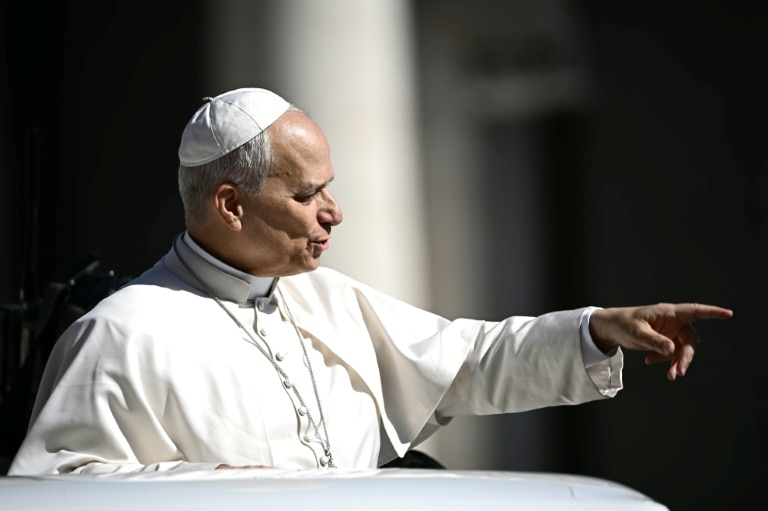
    In a move that underscores the Vatican’s long-running stance on compassionate immigration policy, Pope Leo XIV announced Friday the nomination of Evelio Menjivar-Ayala — a former undocumented migrant who fled civil conflict in El Salvador — to lead the Diocese of Wheeling-Charleston in West Virginia. The appointment comes just weeks after a high-profile public dispute between the U.S.-born pontiff and former President Donald Trump, deepening a rift over immigration and global conflict that has defined their tense relationship.

    Menjivar-Ayala, 56, currently serves as an auxiliary bishop in the Archdiocese of Washington, and his life story tracks closely with the migration issues that have placed the Vatican at odds with hardline U.S. immigration policy. Born into poverty in El Salvador amid the country’s brutal 1980s civil war, he first attempted to cross into the United States in 1990, only to be detained by authorities in Mexico. In a 2023 interview, he recalled paying a bribe to secure his release before successfully crossing the border through Tijuana, entering the U.S. as an undocumented refugee fleeing violence. After decades of religious service, he was ordained as a priest in 2004 and elevated to auxiliary bishop in 2023.

    The Vatican officially confirmed the nomination in a public statement earlier this week, marking a historic milestone for a U.S. diocese: Menjivar-Ayala is believed to be one of the first former undocumented migrants to be appointed a U.S. diocesan bishop. For Pope Leo, who leads the world’s 1.4 billion Catholics, the appointment aligns with his repeated calls for humane treatment of migrants, a stance that has put him directly in conflict with Trump.

    Last month, the pontiff drew fierce pushback from Trump after condemning the former president’s threat to “destroy Iran” as “unacceptable.” Pope Leo urged U.S. voters to pressure congressional representatives to prioritize diplomatic peace over escalation, a comment that sparked a scathing retaliation from Trump. The former president took to social media to slam the pope, labeling him “WEAK on Crime, and terrible for Foreign Policy.”

    Beyond the Middle East conflict, immigration has been the primary flashpoint between the two leaders. Pope Leo has repeatedly decried the treatment of migrants in U.S. detention systems as “extremely disrespectful,” arguing that global governments have a moral obligation to pursue humane, welcoming policies for people fleeing violence and poverty. “We have to look for ways of treating people humanely,” he has said of migration, a message that the appointment of Menjivar-Ayala brings tangible, public form.

    Church observers note that the nomination is far more than a routine personnel change: it is a deliberate reaffirmation of the Catholic Church’s commitment to migrant advocacy at a time when immigration remains one of the most divisive political issues in the United States ahead of the 2024 presidential election.

  • Was LIV Golf an expensive failure for Saudis? Not everyone thinks so

    Was LIV Golf an expensive failure for Saudis? Not everyone thinks so

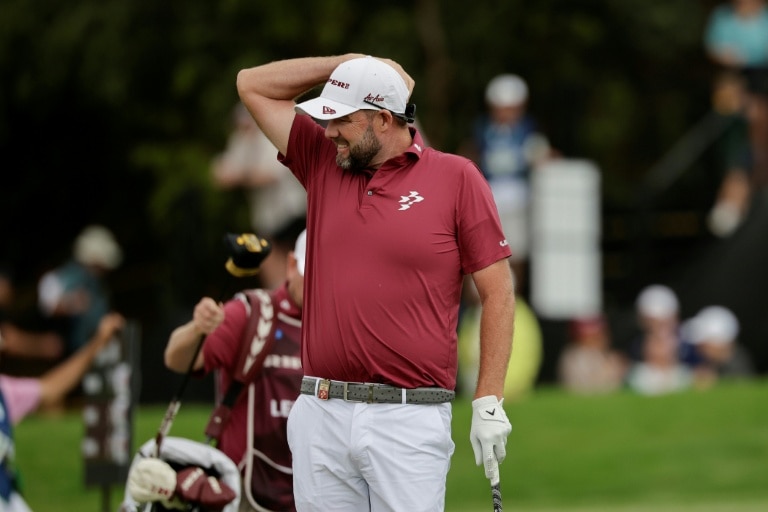
    For many casual observers, writing off Saudi Arabia’s $5 billion investment in the controversial breakaway LIV Golf tour as an expensive business failure seems like a straightforward conclusion after the kingdom confirmed its exit after five planned seasons. But industry experts argue that framing the LIV experiment as a total loss misreads Saudi Arabia’s broader strategic goals, which extended far beyond turning a quick profit on professional golf.

    Launched in 2022 by Saudi Arabia’s $900 billion sovereign wealth fund, the Public Investment Fund (PIF), LIV Golf upended the global golf landscape by poaching dozens of top stars including Dustin Johnson and Phil Mickelson with nine-figure signing bonuses. The reimagined tour format—featuring 54 holes of play, simultaneous shotgun starts, and on-course entertainment—sparked a bitter legal battle with the established PGA Tour that ended only when the two sides announced surprise merger negotiations, which dragged on for years without reaching a final deal. Ultimately, LIV never secured a lucrative major broadcast contract or built a large, loyal global fanbase, making continued large-scale investment unsustainable.

    However, analysts emphasize that LIV always served a larger purpose beyond golf: advancing Saudi Arabia’s core strategic agenda of diversifying its oil-dependent economy and boosting its global profile as a destination for tourism, international business, and investment. As the world’s top crude oil exporter, Saudi Arabia has used its PIF to pour billions into high-profile sports properties to deliver on this vision, a strategy that has already yielded visible wins: securing hosting rights for the 2034 men’s FIFA World Cup, luring global soccer superstar Cristiano Ronaldo to the Saudi Pro League, and taking over English Premier League club Newcastle United. Even with LIV’s exit, experts say this broader strategic trajectory remains unchanged.

    “Saudi Arabia is not going cold on sport,” Simon Chadwick, professor of Afro-Eurasian sport at Emlyon Business School in Shanghai, told Agence France-Presse. “It is evaluating the work that has thus far been done, what remains to be delivered, and what has worked (or hasn’t worked). The trajectory remains the same.”

    Chadwick added that initial Saudi ambitions for sports investment may have been overly ambitious, opening the door for opportunistic actors in the global sports industry to exploit the kingdom’s aggressive spending spree. Other analysts note that LIV’s exit is part of a broader pullback from the most extravagant, unproven projects across Saudi Arabia’s economic diversification agenda, including scaled-back spending on the $500 billion futuristic megacity NEOM and luxury tourism resorts. Within sports, the Saudi Pro League has also pulled back from the blank-check spending spree that attracted veteran global stars, and PIF recently sold a majority stake in top domestic club Al Hilal. Other high-profile events, including the Saudi Arabia Snooker Masters, have also been scrapped years into long-term contracts.

    Amro Elserty, a France-based Middle East sports affairs analyst, explained that LIV fulfilled its core initial purpose of putting Saudi Arabia on the global sports map, even if continued massive spending no longer made strategic sense. “That phase was primarily about visibility and positioning Saudi Arabia as a major global player,” he said. “What has changed is not that this objective disappeared, but that the marginal value of continuing to spend at the same level on a single project like LIV has declined.”

    While LIV’s exit carries some minor reputational risk, Elserty argued that it is not viewed as a major failure inside Saudi policy circles. “Within the logic of PIF’s strategy, this is better understood as a controlled exit from an experimental phase rather than a failure in the conventional sense,” he said. Chadwick echoed that view, noting that outside observers have overblown the significance of the pullback, framing what is a routine strategic adjustment as a high-stakes sports melodrama. Critics have long dismissed Saudi Arabia’s sports investments as “sportswashing,” an effort to distract from global criticism of the kingdom’s human rights record, but that has not slowed the expansion of Saudi influence across global sport. Even with LIV’s end, experts confirm Saudi Arabia’s commitment to using sports investment as a core tool for economic and geopolitical positioning remains intact.

  • Iran offers new proposal amid stalled US peace talks

    Iran offers new proposal amid stalled US peace talks

    Nearly two months into a ceasefire between US-led coalition forces and Iran, hopes for a diplomatic breakthrough have moved forward slightly after Tehran delivered a new negotiating proposal to Washington via Pakistani mediators, Iranian state media confirmed Friday.

    According to Iran’s official IRNA news agency, the full text of the proposal was transferred to Islamabad for onward transmission to US officials on Thursday evening. This development comes after the only completed round of direct peace talks between the two parties ended without progress, even as a cessation of active hostilities has held since April 8. The conflict, launched on February 28 via a surprise joint strike campaign by the United States and Israel, has paused on the battlefield but left a tangled web of economic blockades that are roiling global markets.

    A key point of ongoing friction remains control of the Strait of Hormuz, a critical chokepoint for 20% of the world’s daily oil trade. Iran has continued its restrictions on commercial shipping through the strait, cutting off millions of barrels of oil, natural gas, and fertilizer supplies from global markets. In response, Washington has enforced a full counterblockade of Iranian ports. The Wall Street Journal reported Thursday that US President Donald Trump has instructed national security officials to prepare for the standoff to extend through coming months, a revelation that immediately pushed up global crude prices.

    Speaking in a video published by Iran’s judiciary website Mizan Online, top Iranian judicial official and senior cleric Gholamhossein Mohseni Ejei reaffirmed Tehran’s position on negotiations this week. “The Islamic Republic has never shied away from negotiations,” he said, while adding that Iran would never accept externally imposed terms for a peace deal. Ejei also stressed that Tehran has no interest in resuming full-scale conflict. “We do not welcome war in any way; we do not want war, we do not want its continuation,” he added.

    Even with the ceasefire holding, global markets have remained roiled by the uncertainty of the prolonged standoff. Crude oil prices remain more than 50% higher than pre-conflict levels, as traders price in extended disruption to Hormuz shipping. The European Central Bank opted this week to hold interest rates steady, driven by new concerns that sustained energy price hikes could reignite global inflation.

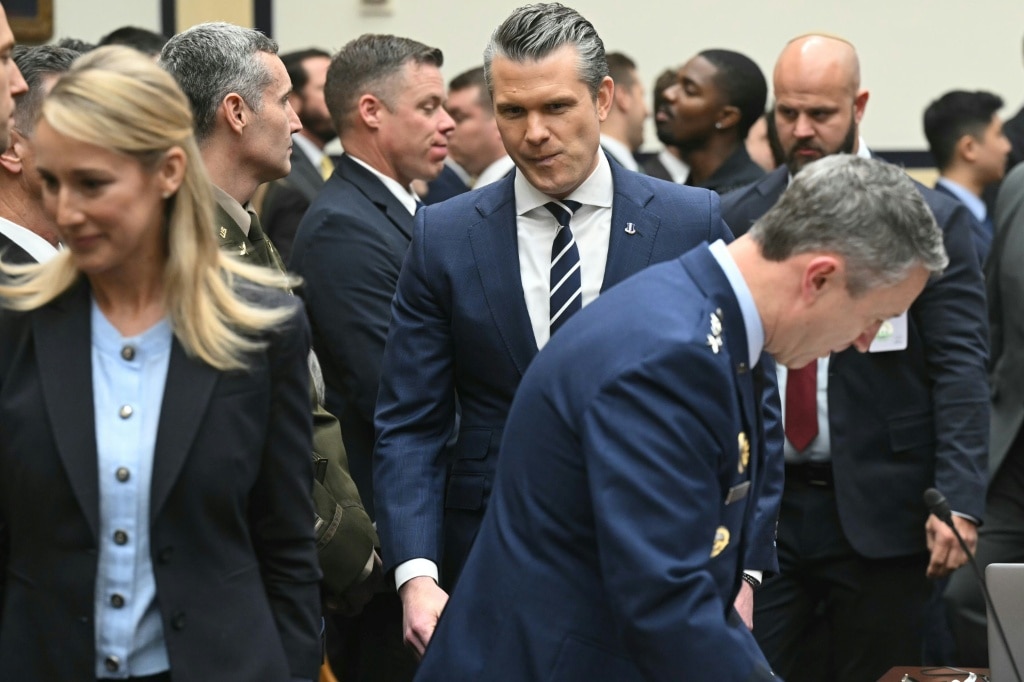
    Domestically, the conflict has amplified political and economic pressure on both sides. In Washington, a bitter legal debate over war powers has broken out, centered on a 60-day deadline for the president to secure congressional authorization for military action under the War Powers Resolution. Trump administration officials, including Defense Secretary Pete Hegseth, argue that the ceasefire has paused the clock on the deadline, claiming active hostilities that began on February 28 have formally ended for the purposes of the law. But critics have pushed back on the claim, and Trump faces growing discontent over the conflict, which has coincided with rising domestic inflation, slower-than-expected economic growth, and looming November midterm elections. US government data released Thursday put national inflation at 3.5%, well above policymakers’ target levels.

    For Iran, the conflict has compounded economic hardship that built up over years of harsh international sanctions. The US Pentagon reported this week that its counterblockade has prevented Iran from exporting $6 billion worth of oil since the conflict began. Iran’s national statistics center shows that domestic inflation, already above 45% before the war, has climbed to 53.7% in recent weeks.

    “For many people, paying rent and even buying food has become difficult, and some have nothing left at all,” Mahyar, a 28-year-old Iranian resident who spoke to AFP on condition of safety, said. He added that the private company he works for has laid off 34 staff, roughly 40% of its total workforce, amid the economic downturn.

    On the diplomatic front, Washington has moved forward this week with plans to launch a new international shipping coalition, branded the “Maritime Freedom Construct”, to restore commercial traffic through the Strait of Hormuz. Trump has repeatedly criticized US allies for dragging their feet on coalition efforts to reopen the waterway. Previously, France and Britain had organized a broader international coalition that pledged to support reopening Hormuz only after a diplomatic peace deal is reached.

    After the US announcement of its separate coalition, French Foreign Minister Jean-Noel Barrot sought to downplay tensions between the two initiatives during a visit to the Gulf this week. Barrot said the two coalitions have different mandates and will complement rather than compete with one another. “The US mission is not of the same nature as the one we established… it comes as a sort of complement,” he explained.

  • Rebels take key military camp in Mali’s north

    Rebels take key military camp in Mali’s north

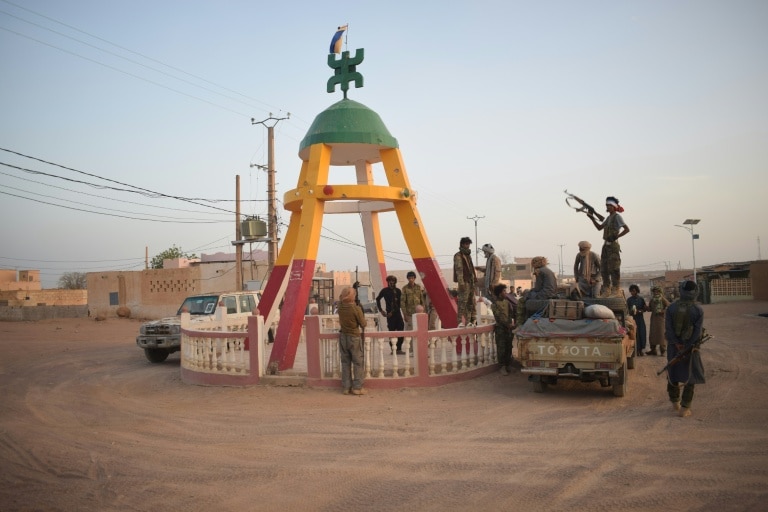
    In a major escalation of armed opposition to Mali’s ruling military junta, a coordinated alliance of Tuareg separatists and al-Qaeda-linked jihadists has captured a key strategic military outpost in the country’s far north, after junta-aligned forces withdrew without major resistance.

    The fall of the Tessalit military base — a strategically critical installation nicknamed a “super-camp” located just kilometers from the Algerian border — was confirmed by multiple independent sources speaking to Agence France-Presse, following a wave of large-scale coordinated attacks across the West African nation that have already killed a top junta leader and left at least 23 other people dead.

    A senior official with the Tuareg-dominated separatist Front for the Liberation of Azawad (FLA), the group leading the rebel advance, confirmed that all remaining Malian army troops and their Russian mercenary allies surrendered the camp and retreated southward ahead of rebel forces entering the area. A security source based in Gao, the largest city in northern Mali located south of Tessalit, confirmed no significant armed clashes broke out during the capture, as regular Malian forces had fully evacuated the base before rebel fighters arrived. A locally elected official in the region further confirmed that Russian mercenary personnel, who have been embedded with Malian troops across the country to counter insurgent movements, also abandoned their positions at the outpost.

    Geopolitical and military analysts have underscored the outsize strategic importance of the Tessalit base. Originally constructed by French colonial authorities, the installation features a well-maintained airstrip capable of accommodating military helicopters and larger fixed-wing aircraft, and its isolated position in the far northern Sahara offers unobstructed monitoring of cross-border movement across the entire Sahara region. Prior to its capture, the base hosted a large contingent of Malian army troops and Russian mercenary allies, and stocked a substantial arsenal of military equipment.

    The capture of Tessalit comes as the culmination of a series of coordinated rebel offensives that mark the most significant armed challenge to Mali’s junta in nearly 15 years. Last weekend, separatist FLA fighters and jihadists from the Group for the Support of Islam and Muslims (JNIM) — an al-Qaeda-affiliated insurgent group — launched coordinated large-scale fatal attacks across multiple key junta strongholds across the country. The attacks included a car bombing at the residence of Mali’s defense minister Sadio Camara, a core leader of the 2020 junta, in the garrison town of Kati near the capital Bamako. Camara, 47, died of his wounds from the attack, and the junta held an official state tribute for him earlier this week. During the weekend offensive, rebel forces also seized full control of the major northern city of Kidal, and FLA leaders have publicly predicted their alliance will soon take control of all of northern Mali and topple the junta entirely.

    Just one day before the fall of Tessalit, JNIM launched a full road blockade of the capital Bamako, permitting only exit for residents already inside the city and cutting off most inbound supply routes. This is not the first time the group has targeted the Malian economy with blockades: late in 2024, JNIM imposed widespread blockades on imported gasoline and diesel trucked into the country from neighboring Ivory Coast and Senegal, in an attempt to cripple government revenue and basic services.

    Mali’s current political trajectory has been shaped by its 2020 military coup, which brought the current junta to power. In the years following the coup, Mali joined neighboring junta-led Burkina Faso and Niger in cutting all diplomatic and security ties with former colonial power France, and aligned closely with the Russian government. Russia has deployed thousands of mercenary fighters to the three Sahel states to support counter-insurgency operations against jihadist groups. Earlier this year, the three nations formed the Alliance of Sahel States (AES), a joint security bloc with a stated combined force of 15,000 troops. Late Thursday, the government of Niger announced that the AES had launched intensive air campaigns across Mali in response to last weekend’s rebel attacks.

  • Turkish police fire tear gas, arrest hundreds at Istanbul May Day rallies

    Turkish police fire tear gas, arrest hundreds at Istanbul May Day rallies

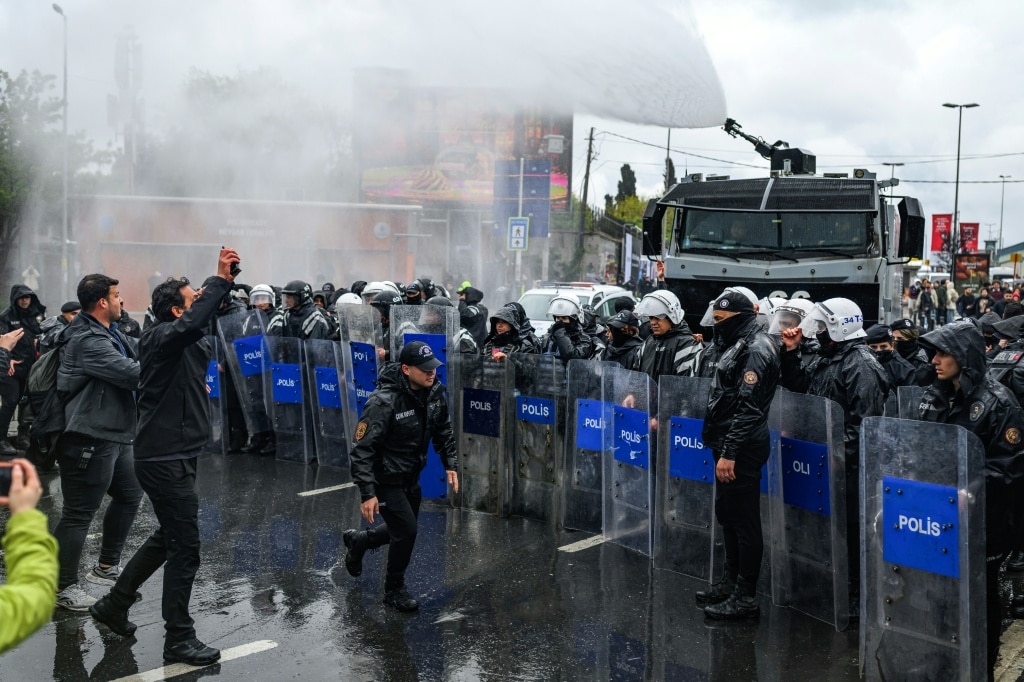
    On Friday, thousands of workers and activists across Turkey took to the streets for annual May Day demonstrations, with the most intense confrontations unfolding in Istanbul, where security forces deployed tear gas and detained hundreds of participants seeking access to a iconic protest site.

    Taksim Square, a public space that has long been a flashpoint for anti-government demonstrations in Turkey, was locked down by police overnight ahead of the planned rallies. Two groups of protesters had explicitly announced their intention to march to the sealed square on the city’s European side, triggering a swift, heavy-handed response from law enforcement.

    AFP journalists on the ground confirmed that riot police used vehicle-mounted tear gas launchers to disperse crowds gathered in Istanbul. Data collected by the CHD Lawyers’ Association, which had legal observers present at the demonstrations, puts the number of arrests in the city at a minimum of 370 as of 11:00 GMT, a figure that approaches the 400+ detentions recorded at 2023’s Istanbul May Day protests. Footage broadcast by opposition broadcaster HALK TV showed Turkish Workers’ Party leader Erkan Bas directly targeted with pepper spray during the clashes.

    Speaking before the confrontation, Bas emphasized the core purpose of the demonstration: “Those in power already speak 365 days a year, so let workers talk about the hardships they face at least one day a year.”

    Shortly after publicly condemning the closure of Taksim Square to demonstrators, Basaran Aksu, a senior union official, was taken into custody by police. In remarks before his arrest, Aksu criticized the unequal access to the central public space, saying “You can’t close off a square to the workers of Turkey. Everyone uses Taksim, for official ceremonies, for celebrations. Only the labourers, the workers, the poor find the square closed to them.”

    May Day protests have drawn heavy police deployment in Turkey for years, with authorities routinely sealing off large swathes of central Istanbul around Taksim Square to prevent unauthorised gatherings. On Friday this year, the city’s central neighbourhoods were blocked off by metal barricades, with thousands of officers in full riot gear positioned to block access.

    In Istanbul’s Mecidiyekoy district, AFP reporters witnessed police use tear gas against a group that included members of the leftist HKP party, who attempted to break through police lines while chanting anti-government and anti-American slogans. In the Besiktas neighbourhood, officers surrounded demonstration zones and intervened violently whenever protesters began chanting, with multiple demonstrators seen being tackled and thrown to the ground by security forces.

    The 2024 demonstrations were organized by a coalition of trade unions and civil society groups under the unifying slogan “Bread. Peace. Freedom”, a call rooted in the country’s ongoing severe cost-of-living crisis. Official data puts Turkish inflation at 30 percent, but independent economic analysts estimate the real rate is closer to 40 percent, squeezing working-class households across the country.

    In the capital city of Ankara, around 100 coal miners joined the May Day march after staging a nine-day hunger strike to demand payment of long-overdue wages. The march in Ankara drew a notably large, young crowd, and was also closely monitored by a heavy police deployment, an AFP correspondent reported.

    The crackdown on Friday came days after Turkish authorities issued arrest and search warrants for 62 people, 46 of whom include working journalists, trade union leaders, and opposition figures. Authorities labeled the group “likely to carry out attacks” ahead of the May Day demonstrations.

  • French hub monitors Hormuz tensions from afar

    French hub monitors Hormuz tensions from afar

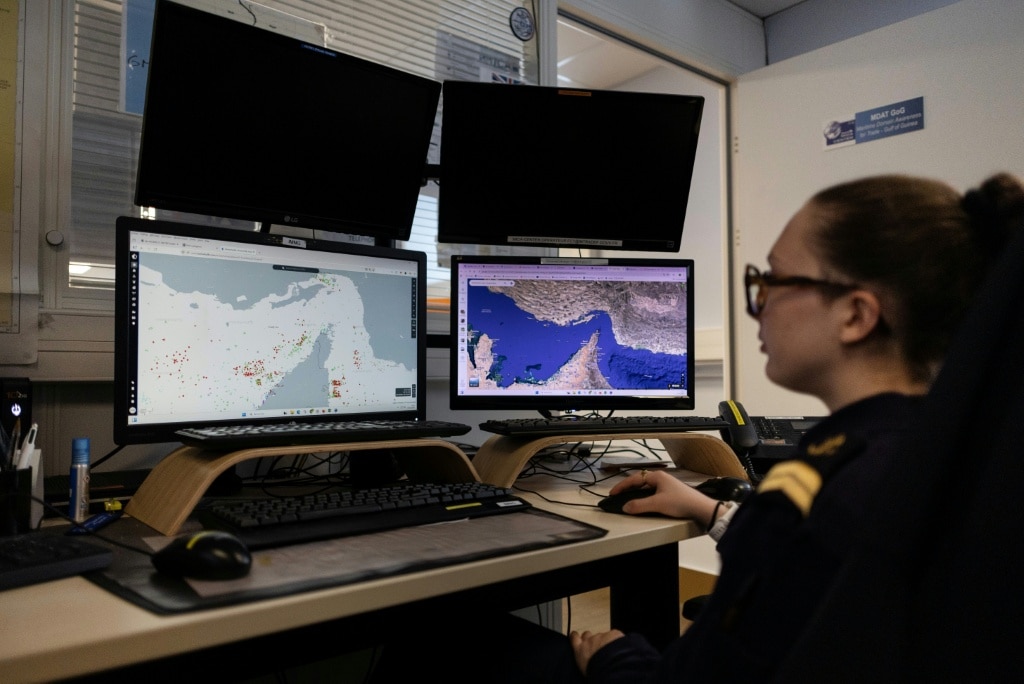
    Thousands of kilometers from the oil-rich waters of the Persian Gulf, a small team of 12 French naval analysts sits hunched over monitoring screens in a basement facility in Brest, tracking every blink of vessel activity signaling shifting danger near the strategic Strait of Hormuz. Since the outbreak of the Iran conflict in late February, this quiet outpost — the Maritime Information Cooperation and Awareness Center, or MICA Center — has become a critical lifeline for hundreds of civilian merchant vessels trapped in the Gulf amid escalating blockades and unpredictable attacks.

    Tensions between Iran and the United States have led to overlapping blockades of the narrow strait, a global energy chokepoint that carried roughly one-fifth of the world’s total crude oil and liquefied natural gas supplies before the conflict began. The standoff has left more than 750 civilian ships stranded on the Gulf side of the passage, with only a tiny number able to successfully exit in recent weeks.

    MICA’s core mission is to deliver real-time security alerts to commercial shipping operators across the globe. When the center’s team detects any sign of bombardment or imminent threat, it immediately dispatches an encrypted alert to all container ships, cargo vessels and cruise liners within a 50-nautical-mile radius of the danger zone. “We share the nature of the event, its context and exact position,” MICA’s commanding officer Thomas Scalabre told Agence France-Presse during an on-site interview. That advance warning allows vessels to react quickly: crews can steer clear of incoming fire or floating debris, or even disable their tracking transponders to avoid being targeted. For context, the strait measures just 29 nautical miles across at its narrowest point, making the 50-nautical-mile alert zone more than sufficient to cover the entire waterway.

    MICA’s monitoring data draws from multiple sources, combining high-resolution satellite imagery, automatic location signals transmitted by ship transponders, and on-the-ground reports shared directly by crews operating in high-risk waters. The center currently provides its monitoring and alert services to 85 major international maritime transport companies, including French shipping giant CMA CGM and Danish industry leader Maersk. While the Strait of Hormuz is currently MICA’s top priority, the facility also monitors security risks across all the world’s open waters, tracking Houthi rebel missile and drone attacks in the Red Sea, piracy operations off the coast of Somalia, and transnational drug smuggling routes.

    Since the outbreak of the conflict on February 28, Scalabre says MICA has documented roughly 40 separate security incidents in and around the Strait of Hormuz, 24 of which were direct attacks by Iranian forces on commercial vessels — some of which have resulted in fatalities.

    France and the United Kingdom have previously announced plans to form a multinational coalition to reopen the strait to safe commercial navigation, but the coalition will not be deployed until after a ceasefire is reached. To date, peace talks aimed at de-escalating the conflict have stalled in recent weeks, leaving merchant shipping in a state of ongoing uncertainty.

    In the absence of a clear resolution, “the rules Iran imposes on navigation remain very unclear and are constantly shifting,” Scalabre explained. This uncertainty extends to which vessels the Iranian Revolutionary Guards Corps (IRGC) may choose to target. “There isn’t necessarily any logic in the IRGC’s targeting policy. We’ve seen many different nationalities and types of vessels” targeted, he added.

    Even nations long viewed as friendly to Iran are not exempt from unprovoked attacks. According to security intelligence firm Vanguard Tech, IRGC gunboats opened fire on the India-flagged tanker Sanmar Herald on April 18 without any prior radio contact, despite India being counted among Iran’s close partners alongside China, Russia, Iraq and Pakistan. Iran has also publicly confirmed it has laid sea mines across the main channel of the strait.

    “What matters is the psychological effect. No one will take the risk of venturing there,” Scalabre said of the persistent threat. While Tehran retains the authority to grant individual ships permission to enter or exit the Gulf through the strait, even approved vessels are not guaranteed safe passage. “Even when they obtain it, the IRGC’s ‘mosquito fleet’ can emerge to block their way,” Scalabre added, referencing the IRGC’s fleet of small, fast attack speedboats that are used to intercept and harass commercial vessels.

    In his office, Scalabre pulled up a satellite image showing a swarm of these small craft moving in to intercept a target: a dozen patrol boats cutting through the water, leaving trails of white wake as they encircle and seize a commercial vessel before it can exit the Gulf. “They sometimes carry out indiscriminate attacks, whether the country is considered friendly or not,” the French naval officer said.

    For the Iranian government, controlling access to the Strait of Hormuz remains one of its most powerful leverage points, Scalabre noted: “For Tehran, controlling the Strait of Hormuz remains one of its trump cards to exert pressure and negotiate a way out of the conflict.”