标签: Oceania

大洋洲

  • Vingegaard wins Giro d’Italia to complete Grand Tour set

    Vingegaard wins Giro d’Italia to complete Grand Tour set

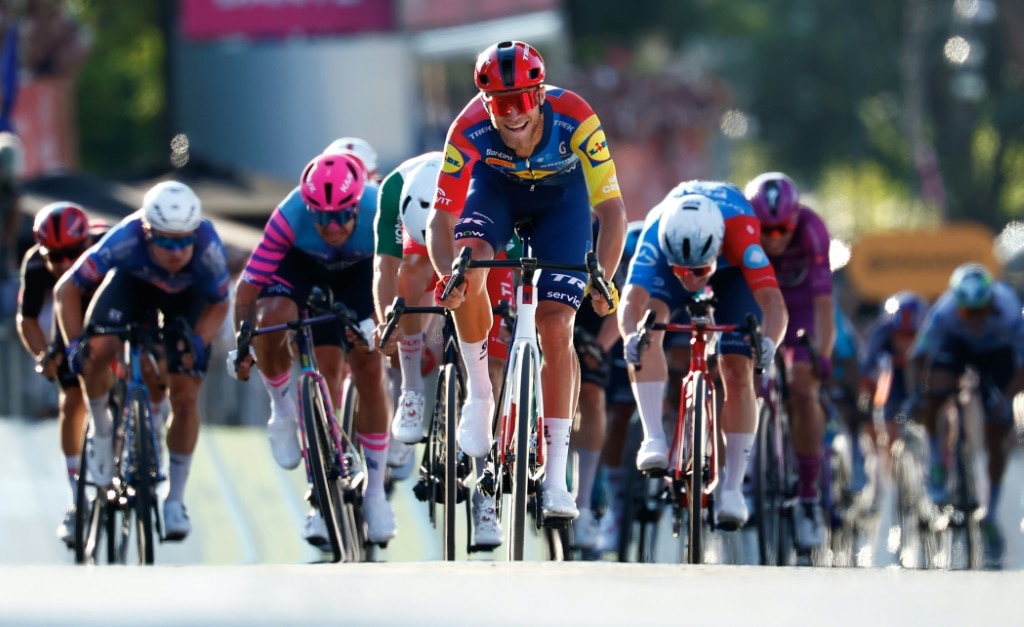
    In a historic milestone for professional road cycling, Denmark’s Jonas Vingegaard secured overall victory at the 2025 Giro d’Italia on Sunday, capping off a dominant three-week race and cementing his place as one of the sport’s all-time greats by completing the rare sweep of cycling’s three Grand Tours. The final stage of the race, which concluded on the sunlit streets of central Rome, delivered a hometown fairytale for Italian sprinter Jonathan Milan, who claimed a dramatic stage win with a late powerful burst, but the day belonged entirely to Vingegaard, who rolled into the capital draped in the Giro’s iconic pink leader’s jersey to claim his first overall title at the Italian race.

    With Sunday’s result, Vingegaard adds the Giro crown to his back-to-back Tour de France titles in 2022 and 2023, and his 2025 Vuelta a Espana victory, completing the sport’s coveted Triple Crown of three-week Grand Tours. This achievement makes him the only active rider in the world to hold wins at all three events, and just the eighth male rider in the entire 100-plus year history of professional cycling to reach the mark, joining legendary figures including Eddy Merckx, Bernard Hinault and Italy’s own Vincenzo Nibali.

    Slovenian cycling star Tadej Pogacar, Vingegaard’s long-time rival, has claimed four Tour de France titles and one Giro d’Italia victory to his name, but has yet to add a Vuelta win to his resume, leaving the Triple Crown out of his reach for now.

    Speaking to Italian public broadcaster RAI after crossing the finish line, an emotional Vingegaard reflected on the unprecedented achievement. “Winning all three is very special for me, it’s difficult to find the words to describe it,” the Visma–Lease a Bike rider said. Following the victory, Vingegaard plans to stay in Rome for several days to celebrate with his family before returning to his native Denmark to begin preparations for the 2025 Tour de France, which kicks off on July 4, where he is set to face off once again against Pogacar in cycling’s most high-profile showdown.

    Vingegaard noted that his fitness remains strong despite the grueling three-week Giro, a positive sign for his Tour prospects. “If you’re completely exhausted and need two weeks of rest afterwards, it’s not ideal. But I’m not completely exhausted,” he explained. Richard Plugge, general manager of the Visma–Lease a Bike team, expressed full confidence in his rider’s ability to contend for another yellow jersey in July. “Jonas is getting even stronger after this. We planned it so that he will be at his peak in the Tour de France, so we’re looking forward to that fight,” Plugge said, describing the squad as a “yellow jersey organization” focused on Tour victory.

    Vingegaard’s victory at this year’s Giro was defined by utter dominance. With Pogacar not competing in the race, the Danish rider faced no serious challenges to his lead throughout the three weeks, wrapping up the overall title with a commanding mountain stage victory on Saturday that sealed his advantage before the processional final stage into Rome. He finished the general classification with five individual stage wins, and an unrivaled 5 minute 22 second gap over second-place Austrian rider Felix Gall. 2022 Giro champion Jai Hindley of Australia rounded out the overall podium in third.

    In the race’s other classification awards, Portugal’s Afonso Eulalio claimed the white jersey for the best young rider, after holding the overall pink leader’s jersey for eight consecutive stages following a breakout performance on a rain-soaked fifth stage. Italian veteran Giulio Ciccone won the mountains classification, while young French sprinter Paul Magnier claimed the points classification sprint jersey thanks to three stage wins throughout the race.

    For Milan, the final stage win marked a satisfying redemption for his Giro campaign. The home favorite had come close to stage victories multiple times throughout the race but had failed to cross the line first until Sunday, when he outsprinted compatriot Giovanni Lonardi and France’s Paul Penhoet to take the win on home soil. “I’m pleased to have finished my Giro this way,” Milan told RAI. “It’s important in terms of just winning something. It wasn’t easy always being close but not quite getting there.” Milan finished the points classification 47 points behind winner Magnier.
  • Paris Saint-Germain players celebrate amid riot recriminations

    Paris Saint-Germain players celebrate amid riot recriminations

    Paris welcomed Paris Saint-Germain’s football squad with a jubilant hero’s parade on Sunday, as the team marked its second consecutive UEFA Champions League title. The celebration, however, unfolded against a backdrop of bitter political finger-pointing, coming 24 hours after widespread rioting across France left one person dead, hundreds injured, and hundreds more arrested in post-victory unrest.

    The victory was sealed in Budapest on Saturday night, where PSG defeated English Premier League side Arsenal 4-3 in a tense penalty shootout. On their return to the French capital, the squad traveled in an open-top parade from Charles de Gaulle Airport to the Champ de Mars, the sprawling public plaza situated at the foot of the Eiffel Tower. Tens of thousands of flag-waving, chanting supporters lined the route to catch a glimpse of their champions. Before the public parade, the team was received in an official audience by President Emmanuel Macron, and later made a stop at their home ground, Parc des Princes, to greet fans before the main event.

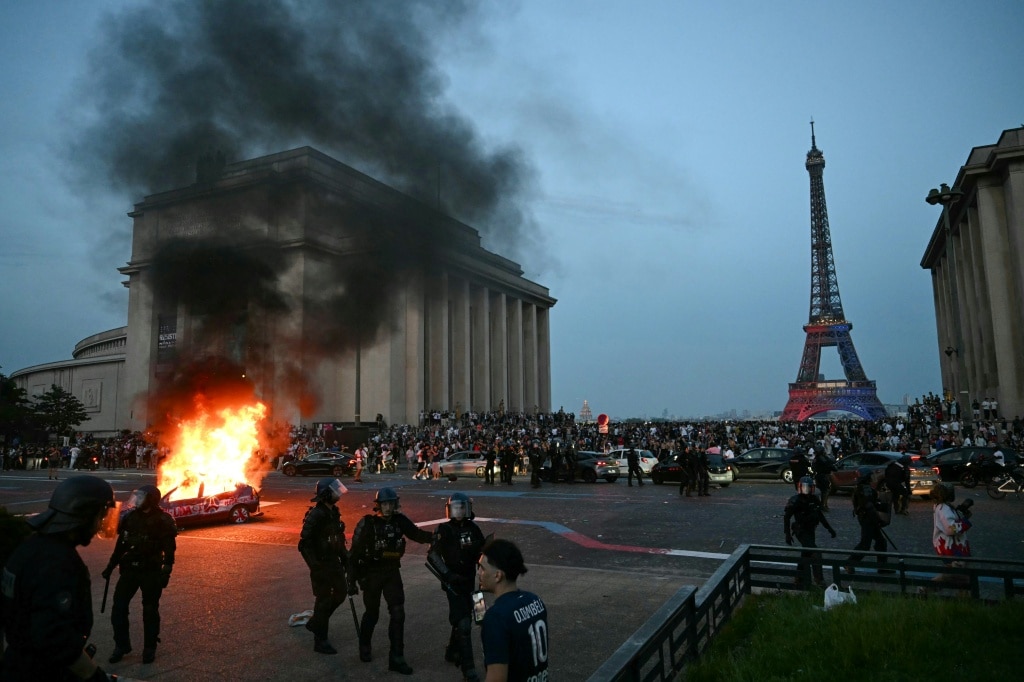
    The night of celebration turned violent, however, as clashes erupted between young rioters and police officers across Paris and multiple other French cities. The unrest left a trail of destruction: cars set ablaze, storefronts looted, and public infrastructure damaged across 15 cities nationwide. A 57-year-old motorcyclist died in a celebratory crash on Paris’ peripheral ring road, while authorities also recorded multiple stabbings and violent assaults. Official injury counts put the total at 57 police officers and 219 rioters or participants hurt, with eight people remaining in critical condition Sunday morning.

    By Sunday morning, municipal crews worked frantically to clear shattered glass, destroyed bus shelters, discarded trash and burned-out vehicles from Paris’ central streets ahead of the planned parade. Interior Minister Laurent Nunez reported that a total of 780 people had been arrested across France by Sunday morning — nearly 30 percent more arrests than followed PSG’s 2024 Champions League win over Inter Milan, which also sparked widespread post-victory disorder.

    President Macron called the outbreak of violence “unspeakable”, but political leaders have clashed sharply over who bears responsibility for the unrest, and how it was handled. Paris Mayor Emmanuel Gregoire pushed back against claims of widespread chaos, noting that the vast majority of supporters celebrated peacefully, and that isolated incidents on the margins of major national celebrations are not a new phenomenon. Speaking to BFM TV, Gregoire argued that excessive media coverage and social media-fueled attention-seeking by troublemakers had amplified the unrest, creating a chain reaction of incitement that escalated tensions. “In the vast majority of cases, people celebrated with family and friends. And it was an extraordinary celebration. And incidents on the fringes of major events have been going on for centuries,” he said.

    The local town hall overseeing the Champs-Élysées — where tens of thousands of fans gathered after the final whistle on Saturday — issued a scathing statement calling for future bans on large post-victory gatherings, claiming the iconic avenue “ceased to be a place of celebration and became an arena of urban guerrilla warfare” overnight.

    Politicians from across the French political spectrum condemned the violence and questioned security planning. Far-right leader Marine Le Pen wrote on social media platform X that “only in France does a football club’s victory spark riots”. Valerie Pecresse, head of the greater Paris regional council from the conservative Republicans party, slammed the “brainless thugs who allow themselves to destroy everything, tarnishing the image of Paris and France”, and demanded “exemplary sanctions” for those arrested. Meanwhile, a spokesperson for the hard-left France Unbowed party criticized the national government’s planning and security management of the event, saying “We cannot be satisfied with the way last night’s event was managed and organised by the government.”

    Despite the recriminations and the previous night’s violence, the official parade went ahead as planned, with Nunez deploying 6,000 police officers across central Paris to maintain order for the tens of thousands of supporters who turned out to celebrate. Fans packed into the Champ de Mars hours before the team arrived, with crowds so large that the squad’s arrival was delayed by more than an hour. When the players finally took to the stage, they paraded along a red, white and blue tricolor carpet as giant screens replayed the decisive penalty shootout that secured their historic back-to-back title.

    For many fans, the joy of victory could not be dampened by the previous night’s chaos. “We’re still riding yesterday’s high, so we want to keep the party going,” said 25-year-old Abou, a PSG fan since childhood, as supporters chanted “Paris, Paris” while filtering through security checkpoints. Mirna Makima, a 39-year-old physiotherapist who traveled from Belgium to attend the celebrations, said: “It was great, there was the stress of the penalty shootout but it was good stress in the end.”

  • Iran says does not trust US as Trump toughens terms

    Iran says does not trust US as Trump toughens terms

    Diplomatic efforts to resolve a months-long conflict between the United States and Iran have hit a new impasse, with Tehran’s top negotiator rejecting Washington’s toughened new peace framework and warning that the US cannot be trusted to honor its commitments.

    The standoff comes after weeks of fraught, on-again off-again negotiations that have unfolded against a backdrop of military strikes, broken temporary ceasefires and escalating regional tensions that have disrupted global energy supplies. The core points of dispute remain Iran’s nuclear program, control over the strategically critical Strait of Hormuz, and the spreading conflict on the Lebanese border between Israel and Iran-backed Hezbollah.

    On Sunday, Iran’s chief negotiator Mohammad Bagher Ghalibaf said in a televised address that Tehran would not sign off on any final deal until the full rights of the Iranian people are formally secured and upheld. His comments came shortly after multiple US outlets, including The New York Times and Axios, reported that former President Donald Trump had sent a revised, harder-line negotiating framework back to Iranian officials for review, leaving key details of the proposal still undisclosed.

    Trump has publicly laid out two non-negotiable priorities for any final agreement: a permanent halt to all Iranian nuclear weapons development and the full reopening of the Strait of Hormuz, a critical global oil shipping chokepoint that Iran blockaded after the outbreak of the war earlier this year. In an interview with his daughter-in-law Lara Trump on Fox News, Trump claimed Iran had already agreed to the zero-nuclear-weapons stipulation, though Tehran has repeatedly pushed back on that assertion. “The one guarantee that I have to have is that there will be no nuclear weapons. They’ve agreed to that, and it was very interesting,” Trump told the program.

    The current diplomatic push grew out of indirect talks that were already underway in February, when the United States and Israel launched a coordinated air and missile campaign that killed most of Iran’s top senior leadership. The US and its Western allies have long suspected Iran’s civilian nuclear program is a front for developing nuclear weapons, a charge Tehran has consistently denied.

    Iran’s core demands remain unchanged: the release of an estimated $12 billion in Iranian assets that have been frozen by international sanctions, a concession Trump has not publicly committed to. Tehran has also dismissed Trump’s claims that Iran has agreed to destroy its stockpile of enriched uranium as completely baseless, according to state-run Iranian media. As of Sunday, Iranian state news agency Tasnim confirmed that negotiations on the draft text are still ongoing, with both sides submitting regular amendments, but no final agreement has been reached, and a total collapse of talks remains on the table.
    “No agreement has yet been finalised, and it is possible that any agreement will be rejected,” the agency reported.

    Military developments have further complicated the diplomatic process. The US stated one of its core war aims was the complete destruction of Iran’s ballistic missile program, with top US General Dan Caine claiming in April that more than 80 percent of Iran’s missile facilities had been destroyed in coalition strikes. But new CNN analysis of satellite imagery released Sunday found that Iran has already repaired and reopened 50 of the 69 tunnel entrances hit at 18 separate underground missile sites, undermining US claims of major progress on the objective.

    While a temporary ceasefire between the US and Iran that took hold in April halted large-scale daily air strikes across Iran and the Persian Gulf, sporadic violence has continued. Iran’s state broadcaster IRIB reported last week that the Iranian Revolutionary Guard Corps shot down an American military drone that was approaching Iranian territorial waters, a claim US officials have not yet confirmed.

    Negotiations over the Strait of Hormuz have also hit a snag. After Trump claimed any final deal would require Iran to charge no tolls or fees for commercial ships passing through the strait, Iranian officials quickly pushed back. State-run Fars News Agency reported no such clause exists in the current draft, and Iranian parliamentary news agency ISNA reported Saturday that a new bill formalizing Iranian sovereignty over the strait, including the right to charge administrative fees for shipping, is set to be introduced to parliament imminently.

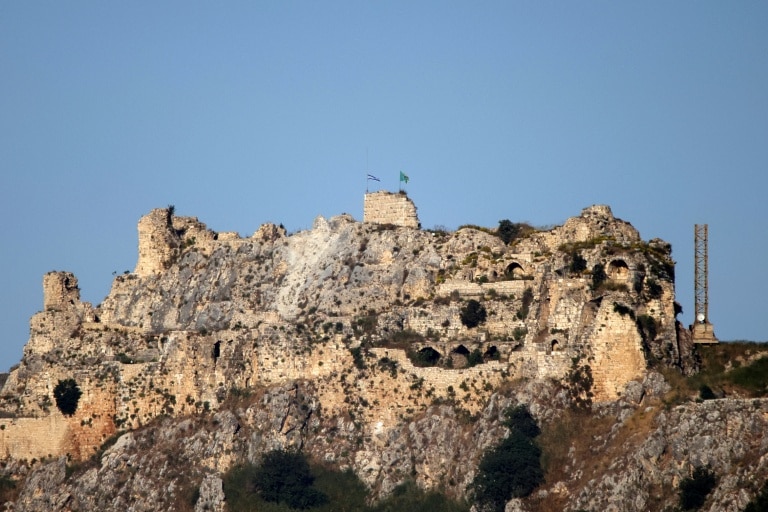
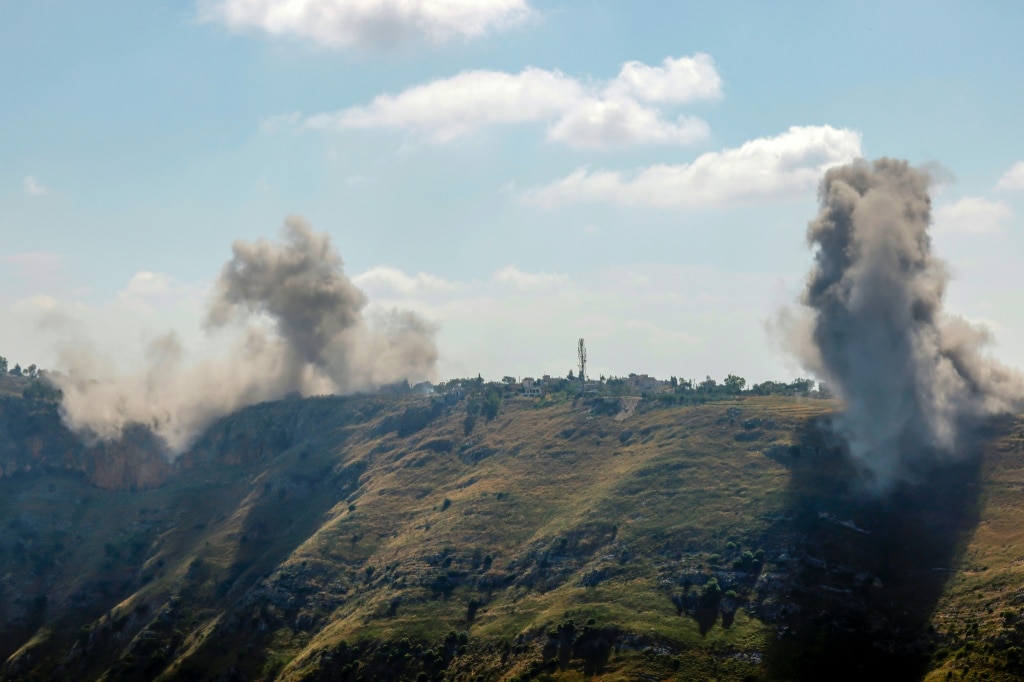
    The conflict has also spilled over into Lebanon, where Israeli forces have escalated their offensive against Iran-backed Hezbollah in recent days. Tehran has insisted that any final peace deal with the US must include a resolution to the Lebanese front, where a fragile truce that went into effect April 17 has been violated repeatedly by both sides. Over the weekend, Israeli forces captured the strategic Beaufort Castle, a medieval fortress that served as an Israeli military base during the country’s 22-year occupation of southern Lebanon. AFP photographers captured footage of an Israeli military flag raised above the castle, with heavy smoke billowing from the surrounding area.

    Israeli Prime Minister Benjamin Netanyahu called the capture of the castle a major turning point in Israel’s campaign against Hezbollah. “The capture of Beaufort is a dramatic stage and a dramatic shift in the policy we are leading,” Netanyahu said. But Hezbollah lawmaker Hassan Fadlallah pushed back on the Israeli narrative, noting that the castle was not used as a military outpost by the group, and calling the flag raising a deliberate provocation. “The raising of the Israeli flag there should provoke the feelings of every loyal patriot,” Fadlallah said.

    Lebanese officials have accused Israel of carrying out a scorched-earth policy as it expands its ground offensive, and have called for an immediate permanent ceasefire. The United Nations Security Council has scheduled an emergency meeting for Monday to address the escalating violence, diplomatic sources confirmed to AFP.

  • Swiatek exits French Open, Zverev, Ruud eye quarters

    Swiatek exits French Open, Zverev, Ruud eye quarters

    The 2025 Roland Garros entered its second week with a stunning upset that sent shockwaves through the clay-court Grand Slam, as four-time champion Iga Swiatek was eliminated from the tournament in a lopsided defeat to Marta Kostyuk. For the Polish star, the loss marked a disappointing end to her tournament on her 25th birthday, capping a difficult stretch of form that has seen her long-held dominance on clay erode over the past 12 months.

    Swiatek, who entered the tournament as the world No. 3, took an early advantage in the opening set, breaking Kostyuk to move ahead 4-3. But from that point onward, her serve and overall rhythm completely collapsed. She never held another game, as the Ukrainian clay-court specialist clawed back to take the first set 7-5, then blazed through the second set 6-1 to secure a straight-sets victory. It is the furthest Kostyuk has ever advanced at Roland Garros, extending a career-best run through the clay-court season that already includes a WTA 250 title in Rouen and her first ever WTA 1000 crown at the Madrid Open.

    In her post-match comments, Swiatek openly acknowledged the mental pressure that derailed her performance, admitting that stress management has been a persistent struggle for her over the past year. “I feel, like, for sure I lost today because Marta used the opportunity, and I was super tense,” the three-time Roland Garros winner said. “It is harder a bit to handle stress for me in the last year. So I feel like today I felt off, you know, and I did mistakes that I didn’t want to do, and I wanted to play safe, but the ball flew everywhere. Suddenly these feelings came back, and I tried to work on it with my dialogue inside, but it was tough today. Yeah, so it all kind of went drastically down, and I played worse and worse.”

    The upset continues a trend of top seeds exiting the tournament early in the second week. Swiatek’s exit follows the end of her historic streak of consistent success at Roland Garros: since claiming her first French Open title in just her second appearance at the event back in 2020, she had never gone more than two seasons without lifting the Coupe Suzanne Lenglen. After Aryna Sabalenka ended her bid for a fourth consecutive title in the 2024 semi-finals, Swiatek has struggled to recapture her unbeatable form on clay, collecting just three tour-level titles in the two seasons since her last Paris championship.

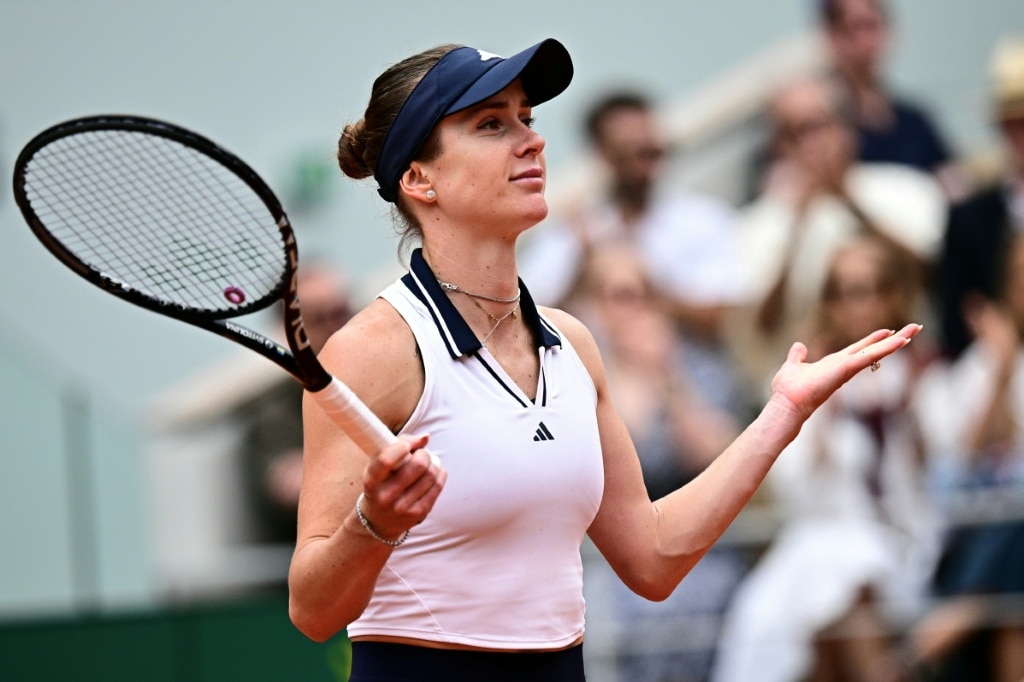
    Kostyuk will now face compatriot Elina Svitolina in the quarter-finals, after Svitolina staged a comeback to beat 11th seed Belinda Bencic of Switzerland 4-6, 6-4, 6-0. Svitolina, the seventh seed, has reached the French Open quarter-finals five times before but has never advanced past that stage. Having claimed her first WTA 1000 title in eight years at the Italian Open last month, the upcoming match will pit the two champions of the biggest Roland Garros warm-up events against one another, guaranteeing a Ukrainian representative in the semi-finals. “It’s exciting. Definitely she’s been playing really well,” Svitolina said of Kostyuk, who has now won 15 consecutive matches on red clay. “I feel like it’s going to be an exciting battle for Ukraine, as well, you know, that there will be one Ukrainian in the semis. Yeah, I think it’s really cool.”

    Elsewhere in the women’s draw, 36-year-old Romanian Sorana Cirstea is enjoying a dream final season on tour, rallying to continue her remarkable renaissance with a 6-3, 7-6(4) win over China’s Wang Xiyu, ranked world No. 148. The result puts Cirstea into her first French Open quarter-final in 17 years, where she will face either Russian eighth seed Mirra Andreeva or Switzerland’s Jil Teichmann, ranked 170th in the world. Entering this final season, Cirstea said she wanted to exit the sport competing at a high level, but even she never expected this level of success. Currently sitting at a career-high WTA ranking of 18th, she said, “I came into my last year, wanted to go out the front door of the sport, wanting to really do well, but I didn’t really think it was going to go that well. In the same time it’s very beautiful. I’m very grateful for everything that’s happening.”

    In the men’s draw, 19-year-old Spanish rising star Rafael Jodar pulled off a dramatic comeback in his debut Grand Slam campaign, fighting back from two sets down to defeat compatriot Pablo Carreno Busta 4-6, 4-6, 6-1, 6-2, 6-2 to book his spot in the quarter-finals. The five-set battle was interrupted by brief rain delays after the first week’s record heatwave gave way to wet conditions, extending an already lengthy match for the teen qualifier who has become accustomed to marathon clashes during his first run at Roland Garros.

    Looking ahead to the day’s remaining matches, the two highest-profile remaining contenders in the bottom half of the men’s draw—both former Grand Slam finalists—will step onto court looking to secure their own quarter-final spots and keep their dreams of a first major title alive. Eighth seed Casper Ruud will face Brazilian young gun Joao Fonseca, while second seed Alexander Zverev will take on Dutch lucky loser Jesper de Jong.

  • Aussies delaying retirement by years as cost of living ruins retirement plans

    Aussies delaying retirement by years as cost of living ruins retirement plans

    Years of relentless cost-of-living increases have upended decades of retirement planning for Australian workers, pushing the expected retirement age four years higher and driving the projected superannuation savings needed for a comfortable post-work life across the $1 million threshold for the first time, new industry research shows.

    In Colonial First State’s (CFS) 2024 Retirement Report, researchers found that while Australian workers still hold an ideal retirement age of 62, shifting financial realities have forced most to adjust their expectations: the average worker now anticipates they will need to remain in the workforce until age 66. The report, based on a broad survey of working Australians, paints a clear picture of widespread anxiety over retirement security amid persistent inflation.

    More than half of all respondents reported worry that they will not accumulate enough savings to fund a comfortable retirement, with half specifically citing fears of unplanned out-of-pocket health or aged care expenses. A further 37% shared concerns that they will outlive their superannuation savings entirely. Against this backdrop, the average amount workers now say they need in super for a comfortable retirement has jumped by $183,000 year-over-year, pushing the total target above $1 million for the first time since CFS began tracking the metric.

    Marissa Powe, CFS executive director for retirement and growth, framed the shift as a direct response to sustained cost increases that have eroded household savings and projected retirement balances. “Australians are understanding that cost-of-living continues to increase, there’s the cost of aged care and healthcare,” Powe told NewsWire. “They are just taking that all in knowing their retirement savings and super will need to go further than it ever has before.”

    The new research comes as official inflation data shows mixed signals for Australia’s economy. The Australian Bureau of Statistics recently reported that annual headline inflation eased to 4.2% in April, down from 4.6% in March, thanks to temporary federal government measures including a halving of the fuel excise and GST rebates that have softened near-term price pressures. However, core trimmed mean inflation — the metric closely monitored by the Reserve Bank of Australia that strips out volatile price shifts — rose to 3.4% for the 12 months to April, indicating underlying inflationary pressures remain entrenched in the economy.

    The CFS report also highlighted a major gap in retirement preparedness tied to access to professional financial advice. More than 75% of workers who have engaged a financial adviser reported feeling prepared for retirement, compared to fewer than 50% of workers who have never accessed professional advice. CFS Superannuation chief executive Kelly Power argued that expanding access to affordable advice is critical to closing this preparedness gap. “Planning for retirement is complex, but the path forward becomes much clearer with the right support in place,” Power said. “That’s why improving access to financial advice is critical. We strongly believe that reducing barriers to advice, like cost, will help more Australians get the support they need to plan and retire with confidence.”

    There is no consensus among industry bodies on how much super Australians actually need to retire comfortably, with estimates varying based on factors including home ownership, access to the age pension, and individual spending habits. The Association of Superannuation Funds of Australia (ASFA) confirms that persistent cost pressures have made a comfortable retirement harder to achieve for all cohorts. ASFA estimates that a single 67-year-old homeowner now needs a $630,000 lump sum to retire comfortably, while a retired couple needs a minimum of $730,000, up from $690,000 previously. Even for Australians seeking a more modest retirement, required lump sums have risen to $110,000 for singles and $120,000 for couples, up from $100,000 for both groups. All ASFA estimates assume the retiree owns their home outright, a key caveat that excludes a growing share of younger Australian workers.

    By contrast, Super Consumers Australia (SCA) notes that survey data from current retirees shows most end up spending less than expert industry estimates suggest. SCA calculates that a typical single retiree only needs $322,000 in super to support $44,000 in annual post-work spending, while a couple needs a combined $432,000 to fund $64,000 in annual retirement expenses.

    The report also confirmed that retirement anxiety disproportionately impacts women, with the gender gap in preparedness showing little sign of closing despite years of awareness efforts. Nearly two-thirds of women (62%) reported worry about having insufficient retirement savings, compared to just 48% of men. Women are also more likely to fear unexpected health and aged care costs (41% versus 34% of men) and to worry about outliving their super savings. While both genders have seen modest gains in self-reported preparedness over the past three years of CFS surveys — with women’s preparedness rising from 29% to 43% and men’s from 44% to 59% — the gap between the two groups has remained largely unchanged.

  • War or peace? Colombians choose destiny in high-stakes vote

    War or peace? Colombians choose destiny in high-stakes vote

    On Sunday, millions of Colombian voters flocked to polling stations across the country to cast ballots in what is widely described as one of the most consequential presidential elections in the nation’s modern history. The contest boils down to a stark, defining choice: continue the outgoing government’s left-wing push for negotiated dialogue with armed drug-trafficking guerrilla groups, or swing sharply to the right to launch an all-out military crackdown on insurgent and criminal organizations.

    Pre-election opinion surveys place left-wing senator Ivan Cepeda, the hand-picked successor of outgoing President Gustavo Petro — Colombia’s first progressive head of state — in the lead, buoyed by modest economic gains delivered during Petro’s term. But Cepeda faces stiff competition from two hard-right challengers: wealthy lawyer Abelardo de la Espriella and conservative senator Paloma Valencia, who have centered their campaigns on widespread voter anger over rising insecurity.

    As no candidate is projected to win an outright majority in Sunday’s first round, a run-off election between the two top-performing candidates is scheduled for June 21. The entire race has become a de facto referendum on Petro’s flagship “total peace” initiative, an effort to convince holdout guerrilla groups that rejected a landmark 2016 peace agreement to disarm that ultimately failed to curb violence.

    “Even though Petro is not on the ballot this cycle, the entire campaign revolves around him,” explained Yann Basset, a political science professor at Bogota’s University of Rosario. “He remains at the center of every policy debate and every attack from rival candidates.”

    Petro’s four-year term was marked by persistent unrest: car bombings, drone attacks on civilian and government targets, and the assassination of a sitting presidential candidate. Independent security analysts widely note that guerrilla groups used the window of peace talks to strengthen their territorial positions and expand their illegal operations, which include cocaine trafficking, unregulated mining, and widespread extortion of local businesses.

    Whoever claims the presidency will inherit a fragmented security landscape dominated by a patchwork of competing criminal and insurgent groups, all fueled by Colombia’s position as the world’s top producer of cocaine. For Cepeda, the son of a communist leader assassinated by right-wing paramilitaries and one of the architects of the 2016 FARC peace deal, the path forward is to double down on dialogue. He has pledged to continue the “total peace” framework and expand social safety net programs to address the deep inequality that has long fueled insurgency in the country.

    “Today, power is in our hands, the hands of the people,” said Jose Cruz, a 60-year-old former left-wing militant and Cepeda supporter. “We will not accept the return of oligarchic and bourgeois rule.”

    Cepeda’s economic progressive platform has gotten a boost from recent gains under Petro: unemployment has fallen over the past four years, and the government has implemented significant increases to the national minimum wage, improvements that have resonated with low-income and working-class voters.

    But for right-wing candidates, continued dialogue with armed groups is a non-starter. They have weaponized widespread voter anxiety over rising violence to oust the left from power. Polling indicates Cepeda is most likely to face de la Espriella — a self-described admirer of former U.S. President Donald Trump who has nicknamed himself “The Tiger” — in the June run-off. De la Espriella has promised a full-spectrum military offensive against armed groups across air, land, and sea, echoing the tough-on-crime rhetoric that has fueled a recent wave of right-wing electoral victories across Latin America.

    “What De la Espriella wants is to put this country back in order,” said Wilmer Bolivar, a 47-year-old former soldier and de la Espriella supporter.

    Valencia, a conservative senator and close ally of influential former president Alvaro Uribe, endorses the same militarized approach to security. “We are going to put an end to ‘total peace’ in order to impose total security,” she declared during a recent campaign stop.

    While widespread bloodshed on election day is not expected, with even criminal groups traditionally declaring unilateral ceasefires to allow voting to proceed peacefully, the wave of attacks in recent months has left many voters deeply anxious. The National Electoral Council has deployed 408,000 law enforcement officers across the country to secure polling places. Voting will run for eight hours, concluding at 4:00 pm local time (2100 GMT), with preliminary results expected by 6:00 pm (2300 GMT).

    Colombia currently records its highest levels of violence in a decade, a crisis almost entirely driven by revenue from the multibillion-dollar cocaine trade. The 2023 assassination of right-wing candidate Miguel Uribe, which was blamed on a leftist guerrilla group, stoked widespread fears of a return to the full-scale civil conflict that devastated the country for decades. In April 2025, a bombing on a highway in southwestern Cauca region killed 21 civilians, making it the deadliest attack on non-combatants in decades; the responsible group later called the attack a tactical error.

    For many ordinary Colombians, the top priority for the next president is simple: end the cycle of violence that has upended daily life across much of the country. “The next president needs to give us some peace of mind, some actual peace, because the way things are right now, we’re all very anxious,” said Maria Eugenia Motato, a 57-year-old housewife in Suarez, Cauca. “There’s just far too much conflict.”

  • 780 arrested, deadly road accident in riotous PSG victory celebrations across France

    780 arrested, deadly road accident in riotous PSG victory celebrations across France

    What was meant to be a night of national celebration for Paris Saint-Germain’s historic UEFA Champions League final win over Arsenal quickly descended into chaos across France Saturday, leaving one young fan dead, dozens injured, and hundreds in police custody after widespread violent unrest. French interior officials confirmed Sunday that the total number of arrests nationwide reached 780, a 32% jump from the number of detentions recorded during PSG’s 2023 Champions League victory celebrations, when rioting also broke out. Anticipating potential unrest after last year’s disorder, French authorities deployed 22,000 law enforcement officers across the country ahead of Saturday night’s final, held in Budapest, Hungary. Even with the large security presence, unrest flared in 71 different municipalities, with small groups of rioters engaging in theft, looting and violent clashes with police. Interior Minister Laurent Nunez told reporters Sunday that rioters specifically targeted law enforcement with commercial fireworks, leaving 57 officers injured. In total, 219 people across the country were hurt during the unrest, eight of them with life-threatening injuries. One of the most tragic incidents unfolded on a Paris ring road exit ramp, where a young man in his 20s riding a motocross bike crashed head-on into concrete security barriers and was killed. Separately, authorities confirmed another young person was seriously wounded in a knife-linked robbery that broke out amid the chaotic street crowds in Paris. The most severe disorder unfolded on Paris’ iconic Champs-Élysées, where 20,000 fans converged to celebrate immediately after the final whistle. The city hall for Paris’ 8th arrondissement, the district that hosts the famous avenue, released a scathing statement Sunday describing the area as having transformed from a celebration space into an urban guerrilla warfare zone overnight. The district mayor called for a strict policy of zero gatherings on the Champs-Élysées for future victory events, arguing it is the only way to prevent repeat violence after repeated disorder following major PSG wins. That call was rejected by Interior Minister Nunez, who argued a full ban of gatherings on the avenue would require reallocating nearly half of the planned security resources for Sunday’s scheduled victory events. Sunday’s official celebration is scheduled to bring an estimated 100,000 fans to the Champs-de-Mars, the public greenspace at the foot of the Eiffel Tower, for an open-air parade featuring the PSG playing squad. After the public event, the team is scheduled to meet with President Emmanuel Macron at the Elysee Palace. To prepare for the official event, authorities have deployed an additional 6,000 police officers and gendarmes. Nunez has promised a robust, zero-tolerance law enforcement response to any new unrest, and warned that anyone found blocking traffic or intruding on the Paris ring road will face immediate fines.

  • Israel plants flag on medieval castle, pushes Lebanon ground operation

    Israel plants flag on medieval castle, pushes Lebanon ground operation

    In a significant escalation of its cross-border conflict with Hezbollah, Israeli forces have raised the national flag over the medieval Beaufort Castle in southern Lebanon as part of a broader expansion of ground operations deeper into Lebanese territory, official announcements and on-the-ground reporting confirmed Friday.

    Agence France-Presse correspondents on site observed the Israeli banner flying above the centuries-old fortress, with the sound of artillery shelling echoing across the surrounding hills and plumes of smoke rising from nearby areas. The site holds deep strategic and historical significance for both sides: it served as a key Israeli military base during the country’s 22-year occupation of southern Lebanon that ended in 2000, and it was the site of a famous 1982 battle during the First Lebanon War.

    Israeli Defence Minister Israel Katz confirmed the capture of the strategic high point in a social media post Friday, timed to coincide with the annual commemoration of Israeli soldiers killed in the 1982 First Lebanon War. “Forty-four years after the heroic Battle of Beaufort, and on this day commemorating the soldiers who fell in the First Lebanon War, our troops have returned to the summit of Beaufort and once again raised the Israeli flag there,” Katz wrote. He added that under the direction of Prime Minister Benjamin Netanyahu and his own leadership, the Israel Defense Forces (IDF) had crossed the Litani River and seized Beaufort Ridge, a position that provides sweeping panoramic views of southern Lebanon and northern Israel’s Galilee region. “This is one of the most important strategic points for defending the communities of the Galilee and safeguarding the security of our forces,” Katz noted.

    The advance on Beaufort came alongside a mass evacuation order issued by the IDF for all civilian areas south of the Zahrani River, a waterway located roughly 25 miles north of the Israel-Lebanon border, north of the Litani River. The military warned it is conducting targeted operations against the Iran-backed Hezbollah armed group, which has launched near-daily attacks on northern Israel since the outbreak of the Israel-Hamas war in 2023. “Anyone present near Hezbollah elements, facilities, or combat means endangers their life. Any building used by Hezbollah for military purposes may become subject to targeting!” IDF spokesman Avichay Adraee wrote in a social media statement.

    On Saturday, the IDF confirmed that a large contingent of ground troops had launched offensive operations to push its forward defense line deeper into Lebanon, with operations expanding into additional areas of the southern part of the country. Lebanese Prime Minister Nawaf Salam has condemned the expanded offensive as a deliberate “scorched-earth policy and collective punishment” targeting Lebanese civilians. “It is destroying towns and villages, and forcing their inhabitants into exile,” Salam said, urging an immediate ceasefire to halt the violence.

    The military escalation comes amid ongoing diplomatic efforts to de-escalate the conflict, with U.S.-brokered security talks between Israeli and Lebanese military delegations held in Washington Friday, with additional political negotiations scheduled for next week. Salam acknowledged that the outcome of the negotiations remains uncertain, but called the diplomatic track “the least costly path for our country and our people.”

    A nominally binding truce between Israel and Hezbollah was supposed to enter into force on April 17, but the agreement has been almost universally violated by both sides. Each side accuses the other of daily breaches of the ceasefire, using the other’s attacks to justify retaliatory strikes. The U.S. statement issued after Friday’s talks made no public mention of the failed truce, only noting that “productive military-to-military discussions” would lay groundwork for next week’s political negotiations. Hezbollah has repeatedly voiced firm opposition to direct bilateral talks with Israel.

    On Saturday, Hezbollah announced it had launched multiple coordinated attacks targeting northern Israeli positions and engaged in direct ground clashes with IDF troops in several towns across southern Lebanon, including Zawtar al-Sharqiyah, Yohmor al-Shaqif and Dibbine. The group claimed Israeli forces had “not yet succeeded in taking control of the towns” amid the fighting.

    The IDF reported that more than 25 projectiles were fired from Lebanese territory into northern Israel on Saturday, triggering air raid sirens in the northern cities of Karmiel and Safed — the first time sirens have sounded in those urban centers since the April truce went into effect. Public broadcaster Kan released user-generated footage showing rockets falling into the Mediterranean Sea off the coast of Nahariya, a northern Israeli coastal city near the border, forcing panicked beachgoers to flee the area.

    On Sunday, the IDF confirmed that one Israeli soldier had been killed a day earlier in a Hezbollah explosive drone attack, pushing the total number of Israeli military personnel killed in operations in Lebanon since early March to 25. According to Lebanon’s Ministry of Public Health, Israeli attacks across southern Lebanon have killed more than 3,371 Lebanese people since March 2, the vast majority of whom are civilians.

  • Fan rides across 30 countries from Australia to reach Isle of Man TT

    Fan rides across 30 countries from Australia to reach Isle of Man TT

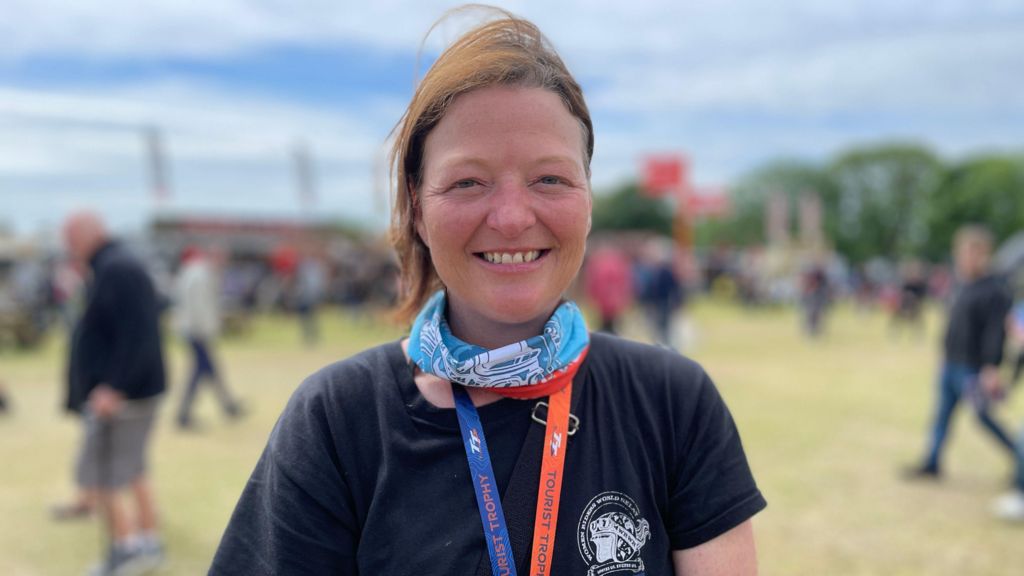
    For most motorsports fans, standing on the iconic Isle of Man TT course is a lifelong fantasy. For Melbourne-based rider Jodie Rogers, that dream became a tangible reality this year, after a 14-month solo expedition spanning 26,700 miles across 30 countries that tested her grit, adaptability and love of the open road.

    Rogers, who only picked up off-road motorcycling in 2023 and describes herself as a non-expert rider, set out from Australia in March of last year on her trusty Honda CRF. Her route took her across sweeping deserts, jagged mountain ranges, and remote international borders, winding through Southeast Asia, China, Central Asia, the Middle East, and eventually into Europe. When winter closed in, she stored her motorcycle in Ireland, then returned five weeks ago via Japan to resume her trek, with the legendary Isle of Man TT always marked as the primary destination on her itinerary.

    Along the way, Rogers faced a litany of unexpected challenges: mechanical failures that stranded her in remote regions, dangerous high-altitude passes, and forced campouts in far-from-ideal locations. One of her most memorable stops came on the Afghan-Tajik border, when floodwaters swallowed a river crossing and left her stuck between Taliban positions on one side and Tajik government forces on the other, with her bright green tent pitched squarely in the no-man’s land in between. Even amid that tension, Rogers took the incident in stride, noting that for every obstacle thrown her way, she has always found a way forward.

    Far from being a lonely slog, Rogers says her journey has been filled with human connection that transformed her worldview. After going through difficult personal experiences in the past, the trip restored her faith in humanity; she rarely feels isolated on the road, meeting kind, generous people at every stop along her route. Her first major overland trip, after cutting her teeth crossing Australia’s Simpson Desert, took her to Vietnam and the Indian Himalayas — and that experience sparked a desire to keep exploring beyond her home country’s borders.

    Now, after 244 days on the road before her winter break and weeks of additional travel to reach the Irish Sea island, Rogers says arriving at the TT still feels surreal. “I kind of can’t believe I’m actually here,” she said, describing the moment she stepped onto the island as a “pinch me” experience. The atmosphere at the event, she says, is nothing short of electric: the roar of superbikes screaming past, the wind tearing through your hair, the scent of fuel hanging in the air as riders shift through gears approaching tight corners is an exhilarating feeling that cannot be replicated anywhere else.

    During the TT’s two-week racing schedule, Rogers is camping in Onchan and is set to take part in the event’s Legacy Lap on May 31. But even after checking the Isle of Man TT off her bucket list, her global adventure is far from over. This entire expedition is just one phase of an ambitious seven-year plan that will see her ride through the rest of Europe, across Africa, throughout North and South America, and across New Zealand before she eventually returns to Australia. When asked what she plans to do after circling the entire globe on two wheels, the intrepid rider laughed and quipped, “I might have to go to the moon or something.”

  • Japan defence chief takes swipe at China at security meet

    Japan defence chief takes swipe at China at security meet

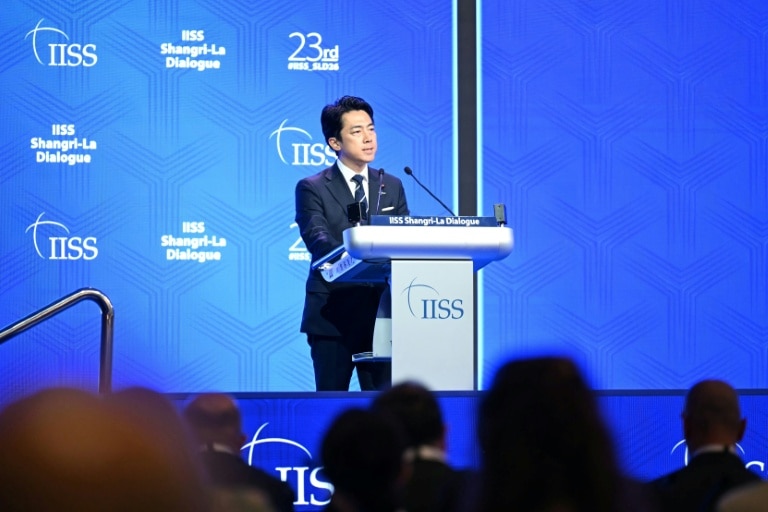
    Asia’s premier annual defence summit, the IISS Shangri-La Dialogue, kicked off in Singapore Sunday with sharp rhetorical friction between Japan and China, as Tokyo’s top defence official pushed back against Beijing’s accusations of rising Japanese militarism. Japan’s Defence Minister Shinjiro Koizumi used his platform at the closed-door, high-profile gathering to deliver a veiled rebuke of China, as Tokyo presses forward with a sweeping overhaul of its post-World War II security posture.

    Under current Prime Minister Sanae Takaichi, Japan has accelerated its shift toward a far more proactive defence policy, backed by long-standing U.S. encouragement to move away from the pacifist constitutional framework that has guided its military policy for nearly 80 years. This shift has drawn consistent and harsh criticism from Beijing, which has repeatedly labeled Tokyo’s evolving stance as a dangerous turn toward “new militarism” that threatens regional stability.

    Koizumi rejected these claims outright in his address. “Nothing could be further from the truth,” he told delegates, before framing a pointed comparison: “Think about it. There is a country that has a huge arsenal of nuclear weapons and strategic bombers. Japan has neither of such weapons. And yet, Japan is labelled ‘new militarism’. Isn’t it strange?” While he did not name China directly, the reference was clear to all in attendance. International defense estimates indicate China possesses hundreds of nuclear warheads and has undertaken a rapid, large-scale expansion of its military capabilities over the past two decades.

    Diplomatic tensions between the two major Asian powers have been elevated since last November, when Takaichi suggested Japan could take military action if China attempted to seize control of Taiwan, the self-governing island democracy that Beijing claims as an inalienable part of its territory. Koizumi doubled down on Tokyo’s concerns Sunday, arguing that China’s military buildup has proceeded “without sufficient transparency” and that its regional military activities represent “a matter of serious concern for Japan”.

    In contrast, Koizumi stressed that Japan’s own military modernization, which includes expanding capabilities in artificial intelligence, unmanned defense systems, cyber security, and space defense, is being carried out “with a high degree of transparency”. He added that Japan’s decades-long track record as a peace-loving nation is a proven fact recognized by the international community, and that “this fact will not be shaken by false claims”. Koizumi also noted he regretted that China had declined to send its top defense leadership to the summit, meaning no bilateral meeting between the two nations’ defense chiefs could be held this year. For the second consecutive Shangri-La Dialogue, China sent a lower-level, scaled-back delegation without its incumbent defense minister Dong Jun.

    Beyond his address, Koizumi held bilateral talks with Philippine Defense Secretary Gilberto Teodoro on Sunday, where the two allies confirmed plans to transfer retired Japanese Abukuma-class destroyers and TC-90 aircraft to the Philippines during Japan’s 2027 fiscal year. The Philippines has sought to acquire the decommissioned Japanese vessels for years, sending a military inspection team to review the ships in 2025.

    This defense cooperation comes amid deepening security ties between Tokyo and Manila, both of which have growing territorial and strategic disputes with Beijing in the South China Sea. The two leaders announced they would move forward with talks on intelligence sharing and open maritime border coordination — a step Beijing has already condemned as an illegal violation of its broad, contested territorial claims in the region.

    Teodoro echoed Koizumi’s criticism of Beijing in comments after the meeting, stressing that Manila would never compromise its territorial integrity and sovereignty, a commitment enshrined in the country’s constitution. He drew a sharp contrast between the Philippines’ democratic system and what he called “some autocratic systems where the mandate comes from above, dictated down.”

    Teodoro’s comments came as China’s People’s Liberation Army Southern Theater Command announced it had carried out new combat readiness patrols in the waters and airspace around Scarborough Shoal, a contested feature at the center of a years-long sovereignty dispute between Beijing and Manila. In its statement, the Chinese command called the patrols an “effective countermeasure to cope with all sorts of rights-violation and provocative acts” around the shoal, which it claims is an inherent part of Chinese territory.

    An international arbitration ruling issued in 2016 overwhelmingly rejected Beijing’s sweeping territorial claims to nearly the entire South China Sea, but Beijing has continued to ignore the ruling and expand its military and paramilitary presence in contested areas of the strategic waterway, through which trillions of dollars in global trade passes annually. The Shangri-La Dialogue, now in its 23rd year, brings together top security officials, defense leaders, and policy experts from more than 45 nations to discuss pressing regional security challenges.