标签: Oceania

大洋洲

  • Oil shock after Middle East tensions could force Reserve Bank to pause interest rates

    Oil shock after Middle East tensions could force Reserve Bank to pause interest rates

    Escalating geopolitical conflicts in the Middle East are creating a complex dilemma for Australia’s Reserve Bank, potentially forcing monetary policymakers to maintain current interest rates even as rising oil prices threaten to push inflation higher. The recent spike in crude prices to four-year highs has introduced unprecedented uncertainty into global energy markets, directly impacting Australia’s economic outlook.

    Financial experts reveal that while elevated oil prices typically drive inflationary pressures, they simultaneously function as an indirect tax on consumer spending that can precipitate economic slowdowns. This dual-effect phenomenon presents central bankers with contradictory signals when determining appropriate monetary policy responses.

    BetaShares Chief Economist David Bassanese emphasized that current Middle Eastern instability would likely prompt the RBA to adopt a wait-and-see approach. “The central bank would assess the macroeconomic effects, which present a mixed picture—inflation increases while economic activity decreases,” Bassanese explained. “This heightened uncertainty typically encourages policymakers to remain on the sidelines, increasing inertia in their decision-making process regardless of previous stances.”

    The RBA’s current official cash rate stands at 3.85% following a series of rate adjustments throughout 2025 and 2026. Earlier this year, economists had predicted further rate hikes, though consensus on timing remained divided, with some anticipating increases as early as May.

    AMP Chief Economist Shane Oliver provided historical context, noting that oil price surges have frequently preceded global economic downturns, including the mid-1970s recession, early 1980s contraction, and even the Global Financial Crisis. “While not necessarily the primary driver of these recessions,” Oliver observed, “energy price increases effectively function as a consumption tax that reduces disposable income and dampens economic activity.”

    Current oil markets have witnessed dramatic fluctuations, beginning 2026 at $56 per barrel before soaring to $75 following recent Middle Eastern conflicts—a 13% single-day surge. Oliver calculated that each $1 per barrel increase translates to approximately one cent per liter at Australian fuel pumps, meaning a return to $100+ oil prices could cost motorists an additional 40 cents per liter within days.

    Beyond direct impacts on transportation costs, sustained oil price increases would affect multiple sectors including aviation and logistics, creating broader inflationary effects throughout the economy. Although fuel directly accounts for approximately 3% of Australia’s inflation measurement, prolonged price elevations would generate significant indirect impacts that could reshape the RBA’s monetary policy trajectory in coming months.

  • CBS in turmoil as US media feels pressure under Trump

    CBS in turmoil as US media feels pressure under Trump

    A significant crisis is unfolding at CBS News as the renowned broadcast network experiences substantial internal upheaval following its acquisition by Paramount Skydance in mid-2025. The organization, once celebrated for its journalistic excellence under legendary figures like Walter Cronkite and Edward R. Murrow, now faces serious allegations of editorial interference that many insiders attribute to the influence of President Donald Trump’s administration.

    The situation escalated when CBS’s new leadership, headed by Trump ally David Ellison, appointed Bari Weiss—a known critic of progressive politics—as Editor in Chief. Weiss’s controversial decisions included abruptly pulling a scheduled report on the Trump administration’s immigration policies hours before broadcast, which later aired with substantial revisions. This move prompted widespread concern among journalists and triggered a wave of resignations, including top producers from the flagship ’60 Minutes’ program.

    Further controversy emerged when the network blocked Stephen Colbert from airing his interview with Texas Democrat James Talarico, who is challenging Republican Senator John Cornyn. The conflict reflects broader patterns of corporate media behavior, as noted by FCC commissioner Anna M. Gomez, who described these developments as ‘troubling examples of corporate capitulation’ to administrative pressure campaigns.

    Academic experts analyzing the situation suggest strategic motivations behind these changes. Victor Pickard, Professor of Media Policy at the University of Pennsylvania, indicated that CBS’s new approach primarily aims to ‘appease or curry favor with the Trump administration’ ahead of potential acquisitions, including the upcoming purchase of Warner Bros Discovery.

    The $16 million settlement Paramount paid regarding Trump’s complaints about CBS’s election coverage—described by Colbert as ‘a big fat bribe’—adds to concerns about financial influences on editorial independence. With CNN now facing similar ownership changes under Skydance, media analysts warn of reduced editorial diversity and increased alignment with administration-preferred narratives across major news networks.

    Christopher Terry, Professor at the University of Minnesota, emphasized the broader implications: ‘The real danger is the deals that follow because of this deal,’ suggesting this acquisition could inspire copycat megamergers that fundamentally reshape the American media landscape.

  • ‘Activist’: Angus Taylor snaps at journalist in Trump-like spray over ISIS brides

    ‘Activist’: Angus Taylor snaps at journalist in Trump-like spray over ISIS brides

    Australian Opposition Leader Angus Taylor engaged in a heated exchange with a journalist during a press conference addressing the controversial issue of repatriating citizens with ISIS connections. The confrontation occurred Monday following Taylor’s meeting with Nationals MP Michael McCormack and representatives of the persecuted Yazidi community.

    The political firestorm centers on the Coalition’s proposed legislation to criminalize assistance for 34 women and children seeking return to Australia after years in Syrian detention camps. These individuals are connected to ISIS fighters who traveled to support the terrorist organization in the Middle East.

    Taylor repeatedly characterized the group as ‘ISIS sympathizers’ during the briefing, emphasizing that one woman already faces temporary return restrictions. When pressed on whether this designation extended to children involved, the Opposition Leader maintained his position without qualification.

    The tension escalated when Saturday Paper journalist Jason Koutsoukis questioned why Syria should bear responsibility for Australian citizens. Taylor interrupted, referencing ISIS atrocities including mass genocide and murders of innocent people before challenging the reporter’s professional capacity: ‘Either you’re an activist or a journalist—you need to make up your mind which one you are.’

    The Coalition has consistently accused the federal government of facilitating the group’s return, allegations vigorously denied by Home Affairs Minister Tony Burke and Prime Minister Anthony Albanese. The controversy deepened with revelations that Burke associate Dr. Jamal Rifi is currently in Syria assisting the cohort, though Burke confirmed during Monday’s Question Time that their last communication occurred ‘many, many months’ ago.

    The parliamentary debate coincides with Save the Children’s expressed disappointment regarding Australia’s refusal to assist citizens in distress overseas, highlighting the complex humanitarian and security dimensions of this politically charged issue.

  • Israel hits Lebanon after Hezbollah fire, expanding Iran war

    Israel hits Lebanon after Hezbollah fire, expanding Iran war

    Israeli military forces initiated a significant escalation in hostilities with Hezbollah on Monday, launching targeted strikes across Lebanon, including the capital city of Beirut. This offensive action came in direct response to rocket and drone attacks launched by the Iranian-backed militant group against Israeli territory earlier that day.

    The Israeli Defense Forces confirmed they had ‘begun striking targets of the Hezbollah terrorist organization across Lebanon,’ with an AFP journalist documenting multiple powerful explosions resonating through Beirut. Military officials specified that their operations ‘precisely struck’ senior Hezbollah members both in the Beirut metropolitan area and in southern Lebanon, marking the most substantial military engagement since the November 2024 ceasefire agreement.

    Hezbollah, the Shiite Muslim political and military organization, claimed responsibility for the initial rocket barrage, characterizing it as retaliatory measure for the killing of Iranian Supreme Leader Ayatollah Ali Khamenei during coordinated US-Israeli strikes on Tehran over the weekend. The group’s leadership had previously established any attack against Khamenei as an unequivocal ‘red line’ that would necessitate military response.

    The escalation has triggered widespread evacuations throughout southern Lebanon and Beirut’s suburbs, with Israel issuing formal warnings to residents in approximately 50 towns and villages within Hezbollah strongholds. Army spokeswoman Ella Waweya urged civilians to ‘evacuate your homes immediately and move at least 1,000 metres away from your village to open areas’ for their safety.

    Lebanese Prime Minister Nawaf Salam condemned Hezbollah’s rocket fire as ‘irresponsible,’ asserting that such actions ‘endanger Lebanon’s security and safety, and gives Israel pretexts to continue its attacks.’ His government, which has historically advocated for Hezbollah’s disarmament, announced plans to convene an emergency meeting to address the crisis and implement protective measures for Lebanese citizens.

    The National News Agency of Lebanon reported substantial population displacement from conflict zones, with local media footage showing congested roadways as residents fled targeted areas. This development represents a dangerous expansion of regional tensions that originated with the October 2023 Hamas attack on Israel and subsequent military operations in Gaza.

  • Recognition, not competition, for Oscar-nominated foreign filmmakers

    Recognition, not competition, for Oscar-nominated foreign filmmakers

    The landscape of the Academy Awards is undergoing a profound transformation as foreign-language cinema moves from the periphery to the center stage of Hollywood’s most prestigious night. This year’s nominations underscore a significant shift, with two non-English films—Brazil’s ‘The Secret Agent’ and Norway’s ‘Sentimental Value’—competing for Best Picture, a category traditionally dominated by American productions.

    Joachim Trier’s Nordic family drama ‘Sentimental Value’ leads this charge with an extraordinary nine nominations, including Best Director and Best International Feature. For Trier, the recognition itself represents victory beyond competition. ‘It’s not about competition. It’s more about recognition. And I like that,’ the Danish-Norwegian director remarked. He attributes this inclusivity to the evolving diversity within the Academy’s voting body, noting that films succeed globally when they articulate universal personal emotions through intimate storytelling.

    This sentiment resonates across the international nominees. Franco-Spanish director Oliver Laxe, nominated for ‘Sirat,’ views the recognition as a collective triumph that validates artistic authenticity over conventional formulas. ‘I think nobody loses here. We all win,’ Laxe stated, emphasizing that audiences increasingly seek genuine individual sensitivity in cinema.

    From South America, Brazilian director Kleber Mendonca Filho expressed astonishment at the worldwide impact of his political thriller ‘The Secret Agent,’ which examines military dictatorship-era persecution. His wife and producer, Emilie Lesclaux, observed that the Oscars have evolved from an insular American ceremony to truly global recognition where powerful international films receive equal consideration.

    The political dimension of international cinema remains potent. Iranian director Jafar Panahi’s secretly filmed ‘It Was Just an Accident,’ representing France, uses its platform to highlight ongoing oppression in Iran, while Tunisian director Kaouther Ben Hania’s Gaza-set docudrama ‘The Voice of Hind Rajab’ transforms a Palestinian child’s tragedy into a global call for witness responsibility. Both demonstrate how international films are expanding the Oscars’ cultural and political conversations, creating what nominees describe as a ‘new normal’ in global cinema recognition.

  • ‘Better Call Ivan’: Ivan Cleary’s advice to the judiciary as Panthers coach shuts down revenge theory

    ‘Better Call Ivan’: Ivan Cleary’s advice to the judiciary as Panthers coach shuts down revenge theory

    Penrith Panthers coach Ivan Cleary has emphatically declared his retirement from legal advocacy duties following a successful judiciary appearance that overturned his son Nathan’s suspension. The four-time premiership-winning mentor temporarily swapped his coaching attire for formal wear last week, delivering a compelling defense that reduced a potential three-match ban to a mere fine.

    The contentious case centered on a tackle during a trial match that the match review committee had initially graded as warranting suspension. Cleary presented visual evidence demonstrating the absence of direct head contact, securing his halfback’s availability for the season opener against Brisbane.

    Expressing frustration with the judicial process, Cleary criticized the system’s inherent flaws, particularly the risk-reward calculation that forces clubs to weigh challenging incorrect decisions against potential extended bans. ‘It was quite a big thing – either no weeks or three weeks for something that was pretty clearly a grade one,’ Cleary remarked, highlighting the disproportionate consequences clubs face.

    The veteran coach specifically questioned the match review committee’s assessment capabilities, suggesting technological upgrades might be necessary for proper incident evaluation. He advocated for greater understanding toward players’ timing in trial matches and expressed satisfaction with the hearing’s eventual outcome despite his reservations about the process.

    With Nathan Cleary now available for selection, the Panthers turn their attention to Friday’s season opener against the Broncos – a rematch of last year’s grand final that ended Penrith’s premiership streak. Cleary dismissed revenge narratives, instead expressing confidence in his squad’s competitive readiness for the 2026 campaign.

    ‘I feel like we’re going to be really competitive,’ Cleary stated, acknowledging the uncertainty of early season form while maintaining optimism about his team’s championship credentials.

  • Infantino says players who cover mouths when speaking could be sent off

    Infantino says players who cover mouths when speaking could be sent off

    FIFA President Gianni Infantino has proposed a significant shift in football’s disciplinary approach, suggesting that players who cover their mouths during on-field conversations could face immediate red cards. This radical proposal emerges amid ongoing investigations into racial abuse allegations involving Benfica’s Gianluca Prestianni and Real Madrid’s Vinícius Júnior.

    The controversial incident occurred during a recent Champions League match where Prestianni was accused of racially abusing the Brazilian forward while concealing his mouth with his shirt. This case has prompted football’s governing bodies to reconsider how such concealed interactions are handled in professional play.

    Infantino articulated his position clearly at Saturday’s International Football Association Board (IFAB) meeting, stating: ‘When a player obscures his mouth and makes remarks with racist consequences, the obvious outcome must be immediate dismissal. The very act of concealment creates a presumption of wrongdoing—why would one hide their words if they had nothing to conceal?’

    The FIFA president’s comments signal a potential paradigm shift in how football authorities address on-pitch communications. Infantino emphasized that mouth-covering actions fundamentally undermine the spirit of transparency in football, suggesting that such behavior inherently indicates the speaker has something inappropriate to hide.

    Looking ahead to next month’s FIFA Congress in Vancouver, Infantino revealed that governing bodies may implement specific measures to prevent mouth-covering at this year’s World Cup tournaments. Additionally, he proposed a novel approach to disciplinary measures, suggesting that players who publicly apologize for racist behavior might receive reduced sanctions compared to those who do not.

    While Prestianni maintains his innocence regarding the racial abuse allegations, he has been provisionally suspended from Champions League play pending UEFA’s investigation outcome. If found guilty, the Argentine player could face a substantial 10-match ban, highlighting the serious consequences players face for discriminatory behavior on the pitch.

  • 17 killed at pro-Iran protests across Pakistan

    17 killed at pro-Iran protests across Pakistan

    Pakistan witnessed violent nationwide demonstrations on Sunday as protests erupted over the killing of Iran’s Supreme Leader Ayatollah Ali Khamenei in US-Israel strikes, resulting in at least 17 fatalities and numerous injuries across multiple cities.

    In Karachi, hundreds of pro-Iranian protesters attempted to storm the US consulate, leading to intense clashes with security forces. Medical authorities confirmed at least 10 deaths and over 70 injuries in the city, with hospital records indicating many victims suffered fatal gunshot wounds. AFP journalists witnessed demonstrators scaling the consulate’s main gate, smashing windows before police dispersed crowds with tear gas.

    The northern city of Gilgit experienced similarly deadly confrontations, where rescue official Zaheer Shah reported at least seven fatalities and multiple injuries during protests. In the capital Islamabad, thousands gathered bearing images of the deceased Iranian leader, prompting security forces to deploy tear gas and audible gunfire to control crowds near US diplomatic compounds.

    Prime Minister Shehbaz Sharif condemned Khamenei’s killing as a ‘violation of international law,’ stating on social media platform X that ‘Heads of State/Government should not be targeted.’ While expressing solidarity with Iran, Sharif’s statements notably characterized the offensive as an Israeli operation, omitting significant US involvement.

    The protests revealed deep anti-American sentiment among demonstrators. ‘We don’t need anything in Pakistan that is linked with the US,’ protester Sabir Hussain told AFP. Another participant, Zahra Mumtaz, accused Pakistani leadership of being ‘stooges of the Americans’ while demanding the right to grieve openly.

    The violence extended to international organizations as protesters in Skardu stormed and set fire to a United Nations office, with nearby vehicles completely burned according to AFP correspondents. The US and British embassies subsequently issued security alerts urging citizens to exercise extreme caution throughout Pakistan.

  • Maersk suspends vessel transit through Strait of Hormuz

    Maersk suspends vessel transit through Strait of Hormuz

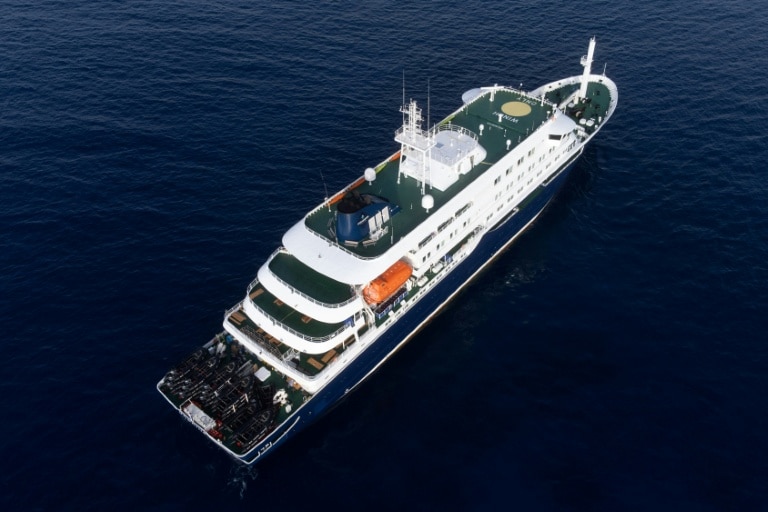
    In a significant escalation of maritime security concerns, global shipping giant Maersk has suspended all vessel transits through the strategically vital Strait of Hormuz and the Bab el-Mandeb Strait leading to the Suez Canal. The Danish container shipping company announced the precautionary measure Sunday following declarations from Iran’s Revolutionary Guards that the strait was closed and multiple security incidents reported in the region.

    The decision comes as part of a broader industry response to heightened risks, with Maersk stating that ‘the safety of our crews, vessels and customers’ cargo remains our key priority.’ The company has implemented rerouting strategies that will send vessels around the Cape of Good Hope at Africa’s southern tip, adding substantial distance and time to traditional shipping routes between Europe and Asia.

    Simultaneously, Maersk has temporarily closed its regional offices in the United Arab Emirates, Qatar, and Oman as a security precaution. The shipping conglomerate joins other major industry players including MSC, Hapag-Lloyd, and CMA CGM in implementing similar safety measures across the affected waterways.

    The security situation intensified Sunday with reports from Omani state media indicating an oil tanker off its coast had been targeted, resulting in injuries to four crew members. Separately, the United Kingdom Maritime Trade Operations Centre documented another vessel near the UAE coast reporting impact ‘by an unknown projectile causing a fire.’

    International Maritime Organization Secretary-General Arsenio Dominguez issued a statement urging ‘maximum caution’ among shipping companies and recommending vessels avoid the affected region ‘until conditions improve.’ The collective industry response underscores the critical nature of these waterways, with the Strait of Hormuz alone facilitating nearly a quarter of global seaborne oil shipments alongside substantial commercial cargo volumes.

  • Capital city property prices defy RBA as median value soars

    Capital city property prices defy RBA as median value soars

    Australia’s capital city housing market has achieved an unprecedented milestone, with the median house price exceeding $1 million for the first time in February. This remarkable surge occurred despite the Reserve Bank of Australia’s recent decision to implement a 25 basis point interest rate increase, bringing the official cash rate to 3.85%.

    According to the latest PropTrack data analysis, capital city house prices experienced a 0.5% monthly increase, pushing the national median to a record $1,004,000. The market demonstrated broad-based strength with every capital city registering price growth during February.

    Hobart emerged as the standout performer with a robust 1% monthly increase, reaching a median price of $718,000. Brisbane and Adelaide followed closely, both recording 0.7% gains. Brisbane’s annual performance has been particularly impressive, with prices surging $153,500 over the past year to establish a new median of $1,046,000. Adelaide similarly appreciated by $118,600 to reach $929,000.

    Major markets Sydney and Melbourne maintained steady growth with increases of 0.5% and 0.3% respectively. Sydney’s median house price now stands at $1,255,000. Regional markets outperformed capital cities with a 0.6% monthly increase and a striking 10.5% annual growth rate, continuing a five-year trend of regional outperformance.

    REA Group senior economist Eleanor Creagh noted that the national increase represents the fastest annual pace of growth since June 2022. She highlighted Hobart’s reacceleration, attributing it to significantly reduced market inventory, with total stock down approximately 30% over the past year.

    The market dynamics show an interesting shift, with capital city unit growth outperforming houses both quarterly and annually across most markets, indicating buyer preference for more affordable options amid rising interest rates.