标签: Oceania

大洋洲

  • Artemis astronauts hours away from high-stakes re-entry

    Artemis astronauts hours away from high-stakes re-entry

    As the clock ticks down to the final, most dangerous phase of their groundbreaking 10-day lunar flyby mission, the four crew members of NASA’s Artemis II mission have entered the final hours of preparation for re-entry and splashdown off the California coast. What began as a historic voyage that pushed human spaceflight further from Earth than ever before now hangs on the successful completion of a step that has carried extraordinary risk for the program, dating back to its first uncrewed test flight in 2022.

    The international crew — NASA astronauts Reid Wiseman, Victor Glover, and Christina Koch, alongside Canadian Space Agency astronaut Jeremy Hansen — has already notched a series of historic firsts during their journey beyond low-Earth orbit. Glover became the first person of color to circumnavigate the Moon, Koch the first woman, and Hansen the first non-American to take part in a lunar flyby mission. Over the past week and a half, the team has captured breathtaking new images of the lunar surface, witnessed a rare Earth-viewed solar eclipse from their vantage point, and shared vivid, awe-inspiring accounts of our planet’s place in the cosmos that have captured public attention across the globe.

    Mission commander Wiseman summed up the crew’s core hope for the voyage in reflective remarks shared mid-mission: “What we really hoped in our soul is that we could, for just a moment, have the world pause — and remember that this is a beautiful planet in a very special place in our universe. We should all cherish what we have been gifted.”

    Now, all eyes turn to the scheduled splashdown set for 5:07 pm local time in the Pacific Ocean, roughly 90 miles off the coast of San Diego. After the capsule lands, joint teams from NASA and the U.S. military will extract the astronauts from the Orion spacecraft and transport them to a waiting recovery ship for initial medical checks. To mark the crew’s final day in space ahead of return, NASA mission control woke the astronauts Friday to a curated playlist featuring Live’s “Run to the Water” and Zac Brown Band’s “Free.”

    While the mission has already achieved nearly all of its test and exploration objectives, senior NASA officials emphasize that no mission success can be declared until the crew is safely back on Earth. “When we can start celebrating is when we have a crew safely in the medbay of the ship,” NASA Associate Administrator Amit Kshatriya told reporters during a Thursday briefing. “That’s really when we can allow the emotions to take over, and, you know, start talking about success. We need to have the crew home before we do that.”

    The high stakes of the re-entry phase stem from unresolved concerns surrounding the Orion capsule’s critical heat shield, first uncovered during the 2022 Artemis I uncrewed test flight. During that mission, the heat shield experienced unexpected excessive erosion during its return through Earth’s atmosphere. The heat shield is designed to slowly ablate, or burn away, to dissipate the extreme heat generated during re-entry: the capsule will hit Earth’s atmosphere at speeds approaching Mach 35, generating searing surface temperatures around 2,700 degrees Celsius — roughly half the temperature of the Sun’s surface.

    NASA engineers have confirmed that even with the unexpected erosion seen on Artemis I, a crew would have survived the return. Still, the agency has adjusted the re-entry trajectory for Artemis II to reduce risk, after determining the shallower flight path used in the uncrewed test contributed to the abnormal erosion. The new trajectory is steeper and shorter, a change the Artemis II crew has reviewed and approved, with Kshatriya noting the team is comfortable with the adjusted plan.

    “We have high confidence in the system and the heat shield and the parachutes and the recovery systems we put together,” Kshatriya said. “The engineering supports it, the Artemis I flight data supports it. All of our ground test supports it. Our analysis supports it. The crew is going to put their lives behind that confidence.”

    Still, the lingering questions around the heat shield have drawn uncomfortable public comparisons to the 1986 Challenger and 2003 Columbia space shuttle disasters, both of which claimed the lives of entire crews after known safety risks were overlooked ahead of flight. When asked about ongoing concerns among ground teams, Kshatriya acknowledged unavoidable anxiety, but stressed that all rational risks have been addressed. “It’s impossible to say you don’t have any irrational fears left,” he said. “But I would tell you, I don’t have any rational fears about what’s going to happen.”

    As the world waits for the capsule’s return, family members of the four astronauts have gathered at NASA’s Mission Control Center in Houston to watch the final phase of the mission unfold. Catherine Hansen, wife of Canadian astronaut Jeremy Hansen, described the week as a rollercoaster of conflicting emotions in an interview with Agence France-Presse. “It has been a very emotional week,” she said. “There’s been a lot of happiness and excitement, a lot of joy, but also some anxiety and some wanting to get him home safely.”

    For the Artemis program as a whole, the success of Artemis II is a critical prerequisite for the next phase of NASA’s goal to return humans to the lunar surface for the first time since the Apollo program ended in 1972. This mission serves as the final crewed test of the Orion capsule, proving the spacecraft can safely carry humans to lunar orbit and back before the Artemis III mission that will land the first woman and person of color on the Moon.

  • US inflation surges to 3.3% as Iran war impact bites

    US inflation surges to 3.3% as Iran war impact bites

    New government data released Wednesday has confirmed a sharp acceleration in United States inflation for March, driven by skyrocketing energy costs stemming from ongoing conflict between Iran and a US-Israeli military coalition. The sudden price surge has piled political pressure on the Trump administration, just months ahead of November’s critical midterm elections, as Washington pursues new peace talks with Tehran.

    The US Bureau of Labor Statistics (BLS) reported that annual inflation reached 3.3% in March, a notable jump from the 2.4% year-on-year reading recorded in February. Most striking was the unprecedented leap in gasoline prices: between February and March, pump prices surged 21.2%, marking the largest single-month increase since the agency started tracking this metric in 1967. For American drivers, the impact is immediate: the national average price for a gallon of regular gasoline now stands at $4.15, up from roughly $3 before the outbreak of hostilities in late February. Even as the world’s top crude oil producer, the US has not escaped the market shock of disrupted global energy supplies.

    The conflict traces back to February 28, when US and Israeli forces launched airstrikes on Iran. In retaliation, Tehran blocked shipping traffic through the Strait of Hormuz, the strategic global waterway that carries roughly one-fifth of the world’s daily oil and gas trade. While financial markets had largely anticipated this inflationary spike, per consensus forecasts published by MarketWatch, the long-term economic outlook remains deeply uncertain amid ongoing violence.

    Administration officials have sought to downplay concerns, framing the price disruptions as a temporary side effect of the conflict. White House spokesperson Kush Desai emphasized that the US economy “remains on a solid trajectory” in comments following the data release. Top economic advisor Kevin Hassett highlighted small wins for the administration during a Fox News appearance, pointing to falling prices for eggs, beef, and concert tickets. Ahead of upcoming US-Iran peace talks set to take place this weekend in Pakistan, Vice President JD Vance said he was optimistic for a “positive” outcome from the negotiations.

    However, independent economists warn that more financial strain is on the horizon, particularly for low- and middle-income households already stretched thin by rising living costs. Heather Long, chief economist at Navy Federal Credit Union, noted that March’s inflation rate is the highest the US has seen in nearly two years. “This is only the beginning. Food prices, travel and shipping costs are all going up in April and will exacerbate the pain,” Long said. Christopher Low, senior analyst at FHN Financial, added that the failure of both sides to uphold an announced ceasefire has kept the Strait of Hormuz largely blocked, extending the energy market disruption. “There’s still very little traffic through the Strait of Hormuz,” Low told AFP.

    Independent estimates suggest the sustained oil price increase will cost the average US household at least $350 in additional annual expenses. Consumer sentiment has already taken a hit, with a closely watched University of Michigan survey recording an 11% drop in consumer confidence this month. Federal Reserve Chairman Jerome Powell warned in mid-March that the conflict would likely slow the central bank’s work to bring inflation back to its long-term 2% target – a goal the Fed has missed for five consecutive years, due to lingering post-Covid supply chain disruptions, the ongoing war in Ukraine, and international trade tariffs.

  • On Iran truce, all sides want bigger China role, but does China?

    On Iran truce, all sides want bigger China role, but does China?

    For nearly a century, Washington has positioned itself as the unchallenged guardian of regional stability across the Middle East, building deep military alliances with both Israel and Gulf Arab monarchies while consistently sidelining Beijing’s ambitions to play a larger diplomatic and security role in the strategically critical region. That long-held narrative of a US-led regional order has recently been fractured by the cross-border escalation between Israel, the United States and Iran, which has upended long-held assumptions about deterrence in the Gulf. Far from being cowed by Washington’s persistent military deployment in the region, Tehran launched retaliatory strikes against Gulf Arab states that had long been viewed as secure under US security umbrella, directly exposing the gaps in the decades-old US-led framework.

    In the moments before a devastating escalation, China played a quiet but pivotal part in pulling the region back from the brink of all-out war. Yet in a striking paradox, Beijing has refused to claim credit for its diplomatic intervention, a choice that experts trace to careful strategic calculation: Beijing judges that deeper, more public involvement in Middle East security carries major risks, while the current post-escalation status quo — where US influence appears weakened but Washington remains committed to shouldering the burden of Gulf security — already serves China’s core interests.

    Former US President Donald Trump, in an interview with Agence France-Presse, credited Chinese diplomatic pressure for pushing Iran to agree to the two-week ceasefire, a breakthrough that came barely an hour before Trump’s public threat to obliterate Iranian infrastructure and cultural sites was set to take effect. This account was independently corroborated by a senior Pakistani government official, who told reporters that Chinese negotiators stepped in to convince Iranian leadership to accept the truce at a moment when international hopes for a de-escalation were all but gone.

    Despite these accounts from third parties, Beijing’s own public statements on the ceasefire have been deliberately muted. Chinese officials have confirmed their support for the truce but have made no effort to highlight or celebrate their own diplomatic work behind the scenes.

    Yun Sun, director of the China Program at the Washington-based Stimson Center, noted that this low-key approach is unusual for Chinese diplomacy, and suggested that Iran may have deliberately framed China as the key peace broker for strategic purposes. “Iran has singled out China as a potential security guarantor so there is an incentive on the part of Iran in presenting the optics of China playing an oversized role, in the hope that China would then be accountable for the implementation of the ceasefire,” she explained. “China doesn’t provide security guarantees and how do you even try to guarantee something with President Trump? It would just create problems for China down the road,” she added.

    Diplomatic moves continue this week, with US Vice President JD Vance set to open talks with Iranian officials in Pakistan on Saturday. Pakistan maintains close bilateral ties with China, and has actively courted the Trump administration in recent months, in large part to seek US backing in its ongoing territorial and diplomatic disputes with India.

    Liu Pengyu, spokesperson for the Chinese Embassy in Washington, struck a careful balance in his official comment, saying that China “welcomes all efforts conducive to peace and supports Pakistan in actively undertaking mediation.” He added, “As a responsible major power, China will continue to play a constructive role and make efforts to de-escalate tensions and quell the conflict.”

    Beyond diplomacy, China holds extensive economic stakes across the Middle East. As the world’s second-largest economy, China draws roughly half of its total oil imports from the region, though it has gradually reduced this reliance in recent years through rapid expansion of renewable energy capacity. Beijing has also been the most prominent country defying longstanding unilateral US sanctions on Iranian oil exports, and it stands to gain additional economic advantages after Tehran consolidated its control over the Strait of Hormuz, the critical chokepoint through which a fifth of global oil supplies pass daily.

    This is not Beijing’s first major diplomatic breakthrough in the region: in 2023, Iran and Saudi Arabia announced the restoration of full diplomatic relations during talks hosted in Beijing, a deal that the Biden administration at the time deliberately downplayed to minimize China’s diplomatic influence.

    One senior regional diplomat based in the Gulf summed up Beijing’s approach, saying, “China’s strategy in the Middle East has been masterful. It has dominated business and never fired a single bullet, but with the changes in the region it knows it needs a political element.”

    Lyle Morris, a senior fellow at the Asia Society Policy Institute’s Center for China Analysis, noted that Trump’s decision to credit China for the ceasefire may also be rooted in his own diplomatic agenda. Morris suggested Trump may be seeking to improve bilateral goodwill ahead of his planned visit to Beijing next month, where he intends to push for concessions on trade and other key issues. Still, Morris emphasized that Beijing ultimately has far fewer core stakes in the conflict than the United States, Iran, Israel and the Gulf states. “China’s not a primary actor here,” Morris said. “Ultimately, it’s a supporting role, just by the nature of their capacity and their stakes in the conflict.”

    Even as Beijing regularly criticizes US global military dominance, it has almost no history of large-scale military deployments outside of Asia, and few analysts expect it to seek to directly replace the US security presence in the Middle East. Henry Tugendhat, a fellow at the Washington Institute for Near East Policy who focuses on China’s regional role, pointed out that Beijing’s top military priority remains focusing its forces near the South China Sea and Taiwan, the self-governing democracy that China claims as its own territory.

    “At the end of the day, China’s greatest interest in the region is simply stability for the economic relations it seeks to foster with the region,” Tugendhat said. “So it may yet accept a return to US security guarantees as their least bad option but that also depends on what’s negotiated by all parties at the conclusion of this conflict.”

  • Scheffler, Rose to chase McIlroy with early Masters starts

    Scheffler, Rose to chase McIlroy with early Masters starts

    As the second round of the 90th Masters Tournament gets underway at Augusta National Golf Club on Friday, early-morning tee times have handed world number one Scottie Scheffler and British veteran Justin Rose a golden opportunity to close the gap on overnight co-leaders Rory McIlroy and Sam Burns.

    Defending champion McIlroy, who is bidding to become just the fourth golfer in history to claim back-to-back Masters titles, carded an impressive five-under-par 67 in his opening round alongside Burns, sharing the top spot on the leaderboard after 18 holes of play. Despite finding only five of 14 fairways — and just one on the front nine — the five-time major winner pulled off a series of sensational recovery shots from tree-lined rough that would have drawn praise from Spanish Masters legend Seve Ballesteros, securing his second-best opening round at the tournament. “The first seven holes were really important, that I played them in par,” McIlroy said of his opening round. “I made some good swings from where I found myself.”

    For Burns, who held the 54-hole lead at last year’s U.S. Open, the opening 67 marked his lowest career round at Augusta in 13 appearances, achieved even as the tournament’s iconic greens ran firm and fast. “They’re only going to get firmer,” Burns warned of the conditions. “As the golf course speeds up, it only gets more difficult out there, and I think it’s going to be a really good test.”

    Behind the leading pair, 2014 champion Patrick Reed, American Kurt Kitayama and Australian Jason Day all tied for third at two-under-par 69. Like McIlroy and Burns, all three will tee off in Friday’s afternoon wave, when the baked-out course is expected to become even more challenging.

    That leaves the first half of Friday’s draw to two of golf’s biggest names hungry to climb the leaderboard: 2013 U.S. Open champion Justin Rose — a three-time Masters runner-up who lost a playoff to McIlroy for the green jacket last year — and four-time major winner Scheffler, who is chasing a third Masters title in five seasons. Both are three strokes off the lead in a group of players tied at one-under 70, which also includes later starters Shane Lowry, the 2019 British Open champion from Ireland, and two-time major winner Xander Schauffele, who is still seeking his first Masters title.

    Scheffler, who won the Masters in 2022 and 2024, got off to a blistering start in his opening round with an eagle on the par-five second hole followed by a birdie on the par-four third. But as afternoon temperatures climbed and greens hardened further, he could not add more low scores, settling for pars on the par-five 13th and 15th holes. He is optimistic his early Friday tee time will bring more favorable conditions. “I played pretty solid. A lot of good stuff,” Scheffler said. “I hit it nice, made some good iron shots, but it got so firm late in the day, it was pretty challenging.”

    Rose, meanwhile, notched five birdies in his opening round, with four coming on Augusta’s famous par-five holes, but slipped back from the leading pack with back-to-back bogeys to close out his round. The 44-year-old veteran leaned into his years of experience at Augusta, emphasizing that patience is the key to navigating the brutal current conditions. “Every hole you’re just being patient through experience, knowing that grinding out the pars is a good thing,” Rose said. “Just eating up the holes is a good thing.”

    The tough opening conditions have already derailed the title hopes of several big names, who are at risk of missing the cut for the final two rounds, which goes to the top 50 players and ties. Two-time major champion Jon Rahm of Spain sat well outside the cut line after an opening 78, while two-time U.S. Open winner Bryson DeChambeau carded a 76, and Scotland’s Robert MacIntyre shot an 80.

    Rose added that the current rock-hard, lightning-fast greens test more than just shot-making — they demand strategic caution from every competitor. “I can’t even point to anywhere where you can be aggressive,” he said. “I think it’s in their control really how they want it to be… when it gets completely rock hard and you can’t access any pin anywhere, then a lot of good shot-making is taken out of the equation.”

  • US-Iran talks in Pakistan uncertain as sides trade accusations

    US-Iran talks in Pakistan uncertain as sides trade accusations

    Just days before scheduled high-stakes peace negotiations between the United States and Iran were set to kick off in Pakistan’s capital Islamabad, the entire process hangs in the balance, as both sides have traded sharp accusations over violations of a fragile two-week ceasefire that was meant to pave the way for a permanent end to their deadly conflict. As of Friday, no official confirmation had been released regarding the arrival of negotiating delegations, leaving regional observers and global markets bracing for potential renewed escalation.

    The temporary truce, negotiated to create space for dialogue aimed at ending a conflict that has already claimed thousands of lives and sent shockwaves through the global economy, has been fraying almost from its inception. US President Donald Trump has openly criticized Iran’s management of the strategic Strait of Hormuz, a critical global energy chokepoint that was supposed to be fully reopened under the terms of the ceasefire deal. Data from shipping trackers shows only a tiny fraction of the usual volume of vessels have transited the waterway since the truce was announced, despite the fact that roughly 20% of the world’s daily oil supply, alongside massive volumes of natural gas and fertilizer, normally passes through the strait in peacetime.

    In a series of social media posts Thursday that reignited fears the truce could collapse entirely, Trump accused Iran of doing a “very poor job” of upholding its ceasefire obligations and blocking energy shipments through the strait. On the Iranian side, officials have reacted with fury to intense Israeli airstrikes in Lebanon, carried out just 48 hours after the truce went into effect. Tehran insists that the Lebanese front falls within the scope of the agreed ceasefire, a claim Washington explicitly rejects. Iran’s foreign ministry spokesman Esmaeil Baqaei has framed Iran’s participation in the Islamabad talks as conditional on the US forcing an immediate halt to Israeli attacks on Lebanon, stating: “The holding of talks to end the war is dependent on the US adhering to its ceasefire commitments on all fronts, especially in Lebanon.” Senior Iranian officials have even gone so far as to label the planned negotiations “meaningless” if the strikes continue, though Iran’s powerful Revolutionary Guards has reaffirmed its commitment to the truce, telling state broadcaster that it has not launched any offensive operations against any nation.

    Adding to the growing cloud of uncertainty, Iran’s ambassador to Pakistan deleted a social media post Thursday that had originally announced an Iranian delegation would arrive in the country that same day. Despite the open disputes, Pakistani authorities have continued moving forward with logistical preparations for the talks, which official sources confirm will cover a range of highly sensitive topics, including Iran’s nuclear enrichment program and guaranteed unimpeded trade through the Strait of Hormuz.

    For its part, the US delegation is still scheduled to arrive this weekend, led by Vice President JD Vance, with special envoy Steve Witkoff and Trump’s son-in-law Jared Kushner also in attendance.

    Pakistan’s role as a neutral mediator has already been thrown into question by a controversial remark from its top defense official. On Thursday evening, Defence Minister Khawaja Asif posted a statement labeling Israel a “cancerous state” and “a curse for humanity” amid the Lebanese strikes, a post that was removed several hours later. The Israeli prime minister’s office condemned the comments as “outrageous”, saying the remarks could not be tolerated from a country claiming to act as a neutral peace broker. Pakistan does not formally recognize the state of Israel, and has repeatedly insisted that the ceasefire agreed for the US-Iran talks must include the Lebanese front, a position that puts it at odds with Washington.

    Public opinion inside Iran remains deeply divided and skeptical of the negotiations’ outcome. A 30-year-old Tehran resident, speaking to AFP on condition of anonymity for security reasons, dismissed most of Trump’s public statements as “pure noise and nonsense”, arguing that the US president was only seeking to manipulate the Iranian government into accepting a one-sided deal. Another Tehran local, Sheida (who also withheld her last name over safety concerns), summed up the widespread anxiety gripping the country: “I am scared of the war starting again, and at the same time I’m scared of the regime staying.”

    Parallel to the planned Islamabad talks, separate negotiations are being arranged to address the ongoing conflict on the Lebanese front, after Israel carried out its heaviest bombardment of Lebanese territory since Iran-backed Hezbollah entered the war on Wednesday, killing more than 300 people. Early Friday, Hezbollah announced it had carried out fresh drone and rocket strikes targeting Israeli military positions along the bilateral border and a town in northern Israel, triggering air raid sirens across Tel Aviv and other parts of the country. Trump has claimed that Israeli Prime Minister Benjamin Netanyahu assured him strikes would be scaled back to “low-key” operations after the international backlash, and a Western diplomat speaking anonymously confirmed that European nations, Gulf Arab states and Egypt have all placed heavy pressure on Israel to hold off on further large-scale airstrikes in the Lebanese capital Beirut following what observers have dubbed “Black Wednesday”. As of Friday morning, the Israeli military had not followed through on prior warnings of widespread strikes in southern Beirut.

    Washington has confirmed that it will host separate talks next week focused exclusively on ceasefire negotiations between Israel and Lebanon, a plan that aligns with the US position that the Lebanese front should be handled separately from US-Iran negotiations. The US announcement came shortly after Netanyahu ordered Israeli ministers to pursue direct dialogue with the Lebanese government focused on disarming Hezbollah. Neither the Israeli government nor Lebanon’s caretaker administration has publicly confirmed the planned talks, while a Lebanese official told AFP that Beirut will not enter any negotiations before a formal truce takes effect across the border.

  • War in the Middle East: latest developments

    War in the Middle East: latest developments

    Just nine minutes ago, Agence France-Presse released a comprehensive update on the rapidly evolving conflict across the Middle East, bringing together multiple overlapping developments that are shifting regional security and global energy markets.

  • Australian man dies after being found unconscious on balcony at a Bali hotel

    Australian man dies after being found unconscious on balcony at a Bali hotel

    A 30-year-old Australian tourist has died in Bali, Indonesia after his girlfriend found him unconscious on their accommodation’s balcony, triggering an ongoing official investigation into the unexpected death. The incident unfolded early Wednesday morning in the popular coastal resort area of Seminyak, with the girlfriend locating the unresponsive man at approximately 4:15 a.m. immediately after discovering him, she alerted hotel management and emergency response teams.

    According to official statements from Gede ADI Saputra Jaya, a public spokesman for the Denpasar Police Department, first responders confirmed the victim was still breathing when they arrived at the hotel to render aid. “He was unconscious when taken to Siloam hospital,” Jaya confirmed to local media outlets. Despite emergency medical intervention, the Australian man passed away several hours after being admitted to the hospital.

    Investigators have outlined key timeline details from the night preceding the death: the couple had spent the evening at a local bar, returned to their hotel around 1:30 a.m., and engaged in a verbal argument. Following the disagreement, the man told his girlfriend he would sleep on the open balcony, a choice that preceded the morning’s emergency discovery.

    As of press time, law enforcement teams have not announced a confirmed cause of death, with the spokesperson noting that officers are still conducting a thorough investigation into the circumstances surrounding the incident. Australia’s Department of Foreign Affairs and Trade has been contacted by media outlets seeking comment on the case, and has not yet released an official statement.

  • Judge dismisses claim Adelaide woman tried to mow down boyfriend in alleged row over hot chip

    Judge dismisses claim Adelaide woman tried to mow down boyfriend in alleged row over hot chip

    A highly unusual criminal case out of South Australia, which gained viral attention for its alleged connection to a fight over a single hot chip, has concluded with the accused woman walking free from court after the most serious charge against her was dismissed.

    Charlotte Harrison, 36, faced one count of dangerous driving endangering life, a felony charge that carried significant potential prison time, connected to a February 2023 incident on Melbourne Street in North Adelaide. The case had been winding through the South Australian legal system for more than three years before reaching its conclusion at Adelaide’s District Court on Friday.

    According to Harrison’s former partner Matthew Finn, the confrontation began when he asked to eat Harrison’s last hot chip from a takeaway chicken order, triggering a heated argument that escalated into dangerous driving. That widely shared narrative never made it into the official court proceedings, however, with no mention of the salty snack during Harrison’s trial.

    After reviewing CCTV footage of the crash, Judge Paul Muscat rejected the claim that Harrison’s driving rose to the level of endangering life, openly scoffing at the prosecution’s framing of the incident. “I do not believe that is driving in a manner that is so dangerous it could cause fear or intimidation to others,” the judge told the court. “It is more typical of driving without due care and attention.”

    Harrison entered guilty pleas to two lesser misdemeanor charges: reckless and dangerous driving. The more serious charge of driving endangering life was formally dismissed by the court.

    In his sentencing ruling, Judge Muscat found that Harrison had already served more than enough time in punishment for her offenses. The court confirmed Harrison had already spent nine days in custody on remand and 23 days on home detention following her arrest, a period the judge said exceeded any appropriate sentence for the two minor convictions. As a result, Judge Muscat convicted Harrison on the two counts but imposed no additional fines, prison time, or other penalties.

    Speaking to reporters outside the courtroom after the ruling, Harrison pushed back hard on the viral narrative about the hot chip dispute. “There was never any chips and I never intended to harm or hurt anybody,” she said. Harrison confirmed she had driven recklessly, reversing her vehicle into another car before colliding with a power box, and accepted responsibility for that driving offense. “I drove in a manner that was reckless, reversed into a Yaris,” she told reporters.

    Harrison added that the three-year legal process had been a major burden, and she was relieved to have the case resolved to move forward with her life. “I feel really relieved to have all that behind me, it has been quite a journey,” she said. “I understand the elements of the charge, it was a driving offence, but the narrative that Mr Finn played up did not really play to it. I wanted to resolve this so I could move on with my life.”

    She also offered an apology to bystanders who witnessed the 2023 incident. “I am sorry to anyone that witnessed the event that day,” she said. In a lighthearted comment to reporters, she added, “Thank you for the soap that I got when I was on remand.”

    The case laid bare how sensational salacious details can overshadow the actual facts of a criminal incident, with the hot chip claim turning a routine reckless driving case into a viral news story. Harrison’s acquittal on the serious charge confirms that the court found no evidence to support the claim that she intended to harm her former partner by attempting to run him over.

  • Man attacks ‘close friend’ with samurai sword

    Man attacks ‘close friend’ with samurai sword

    A brutal, drug-fueled attack in suburban South Australia has left a close-knit friendship destroyed and a victim facing lifelong disability, culminating in a nearly eight-year prison sentence for the perpetrator. Phonexaysack Rawatxay, a 49-year-old father of three from Blakeview, was handed down the sentence this week in Adelaide District Court for the sustained samurai sword attack on his long-time close friend, identified only as DB, in April 2023.

    The court heard that DB had been staying overnight at Rawatxay’s home when he suffered a sudden hypoglycaemic attack on the living room sofa around midday. After moving into Rawatxay’s bedroom to rest, Rawatxay returned from a 10 to 15 minute drive out with his wife, two of his children and an additional friend. In the small enclosed space of the bedroom, Rawatxay drew his personal samurai sword and swung it multiple times at the unsuspecting DB. The blade struck DB repeatedly before a final blow slammed into the wooden bedhead, leaving significant damage to the furniture.

    While the exact trigger for the unprovoked attack remains unconfirmed, court documents outline the devastating extent of DB’s injuries. The victim suffered deep lacerations across his scalp, collarbone, neck, forearm and hand, with the sword actually striking his skull bone. DB’s left forearm bore a gaping 20cm by 10cm gash, while his neck was cut by a 15cm laceration. The damage to his hand was so severe that surgeons required eight hours of reconstructive surgery to repair the tissue at Royal Adelaide Hospital. Judge Michael Durrant noted in his sentencing remarks that DB was “extremely fortunate” to have survived the attack with his life.

    During court proceedings, Rawatxay pleaded not guilty to the charge of aggravated recklessly causing serious harm, arguing he had acted in self-defense. However, Judge Durrant rejected this claim and found Rawatxay guilty beyond reasonable doubt after a short trial, noting that the acts of swinging the sword were voluntary, deliberate, and clearly carried out with reckless disregard for DB’s safety.

    In pre-sentencing interviews, Rawatxay admitted that he was under the heavy influence of methylamphetamine at the time of the attack, stating he was unable to think clearly and could not recall any clear motive for the violence beyond the drug-induced impairment. Court records also revealed that Rawataxay was a chronic meth user, reporting that he injected the drug three to five times daily by November 2023, which Judge Durrant classified as “significant abuse.” The judge also acknowledged that Rawatxay expressed genuine remorse for the attack and regretted the end of his longstanding friendship with DB.

    Victim impact statements submitted to the court painted a picture of permanent, life-altering harm for DB. The attack left him with lasting physical scars, chronic emotional distress and ongoing psychological trauma that has upended every area of his life. He can no longer work to provide for his family, participate in recreational sports he once enjoyed, or even complete basic daily tasks independently. Most devastatingly, the hand injury has left DB unable to hold his own newborn son.

    “You have significantly altered his life. He will carry the scars and permanent impact from this offending for the rest of his life,” Judge Durrant wrote in his sentencing remarks.

    In the end, Rawatxay was sentenced to seven years, 11 months and 19 days in state prison. A separate court order also required the offending samurai sword to be forfeited and destroyed by authorities.

  • Australian shares secure biggest weekly gain since 2022 despite market dip

    Australian shares secure biggest weekly gain since 2022 despite market dip

    Australia’s benchmark stock index has pulled off a remarkable milestone this week, logging its strongest weekly performance in more than two years even as lingering geopolitical instability kept market sentiment cautious through Friday’s trading session. The S&P/ASX 200 edged down 12.60 points, or 0.14%, to close at 8,960.60 on Friday, while the broader All Ordinaries index also slipped by a matching 0.14% to settle at 9,155.80. Despite the single-day pullback, the benchmark ASX 200 notched a 4.2% weekly gain that leaves it just 250 points shy of its all-time record high of 9,202.

    Market analyst Tony Sycamore notes that the monthly gain for April currently sits at 5.55%, which has erased 70% of the steep losses the index suffered during the market downturn in March. That recovery marks a notable turnaround following the sharp contraction Australian equities saw just one month prior.

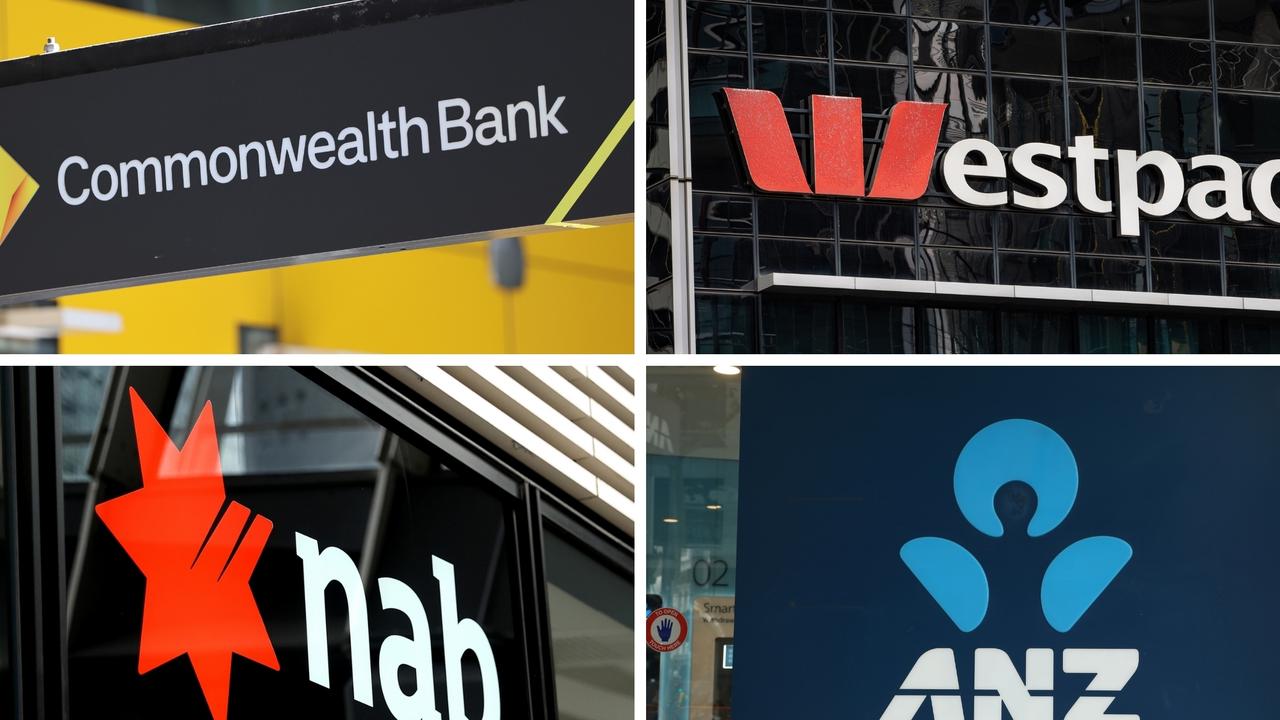
    On Friday, only three out of the Australian exchange’s 11 major sectors finished the trading day in positive territory. The real estate sector led the gains, climbing 0.88% overall, with Vicinity Centres posting a 3.2% rise to close at $2.56. Utilities and financials followed the real estate sector in positive performance. Among Australia’s big four retail banks, results were mixed: National Australia Bank (NAB) added 0.31% after announcing its second fixed-rate mortgage hike in two weeks, Commonwealth Bank of Australia rose 0.47%, Westpac Banking Corporation gained 0.28% after positioning itself as the country’s lowest-cost fixed-rate lender, and Australia and New Zealand Banking Group edged up 0.23%.

    The information technology sector was the day’s poorest performer, with multiple major stocks posting notable declines. Logistics software firm WiseTech Global fell 2.6% to $37.61, cloud accounting platform Xero dropped 2.7% to $71.46, and Life360 slipped 3.3% to $19.48 shortly after unveiling workforce cuts as part of a restructuring to align its operations with artificial intelligence integration.

    Geopolitical uncertainty tied to Middle East tensions remains the primary driver of market volatility, analysts confirm. While a two-week ceasefire between the United States and Iran was announced on April 8, ongoing reports of military strikes in Lebanon and the continued closure of the Strait of Hormuz, a critical global oil chokepoint, have kept traders on edge.

    The uncertain outlook has hit energy sector stocks, with Whitehaven Coal falling 3.2% to $8.12 and Woodside Energy dipping 0.2% to $33.29. Despite weak energy equities, concerns over the durability of the ceasefire have pushed crude oil prices higher: Brent Crude edged up 0.8% to trade at US$96.72 per barrel.

    “Oil initially fell sharply when the ceasefire was announced, as traders ruled out the most severe supply disruption scenarios,” explained market analyst Daniela Hathorn. “But prices have since rebounded as doubts about how long the agreement will hold have grown.”

    Amid the broader market volatility, safe-haven assets continued to see steady gains, with gold climbing 0.06% to hit US$4,766.17 per ounce. The Australian dollar was last trading at 70.86 U.S. cents.