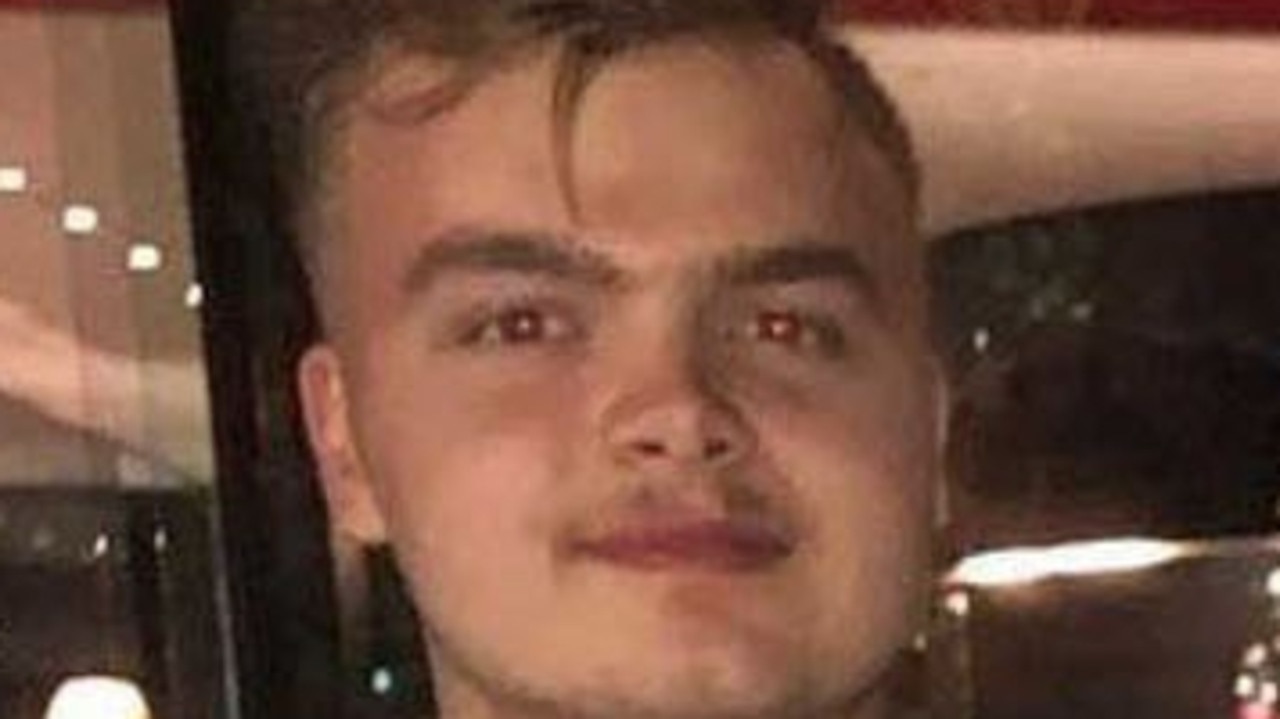
A Sydney killer obsessed with notorious American serial killer Ted Bundy, who murdered one 17-year-old girl and left another seriously injured in a 2020 Parramatta hotel attack, has had his total prison sentence cut by seven years following a successful appeal ruling.
Kristian Kovaleff was just 19 years old when he carried out the brutal, premeditated attack on two teenage friends who had booked an apartment at Parramatta’s Meriton Suites to celebrate one of the girls’ birthdays. The victims had only invited Kovaleff to join the gathering because they needed an adult over the age of 18 to complete the room check-in process, court documents confirm.
Weeks before the attack, court records show Kovaleff developed a deep, pathological fixation on Ted Bundy, one of the most infamous serial killers in US history, and began plotting a murder to experience the “thrill” he believed killing would bring. He prepped for his attack by purchasing binding materials including rope and duct tape, acquiring a handsaw, and running repeated internet searches for potential weapons. He initially planned to kill just one victim a week before the birthday gathering, before expanding his plan to target both girls.
On the night of December 13, 2020, at roughly 8:40 p.m., Kovaleff launched his attack. One of the teens was in the bathroom preparing for a swim when he entered and stabbed her repeatedly in the abdomen. He forced both teens into the bedroom, where he continued his assault on the first victim. When the second girl bravely stepped between Kovalev and her injured friend to block his path, he stabbed her in the stomach as well. Even as the surviving victim begged him to call emergency services, Kovalev refused to request help, instead pacing the room while muttering that he knew he would face life in prison for his crimes and singing a song with lyrics referencing being an explosive about to detonate. When the surviving victim regained consciousness after passing out from her injuries, she found Kovalev had loosely bandaged her wounds — a move the court confirmed was only to preserve her so he could sexually assault her. After the attack, Kovalev fled the apartment with both victims’ phones, turning himself in to local police the following morning. First responders found one victim dead in the bedroom, while the second was rushed to hospital for life-saving emergency surgery.
After his arrest, Kovalev spent two years behind bars faking symptoms of psychosis and claiming he heard internal voices, in an attempt to build an insanity defense. A full assessment by a forensic psychiatrist ultimately ruled he did not suffer from any clinically significant mental illness. He later entered guilty pleas to one count of murder and one count of wounding with intent to cause grievous bodily harm.
Initially, New South Wales Supreme Court Justice Stephen Rothman sentenced Kovalev to a 36-year total prison term, with a 26-year non-parole period that would have made him eligible for release in 2046. Justice Rothman only granted a 15% sentence discount for Kovalev’s guilty plea, citing the extreme severity of the crimes. Kovalev subsequently launched an appeal against his sentence, arguing the original penalty was too harsh.
On Friday, the New South Wales Court of Criminal Appeal delivered a unanimous ruling to quash the original sentence and issue a reduced penalty. In their judgment, Justices Ian Harrison, Deborah Sweeney and Edward Muston agreed the original 36-year term was “manifestly excessive”, accounting for Kovalev’s age at the time of the crime. “Acknowledging the seriousness of the circumstances of the offending, I have concluded that when regard is had to Mr Kovaleff’s youth, immaturity, and emotional and intellectual dysfunction, the starting sentence of 40 years imprisonment, and the sentence after discount for the murder offence, was too high having regard to those personal characteristics,” Justice Sweeney wrote in the published decision. The appeal court also increased the sentence discount for Kovalev’s early guilty plea from 15% to 25%, ruling that the level of culpability did not justify restricting the discount that is typically granted for early guilty pleas in the state’s justice system.
The new sentence hands Kovalev a 29-year total prison term, with a 21-year non-parole period that will make him eligible for release in December 2041, five years earlier than his original release date.