标签: Oceania

大洋洲

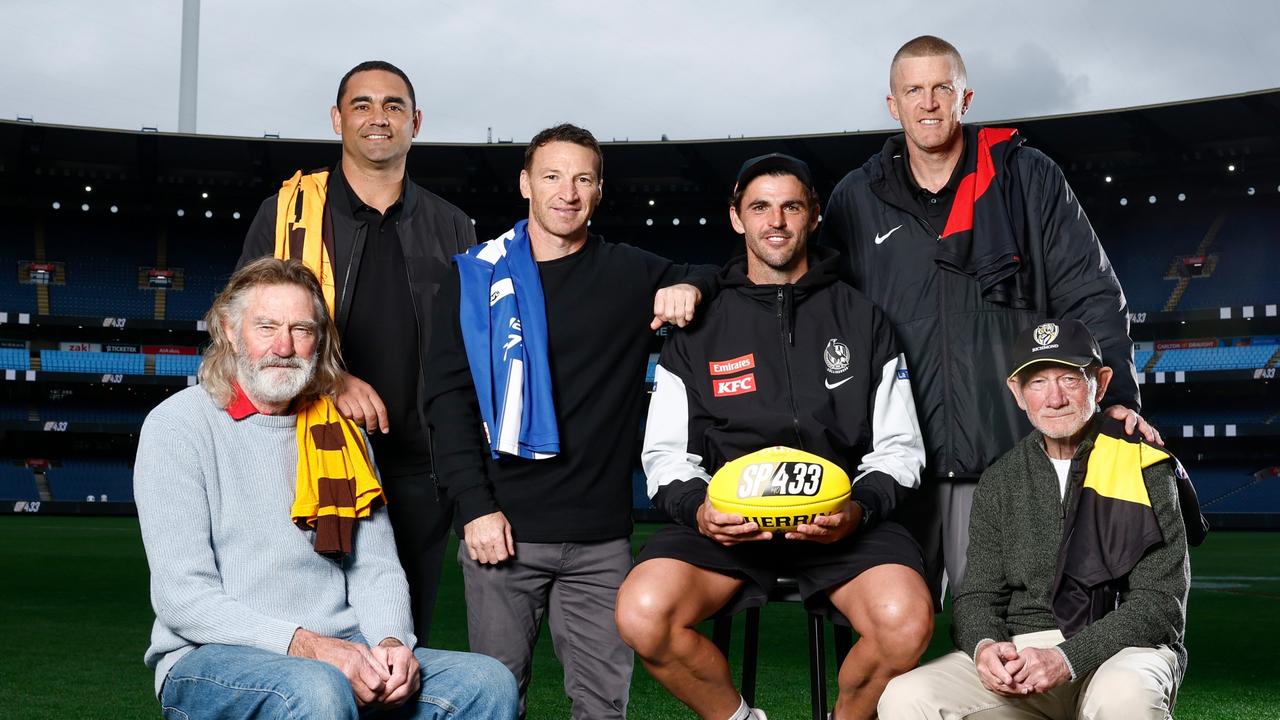
  • AFL 2026: Carlton defenders Jacob Weitering and Harry Dean will be available for Collingwood

    AFL 2026: Carlton defenders Jacob Weitering and Harry Dean will be available for Collingwood

    Ahead of one of the most anticipated AFL matches of the early season, Carlton has received a major defensive boost, with two of its starting defenders cleared to return for Thursday night’s blockbuster against Collingwood at the Melbourne Cricket Ground.

    Jacob Weitering and Harry Dean, both of whom missed the Blues’ Gather Round clash with Adelaide after sustaining concussions, have been confirmed fit to retake their spots in the back six. Stand-in defenders Nick Haynes and Wade Derksen were forced to step up against the Crows last week, a match that pushed the understudies outside their usual comfort zone.

    Speaking to media on Tuesday, Carlton senior coach Michael Voss confirmed the pair’s return, noting that both have successfully completed all concussion protocol requirements. “They’ll both be available,” Voss said. “They trained under the protocols last week on Friday and they’ve trained fully this week. I expect them to be available, they’ll end up back in the side. I’ll fit Jacob back in somewhere I reckon, he’ll find a spot. They’ll be two important additions for us – both the old and the new.”

    Weitering suffered his concussion in a marking contest on Good Friday, leaving the backline short of its veteran leader for the Adelaide clash. Dean’s return adds critical depth to a defensive unit that was stretched thin last round, a gap the club will be relieved to fill heading into its rivalry match against the Magpies, who are currently working through their own forward line selection challenges.

    Last week’s match against Adelaide also left Voss responding to commentary over his controversial decision to bench captain Patrick Cripps for the opening stretch of the second quarter. Carlton started the match with one of its strongest opening quarters of the year, but Cripps’ absence allowed the Crows to grab the momentum and surge to an eventual lead.

    Voss has doubled down on his rotation strategy, pushing back at critics who questioned the call. “I understand there was some commentary on it,” he said. “But correct me if I’m wrong, you all had him traded last week didn’t you? Now he’s playing 100 per cent game time. We do what the team needs, it’s team-first. We’ve got a rotation that we want to make sure we execute, there’s some immediate impact that we need to have. But we also take into account that it’s the whole game we need to be able to play and bring intensity around the ball.”

    Beyond the confirmed returns of Weitering and Dean, Voss also revealed the club is weighing a recall for reigning Carlton best and fairest winner George Hewett, who was dropped from the match side ahead of the Adelaide clash.

  • ‘Blindsided’: US farmers strained as fertilizer costs surge on war

    ‘Blindsided’: US farmers strained as fertilizer costs surge on war

    As spring planting gets underway across the United States, agricultural producers in major farm belts are facing an unprecedented crisis, driven by geopolitical unrest thousands of miles away. The conflict that followed US-Israeli strikes on Iran, which prompted Tehran to block the Strait of Hormuz — a critical global chokepoint for fertilizer and energy shipments — has sent input costs soaring and left growing numbers of farmers waiting for delayed orders they urgently need for this year’s growing season.

    On Andy Corriher’s North Carolina corn and soybean operation, the timing could not be worse. Spring is the period when most American farmers apply the bulk of their fertilizer for the year, and Corriher is among the many who found themselves forced to buy supplies just as prices skyrocketed and shipments stalled. “We got hit at the worst possible time, because we’re trying to buy fertilizer when it skyrockets and when the supply also gets cut,” the 47-year-old grower told AFP. He noted he placed orders for multiple loads of liquid nitrogen weeks ago, but suppliers still cannot give him a firm delivery date. Since the blockage of the strait, Corriher estimates the price of his nitrogen fertilizer has jumped by at least 40 percent, while urea — a widely used nitrogen-based fertilizer — has seen a roughly 50 percent price spike at the Port of New Orleans. To cope, he has cut his fertilizer application by a third, a move he fears will lead to lower crop yields at harvest.

    Corriher is far from alone in facing this sudden squeeze. Russell Hedrick, a 40-year-old farmer who grows corn and soy across 1,000 acres near Hickory, North Carolina, said around three-quarters of his fertilizer purchases for this season happened after prices rocketed. Unlike large industrial agricultural operations, most small to mid-sized American farmers lack the on-farm storage capacity and upfront capital to stock up on bulk fertilizer months ahead of planting season, leaving them exposed to sudden market shocks. Even before the current conflict, Hedrick noted, steadily rising input costs had forced farmers to carefully ration every pound of fertilizer to maximize output. Now, he has cut application rates down to the “bare minimum,” holding off on additional applications in the hopes prices will cool later in the season. “This year, we just kind of got blindsided,” he said, comparing the unexpected disruption to pre-planned export restrictions that caused fertilizer shortages in 2021, shortages that farmers had time to prepare for.

    The crisis has put political pressure on the Trump administration, as farmers make up a core support base that delivered 78 percent of the vote in agricultural-dependent counties to Trump in the 2024 election. Over the weekend, Trump blamed the price hikes on “price gouging from the fertilizer monopoly,” and reassured producers that “American Farmers, we have your back!” US Agriculture Secretary Brooke Rollins attempted to downplay the severity of the crisis, noting that 80 percent of American farmers had already purchased their spring fertilizer before the conflict broke out. But that assessment offered little comfort to the 20 percent of producers who lacked the funds or storage to buy early. For Derrick Austin, a 55-year-old grower based in Marshville, Rollins’ comments were a “gut shot.” After hearing news of the Strait of Hormuz blockage, Austin immediately called his supplier to lock in supply before prices rose. “Thankfully, he let me buy three loads of nitrogen at the old price per ton so I could at least fertilize my wheat crop,” he said. “It was devastating.”

    For many long-time Trump supporters in farm country, the crisis has sparked new questions about the administration’s handling of the Middle East conflict, even as most remain hesitant to abandon their support. Corriher, who has backed Trump in past elections, said the crisis “didn’t seem like we had really thought out all the consequences to the American people. I feel like these things were kind of overlooked as part of collateral damage.” The surge in fertilizer costs has been paired with simultaneous spikes in gasoline and diesel prices, hitting both farmers and ordinary American households: “Everybody seems to be suffering.” Austin said the conflict has left him questioning the administration’s decision-making, though he still believes the current administration “still beats some of the alternatives.” Hedrick, who has voted for Trump three times, struck a similar balance: “He’s human like the rest of us. I think he makes good calls, I think he makes mistakes. If the conflict’s resolution brings long-term peace and a reopened Strait of Hormuz, that’s all I can hope for.”

    Agricultural economists warn that the long-term impact of the crisis will depend on how quickly the conflict is resolved. The US agricultural sector has already been locked in a prolonged recession for the past two years, noted Chad Hart, an agricultural economist at Iowa State University, with net farm income declining while overall business costs remain persistently high. For 2025, the overall impact may be muted, as many producers who bought fertilizer early will avoid the worst of the price hikes, keeping overall margin losses lower than initially feared. But if the conflict drags on and the Strait of Hormuz remains blocked, Hart warned the 2027 crop cycle could face far more severe disruptions that would send ripple effects through global food markets.

  • Australians brace for ‘cost of living shock’ as confidence plunges

    Australians brace for ‘cost of living shock’ as confidence plunges

    Australia’s economic sentiment has suffered its sharpest contraction since the height of the COVID-19 pandemic, driven by a crippling new cost of living shock that has left both households and bracing for severe economic headwinds, new industry surveys show.

    The monthly Westpac-Melbourne Institute Consumer Sentiment Index, a key measure of Australian household economic outlook, recorded a dramatic 12.5% nosedive in April, dragging the headline reading down to 80.1. By standard survey conventions, any score above 100 signals a net optimistic outlook among consumers, while readings below 100 reflect widespread pessimism. The latest result sits near all-time historic lows, though it remains slightly above the extreme troughs recorded during peak COVID-19 lockdowns and the early 1990s Australian recession.

    “Australian consumers are being hit by another cost of living shock,” explained Matthew Hassan, Westpac’s head of Australian macro forecasting. Surging fuel prices have emerged as the single biggest drain on household budgets, dragging the corresponding survey subindex down 16.7% year-on-year to 66.8. The sharp decline follows a record jump in national average petrol prices, which hit $2.40 per litre in early April – a 77-cent increase from February that marks the largest percentage price spike in the survey’s decades-long history.

    All five of the index’s core subindicators deteriorated sharply in April, with measures of current economic conditions faring the worst. Near-term expectations for both national economic performance and personal household finances also fell steeply, a trend Hassan says signals consumers see almost no chance of near-term relief and are preparing for ongoing hardship.

    Fears of another interest rate increase from the Reserve Bank of Australia (RBA) are also weighing heavily on consumer sentiment, Hassan added. Global energy market volatility stemming from international conflicts has stoked inflation concerns, leading many consumers to bet the RBA will implement another rate hike to cool price growth. The Westpac-Melbourne Institute Mortgage Rate Expectations Index, which tracks household forecasts for variable mortgage rates over the coming 12 months, rose 3.9% in April to 177.2, returning to the recent cycle’s multi-year highs.

    Money markets are currently pricing in a 65% probability that the RBA will raise the official cash rate when its board meets on May 4-5. If the hike goes through, it will mark the third interest rate increase in 2026 and fully undo the four rate cuts the central bank implemented in 2025, leaving households facing even higher mortgage repayment costs.

    The economic uncertainty has also spiked fears of job losses, pushing unemployment expectations to their most pessimistic level since August 2020 – one of the darkest periods of the COVID-19 pandemic, shortly before the federal government expanded the JobKeeper wage subsidy program to prevent mass layoffs. Data shows the jump in job insecurity is most acute among workers in sectors directly exposed to energy and interest rate volatility, particularly construction and hospitality.

    The bleak sentiment is not limited to households: separate monthly survey data from the National Australia Bank (NAB) shows Australian business confidence has suffered its second-largest one-month drop in 37 years. The plunge comes on the back of the recent outbreak of conflict in the Middle East and soaring domestic fuel prices, which have combined to amplify existing price pressure pressures across the economy.

    In the first full survey reading collected after the Middle East conflict began, NAB’s business confidence index plummeted 29 points to a negative reading of minus 29. Falls of this magnitude have only been recorded twice before in the survey’s history: during the 2008 Global Financial Crisis and at the onset of the COVID-19 pandemic in 2020.

    Unlike consumer sentiment, however, actual business activity has so far held relatively steady. NAB’s measure of business conditions fell just one point to six index points in March, indicating that while geopolitical and inflationary shocks have hit business outlook, the real impact on day-to-day operations has yet to fully materialize. “It is still early days in terms of the flow through to activity,” noted Gareth Spence, NAB’s head of Australian economics. Confidence is now negative across every Australian state and territory, though business conditions remain positive in most regions.

    The sharp synchronized drop in both consumer and business sentiment marks one of the most significant weakening in Australian economic outlook outside of formal recession periods, reinforcing warnings from top RBA officials about ongoing economic instability and persistent inflationary risks.

  • War-weary Lebanese weigh giving talks with Israel a chance

    War-weary Lebanese weigh giving talks with Israel a chance

    Decades of repeated conflict have left many Lebanese civilians desperate for an end to bloodshed, creating deep divisions across the country over whether to proceed with unprecedented direct negotiations with Israel scheduled for this week in Washington.

    For residents like Qassem Saad, a 49-year-old shop owner who sustained minor injuries in a recent Israeli airstrike that leveled a neighboring Beirut building, exhaustion after generations of war has overridden long-held political enmity. From his damaged store overlooking the rubble, Saad told Agence France-Presse that while Israel remains an adversarial power to most Lebanese, the population can no longer bear the cost of ongoing fighting. “What matters to us is to reach a stage where we can raise our children and live in peace. If there is a comprehensive solution for peace, we are for it, on the condition that no one encroaches on the other,” Saad said. He added that he would fully support the talks if Israel agrees to withdraw from all occupied southern Lebanese territory, repatriate Lebanese prisoners, honor Lebanese sovereign rights, and end all cross-border attacks.

    The upcoming Tuesday meeting between Lebanese and Israeli ambassadors in Washington comes as the death toll from the expanding regional conflict continues to climb. Lebanese official data confirms that at least 2,089 people, including 166 children and 88 healthcare workers, have been killed in Israeli strikes since violence spilled over into Lebanon from the Gaza conflict on March 2. A recent nationwide wave of Israeli air strikes last Wednesday alone killed more than 350 people across the country, leaving neighborhoods like Beirut’s working-class Corniche al-Mazraa in ruins.

    Many ordinary residents recovering from the destruction share Saad’s hunger for peace. Kamal Ayad, another 49-year-old who was repairing strike damage in Corniche al-Mazraa, echoed calls for an end to decades of conflict. “We are in favor of (negotiations) if they serve Lebanon’s interest, if they will resolve matters, end the war, and let us live in peace,” Ayad said. “We want peace… and we hope Iran won’t obstruct it. We are extremely tired… We have lived through many wars and we want rest.”

    But not all Lebanese are convinced that negotiations can deliver a just and lasting peace, especially while bombardment continues. Hezbollah, the Iran-backed militant group that has been the main target of Israeli strikes, has already rejected the talks out of hand. Hezbollah deputy leader Naim Qassem has demanded the meeting be canceled and vowed to fight Israel “until our last breath.” Hundreds of Hezbollah supporters held a protest march in Beirut Saturday to voice their opposition, though the group and its political ally the Amal Movement later called off further demonstrations to preserve domestic civil peace.

    Skepticism also runs deep among some civilian residents who doubt Israel’s commitment to any negotiated agreement. Mohammad Al-Khatib, a 57-year-old electronics business owner whose shop sits near the site of the Corniche al-Mazraa airstrike, where soot still blackens building facades and the smell of smoke lingers, argues that talks held under ongoing attack are illegitimate. “You don’t hold negotiations under bombardment, shelling and humiliation. Where is the justice?” he asked. “They (the Israelis) have never stuck to peace in their lives. Their ambition is expansion and control over Lebanon… throughout its history Israel hasn’t been credible.”

    Other residents warn that the push for talks risks igniting new internal strife in a country still grappling with the legacy of the 1975-1990 Lebanese Civil War. For decades, negotiating with Israel — which is officially classified as an enemy state under Lebanese law — has been a deeply taboo topic in Lebanese politics. Joe Ghafari, a 61-year-old resident of Beirut’s Ashrafiyeh district, noted that the ultimate fate of any peace deal depends on outside powers: the United States, Israel’s main backer, and Iran, which provides funding and military support to Hezbollah. “There has to be a solution between the US and Iran, otherwise negotiations are useless,” Ghafari said. “The decision isn’t in our hands. If it were, I would support negotiations.” He added that deep divisions within Lebanon over talks with Israel mean any progress on the diplomatic front could spark domestic conflict that the small country can no longer withstand. “How can we make peace with Israel if part (of the population) doesn’t want it?” Ghafari asked. “If these negotiations advance while the other side does not want them, there will of course be internal conflict. And Lebanon cannot bear internal wars.”

    The path to talks is already complicated by competing positioning from both sides. Lebanese authorities have emphasized that Beirut’s top priority is securing an immediate bilateral ceasefire between Israel and Hezbollah before formal talks can proceed, but Israel has ruled out that outcome for the moment. Israel insists that Hezbollah must first fully disarm, and says it would rather move straight to formal peace negotiations with the Lebanese state itself. The diplomatic push comes just days after talks between the U.S. and Iran aimed at ending the broader regional war failed to produce a permanent agreement. The two sides agreed to a temporary two-week truce, which Iran and mediator Pakistan say covers cross-border fighting in Lebanon, a claim that both Israel and the U.S. have rejected.

    This week’s meeting is not the first attempt at direct dialogue between the two longtime foes. In December 2024, Lebanese and Israeli civilian representatives held the first direct talks between the two sides in decades, as part of a monitoring mechanism for a temporary ceasefire that ended an earlier round of Israel-Hezbollah fighting. The last formal negotiations between the two countries followed Israel’s 1982 invasion of Lebanon, producing an agreement to end hostilities that was later annulled by Lebanese authorities.

  • Interest rates could rise as RBA flags ‘big income shock’ for Australians

    Interest rates could rise as RBA flags ‘big income shock’ for Australians

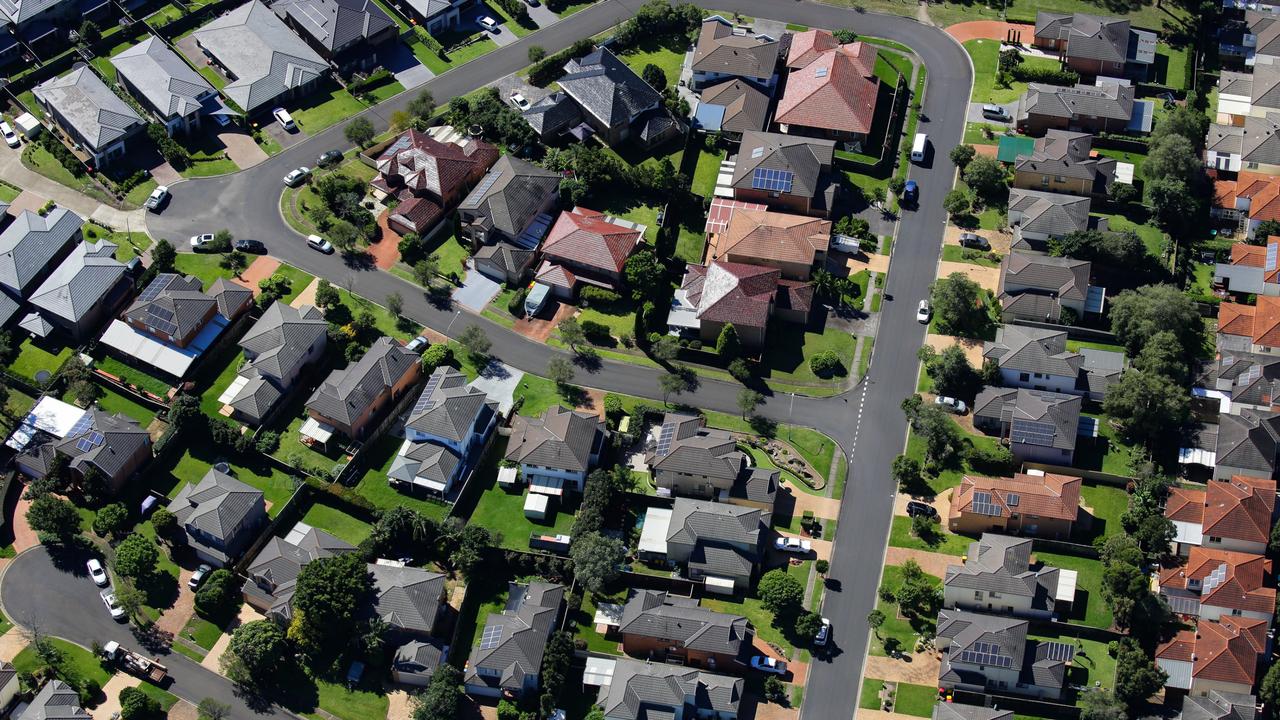
    Six weeks after the outbreak of new conflict in the Middle East, global oil prices have doubled, triggering stark warnings from top Australian central bank officials that the country could face what many call the “central banker’s nightmare” — a toxic combination of rising inflation and slowing economic activity. The unfolding economic shock is already casting uncertainty over household finances and interest rate trajectories for Australian mortgage holders.\n\nReserve Bank of Australia (RBA) Deputy Governor Andrew Hauser outlined the grave risks during a public fireside chat with the Money Marketeers group in New York, speaking as national consumer sentiment indexes have slumped to all-time historic lows across Australia. While Hauser noted that weak sentiment readings do not always guarantee a corresponding drop in consumer spending, he cautioned that if the surveys accurately reflect underlying trends, Australia is heading for a significant income shock.\n\n“That is the central banker’s nightmare, you know, inflation up, activity down and judging the balance between the two is how we earn our money,” Hauser told the audience. This worst-case outcome, known as stagflation, creates an intractable policy dilemma for central banks: raising interest rates to curb inflation can further drag on already slowing growth, while cutting rates to stimulate activity can make soaring price pressures even worse.\n\nThe disruption to global energy markets from the Middle East conflict has already complicated the RBA’s long-running push to bring inflation back down to its target range of 2 to 3 percent, Hauser added. “I wouldn’t say we have high confidence that we’ve set interest rates at the right level because you never do have that high confidence. But we’re going to have to monitor this new shock pretty carefully,” he said. “I think it is easy to see that upside inflation pressure. More important for us now is to think through what the medium-term impact might be.”\n\nHauser emphasized that inflation is already “too high” in Australia, and the energy price spike spurred by the Gulf conflict is delivering a “big income shock for Australia” that ripples through every sector of the economy. The conflict has disrupted shipping through the Strait of Hormuz, the strategic global oil chokepoint that typically carries roughly one-fifth of the world’s daily oil trade, cutting off key supply routes for global energy markets.\n\nBefore the conflict began six weeks ago, benchmark oil traded at roughly $US56 per barrel; as of this week, prices hover around $US100 per barrel. For Australian motorists, this surge translates directly to higher fuel costs: every $US10 per barrel increase in oil prices adds approximately 10 Australian cents to the price of fuel at the pump, piling extra pressure on already stretched household budgets.\n\nPrior to the outbreak of conflict on February 28, Australia’s annual Consumer Price Index (CPI) fell 0.1 percentage points to 3.7 percent in February, but that figure still remained well above the RBA’s 2-3 percent target range. Already, federal Treasurer Jim Chalmers has updated the government’s economic modelling to account for worsening supply disruptions: early projections showed that prolonged fuel market disruption could push Australian inflation close to 5 percent, and Chalmers recently noted that even that grim forecast “look pretty conservative now.”\n\n“ We’ve asked for some more, challenging circumstances to be modelled,” Chalmers said. The two core variables shaping the government’s scenario planning, he added, are the duration of the conflict and how long it will take for global energy markets and the Australian economy to “get back on track after the hot part of hostilities.”\n\nWhile Hauser stopped short of predicting that Australia will enter a full recession, even with consumption already running at relatively low levels, financial markets are already bracing for further interest rate hikes. The RBA has already raised interest rates twice in 2025, pushing the official cash rate back to 4.1 percent — undoing two of the three rate cuts implemented in 2024, and leaving rates at their highest level since April 2012. As of the latest market pricing, investors see a roughly 65 percent chance of another rate increase when the RBA holds its next policy meeting in May, just one week ahead of the release of the federal government’s annual budget.

  • Russian, Belarusian swimmers free to compete under own flag

    Russian, Belarusian swimmers free to compete under own flag

    Global aquatic sports governing body World Aquatics announced a landmark policy shift on Monday, ending a years-long restriction that barred senior athletes from Russia and Belarus from competing under their national flags at official international events.

    The ban on Russian and Belarusian competitors was first implemented in early 2022, in response to Russia’s full-scale invasion of Ukraine. For nearly two years starting in September 2023, athletes from the two nations were only permitted to participate as neutral competitors, with no official national symbols allowed. The new policy reverses this arrangement for senior competitors.

    In an official statement released Monday, World Aquatics confirmed that after a vote by its governing bureau, and in consultation with the Aquatics Integrity Unit (AQIU) and the organization’s athletes’ committee, the existing participation guidelines put in place for periods of political conflict will no longer apply to senior athletes holding Russian or Belarusian sporting nationality. Going forward, these athletes will be granted the same privileges as competitors from all other countries, allowing them to compete with their official national uniforms, fly their national flags, and have their national anthems played for medal victories.

    World Aquatics also emphasized that eligibility for competition is not automatic. All Russian and Belarusian athletes must clear a strict anti-doping requirement, passing at least four consecutive scheduled doping controls before they are allowed to participate in any official event.

    World Aquatics President Husain Al-Musallam framed the decision as a commitment to keeping geopolitical division separate from athletic competition. “Over the last three years, World Aquatics and the AQIU have successfully helped ensure that conflict can be kept outside the sporting competition venues,” Al-Musallam said. “We are determined to ensure that pools and open water remain places where athletes from all nations can come together in peaceful competition.”

    The policy shift puts World Aquatics in line with a recent decision from the International Paralympic Committee, which voted last year to allow Russian and Belarusian athletes to compete under their own national flags at the 2026 Winter Paralympic Games set to take place in Milan-Cortina.

    Russian Sports Minister Mikhail Degtyarev publicly welcomed the new ruling, noting that it followed a meeting between himself and Al-Musallam in January at the Olympic Council of Asia gathering in Tashkent. Degtyarev wrote on his Telegram channel that the two officials had discussed the rights of Russian athletes during the meeting. “I am grateful to Mr Al-Musallam for his firm stance on the issue,” he said. “It is very important that the international sport dialogue is bearing fruits and contributing to the systematic restauration of sport ties.”

    Degtyarev also addressed a related incident earlier Monday, when Ukrainian water polo athletes refused to compete against Russia in a World Cup qualifying match held in Malta. The refusal resulted in an automatic technical defeat for Ukraine, a outcome Degtyarev argued only harmed the Ukrainian team.

    The next senior World Aquatics Championships after the 2025 event in Singapore will be hosted in Budapest in 2027.

  • McDonald’s, Iran, and the pope: Trump’s bizarre press conference

    McDonald’s, Iran, and the pope: Trump’s bizarre press conference

    On a surprising Monday in April 2026, what was framed as a routine policy event at the White House quickly devolved into one of the most bizarre press encounters of Donald Trump’s second presidential term, blending fast food delivery, awkward personal exchanges, fiery diplomatic rhetoric, and religious controversy all in less than 30 minutes. The event was organized to center on a core Trump campaign promise: his administration’s “no tax on tips” policy, a policy that the White House sought to humanize by inviting the DoorDash delivery worker who would benefit from it directly to the Oval Office doorstep.

    Sharon Simmons, a grandmother of 10 from Arkansas, arrived carrying two paper bags of McDonald’s burgers, hand-delivering the fast food order that the 79-year-old president — a famously outspoken lover of quick-service cuisine — had placed. After accepting the order from Simmons, Trump turned to assembled reporters and pressed a rhetorical question that would set the tone for the entire gathering: “This doesn’t look staged does it?”

    Before the conversation could return to the tip tax policy, however, a reporter’s question about a controversial social media post sent the press conference into unscripted surreal territory. Over the previous 24 hours, Trump had faced widespread backlash after an AI-generated image, depicting the president as Jesus Christ, was posted to his Truth Social account. The post came just hours after he launched a public attack on Pope Leo XIV, the first U.S.-born pope, for the pontiff’s public opposition to Trump’s hawkish policy on Iran. When asked if he had intentionally posted the image, Trump offered a confusing, unorthodox denial: “I did post it — and I thought it was me as a doctor and had to do (with the) Red Cross,” he said, adding “And I do make people better. I make people a lot better.” The image has since been deleted from his account.

    Attention quickly shifted to the escalating Iran crisis, which has roiled global energy markets just seven months ahead of critical November midterm elections that will determine control of Congress. Just two hours before the press conference, Trump’s self-declared naval blockade of Iranian ports went into effect, implemented after weekend peace talks between U.S. and Iranian negotiators in Pakistan collapsed without any breakthrough. Despite the failed talks, Trump insisted that Iranian officials had already reached out to Washington to restart negotiations, claiming that Tehran “very badly” wants a new agreement — one that he says must permanently block Iran from developing a nuclear weapon. The blockade has already driven a sharp spike in global crude oil prices, stoking fears of inflation that could damage Republican electoral chances in the fall.

    With Simmons still standing beside him, Trump turned next to his ongoing feud with the pope, rejecting any possibility of an apology for his previous public criticism of Leo’s anti-war stance. “There’s nothing to apologize for. He’s wrong,” Trump told reporters. “Pope Leo said things that are wrong. He was very much against what I’m doing with regard to Iran, and you cannot have a nuclear Iran.” He went on to accuse the pope of being “very weak on crime and other things.”

    In a moment that underscored the chaotic tone of the gathering, the president then pivoted to another of his signature political issues — his administration’s ban on transgender athletes competing in women’s sports — and asked Simmons for her opinion. The delivery worker deflected the question, grounding the moment back to the purpose of her appearance: “I really don’t have an opinion on that, I’m here about no tax on tips.”

    When a reporter turned to Simmons to ask one final, lighthearted question — whether the White House tips well — she hesitated with a shrug. Before she could answer, Trump reached into his trouser pocket, pulled out a folded $100 bill, and handed it directly to her, quipping to the reporter “Thank you. You reminded me!” The awkward, unplanned exchange capped a press conference that will go down as one of the most unusual of Trump’s political career, blending political theater, policy promotion, and unfiltered controversy in a single, surreal appearance.

  • Trump deletes Jesus post of himself after outcry

    Trump deletes Jesus post of himself after outcry

    Less than 24 hours after it was posted, former and current U.S. President Donald Trump took down an AI-generated image shared to his Truth Social platform that drew widespread condemnation from religious leaders for its blatant blasphemous framing of Trump as Jesus Christ. The controversial graphic, which went viral shortly after being published late Sunday, depicted Trump clad in flowing red and white robes, with a glowing aura emanating from his hand and head as he touched the forehead of a figure that appeared to be ill. In the background, an American flag billowed in the wind, while a crowd of onlookers stared up at Trump in an attitude of reverent worship.

    When pressed by reporters about the inflammatory post, Trump pushed back against claims that he intended to portray himself as Jesus. He claimed the image was meant to cast him as a doctor working with the Red Cross, saying, “It’s supposed to be me as a doctor, making people better. And I do make people better. I make people a lot better.”

    Despite this explanation, the post sparked immediate outrage, even among prominent conservative Christian figures who count themselves among Trump’s most loyal core supporters. Conservative political journalist and commentator Megan Basham condemned the graphic in a sharp post on X, writing, “I don’t know if the President thought he was being funny or if he is under the influence of some substance or what possible explanation he could have for this OUTRAGEOUS blasphemy.” She demanded that Trump remove the post immediately, issue a public apology to the American people, and seek forgiveness from God.

    This is not the first time Trump has leaned on religious imagery to frame his political identity. During his 2023 New York bank fraud trial, he shared a supporter-created sketch that depicted him sitting alongside Jesus inside the courtroom. His closest spiritual and political advisors have also repeatedly drawn parallels between Trump and Jesus to bolster his messianic political brand. Earlier this month, at an Easter luncheon hosted at the White House, long-time Trump spiritual advisor and televangelist Paula White-Cain openly compared the president to Christ, saying, “You were betrayed and arrested and falsely accused. It’s a familiar pattern that our Lord and Savior showed us.”

    Following the failed 2024 assassination attempt against Trump, the president has doubled down on embracing the narrative that he has a divinely ordained messianic mission to save the United States. In his victory speech after winning the 2024 presidential election, Trump told supporters, “Many people have told me that God spared my life for a reason, and that reason was to save our country and to restore America to greatness.”

    Matthew Taylor, a visiting scholar at Georgetown University’s Center on Faith and Justice who specializes in research on Christian nationalism, told AFP that the controversial post comes at a fragile time for Trump’s political base, where existing rifts have already opened over his handling of the ongoing Middle East conflict. Taylor noted that many Catholic supporters have already been alienated by Trump’s very public feud with Pope Leo, who has openly criticized U.S. bombing operations in Iran. “A lot of right-wing supporters were already pushing back against the war in Iran. The rift was already emerging for a lot of his Catholic base, and with the denunciations of Pope Leo this does threaten to alienate that crowd,” Taylor explained.

    However, Kristin du Mez, a historian at Calvin University who studies American evangelical politics, argues that the backlash is unlikely to erode support among Trump’s most die-hard conservative Christian backers. While many of these supporters acknowledge that the image crosses a line into blasphemy, du Mez said their commitment to Trump remains unshaken. “They are keeping their distance from what would clearly count as blasphemy,” du Mez told AFP. “But I also see a lot of dodging. Yes, blasphemy is bad, this is inappropriate, he should take this down. What I’m not seeing is in any way suggesting that they’re not going to continue supporting the man.”

  • Harry and Meghan arrive in Australia for four-day tour

    Harry and Meghan arrive in Australia for four-day tour

    Nearly eight years after their high-profile 2018 royal honeymoon tour, the Duke and Duchess of Sussex have returned to Australian soil for a four-day visit that blends charity outreach with paid commercial engagements – and already draws mixed reactions from local communities and lingering questions over public security costs.

    The couple, who stepped down as full-time working British royals in early 2020 and relinquished their official HRH titles, touched down at Melbourne’s Tullamarine Airport just after 6:30 a.m. on Tuesday local time, flying commercial on a Qantas jet from their current home in Los Angeles. This marks their first trip to Australia since the 2019 Invictus Games, and a stark contrast to their 2018 tour, which drew massive public crowds and a packed schedule of open royal engagements. This time around, no public meet-and-greet events are on the official agenda.

    The couple’s representatives frame the lack of public appearances as an intentional choice to minimize disruption for local communities and host organizations. But the visit’s structure, which pairs non-profit work with for-profit paid appearances, has already sparked scrutiny. The itinerary opens with charity-focused stops: the pair will meet pediatric patients and medical staff at a Melbourne children’s hospital, spend time with Australian military veterans and their families, and connect with survivors of domestic family violence across the three cities they are visiting: Melbourne, Canberra, and Sydney.

    Alongside these charitable engagements, however, are two high-ticket paid events that will net the couple personal income – figures that have not been disclosed to the public. Prince Harry is set to deliver a keynote address at the Invictus Psychosocial Safety Summit in Melbourne, where general admission tickets range from AU$1,000 to AU$2,400 per person. A portion of ticket proceeds is earmarked for Australian suicide prevention charity Lifeline, but there has been no confirmation from event organizers whether Harry will receive a speaking fee for his appearance.

    For Meghan’s part, she is scheduled to lead an exclusive in-person conversation at a women-only “girls weekend” wellness retreat hosted by the Her Best Life podcast at a five-star Sydney beachside hotel on the Saturday following the official close of the tour. Attendees pay up to AU$3,199 for access, with premium VIP packages offering a group photo opportunity with the duchess. As of the arrival date, the event has not sold out, with organizers still advertising a small number of remaining spots, and no details have been released about Meghan’s compensation for the appearance.

    Industry observers also note the trip doubles as an exploratory visit for Meghan’s upcoming lifestyle brand, As Ever. Trademark records from the Australian government’s intellectual property database show the brand registered trademarks for 12 different product categories across the country last year, and the brand has already been heavily featured in a Netflix docuseries produced by the couple’s own production company.

    Beyond the commercial aspects of the private visit, one of the biggest unanswered questions centers on who will cover the cost of security. Both Victoria Police and New South Wales Police have confirmed they will deploy additional officers to maintain public safety during the couple’s stay, but neither force has confirmed whether Australian taxpayers will be on the hook for the extra security expenses. “Police routinely assess events and visits and will deploy resources as necessary to ensure community safety,” a Victoria Police spokesperson said, echoing a similar statement from New South Wales Police that emphasized minimizing disruption to local residents.

    Security is already a contentious issue for Prince Harry, who is still fifth in line to the British throne. Just last month, he lost a high-profile court appeal in the UK over the decision to downgrade his publicly funded police protection when he is in the country. The Australia trip also marks Harry’s first public appearance since news broke last week that he is being sued for defamation by Sentebale, the African children’s charity he co-founded more than 15 years ago.

    Many ordinary Australians have expressed confusion over the purpose of the visit, with no clear public mandate for the couple’s trip as private citizens. Unlike their 2018 tour, which was an official royal visit with widespread public engagement, this low-key, commercial-charity hybrid trip has left many locals questioning what the pair hope to accomplish, and why they have chosen to visit now.

  • Qantas cuts flights and hikes fares blaming soaring Middle East fuel costs

    Qantas cuts flights and hikes fares blaming soaring Middle East fuel costs

    The ongoing geopolitical turbulence stemming from the Middle East conflict has sent global oil markets into a state of extreme volatility, triggering cascading disruptions for Australia’s aviation industry and leaving leisure and business travellers facing steeper costs and fewer travel options. Australia’s flag carrier Qantas Airways has become the first major airline to roll out sweeping operational adjustments to offset the unexpected surge in jet fuel expenses, announcing deep cuts to domestic flight capacity, targeted changes to its international route network, and immediate passenger fare increases.

    Before the outbreak of the latest hostilities in the Middle East, global benchmark crude traded at roughly $56 per barrel, equivalent to around 80 Australian dollars. In just weeks of escalating tensions, that price has jumped to trade near the $100 per barrel mark, or 143 Australian dollars. Most dramatically, Qantas reports that jet fuel refinery margins have exploded from an already elevated $20 per barrel ($28 AUD) to as high as $120 per barrel ($169 AUD). Looking ahead to the June quarter, the airline now projects that unhedged jet fuel prices will sit between 185 and 200 Australian dollars per barrel.

    The revised fuel cost projection for the second half of Qantas’ current financial year now lands between $3.1 billion and $3.3 billion, representing a $600 million to $800 million increase from the company’s earlier guidance. In an official media statement, Qantas noted that its leadership team continues to closely monitor the fast-evolving geopolitical and market environment, maintaining flexible contingency plans to implement additional cost mitigation measures if oil prices continue their upward trend.

    To balance its budgets amid the price shock, Qantas is cutting domestic flight capacity by 5% and reshuffling its international network. The airline confirmed it is reallocating aircraft and crew capacity pulled from U.S. routes and the shrunken domestic network to boost flight frequencies to Paris and Rome, where it has recorded sustained strong demand from international travellers. Despite the capacity cuts, Qantas emphasized that overall travel demand remains robust across its network, and projects that revenue per available seat kilometre will double from prior period levels.

    Passengers booked on affected Qantas and Jetstar (Qantas’ low-cost subsidiary) flights will be contacted directly by the airline, with options to rebook onto alternative services or claim a full refund for unused tickets. On the supply front, Qantas says it is coordinating closely with federal government regulators and its network of jet fuel suppliers, who have guaranteed consistent fuel availability through the rest of April and well into May. Even so, the airline cautioned that ongoing uncertainty surrounding global energy supply chains means the situation remains fluid.

    In additional financial adjustments released alongside the operational changes, Qantas announced that it will cap its total capital expenditure for the 2026 financial year at or below $4.1 billion, which falls at the lower end of its previously released guidance range. The airline confirmed that its previously announced $300 million interim dividend, equal to 19.8 cents per share, will still be distributed to shareholders on April 15, as scheduled. However, the company has scrapped a planned $150 million share buyback program to preserve cash amid heightened market uncertainty.