标签: Oceania

大洋洲

  • Brutal assault in Byron Bay leaves Canadian man with skull fracture

    Brutal assault in Byron Bay leaves Canadian man with skull fracture

    A popular Australian coastal tourist hub in New South Wales has become the site of a violent random attack that left a young Canadian visitor fighting for recovery with life-altering injuries, prompting a public appeal for witnesses from local law enforcement.

    The incident unfolded late on a Sunday evening, shortly before 11:40 p.m., in central Byron Bay, a top travel destination famed for its beaches and laid-back travel culture. After escaping the attack, the 28-year-old victim managed to make his way to Butler Street, where he flagged down a passing patrol car to report the assault. First responders immediately administered on-scene first aid before rushing the man to the local Byron Bay Hospital in what medics described as a serious but clinically stable condition.

    In interviews with investigating officers, the victim shared that he had been socializing and drinking with a group of five unknown people in a public park on Jonson Street in the hours before the attack. Without warning, the group turned on him, launching a brutal group beating. The tourist managed to break free from his attackers and fled into nearby bushland to hide, eventually making his way out to the main road to get help from police.

    Following initial assessment at the local hospital, the severity of his injuries required a transfer to the larger Tweed Valley Hospital for advanced care. It was there that clinicians confirmed the full extent of the harm inflicted: a fractured skull, bleeding on the brain, and additional spinal injuries. Medical teams have not released an updated prognosis as of the latest police update.

    Local investigators have now launched a public appeal for any information that could help them identify and apprehend the attackers. Early investigative work has revealed that at least two of the male suspects are believed to be teenagers between 16 and 17 years old. Police are asking any residents or visitors who were in the area of the attack around the time of the incident to check their personal devices for any relevant dashcam footage or mobile phone recordings that could help the investigation. Anyone with information is urged to contact Byron Bay Police Station directly or reach out to the national Crime Stoppers hotline anonymously.

    The attack has shaken the small coastal town, which relies heavily on tourism and has a reputation as a safe welcoming destination for international travelers.

  • Hundreds of Charlie Chaplin lookalikes gather in Switzerland

    Hundreds of Charlie Chaplin lookalikes gather in Switzerland

    On a sun-drenched Sunday in western Switzerland, hundreds of devotees of one of cinema’s most enduring icons came together for a celebration decades in the making. More than 400 attendees, each outfitted in Charlie Chaplin’s signature black bowler hat, neat toothbrush moustache and iconic walking cane, converged on the Charlie Chaplin Museum located at Corsier-sur-Vevey, the former estate where the legendary filmmaker spent the final quarter-century of his life. The gathering was organized to mark the 10th anniversary of the museum’s opening, with a shared goal of reclaiming the world record for the largest assembly of Charlie Chaplin lookalikes — a title the site already held after 662 impersonators turned out for a 2017 event.

    When final counts were tallied, Sunday’s turnout hit 429 participants, falling short of the 2017 benchmark. But the shortfall did little to dim the joyful, reverent atmosphere that filled the sprawling lawns of Manoir de Ban, Chaplin’s former manor. Instead of focusing on the record, attendees gathered to form a giant number “10” across the grass, a visible tribute to a decade of museum operations and a century of Chaplin’s cultural impact.

    For many participants, the event was far more than a record attempt: it was a chance to honor the values and legacy of the man who changed global cinema. Anthony Champeil, a 36-year-old French actor who regularly portrays Chaplin on stage, perfectly embodied the silent film star’s signature look, and spoke of his overwhelming joy at the gathering. “We are at Chaplin’s place with people who are passionate about Chaplin,” Champeil told reporters from Agence France-Presse. Reflecting on Chaplin’s well-documented belief that people should hold onto childlike curiosity and joy throughout their lives, Champeil added that he was certain the icon would have delighted in hundreds of “big kids” gathering to celebrate his work. “I find it marvellous,” he said.

    The Manoir de Ban estate, located roughly 26 kilometers outside the Swiss city of Lausanne, holds deep personal meaning for Chaplin’s legacy. After being barred from re-entering the United States in the 1950s amid Cold War anti-communist paranoia over unproven claims of Soviet sympathies, Chaplin settled in Switzerland with his wife Oona and their eight children. He lived at the manor until his death in 1977 at the age of 88, and the property was converted into a museum dedicated to his life and career a decade ago.

    Alice Kauffmann, who brought her young children to the event dressed as tiny Chaplins, described the gathering as deeply moving. Echoing the sentiments of many attendees, she noted that the event brought to life the humanistic values Chaplin wove into his most iconic films, including *The Great Dictator*, *The Kid* and Modern Times. “He defended love, respect and beautiful values,” Kauffmann said. Fifty-two-year-old Sophie Teteule echoed that praise, saying, “I think it is magnificent that we can gather today, so long after he left us. It is a marvellous moment in his honour.”

    Even event organizers downplayed the disappointment of falling short of the record. Museum spokeswoman Olivia Baliguet told AFP that the result was no failure. “Nothing is lost,” she said, leaving the door open for another attempt — possibly next year, or ahead of the museum’s 20th anniversary.

  • Europe opening up to self-driving taxis

    Europe opening up to self-driving taxis

    After years of lagging behind the United States and China, where autonomous robotaxi technology has already scaled rapidly, Europe is finally gearing up to open its doors to large-scale trials of self-driving taxis, with a landmark regulatory shift set to be formalized this week.

    Data from a May International Energy Agency (IEA) report underscores just how far Europe has fallen behind: the total combined fleet of commercial robotaxis in the US and China more than doubled in 2025 alone, hitting 8,000 vehicles operating across more than 25 major cities. Seven years behind the initial global testing timeline, the first wave of multi-city trials is set to launch across the continent over the coming months, with industry leaders from North America, China and Europe already lining up operations.

    To clear the path for faster deployment, the European Union is set to approve a streamlined new “testbed” framework on Monday, senior EU official for autonomous vehicle development Anne-Marie Idrac confirmed to AFP. Currently, strict EU rules require a human safety driver to remain in every test vehicle, a mandate that mirrored early-stage regulations in the US and China. The new framework will eliminate the need for companies to seek separate, country-by-country approval for trials, cutting through bureaucratic red tape that has slowed progress to date.

    The first European trial already launched on April 8 in Croatia, where leading Chinese autonomous vehicle firm Pony.ai has partnered with US ride-hailing giant Uber and Croatian startup Verne, backed by automaker Rimac Group, to operate a fleet of 10 robotaxis through the capital city of Zagreb.

    Multiple more trials are scheduled to launch across the continent before the end of the year. In London, three separate projects are in the works: global robotaxi leader Waymo, a subsidiary of Google-parent Alphabet, will launch its service, followed by UK-based competitor Wayve (in partnership with Uber) and Baidu’s autonomous ride-hailing brand Apollo Go, one of the world’s largest robotaxi operators. In Madrid, Chinese autonomous firm WeRide has just announced a new trial with Uber, while Uber will also roll out test services in Munich powered by Chinese technology firm Momenta’s autonomous driving system. Apollo Go has also paired with Swiss Post for a pilot program in eastern Switzerland, and multinational automaker Stellantis has joined forces with Pony.ai for a trial in Luxembourg. Leading ride-hailing platforms including Uber, Lyft and Bolt have become the most common partners for these cross-industry testing projects.

    Today, the global robotaxi market is already dominated by major players based in the US and China. Wayme says it operates roughly 3,000 fully driverless taxis across a dozen US cities, a fleet size roughly equal to Apollo Go’s, which operates in 27 Chinese cities as well as Dubai. Pony.ai holds a global fleet of 1,700 robotaxis and has set a target of 3,500 vehicles by the end of 2026, while WeRide currently has 1,000 vehicles on roads. Additional key players include Chinese ride-hailing giant Didi and state-owned carmaker SAIC, which operate robotaxi services across major Chinese cities, as well as Tesla and Amazon-owned Zoox, which have deployed test fleets across multiple US cities.

    Industry forecasts project massive growth for the global robotaxi market over the next decade. By 2035, the IEA predicts the global fleet will reach between 700,000 and 3 million vehicles operating across 40 to 80 major cities worldwide. Consulting firm BCG projects a total global fleet of 3 million robotaxis by 2035, with 850,000 based in China and 350,000 in the United States, leaving just 120,000 in Europe. Investment bank Goldman Sachs takes a more optimistic view of market expansion, projecting a global fleet of around 6 million robotaxis that will create a $415 billion global industry by mid-decade.

    For Europe, two long-standing factors have slowed the rollout of robotaxis to date: strict regional safety regulations and Europe’s deeply established culture of high-quality public transit, according to autonomous vehicle specialist Herve de Treglode. Even so, de Treglode predicts commercial robotaxi services could launch as soon as 2027 in ready markets like London and Madrid. Unlike in Europe, where testing has proceeded in slow, fragmented fits and starts, de Treglode noted that the US and China have pursued a far more aggressive rollout strategy: companies deploy to one neighborhood at a time, remove safety drivers once testing is complete, and scale commercial services with massive ongoing investment.

    Even as the EU clears regulatory barriers, Europe’s robotaxi rollout stands at a critical crossroads, with a key disagreement over where services should deploy. Private companies are overwhelmingly eager to launch robotaxi services in dense, highly profitable urban centers, but many policymakers are pushing for services to prioritize underserved suburban and rural areas, where robotaxis could fill gaps in existing public transit networks.

    “It’s high time we came up with a strategy,” Laurence Debrincat of the Paris regional transport authority said last month, advocating for investment to expand service outside of dense city cores. Thomas Matagne, founder of French ridesharing firm Ecov, summed up the core choice facing European regulators: “Should we leave the sector to the market, at the risk of concentrating it in densely populated areas? Or should the government invest to roll out (robotaxis) in the general interest?”

  • Denmark’s Eriksen collapses during Ukraine friendly

    Denmark’s Eriksen collapses during Ukraine friendly

    Five years after a life-threatening cardiac arrest at the European Championships, Danish international football star Christian Eriksen has suffered another on-pitch medical incident, collapsing during a friendly match against Ukraine on Sunday.

    The 34-year-old midfielder has relied on an implanted cardiac pacemaker to regulate his heart rhythm since his 2021 Euro 2020 emergency, when he suffered a sudden cardiac arrest during a group stage fixture against Finland. That incident forced Eriksen to step away from professional football for more than six months while he recovered and adjusted to life with the medical device.

    Sunday’s incident unfolded in the 64th minute of the friendly, hosted in the Danish city of Odense, when Eriksen fell to the turf with Denmark holding a 2-1 lead over Ukraine. Match officials immediately halted play, and emergency medical staff sprinted onto the pitch to provide urgent care. Roughly 15 minutes after Eriksen collapsed, the referee made the decision to call off the remainder of the match.

    Contrary to early widespread concern, Danish Football Association confirmed via social media that Eriksen remained conscious and is in stable condition given the circumstances. Morten Boesen, the Danish national team’s lead doctor, clarified that Eriksen was able to exit the pitch under his own power before being transported to a local Odense hospital for further observation and testing.

    Boesen told reporters that the incident aligns with expected device function, noting “As I see it, the pacemaker responded as it should.” He added that Eriksen experienced only a brief loss of consciousness, regaining awareness almost immediately, with medical staff able to establish communication with him right away. Teams of specialists are now conducting a full suite of diagnostic tests to identify the exact trigger for Sunday’s collapse, ahead of determining next steps for Eriksen’s treatment and career.

  • Trump storms out of tense, rain-plagued NBC interview

    Trump storms out of tense, rain-plagued NBC interview

    In a chaotic, weather-disrupted interview filmed on a Wisconsin farm on June 5, 2026, during US President Donald Trump’s visit for a rural economy roundtable, Trump abruptly walked out mid-conversation after host Kristen Welker of *Meet the Press* pressed him to back up his long-debunked false claims of election fraud. The outdoor interview, set against a backdrop of farm tractors and hay bales, was repeatedly interrupted from the start by severe thunderstorms. Torrential rain hammered the structure’s roof, creating deafening audio disruptions that forced multiple pauses. When Welker asked if the crew should halt recording to wait out the storm, Trump insisted on continuing, saying, “No. People will understand — we’re on a farm.”

    After working through the weather issues, the conversation shifted to Trump’s strategy around Iran and his past campaign promises to keep the United States out of endless foreign conflicts. Pushed on his approach, Trump pushed back against Welker’s questioning, rejecting his earlier pledge to avoid new wars. “First of all, I didn’t guarantee no war. Why would I have built the strongest military in the world?” he said, before labeling Welker a “big liberal, a big progressive.” When Welker clarified she was only doing her job as a journalist, Trump added that his current actions in the region did not amount to another endless conflict: “I don’t like these endless wars. This is not an endless war. We’ve been doing this for three months.”

    Tensions flared again when the discussion turned to Trump’s newly proposed “weaponization fund” — a taxpayer-funded program that would compensate individuals he claims were wrongfully prosecuted under the previous Biden administration. Speaking angrily, Trump lashed out at the press and his predecessor: “I love the idea because people like you, the fake dirty press, the crooked press, people like stupid Biden … they destroyed people. They sent people to jail who did nothing wrong.” When Welker pushed back, noting there was no evidence to support his claims, the conversation devolved further.

    It was at this point that Trump doubled down on his repeated false assertions that the 2020 presidential election was rigged, adding that last week’s California primary was also stolen. When Welker held her ground and repeatedly asked him to produce evidence to back up these claims, Trump erupted. “You are either crooked or you’re stupid,” he told the host, before standing up and storming out of the frame, ending the interview early as Welker attempted to get him to stay.

    In on-air remarks Sunday when the interview was broadcast, Welker told viewers that she had spoken with Trump the day after the confrontation to address the weather disruptions that had complicated the recording, and that Trump had agreed to reschedule a full interview with NBC at a later date.

  • Iran fans dismayed by team’s World Cup visa quarrel

    Iran fans dismayed by team’s World Cup visa quarrel

    As the 2026 FIFA World Cup co-hosted by the United States, Mexico and Canada approaches, Iran’s national men’s football team, commonly known as Team Melli, has touched down in Tijuana, Mexico — their pre-tournament training base ahead of three group-stage matches to be held across the U.S. While a small but passionate group of Iranian supporters gathered at the crack of dawn Sunday to welcome the squad, the joyful occasion was overshadowed by a contentious visa controversy that has left the Iranian football community frustrated and disappointed.

    Among the cheering crowd at Tijuana’s airport was Sadegh Galavi, a 30-something mechanic and long-time Tijuana resident who lives just a short distance from the U.S. border. Galavi rose before sunrise to greet the team when their flight landed at 5 a.m., wearing the iconic Iranian national team white jersey trimmed with green and red. For him, showing up to welcome the squad was a non-negotiable gesture of national pride. “My national team is coming to my city, and being here is a small thing I can do just to welcome them,” he told AFP. His excitement quickly shifted to criticism, however, over the visa denials that have disrupted the team’s delegation.

    In total, roughly 15 accompanying Iranian delegation members were denied U.S. visas required to enter the country for the tournament. That list includes the head of the Iranian Football Federation, Mehdi Taj, who previously held a role in Iran’s Islamic Revolutionary Guard Corps — an organization Washington has designated as a terrorist group. While all 26 players successfully received the necessary visas to compete in their group matches against New Zealand, Belgium and Egypt scheduled for Los Angeles and Seattle, the denial of entry for top officials has deepened anger over the entanglement of politics and sports at the world’s biggest football event. “It makes no sense to me. Sport is supposed to be a symbol of peace, so when you mix politics and sports, it doesn’t work,” Galavi said.

    This visa row is only the latest in a string of off-field disruptions that have plagued Iran’s World Cup preparation. The unprecedented situation stems from the ongoing open conflict between Iran and the United States, which began with joint Israeli-American strikes on Iran in late February. Never before has a World Cup participant been actively at war with one of the tournament’s host nations, leaving Iran’s participation in doubt for months amid global diplomatic uncertainty. It was only after repeated insistence from FIFA that Iran ultimately confirmed its team would compete, with the governing body prioritizing the right of athletes to participate on sport’s biggest stage.

    Even after confirmation of participation, further changes came two weeks ago, when rising geopolitical tensions forced the Iranian Football Federation to scrap its original plan to base the team in Tucson, Arizona. Instead, the squad relocated its training base to Tijuana, a decision that fans and officials say offers greater safety and stability for the players ahead of the tournament. Tight security arrangements have already been put in place to protect the team: a large convoy of heavily armed Mexican police and military escorted the squad from the airport, and increased security measures have been deployed around the team’s hotel and Estadio Caliente, the venue where Iran will hold its public training sessions.

    For Iranian supporters, the string of setbacks has done little to dim their enthusiasm for Team Melli, which is still chasing its first ever berth in the World Cup knockout stage. Sina Moghadam, an Iranian-American retired self-described patriot who traveled from San Diego, California just across the border to welcome the team, said off-field adversity would only strengthen the squad’s resolve. “Iran’s history goes back thousands of years. Things like this only make us stronger; they won’t destabilize the team,” he said, holding an enormous Iranian flag. Moghadam even said he hopes Iran advances far enough to face the U.S. in the knockout stage, calling for his national team to pull off an iconic victory against the host nation. “I hope they’re going to kick the US team’s ass,” he laughed as the players’ bus pulled away from the airport.

    The new base in Tijuana has offered some comfort to fans concerned for the team’s safety. Hossein Nikyar, a 40-something engineer who drove overnight from Los Angeles with his son to welcome the team, noted that the relocation to Mexico removes the risk of disruption from anti-government Iranian opposition groups concentrated in Southern California. “It’s safer for them to be here than in Los Angeles anyway, because many Iranians in LA are royalists who want to take down the government,” he explained. Nikyar already holds tickets to Iran’s matches in Los Angeles, but he echoed the widespread frustration over the visa dispute, calling out FIFA’s long-held stance that sports should remain separate from politics. “FIFA claims that there’s no politics in the World Cup, and it’s all about the football fair play. But in fact, we see that it’s not true,” he sighed.

    As Team Melli settles into its new training base in Tijuana, all eyes will be on whether the squad can overcome weeks of off-field chaos and political interference to deliver the breakthrough performance that Iranian football has waited decades to achieve.

  • Asia-Pacific airline per-passenger profit tipped to fall 35 per cent

    Asia-Pacific airline per-passenger profit tipped to fall 35 per cent

    The global airline industry is facing unprecedented financial pressure in 2026, with the International Air Transport Association (IATA) issuing a stark warning that per-passenger profits for Asia-Pacific carriers could plummet by as much as 35.9% this year, driven by skyrocketing jet fuel prices and depreciating regional currencies against the U.S. dollar.

    In its latest analysis released overnight Australian time from IATA’s annual general meeting held in Rio de Janeiro, Brazil, the industry trade group projects that average profit per passenger across the Asia-Pacific region will fall from US$5.30 recorded in 2025 to just US$3.40 in 2026. The net profit margin for regional carriers is also expected to slump by 40% year-over-year. Globally, the downturn is equally severe: IATA forecasts total industry profits will halve from US$45 billion in 2025 to US$23 billion in 2026, with overall margins shrinking from 4.2% to 2%.

    “It is a tough year for all airlines, but especially for those whose balance sheets have not yet recovered from Covid-19,” IATA Director General Willie Walsh told attendees on Sunday local time. Walsh emphasized that even the reduced projected profit figure demonstrates a degree of industry resilience, but warned the slim margin leaves almost no room for unexpected cost increases. “It won’t even buy you a hot dog at most of the FIFA World Cup venues, and it does not leave much of a buffer, should other costs or taxes start rising,” he said.

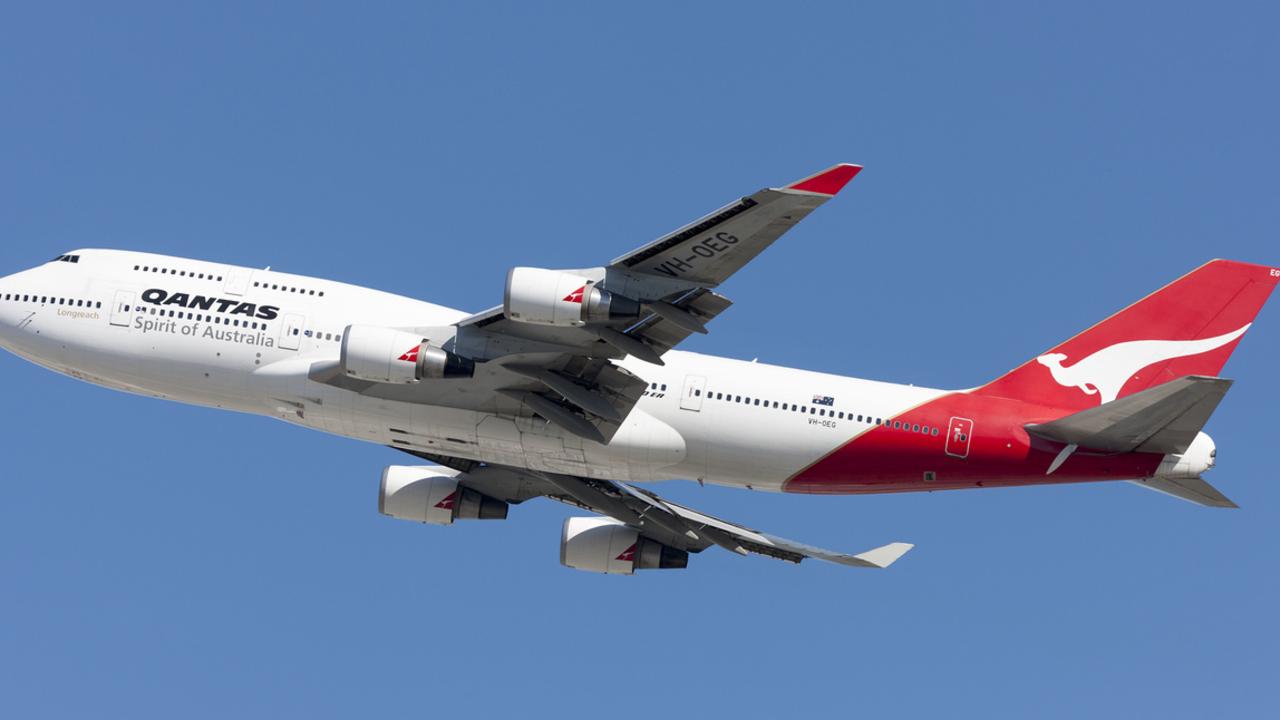
    The root of the current crisis traces back to escalating conflict-related disruptions in the Middle East, which have pushed global jet fuel prices up 70% year-to-date. By mid-April 2026, regional jet fuel prices had climbed to 125% above pre-conflict levels, prompting major Australian carriers Qantas and Virgin Australia to take immediate defensive action: both have raised ticket prices and cut flight capacity to offset rising energy costs.

    Australia’s flag carrier Qantas confirmed to the Australian Securities Exchange (ASX) in mid-April that it had restructured its route network, cutting domestic flight capacity by 5% and reallocating aircraft from U.S. and domestic services to meet strong demand for travel to Europe. The shift comes as both airlines and passengers avoid travel through the volatile Middle East. So far in 2026, Qantas’ share price has fallen 11.5%, though it has staged an 8.6% rebound over the past 30 days.

    Virgin Australia similarly announced mid-April that it had implemented fare hikes and capacity cuts after jet fuel costs doubled between March and April 2026. The carrier noted that its fuel suppliers have guaranteed near-term supply to support operations through to May 2026. Virgin’s share price has dropped 25.4% year-to-date, matching Qantas’ recent rebound trend with a 14.5% gain over the past month. Both major Australian airlines declined to provide additional comment beyond their existing public disclosures when contacted by NewsWire.

    IATA notes that the Asia-Pacific region faces amplified pressure compared to other global markets, due to its heavy reliance on crude oil imports from the Persian Gulf, which has strained regional refinery operations. Further cost increases have been driven by the depreciation of multiple Asian currencies against the U.S. dollar, since jet fuel and other major aviation expenses are dollar-denominated, pushing up local currency costs for carriers. Walsh did acknowledge one small bright spot for some regional operators: “Some Asia-Pacific carriers are benefiting from shifting traffic flows linked to the Middle East conflict, particularly on Europe-Asia routes.”

    To mitigate near-term supply risks for Australian airlines, the Australian government secured a 100 million-litre jet fuel shipment from China last month that is scheduled to arrive in early June.

  • One Nation did not have housing policy ‘written down’ at time of on-air bungle: Joyce

    One Nation did not have housing policy ‘written down’ at time of on-air bungle: Joyce

    Australia’s political landscape has been thrown into fresh chaos this week, as a stunning surge in polling for far-right party One Nation has been overshadowed by a series of embarrassing policy blunders that have raised serious questions about the party’s preparedness to govern. At the center of the controversy is veteran political figure Barnaby Joyce, who has conceded he made a major misstatement during a live television interview on One Nation’s proposed housing policy — an error he blames on the fact that the full details of the policy were never formally documented. The unforced error has sparked fierce criticism from the ruling Labor government and laid bare deep inconsistencies in how One Nation representatives communicate key policy proposals to voters.

    The drama unfolded on Thursday, when Joyce appeared on Sky News to outline One Nation’s plan to restrict property ownership by non-Australians. The policy, broadly framed to prioritize home access for Australian citizens, requires non-residents to sell any Australian properties they own within a two-year window. During the interview, Joyce incorrectly stated that permanent residents would be caught by the new rules. Only hours after the segment aired, he was forced to return to the same program to issue a hasty correction, clarifying that permanent residents would not be forced to sell their homes.

    One Nation leader Pauline Hanson later stepped in to lock in the clarified position, confirming the policy would only target foreign owners, specifically temporary visa holders. Even with Hanson’s intervention, however, confusion persisted: the following day, One Nation Senator Sean Bell was unable to answer basic follow-up questions about the policy during an interview with 2GB, including what enforcement measures would apply if a property was not sold within the mandated two-year period. When Bell repeatedly dodged the question, host Mark Levy cut the interview short, describing the exchange as a “trainwreck.”

    Days after the initial blunder, Joyce broke his silence on the controversy during an appearance on Seven’s *Sunrise*, where he made a major concession that has reignited debate over One Nation’s policy credibility. He admitted that at the time of his Sky News interview, the party had not formally drafted or written down the details of the housing policy. “I made a mistake because we didn’t have the policy written down, and I corrected it on the same news… and all of a sudden they’re saying One Nation is over,” Joyce said. He pushed back against critics, arguing that voter dissatisfaction with the current government, not a single interview misstep, is driving One Nation’s growing support. “People have changed, not because of an interview on Sky. People have changed because they don’t trust [the government] anymore, and their lives are not getting better,” he added. Labor Social Services Minister Tanya Plibersek quickly called out Joyce’s admission, pressing him: “So you just made it up? You didn’t have it written down?”

    The policy chaos comes as new polling data delivered a seismic shift in Australian federal voting intentions. The latest Newspoll conducted for *The Australian*, which surveyed 1,240 voters between the previous Monday and Thursday, recorded One Nation’s primary vote surging to 31 percent — putting the party one point ahead of the ruling Labor Party on 30 percent, and far ahead of the opposition Coalition, which recorded just 18 percent primary support. While Labor remains ahead of both One Nation and the Coalition on a two-party preferred basis, the primary vote result marks a historic high for Pauline Hanson’s far-right party and signals deep voter unrest with the established political order.

    Responding to the new polling, Plibersek acknowledged that Australian voters are hungry for major change, but argued that Labor is the only party capable of delivering meaningful reform. “We agree this country needs to be changed so that it’s fairer, so people get paid more, taxed less, they get the health and education services that they deserve,” she said. “We agree with all of that. That’s what we’re changing. One Nation is the party that’s opposing those changes.” As the fallout from the policy blunder continues, political observers are watching closely to see whether the confusion around the housing policy will erode One Nation’s newly gained support ahead of any future federal election.

  • Billy Slater brings back Reece Walsh for pivotal MCG showdown as Maroons look to save the Origin series

    Billy Slater brings back Reece Walsh for pivotal MCG showdown as Maroons look to save the Origin series

    With just over a week remaining until the second State of Origin clash at Melbourne’s MCG, Queensland Maroons head coach Billy Slater has finalised his adjusted squad, making a high-stakes call on controversial Broncos fullback Reece Walsh that has reshaped the side’s lineup for the must-win matchup.

    Queensland enters the June 17 showdown facing a do-or-die scenario: a loss to the New South Wales Blues will see their opponents clinch the 2025 series outright, while a Maroons win will force a deciding decider on Queensland home soil. To pursue that outcome, Slater has shaken up his game one roster, with Walsh’s return standing as the most notable adjustment.

    Walsh, a Brisbane Broncos fullback, has earned a spot on the Maroons’ extended bench, ousting fellow Broncos teammate Ezra Mam, who has been dropped entirely from the squad. Mam’s exit comes off a tough weekend for the young playmaker, who was already demoted to the Broncos’ reserve bench before a late, poor decision in a clutch moment contributed to Brisbane’s narrow loss to the Gold Coast Titans. While Walsh has not delivered his dominant best form throughout the 2025 NRL season, he has still beaten out Mam for a recall to the Origin side, marking his first potential appearance in the series since 2024. Kalyn Ponga, who was sent off early in Queensland’s game one collapse in Sydney, will retain his starting fullback position despite the high-profile disciplinary incident.

    The squad also features a first-time Origin call-up: Dolphins forward Kulikefu Finefeuiaki will make his Maroons debut from the bench, rewarded for a breakout, standout start to his 2025 NRL season. Injuries have forced two other key absences: starting forwards Pat Carrigan and Gehamat Shibasaki will both miss the clash, opening a bench spot for winger Murray Taulagi.

    Slater also made a small but strategic adjustment to his starting 13: Reuben Cotter will shift from an edge forward position to lock, which moves Briton Nikora into the starting back row, while Max Plath drops back to the extended bench.

    The revised full Maroons squad for game two is: Kalyn Ponga, Selwyn Cobbo, Robert Toia, Hamiso Tabuai-Fidow, Jojo Fifita, Cameron Munster, Sam Walker, Thomas Flegler, Harry Grant, Tino Fa’asuamaleaui, Briton Nikora, Kurt Capewell, Reuben Cotter, Max Plath, Lindsay Collins, Kulikefu Finefeuiaki, Trent Loiero, Reece Walsh, Murray Taulagi, Heilum Luki.

    The Blues are set to announce their own game two squad at 7pm AEST, with the side eyeing a series-clinching win on Melbourne ground to wrap up the Origin trophy early.

  • China’s Xi to visit North Korea after meetings with Trump, Putin

    China’s Xi to visit North Korea after meetings with Trump, Putin

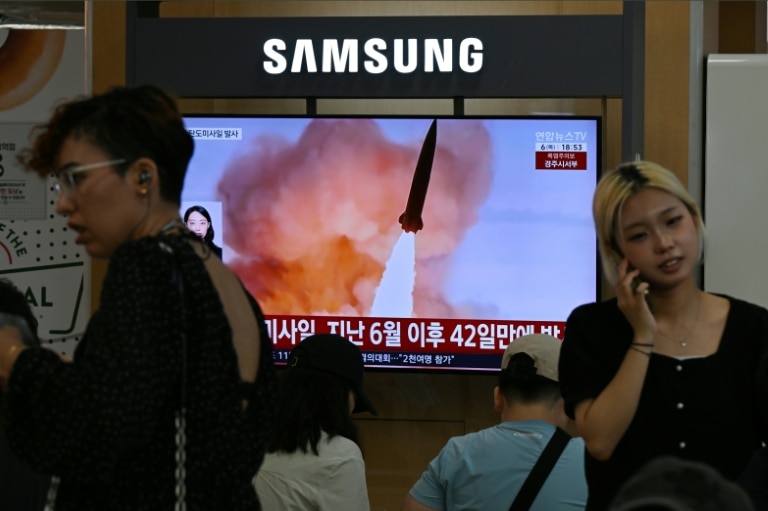
    Just weeks after hosting back-to-back summits with U.S. President Donald Trump and Russian President Vladimir Putin, Chinese President Xi Jinping is scheduled to arrive in Pyongyang on Monday for a high-profile meeting with North Korean leader Kim Jong Un. This visit comes at a pivotal moment for regional and global geopolitics, as Washington’s diplomatic efforts to denuclearize North Korea remain firmly deadlocked.

    For decades, China has stood as North Korea’s largest trading partner by a significant margin, and has long served as Pyongyang’s primary provider of both diplomatic backing and economic assistance to the country of 26 million people. During last month’s Beijing summit between Xi and Trump, the White House confirmed that the two leaders reaffirmed their shared commitment to the goal of complete denuclearization on the Korean Peninsula. Chinese Foreign Ministry spokesperson Mao Ning outlined the agenda for Xi’s meeting with Kim on Friday, stating the pair will exchange in-depth views on the future of bilateral relations and pressing regional issues of shared concern, with the aim of advancing greater stability for the Korean Peninsula and global peace at large.

    However, just 24 hours ahead of Xi’s arrival, Kim Jong Un’s influential sister issued a stark reminder of Pyongyang’s non-negotiable stance: North Korea’s nuclear weapons program remains a “line of no retreat” that the country will not abandon under any circumstances.

    Regional diplomacy experts note that Beijing’s core priority in the region has shifted in recent years, amid growing tensions between China and the United States. “China has always prioritized stability on the Korean Peninsula, and right now it has to carefully manage its broader relations and long-running differences with the U.S.,” explained Minseon Ku, a professor of diplomacy at DePaul University, in an interview with Agence France-Presse. “It is likely Beijing has already come to accept North Korea as a de facto nuclear state, but Xi will almost certainly convey to Kim that China values regional stability above all other outcomes.”

    Seong-Hyon Lee, a visiting scholar at the Harvard University Asia Center, echoed this analysis, pointing out that Beijing is moving away from attempting to force Pyongyang to abandon its nuclear program and toward a strategy of guaranteeing the durability of the North Korean regime. “China’s broader regional strategy benefits from a stable, heavily armed, aligned buffer state that occupies the military attention and resources of the U.S. and its regional allies,” Lee noted.

    Since the collapse of the 2019 summit between Kim and Trump, which fell apart over disagreements on the scope of denuclearization and the scale of sanctions relief, Pyongyang has repeatedly and publicly declared its status as an irreversible nuclear weapons state. During his first term in office, Trump met with Kim three times, but his October 2024 comment that he was “100 percent” open to another meeting with the North Korean leader has gone unanswered by Pyongyang.

    In recent months, Kim has gained greater diplomatic and material leverage from the ongoing war in Ukraine. After committing thousands of North Korean troops to fight alongside Russian forces in Ukraine, Pyongyang has secured critical military technology, food, and economic support from Moscow. This growing Russia-North Korea alignment has led some analysts to speculate that Xi’s visit is, in part, an effort to push back against Moscow’s expanding influence in Pyongyang. But DePaul University’s Ku pushed back on that framing, arguing that “overall, Moscow cannot match China’s historic role and influence in North Korea.” She added, “Russia and North Korea have a far more equal dynamic than China and North Korea: Moscow needs Kim’s support for its war in Ukraine just as much as Pyongyang needs Russian technology and food aid.”

    The last meeting between Xi and Kim took place in September 2025, when Kim joined Putin as a guest of honor at a Beijing military parade marking the 80th anniversary of the end of World War II and the defeat of imperial Japan. Analysts say that high-profile appearance highlighted Kim’s rising global standing, placing him alongside the leaders of the two largest Eurasian powers in a moment of international attention.

    Against a backdrop of growing U.S. geopolitical competition and an increasingly unpredictable Washington under the second Trump administration, Xi has hosted a steady stream of global leaders in recent months as Beijing works to shore up its network of regional and global alliances. Simultaneously, ongoing conflicts in the Middle East have diverted much of Washington’s attention and military resources, leaving the Trump administration with little progress to show on North Korea policy, particularly on the nuclear file, despite earlier high-profile summits with Kim.

    Notably, North Korea is the only country in the world that maintains an official, binding military alliance with China. “The U.S. is currently engaged in aggressive actions that threaten core Chinese interests, including global energy supply routes,” explained Vladimir Tikhonov, a professor of Korean Studies at the University of Oslo. “It appears Xi is seeking to consolidate his alliance with Pyongyang in large part to counter these U.S. moves.”

    Analysts also point out that North Korea serves as a strategic counterweight to U.S. allies in the region, including South Korea and Japan, at a time when Beijing is increasing pressure on the self-ruled island of Taiwan, which China claims as its sovereign territory. Relations between China and Japan, already strained for years, have deteriorated further recently after Japanese Prime Minister Sanae Takaichi, a prominent security hawk, suggested last year that Tokyo could intervene militarily if China attempts to take control of Taiwan by force.

    “As China’s international influence continues to grow, Beijing is likely seeking to draw Pyongyang more actively into its broader diplomatic orbit to advance its regional strategic goals,” noted Lim Eul-chul, a leading North Korea expert at South Korea’s Kyungnam University.