标签: Oceania

大洋洲

  • Destruction, hope in south Beirut as Lebanese return home

    Destruction, hope in south Beirut as Lebanese return home

    Hours after a fragile ceasefire took hold between Israel and Hezbollah, displaced residents of Beirut’s southern suburbs — a long-standing Hezbollah stronghold — began a tentative journey home on Friday, threading past crumpled building facades and mountains of concrete rubble to assess what remains of their lives.

    Streaming back in private cars and on motorbikes, many carried only the few belongings they grabbed when they fled, their arrivals marked by equal measures of relief at the lull in fighting and heartbreak over the scale of destruction left by weeks of Israeli airstrikes that began on March 2.

    Among the early returnees was 42-year-old Insaf Ezzedine, who fled the neighborhood of Hay al-Sellom and spent the duration of the conflict bouncing between makeshift street shelters after formal evacuation centers hit capacity. Speaking to Agence France-Presse on a Hezbollah-organized media tour of the area — where independent journalist movement remains restricted — Ezzedine described the overwhelming force of the bombardments that shook the district’s aging, densely packed residential blocks. As her young daughter clung to a plastic doll on the back of their motorbike, she voiced what many returning residents echoed: a desperate longing for lasting peace. “We hope the war will stop and we’ll all go back to our homes and live in peace,” she said. “We want to live with our kids in safety. Our own home was badly damaged, so we’re heading to my brother’s place now.”

    The scope of damage is visible on every major thoroughfare in the southern suburbs. Piles of broken concrete, toppled solar panels and dented water tanks block roadside verges, while storefronts along main roads stand gutted, their metal doors blown off their hinges and shop windows shattered into shards. Occasional cars bearing Hezbollah’s yellow flags pass families walking and driving through the rubble-strewn streets, many loaded with whatever personal items they have been able to salvage.

    Seventy-five-year-old Samia Lawand traveled back with her daughter and grandchildren only to confirm the worst: their home was too damaged to reoccupy. “We came to check on the house and pick up a few things, but we found the place was too damaged, so we’re leaving again,” Lawand said from the front passenger seat of her family’s car. Her 42-year-old daughter Mariam added that shattered glass and scattered belongings made the space unlivable. In one particularly striking scene on a major artery, a mid-rise building had its entire side torn away by a strike, leaving office furniture and even a complete dentist’s chair exposed to open air. Opposite a blackened, destroyed building just steps from a large portrait of Hezbollah leader Naim Qassem, the twisted wreckage of burned-out cars sits abandoned.

    For 34-year-old Hassan Hanoud, who fled to central Beirut with his wife, children and mother to escape the bombardment, the ceasefire represented a chance to return to the only home his family has. “We left for the kids’ sake,” Hanoud explained, a young child resting in his lap as a young daughter behind him held a worn plush toy. “The last time we went back, all the doors and windows were broken, but now the kids just want to come home.”

    In the Tahouitet al-Ghadir neighborhood, the first signs of slow recovery are already emerging. Shopkeepers have begun sweeping away debris to reopen their storefronts, and small groups of residents have begun to gather. Long-separated relatives hugged and wept when reunited for the first time since the escalation of hostilities.

    Sixty-five-year-old Mustafa, who owns a local garage and spent the war moving between makeshift beachfront tents near the Beirut coast, was one of the first to return, arriving just minutes after the ceasefire went into effect at midnight. “There’s no better feeling than coming back to your area and your people,” he said.

    But for many, the fragile truce comes at a devastating cost, bringing a complex mix of fear and cautious hope. Seventy-six-year-old retired soldier Ezzedine Shahrour, who fled the southern Lebanese town of Kfar Hammam and now has one son serving in the Lebanese army and another in security forces, has been begging his children to take him home, even as they warn the security situation remains unstable. “There’s fear and hope” after the ceasefire, he acknowledged.

    Seventy-three-year-old Jaafar Ali, who fled the southern Lebanese city of Tyre with his family to shelter in Beirut, came to southern Beirut to check on the home of his relatives. He recalled fleeing so abruptly that the family left in their nightclothes, with no time to grab belongings. “We don’t know how we got out, and we don’t know what’s happened to the house,” he said. While he is relieved the fighting has paused, the loss has been overwhelming. “We’re happy about the ceasefire, but we’ve paid a high price. Our homes were badly damaged. We’ve lost a lot… I feel like crying. Thank God we’re still alive, but what about all the people who died under the rubble?”

  • Oil plunges, stocks jumps as Iran declares Hormuz open

    Oil plunges, stocks jumps as Iran declares Hormuz open

    Global financial markets swung dramatically on Friday, triggered by a key announcement from Iranian Foreign Minister Abbas Araghchi that the Strait of Hormuz, the world’s most critical chokepoint for global oil supplies, will remain fully open to commercial shipping for the duration of the ongoing ceasefire between Iran and the United States. The news sent crude oil prices tumbling more than 10 percent and pushed major U.S. stock indices to uncharted record territory, capping a rapid two-week rebound from conflict-driven losses.

    The Strait of Hormuz, which carries roughly one-fifth of the world’s daily crude oil shipments, had seen growing supply disruption risks after the outbreak of regional hostilities linked to the U.S.-Israeli offensive. Those tensions pushed oil prices to a peak of nearly $120 a barrel earlier this month, stoking widespread fears of inflationary pressure that could destabilize the global economy. Within hours of Araghchi’s statement posted on X, both benchmark Brent Crude and U.S. West Texas Intermediate fell below the $90 per barrel threshold, recording their largest single-day drop in years. By 1330 GMT, Brent traded at $89.56 a barrel, down 9.9 percent, while WTI fell 10.2 percent to settle at $81.88.

    “This news is having an immediate impact on markets,” noted Kathleen Brooks, research director at XTB. The development marks the most significant breakthrough since the ceasefire went into effect, she added, saying “it gives hope that the war will end soon, and supply chains will return to some normality.”

    Wall Street opened sharply higher on the news, with the Dow Jones jumping 1.3 percent to 49,221.56 points, while the S&P 500 gained 0.7 percent to hit a new record of 7,092.15. The Nasdaq Composite also climbed 0.9 percent to 24,317.32, extending all-time highs set the previous trading session. In Europe, major benchmarks followed the upward trend: Frankfurt’s DAX gained 2.2 percent, while Paris’ CAC 40 rose 2 percent, and London’s FTSE 100 added 0.5 percent. Asian markets mostly closed lower, however, after recent record-setting runs, with Tokyo’s Nikkei 225 falling 1.8 percent and Hong Kong’s Hang Seng Index dropping 0.9 percent.

    The speed of the U.S. stock rally has surprised many market participants. David Morrison, a senior analyst at Trade Nation, pointed out that the S&P 500 has bounced nearly 12 percent in just over two weeks, a move that caught many investors off guard. “Many investors sold during the first few weeks of the war, either to flatten their exposure or go net short,” he explained. “Now these investors are having to pay up to re-establish their existing positions, or cover their shorts and suffer painful losses.” The rally has also been fueled by a resurgent “fear of missing out” as indices hit new records, supported by stronger-than-expected earnings growth during the first-quarter reporting season.

    Uncertainty remains over the exact scope of the ceasefire referenced in Araghchi’s announcement. It remains unclear whether he was referring to the 10-day Israel-Lebanon truce that took effect at midnight or the earlier two-week Iran-U.S. truce that began on April 8. Even with the positive announcement, U.S. President Donald Trump reaffirmed that the American blockade of Iranian ports remains in force. Still, the declaration has boosted market hopes for extended ceasefire negotiations and long-term de-escalation.

    Meanwhile, Western leaders were moving forward with contingency planning Friday: French President Emmanuel Macron and UK Prime Minister Keir Starmer chaired an alliance meeting to discuss the deployment of a multinational naval task force to guarantee free navigation through the strait once the conflict concludes. Currency markets also reflected the improved risk sentiment, with the euro and pound gaining against the U.S. dollar, while the dollar softened against the Japanese yen.

  • Rescue for whale stranded off German coast in ‘decisive phase’

    Rescue for whale stranded off German coast in ‘decisive phase’

    A months-long struggle for survival of a 13.5-meter humpback whale stranded off Germany’s Baltic Sea coast has reached a critical turning point, with a last-ditch private rescue operation entering its decisive phase, regional officials confirmed Friday.

    The whale’s ordeal stretches back to late March, when it was first spotted trapped on a sandbank near the northern German city of Luebeck. After managing to free itself from the initial stranding, the large marine mammal only traveled a short distance east along the coast before becoming stuck again near Poel Island, close to Wismar.

    By early this month, official observers held a grim outlook: they said the whale had been too severely weakened by its weeks-long displacement from its natural Atlantic habitat to survive, and expected the animal to die. That prognosis shifted dramatically this week, when state authorities approved an unconventional rescue plan put forward by two private entrepreneurs. Unlike earlier proposals that were scrapped over fears they would kill the animal, the new plan relies on inflatable cushions to lift the weakened whale, which will then be transported out to open water on large pontoons.

    On Friday, Till Backhaus, environment minister for the state of Mecklenburg-Western Pomerania, announced the operation had entered its decisive window, and confirmed the mammal now has a tangible chance at survival. Rescue teams were spotted Friday approaching the whale’s location to carry out pre-lifting preparations, and observers noted the animal has shown increased activity in recent days, including repeatedly lifting and flapping its tail above the water’s surface.

    Backhaus added he was encouraged by the whale’s current state, noting it “is in a better condition than some had suspected.” Rescuers emphasized they are moving at a deliberate, cautious pace to avoid causing additional stress to the animal, and have not set a firm timeline for when the full lifting and transport will be carried out.

    The whale, nicknamed “Timmy” by much of the German press, has captured widespread public attention across the country. The prolonged struggle has sparked public demonstrations in support of continuing rescue efforts, though the outcry has also turned extreme in some cases: some social media posts targeting state officials have included violent threats of death. Earlier rescue proposals, including a plan to use a large catamaran to move the whale, were previously rejected after experts concluded the animal would not survive the stress of that method.

  • Anthony Albanese to join world leaders in summit discussing reopening of Strait of Hormuz, following Trump criticism

    Anthony Albanese to join world leaders in summit discussing reopening of Strait of Hormuz, following Trump criticism

    A high-stakes virtual diplomatic summit focused on the Strait of Hormuz will bring together more than 40 global leaders Wednesday night, with Australian Prime Minister Anthony Albanese set to take part in talks aimed at reopening the critical waterway and cementing regional peace after a months-long blockade.

    Organized under the banner of the Strait of Hormuz Maritime Freedom of Navigation Initiative, the meeting is co-hosted by French President Emmanuel Macron and newly installed British Prime Minister Kier Starmer, who is currently in Paris to oversee the gathering. The summit is scheduled to kick off at 10:30 pm local time, with a clear policy agenda centered on long-term security for one of the world’s busiest global shipping chokepoints.

    Notably, US President Donald Trump will not be in attendance, multiple Australian Broadcasting Corporation reports confirm. The absence comes amid open friction between Trump and the Australian government over his earlier blockade of the strait, during which he publicly slammed Australia for failing to back his actions.

    “I’m not happy with Australia because they were not there when we asked them to be there,” Trump told reporters overnight. “They were not there, having to do with Hormuz. So I’m not happy, I’m not happy with them.”

    Albanese pushed back on the criticism Friday, clarifying that his administration had not received any formal new requests for support from the White House. The prime minister also pointed to Trump’s own past remarks downplaying the need for allied assistance. “And indeed, President Trump has himself said that he has got this and he has made that position clear,” Albanese told reporters.

    Trump has previously doubled down on this stance, writing on social media that the U.S. had achieved such overwhelming military success in the region that it “no longer ‘need,’ or desire” allies’ help — adding “WE NEVER DID!” for emphasis.

    According to an official statement from the British Prime Minister’s office, tonight’s summit will prioritize two core goals: shoring up the fragile ceasefire that has paused active hostilities in the region, and laying the groundwork for the permanent, secure reopening of the strait’s shipping lanes.

    “Discussions will also include supporting the vital work of the International Maritime Organisation, who will dial into the call, to ensure the safety of seafarers and vessels,” the statement continues. The release added that Starmer, who completed a tour of Gulf states last week, has prioritized aligning diplomatic, military and economic tools to protect the ceasefire and mitigate global energy and food price shocks that have driven up cost of living pressures worldwide since the blockade began.

    Following tonight’s diplomatic gathering, a separate multinational military planning session is scheduled for next week at the UK’s Permanent Joint Headquarters in Northwood, where defense officials will work through operational details for long-term security deployments in the region.

  • Lebanese civilians head home as truce with Israel takes effect

    Lebanese civilians head home as truce with Israel takes effect

    A fragile 10-day ceasefire between Israel and Iran-backed Hezbollah has come into force along the Lebanon-Israel border, opening the door for thousands of displaced Lebanese civilians to rush toward their war-ravaged homes in southern Lebanon and southern Beirut. Despite official warnings from the Lebanese military against returning to areas heavily damaged by weeks of Israeli targeting of Hezbollah positions, crowds of families have already gathered at destroyed crossing points, waiting for infrastructure repairs to be completed so they can begin their journey home.

    At the bombed-out Qasmiyeh bridge near the southern Lebanese city of Tyre, AFP journalists documented long lines of vehicles packed with belongings and anxious residents, many of whom had been displaced for weeks amid the escalating cross-border conflict. For many of these returnees the temporary truce, negotiated through U.S. diplomatic pressure led by President Donald Trump, has brought a long-awaited glimmer of hope after months of violence. “Our feelings are indescribable, pride and victory,” 37-year-old returnee Amani Atrash told AFP from her car while waiting in the queue, adding that she held out hope the 10-day truce would be extended into a longer lasting ceasefire.

    Across the international border in northern Israel, civilian movement restrictions remain in place for vulnerable border communities ordered by the Israeli military’s home front command. Even so, some Israeli civilians are already daring to hope for a return to everyday normalcy after weeks of sheltering from rocket attacks. “I’ve got a three-year-old girl and a two-month-old baby, and the whole time we’ve just not left the house because you never know when there’ll be a rocket attack,” 31-year-old Ofir Ben Aris Lev told AFP. “It’s been crazy, but I think things will be quiet now and I’ll be able to take my daughter to the park”, he added.

    Hezbollah, which has sustained heavy damage from Israeli airstrikes and deployed ground fighters in southern Lebanon, has confirmed it will respect the truce so long as Israeli attacks on Lebanese territory cease, but remains on high alert for any violations. “The fighters will keep their finger on the trigger because they are wary of the enemy’s treachery,” the movement said in an official statement. Hezbollah lawmaker Ibrahim al-Moussawi told AFP the group would “cautiously adhere” to the truce if Israeli attacks stopped, and thanked Iran for applying diplomatic pressure in support of Lebanon.

    The ceasefire marks a critical milestone in U.S.-led efforts to broker a broader peace deal between Washington and Tehran, after Iran made an end to the Lebanon-based fighting a non-negotiable precondition for any final agreement. Pakistan has led behind-the-scenes diplomatic efforts to restart direct face-to-face negotiations between Tehran and Washington, and President Trump has said the two sides are “very close” to reaching a final agreement.

    The conflict in Lebanon erupted on March 2, when Hezbollah launched a barrage of rockets into Israel just days after the start of the broader regional Middle East war, in retaliation for the killing of Iran’s supreme leader Ali Khamenei. As the ceasefire officially took effect, the Israeli military confirmed it had struck more than 380 targets linked to the “Hezbollah terror organisation” across southern Lebanon during the conflict, and said it remains on “high alert” to resume military operations if the truce is broken.

    President Trump confirmed he held separate calls with Israeli Prime Minister Benjamin Netanyahu and Lebanese President Joseph Aoun in the lead-up to the truce, saying both leaders had agreed to the pause in fighting “in order to achieve PEACE between their Countries”. He added that he expects both Netanyahu and Aoun to visit the White House for talks “over the next four or five days” to continue peace negotiations.

    A high-level in-person meeting between Israeli and Lebanese leadership would mark a watershed moment for the long-turbulent region, though it remains unclear whether the meeting will actually go ahead. An anonymous official source told AFP that Lebanese President Aoun has already rejected Trump’s request for a direct call with Netanyahu, a sign of lingering tensions between the two governments.

    Netanyahu said the truce opens an opportunity for a “historic peace agreement” with Beirut, but reiterated that the full disarmament of Hezbollah remains a non-negotiable precondition for any long-term deal. Lebanese Prime Minister Nawaf Salam welcomed the ceasefire announcement, calling it a “key Lebanese demand that we have pursued since the very first day of the war”.

    President Trump called the developing diplomatic progress “very exciting” during a press interaction with AFP at the White House, noting “Today they’re going to be having a ceasefire, and that’ll include Hezbollah.” For Iranian officials, the truce was framed as a victory for Tehran’s diplomatic positioning and Hezbollah’s armed resistance. Iranian state television portrayed the ceasefire as the result of Tehran’s “insistence” alongside Hezbollah’s “resistance” against Israeli aggression.

    Netanyahu confirmed Israel agreed to the 10-day truce but will maintain a 10-kilometre (six-mile) “security zone” along the border inside southern Lebanon for the duration of the ceasefire. Violence continued right up to the minute the truce went into effect: Lebanon’s health ministry confirmed that at least seven people were killed and more than 30 wounded in a late Israeli airstrike on the town of Ghazieh on Thursday, just hours before the ceasefire took hold.

  • Queensland reveals plans for new $11bn Gladstone oil refinery amid national fuel crisis

    Queensland reveals plans for new $11bn Gladstone oil refinery amid national fuel crisis

    A week after a destructive fire damaged one of Australia’s only two remaining operational oil refineries, Queensland’s state government has launched a proactive, home-grown plan to strengthen the nation’s fuel security amid a growing national supply crisis. The proposal, unveiled Friday by Queensland Premier David Crisafulli, comes just days after the Wednesday night blaze that tore through VIVA Energy’s Geelong refinery, leaving only Ampol’s Lytton facility in Brisbane fully operational across the country.

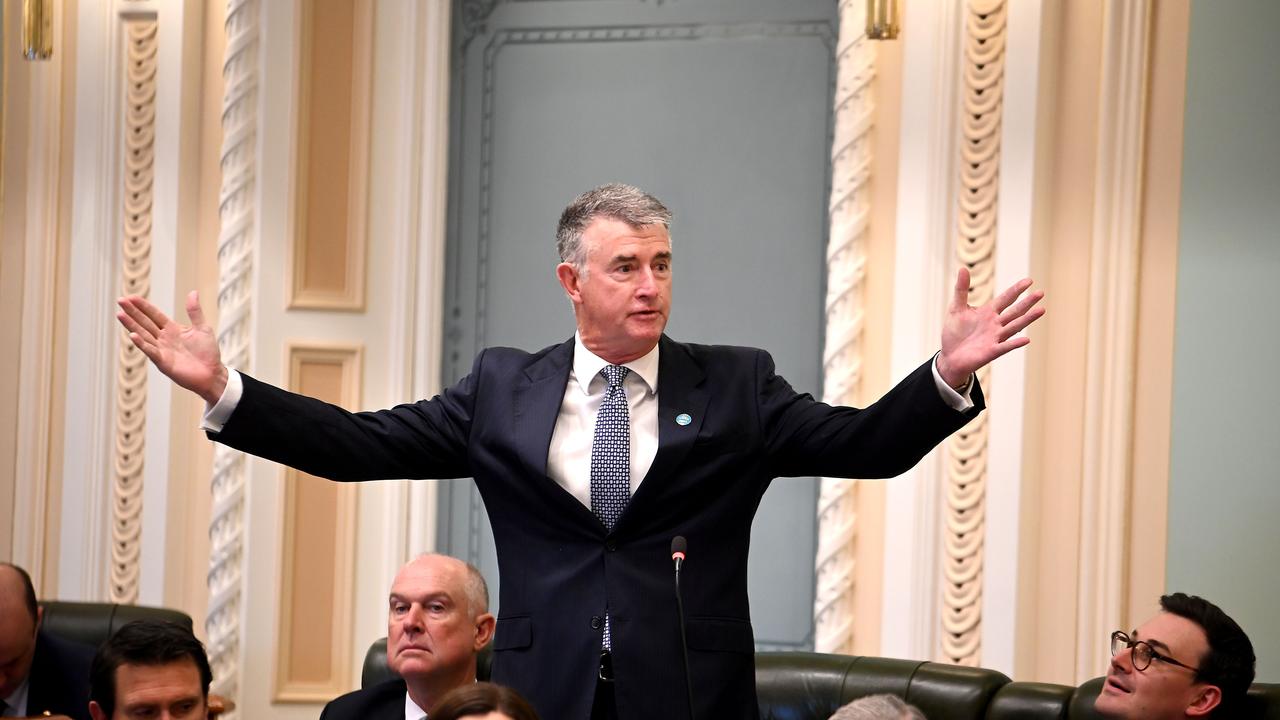
    Crisafulli confirmed that state authorities are already in active discussions with multiple project backers to develop a new refinery in Queensland’s industrial Gladstone region, a move designed to let Australia take greater control of its domestic fuel supply chain. “For a long time, I have highlighted that Queensland needs to control its own energy destiny — that means we need to drill, refine and store our own fuel right here,” the premier stated during the announcement. “Today I can confirm we are in formal talks with several proponents to build a fuel refinery here in Queensland. We have the right regulatory framework, the right approach, and we are open for investment.”

    The proposal lands as Australia confronts a growing national fuel crisis, triggered by escalating geopolitical tensions between the United States and Iran in the Middle East that have disrupted global energy supply chains. The country’s refining capacity has shrunk drastically over the last three years: two major facilities in Kwinana, Western Australia and Altona, Victoria closed permanently in 2021 and were converted into import-only storage terminals, leaving just the Geelong and Lytton plants online. This recent fire at Geelong has amplified concerns about overreliance on imported fuel and exposure to global market volatility.

    When pressed for a concrete timeline for the Gladstone project, Crisafulli declined to share a specific completion date, framing the initiative as a long-term investment in national energy resilience. “This is a long-term vision for fuel security,” he said. “We also have critical work to deliver in the short and medium term to address immediate supply risks.”

    Queensland Deputy Premier Jarrod Bleijie added that the state government is prioritizing speed for the project, having already directed Economic Development Queensland and the state’s Coordinator-General to fast-track all approval processes. “I have instructed these agencies to move every possible obstacle out of the way for the companies we are talking to, to fast-track approvals, secure suitable land, and get this refinery built as quickly as possible,” Bleijie explained.

    One proponent already confirmed to be in talks is Resilient Energy Australia, whose chair David Goodwin told the Australian Broadcasting Corporation that the group has put forward a $11 billion proposal for the Gladstone site. If completed, the facility would have the capacity to process 210,000 barrels of crude oil per day, with between 60 and 70 percent of output dedicated to diesel. The refinery would also produce other critical fuel products including automotive gasoline, aviation gasoline, kerosene and jet fuel to meet domestic demand across multiple sectors.

  • War in the Middle East: latest developments

    War in the Middle East: latest developments

    A fragile 10-day ceasefire between Israel and Lebanon came into force at midnight local time on Thursday, marking a critical pause to weeks of cross-border conflict that has stoked fears of a wider regional war. The truce, brokered with U.S. mediation, comes hours after a deadly Israeli airstrike in southern Lebanon and intense last-minute exchanges of fire along the border, leaving casualties on both sides.

    Hours before the ceasefire deadline, an Israeli strike on the southern Lebanese town of Ghazieh killed at least seven people and wounded 33, according to Lebanon’s health ministry. Lebanese state media labeled the attack a “massacre against civilians”, with search and rescue operations still underway to pull survivors from rubble. In northern Israel, rocket fire from Hezbollah positions wounded two people, one seriously, in the towns of Karmiel and Nahariya, Israel’s national emergency service Magen David Adom confirmed.

    Despite official warnings from the Lebanese army urging residents of southern Lebanon to avoid returning to their war-damaged homes, dozens of families loaded their belongings into packed cars and began traveling south along Lebanon’s coastal highway before dawn, crossing the remains of a bridge destroyed in earlier Israeli bombing as soon as sunrise broke.

    The ceasefire agreement has drawn mixed official reactions across the region and globally. U.S. President Donald Trump, who announced the truce earlier this week, took to his Truth Social platform Thursday to urge Iran-backed militant group Hezbollah — which has fought Israeli forces along the border since launching rocket attacks in support of Iran last month — to uphold the pause in hostilities. “I hope Hezbollah acts nicely and well during this important period of time,” Trump wrote, adding that honoring the truce would be a “GREAT moment for them if they do. No more killing. Must finally have PEACE!” Trump also confirmed that the ceasefire explicitly includes Hezbollah, and announced he will invite Israeli Prime Minister Benjamin Netanyahu and Lebanese President Joseph Aoun to the White House for diplomatic talks in the coming weeks.

    Israeli Prime Minister Benjamin Netanyahu framed the 10-day truce as a potential opening for a “historic peace agreement” with Beirut, but reaffirmed that the full disarmament of Hezbollah remains a non-negotiable precondition for any long-term deal. Lebanese Prime Minister Nawaf Salam formally welcomed the ceasefire announcement, while a Hezbollah member of parliament told AFP that the group would respect the truce as long as Israel halts all attacks on its operatives — though Hezbollah has not issued an official formal statement endorsing the agreement. Iran, Hezbollah’s primary backer, also welcomed the truce. Iranian foreign ministry spokesman Esmaeil Baghaei confirmed in a Telegram post via state news agency IRNA that the Lebanon ceasefire is part of a broader earlier ceasefire understanding between Iran and the U.S. mediated by Pakistan, agreed to pause the current wave of regional conflict.

    On the Iranian nuclear front, Trump told reporters at the White House that Tehran has agreed to hand over its entire stockpile of enriched uranium, which the U.S. argues could be repurposed to build nuclear weapons. “They’ve agreed to give us back the nuclear dust,” Trump said, adding that Washington and Tehran are “close” to a final peace deal to end six weeks of open conflict.

    In the first hours of the ceasefire, Lebanon’s army reported that “several Israeli acts of aggression” have already occurred, accusing Israel of violating the terms of the truce. The violations have raised new concerns that the fragile 10-day pause could collapse before it can pave the way for longer-term diplomatic talks to end the months-long border conflict.

  • Storm brewing: Melbourne need lightning to strike twice after they slump to fifth loss in a row thanks to emerging Raiders star

    Storm brewing: Melbourne need lightning to strike twice after they slump to fifth loss in a row thanks to emerging Raiders star

    One of rugby league’s most dominant dynasties over the past 20 years is facing its biggest crisis in more than a decade, as the Melbourne Storm’s five-match losing skid has left their long-running finals appearance streak on the brink of extinction following a 26-22 comeback defeat to the Canberra Raiders at GIO Stadium.

    The Storm’s current slump marks the first time the club has dropped five consecutive contests since 2012, the same year they capped off the downturn with a premiership title. But even with Craig Bellamy at the coaching helm, few analysts are predicting a repeat of that unlikely turnaround this time around, after a string of key injuries and off-season departures have finally gutted the roster of the depth and star power that once made the purple-clad side the most feared outfit in the NRL.

    Melbourne got off to a promising start to the 2026 season, opening with two dominant wins to reinforce expectations of another deep finals run. But the rot has set in quickly in recent weeks: opposition sides no longer approach matches against the Storm with the same title-tested trepidation they once did, and the club’s vaunted superstar spine can no longer produce game-changing plays, starved for space by a depleted forward pack and lacking dynamic wide threats that can turn broken plays into points.

    Saturday’s clash actually marked an improvement from Melbourne’s prior outing, a humiliating home loss to the New Zealand Warriors. Fullback Sua Fa’alogo turned in a particularly sharp performance for the Storm, though his night ended early when he was forced from the pitch after a high tackle. Even with the improved effort, however, the Storm’s thin roster cannot compete with the league’s top contenders, leaving Bellamy needing to pull off an all-time coaching miracle to keep the club’s finals streak alive.

    For Canberra, the narrow win marked back-to-back victories, with centre Simi Sasagi turning in the performance of a lifetime to carry the Raiders across the line. A versatile utility who has filled multiple roles for the club over his career, Sasagi has found a permanent home on the right edge this season, and he delivered his best form of the year when it mattered most.

    The match got off to a chaotic start: the Raiders thought they had opened the scoring through Hudson Young just minutes in, only for a Bunker review to disallow the try, a call that sparked widespread outcry across social media. A minute later, Ethan Strange executed a sharp build-up play that put Sasagi over for the game’s opening try, before lock Corey Horsburgh extended Canberra’s lead to 12-0 inside the first 10 minutes.

    But Canberra’s fast start was nearly derailed by a moment of disciplinary madness from Horsburgh. After opening the scoring, the fiery lock lashed out at referee Peter Gough over what he deemed slow ruck speed from the Storm, earning a penalty for dissent while the Raiders held possession. Melbourne capitalized immediately, crossing for a try through Fa’alogo. The incident was far from the first time Horsburgh’s temper has cost his side, after a sin-binning against Cronulla earlier this season opened the door for two Sharks tries; coach Ricky Stuart pulled the lock aside for a quiet word at halftime to address the outburst, though the mistake ultimately did not cost Canberra the win.

    Sasagi stepped up to flip the momentum of the match when the Storm looked poised to pull away. With Canberra trailing and on the ropes, the centre pulled off a game-saving intercept to stop the Storm from opening up a 10-point lead, before throwing a pinpoint offload to send Strange over for a try that leveled the score. He notched a second critical intercept on another Storm attacking drive, finished the night with a team-high 182 running metres, and only missed out on a second assist when a forward pass call negated the play.

    Canberra held on to lock in the win, but the side will now face an anxious wait over the fitness of veteran forward Josh Papalii, who was forced from the match with a left calf injury.

  • Ngor Nai: Basketballer pleads not guilty to rape charge, committed to stand trial

    Ngor Nai: Basketballer pleads not guilty to rape charge, committed to stand trial

    A 26-year-old professional basketball player Ngor Nai has formally entered a not guilty plea to a single count of rape during a Friday morning hearing at the Melbourne Magistrates Court, confirming he will contest the allegations at a full trial. The charge against Nai centers on an alleged incident in May of last year, when prosecutors claim he intentionally sexually penetrated a complainant without a condom, and did not hold a reasonable belief that she consented to intercourse without barrier protection.

    Nai has built a notable career across multiple regional and national basketball leagues in Australia and New Zealand. He was a squad member for the Adelaide 36ers during the NBL25 season, and had been drafted to join the Manawatu Jets, a team competing in New Zealand’s top basketball league, for the 2026 season. Prior to these stints, he also played for the Ringwood Hawks and Ipswich Force in Australia’s NBL1 competition.

    When Nai first appeared in court on February 2, the court was informed that the 6-foot-10 forward was in the process of relocating to New Zealand ahead of the 2026 Manawatu Jets season. However, just weeks before the new season was set to kick off on March 27, the Jets announced via social media that the organization and Nai had reached a mutual agreement to separate immediately, ending his contract with the team ahead of his debut. During Friday’s hearing, Nai’s legal aid representative told the court that the player has since returned to Melbourne to reside while the legal process moves forward.

    Nai currently remains on bail, with strict conditions that require him to live at a confirmed fixed address and prohibit him from leaving Australia. His next court appearance is scheduled for May 15 at the County Court, where he will attend a preliminary directions hearing to outline next steps for the upcoming trial.

  • ASX 200 slips as Middle East caution outweighs strong tech surge

    ASX 200 slips as Middle East caution outweighs strong tech surge

    On Friday, a strong five-day rally in Australia’s technology sector failed to offset broader investor caution tied to unresolved Middle East peace negotiations, leaving the country’s key sharemarket benchmark in negative territory. The benchmark S&P/ASX 200 closed down 8.10 points, or 0.09%, at 8946.90, while the wider All Ordinaries index retreated 5 points, or 0.05%, to settle at 9168.60.

    Trading was split across the market’s 11 sectors, with six closing in positive territory and five ending the session lower. Technology stocks emerged as the clear outperformer, with the sector’s index notching a 12.99% gain over the previous five trading days, and extending upward momentum into Friday. Standout gainers in the space included logistics software firm WiseTech Global, which rose 2.85% to $46.18, data center operator Next DC Limited, which climbed 1.58% to $14.12, and communications technology firm Codan, which added 0.89% to $33.97.

    These gains were more than offset by pullbacks in consumer discretionary shares and financial stocks. Retail conglomerate Wesfarmers, the country’s largest retailer by revenue, dropped 1.63% to $72.85, electronics retailer JB Hi-Fi fell 0.50% to $76.07, and home goods chain Harvey Norman slid 2.97% to $4.57. Australia’s big four banks also posted a mixed performance: Commonwealth Bank of Australia eked out a 0.07% gain to $178.23, and ANZ Group added 0.50% to $37.92, while Westpac Banking Corporation fell 0.72% to $39.73, and National Australia Bank slumped 1.98% to $42.55.

    Beyond equities, the Australian dollar saw slight downward movement after hitting a four-year high in the previous session. During Thursday’s Asian trading window, the currency briefly touched a peak of 71.97 U.S. cents before retreating marginally to 71.63 U.S. cents by Friday’s close. Commonwealth Bank senior economist Kristina Clifton projected that the local currency could receive a short-term 1-2 U.S. cent boost if the Strait of Hormuz, a critical global oil chokepoint currently disrupted by regional tensions, reopens to full commercial traffic. Clifton noted that a full reopening remains 3 to 4 weeks away based on current projections.

    Investor anxiety over the trajectory of Middle East peace talks and the ongoing uncertainty around maritime access through the Strait of Hormuz has left market strategists warning of elevated downside risk for Australian and global equities. AMP chief economist and head of investment strategy Shane Oliver noted that while major markets have likely absorbed the worst impacts of the regional conflict and associated oil price shock if oil shipments resume quickly, the unresolved uncertainty around peace talks and Strait access means a full 15% peak-to-bottom market correction remains a distinct possibility. Oliver also flagged stretched equity valuations, U.S. political uncertainty tied to former President Donald Trump and upcoming midterm elections, growing concerns over the private credit sector, and unquantified risks tied to artificial intelligence adoption as additional headwinds for markets in the coming months.

    In individual company news, buy now, pay later provider Zip emerged as the session’s top gainer, jumping 13.66% to $2.33 after reporting a 41.5% year-over-year surge in third-quarter cash earnings before interest and tax, driven primarily by strong revenue growth across its U.S. operations. Civil contractor NRW Holdings also climbed 2.18% to $6.10 after announcing its fully owned subsidiary Fredon had secured A$160 million in new electrical and mechanical infrastructure contracts. On the downside, online furniture retailer Temple & Webster was the session’s largest loser, sliding 6.45% to $6.66 despite no new public announcements from the company to explain the pullback.