
What was meant to be a night of national celebration for Paris Saint-Germain’s historic UEFA Champions League final win over Arsenal quickly descended into chaos across France Saturday, leaving one young fan dead, dozens injured, and hundreds in police custody after widespread violent unrest. French interior officials confirmed Sunday that the total number of arrests nationwide reached 780, a 32% jump from the number of detentions recorded during PSG’s 2023 Champions League victory celebrations, when rioting also broke out. Anticipating potential unrest after last year’s disorder, French authorities deployed 22,000 law enforcement officers across the country ahead of Saturday night’s final, held in Budapest, Hungary. Even with the large security presence, unrest flared in 71 different municipalities, with small groups of rioters engaging in theft, looting and violent clashes with police. Interior Minister Laurent Nunez told reporters Sunday that rioters specifically targeted law enforcement with commercial fireworks, leaving 57 officers injured. In total, 219 people across the country were hurt during the unrest, eight of them with life-threatening injuries. One of the most tragic incidents unfolded on a Paris ring road exit ramp, where a young man in his 20s riding a motocross bike crashed head-on into concrete security barriers and was killed. Separately, authorities confirmed another young person was seriously wounded in a knife-linked robbery that broke out amid the chaotic street crowds in Paris. The most severe disorder unfolded on Paris’ iconic Champs-Élysées, where 20,000 fans converged to celebrate immediately after the final whistle. The city hall for Paris’ 8th arrondissement, the district that hosts the famous avenue, released a scathing statement Sunday describing the area as having transformed from a celebration space into an urban guerrilla warfare zone overnight. The district mayor called for a strict policy of zero gatherings on the Champs-Élysées for future victory events, arguing it is the only way to prevent repeat violence after repeated disorder following major PSG wins. That call was rejected by Interior Minister Nunez, who argued a full ban of gatherings on the avenue would require reallocating nearly half of the planned security resources for Sunday’s scheduled victory events. Sunday’s official celebration is scheduled to bring an estimated 100,000 fans to the Champs-de-Mars, the public greenspace at the foot of the Eiffel Tower, for an open-air parade featuring the PSG playing squad. After the public event, the team is scheduled to meet with President Emmanuel Macron at the Elysee Palace. To prepare for the official event, authorities have deployed an additional 6,000 police officers and gendarmes. Nunez has promised a robust, zero-tolerance law enforcement response to any new unrest, and warned that anyone found blocking traffic or intruding on the Paris ring road will face immediate fines.
标签: Oceania
大洋洲
-
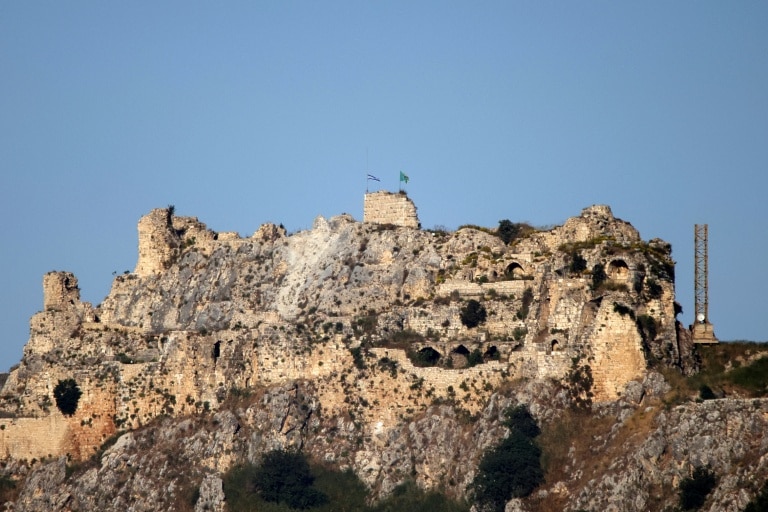
Israel plants flag on medieval castle, pushes Lebanon ground operation
In a significant escalation of its cross-border conflict with Hezbollah, Israeli forces have raised the national flag over the medieval Beaufort Castle in southern Lebanon as part of a broader expansion of ground operations deeper into Lebanese territory, official announcements and on-the-ground reporting confirmed Friday.
Agence France-Presse correspondents on site observed the Israeli banner flying above the centuries-old fortress, with the sound of artillery shelling echoing across the surrounding hills and plumes of smoke rising from nearby areas. The site holds deep strategic and historical significance for both sides: it served as a key Israeli military base during the country’s 22-year occupation of southern Lebanon that ended in 2000, and it was the site of a famous 1982 battle during the First Lebanon War.
Israeli Defence Minister Israel Katz confirmed the capture of the strategic high point in a social media post Friday, timed to coincide with the annual commemoration of Israeli soldiers killed in the 1982 First Lebanon War. “Forty-four years after the heroic Battle of Beaufort, and on this day commemorating the soldiers who fell in the First Lebanon War, our troops have returned to the summit of Beaufort and once again raised the Israeli flag there,” Katz wrote. He added that under the direction of Prime Minister Benjamin Netanyahu and his own leadership, the Israel Defense Forces (IDF) had crossed the Litani River and seized Beaufort Ridge, a position that provides sweeping panoramic views of southern Lebanon and northern Israel’s Galilee region. “This is one of the most important strategic points for defending the communities of the Galilee and safeguarding the security of our forces,” Katz noted.
The advance on Beaufort came alongside a mass evacuation order issued by the IDF for all civilian areas south of the Zahrani River, a waterway located roughly 25 miles north of the Israel-Lebanon border, north of the Litani River. The military warned it is conducting targeted operations against the Iran-backed Hezbollah armed group, which has launched near-daily attacks on northern Israel since the outbreak of the Israel-Hamas war in 2023. “Anyone present near Hezbollah elements, facilities, or combat means endangers their life. Any building used by Hezbollah for military purposes may become subject to targeting!” IDF spokesman Avichay Adraee wrote in a social media statement.
On Saturday, the IDF confirmed that a large contingent of ground troops had launched offensive operations to push its forward defense line deeper into Lebanon, with operations expanding into additional areas of the southern part of the country. Lebanese Prime Minister Nawaf Salam has condemned the expanded offensive as a deliberate “scorched-earth policy and collective punishment” targeting Lebanese civilians. “It is destroying towns and villages, and forcing their inhabitants into exile,” Salam said, urging an immediate ceasefire to halt the violence.
The military escalation comes amid ongoing diplomatic efforts to de-escalate the conflict, with U.S.-brokered security talks between Israeli and Lebanese military delegations held in Washington Friday, with additional political negotiations scheduled for next week. Salam acknowledged that the outcome of the negotiations remains uncertain, but called the diplomatic track “the least costly path for our country and our people.”
A nominally binding truce between Israel and Hezbollah was supposed to enter into force on April 17, but the agreement has been almost universally violated by both sides. Each side accuses the other of daily breaches of the ceasefire, using the other’s attacks to justify retaliatory strikes. The U.S. statement issued after Friday’s talks made no public mention of the failed truce, only noting that “productive military-to-military discussions” would lay groundwork for next week’s political negotiations. Hezbollah has repeatedly voiced firm opposition to direct bilateral talks with Israel.
On Saturday, Hezbollah announced it had launched multiple coordinated attacks targeting northern Israeli positions and engaged in direct ground clashes with IDF troops in several towns across southern Lebanon, including Zawtar al-Sharqiyah, Yohmor al-Shaqif and Dibbine. The group claimed Israeli forces had “not yet succeeded in taking control of the towns” amid the fighting.
The IDF reported that more than 25 projectiles were fired from Lebanese territory into northern Israel on Saturday, triggering air raid sirens in the northern cities of Karmiel and Safed — the first time sirens have sounded in those urban centers since the April truce went into effect. Public broadcaster Kan released user-generated footage showing rockets falling into the Mediterranean Sea off the coast of Nahariya, a northern Israeli coastal city near the border, forcing panicked beachgoers to flee the area.
On Sunday, the IDF confirmed that one Israeli soldier had been killed a day earlier in a Hezbollah explosive drone attack, pushing the total number of Israeli military personnel killed in operations in Lebanon since early March to 25. According to Lebanon’s Ministry of Public Health, Israeli attacks across southern Lebanon have killed more than 3,371 Lebanese people since March 2, the vast majority of whom are civilians.
-

Fan rides across 30 countries from Australia to reach Isle of Man TT
For most motorsports fans, standing on the iconic Isle of Man TT course is a lifelong fantasy. For Melbourne-based rider Jodie Rogers, that dream became a tangible reality this year, after a 14-month solo expedition spanning 26,700 miles across 30 countries that tested her grit, adaptability and love of the open road.
Rogers, who only picked up off-road motorcycling in 2023 and describes herself as a non-expert rider, set out from Australia in March of last year on her trusty Honda CRF. Her route took her across sweeping deserts, jagged mountain ranges, and remote international borders, winding through Southeast Asia, China, Central Asia, the Middle East, and eventually into Europe. When winter closed in, she stored her motorcycle in Ireland, then returned five weeks ago via Japan to resume her trek, with the legendary Isle of Man TT always marked as the primary destination on her itinerary.
Along the way, Rogers faced a litany of unexpected challenges: mechanical failures that stranded her in remote regions, dangerous high-altitude passes, and forced campouts in far-from-ideal locations. One of her most memorable stops came on the Afghan-Tajik border, when floodwaters swallowed a river crossing and left her stuck between Taliban positions on one side and Tajik government forces on the other, with her bright green tent pitched squarely in the no-man’s land in between. Even amid that tension, Rogers took the incident in stride, noting that for every obstacle thrown her way, she has always found a way forward.
Far from being a lonely slog, Rogers says her journey has been filled with human connection that transformed her worldview. After going through difficult personal experiences in the past, the trip restored her faith in humanity; she rarely feels isolated on the road, meeting kind, generous people at every stop along her route. Her first major overland trip, after cutting her teeth crossing Australia’s Simpson Desert, took her to Vietnam and the Indian Himalayas — and that experience sparked a desire to keep exploring beyond her home country’s borders.
Now, after 244 days on the road before her winter break and weeks of additional travel to reach the Irish Sea island, Rogers says arriving at the TT still feels surreal. “I kind of can’t believe I’m actually here,” she said, describing the moment she stepped onto the island as a “pinch me” experience. The atmosphere at the event, she says, is nothing short of electric: the roar of superbikes screaming past, the wind tearing through your hair, the scent of fuel hanging in the air as riders shift through gears approaching tight corners is an exhilarating feeling that cannot be replicated anywhere else.
During the TT’s two-week racing schedule, Rogers is camping in Onchan and is set to take part in the event’s Legacy Lap on May 31. But even after checking the Isle of Man TT off her bucket list, her global adventure is far from over. This entire expedition is just one phase of an ambitious seven-year plan that will see her ride through the rest of Europe, across Africa, throughout North and South America, and across New Zealand before she eventually returns to Australia. When asked what she plans to do after circling the entire globe on two wheels, the intrepid rider laughed and quipped, “I might have to go to the moon or something.”
-
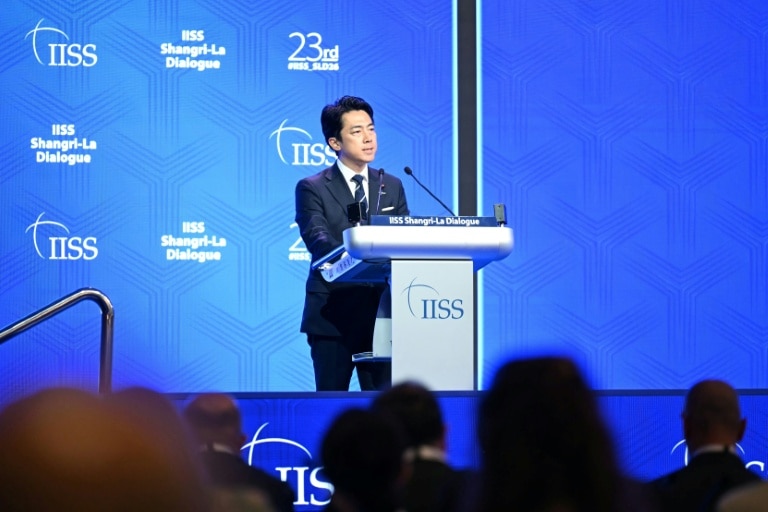
Japan defence chief takes swipe at China at security meet
Asia’s premier annual defence summit, the IISS Shangri-La Dialogue, kicked off in Singapore Sunday with sharp rhetorical friction between Japan and China, as Tokyo’s top defence official pushed back against Beijing’s accusations of rising Japanese militarism. Japan’s Defence Minister Shinjiro Koizumi used his platform at the closed-door, high-profile gathering to deliver a veiled rebuke of China, as Tokyo presses forward with a sweeping overhaul of its post-World War II security posture.
Under current Prime Minister Sanae Takaichi, Japan has accelerated its shift toward a far more proactive defence policy, backed by long-standing U.S. encouragement to move away from the pacifist constitutional framework that has guided its military policy for nearly 80 years. This shift has drawn consistent and harsh criticism from Beijing, which has repeatedly labeled Tokyo’s evolving stance as a dangerous turn toward “new militarism” that threatens regional stability.
Koizumi rejected these claims outright in his address. “Nothing could be further from the truth,” he told delegates, before framing a pointed comparison: “Think about it. There is a country that has a huge arsenal of nuclear weapons and strategic bombers. Japan has neither of such weapons. And yet, Japan is labelled ‘new militarism’. Isn’t it strange?” While he did not name China directly, the reference was clear to all in attendance. International defense estimates indicate China possesses hundreds of nuclear warheads and has undertaken a rapid, large-scale expansion of its military capabilities over the past two decades.
Diplomatic tensions between the two major Asian powers have been elevated since last November, when Takaichi suggested Japan could take military action if China attempted to seize control of Taiwan, the self-governing island democracy that Beijing claims as an inalienable part of its territory. Koizumi doubled down on Tokyo’s concerns Sunday, arguing that China’s military buildup has proceeded “without sufficient transparency” and that its regional military activities represent “a matter of serious concern for Japan”.
In contrast, Koizumi stressed that Japan’s own military modernization, which includes expanding capabilities in artificial intelligence, unmanned defense systems, cyber security, and space defense, is being carried out “with a high degree of transparency”. He added that Japan’s decades-long track record as a peace-loving nation is a proven fact recognized by the international community, and that “this fact will not be shaken by false claims”. Koizumi also noted he regretted that China had declined to send its top defense leadership to the summit, meaning no bilateral meeting between the two nations’ defense chiefs could be held this year. For the second consecutive Shangri-La Dialogue, China sent a lower-level, scaled-back delegation without its incumbent defense minister Dong Jun.
Beyond his address, Koizumi held bilateral talks with Philippine Defense Secretary Gilberto Teodoro on Sunday, where the two allies confirmed plans to transfer retired Japanese Abukuma-class destroyers and TC-90 aircraft to the Philippines during Japan’s 2027 fiscal year. The Philippines has sought to acquire the decommissioned Japanese vessels for years, sending a military inspection team to review the ships in 2025.
This defense cooperation comes amid deepening security ties between Tokyo and Manila, both of which have growing territorial and strategic disputes with Beijing in the South China Sea. The two leaders announced they would move forward with talks on intelligence sharing and open maritime border coordination — a step Beijing has already condemned as an illegal violation of its broad, contested territorial claims in the region.
Teodoro echoed Koizumi’s criticism of Beijing in comments after the meeting, stressing that Manila would never compromise its territorial integrity and sovereignty, a commitment enshrined in the country’s constitution. He drew a sharp contrast between the Philippines’ democratic system and what he called “some autocratic systems where the mandate comes from above, dictated down.”
Teodoro’s comments came as China’s People’s Liberation Army Southern Theater Command announced it had carried out new combat readiness patrols in the waters and airspace around Scarborough Shoal, a contested feature at the center of a years-long sovereignty dispute between Beijing and Manila. In its statement, the Chinese command called the patrols an “effective countermeasure to cope with all sorts of rights-violation and provocative acts” around the shoal, which it claims is an inherent part of Chinese territory.
An international arbitration ruling issued in 2016 overwhelmingly rejected Beijing’s sweeping territorial claims to nearly the entire South China Sea, but Beijing has continued to ignore the ruling and expand its military and paramilitary presence in contested areas of the strategic waterway, through which trillions of dollars in global trade passes annually. The Shangri-La Dialogue, now in its 23rd year, brings together top security officials, defense leaders, and policy experts from more than 45 nations to discuss pressing regional security challenges.
-
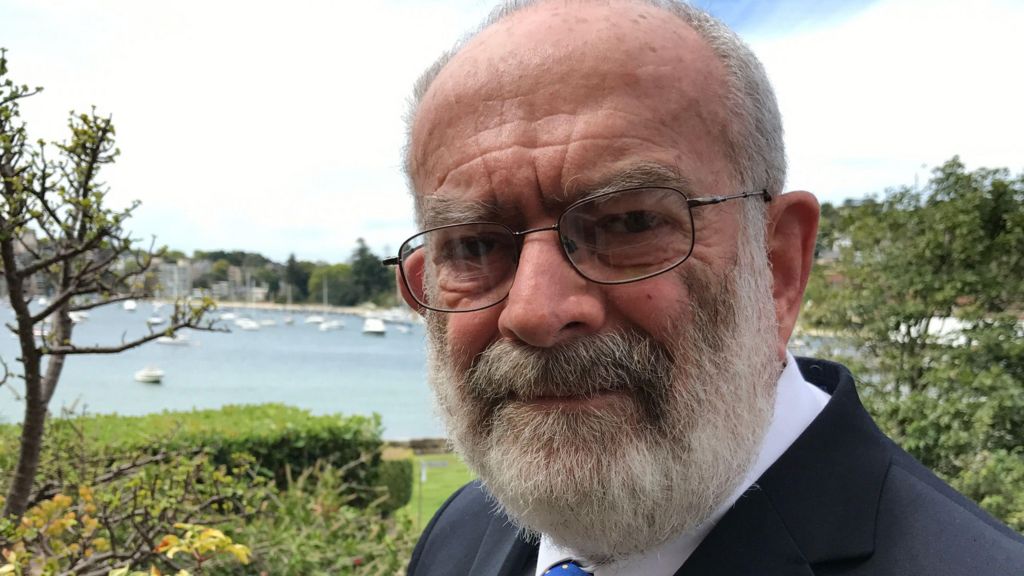
The Australian helping to return stolen English church artefacts
Half a world away from the English countryside, an 80-year-old Sydney-based solicitor with a lifelong passion for heraldry has pulled off a remarkable feat of historical restitution: tracking down and securing the return of two stolen centuries-old artefacts taken from parish churches in Norfolk and Hertfordshire. Richard d’Apice, an active member of both the UK and Australian branches of the Heraldry Society, spotted the items by chance while browsing online auction listings, turning his decades of specialized hobbyist knowledge into a win for cultural preservation.
d’Apice has long been drawn to the study of heraldic symbols, particularly those connected to funeral memorials, and says he makes a point of exploring every open church he encounters during his travels. That curiosity translated to online browsing last December, when he came across a painted wooden panel listed for sale by UK-based Dreweatt Auction House. His specialized training let him spot that the piece was out of place: ecclesiastical heritage items almost never get formal permission to be removed from church property, so seeing a 17th-century heraldic panel up for public auction immediately raised red flags.
After weeks of targeted research, d’Apice cross-referenced details of the panel with historical records, confirming it was first documented in an 1812 issue of *The Gentleman’s Magazine* as a memorial to George Cordell, a figure who served in the royal households of three successive British monarchs. The panel, valued at roughly £3,000, had been stolen from St Leonard’s Church in Flamstead, Hertfordshire back in 1996. Once d’Apice verified its origin, he reached out directly to the church’s rector and wardens to alert them to the impending sale.
Church officials confirmed the item matched their 1996 theft report, which had already been filed with police and added to the Art Loss Register, a global database tracking stolen cultural property. With the official documentation in hand, the auction house pulled the panel from its sale schedule, and arrangements were made to return it to its rightful home. A public unveiling ceremony is scheduled for June 4 at St Leonard’s, as a highlight of this year’s Flamstead Arts Festival, which runs through June 7. d’Apice will travel from Australia to attend the event and personally unveil the restored memorial.
The Hertfordshire recovery was not a one-off coincidence: it came only a short time after d’Apice helped track down a second stolen artefact, a 19th-century funeral hatchment, the diamond-shaped heraldic panel that memorializes a deceased individual, stolen from St Margaret’s Church in Felbrigg, Norfolk. That piece, which honors Cecilia, the widow of 19th-century MP William Windham who died in 1824, had been listed for sale by Sworders Fine Art Auctioneers in Stansted Mountfitchet, Essex.
Following d’Apice’s tip, Essex Police’s rural engagement team launched an investigation and recovered the hatchment from a private seller who had purchased it in good faith roughly 20 years prior. The artefact was officially returned to St Margaret’s last October. “It was recovered from the seller, who had bought it in good faith around 20 years ago. Then, happily, I was able to deliver it safely back to its legal guardians,” explained PC Dane Wyatt, the rural engagement officer who led the handover. Sworders Fine Art Auctioneers also confirmed they were proud to support the restitution effort, welcoming the chance to return the piece to its original home.
For d’Apice, the dual recoveries are not just a personal win for his hobby, but a reminder of a growing threat to UK ecclesiastical heritage: rampant theft of historical items from rural churches that has slowly eroded collections of irreplaceable cultural objects across the country. He emphasized that the Art Loss Register has emerged as a critical tool in fighting this trend, allowing owners to prove rightful ownership and recover stolen property across the global art and antiquities market.
“It feels wonderful to know my extensive knowledge and research had been put to good use, and the items were now back to where they belong,” d’Apice said in an interview. “I’m excited to know the memorial board has been returned to the place it’s been for hundreds of years.”
This report originates from BBC Beds, Herts and Bucks, which invites audience members to submit local story tips via multiple digital platforms, including BBC Sounds, Facebook, Instagram and X.
-
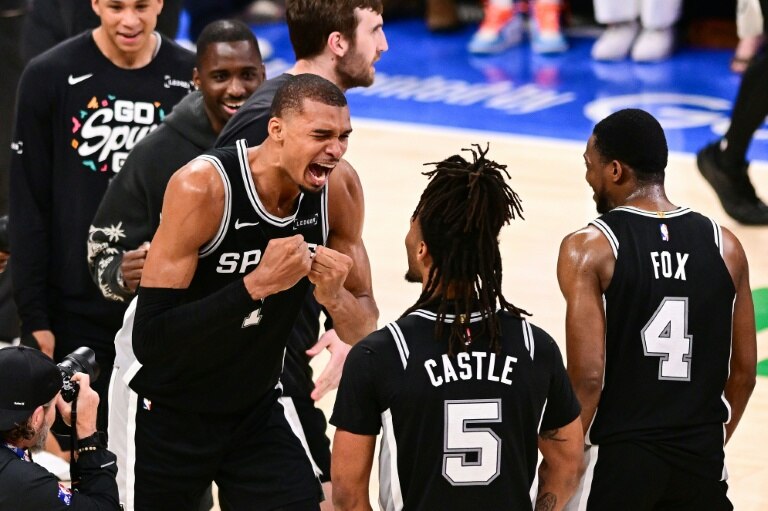
Spurs dethrone Thunder to reach NBA Finals against Knicks
In a tense, winner-take-all Game 7 clash that went down to the final seconds, the San Antonio Spurs pulled off a thrilling 111-103 victory over the defending NBA champion Oklahoma City Thunder on Saturday, punching their ticket to the franchise’s first NBA Finals appearance in nearly a decade and setting up a championship rematch with the New York Knicks.
Fueled by a historic performance from 22-year-old generational talent Victor Wembanyama, the young, relatively inexperienced Spurs squad claimed the Western Conference crown 4-3 in the hard-fought best-of-seven series. The NBA Finals will tip off this Wednesday in San Antonio, where Wembanyama and his teammates will face off against a Knicks team that already got the better of them in the season’s in-season tournament.
The 7-foot-4 French standout, who earned both Western Conference Finals MVP and NBA Defensive Player of the Year honors this postseason, delivered 22 points, seven rebounds, and multiple game-changing defensive plays to anchor the win. When the final buzzer sounded, an emotional Wembanyama celebrated with teammates, describing the moment as the fulfillment of a lifelong childhood dream. “Though we’re still hungry for one more, this feeling is, I can’t explain it, it’s so powerful,” Wembanyama told reporters after the game. “We want four more wins. We’re not done. Go Spurs go.”
Role players stepped up in a major way for San Antonio, too: wing Julian Champagnie poured in 20 points, including six clutch three-pointers, while rookie guard Stephon Castle added 16 points to the winning effort. “We never knew if we were going to get this far but when you’ve got the greatest player in the world things happen,” Champagnie said of his superstar teammate, who deflected praise back to the entire roster after the win. “It doesn’t mean anything for me other than the fact we are a team,” Wembanyama said of his series MVP award. “I got this for all of us and all the fans right here.”
What makes the victory even more impressive is the context: only one Spurs player had ever appeared in a Game 7 before Saturday, while the Thunder brought defending championship experience and a deep roster into the decider. The Thunder were also missing starting forward Jalen Williams to a late hamstring injury, but still pushed the Spurs to the brink behind a 35-point masterclass from league MVP Shai Gilgeous-Alexander.
Spurs head coach Mitch Johnson highlighted his team’s grit and togetherness over experience as the key difference. “Back in October we knew we had a chance to be pretty good,” Johnson said. “There’s a lot being talked about, words like competitiveness, resolve, togetherness, execution — who gives a damn about the word experience? They had to go out and execute and they did.”
The game played out as a back-and-forth battle from the opening tip. Gilgeous-Alexander scored 11 first-half points to spark a 20-5 Thunder run that put the defending champs up 53-49, but San Antonio closed the half with a 7-0 run, capped by a Wembanyama dunk, to carry a 56-53 lead into the locker room. A 16-2 third-quarter run, fueled by 11 points from Champagnie, pushed the Spurs out to an 11-point lead, only for Gilgeous-Alexander to rally the Thunder back with a 12-0 run of his own.
Wembanyama took over in the fourth quarter: he drained two three-pointers during a 17-9 opening run to the final frame that put San Antonio up 97-86 with eight minutes to play. Just seconds later, he picked up his fifth foul and headed to the bench, giving the Thunder a window to mount a comeback. But San Antonio’s depth held: fill-in big man Luke Kornet blocked a fast-break dunk attempt from Isaiah Hartenstein, and the Spurs extended their lead to 11 points on a Castle layup and a Champagnie three-pointer with five and a half minutes remaining.
The Thunder made a late push to close the gap in the final seconds, but could never get within a single possession, and the Spurs held on to lock in their Finals spot. The upcoming series will be a rematch of this season’s NBA Cup final, where the Knicks defeated the Spurs 124-113 in Las Vegas back in December, adding an extra layer of narrative to the highly anticipated championship showdown.
-
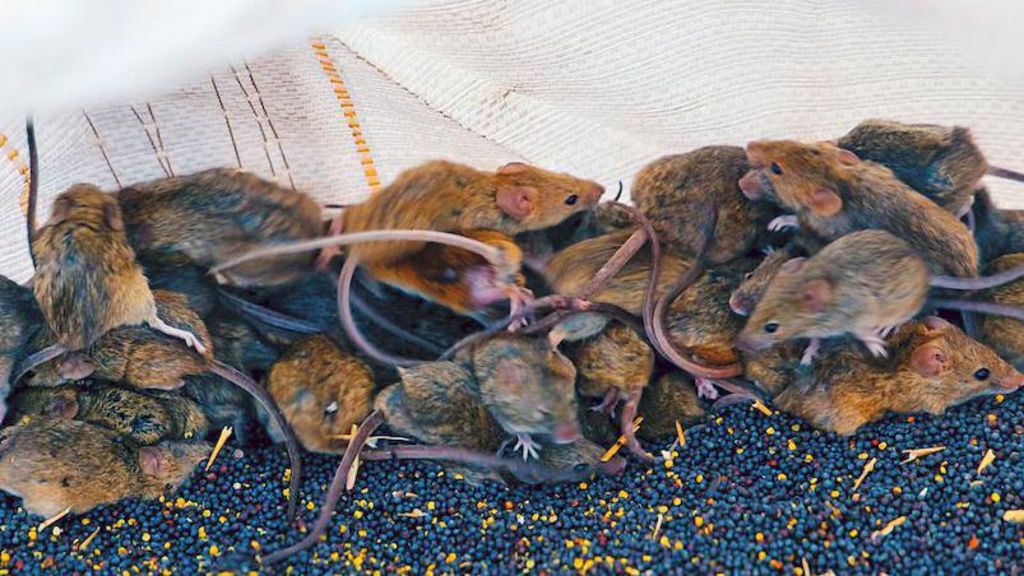
‘It’s like a decaying body’: Australian farmers battle mouse plague
Across vast agricultural regions of Australia, an unprecedented mouse plague is unleashing chaos on farming communities, destroying growing crops and upending daily life for producers already grappling with cascading economic pressures from global geopolitical instability. The infestation, which first emerged in Western Australia’s key grain-growing zones in early 2026, has rapidly spread to neighboring South Australia, leaving widespread ruin in its wake and stretching the resilience of even the most seasoned agricultural operators.
This crisis comes on top of already significant strain: unpredictable fuel and fertilizer supplies, driven by the ongoing US-Israeli conflict with Iran, have sent input costs soaring for Australian farmers, leaving little room in tight budgets to absorb new, unexpected expenses. To combat the invasion, producers have poured hundreds of thousands of dollars into emergency responses, from re-sowing crops that mice have devoured to laying poison-laced sterile bait across their paddocks – costs that extend far beyond the price of materials themselves.
Geoff Cosgrove, a 25-year farming veteran who operates a 14,000-hectare mixed grain farm in Mingenew, Western Australia, describes the 2026 infestation as far more severe than the last major plague that hit eastern Australia in 2021. That 2021 outbreak was already record-breaking for parts of New South Wales and Queensland, so severe that entire prison populations had to be relocated after rodents caused catastrophic structural damage to correctional facilities. For Cosgrove, the harm is not just financial: the invasion has seeped into every corner of daily life, leaving him unable to find respite even inside his home. “They do play with your mind – running around at night, in the ceiling, the air conditioning units. You can hear them and you can smell them – it’s like a decaying body,” he says. Like many farmers, Cosgrove only twice had to deploy large-scale baiting across his property in 25 years – a fact that underscores how extreme this year’s outbreak is. He holds out cautious hope that dropping winter temperatures will naturally reduce rodent populations.
Two hours north of Cosgrove’s operation, Belinda Eastough, a 59-year-old agronomist and fourth-generation farmer with 40 years of experience, has watched the plague unfold on her 5,500-hectare Geraldton-region property, one of the areas hit hardest by the infestation. Eastough says a confluence of ideal conditions for mouse population growth set the stage for this year’s crisis. After a record-breaking 2025 harvest, large amounts of grain were spilled across paddocks, creating an abundant, accessible food source. Unseasonable summer rain then triggered the growth of new green vegetation, giving rodents an even more diverse food supply. “So instead of just steak, they got steak and salad. Basically, the mice were in absolute mouse heaven,” she explains. Today, she estimates between 8,000 and 10,000 mice per hectare in her canola fields – a number that dwarfs the 800-per-hectare threshold researchers use to define a plague.
The timing of the outbreak could not be worse: autumn is the critical planting window for Australia’s annual grain crop, much of which is exported to Southeast Asia or used for domestic food production. Mice target freshly sown seeds immediately after planting, meaning entire rows of crops can be wiped out in less than 12 hours if baiting is not completed right after seeding. Like other producers, Eastough says the plague comes as an additional blow on top of already skyrocketing input costs. “We’re paying twice for fuel now than we were paying two, three months ago,” she notes. “The mouse thing is another thing thrown on top, another headache.”
Steve Henry, a mouse control specialist and research officer with Australia’s national science agency CSIRO, confirms the severity of the outbreak matches the on-the-ground reports from farmers. On a recent assessment trip to Western Australia’s cropping zones, Henry counted 30 to 40 active mouse burrows along a 100-meter transect, translating to at least 3,000 to 4,000 burrows per hectare – a population density unseen in recent decades. Henry explains that mice’s extraordinary reproductive capacity is what allows populations to explode so rapidly: rodents reach breeding age at just six weeks old, produce six to 10 offspring every 19 to 21 days, and can become pregnant again just two to three days after giving birth, allowing generations of offspring to develop simultaneously.
Beyond the massive economic damage, Henry emphasizes the underrecognized psychological toll of a mouse plague, which is far more invasive than other common farming crises such as drought. “If you’re dealing with a drought, you can go inside and close the door and turn on the air conditioner and get some level of respite,” he says. “But if you’re dealing with mice, you go inside, close the door, go to your cupboard, and the mice are in the cupboard … You go to sleep at night, and the mice are running across your bed.”
After months of lobbying from farming communities, Australia’s national environmental regulator has finally approved access to higher-strength rodent bait for affected producers, a move welcomed by desperate farmers across the impacted regions. Retired 67-year-old farmer Damian Ryan, who has worked the land in Morawa, north of Perth, for 50 years, says he has never seen an infestation this bad. Ryan, who currently catches 20 to 30 mice a day inside his home and 150 more in his shed each day, calls the current situation “plague proportions” unmatched in his decades of farming. “You drive around at night and you just see mice running everywhere,” he says.
In recent days, farmers have reported early signs of relief, coinciding with the rollout of the stronger bait, cooler seasonal temperatures, and forecast rain. Many, like Cosgrove, are optimistic that the worst will soon pass as winter sets in, but the economic and emotional damage of the 2026 plague will leave long-lasting impacts on Australia’s farming communities already pushed to the brink by global instability.
-
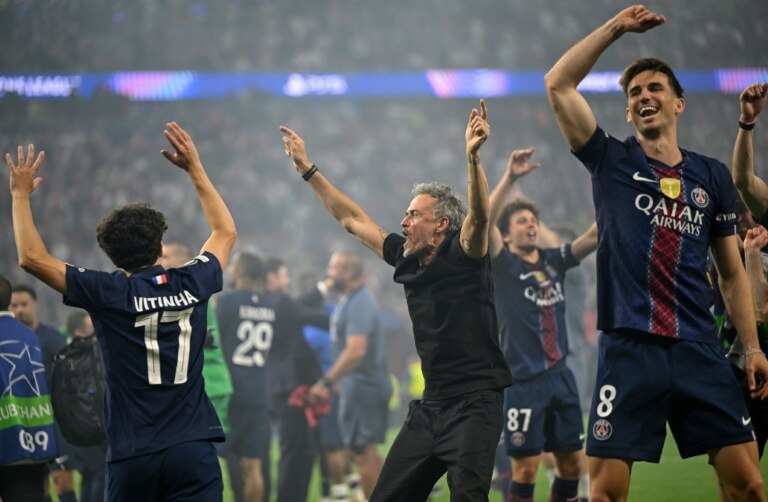
PSG edge Arsenal on penalties to retain Champions League title
In a tense, drama-filled 2025 UEFA Champions League final held at Budapest’s Puskas Arena on Saturday, Paris Saint-Germain (PSG) etched their name into European football history, edging out Arsenal 4-3 on penalties to claim consecutive continental titles after 120 minutes of play ended locked at 1-1. For the Gunners, the result marks a heartbreaking second Champions League final defeat, two decades after their first loss to Barcelona in 2006.
Arsenal, the 2024-25 Premier League champions who entered the final having lifted their first English top-flight title in 22 years, got off to a dream start within the opening six minutes. Kai Havertz, the German forward who already has a Champions League final winner’s medal from his 2021 triumph with Chelsea, found an unexpected opening when Marquinhos’ misdirected clearance bounced off Leandro Trossard straight into his path. Havertz burst into space behind PSG’s backline and fired a blistering, tight-angle shot into the top of the net to put Mikel Arteta’s side ahead early.
For the majority of regular time, Arsenal’s deep, disciplined defense held firm, having conceded just six goals across their entire run to the final. The Gunners stifled PSG’s high-powered attack, limiting the French side to only inaccurate long-range attempts and shutting down dynamic winger Khvicha Kvaratskhelia for most of the match, with center-back Gabriel making a crucial last-ditch tackle to deny the Georgian early on.
After halftime, PSG manager Luis Enrique adjusted his side’s tempo, urging faster ball movement to break down Arsenal’s compact rearguard. The equalizer came in the 67th minute, when a slick one-two between Kvaratskhelia and Ousmane Dembele drew a clumsy foul from Arsenal defender Cristhian Mosquera inside the penalty area. Dembele stepped up to the spot, sending Arsenal goalkeeper David Raya the wrong way with a low finish to level the score. The goal marked PSG’s 45th of the 2024-25 tournament, tying the all-time Champions League single-season scoring record.
PSG came close to snatching a late winner in regular time when Kvaratskhelia broke clear down the left flank, but his shot bounced off the goalpost. As the match wore on, Arsenal tired but held on to force extra time. The Gunners had a late penalty shout turned down when substitute Noni Madueke went down under contact from PSG’s Nuno Mendes, though replays showed minimal contact from the defender.
The final was ultimately decided by penalties, a test PSG entered with confidence: the French side had already won three trophies via shootouts this season, and carried a five-match winning streak in penalty deciders heading into the final. Arsenal faltered first, with Eberechi Eze sending his opening spot-kick wide of the post, but Raya gave the Gunners new life by saving Mendes’ attempt. Declan Rice converted to level the score at 2-2, and after Lucas Beraldo put PSG ahead 4-3, it fell to Gabriel to keep Arsenal’s hopes alive. The Arsenal defender lashed his penalty high over the crossbar, handing PSG the trophy.
The victory makes PSG only the second club in the Champions League era to win back-to-back titles, joining the iconic all-dominant Real Madrid sides that achieved the feat multiple times. It also marks the third Champions League title for manager Luis Enrique, who won his first with Barcelona back in 2015, making him only one of five head coaches in history to lift the trophy three times. The result comes one year after PSG’s first ever Champions League title, which ended a 55-year wait for the club and 14 years of investment under Qatari ownership. Now, with a second consecutive crown, PSG appear poised to begin an era of sustained European dominance.
“We are so, so proud, so happy, so grateful,” PSG winger Desire Doue told reporters post-match. “As a team, as a family, I think we deserve that… look at the fans, we are so happy.” Midfielder Fabian Ruiz added: “It was Real Madrid and now it’s us too. They defended all through the game and football is fair… today the right team won.”
For Arsenal, the bitter defeat comes just days after they secured their first Premier League title in 22 years, a milestone that was supposed to cap a dream season for Arteta’s young side. The club still plans to hold a victory parade in London on Sunday to celebrate the league title, but the event will be overshadowed by the heartbreak of a penalty defeat that fell just short of a historic double.
“It’s gutting, it’s devastating to lose the Champions League final on penalties,” Arsenal midfielder Declan Rice said after the final. “Giving it absolutely everything up until this point, we took the game to penalties and it’s a lottery.”
-
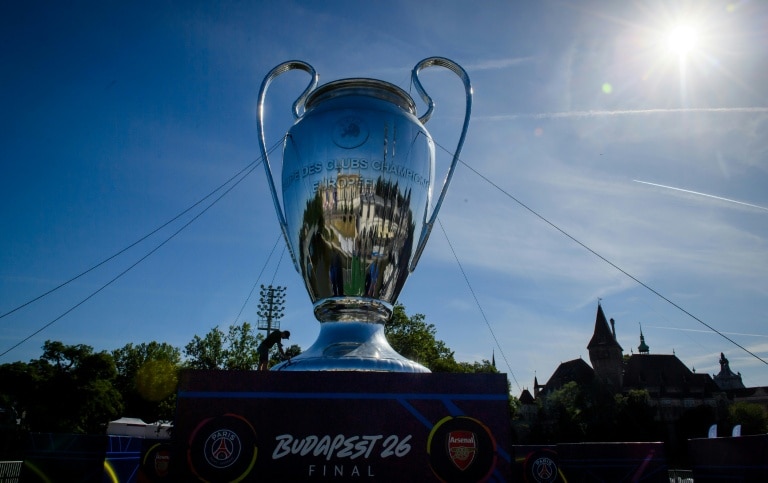
‘Decided on moments’: PSG, Arsenal in knife-edge Champions League final
The stage is set in Budapest’s Puskas Arena for one of the most tightly contested UEFA Champions League finals in recent memory, as defending champions Paris Saint-Germain prepare to lock horns with England’s Arsenal this Saturday, in a game widely billed as a battle that will be decided by split-second moments rather than pre-match form.
With contrasting playing styles set to collide, PSG brings an explosive, high-octane attacking line-up against an Arsenal side that has built its tournament run on rock-solid defensive organization. Ahead of the kickoff, PSG manager Luis Enrique downplayed the tag of pre-match favorite, insisting the 90-minute showdown would be decided by tiny margins. ‘There are no favorites going into this European final,’ he said. ‘The difference will be in the details.’
While bookmakers do rank the Ligue 1 title holders and defending champions as slight favorites, analysts note this final is the hardest to predict since Real Madrid’s iconic 2018 win over Liverpool. For Arsenal, the occasion carries extra weight: the club ended a 22-year wait for the English Premier League title this season, and is now chasing its first ever Champions League crown, 20 years after its last final appearance ended in a defeat to Barcelona in Paris.
Arrived in the Hungarian capital in relaxed form, the Gunners’ squad took a casual stroll through Budapest on Saturday morning to beat the summer heat, with good news on the injury front: right-back Jurrien Timber, who had been a major doubt for the clash, recovered in time to make the match day squad, named to the bench alongside striker Viktor Gyokeres. Manager Mikel Arteta opted to start Kai Havertz in the attacking line for the final. The game’s earlier kickoff time — 6pm local time, two hours earlier than recent finals — is seen as a potential advantage for PSG’s fast, physically demanding pressing style.
Arsenal’s tournament campaign has been defined by defensive resilience: the Gunners enter the final unbeaten in this season’s Champions League, having kept nine clean sheets and conceded only six goals. The widespread expectation is that Arteta’s side will drop into a deep defensive block and look to capitalize on set-piece opportunities against the French side. PSG winger and Ballon d’Or winner Ousmane Dembele acknowledged the challenge Arsenal poses, saying: ‘They’re strong pretty much everywhere, whether it’s in attack or in defence, and they’re dangerous on set-pieces as well, everybody knows that.’
PSG also got a key fitness boost ahead of kickoff: both Dembele and right-back Achraf Hakimi were named in the starting line-up after shaking off minor fitness concerns in the lead-up to the final. While Arsenal has played significantly more matches this season than PSG, winger Bukayo Saka rejected suggestions that fatigue could play a deciding role. ‘A game like this is not going to be decided on minutes, it’s going to be decided on moments,’ the England international said.
Both sides carry historic motivation to lift the trophy. For PSG, a win would secure back-to-back Champions League titles, a feat only Zinedine Zidane’s Real Madrid has achieved in the modern era, when the Spanish club won three consecutive titles between 2016 and 2018. It would also make PSG the first French club to win multiple Champions League trophies, marking a historic milestone for French club football.
For Arsenal, a first Champions League crown would cap a redemptive season for the club, honoring generations of Arsenal players who never reached the pinnacle of European football. Club icons have reached out to the current squad to offer support: former captain and Invincibles legend Patrick Vieira sent a personal good luck video to current skipper Martin Odegaard, who called the message a special moment. ‘This stage was one I had hoped to reach for my whole life,’ Odegaard said. ‘When I started playing football with my friends, on the little pitch next to my house, I was dreaming of this moment.’
Thierry Henry, the club’s all-time leading goalscorer and part of the 2006 final squad that lost to Barcelona, also sent a personal message to Saka on Friday. Tens of thousands of Arsenal fans have traveled to Budapest, many without match tickets, to cheer on their side, packing the city’s famous ruin bars and tourist hotspots. Henry is among the high-profile Arsenal supporters in the city for the final.
Security has been ramped up for the occasion, with almost 4,000 police officers deployed for the match — the largest security operation in Hungarian history. The build-up to the game has remained largely peaceful, apart from a minor scuffle between fans in Budapest’s seventh district on Friday night, which police are currently investigating.
A win for Arsenal would also make history for English football. After Aston Villa lifted the Europa League title and Crystal Palace won the Conference League this season, an Arsenal Champions League triumph would mark the first time a single country has won all three major UEFA men’s club trophies in the same season since 1989-90, when Italy achieved the feat with AC Milan, Juventus and Sampdoria claiming the three trophies respectively.
-
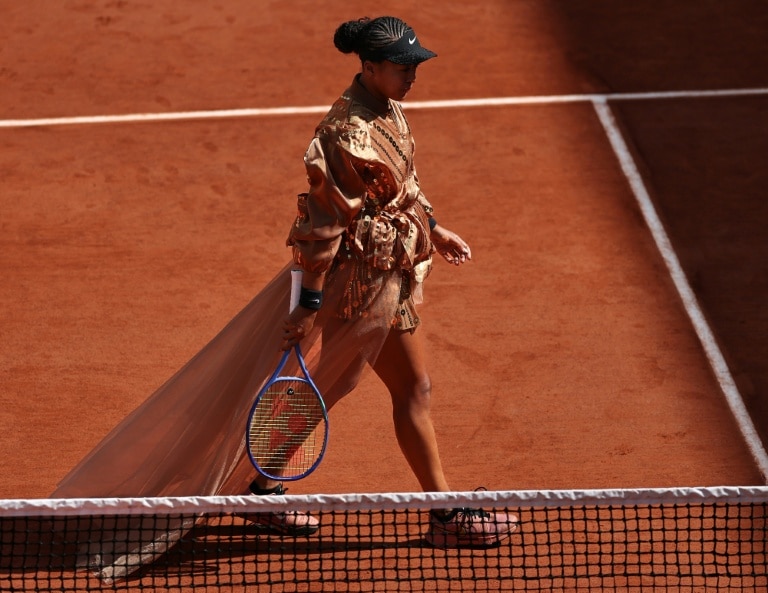
Sabalenka, Osaka set up French Open clash, Gauff eyes second week
The 2025 French Open is heating up amid a lingering Paris heatwave, with Saturday’s third-round play producing one of the most anticipated round-of-16 matchups in recent Grand Slam history, alongside shocking upsets and breakthrough runs that have reshaped both the men’s and women’s draws.
World number one and top women’s seed Aryna Sabalenka kicked off the day’s standout results with a commanding 6-0, 7-5 victory over 53rd-ranked Daria Kasatkina, wrapping up the 76-minute contest to secure her spot in the fourth round. After blitzing through the opening set without dropping a game, Sabalenka found herself in an early break deficit in the second set, but fought back to seal the win. Speaking on court after her victory, the 28-year-old Belarusian credited her resilience through tough moments, as Roland Garros wraps up the final day of a heatwave that has blanketed Paris since the tournament kicked off.
Sabalenka’s win sets up a high-stakes fourth-round showdown with four-time Grand Slam champion Naomi Osaka, a matchup between two players who have each claimed four major titles: two Australian Opens and two US Opens apiece. While Sabalenka has defeated Osaka twice already in the 2025 season, Osaka holds the edge in major meetings—she beat Sabalenka in the same round at the 2018 US Open, the first of her career Grand Slam wins.
Osaka, the tournament’s 16th seed from Japan, earned her place in the fourth round after a grueling three-set battle with 18-year-old American starlet Iva Jovic, 7-6(7/5), 6-7(3/7), 6-4. The match was defined by dominant serving from both players, with the first two sets settled entirely by tiebreaks. Osaka secured the decisive break of Jovic’s serve in the 10th game of the final set to close out the win. The result marks a career milestone for Osaka, who had never advanced past the third round at Roland Garros before this year’s tournament. “I was a lot calmer than in my first matches… In a Slam the further I get the calmer I am. It’s such an honour to be here. It’s the furthest I have ever been here,” Osaka said after her win.
In a politically charged third-round matchup, Ukraine’s Oleksandra Oliynykova lost 7-5, 6-1 to Russian opponent Diana Shnaider, after Oliynykova accused Shnaider in pre-match comments of accepting funding from a company that supports Russian war crimes and liking social media posts from pro-war propagandists.
Defending women’s champion Coco Gauff, the tournament’s fourth seed, will look to join Sabalenka and Osaka in the second week when she faces off against Austria’s Anastasia Potapova in Saturday’s later action, targeting a spot in the tournament’s fourth round.
On the men’s side of the draw, the bracket remains wide open after the shocking early exits of top seed Jannik Sinner and 24-time Grand Slam champion Novak Djokovic. Italian 10th seed Flavio Cobolli sent a clear message to the rest of the field with an emphatic 6-2, 6-2, 6-3 victory over American Learner Tien on Court Philippe Chatrier, wrapping up the win in just one hour and 45 minutes. Cobolli, who is now set to face Zachary Svajda for a spot in the men’s quarter-finals, said he is focusing on one match at a time amid widespread talk of a first-time Grand Slam champion this year. “I want to think match by match. That’s the way that I want to think this week,” Cobolli said. “I know that… for sure we will have a new Grand Slam champion, but I don’t want to think about this. For sure I have now another tough match.”
American world number 85 Zachary Svajda continued his dream Grand Slam run, upsetting 25th seed Francisco Cerundolo of Argentina 6-3, 6-4, 3-6, 4-6, 6-3 to secure his spot in the second week. The 23-year-old had never advanced past the second round of any major tournament before this year’s French Open, marking his first run into the second week of a Grand Slam.
Saturday’s closing action will see Canadian fourth seed Felix Auger-Aliassime face off against American 31st seed Brandon Nakashima in the night session on Court Philippe Chatrier, while 17-year-old rising French home star Moise Kouame will take on Chile’s Alejandro Tabilo on Court Suzanne Lenglen as he looks to extend his breakout run at the tournament.