标签: Oceania

大洋洲

  • Real Madrid top football rich list as Liverpool surge

    Real Madrid top football rich list as Liverpool surge

    Real Madrid has solidified its position as football’s financial powerhouse, maintaining the top spot in Deloitte’s annual Money League rankings with unprecedented revenue generation during the 2024/25 season. The Spanish giants amassed approximately €1.2 billion ($1.4 billion) despite failing to secure major silverware, demonstrating the club’s remarkable commercial resilience.

    The comprehensive redevelopment of Santiago Bernabeu Stadium has emerged as a transformative revenue driver, with commercial operations alone generating €594 million – sufficient to secure a top-ten position independently. Barcelona ascended to second position with €975 million, achieving this milestone while playing their entire season away from Camp Nou due to ongoing redevelopment delays.

    German champions Bayern Munich claimed third position with €861 million, narrowly surpassing Paris Saint-Germain whose Champions League victory provided significant financial impetus. The Premier League’s representation remained robust, with Liverpool leading English clubs for the first time following stadium expansion, Champions League participation, and domestic league triumph that collectively boosted revenues to €836 million.

    Notable shifts occurred in the rankings as Manchester City descended from second to sixth position following early European elimination and third-place domestic finish. Manchester United fell to eighth behind Arsenal after missing Champions League qualification and finishing 15th in Premier League competition.

    Collectively, Europe’s top 20 revenue-generating clubs achieved an 11% revenue increase to €12.4 billion. Deloitte Sports Business Group lead partner Tim Bridge observed: “The ranking’s upper echelon reflects strategic emphasis on commercial revenue development as domestic broadcast rights stabilize. Clubs are fundamentally transforming their business models through brand optimization and stadium asset maximization.”

    The emerging trend of multifunctional stadium facilities – incorporating breweries, hotels, and restaurants – demonstrates strategic diversification toward year-round entertainment destinations. The inaugural 32-team Club World Cup significantly influenced rankings, propelling Bayern into top-three positioning for the first time since 2020/21.

    In women’s football, Arsenal emerged as highest-earning club for the first time following their Champions League victory, generating €25.6 million to surpass London rivals Chelsea and Barcelona.

  • ‘One Battle After Another,’ ‘Sinners’ tipped to top Oscar noms

    ‘One Battle After Another,’ ‘Sinners’ tipped to top Oscar noms

    The film industry stands on the precipice of a historic Oscar nomination announcement, with Warner Bros’ cinematic juggernauts “One Battle After Another” and “Sinners” positioned to dominate the awards landscape. Industry analysts project both films could achieve an unprecedented nomination count, potentially challenging the longstanding record of 14 nominations jointly held by “All About Eve,” “Titanic” and “La La Land.”

    Paul Thomas Anderson’s revolutionary thriller “One Battle After Another” has generated exceptional momentum throughout awards season, already securing the record for most nominations from Hollywood’s actors guild. The film features Leonardo DiCaprio in a performance that virtually guarantees his seventh Academy acting nomination, portraying a retired revolutionary navigating a complex web of radical violence and white supremacists while searching for his missing daughter.

    Meanwhile, Ryan Coogler’s blues-infused period horror “Sinners” has emerged as a groundbreaking force in Oscar politics. The film’s exploration of racial tensions in 1930s Mississippi, featuring Michael B. Jordan in a dual role as twins combating vampires and racists, has been described by Variety’s Clayton Davis as entering “a statistical stratosphere no filmmaker has ever touched.”

    The Warner Bros dominance comes during a potentially transformative period for the studio, which remains the target of an intense bidding war between Paramount Skydance and Netflix. This corporate uncertainty adds dramatic subtext to what might represent the studio’s final independent distribution year.

    Netflix maintains its own formidable contenders including Guillermo del Toro’s “Frankenstein,” the pioneering Western drama “Train Dreams,” and animated musical phenomenon “KPop Demon Hunters.” The streaming giant faces competition from international cinema, with three non-English language films—Norway’s “Sentimental Value,” Palme d’Or winner “It Was Just An Accident,” and Brazil’s “The Secret Agent”—potentially disrupting the best picture category.

    This year introduces the groundbreaking best casting Oscar, creating speculation about voting criteria for this inaugural honor. The nominations announcement, scheduled for Thursday at 5:30 AM PST in Los Angeles, will set the stage for the 98th Academy Awards ceremony on March 15th.

  • Plastics everywhere, and the myth that made it possible

    Plastics everywhere, and the myth that made it possible

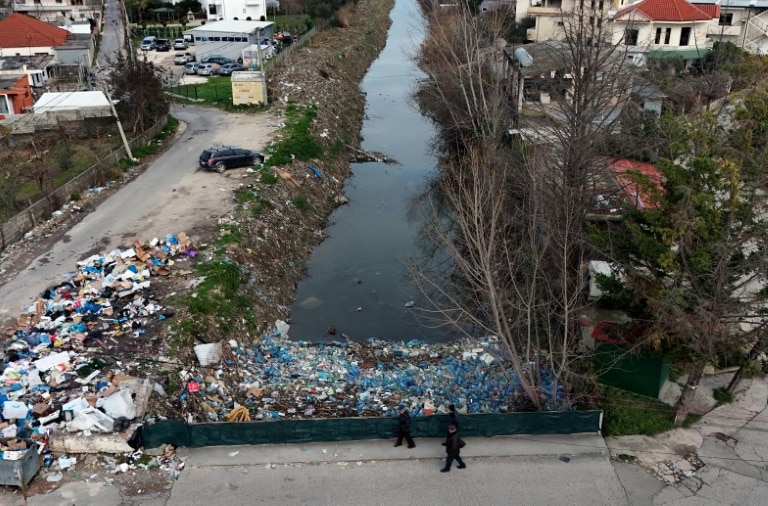
    In her groundbreaking work ‘The Problem with Plastics,’ former Obama-era environmental official Judith Enck delivers a powerful exposé on the plastic pollution crisis that has come to define modern existence. From microplastics found in newborn stool to airborne particles infiltrating our atmosphere, plastic contamination has reached unprecedented levels, with half of all plastic ever manufactured produced since the 2007 iPhone debut.

    Enck systematically dismantles what she identifies as the plastic industry’s most damaging fabrication: the myth of effective recycling. Contrary to popular belief, only 5-6% of plastics in the United States actually undergo recycling processes. This abysmal rate stems from fundamental technical challenges—consumer plastics comprise thousands of distinct polymer types, rendering large-scale recycling economically unfeasible compared to materials like glass or metal.

    The environmental advocate reveals how industry campaigns have strategically shifted responsibility onto consumers through terminology like ‘litterbug’ while promoting chemically dubious ‘solutions.’ Recent analysis from Enck’s Beyond Plastics organization demonstrates that chemical recycling facilities handle merely 1% of U.S. plastic waste, with several operations already shuttered.

    This plastic proliferation carries devastating ecological consequences. Approximately 33 billion pounds of plastic enter oceans annually—equivalent to two garbage trucks dumping payloads every minute. Marine ecosystems suffer catastrophic damage from microplastics and nanoplastics, which subsequently infiltrate human food chains. Emerging medical research indicates alarming health correlations, including a 2024 study linking arterial microplastics to elevated risks of heart attacks, strokes, and premature mortality.

    Environmental justice emerges as a critical theme, with petrochemical expansion disproportionately affecting marginalized communities. Louisiana’s ‘Cancer Alley’ exemplifies this disparity, where residents experience cancer rates seven times the national average. ‘Our zip code dictates our health,’ Enck emphasizes, highlighting how plastic production becomes an environmental justice issue affecting predominantly low-income and minority populations.

    The recent plastic production surge connects directly to hydraulic fracturing developments since the mid-2000s, creating a gas glut that industry seeks to monetize through plastic manufacturing—simultaneously exacerbating climate change.

    Despite these challenges, Enck maintains cautious optimism. She points to grassroots momentum exemplified by legislation like New Jersey’s ‘Skip the Stuff’ law, requiring restaurants to provide single-use cutlery only upon request. Her approach combines personal responsibility with systemic change, advocating for legislative action rather than consumer shaming. ‘We need new laws that require less plastic,’ she asserts, providing practical guidance for community organizing and policy advancement in her comprehensive publication.

  • Australia’s opposition coalition splits after row over Bondi shooting reforms

    Australia’s opposition coalition splits after row over Bondi shooting reforms

    Australia’s political landscape has been reshaped as the National Party announced its formal separation from the Liberal Party, fracturing the nation’s primary opposition coalition. The rupture follows intense disagreements regarding recently enacted hate speech legislation, throwing Liberal leader Sussan Ley’s leadership into uncertainty.

    The schism emerged from fundamentally different approaches to the government’s proposed hate speech reforms, introduced in response to last month’s deadly terrorist attack at Bondi Beach that claimed 15 lives during a Jewish festival. While both coalition partners had opposed parallel gun control measures, the Liberals ultimately supported the hate speech legislation in Parliament, creating an irreconcilable division with their National counterparts.

    Nationals leader David Littleproud declared the coalition ‘untenable’ during a press conference held on a national day of mourning for the attack victims. ‘Our party room has made it clear that we cannot be part of a shadow ministry under Sussan Ley,’ Littleproud stated, though he left open the possibility of future reconciliation, suggesting that ‘some time apart’ might benefit both conservative parties.

    The breakdown accelerated when three Nationals frontbenchers submitted their resignations after their party abstained from voting on the hate speech bill in the lower house and opposed it in the senate, contravening a shadow cabinet agreement. Ley accepted the resignations despite warnings from Littleproud that this would trigger mass departures from the Nationals shadow ministry.

    This marks the second dissolution of the coalition within a year, following a brief separation last May over climate and energy policies that was resolved within weeks. The current dispute centers on concerns that the hastily drafted legislation threatens free speech protections while banning groups deemed to spread hate and increasing penalties for religious leaders advocating violence.

    Political analysts suggest the rupture compounds challenges for Ley, who has struggled to consolidate authority since becoming the Liberal Party’s first female leader following last year’s electoral defeat. The timing of the split, occurring during a national day of mourning, drew criticism from some quarters, though Nationals senator Bridget McKenzie defended her party’s decision despite acknowledging the ‘appalling’ timing.

    The coalition, dating back to the 1940s, now faces existential questions about its future viability as Australia’s dominant conservative force, with former Prime Minister Malcolm Turnbull describing the situation as ‘smouldering wreckage’ while John Howard offered support for Ley’s handling of the crisis.

  • Liverpool cruise as Bayern reach Champions League last 16

    Liverpool cruise as Bayern reach Champions League last 16

    European football’s elite clubs solidified their positions in the UEFA Champions League during Wednesday’s pivotal matchday, with several powerhouses securing passage to the knockout rounds. Liverpool delivered a commanding performance in Marseille, cruising to a 3-0 victory that extended their unbeaten streak to 13 matches across all competitions since their surprising November defeat to PSV Eindhoven.

    The breakthrough came courtesy of Dominik Szoboszlai’s ingenious first-half free-kick, which the Hungarian midfielder expertly slotted beneath the defensive wall. ‘I completed my homework and learned that if nobody lies down, I can strike it under the wall,’ Szoboszlai explained post-match. The victory was sealed with an own goal from Marseille goalkeeper Geronimo Rulli and a late finish from substitute Cody Gakpo, positioning Liverpool to clinch their last-16 spot against Qarabag next week.

    In Munich, Harry Kane’s brace propelled Bayern to a 2-0 triumph over Belgian champions Union Saint-Gilloise, guaranteeing the German giants top-eight qualification with one match remaining. Kane’s header and penalty conversion brought his remarkable tally to seven goals in seven Champions League appearances this season, though his hat-trick opportunity was denied by the woodwork. Despite Kim Min-jae’s second-half dismissal, Bayern maintained control, with Kane noting: ‘We scored at decisive moments and demonstrated composure even with ten players.’

    Elsewhere, Newcastle United dominated PSV with a 3-0 victory at St James’ Park, while Chelsea edged Cypriot opponents Pafos 1-0 in new coach Liam Rosenior’s European debut. Barcelona mounted a impressive comeback against Slavia Prague, overcoming an early deficit to win 4-2 through Fermin Lopez’s double and decisive contributions from Dani Olmo and Robert Lewandowski.

    The matchday concluded with dramatic finishes across Europe: Juventus continued their resurgence with a 2-0 win over Benfica, Atalanta suffered a damaging 3-2 home defeat to Athletic Bilbao, and Azerbaijani surprise package Qarabag kept their playoff hopes alive with a dramatic 3-2 victory against Eintracht Frankfurt. The group stage will reach its climax next Wednesday with all final matches played simultaneously.

  • Why Sydney is preserving thousands of flowers after deadly Bondi attack

    Why Sydney is preserving thousands of flowers after deadly Bondi attack

    In a powerful response to tragedy, Sydney’s Jewish community institutions have spearheaded an effort to preserve the spontaneous memorial created after December’s devastating Bondi Beach attack that claimed 15 lives. What began as a vacant shopfront on a central Sydney avenue—outwardly appearing abandoned with plastic-covered windows and padlocked doors—has transformed into a sacred repository for countless tributes left by a grieving nation.

    Inside the makeshift space, carefully organized within masking-tape squares on the floor, rest poignant mementos: cuddly toys, candles, handwritten messages of hope, and particularly touching symbols honoring the youngest victim, 10-year-old Matilda Bee. Dozens of knitted bees and deflated foil bee balloons create a special section dedicated to her memory. The collection also includes traditional Jewish mourning stones placed instead of flowers, alongside flags, books, and even unexpected items like a Barbie cracker.

    The Sydney Jewish Museum and Australian Jewish Historical Society intervened when learning the original memorial faced removal by local authorities. Senior curator Shannon Biederman, whose personal connection to the tragedy runs deep—having nearly attended the targeted Chanukah by the Sea festival and knowing victim Rabbi Eli Schlanger—described the preservation as both professional and profoundly personal. ‘I’m used to working with history,’ she noted, ‘but this is now.’

    Meanwhile, an equally massive undertaking continues at a North Sydney warehouse where volunteers face the emotional and logistical challenge of preserving approximately three tons of floral tributes. Jewish artist Nina Sanadze, overseeing the operation, described the initial sight of flower-filled black bags as resembling ‘100 bodies.’ Volunteers work methodically, hanging blooms on hastily sourced metal fences while wearing masks against overwhelming pollen and moisture.

    The preservation process has presented unique challenges, including concerns about compost fires from decomposing flowers. Yet volunteers find therapeutic purpose in their work, transforming decay into meaning. Sanadze has created resin artworks incorporating salvaged petals, describing the pieces as containing ‘decay and sadness as well as beauty.’ Her proposed title for the memorial effort, ‘Petal by Petal,’ reflects both the meticulous preservation work and the gradual emotional processing of trauma.

    As Australia prepares to honor victims with nationwide landmarks illuminated in solidarity and a moment of silence, the conversation has shifted toward unity and healing. The community emphasizes performing ‘mitzvah’—acts of kindness—as a healing tradition. While final decisions about a permanent memorial remain with a dedicated committee, the preserved items will serve as powerful testament to a nation’s collective grief and resilience.

  • Pakistan rescuers scour blaze site for dozens missing

    Pakistan rescuers scour blaze site for dozens missing

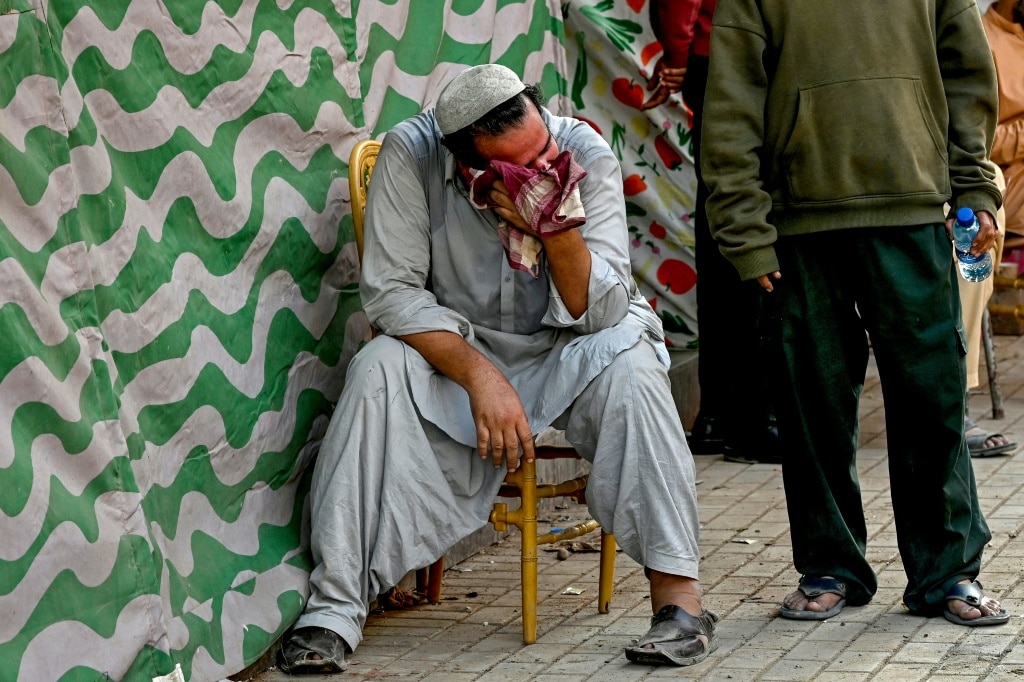
    Rescue teams in Karachi continue their painstaking search through the smoldering wreckage of Gul Plaza shopping complex four days after a catastrophic fire engulfed the building. The devastating blaze has claimed at least 29 confirmed fatalities, though authorities anticipate the death toll will rise significantly as recovery operations progress.

    Javed Nabi Khoso, Deputy Commissioner of Karachi South, disclosed that 39 individuals have been officially verified as missing, with nearly 50 additional persons remaining on unverified missing lists. The recovery process has drawn criticism from grieving families who have expressed frustration with the pace of the operation. AFP correspondents observed at least five sets of human remains being extracted from the debris on Wednesday.

    At Karachi’s Civil Hospital, health official Summaiya Syed reported that DNA samples from 51 families have been collected to facilitate identification of victims. “We will transfer the remains to families once DNA matches are confirmed,” Syed stated outside the hospital mortuary. Of the 29 victims transferred to the Edhi Foundation morgue, only seven have been positively identified and returned to relatives through DNA matching.

    The human tragedy has left families confronting unimaginable decisions. Muhammad Saleem, whose three relatives remain missing, explained his family’s resolution not to bring home any recovered remains. “They are bringing only remains wrapped inside clothes,” he expressed. “Our family members still believe they are alive. They will go mad if they see these remains.”

    Faraz Ali, 28, whose father and brother were inside the mall during the fire, articulated the anguish shared by many families: “I want the bodies to be recovered and handed over to their rightful families. That is all so that the families may receive something, some comfort, some peace. At least let us see them one last time, in whatever condition they are.”

    While fires occur frequently in Karachi’s commercial establishments due to substandard infrastructure, the scale of this tragedy stands as particularly severe. A government committee has initiated an investigation, though the cause of the inferno remains undetermined. The three-story Gul Plaza contained approximately 1,200 retail outlets, notably specializing in wedding merchandise and home decor.

  • US Congress targets Clintons in Epstein contempt fight

    US Congress targets Clintons in Epstein contempt fight

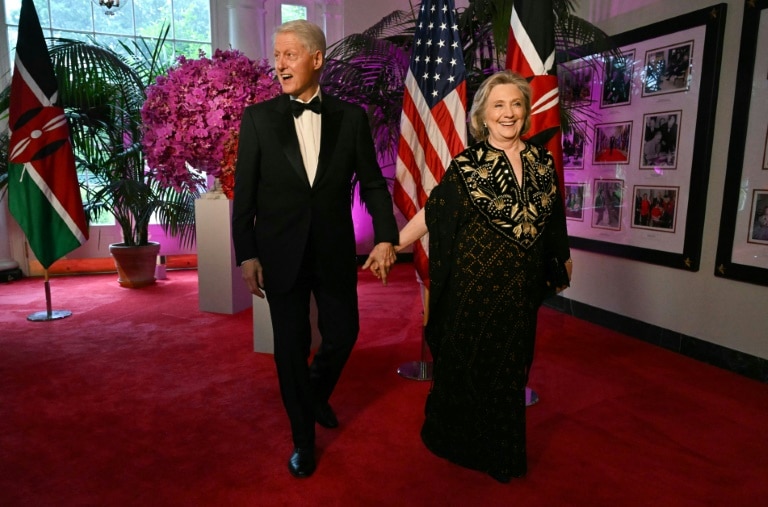
    The U.S. House Oversight Committee has initiated a significant political confrontation by advancing contempt proceedings against former President Bill Clinton and former Secretary of State Hillary Clinton. The Republican-majority committee voted Wednesday to pursue charges after the Clintons declined to comply with subpoenas for in-person testimony regarding their connections to convicted sex offender Jeffrey Epstein.

    The committee’s action represents an escalation in the long-running investigation into how authorities handled previous Epstein investigations. The contempt resolutions now proceed to the full House of Representatives, where Republican leadership must decide whether to formally cite the Clintons for defiance of congressional authority and refer them to the Justice Department for potential criminal prosecution.

    This development highlights how the Epstein scandal continues to reverberate through Washington’s power structures, implicating prominent figures across the political spectrum. The investigation has become intensely polarized, with Democrats characterizing it as a politically motivated effort to target President Trump’s opponents while ignoring Trump’s own documented associations with Epstein.

    Committee Chairman James Comer rejected what he termed a ‘ridiculous offer’ from Bill Clinton’s representatives that would have limited questioning to a single lawmaker in New York without producing an official transcript. The Clintons maintain that the subpoenas lack legitimate legislative purpose and have instead provided sworn written statements detailing their limited interactions with Epstein.

    In their submitted declarations, Bill Clinton acknowledged using Epstein’s aircraft for humanitarian work in the early 2000s but denied visiting his private island. Hillary Clinton stated she had no meaningful interactions with Epstein whatsoever. The controversy has exposed divisions within the Democratic Party regarding how to respond to Republican investigative tactics while maintaining consistency with previous positions on accountability for Epstein’s crimes.

    The proceedings occur against the backdrop of ongoing criticism regarding the Trump administration’s delayed release of Epstein-related case files, which Democrats have characterized as a cover-up. Neither Trump nor the Clintons have been accused of criminal wrongdoing related to Epstein, but the investigation continues to expose the deep political fractures surrounding one of the most notorious criminal cases in recent memory.

  • EU parliament refers Mercosur trade deal to bloc’s top court

    EU parliament refers Mercosur trade deal to bloc’s top court

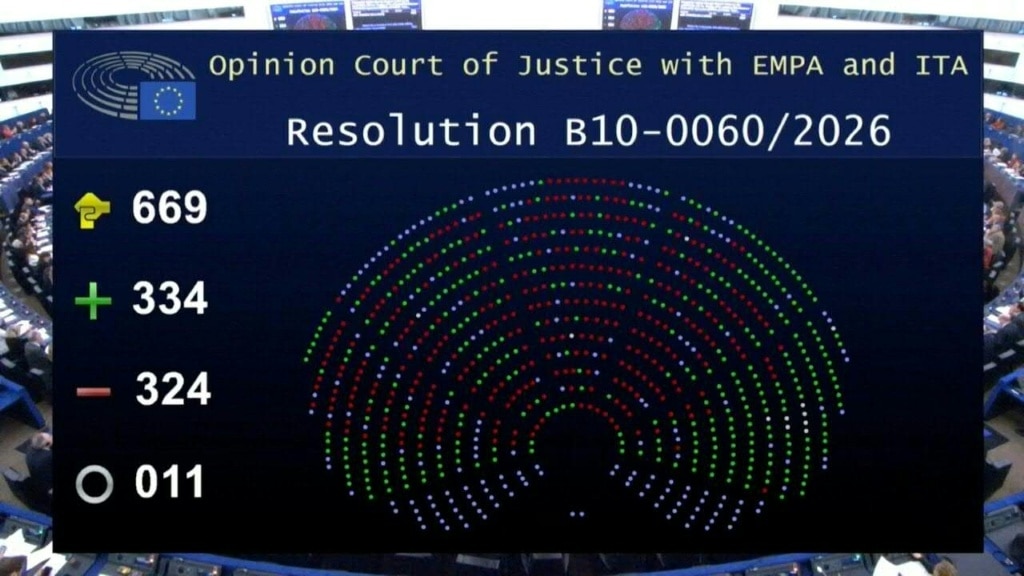
    In a dramatic legislative showdown, the European Parliament has cast the landmark EU-Mercosur trade agreement into legal uncertainty following a contentious vote. Lawmakers in Strasbourg narrowly approved (334-324) referring the freshly inked pact to the Court of Justice of the European Union (CJEU) for constitutional assessment.

    The decision triggered jubilant celebrations among hundreds of farmers who had gathered with tractors outside the parliamentary building. Their prolonged opposition to the deal, particularly from French agricultural groups, found validation in the vote outcome. “We’ve been on this for months and months, for years,” exclaimed Quentin Le Guillous, head of a French young farmers’ group, capturing the emotional triumph felt by protestors.

    This judicial referral represents a significant setback for the European Commission, which had championed the agreement as a historic achievement. Commission President Ursula von der Leyen had vigorously promoted the pact just hours before the vote, emphasizing its strategic importance. The deal, negotiated over 25 years, would create one of the world’s largest free trade areas, eliminating tariffs on over 90% of bilateral trade between the EU and Mercosur nations (Brazil, Argentina, Uruguay, and Paraguay).

    The legal challenge centers on two critical questions: whether partial application before full ratification violates EU procedures, and whether the agreement improperly restricts Brussels’ regulatory powers on environmental and food safety standards. The Commission maintains that parliamentary concerns are “not justified,” with trade spokesman Olof Gill asserting that all raised issues had been comprehensively addressed during negotiations.

    Geopolitical tensions underscore the agreement’s significance, with the EU seeking reliable partnerships amid Trump-era tariff policies and growing Chinese competition. Germany, Spain, and Nordic countries strongly support the pact for its export benefits in automotive, wine, and cheese sectors. Conversely, France, Poland, Austria, Ireland, and Hungary oppose it due to agricultural sector vulnerabilities.

    The judicial process may substantially delay or potentially derail implementation, though the Commission retains authority to provisionally apply the agreement pending the court’s ruling—a move that would likely ignite further political controversy.

  • Davidovich Fokina criticises ‘ignorant drunks’ in crowd

    Davidovich Fokina criticises ‘ignorant drunks’ in crowd

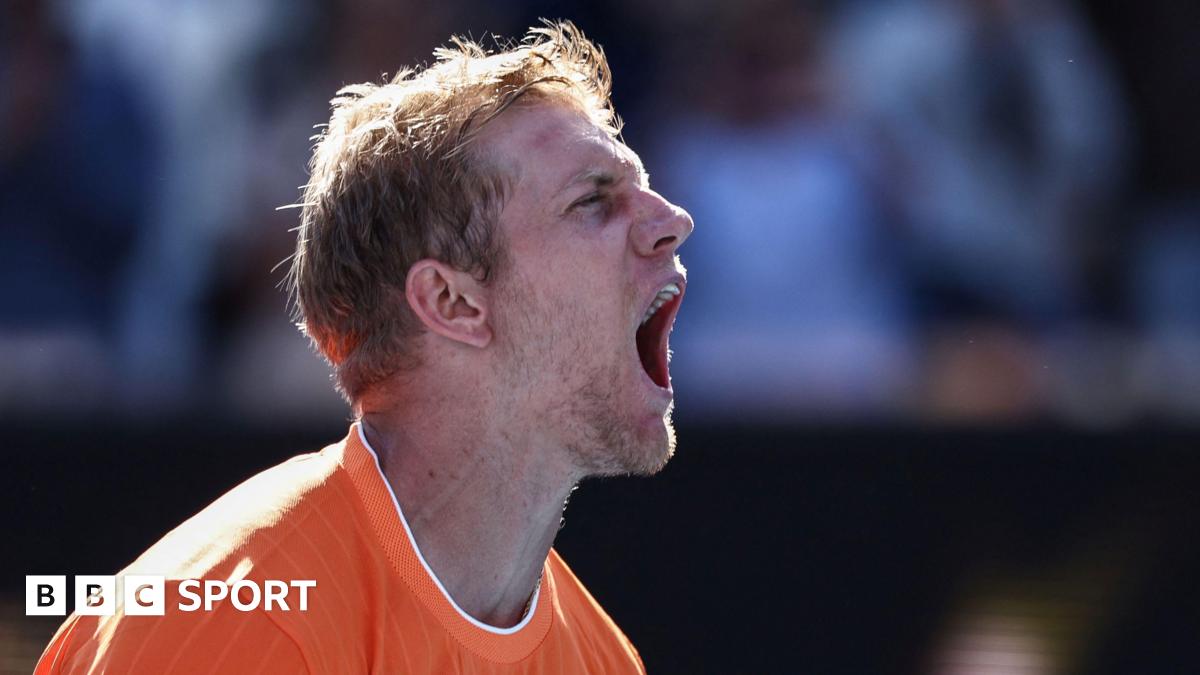
    Spanish tennis professional Alejandro Davidovich Fokina unleashed a vehement critique against disruptive spectators he labeled as “ignorant drunks” during his intense five-set victory at the Australian Open. The incident erupted during the fourth set of his match against American Reilly Opelka on Kia Arena, where the 14th-seeded player abruptly stormed toward the front rows, gesticulating angrily and shouting at a specific group of attendees. The chair umpire promptly intervened, descending from his position to de-escalate the situation and instruct Davidovich Fokina to retreat while addressing the concerned spectators directly.

    Reflecting on the altercation during post-match commentary, Davidovich Fokina expressed frustration with fan behavior that transcends geographical boundaries. “It can happen here, it can happen wherever in the world,” he stated. “So there were four ignorant drunks that I can do nothing about. Nothing more.” Despite the confrontation, the Spaniard secured a hard-fought 6-3, 7-6 (7-3), 5-7, 4-6, 6-4 triumph, celebrating emotionally by shouting skyward before discarding his cap and clenching his fist triumphantly toward his support team.

    This incident represents part of a broader pattern of player-spectator tensions at this year’s Melbourne tournament. Russia’s Anastasia Potapova vocally challenged a spectator who disrupted play during her match against Britain’s Emma Raducanu, while Spain’s Jaume Munar expressed visible frustration when fans initiated chants during critical service moments. These occurrences echo previous years’ controversies, including British player Harriet Dart’s comparison of her 2025 match atmosphere to a “football match” and American Danielle Collins facing hostile heckling from local crowds during her matches against Australian opponents.

    The tournament has historically grappled with crowd management challenges, including last year’s relocation of Davidovich Fokina’s match against Felix Auger-Aliassime due to excessive noise pollution from adjacent courts. These recurring incidents highlight ongoing debates about spectator etiquette and player concentration in professional tennis environments.