标签: Oceania

大洋洲

  • US Supreme Court curbs race-based voting maps in landmark ruling

    US Supreme Court curbs race-based voting maps in landmark ruling

    In a ideologically divided 6-3 decision released Wednesday, the U.S. Supreme Court delivered a landmark judgment that imposes sharp new limits on the consideration of race when drawing congressional electoral districts, a ruling that carries the potential to reshape legislative maps across the country and alter partisan odds ahead of November’s midterm elections.

    The case originated from Louisiana’s post-2020 census redistricting process. After courts ruled the state’s original map illegally diluted Black voting power, state legislators drew a revised plan that created a second majority-Black congressional district, a change intended to align with requirements of the 1965 Voting Rights Act. A group of white voters challenged the revised map, arguing it prioritized racial classification to an unconstitutional degree, setting up a high-stakes clash between voting rights protections and constitutional equal protection guarantees.

    Writing for the court’s conservative majority, Justice Samuel Alito ruled that the Louisiana map crossed into unconstitutional racial gerrymandering. Alito emphasized that Section 2 of the Voting Rights Act does not require states to draw electoral districts primarily along racial lines, noting that “compliance with the law could not justify” the state’s race-centered approach in this instance. “Because the Voting Rights Act did not require Louisiana to create an additional majority-minority district, no compelling interest justified the state’s use of race in creating SB8,” Alito wrote. “That map is an unconstitutional gerrymander, and its use would violate the plaintiffs’ constitutional rights.”

    The ruling leaves the core text of the Voting Rights Act intact but narrows the scope of how the law can be applied to enforce minority representation. For civil rights advocates, the decision represents another major blow to the landmark civil rights legislation, which has already been significantly weakened by a series of Supreme Court rulings over the past decade, most notably a 2013 decision that struck down a key provision mandating federal pre-approval for election law changes in states with histories of systemic discrimination.

    In a fiery dissent read from the Supreme Court bench — a rare step reserved for cases of exceptional national importance — Justice Elena Kagan warned of the decision’s far-reaching consequences. Kagan argued the ruling creates a pathway for states to systematically dilute minority voting power without facing legal pushback, a outcome that undermines decades of progress toward fair representation.

    Legal analysts broadly agree the ruling will raise the legal bar for justifying race-conscious redistricting intended to remedy minority vote dilution, making it far harder to create or preserve majority-minority districts nationwide. These districts, which have been a core tool for advancing minority representation for more than 50 years, have consistently tended to elect Democratic candidates, meaning the ruling is expected to give Republicans a tangible advantage in competitive House races this November.

    The decision marks a major shift in the Supreme Court’s interpretation of the balance between anti-discrimination protections and constitutional equal protection rules, aligned with the conservative majority’s long-stated commitment to what Justice Clarence Thomas — the court’s only Black justice — has framed as a “color-blind” interpretation of the Constitution. While the immediate impact of the ruling on November’s congressional control remains unclear, it has escalated the already fierce national battle over redistricting that has pitted political parties against one another in state legislatures and courts across the U.S.

  • Hungary’s Magyar visits Brussels seeking to unblock EU billions

    Hungary’s Magyar visits Brussels seeking to unblock EU billions

    In his first official visit to Brussels since securing a historic election victory that ended 16 years of nationalist rule under Viktor Orbán, Hungary’s incoming prime minister Peter Magyar sat down with top European Union leadership Wednesday on a mission to reset Budapest’s fractured relationship with the bloc and unlock billions in frozen funding. The trip, which included a high-stakes meeting with European Commission President Ursula von der Leyen, comes as Magyar moves quickly to deliver on his campaign promise of a new pro-EU course, even before he formally takes office next month.

    Magyar struck an upbeat tone ahead of the negotiations, telling followers in an online video that he entered the talks “very optimistic and hopeful.” His top near-term priority is reaching a formal agreement by the end of May to unfreeze roughly €10 billion in Covid-19 recovery funds held by the EU over long-standing rule-of-law concerns that mounted during Orbán’s Kremlin-aligned tenure. Magyar added that preliminary talks between his transition team and senior EU officials — which have already spanned two negotiation rounds — have proceeded smoothly, with both sides approaching discussions in a constructive spirit. “Political decisions” are now all that is required to move the process forward, he noted.

    Beyond the Covid recovery funds, Magyar is also pushing to unlock an additional €8 billion in frozen cohesion funding, bringing the total amount of suspended Hungarian aid seeking release to around €18 billion ($21 billion). Time is not on his side: the incoming Hungarian government faces a hard deadline of the end of August to implement required rule-of-law and governance reforms to secure the €10 billion in Covid recovery funds, or the allocation will be permanently forfeited.

    EU leaders have greeted Magyar’s election victory and rapid push for engagement with cautious optimism. The incoming prime minister’s super-majority control of the Hungarian parliament gives him the political capital needed to push through required reforms quickly — a luxury Orbán’s government never prioritized during years of standoffs with Brussels. European officials have been struck by the level of preparation and commitment from a transition team that has not yet formally taken power. “We’ve never seen such a level of commitment from a government that isn’t even in office yet,” Daniel Freund, a member of the European Parliament and longtime critic of Orbán, told Agence France-Presse. “It’s practically as if Hungary is rejoining the European Union.”

    As a potential early confidence boost for Magyar, Brussels is considering moving forward with approving €16 billion in preferential defense loans that were put on hold amid the standoff with Orbán in the lead-up to Hungary’s election. Still, some EU diplomats stress that concrete policy changes will be the only measure of genuine realignment in Budapest. “So far, wait and see,” one anonymous senior EU diplomat told reporters. “But that might change, considering all the good things he says and does.”

    Beyond domestic funding and rule-of-law reforms, EU leaders are also pushing for a major shift in Hungary’s policy toward Ukraine, where Orbán repeatedly blocked EU military aid for Kyiv, new sanctions on Russia, and progress on Ukraine’s EU accession bid during Moscow’s full-scale invasion. Magyar has already signaled a break from Orbán’s approach, announcing Tuesday that he plans to meet Ukrainian President Volodymyr Zelenskyy in June to “open a new chapter” in bilateral relations.

    Even before Magyar takes office, Orbán’s election defeat has already cleared long-standing logjams in EU policy toward Ukraine. Last week, the 27-member bloc approved a massive €50 billion macro-financial loan for Kyiv and a new package of sanctions on Russia — both measures that Orbán had blocked for months. EU member states now expect Magyar to lift Orbán’s remaining vetoes: unblocking billions in stalled EU military assistance for Ukraine, and removing Hungary’s objection to moving Ukraine to the next phase of its EU accession negotiations. While major EU powers have little appetite to rush Kyiv toward full membership in the near term, officials broadly agree that Ukraine is entitled to continue moving forward in the accession process.

  • War in the Middle East: latest developments

    War in the Middle East: latest developments

    Just 13 minutes ago, Agence France-Presse released a comprehensive update on the rapidly unfolding conflict across the Middle East, capturing multiple interconnected developments that ripple across global politics, energy markets and human rights. The update comes as the war, sparked by US-Israeli strikes in late February, continues to reshape regional dynamics and send shockwaves through the global economy.

    At the heart of US strategy toward Iran, former President Donald Trump has directed American national security officials to draw up plans for a sustained naval blockade of Iranian ports, according to reporting from the Wall Street Journal. The push for a long-term blockade stems from Trump’s deep skepticism that Tehran is negotiating in good faith on its nuclear program. The US administration’s core demands include a 20-year full suspension of uranium enrichment, followed by permanent stringent oversight and restrictions on Iran’s nuclear activities. Trump doubled down on this hardline stance in a post to his Truth Social platform, writing: “Iran can’t get their act together. They don’t know how to sign a nonnuclear deal. They better get smart soon!” The post included a graphic of Trump holding an assault rifle emblazoned with the phrase “NO MORE MR. NICE GUY!”.

    Trump made his first public remarks on the conflict’s trajectory during a White House state dinner honoring Britain’s King Charles III on Tuesday, claiming that Iran had been “militarily defeated”. “We have militarily defeated that particular opponent,” Trump told attendees, adding, “Charles agrees with me even more than I do — we’re never going to let that opponent have a nuclear weapon.”

    On the human rights front, the United Nations has issued sharp criticism of Iran, confirming that at least 21 people have been executed and more than 4,000 arrested across the country since the outbreak of the wider Middle East war. The UN Office of the High Commissioner for Human Rights detailed that nine of those executed were connected to anti-government protests held in January 2026, 10 were accused of membership in opposition groups, and two were executed on charges of espionage. The UN described the Iranian government’s crackdown as “harsh and brutal” against its own population.

    In Congress, US Defense Secretary Pete Hegseth is set to face intense bipartisan scrutiny Wednesday during his first congressional testimony since the war began. Appearing before the House Armed Services Committee to discuss Trump’s $1.5 trillion defense budget request, Hegseth will face tough questions over the administration’s handling of the conflict with Iran. Top US military officer General Dan Caine will also testify, and the hearing is widely expected to be fiery, as lawmakers from both major parties have already voiced deep frustration over the lack of transparency in classified briefings on the war’s progress.

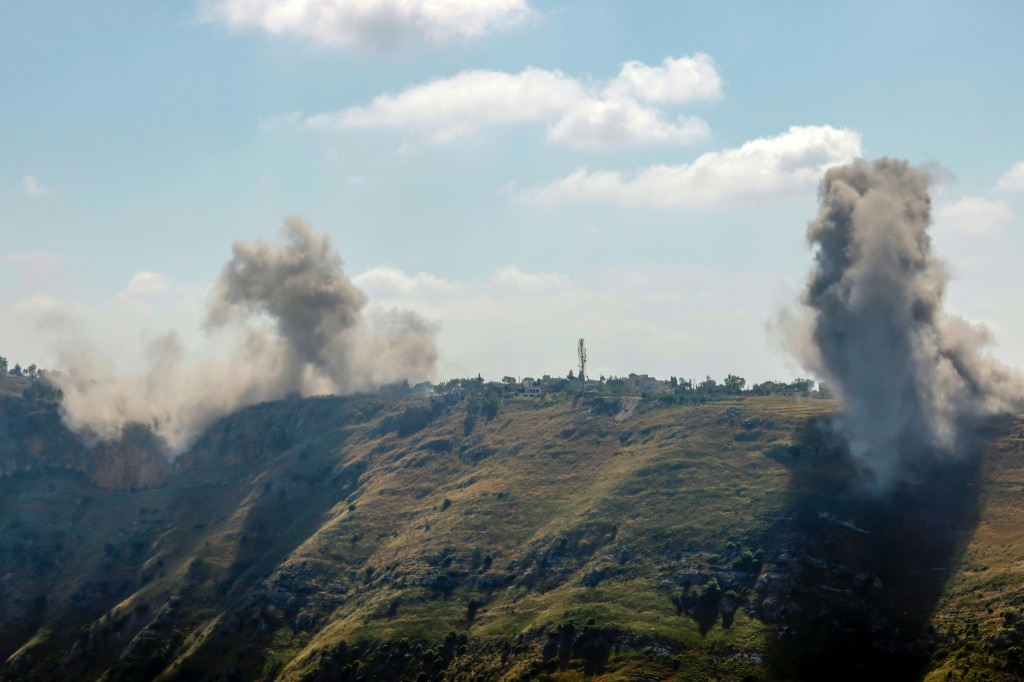
    Violence continues to flare in southern Lebanon despite a fragile ceasefire implemented on April 17. Lebanon’s health ministry confirmed Tuesday that new Israeli strikes killed eight people, including several civilian civil defense rescuers, and wounded two Lebanese soldiers. Israel has been engaged in active ground combat with the Iran-backed Hezbollah militant group since early March, and low-intensity clashes have persisted despite the formal ceasefire agreement.

    For global energy markets, the conflict has already delivered significant financial windfalls for major fossil fuel producers. French energy giant TotalEnergies announced that its first-quarter net profit surged 51% year-over-year to hit $5.8 billion, a new record, driven largely by the sharp rise in crude oil prices tied to Middle East supply chain disruptions. The company noted that expanded oil and gas production in Brazil and Libya fully offset lost output from the Gulf region, which normally accounts for 15% of TotalEnergies’ total hydrocarbon production. The company highlighted its resilience, noting it has been able to capitalize on elevated global prices to boost its bottom line.

    In a separate operational update, TotalEnergies confirmed it has restarted operations at the Satorp refinery in Saudi Arabia, a joint venture with Saudi Aramco. The facility was shut down as a safety precaution after airstrikes in early April damaged three of its processing units. As of April 14, the refinery has returned to full operational capacity, processing 230,000 barrels of crude per day, with undamaged units brought back online to restart production.

    Global oil prices jumped sharply this week following two key developments: reports that Trump is unlikely to accept an Iranian proposal to reopen the Strait of Hormuz to commercial shipping traffic, and a warning from Qatar that the conflict could devolve into a protracted “frozen conflict”. By Tuesday, West Texas Intermediate crude breached the $100 per barrel mark for the first time in two weeks, while Brent crude climbed above the price point it reached before a temporary ceasefire was announced in early April. On Wednesday, both contracts continued their upward climb, with Brent holding above $113 per barrel and WTI trading above $101 per barrel.

  • Diving robot explores mystery of France’s deepest shipwreck

    Diving robot explores mystery of France’s deepest shipwreck

    Nearly 1.5 miles beneath the Mediterranean surface off the French Riviera, a remotely operated diving robot has begun the first archaeological investigation of France’s deepest recorded shipwreck, revealing a remarkably preserved 16th-century merchant vessel that could rewrite key details of early modern Mediterranean trade. The wreck, dubbed “Camarat 4”, was discovered entirely by accident last year during a routine French navy seabed survey off the coast of Ramatuelle, a short distance from the iconic resort town of Saint-Tropez. Though the deep location makes unauthorized access virtually impossible, navy officials have kept the exact coordinates of the site classified to protect the fragile archaeological remains from looting and disturbance.

    Before dawn on the first day of the mission, the expedition’s navy tugboat anchored above the wreck, carrying the specialized diving robot, a team of marine archaeologists from the French culture ministry’s underwater archaeology department, and two converted shipping containers that serve as mobile on-deck workspaces. Operated via a long fiber-optic cable linking the robot to the surface vessel, the craft — rated for dives as deep as 4,000 meters, well beyond the wreck’s 2,500-meter depth — began its slow descent, with every movement tracked in real time by a team of experts watching live monitoring screens. Navy officer Sebastien, who withheld his last name for security protocols, emphasized the extreme care required for the operation: every movement of the robot’s pincers must be deliberate and precise to avoid damaging fragile artifacts or stirring up clouds of sediment that would obscure visibility and disrupt the intact site.

    After a one-hour descent, the robot glided over the dark seabed, revealing a trove of well-preserved artifacts that have rested undisturbed for more than 400 years. High-resolution cameras captured clear footage of a cast-iron cannon, hundreds of intact ceramic pitchers and decorative plates, many adorned with hand-painted floral motifs, crosses and fish symbols. Over three hours of continuous scanning, the robot captured 86,000 individual images at a rate of eight frames per second; these images will later be stitched together to create a full, high-fidelity 3D model of the entire wreck site that researchers can study without disturbing the remains.

    Lead archaeologist Franca Cibecchini expressed surprise at the excellent condition of the site, noting that exceptional water clarity has made the survey far more productive than initial projections: “The visibility is excellent. You almost can’t tell it’s so deep.” Cibecchini and her team have concluded the vessel was almost certainly a merchant trading ship hailing from the Liguria region of northwest Italy, likely loaded with ceramic goods in the major trading ports of Genoa or nearby Savona before it sank en route to its destination. The team believes the ship was carrying a bulk cargo of glazed ceramics and raw metal bars when it went down.

    On the first day of excavation, the robot carefully maneuvered a small intact pitcher into a protective recovery cradle, moving with extreme slowness to avoid the cracks and breaks that ruin roughly one-third of all ceramics recovered from deep-sea shipwrecks, according to lead field archaeologist Marine Sadania. By the end of the first mission phase, the team successfully brought several jugs and plates to the surface, where they were transported to a dedicated marine archaeology laboratory in the southern French port city of Marseille for cleaning and analysis. Examining one recovered pitcher in the lab, Sadania pointed out the distinctive decorative work: dark blue outlines form rectangular panels across the rounded vessel, with some panels filled in turquoise and marked with saffron-yellow geometric symbols.

    Sadania emphasized the enormous historical significance of the find, noting that it fills a major gap in scholarly understanding of 16th-century Mediterranean maritime trade: “We don’t have very detailed texts about merchant ships in the 16th century, so this is a valuable source of information on maritime history.” As the first full-scale investigation of a shipwreck at this depth in French territorial waters, the mission also sets a new benchmark for deep-sea archaeological exploration, demonstrating how remotely operated robots can unlock historical secrets that were once permanently out of reach for researchers.

  • Sri Lanka government ‘temporarily’ takes over cricket board

    Sri Lanka government ‘temporarily’ takes over cricket board

    In a significant shakeup to one of South Asia’s most high-profile sporting institutions, the government of Sri Lanka announced Wednesday it has assumed full temporary administrative control of Sri Lanka Cricket (SLC), the country’s richest sports governing body. The intervention is framed as a targeted step to clear the way for sweeping structural changes to address long-running dysfunction within the organization.

    The SLC has faced sustained public and political scrutiny in recent years over widespread allegations of systemic corruption and mismanagement, issues that have coincided with disappointing on-field results for the national team. Most recently, Sri Lanka suffered an early elimination from the 2024 T20 World Cup, a tournament the island nation co-hosted alongside India earlier this year.

    The move comes on the heels of the full resignation of SLC’s entire executive committee Tuesday, including four-time SLC president Shammi Silva, who stepped down ahead of the government’s formal takeover. According to an anonymous government source, former investment banker and opposition politician Eran Wickramaratne is widely expected to be appointed as the interim head of the reorganized governing board.

    In an official statement, the Ministry of Youth Affairs and Sports confirmed the order: “All administrative functions of Sri Lanka Cricket will be temporarily brought under the Ministry of Youth Affairs and Sports, effective today.” The ministry added that an independent special committee will be formed in the near future to diagnose ongoing problems in the domestic and national cricket ecosystem and roll out the planned structural reforms.

    This is not the first time political intervention in Sri Lanka’s cricket governance has drawn international pushback. Between 2023 and 2024, the International Cricket Council (ICC), cricket’s global governing body, suspended Sri Lanka from international competition for two months specifically over accusations of improper government interference in SLC operations. Agence France-Presse has reached out to the ICC for official comment on the latest government takeover, with no immediate response as of publication.

  • Tamer than feared inflation print sparks afternoon revival on the ASX

    Tamer than feared inflation print sparks afternoon revival on the ASX

    Australia’s benchmark share market extended its downward momentum into a seventh consecutive trading session on Wednesday, but a softer-than-forecast inflation reading triggered a welcome late-session rebound that cut the day’s losses significantly.

    The broad-based sell-off, the longest the Australian Securities Exchange has recorded since 2022, left the benchmark ASX 200 23.70 points lower at closing, a 0.27% drop to 8687 points. The broader All Ordinaries index followed a similar trajectory, slipping 19.30 points or 0.22% to settle at 8915.70. The Australian dollar also weakened against the U.S. dollar, ending the session at 71.61 U.S. cents.

    Trading was deeply mixed across sectors: of the 11 major industry groups tracked on the exchange, six closed in positive territory while five retreated. Utilities and energy stocks led the upward charge, posting gains of 2.18% and 1.27% respectively. Top utility performers included Origin Energy, which climbed 3.17% to $12.03, AGL, which rose 2.38% to $9.48, and LGI Limited, which added 2.86% to $3.60. Energy stocks extended their recent rally, with Woodside Energy gaining 2.01% to $33.05, Santos edging 0.39% higher to $7.77, and Ampol closing up 0.93% at $34.58.

    On the losing side, healthcare stocks were the day’s biggest drag on the index. Biotech giant CSL fell 2.42% to $125.78, sleep technology firm ResMed slipped 1.11% to $30.85, and cochlear implant manufacturer Cochlear extended its recent downturn with a 3.23% drop to $90 per share.

    The sharp afternoon rebound followed the release of new inflation data from the Australian Bureau of Statistics, which showed headline inflation rose 1.1% in the March 2026 quarter, with the 12-month rate hitting 4.6%. The quarterly increase was driven largely by a sharp jump in global oil prices, but the overall reading came in below the consensus forecasts that investors had priced in ahead of the announcement. Before the data was released, the ASX 200 dipped to an intraday low of 8661, but rallied almost immediately to a peak of 8711 as traders digested the softer inflation figure.

    Belinda Allen, head of Australian economics at Commonwealth Bank, noted that the tamer inflation reading gives the Reserve Bank of Australia flexibility to hold current interest rates steady at its upcoming May policy meeting. Allen still expects a narrow vote to raise the cash rate, however, and predicts another split decision amid conflicting economic signals, calling the May outcome “more precarious” than the March meeting. Prior to the inflation release, markets had priced in an 80% chance of a rate hike in May; that probability has since fallen to 70%.

    In individual company news, Woodside’s rally was supported by strong quarterly operating results, which showed operating revenue rose 7% year-over-year to US$3.26 billion (AU$4.54 billion) for the three months ending March. The average selling price for the company’s portfolio of gas, oil liquids and ammonia climbed 11% to $63 per barrel of oil equivalent. Mining services provider Codan saw its shares soar 15.45% to $42 after it upgraded full-year earnings guidance, now projecting a net profit of around $170 million for the 2026 financial year. In contrast, childcare operator G8 Education plunged 31.25% to $0.16 per share, a new multi-year low, after announcing it would close 40 underperforming centers in a proactive response to ongoing cost-of-living pressures that have squeezed household discretionary spending on childcare.

  • EU finds Meta failing to keep under-13s off Facebook, Instagram

    EU finds Meta failing to keep under-13s off Facebook, Instagram

    The European Commission announced Wednesday preliminary findings that tech giant Meta has failed to enforce its own minimum age rule of 13 for Facebook and Instagram, leaving underage users exposed to harmful online content and facing potential penalties that could reach billions of dollars. The ruling marks a major step forward in the EU’s sweeping campaign to tighten protections for minors navigating digital spaces, following similar policy moves around the world.

    The investigation, launched back in May 2024 under the bloc’s landmark Digital Services Act (DSA), uncovered critical flaws in Meta’s age verification systems. Regulators confirmed that under-13s can easily bypass existing restrictions simply by entering a false date of birth, with no effective cross-checks in place to catch these inaccuracies. Additionally, the platform’s built-in tool for reporting underage accounts was found to be unnecessarily convoluted, requiring up to seven separate clicks just to reach the reporting form, rendering it largely ineffective for most users.

    EU officials pointed out that Meta’s own terms of service have long set 13 as the minimum age for platform access, but the company has failed to turn that written policy into actionable protection. “Terms and conditions should not be mere written statements, but rather the basis for concrete action to protect users — including children,” said Henna Virkkunen, the European Commissioner responsible for technology. Brussels also pushed back against Meta’s internal risk assessment, noting it contradicts widespread data across EU member states showing between 10 and 12 percent of all under-13s regularly access the two platforms.

    If the preliminary findings are finalized after the review period, the EU has the authority to impose fines equal to as much as 6 percent of Meta’s total global annual revenue, a penalty that could amount to billions of dollars for the company. Meta has rejected the EU’s conclusions, noting it has existing systems in place to identify and remove underage accounts. “We’re clear that Instagram and Facebook are intended for people aged 13 and older and we have measures in place to detect and remove accounts from anyone under that age,” a Meta spokesperson said, adding the company plans to continue constructive dialogue with EU regulators. The firm could still avoid financial penalties by implementing sufficient fixes to address the identified violations.

    Wednesday’s announcement is just one part of a broader EU push to rein in harmful practices from large technology companies when it comes to child safety online. Back in February, regulators issued an unprecedented warning to TikTok, demanding the platform alter its famously addictive algorithm design or face heavy fines. The ongoing Meta probe also includes additional investigations into the platforms’ impacts on user mental and physical health, as well as assessments of whether their design features intentionally encourage compulsive use.

    The EU’s child safety push has gained new momentum after Australia introduced a groundbreaking national ban on social media use for anyone under 16 earlier this year, putting intense political pressure on Brussels to adopt sweeping bloc-wide rules. Several EU member states have already floated national proposals to ban under-16s from social platforms, and the European Commission confirmed Wednesday it is currently exploring the feasibility of a uniform EU-wide age minimum for social media access. To support these upcoming rules, the Commission also announced this month that a purpose-built EU age verification app is complete and set to roll out across the bloc in the coming months, designed to replace the ineffective pop-up age confirmation banners currently used by most adult and social platforms. Just last month, regulators also penalized four major adult pornography platforms including Pornhub for failing to block underage access to their content in violation of EU digital rules.

    The DSA, the EU’s flagship digital regulation that forms the legal basis for this probe, has already faced fierce criticism from the administration of U.S. President Donald Trump, who has argued the rules unfairly target American technology companies.

  • King Charles to stress UK-US cultural, trade ties in New York

    King Charles to stress UK-US cultural, trade ties in New York

    As the four-day state visit of Britain’s King Charles III and Queen Camilla to the United States enters its third day, the British monarch will center his Wednesday itinerary in New York on reinforcing the deep cultural and economic bonds that have long defined the UK-US relationship, at a moment when the two allies’ so-called “special relationship” faces growing friction. The visit, which opened in Washington D.C. with a warm formal greeting from President Donald Trump for the royal couple, has been overshadowed from the start by escalating tensions over the ongoing conflict involving Iran. The New York leg of the tour will kick off with a solemn act of commemoration: the King and Queen will lay a wreath at the 9/11 Memorial, marking 25 years since the 2001 terrorist attacks that claimed the lives of nearly 3,000 people. In an address to the U.S. Congress delivered the previous day, Charles reflected on the global impact of that tragedy, noting “This atrocity was a defining moment for America and your pain and shock were felt around the whole world.” He added, “We stood with you then. And we stand with you now in solemn remembrance of a day that shall never be forgotten,” framing his speech as a call for unified action among Western powers. Following the wreath-laying, Charles is set to meet with 9/11 first responders and family members of those killed in the attacks. A lifelong advocate for environmental action and sustainable land management, the King will then tour an urban sustainable farming initiative that combines food access work with youth mentorship to address systemic food insecurity in New York City. While the King visits the agricultural project, Queen Camilla will carry out a separate engagement at the New York Public Library, where she will mark the 100th anniversary of A.A. Milne’s beloved fictional character Winnie-the-Pooh. She is expected to present the library with a custom-made plush toy of Roo, Pooh’s young friend from the Hundred Acre Wood. Later in the day, King Charles will gather with transatlantic business leaders — including investors, startup founders and industry executives — at an event dedicated to highlighting the deep interconnectedness of the British and American economies. This engagement comes at a sensitive moment: just weeks earlier, Trump threatened to walk back a bilateral trade agreement that currently mitigates the impact of U.S. tariffs on British goods, in a rebuke of Prime Minister Keir Starmer’s refusal to back the U.S.-led war effort against Iran. The final public event of Charles’s New York schedule will be a reception celebrating the work of The King’s Trust, the monarch’s long-running youth charity, while also showcasing the output of British and American cultural industries. Tight security measures have been implemented across New York for the royal visit, coming just days after an alleged assassination attempt targeting Trump at a Washington D.C. press gala. Zohran Mamdani, New York City’s leftist mayor, will not hold a private meeting with the King but will join him for the 9/11 commemoration ceremony. So far, British officials have expressed satisfaction with the ceremonial welcome extended to Charles and Camilla during their time in the U.S., which has included a 21-gun salute, a military flyover by U.S. fighter jets, and a formal state banquet hosted at the White House. Trump has adopted a warm, jovial tone toward the royal couple, even joking that his Scottish-born mother had a teenage crush on Charles. This amicable tone stands in sharp contrast to Trump’s sharp public criticism of Starmer over the UK’s refusal to join the Iran conflict, a disagreement that created diplomatic friction in the lead-up to the state visit. In his landmark address to Congress — the first by a British monarch since Queen Elizabeth II spoke to the body in 1991, delivered amid celebrations of the 250th anniversary of American independence from British rule — Charles sought to smooth over existing disagreements between the two nations. “Whatever our differences, whatever disagreements we may have, we stand united in our commitment to uphold democracy,” he told assembled lawmakers. He emphasized that the modern UK-US partnership “was born out of dispute, but no less strong for it,” framing the alliance as resilient enough to withstand temporary policy rifts.

  • Olympic breakdancer Rachael ‘Raygun’ Gunn loses lecturing gig at Macquarie University amid staff redundancies

    Olympic breakdancer Rachael ‘Raygun’ Gunn loses lecturing gig at Macquarie University amid staff redundancies

    The Australian breakdancer who became a global viral sensation after her zero-score performance at the 2024 Paris Olympic Games’ inaugural breaking competition has reportedly lost her long-held academic position amid sweeping cost-cutting at one of Australia’s top higher education institutions.

    Rachael Gunn, professionally known by her stage name Raygun, catapulted to worldwide notoriety last summer when her routine at the Paris Games — which included novelty moves inspired by hopping kangaroos, wriggling snakes, and the popular 20th-century party dance the sprinkler — earned no points from judges. The clip of her performance spread rapidly across social media, spawning thousands of memes and turning the relatively little-known breakdancer into a household name overnight.

    Before her Olympic debut, Gunn had built a 10-plus-year academic career at Sydney’s Macquarie University, where she worked as a lecturer in media and popular culture. She earned her PhD from the institution in 2017, with a doctoral thesis examining the gender politics of Sydney’s underground breaking culture. Her research agenda has long centered on the cultural politics of street dance, including a commissioned study for the City of Sydney analyzing the experiences of street dancers performing in public urban spaces.

    According to new reporting from the *Australian Financial Review*, Gunn is among the staff cut in Macquarie University’s latest round of program redundancies, which is part of broader cost-saving initiatives sweeping Australia’s higher education sector. The report notes that widespread declines in international student enrollment — a key source of revenue for Australian universities — have pushed dozens of institutions to eliminate roles to balance their budgets, with Macquarie’s Arts department the latest to undergo restructuring.

    A spokesperson for Macquarie University declined to confirm or comment on details of Gunn’s employment status, citing longstanding institutional policy to protect the privacy and legal rights of individual staff members. “This is our standard practice for legal and privacy reasons,” the spokesperson reiterated to media.

    Gunn’s redundancy comes months after her Olympic performance drew public criticism from Australian Senator Gerard Rennick, who used her profile to attack publicly funded academic programs he deemed unproductive. In a public Facebook post following the Games, Rennick questioned how many “obscure and pointless courses” Australian universities offered with taxpayer subsidies, adding, “It also goes to show just because you have a PhD in something doesn’t mean you are any good at it.”

    In the months following her viral Olympic moment, Gunn capitalized on her newfound global fame by launching a venture on the celebrity personalized content platform Cameo, where she charges fans approximately AU$70 for custom greeting videos. The platform allows supporters of public figures from sports, entertainment, and politics to purchase one-of-a-kind personalized messages directly from creators.

  • Tropical forest loss eases after record year: researchers

    Tropical forest loss eases after record year: researchers

    A new report from joint research teams at the World Resources Institute (WRI) and the University of Maryland has delivered a mixed assessment of global tropical forest conservation: while the pace of primary tropical rainforest destruction dropped 36% in 2025 from the previous year’s all-time high, loss rates remain alarmingly elevated, and climate-worsened wildfires have emerged as a persistent, dangerous new threat to decades of conservation progress.

    Researchers documented 4.3 million hectares (10.6 million acres) of primary tropical rainforest lost in 2025, a decline that equals 11 football fields of forest cleared every minute. By area, that total is roughly the size of Denmark, and it remains 46% higher than average annual loss rates recorded a decade ago. When compared to the benchmark needed to hit the global 2030 goal of halting and reversing forest loss, current deforestation rates are still 70% above the required target.

    Elizabeth Goldman, co-director of WRI’s Global Forest Watch platform, called the single-year drop of this scale an encouraging sign of what targeted policy can achieve. But she cautioned that part of the decline stems from a natural lull after 2024’s unprecedented extreme fire season. That note of caution is echoed by broader warnings from the research team: climate change-fueled wildfires have become a “dangerous new normal” that could erase recent hard-won conservation gains, especially as a new El Niño event is forecast to arrive in the second half of 2026, which is expected to push global temperatures even higher and amplify the risk of extreme drought, heatwaves, and large-scale wildfires.

    Matthew Hansen, director of the University of Maryland’s GLAD Lab, which analyzes satellite forest data, emphasized that one year of progress is not enough to secure long-term tropical forest conservation. “A good year is a good year, but you need good years forever if you’re going to conserve, for example, the tropical rainforest,” Hansen said during a media briefing on the report.

    The bulk of 2025’s slowdown can be traced to aggressive policy action in Brazil, home to the world’s largest tropical rainforest, the Amazon. Under the administration of President Luiz Inácio Lula da Silva, who took office in 2023, Brazil has reinvigorated national anti-deforestation enforcement, relaunched a comprehensive anti-deforestation action plan, and increased penalties for illegal environmental activity. Data shows Brazil’s non-fire related forest loss dropped 41% from 2024 levels, hitting the lowest rate recorded since tracking began. Even so, agriculture remains the single largest driver of deforestation globally, and Brazil’s forests still face pressure from clearing for soy cultivation and cattle ranching, while several Amazonian states have recently passed local legislation that weakens federal environmental protections.

    Other nations have also seen success from strong policy intervention. Neighboring Colombia recorded a 17% drop in forest loss, hitting its second lowest annual rate since 2016, driven by new government policies and land-use agreements that limit unregulated clearing. In Indonesia, forest loss rose 14% in 2025 but remains far below the peak levels seen 10 years prior, while government action in Malaysia has stabilized deforestation rates. However, tropical forest loss remains critically high across other regions, including Bolivia, the Democratic Republic of Congo, Cameroon, and Madagascar, where weak policy enforcement and unregulated land clearing continue to drive widespread destruction.

    Across the globe, total tree cover loss fell 14% in 2025, but fires remain a growing driver of destruction. Fires accounted for 42% of all tropical tree cover loss last year, and over the past three years, fires have burned twice as much tree cover globally as they did two decades ago, according to the report. While most tropical fires are human-caused for land clearing, climate change has intensified natural fire cycles in northern and temperate forest regions. Last year, Canada experienced its second worst wildfire season on record, with blazes consuming more than 5.3 million hectares of forest.

    “Climate change and land clearing have shortened the fuse on global forest fires,” Hansen said. “They are turning seasonal disturbances into a near-permanent state of emergency.”