标签: Oceania

大洋洲

  • Gaza flotilla organisers say 211 activists ‘kidnapped’ by Israel

    Gaza flotilla organisers say 211 activists ‘kidnapped’ by Israel

    A major diplomatic and humanitarian controversy has erupted after Israeli military forces intercepted a flotilla of pro-Palestinian aid vessels heading to the blockaded Gaza Strip in international waters off the Greek island of Crete, with organizers and Israeli officials clashing sharply on the scope and legality of the operation.

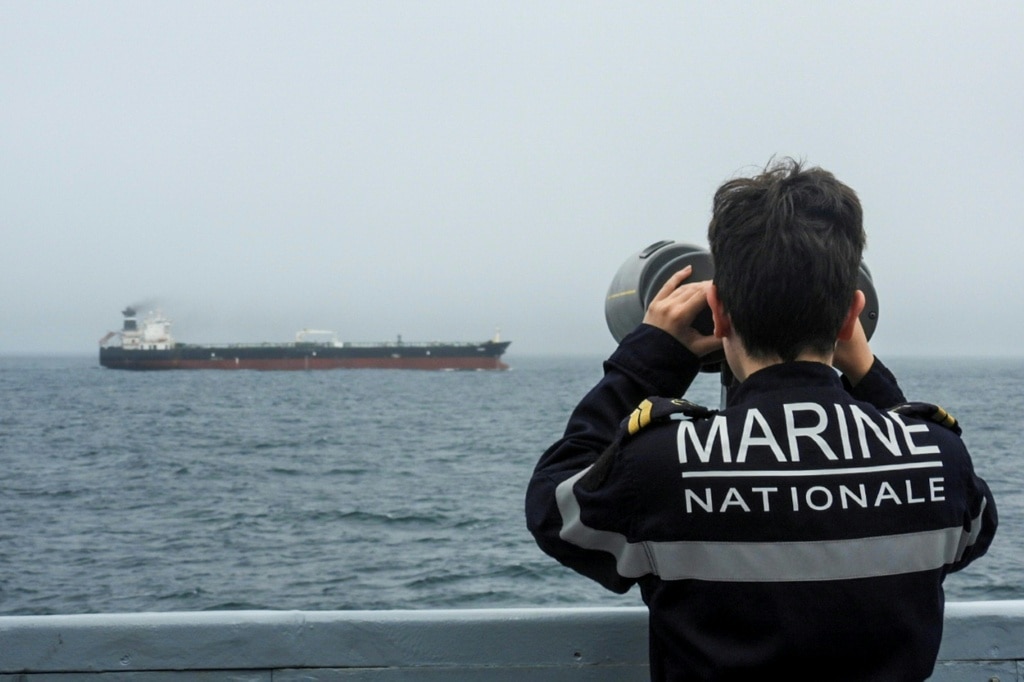
    Organizers with the Global Sumud Flotilla, a coalition of 48 national delegations that launched the voyage from ports in France, Spain and Italy over recent weeks, announced Thursday that Israeli commandos had stormed at least 22 of the coalition’s 58 vessels in an operation that took place hundreds of kilometers from Israeli shores — a distance organizers described as unprecedented. In a graphic account of the raid, the group detailed that Israeli military speedboats approached the unarmed aid vessels, pointing laser weapons and semi-automatic assault weapons at activists, ordering crew members to crawl to the fronts of their boats with their hands and knees on the deck. The operation also included jamming of the flotilla’s communications systems, prompting activists to issue an emergency SOS distress call.

    Per the coalition’s accounts, a total of 211 activists have been taken into Israeli custody, an outcome organizers frame as an arbitrary kidnapping in violation of international law. Among the detainees are Paris Communist municipal councillor Raphaelle Primet and 10 other French citizens, with crew members representing all 48 participating national delegations believed to be held. Helene Coron, a spokesperson for Global Sumud France, confirmed the details of the interception during an online news conference, noting that the operation occurred far closer to Crete than to Israeli territorial waters. Yasmine Scola, an activist still aboard one of the remaining flotilla vessels anchored near Crete, echoed the organizers’ claim that the detained activists had been kidnapped by Israeli forces.

    Israeli officials have offered a conflicting account of the operation. The Israeli foreign ministry put the number of detainees at 175, and derisively labeled the initiative a “condom flotilla” — a reference to prophylactics found in a previous aid convoy — adding that 20 of the intercepted vessels were already traveling peacefully to Israeli ports. Activists counter that their vessels were carrying only civilian humanitarian aid, including school supplies and food for Gazan residents who have faced catastrophic shortages of basic goods for decades.

    A spokesperson for the Greek coast guard confirmed to Agence France-Presse that authorities responded to the flotilla’s SOS distress signal, but once a Greek patrol boat reached the interception zone, crews were told no further assistance was needed. As of Thursday, the 36 remaining vessels from the original flotilla remain anchored off the coast of Crete, and organizers have not yet announced what next steps the remaining crews will take.

    This interception marks the second high-profile voyage by the Global Sumud Flotilla targeting Israel’s blockade of Gaza. The coalition’s first voyage in the summer and autumn of 2025 also drew global attention after Israeli forces intercepted the flotilla off the coasts of Egypt and Gaza in early October of that year. That operation, which Amnesty International and organizers labeled a violation of international law, sparked widespread international condemnation after high-profile participants including climate activist Greta Thunberg were arrested and expelled by Israeli authorities.

    The confrontation comes against a long-running backdrop of humanitarian crisis in Gaza. Israel has controlled all land, air and sea entry points to Gaza since 2007, when the territory came under the governance of Hamas. The United Nations and leading international non-governmental organizations have repeatedly accused Israel of strangling the flow of goods into Gaza, a crisis that deepened dramatically after the outbreak of war between Israel and Hamas in October 2023. According to official Israeli figures compiled by AFP, Hamas’s cross-border attack on October 7, 2023 killed 1,221 people, most of them civilians. Retaliatory Israeli military operations in Gaza have killed more than 72,000 people in the territory, the majority of them civilians, per data from the Gaza Ministry of Health. A fragile ceasefire has been in place since October 2025, ending two years of devastating armed conflict, but severe shortages of food, clean water, medicine and fuel continue to plague the 2 million residents of Gaza.

  • Under-fire UK boosts security for Jews after latest attack

    Under-fire UK boosts security for Jews after latest attack

    Facing mounting criticism over rising antisemitic violence across the country, the UK government has moved swiftly to ramp up protective measures for British Jewish communities, announcing an extra £25 million ($33 million) in funding for security at synagogues, schools, and other community sites. The policy announcement came just 24 hours after a daylight stabbing attack left two Jewish men injured in north London’s Golders Green, the latest in a string of violent incidents targeting the UK’s Jewish population.

    The Wednesday attack unfolded in broad daylight on a public street in Golders Green, a neighborhood with a large longstanding Jewish community. The two victims, aged 34 and 76, were hospitalized and remain in stable condition as of Thursday. A 45-year-old British national, who was born in Somalia and moved to the UK as a child, is currently in police custody in connection with the stabbings.

    This attack is only the most recent in a growing wave of violence targeting Jewish sites across the UK. Last year, a deadly assault on a Manchester synagogue left two people dead, and multiple arson attacks have targeted synagogues and other Jewish community spaces in the Golders Green area in recent months. Community leaders have repeatedly warned that persistent under-policing and growing antisemitic sentiment have left British Jewish communities feeling deeply vulnerable.

    Speaking to Sky News, UK Home Secretary Shabana Mahmood acknowledged the pervasive sense of uncertainty among Jewish Britons, explaining the new funding was a direct response to this crisis. “People have a sense of deep insecurity… and that is why the government is bringing forward investment, an additional £25 million to invest in the security of our Jewish community,” Mahmood said. She confirmed the funding will go toward expanding protective security at Jewish places of worship, educational institutions, and community centers across the country.

    The stabbing has already drawn renewed calls for broader action from community representatives. Rabbi Ben Kurzer, a leader at Golders Green Synagogue, told BBC Radio that regular visible police presence remains scarce in high-risk Jewish areas, with most current security provision falling to underfunded private providers. “There is definitely not a significant police presence on a regular basis in these areas. We have little bits here and there, but most of the security that we’re seeing is private,” Kurzer said. He urged the government to go beyond funding and implement more systemic protections for British Jews, including cracking down on what he described as hate-fueled pro-Palestine protests that have amplified antisemitic rhetoric.

    “We all believe in free speech, but there’s obviously a limit to free speech when it’s leading to events such as we had yesterday,” Kurzer added, echoing longstanding concerns from Jewish community leaders that unregulated large-scale protests have created a permissive environment for antisemitic violence.

    According to U.S.-based monitoring group SITE Intelligence Group, a little-known faction called Harakat Ashab al-Yamin al-Islamiya (HAYI), which is suspected of having links to Iran, has claimed responsibility for the stabbing in an online video, describing the attacker as one of its “lone wolves.” The claim remains uncorroborated by UK law enforcement as of Thursday.

    In response to the alleged ties to a hostile foreign state, Mahmood announced the government would move forward with emergency legislation to close existing legal gaps that have hampered action against groups linked to foreign adversaries and their proxies. The new legislation will be fast-tracked through parliament in the coming weeks, she confirmed.

    The push for tighter protest restrictions aligns with existing policy priorities set by Keir Starmer’s Labour government, which last year announced plans to grant UK police expanded powers to limit frequent demonstrations, in part to account for the “cumulative impact” of repeated protests on community safety.

    Monitoring organizations across the UK have documented a dramatic spike in both antisemitic and Islamophobic incidents since the outbreak of the Israel-Hamas war in Gaza in October 2023, with antisemitic hate crimes rising by more than 100% in some regions of the country.

  • Iran defies Trump’s blockade as oil prices soar

    Iran defies Trump’s blockade as oil prices soar

    A escalating maritime confrontation between the United States and Iran has sent shockwaves through global energy markets, pushing oil prices to their highest levels in four years and raising urgent fears of wider regional destabilization. The standoff, which began after the US imposed a naval blockade on Iranian ports in mid-April, has been amplified by Iran’s continued control over the strategic Strait of Hormuz — a chokepoint through which roughly one-fifth of the world’s daily oil supplies pass — a leverage Tehran has held since the outbreak of regional war in February.

    In an official statement released Thursday, Iranian President Masoud Pezeshkian issued a blunt rebuke of the US blockade, calling the action a violation of international law and warning it would fail to achieve Washington’s goals. “Any attempt to impose a maritime blockade or restrictions is contrary to international law… and is doomed to fail,” Pezeshkian said, adding that the measure would only undermine long-term security across the Persian Gulf.

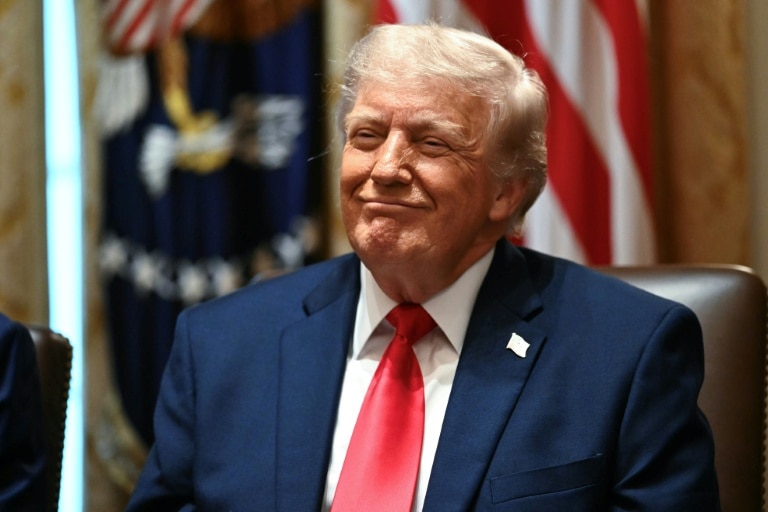
    The tough rhetoric comes as former President Donald Trump, who has overseen the tightening of the blockade, signaled this week that the pressure campaign will remain in place for months to force Tehran to abandon its nuclear program. Speaking to news outlet Axios, Trump claimed Iranian officials were “choking like a stuffed pig” and that conditions would worsen for the country under the blockade. Two unnamed sources familiar with US planning also confirmed to Axios that Trump was set to receive a briefing Thursday from Admiral Brad Cooper, head of US Central Command (CENTCOM), on potential new military actions targeting Iran.

    CENTCOM reinforced the blockade’s progress in a social media post Wednesday, announcing it had diverted the 42nd commercial vessel attempting to bypass the restrictions. The command estimates that 41 oil tankers carrying a total of 69 million barrels of Iranian crude — worth more than $6 billion — have been stranded and cannot be sold on global markets.

    The standoff has already delivered a sharp shock to energy markets: Brent crude for June delivery jumped 7.1 percent this week to top $126 per barrel, reaching a four-year high that has raised costs for consumers worldwide.

    Both sides face mounting domestic and international pressure to de-escalate. Trump is grappling with growing domestic discontent over the ongoing regional conflict, which has driven up energy costs for American households, is unpopular with large swathes of his own political base, and has strained relationships with key US allies. For Iran, the prolonged pressure has hammered the national economy, pushing the Iranian rial to record lows against the US dollar. Ordinary Iranians expressed widespread despair over the ongoing standoff and repeated cycles of confrontation in comments to AFP. “Every time in recent years that negotiations have taken place, the economic situation of the people has only gotten worse. Sanctions have either started or intensified,” a 52-year-old anonymous architect told AFP. “The issue is always nuclear. There’s no talk about people, the economy or freedom. People have the right to not even want to hear the word ‘negotiation,’” he added.

    Diplomatic efforts to ease tensions have hit repeated snags in recent weeks. Top US officials including Vice President JD Vance have twice had planned trips to Pakistan for talks with Iranian representatives called off over the past week. US officials acknowledge they are struggling to identify a clear authoritative voice for Iran after Israeli strikes killed a series of top Iranian leaders, leaving power split between the increasingly powerful hardline Revolutionary Guards and civilian diplomatic bodies.

    Tehran has offered to ease its chokehold on the Strait of Hormuz in exchange for the US lifting its blockade and opening broad negotiations, but the Trump administration has refused to compromise, demanding that any talks center on rolling back Iran’s nuclear program. Iranian Parliament Speaker Mohammad Bagher Ghalibaf, a key political figure since the war began, framed the US blockade as an intentional attempt to fracture Iranian society and trigger domestic collapse.

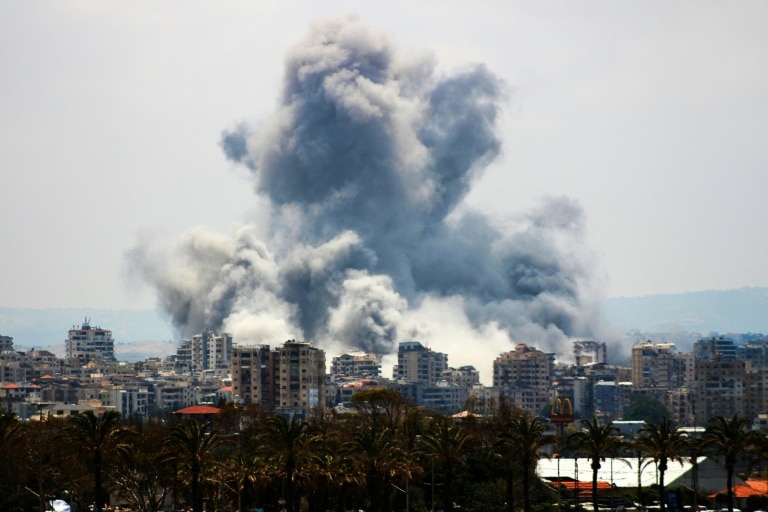
    The confrontation has spilled over into neighboring Lebanon, where a shaky ceasefire between Israel and Iran-backed Hezbollah has been fraying in recent days. The Lebanese army confirmed that an Israeli strike wounded two of its soldiers on Tuesday, marking the first attack on Lebanese military personnel since the ceasefire extension, followed by a second strike Wednesday that killed one Lebanese soldier. Lebanese President Joseph Aoun called for full implementation of the ceasefire to open the door for diplomatic talks, noting that “Israel must finally realise that the only path to security is through negotiations.”

    A new UN-backed report released Wednesday warned that the ongoing conflict has pushed more than 1.2 million people in Lebanon into acute food insecurity, highlighting the growing humanitarian toll of the regional crisis.

  • Housing affordability fix looms as Treasurer hints at capital gains tax reform

    Housing affordability fix looms as Treasurer hints at capital gains tax reform

    As Australia’s federal government prepares to hand down its May 12 budget, Treasurer Jim Chalmers has fuelled widespread speculation about sweeping changes to national housing tax policy, while pushing back against common assumptions that the reforms would deliver a massive windfall to government coffers.

    Speaking in a recent podcast interview with Commonwealth Bank chief economist Luke Yeaman, Chalmers addressed the growing national housing affordability crisis, which has disproportionately locked younger generations out of first home ownership. He acknowledged the clear long-term shift in Australia’s property market, where investor activity has grown steadily at the expense of owner-occupiers, pointing to early 2000s changes to capital gains tax as a key contributing factor to this shift.

    “Anyone who looks objectively at the way that home ownership rates have declined over time … between homeowners and owner‑occupiers versus investors, can see there’s been a long-term trend,” Chalmers told the podcast. “Even if you just go back to around the turn of the century, those changes that were made to capital gains, you can see that that’s had an impact in the composition of the housing market.”

    Despite confirming the government is actively exploring reforms to negative gearing and the existing capital gains discount, Chalmers stopped short of confirming any final changes would be included in the upcoming budget, saying only that he would outline the government’s full plans on budget night. He did, however, push back heavily on widespread market speculation that any changes to these tax policies would generate significant new revenue for the government that could immediately be redirected to broad-based tax cuts for Australian workers.

    “One of the things that I think is not well understood in the speculation is that even if we went down the path that has been speculated about in those areas that you’ve asked me about, people shouldn’t expect there to be this huge amount of new revenue show up over the course of the next few years in the Budget,” Chalmers said. “But people assume that all of a sudden, a huge amount of revenue will show up that you can automatically and immediately give away, and most people who think deeply about those tax changes … would understand that there wouldn’t be a heap of revenue.”

    For weeks ahead of the budget, Chalmers and senior Labor cabinet ministers have framed potential housing tax changes as a matter of intergenerational equity. Critics of the current system argue the existing capital gains discount and negative gearing rules disproportionately benefit wealthy asset holders, while Australian working people bear the majority of the national tax burden. Chalmers said he welcomes the national debate over rebalancing the tax system to create greater fairness between income from labor and income from assets.

    This focus on fairer tax distribution builds on the government’s earlier changes to the controversial Stage 3 tax cuts, which were redesigned to deliver greater relief to low- and middle-income earners when they take effect from July 1, 2024. The revised plan also gradually reduces the 16 per cent tax rate to 15 per cent by July 1, 2026, and 14 per cent by July 1, 2027, while adding a new $1000 instant tax deduction for eligible earners.

    Market analysts and insiders widely predict the government will replace the existing 50 per cent flat capital gains discount with an indexation-based model. Under the current system, any investor holding an asset for more than 12 months qualifies for a 50 per cent discount on their taxable capital gain, a policy originally designed to benefit property investors. For example, an investor who buys a property for $500,000 and sells it two years later for $700,000 would only pay tax on $100,000 of the $200,000 profit under current rules. Under the proposed indexation model, the cost base of the asset would be adjusted for inflation rather than applying a flat 50 per cent discount.

    Chalmers also revealed the budget is still being adjusted in the final weeks ahead of its release, an unusual step driven by ongoing economic volatility stemming from the Middle East crisis. The conflict has already driven a sharp spike in global fuel prices, which added a 9.2 per cent lift to Australian consumer transport costs, with monthly automotive fuel prices surging 32.8 per cent. Around one-fifth of the world’s total oil and gas supply passes through the Strait of Hormuz, and ongoing tensions and blockages in the region have sent global energy prices soaring.

    “Ordinarily budgets are sketched out in summer, locked down in autumn,” Chalmers explained. “This one is being recalibrated even in autumn, and that’s different to normal. But there are some common elements.” He added he has prepared multiple versions of his upcoming budget speech to account for shifting global conditions.

  • ASX hit by supermarket slump and oil price fears in eighth day of losses

    ASX hit by supermarket slump and oil price fears in eighth day of losses

    The Australian Securities Exchange has booked its longest continuous losing streak in eight years, as skyrocketing global crude prices stoke fears of wider inflationary pressures that will erode household grocery budgets and cut into corporate profit margins. On Thursday, the benchmark ASX 200 declined 21.20 points, or 0.24%, to close at 8665.80, while the broader All Ordinaries index dropped 28.10 points, or 0.32%, to settle at 8887.60. This eighth consecutive day of declines marks the local bourse’s worst performance since 2018, with the Australian dollar also sliding 0.19% to trade at 71.14 U.S. cents by market close.

    Against the overall downward trend, eight out of 11 tracked market sectors finished the trading session in positive territory, with the broad market decline pulled down primarily by heavy losses in consumer staples and materials. The steepest drop in the consumer staples segment came from national supermarket giant Woolworths Group, whose shares plummeted 7.78% to $34.39. While the retailer reported a 4.5% year-over-year rise in sales to $18.1 billion, CEO Amanda Bardwell warned that spiking fuel costs driven by the global oil price surge are creating cascading pressure across the entire supply chain. Woolworths confirmed that multiple suppliers have already begun moving to pass higher energy-driven operational costs onto retailers, a shift that will eventually flow through to higher prices for consumers at checkout. Rival leading supermarket chain Coles followed suit, with shares falling 3.62% to $22.11, while other consumer-focused firms including A2 Milk and Endeavour Group also recorded moderate losses.

    Industry analysts say the current market downturn stems from a dual pressure of sky-high crude prices and growing expectations of another incoming interest rate hike from the Reserve Bank of Australia. Josh Gilbert, lead analyst at multi-asset trading platform eToro, explained that the current market shift is a direct reflection of how energy price shocks ripple through the entire economy. “When 20 per cent of the world’s oil supply is at risk, it doesn’t just impact energy prices, it flows through to everything from petrol at the pump to grocery bills, and Woolworths’ profit warning today is exactly that story playing out in real time,” Gilbert noted. As of Thursday, financial markets were pricing in a 77% probability that the RBA will raise interest rates at its next policy meeting, leaving Australian households caught between rising living costs and higher borrowing costs that squeeze disposable income.

    The global oil price surge that triggered the latest market jitters comes amid escalating geopolitical risk that has threatened key global shipping chokepoints. Brent Crude futures jumped to a fresh four-year high this week, briefly touching $US126 per barrel after U.S. officials warned they are bracing for an extended disruption to shipping through the Strait of Hormuz, a critical route that carries roughly a fifth of global oil supplies.

    The elevated oil prices pulled down share values for Australia’s big three iron ore miners: BHP fell 2.24% to $53.72, Rio Tinto declined 1.99% to $167.40, and Fortescue Metals dropped 2.82% to $19.61. Spot iron ore prices held steady at $US107.20 per tonne through the session. Gains in the energy sector partially offset these market declines, with top Australian oil and gas producers posting solid growth: Woodside Energy rose 1.51% to $33.55, Santos gained 2.96% to $8, and fuel retailer Ampol closed up 1.71% at $35.17.

    A handful of positive corporate announcements also delivered isolated gains in other segments. ASX Limited itself saw shares jump 5.10% to $60.80 after announcing Darren Yip as its new interim chief executive. Mineral Resources also climbed 2.96% to $63.71 after the mining firm upgraded its full-year production guidance for its Onslow iron ore project, as well as its Wodgina and Mount Marion lithium operations.

  • Police search Gold Coast property belonging to Dr Vahid Reza Adib, the partner of former premier Annastacia Palaszczuk

    Police search Gold Coast property belonging to Dr Vahid Reza Adib, the partner of former premier Annastacia Palaszczuk

    Queensland law enforcement officials have launched a search of a Gold Coast residential property registered to Dr. Vahid Reza Adib, the long-term partner of former Queensland state premier Annastacia Palaszczuk. Authorities confirmed Thursday that a dedicated crime scene was set up at the Burleigh Heads apartment as a core component of an active, ongoing investigation.

    A spokesperson for the Queensland Police Service shared early details of the operation, confirming that plainclothes detectives and specialized response teams arrived at the Goodwin Terrace address shortly after 11 a.m. local time. The spokesperson added that no additional details about the nature of the investigation could be released to the public at this stage of the process.

    According to initial reports from 7News, forensic investigators also participated in the search, carrying out a detailed inspection of the property before removing a number of undisclosed items for further analysis. As of the latest update, no criminal charges have been filed against any party connected to the property, and investigators have publicly stated that Palaszczuk herself is not considered a person of interest nor believed to have any connection to the conduct under investigation.

    Notably, the search took place just hours before Palaszczuk was scheduled to appear at a public book launch event at the Robina Library on the Gold Coast, part of a statewide promotional tour for her recently released memoir *The Politics of Being Me*. Roughly 200 attendees were in attendance for the event, and multiple guests were overheard discussing the day’s police raid, local outlet the Courier Mail reported. Eyewitness accounts confirm Palaszczuk displayed no visible signs of distress or disruption during her scheduled remarks and public appearance.

    Palaszczuk, who led Queensland as premier from 2015 to 2023, first went public with her relationship with Dr. Adib in 2021, while she still held office. The pair first met at the Stradbroke Day races, and reconnected through a shared network of mutual friends shortly after that initial encounter. They made their first public appearance together at the Caloundra Cup on the Sunshine Coast later that same year.

    In a past interview with the Courier Mail, Palaszczuk spoke positively of her partner, describing him as a warm, caring, and highly intelligent person with a sharp sense of humor. “We are just enjoying getting to know each other,” she said at the time. “We make time when we can to see each other. It’s not easy, but when we do see each other we like to go out to dinner and go on long walks, and what has been nice for me is that he also makes me take a break from work every now and again.”

    Dr. Adib is a prominent weight-loss surgeon based in Brisbane, who founded the Brisbane Obesity Clinic in 2004. Over his decades-long career, he has carried out tens of thousands of bariatric and weight loss procedures. He launched his surgical career at the Royal Brisbane Hospital in 1994, and completed advanced medical training in both Australia and leading European medical institutions.

  • No ‘meaningful’ shift from social media sites after Australia teen ban: govt report

    No ‘meaningful’ shift from social media sites after Australia teen ban: govt report

    Australia made global policy history last December when it became the first nation in the world to implement a formal ban restricting all users under the age of 16 from accessing major social media platforms including TikTok and Instagram. The landmark regulation was crafted to shield minors from two well-documented harms: pervasive cyberbullying and manipulative recommendation algorithms that prioritize engagement over adolescent well-being. Since its passage, policymakers and child welfare advocates across the globe have watched closely, with many weighing whether the Australian model could serve as a replicable blueprint for reining in the unchecked power of large technology companies.

    Newly released internal government documents, obtained by Agence France-Presse via a freedom of information request, offer one of the first public glimpses into how the controversial policy has performed in its early months. The data, analyzed by Australia’s national online safety regulator the eSafety Commission, shows that just one month after the ban entered into force, top platforms including Instagram and TikTok maintained their dominant positions in Australian app store rankings and download charts. The commission’s internal February 2 briefing notes that while some users briefly experimented with alternative apps not covered by the ban, the vast majority quickly returned to the well-established major platforms they had used previously. Overall, the briefing concludes, there was “no meaningful shift” away from the restricted platforms in the initial weeks of the policy.

    Officials did, however, note critical limitations to the early download data that prevent drawing definitive long-term conclusions. The data cannot track the age of active users, nor does it measure actual in-app usage after download, meaning it can only serve as a rough early indicator of shifting popularity trends. One unexpected early finding that has raised concerns is a 26% year-over-year increase in cyberbullying complaints related to the banned platforms between January 2025 and January 2026, with the majority of those new complaints linked specifically to TikTok.

    In an official statement provided to AFP, an eSafety Commission spokesperson emphasized that the released documents only cover the very early implementation phase of the new law, as regulators and platforms work to embed the new restrictions. “Continued analysis as more data becomes available will support more robust, evidence-based conclusions regarding longer-term trends, reporting behaviours and impacts of (a minimum age for social media),” the statement read.

    Interest in Australia’s policy experiment extends far beyond the country’s borders. According to the internal documents, officials from Israel, the United Kingdom, Norway and New Zealand have already held meetings with Australian policymakers to discuss the ban, joining a growing cohort of nations considering similar restrictions on minor access to social media. “The internet doesn’t stop at the border and nor should our efforts to minimise harm, especially to children,” the commission noted, acknowledging the widespread global attention its pioneering legislation has received.

    Tensions between the Australian government and large tech firms have already escalated in the months since the ban took effect. Back in March, Communications Minister Anika Wells publicly accused major tech companies of intentionally failing to comply with their new legal obligations, noting that regulator assessments found a “substantial proportion of Australian children” still accessing banned platforms. “Australia’s world-leading social media laws are not failing. But big tech is failing to obey the laws,” Wells told reporters at the time, adding “Australia will not let the social media giants take us for mugs.”

    Under the current legislation, non-compliant tech companies face maximum fines of up to 33.9 million USD (equivalent to 49.5 million Australian dollars). As of the latest government updates, more than five million accounts linked to underage Australian users have been removed from major platforms since the ban entered into force. TikTok declined to issue a formal comment when approached by AFP for this reporting.

  • Australian Jewish group warned of ‘attack’ before Bondi mass shooting: inquiry

    Australian Jewish group warned of ‘attack’ before Bondi mass shooting: inquiry

    In a bombshell interim finding delivered this week, a high-level federal royal commission has confirmed that a Jewish community security organization warned Australian law enforcement a terror attack targeting Jewish gatherings was likely just days before two attackers killed 15 people in Australia’s deadliest mass shooting in three decades at Sydney’s iconic Bondi Beach.

    The December attack unfolded as hundreds of Jewish families gathered at the coastal location to celebrate the Hanukkah festival. Authorities have charged 24-year-old Naveed Akram, an Australian-born citizen, with 15 counts of murder and terrorism offenses; he remains in custody awaiting trial. His 50-year-old father, Sajid Akram, the second accused attacker, was shot dead by responding police during the incident.

    The inquiry, chaired by former High Court justice Virginia Bell – one of the nation’s most respected retired judicial figures – confirmed in its Thursday report that the Australian Jewish community was the explicit, intended target of the assault. The commission released a pre-attack email sent by the Community Security Group, a volunteer Jewish security organization, which warned bluntly that “A terrorist attack against the NSW Jewish Community is likely and there is a high level of antisemitic vilification” ahead of the public Hanukkah event.

    Per the commission’s findings, the security group notified state police that the community faced elevated threats, but was informed that no dedicated uniformed officers could be assigned to the December 14 gathering. Instead, police offered only intermittent mobile patrols to check in on and monitor the celebration.

    Jewish community leader Alex Ryvchin told public broadcaster ABC that event organizers had already sensed a pervasive atmosphere of unease in the lead-up to the festival, and that the tragedy stemmed from inadequate resourcing of security protections. “The police are the ones that make decisions around resourcing, and it seems like this was not adequately done,” Ryvchin said. “We need to understand why those resourcing decisions were made.”

    New South Wales State Premier Chris Minns moved quickly to accept formal responsibility for the systemic failure to prevent the deaths. “If we had known what was going to happen, we would have put an army down there,” Minns told reporters. In contrast, State Police Commissioner Mal Lanyon defended his department’s actions, noting that officers had reviewed the threat intelligence provided by the Jewish group, and that roving patrols were deployed across the area on the night of the attack.

    The interim report issued one immediate, key recommendation: law enforcement should significantly boost security arrangements for all future public Jewish celebrations that draw large crowds. Federal Prime Minister Anthony Albanese, who framed the operational failure as a matter for the New South Wales state government, pledged that the national government would adopt every recommendation the commission ultimately puts forward. “I can assure the Australian public that the government will do everything necessary to protect the community in the wake of the Bondi attack,” Albanese said.

    The full federal royal commission, the most powerful form of public inquiry in the Australian government system, has been mandated to investigate all contributing factors to the attack, ranging from gaps in domestic intelligence sharing to the steady rise of violent antisemitism across Australian society. The commission also noted that the nation’s existing counter-terrorism capabilities have room for meaningful improvement, and redacted several national security-related recommendations to safeguard sensitive intelligence and ongoing criminal investigations.

    In the wake of the attack, the nation entered a period of national reckoning over antisemitism, with widespread public anger directed at government and law enforcement for failing to protect Jewish Australian communities. Shortly after the shooting, the federal government proposed a package of gun law reforms, headlined by a nationwide voluntary gun buyback scheme designed to remove high-risk weapons from civilian circulation. That plan has since stalled, however, as the federal government struggles to secure buy-in from all state and territorial governments. The commission has now formally recommended that Australian leaders prioritize getting the buyback program launched and operational.

    The inquiry itself was only established after victims’ families penned a public open letter to Prime Minister Anthony Albanese in December demanding a full, independent investigation. “We demand answers and solutions,” the letter read. Full public hearings for the royal commission are expected to proceed in the coming months, and such inquiries often run for multiple years as they gather evidence and probe complex systemic issues.

  • Marathon brothers run Ireland in race to find dementia cure

    Marathon brothers run Ireland in race to find dementia cure

    Just 24 hours after crossing the finish line of the London Marathon carrying a 25-kilogram fridge on his back to draw global attention to a devastating inherited disease, 30-year-old Jordan Adams kicked off an even more ambitious extreme challenge: running one full marathon a day for 32 days across every one of Ireland’s 32 counties, on both sides of the Irish border, to raise money for dementia research. The effort is deeply personal for Jordan and his 25-year-old younger brother Cian, who is supporting the run by cycling most of the route alongside him—both men carry a genetic mutation that gives them a 99.9% chance of developing the same early-onset frontal temporal dementia (FTD) that killed their mother when she was just 52.

    The Adams family’s battle with FTD stretches back more than a decade. In 2010, their mother Geraldine, a native Irish woman with family roots across the country, was diagnosed with the rare familial form of the disease at just 47 years old. Overnight, 15-year-old Jordan, 9-year-old Cian, their older sister, and their father stepped into the role of full-time caregivers, a responsibility they held until Geraldine’s death in 2016. Two years later, devastating genetic testing confirmed what the family had feared: Jordan carried the harmful MAPT gene mutation linked to the condition, and Cian soon received the same positive result. The brothers are expected to develop aggressive, terminal symptoms when they reach their 40s, leaving them in a race against time to accelerate research that could deliver a life-saving cure. To date, 12 members of their Irish extended family have died from the disease, including their grandmother. That history is why the pair chose Ireland for their latest challenge: to honor the relatives they have lost to FTD and raise awareness of the growing dementia crisis across the country.

    Jordan’s viral London Marathon fridge stunt, which he completed hand-in-hand with Cian, was designed to cut through public indifference and shine a spotlight on FTD. Calling the experience surreal, Jordan said that sharing the challenge with his brother—who shares both his diagnosis and his mission—made the achievement feel like a tribute to their late mother. This is not the first extreme endurance campaign the so-called “FTD brothers” have organized: two years ago, they completed a multi-marathon run across the entire United Kingdom, and Jordan previously conquered seven marathons in seven days as part of an earlier fundraising drive.

    As a physiotherapist, Cian has led the brothers’ six-month training plan for the Irish challenge, building strength, conditioning, and endurance to prepare Jordan’s body for 32 straight days of 42-kilometer runs. “We’ve put together a solid plan over the last six months, focusing on strength and conditioning, plyometrics, and targeted running training to get Jordan in the best shape possible,” Cian explained ahead of the run, adding that early on, Jordan’s legs have held up well to the strain. Unlike the London run, Jordan will not carry the 25kg fridge during the Irish challenge, saving his energy for the month-long daily effort. The pair launched the Irish run in County Antrim in Northern Ireland on Monday, and will finish in Dublin on May 28, with crowds of local supporters turning out at every stop to cheer them on.

    The brothers’ ultimate fundraising goal is £1 million to honor their mother and fund research into treatments and a cure for dementia that could ultimately save their lives. After the viral attention from the London Marathon stunt, they are already nearly halfway to their target. Half of all proceeds from the campaign will go to the Alzheimer Society of Ireland (ASI), which supports dementia patients and families across the country.

    Carol Molloy, a leader with the ASI’s local branch, highlighted the urgent need for more funding and awareness: currently, around 64,000 people in Ireland live with dementia, and roughly one in 10 receive a diagnosis of young-onset dementia before the age of 65. By 2050, that total number is projected to jump to nearly 150,000 as populations age. “What Jordan and Cian are doing is amazing, we are so grateful,” Molloy said of the brothers’ work.

    Dozens of local people affected by dementia have joined the brothers for portions of the daily marathon routes, standing in solidarity with their mission. Sean McFadden, a 50-year-old runner from Letterkenny who recently lost his father to dementia, is planning to run the entire route alongside the pair. “It’s a hard disease. For me today to be able to join in with the boys, it’s quite special,” McFadden said ahead of starting his run. “We have to hold our hearts out to the two lads and hope everything goes well.”

  • Police say they believe abducted child was murdered as body found in Outback

    Police say they believe abducted child was murdered as body found in Outback

    A devastating search operation in Australia’s Northern Territory Outback has taken a grim turn, with law enforcement confirming they have located what they believe to be the remains of a 5-year-old Indigenous girl abducted from her home, as the hunt for her accused killer intensifies across remote desert terrain.

    Identified only as Kumanjayi Little Baby out of respect for cultural traditions, the non-verbal child was last seen late on Saturday night, when she was settled into bed at Old Timers Camp, a government-designated Aboriginal town camp located on the outskirts of Alice Springs, just before midnight. She was reported missing shortly after, triggering a large-scale multi-agency search that drew together local community volunteers and specialized police units.

    Northern Territory Police announced Thursday that search teams had recovered the body of a young child in the area. Formal forensic testing is currently ongoing to formally confirm the child’s identity and establish the exact cause of death, law enforcement officials confirmed.

    The primary suspect in the case is 47-year-old Jefferson Lewis, a man who investigators say is a distant relative of the girl. Lewis was released from prison just six days before Kumanjayi disappeared, and he vanished from the area around the same time the child was reported missing. He has a long documented criminal history, with repeated prior convictions for domestic and family violence-related offenses that saw him cycle in and out of correctional facilities for years. Eyewitnesses reported seeing Lewis holding hands with the young girl late on the night she vanished.

    Detective Superintendent Peter Malley, the lead investigator on the case, told reporters Wednesday: “We believed he has murdered this child.” He added that forensic investigators have already connected Lewis to the scene: a piece of children’s underwear recovered near the camp tested positive for DNA from both Kumanjayi and the suspect.

    The search effort has stretched across hundreds of square kilometers of harsh, remote bush and desert surrounding the camp. Dozens of local community members have joined the operation, alongside specialized police resources including a canine search unit, drone surveillance teams, and a police helicopter to cover the vast, sparsely populated terrain.

    Investigators noted that Lewis has no access to modern communication tools, no active bank account, and no vehicle, leading them to believe he has received assistance from third parties to evade capture. Law enforcement has issued a public appeal for any member of the community with information about Lewis’s possible location to contact authorities immediately.

    In a statement to the press, Northern Territory Police Commissioner Martin Dole confirmed that Kumanjayi’s family has been notified of the discovery of the child’s body. “Our thoughts are firmly with them at this devastating time,” Dole said. “This is an incredibly distressing development. This is the worst possible outcome.”

    Closing out the press briefing, Malley issued a direct message to the fugitive: “And I say to Jefferson Lewis, we’re coming for you.”

    Ahead of the report, Australian Broadcasting Corporation issued a content warning for Aboriginal and Torres Strait Islander readers, noting that the article references the death of an Indigenous person.