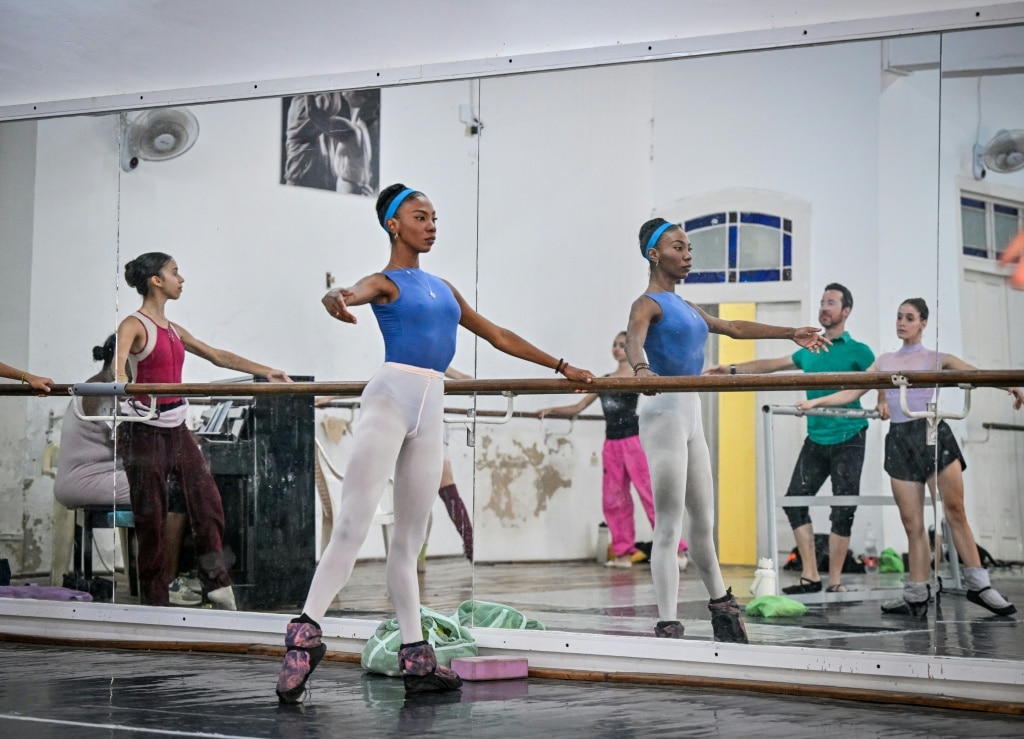
On a Caribbean island grappling with persistent economic crisis, crippling fuel shortages, and rolling daily blackouts, one artistic tradition remains unbroken: Cuban ballet continues to take the stage, carried by the relentless passion of dancers who refuse to let hardship steal their craft. For Laura Kamila Rojas, a 25-year-old Afro-Cuban soloist who earned a coveted spot with the National Ballet of Cuba (BNC) just 12 months ago, every performance is a small victory over the daily struggles that define life in modern Cuba.
Once shy offstage, Rojas transforms into a commanding, confident performer the moment she steps under the stage lights, spinning through pirouettes and executing precise leaps that have already earned her critical acclaim across the country. Her recent turn as Swanilda, the plucky heroine of the beloved 19th-century ballet *Coppelia*, left even the most discerning Havana audiences cheering, with crowds shouting “Bravo, Kamila!” after a flawless sequence of turning jumps during an April performance at the city’s National Theater. But Rojas’ path to the spotlight has been far from easy, as she navigates the same systemic shortages disrupting every corner of Cuban life while building her career at the top of the country’s most iconic cultural institution.
Ballet has occupied a central place in Cuban national identity since the 1959 Revolution, which expanded public access to the arts and opened dance training to people from all social classes. Under the leadership of legendary dancer Alicia Alonso, the country developed its own distinct ballet pedagogy and built one of the most respected professional companies in the world. For Rojas, that legacy of accessibility shaped her own journey: born and raised in Jesus Maria, a working-class Havana neighborhood steeped in Afro-Cuban cultural tradition, she grew up surrounded by folk dance, with a mother who performed in a troupe directed by her father. Her choice to pursue classical ballet instead of carrying on the family folk tradition surprised everyone who knew her, but her unwavering passion has carried her through every obstacle, including the current crisis.
Today, crippling fuel shortages, worsened by decades of U.S. trade blockade, have shrunk the country’s cultural sector and upended daily operations for the BNC. Company buses that once transported dancers to rehearsals are now only deployed for performance days, forcing Rojas to find creative ways to travel the five kilometers from her home to the company’s Vedado neighborhood studio every morning. “If necessary…I’d come on foot,” she says, a quiet determination that echoes across the entire company. Once full-day, 8-plus hour rehearsals have been cut back to just four hours a day to conserve electricity, allowing dancers time to travel home before blackouts descend, but the artistic demand on performers remains as high as ever. “We all want to be here, because this is what we love,” Rojas explains.
Offstage, the daily toll of the crisis makes preparing for performance even more grueling. Summer heat combined with routine blackouts means Rojas often cannot run a fan or air conditioner to cool her home at night, leaving her sleep deprived and battling mosquitos before early morning rehearsals. Yet the moment she steps into the studio or onto the stage, all of that hardship fades: “When I dance, I forget everything. Anything can happen, but my thing is dancing.”
That resilient, dedicated attitude is what keeps the company moving forward, says BNC director and prima ballerina Viengsay Valdes, who has led the institution through the current crisis. “They have a lot of talent and a real desire to dance, and that is essential,” Valdes notes, adding that continuous training is non-negotiable for professional dancers: “If they stop, that body has to be trained all over again.” Even as most other cultural institutions across Cuba have scaled back or paused programming amid shortages, the BNC has kept rehearsals running and performances scheduled, adjusting show times only to align with available electricity.
The company’s grit has not gone unnoticed by audiences, who continue to fill the National Theater’s nearly 2,000-seat auditorium for every show. Spectators travel on foot, by bicycle, or by motorcycle through sweltering heat to attend, turning out to support the art form that has long been a point of national pride. For audience members, the performance offers a much-needed escape from the constant stress of daily crisis. “You sit there watching the ballet, in the middle of Havana, with so many problems, and it’s like a bubble that takes us out of reality,” said Teresa Betancourt, a 52-year-old teacher who attended a recent performance. “It’s strange, but beautiful.”