标签: Oceania

大洋洲

  • Infantino condemns Senegal for ‘unacceptable scenes’ in AFCON final

    Infantino condemns Senegal for ‘unacceptable scenes’ in AFCON final

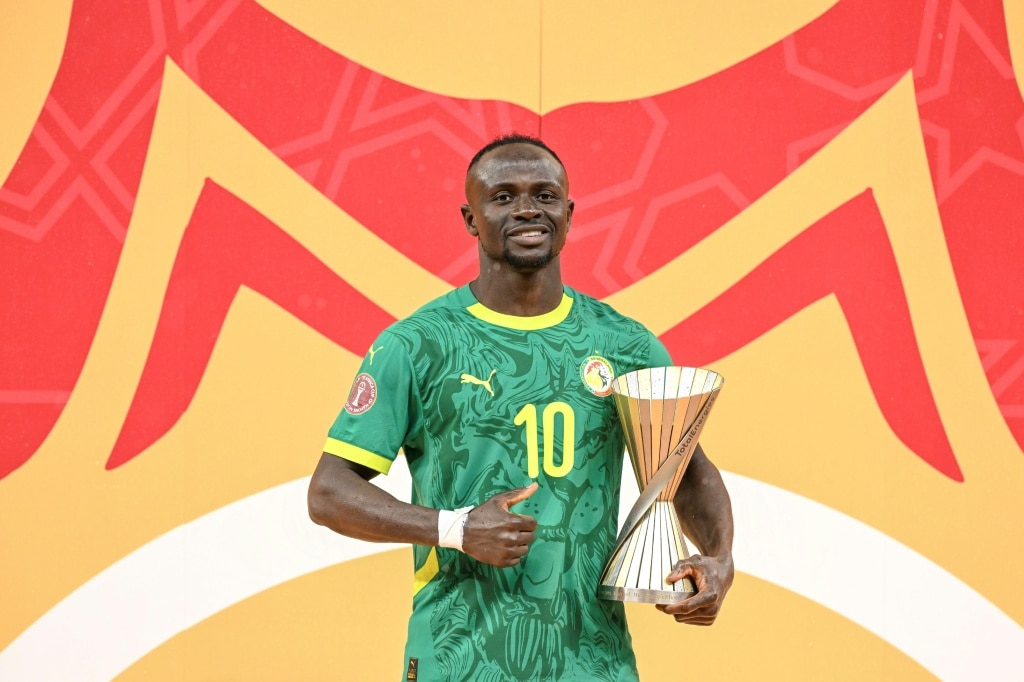
    FIFA President Gianni Infantino has issued a stern condemnation of the conduct displayed by segments of the Senegalese national team and their supporters during the tumultuous Africa Cup of Nations final against Morocco. The championship match, held at Rabat’s Prince Moulay Abdellah Stadium, was dramatically overshadowed by a mass walk-off from the pitch by Senegalese players in protest of a contentious refereeing decision.

    The incident erupted deep into injury time of a goalless regulation match when the Video Assistant Referee (VAR) system prompted the awarding of a penalty to Morocco following a challenge on Brahim Diaz. This decision incited fury among the Senegalese camp, which had been aggrieved minutes earlier by the disallowance of a goal for a perceived soft foul. The ensuing chaos saw most Senegalese players exit the field while, simultaneously, clashes broke out in the stands between a group of Senegalese fans and Moroccan security personnel, resulting in damaged stadium seating.

    The match was suspended for nearly twenty minutes before order was restored. Upon the players’ return, orchestrated largely by team captain Sadio Mane who remained on the pitch to mediate, Diaz’s weakly executed ‘Panenka’ penalty was comfortably saved by goalkeeper Edouard Mendy. The deadlock was finally broken in extra time by Pape Gueye’s decisive goal, securing a 1-0 victory for Senegal before a crowd of 66,526.

    In an official statement, Infantino denounced the actions as ‘unacceptable,’ emphasizing that abandoning the field of play and any form of violence have no place in football. He praised Morocco’s overall hosting of the tournament, a significant test event for its co-hosting duties of the 2030 World Cup. However, Moroccan coach Walid Regragui expressed his dismay at the ‘shameful’ global image projected by African football due to the extended stoppage.

    In a post-match admission, Senegal coach Pape Thiaw apologized for his role in instructing the team to walk off, attributing it to a heat-of-the-moment reaction to a ‘feeling of injustice.’ Infantino concluded by calling for disciplinary measures from the Confederation of African Football (CAF) and reiterating the paramount importance of respecting match officials’ decisions to safeguard the sport’s integrity.

  • Beer supplies across Australia Day long weekend under threat as transport union warns of strike action

    Beer supplies across Australia Day long weekend under threat as transport union warns of strike action

    A nationwide beer shortage threatens to disrupt Australia Day celebrations as transport workers initiate strike action against logistics conglomerate Qube. The Transport Workers Union (TWU) has announced a 24-hour work stoppage commencing at 5am Wednesday, affecting operations in both Western Australia and Victoria.

    The industrial action places critical supplies of Asahi beer, Coca-Cola beverages, and Mondelez chocolate products at risk during the peak holiday period. Union officials cite four years of stagnant wages and unsafe working conditions as primary catalysts for the work stoppage, despite Qube reporting consistent annual profit growth.

    TWU Western Australia State Secretary Tim Dawson emphasized the strategic importance of consolidating state agreements into a national framework, stating this action represents a key component of the union’s 2026 initiative to elevate industry standards. “Transport remains Australia’s most lethal industry,” Dawson noted. “Fragmented agreements and relentless cost reduction measures exacerbate an already dangerous situation.”

    Victorian TWU Director Sam Lynch reinforced these concerns, highlighting the growing disparity between corporate profits and worker compensation. Union representatives maintain that Qube’s offer of 12% wage increases over three years fails to address fundamental safety concerns and does not constitute adequate compensation given inflation rates.

    Qube Logistics has denounced the strike as a “calculated scare campaign” while asserting the implementation of contingency supply arrangements. Company representatives revealed that the action involves minimal workforce participation—merely five drivers in Western Australia and twelve in Victoria—and should not significantly impact supply chains.

    The confrontation represents a broader national debate about wage stagnation, worker safety, and corporate responsibility in Australia’s logistics sector during a period of record corporate profitability.

  • ‘Not young any more’ – Wawrinka advances to round two

    ‘Not young any more’ – Wawrinka advances to round two

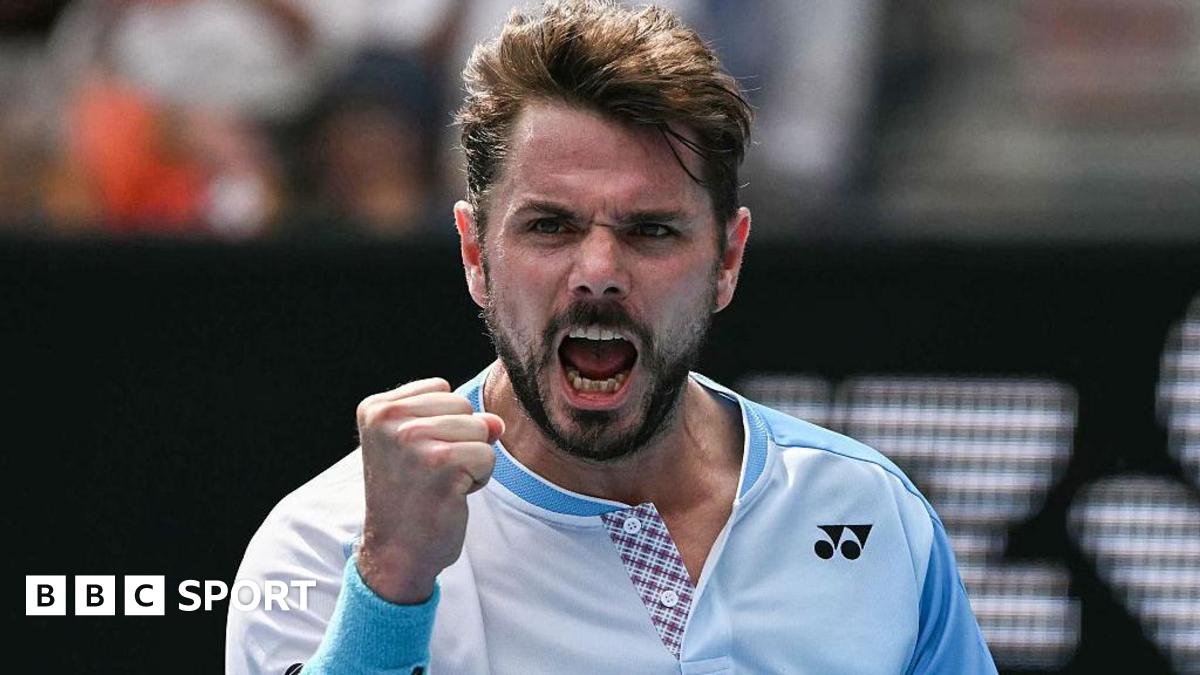
    MELBOURNE PARK — Two decades after his main-draw debut and twelve years removed from his iconic Australian Open triumph over Rafael Nadal, Stan Wawrinka, 40, authored a new chapter in his storied career with a hard-fought first-round victory. The Swiss wildcard, who has announced his retirement at the conclusion of the 2026 season, overcame Serbia’s Laslo Djere in a grueling four-set encounter lasting three hours and twenty minutes. After dropping the opening set 5-7, Wawrinka mounted a characteristic comeback, securing the match 5-7, 6-3, 6-4, 7-6(4) to the roaring approval of the Show Court Arena crowd.

    The emotional victory marks Wawrinka’s first Grand Slam win since Wimbledon 2024 and his first in Melbourne in five years. At 40 years and 296 days, he becomes the second-oldest man to win a singles match at the Australian Open, trailing only Ivo Karlovic’s 2020 record. In a post-match reflection, Wawrinka acknowledged the weight of the moment, stating, ‘The passion is still intact but I’m not young any more… It’s so special for me to enter the court and enter a Grand Slam. I’m a competitor so I’m always going to fight.’

    The latter half of Day Two emerged as a showcase for veteran resilience, contrasting an earlier session marred by injury retirements. Joining Wawrinka in the second round was 37-year-old Marin Cilic, the 2014 US Open champion and 2018 Australian Open finalist. Cilic delivered a breathtaking performance against Germany’s Daniel Altmaier, storming through the first two sets 6-0, 6-0 in a mere 50 minutes and winning 13 consecutive games. He narrowly missed achieving a rare ‘triple bagel’—a 6-0, 6-0, 6-0 scoreline last accomplished by Sergi Bruguera at the 1993 French Open—as Altmaier rallied to force a third-set tiebreak, which Cilic ultimately claimed 7-6(3).

    The victories set compelling second-round matchups: Wawrinka will face French qualifier Arthur Gea, who ousted 17th seed Jiri Lehecka, while Cilic is slated to challenge Canadian 21st seed Denis Shapovalov.

  • Under-19 World Cup: Australia will look to Will Malajczuk to set the tone with another aggressive start

    Under-19 World Cup: Australia will look to Will Malajczuk to set the tone with another aggressive start

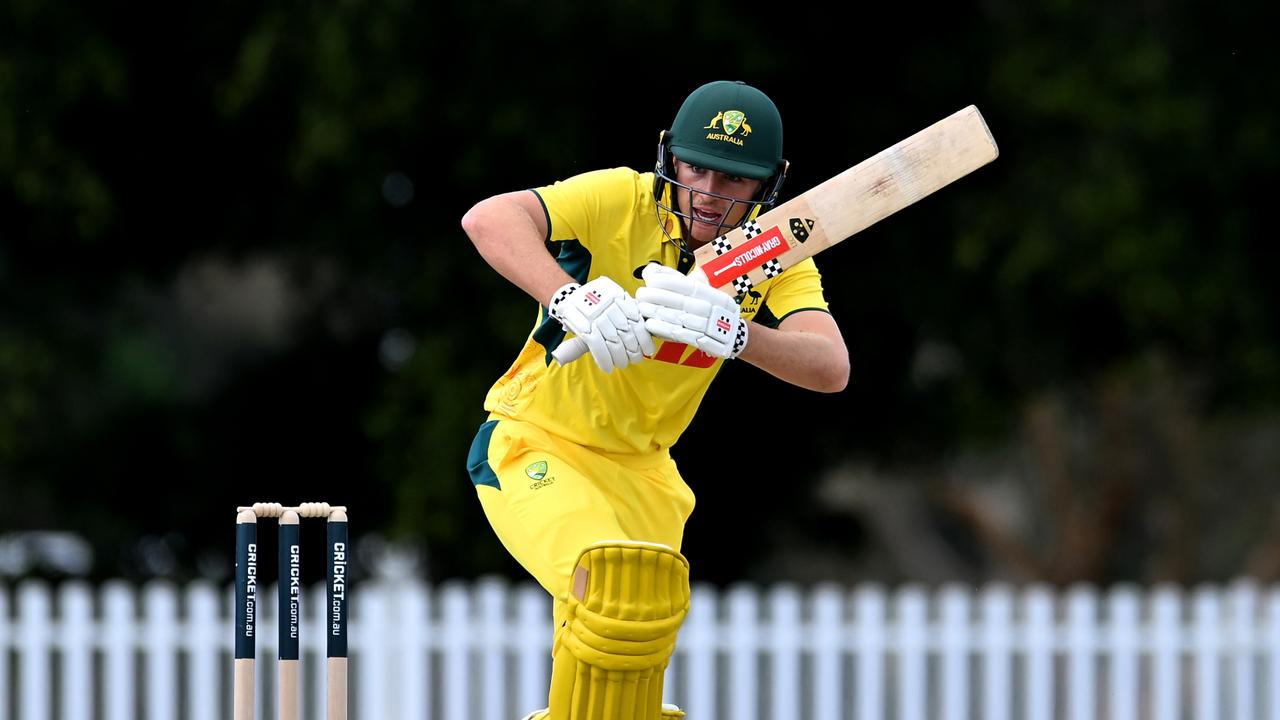
    Australian Under-19 cricket coach Tim Nielsen has reaffirmed his aggressive batting strategy ahead of Tuesday’s World Cup match against Japan, despite opener Will Malajczuk’s recent low score. The decision comes after Australia’s commanding eight-wicket victory over Ireland on Friday, where they chased down 236 runs with 10 overs to spare.

    While Malajczuk managed only 22 runs in the Ireland match, his teammates Steve Hogan (115) and Nitesh Samuel (77 not out) demonstrated the team’s batting depth. Nielsen emphasized that Malajczuk’s attacking approach remains central to Australia’s game plan, particularly noting his impressive performance in pre-tournament practice against South Africa where he scored 80 runs off approximately 50 deliveries.

    The coaching strategy specifically accounts for anticipated spin-heavy opposition attacks. Nielsen explained that an aggressive start could force opponents to alter their bowling strategies prematurely. “If he does come off, it just gives the rest of the batting order that pillow, or buffer, that we’re going quickly at the start,” Nielsen stated.

    Geographical conditions may play to Australia’s advantage, with Namibia’s higher altitude potentially allowing the ball to travel further—a factor that could benefit aggressive openers like Malajczuk.

    Despite Japan’s familiarity with Australian playing styles through previous club and school cricket exchanges, Nielsen emphasized the critical importance of securing a second victory. A win against Japan would likely guarantee Australia’s qualification for the Super Six stage, setting up a decisive match against Sri Lanka on Friday to determine group ranking.

    Nielsen, who previously coached Australia’s senior ODI team during the 2011 World Cup, stressed the need for professional focus: “We need to make sure we’re on our game and not take Japan lightly.”

  • UK, France mull social media bans for youth as debate rages

    UK, France mull social media bans for youth as debate rages

    A growing international movement to restrict youth access to social media platforms is gaining momentum across Western nations, with France and the United Kingdom actively considering measures inspired by Australia’s groundbreaking legislation. The Australian model, which prohibits individuals under 16 from accessing major platforms like Instagram, Facebook, TikTok, and YouTube, has ignited a complex global debate about digital protection versus personal freedom.

    This policy shift stems from escalating concerns regarding adolescent mental health deterioration. Prominent advocates, including American psychologist Jonathan Haidt, author of the influential book ‘The Anxious Generation,’ argue that excessive social media exposure is fundamentally rewiring developing brains and creating a mental health crisis. Haidt’s work, which has attracted significant political attention, posits that screen-based interactions are displacing crucial real-world experiences necessary for healthy development.

    However, the scientific community remains deeply divided on implementing blanket bans. Canadian psychologist Candice Odgers and other academics challenge the alarmist narrative, contending that Haidt’s conclusions lack robust scientific validation. This academic disagreement centers on the difficulty of isolating social media’s specific impact amid numerous factors influencing teen wellbeing.

    Research from the University of Queensland’s Michael Noetel suggests that while evidence of harm exists, the effects might be more nuanced than extreme positions indicate. Noetel describes supporting restrictive measures as ‘a bet worth making’ given potential benefits. Conversely, University of Adelaide researcher Ben Singh’s longitudinal study of over 100,000 Australian youth revealed a U-shaped relationship: both heavy usage (over two hours daily) and complete non-use correlated with poorer outcomes, while moderate engagement showed the best results. The study notably found gender differences, with excessive use most harmful for girls and complete deprivation most detrimental for older teenage boys.

    French psychiatrist Serge Tisseron acknowledges social media’s ‘appallingly toxic’ aspects but cautions that outright bans might be technologically circumvented by digitally-native youth while inadvertently relieving parents of supervisory responsibilities. He advocates for more sophisticated, nuanced regulatory approaches rather than polarized all-or-nothing solutions.

    As France debates legislation for under-15s and UK officials consult experts, many researchers suggest observing Australia’s implementation. Cambridge University’s Amy Orben notes that within a year, substantial data will emerge regarding the ban’s effectiveness and any unintended consequences, with Australia’s e-safety commissioner already reporting 4.7 million blocked underage accounts.

  • Record gold price fails to stop ASX 200 from dropping after five-day rally

    Record gold price fails to stop ASX 200 from dropping after five-day rally

    Global financial markets experienced significant turbulence as former President Donald Trump’s unexpected trade policy announcement triggered a flight to safe-haven assets. Gold prices surged to an unprecedented $4,690.59 per ounce, while silver reached $94.12, marking historic highs in precious metal trading.

    The Australian sharemarket snapped its five-day winning streak despite the commodity rally, with the benchmark ASX 200 declining 29.40 points (0.33%) to close at 8,874.50. The broader All Ordinaries index similarly fell 31.80 points (0.34%) to 9,194.90. Market analysts attributed the divergence to sector-specific performances, where strengthening commodity prices were offset by substantial declines in technology, consumer discretionary, and financial stocks.

    Trump’s controversial proposal involved imposing 10% export tariffs on eight countries that opposed the United States’ attempted acquisition of Greenland, a largely autonomous Danish territory. This announcement reignited fears of potential trade conflicts between Europe and the United States, prompting investors to seek refuge in traditional safe-haven assets.

    Gold producers emerged as clear market winners, with Northern Star Resources jumping 3.17% to $27.68, Evolution Mining climbing 3.13% to $13.53, and Newmont Corporation adding 1.41% to $171.64. According to eToro market analyst Zavier Wong, “The outlook for precious metals remains positive, particularly for gold and silver. Structural forces are doing much of the heavy lifting, including sustained central bank buying, rising government debt levels and a world that looks increasingly fragmented geopolitically.”

    Technology stocks suffered significant losses, with WiseTech Global slumping 4.40% to $64.07, Xero declining 2.64% to $100.89, and TechnologyOne falling 1.43% to $13.15. Banking shares also retreated, with Commonwealth Bank sliding 0.67% to $153.25, Westpac falling 0.56% to $38.97, NAB slumping 1.05% to $42.22, and ANZ slipping 0.40% to $37.37.

    In corporate developments, A2 Milk shares plummeted 10.64% to $8.40 and entered a trading halt despite no negative financial disclosures. Market speculation suggested investor concerns might be linked to Chinese government data showing declining birth rates. Conversely, City Chic Collective shares jumped 3.57% to $0.14 after reporting $69.2 million in sales revenue for the 26 weeks to December 28. Treasury Wine Estate shares continued their upward trajectory, gaining 0.73% to $5.53 following European billionaire Olivier Goudet increasing his stake to 6.13% of the business.

    The Australian dollar edged higher to 66.96 US cents amid the mixed market performance, reflecting the complex interplay between commodity strength and broader market uncertainties.

  • China’s Buddha artisans carve out a living from dying trade

    China’s Buddha artisans carve out a living from dying trade

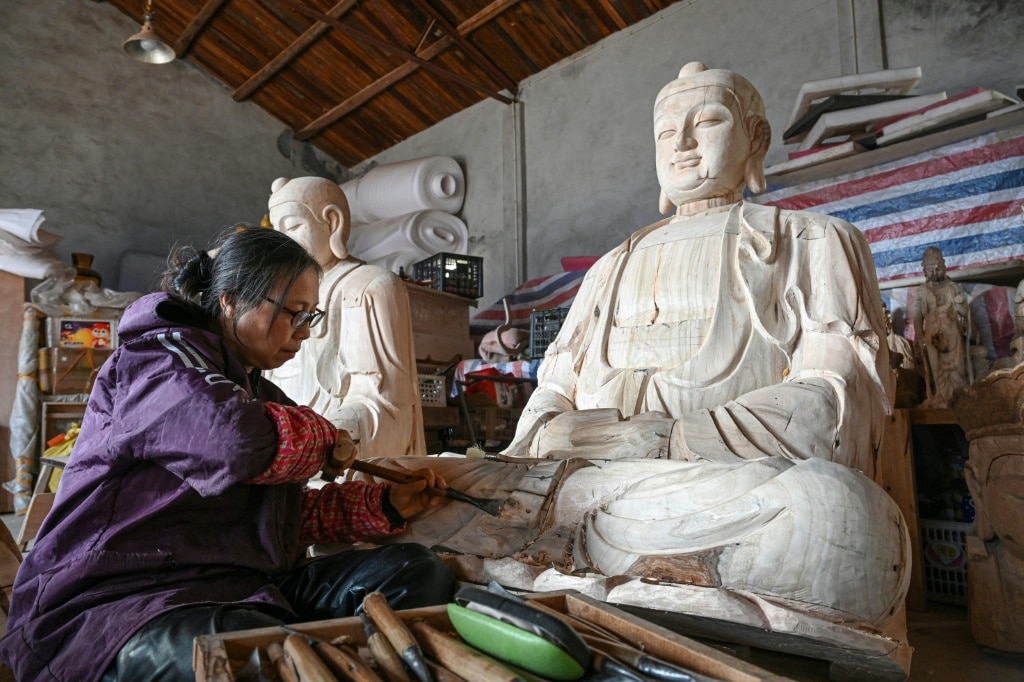
    In the dusty workshops of Chongshan village near Suzhou, a centuries-old tradition of sacred woodcarving stands on the brink of disappearance. Master craftsman Zhang meticulously shapes a block of wood into a divine foot beneath the silent gaze of dozens of unfinished life-sized Buddhist and Taoist statues, continuing a family legacy that spans multiple generations.

    This specialized craft, requiring five to six years of dedicated apprenticeship to master, faces an existential crisis as younger generations reject the demanding profession. Zhang, who learned the intricate art from his father during his teenage years, acknowledges the inevitable: ‘Once our generation retires, there will be no one left to carry on the tradition.’

    The decline stems from a combination of inadequate financial compensation and modern youth’s reluctance to invest the necessary time and energy. The village experienced a temporary resurgence in orders during the late 20th century when China relaxed religious restrictions, leading to a nationwide revival of temple construction and decoration.

    However, the market has now reached saturation point, with most temples across China already furnished with statues. At another workshop, 71-year-old artisan Gu recalls adapting to political pressures during the Cultural Revolution by producing secular handicrafts when religious expression was suppressed. Specializing in carving expressive Buddha heads, Gu demonstrates how each gilded figure conveys unique emotional depth – some smiling, others crying, with renowned monk Ji Gong sculptures even displaying contrasting expressions on each side of the face.

    While outsiders perceive these creators as artists, Zhang maintains a pragmatic perspective: ‘People look at us like we’re artists. But to us, we’re just creating a product.’ This disconnect between cultural significance and economic reality ultimately threatens the survival of one of China’s most spiritually significant artisanal traditions.

  • ‘Set the record’: Pauline Hanson claims Trump, Farage ‘followed’ her as One Nation vote surges to 22 per cent

    ‘Set the record’: Pauline Hanson claims Trump, Farage ‘followed’ her as One Nation vote surges to 22 per cent

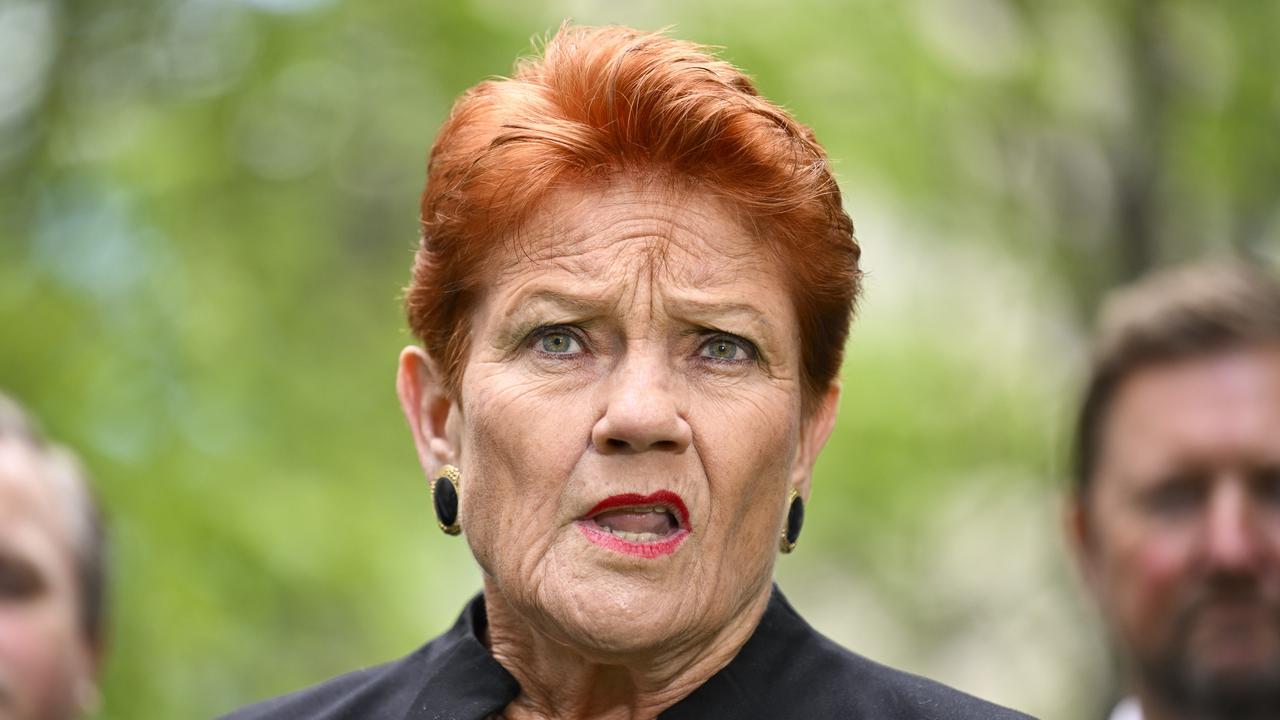
    In a stunning political realignment, Pauline Hanson’s One Nation party has eclipsed the Coalition in the latest Newspoll, capturing an unprecedented 22% of the primary vote following a seven-point surge over two months. The controversial leader framed this seismic shift as public endorsement of her longstanding nationalist agenda while pointing to recent violent incidents as catalysts for awakening Australian consciousness.

    Addressing media at Parliament House, Senator Hanson positioned herself as the original architect of global right-wing populism, asserting her ideological precedence over figures like Nigel Farage and Donald Trump. ‘I’ve set the record—I stand up for what I believe in and don’t back away from anything,’ she declared, characterizing her consistency as the cornerstone of her appeal.

    The One Nation leader specifically referenced the alleged assassination attempt on American commentator Charlie Kirk and the Bondi Beach terror attack as pivotal moments that galvanized public support. She described these events as ‘wake-up calls’ that exposed systemic failures in national security and immigration policy. ‘Mass migration has been a huge issue for Australians calling out to government,’ Hanson stated, linking housing shortages, job insecurity, and cost-of-living pressures to uncontrolled immigration.

    Her commentary extended to defending her notorious 2017 burqa stunt in Parliament, which resulted in her exclusion from recent Senate condolence proceedings. ‘It wasn’t a stunt—I was standing my ground,’ she insisted, maintaining that the gesture highlighted security concerns about full-face coverings in public spaces.

    The party’s momentum was further amplified by defector Barnaby Joyce, who joined One Nation after fracturing with the Nationals. The former deputy prime minister rejected characterization of the party as radical, asserting ‘It is not radical if it’s the truth.’ Joyce criticized performative political empathy without substantive action, questioning the value of ’empathetic self-aggrandisement.’

    As Liberal Senator Jonathon Duniam acknowledged the polling indicates ‘we’ve got our work cut out for us,’ Hanson revealed ambitions beyond protest politics. ‘You bet I want to form government,’ she stated, confirming active recruitment strategies for Queensland lower house seats while recognizing the formidable challenge of maintaining record polling numbers.

  • Thousands march in US to back Iranian anti-government protesters

    Thousands march in US to back Iranian anti-government protesters

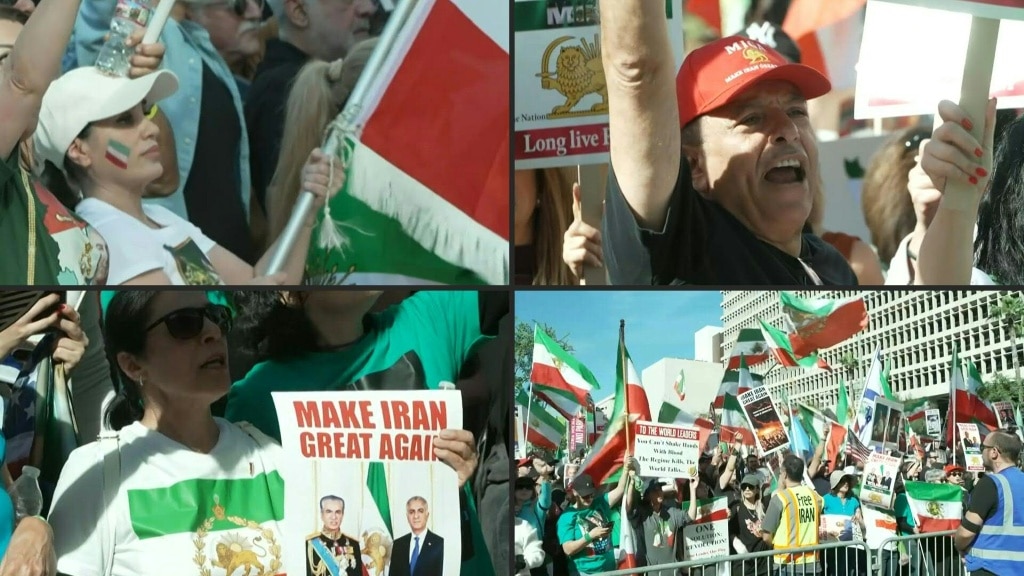
    Mass demonstrations erupted across major American cities this weekend as thousands gathered to denounce the Iranian government’s violent suppression of domestic protests. The gatherings, organized by members of Iran’s extensive diaspora community, represented a powerful display of international solidarity with protesters facing escalating violence in their homeland.

    Los Angeles, hosting the world’s largest Iranian expatriate population, witnessed several thousand marchers flooding its streets. Simultaneously, several hundred protesters assembled in New York City, creating a coordinated coast-to-coast expression of outrage. Participants carried emotionally charged signage condemning what they termed a ‘New Holocaust’ and ‘genocide in the making’ by Iranian authorities.

    The protests originated from December’s economic dissatisfaction demonstrations in Iran, which rapidly evolved into the most significant challenge to the Islamic Republic’s leadership in recent history. A severe government crackdown accompanied by nationwide internet restrictions has reportedly resulted in substantial casualties. Iran Human Rights, an Oslo-based monitoring organization, has documented 3,428 protest-related fatalities through verified sources within Iran’s medical system and independent witnesses. The NGO emphasizes that actual numbers likely significantly exceed this verified count.

    Demonstrators expressed complex and sometimes contradictory political perspectives. While many participants voiced support for U.S. presidential intervention, others displayed skepticism toward American involvement. The diaspora community appears divided between those advocating for Western-backed regime change and those insisting on Iranian self-determination without foreign interference.

    This ideological tension was visibly present at the Los Angeles gatherings, where some protesters championed Reza Pahlavi, son of Iran’s deposed Shah, while others explicitly rejected monarchical restoration. The political divisions within the exile community mirror the fragmented nature of Iran’s domestic opposition movement, complicating prospects for unified resistance against the current regime.

    The demonstrations occurred amid ambiguous signals from the U.S. administration regarding potential intervention. While threatening consequences for violence against protesters, American officials have simultaneously expressed satisfaction with Iranian assurances regarding demonstrator treatment. This diplomatic ambiguity has created uncertainty among diaspora communities seeking clearer international support for protesters facing life-threatening repression.

  • Steve Smith hasn’t won over the Twenty20 selectors despite his blistering Big Bash League form

    Steve Smith hasn’t won over the Twenty20 selectors despite his blistering Big Bash League form

    In a surprising selection move, Australian cricket chiefs have unveiled their squad for the upcoming three-match T20 series against Pakistan, conspicuously excluding two of the nation’s most prominent cricketing figures. Despite delivering exceptional performances in the Big Bash League, veteran batsman Steve Smith and all-rounder Glenn Maxwell have both been omitted from the touring party that will prepare for next month’s World Cup in India and Sri Lanka.

    Chief selector George Bailey provided insight into the controversial decisions, acknowledging Smith’s dominant BBL form while explaining the competitive landscape at the top of the batting order. “When he goes back to the Big Bash he’s a level above,” Bailey stated, emphasizing that Smith faces stiff competition from Mitch Marsh and Travis Head for opening positions. The selector noted that while Smith has demonstrated adaptability throughout the order, his recent international opportunities have primarily come at the top.

    Bailey also addressed the unique challenges of evaluating BBL performances, pointing to rule variations like the Power Surge and four-over powerplay that differentiate the domestic competition from international standards. Despite these contextual factors, Bailey affirmed that Smith undoubtedly possesses the capability to excel at the highest level.

    The squad features several emerging talents, including young pace bowler Mahli Beardman, whom Bailey praised for his “air speed” and versatile skill set. Jack Edwards, who previously joined the white-ball squad during the India series, also receives another opportunity to showcase his abilities on the international stage.

    Mitchell Marsh will captain a blend of established players and promising newcomers, with the selection panel clearly balancing immediate World Cup preparation with long-term development objectives. The team composition suggests strategic planning for both the upcoming Pakistan tour and future international commitments, with Bailey emphasizing Beardman’s inclusion as “an eye to the future.”

    The absence of both Smith and Maxwell, despite their recent domestic successes, indicates a deliberate approach to squad rotation and specialization ahead of the global tournament, raising questions about Australia’s final World Cup lineup and strategic direction.