标签: North America

北美洲

  • Senate votes to curb president’s military action

    Senate votes to curb president’s military action

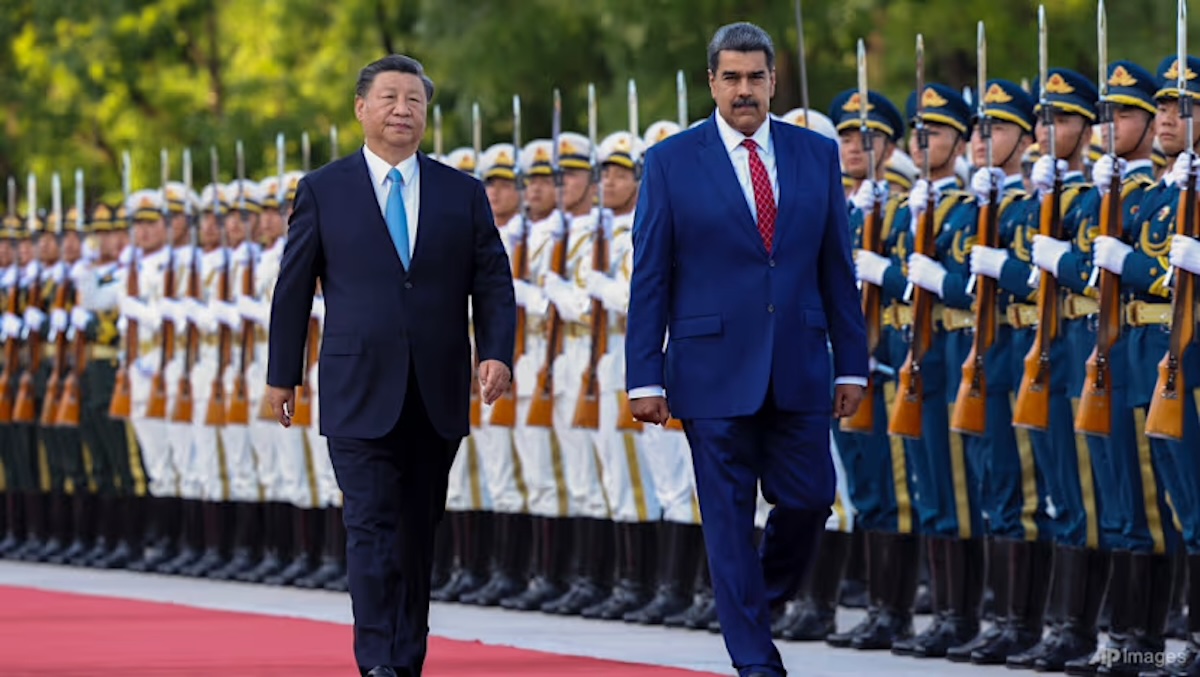
    In a significant bipartisan move, the US Senate has initiated proceedings to restrict presidential war powers following a controversial military operation in Venezuela. The procedural vote passed 52-47 on Thursday, with five Republican senators crossing party lines to support the measure championed by Democratic Senator Tim Kaine of Virginia.

    The resolution sets the stage for substantive debate next week that could compel President Donald Trump to seek congressional authorization for any sustained military engagement in Venezuela. The legislative action comes in direct response to last weekend’s unauthorized strike targeting Venezuelan President Nicolás Maduro, which Trump ordered without consulting Congress.

    Senator Kaine condemned the operation as “profoundly disrespectful to US troops, deeply unpopular, suspiciously secretive and likely corrupt” during floor debates. He emphasized constitutional requirements that mandate congressional approval for military actions, declaring the Venezuela intervention “clearly illegal.”

    Trump responded fiercely on his Truth Social platform, denouncing the Republican defectors and asserting that the vote “greatly hampers American self-defense and national security.” In a revealing interview with The New York Times, the president claimed his authority as commander-in-chief is limited only by his “own morality,” dismissing the relevance of international law.

    The Venezuela operation has sparked widespread domestic criticism beyond congressional chambers. Tom Watkins, a Michigan-based policy consultant, described the strike as fundamentally concerning “regime change, power, money, oil” rather than the officially stated objective of combating drug trafficking. Protesters across American cities have condemned the violation of Venezuelan sovereignty using taxpayer funds.

    Meanwhile, the White House has attempted to leverage the situation positively, claiming credit for Venezuela’s subsequent release of political prisoners. Deputy Press Secretary Anna Kelly framed this development as evidence of Trump “using maximum leverage to do right by the American and Venezuelan people.” Venezuelan officials meanwhile maintained their country remains unsubjugated to US pressure.

    The Senate’s war powers debate represents a constitutional confrontation that could redefine executive authority in military matters regardless of eventual passage.

  • Nevada eyes Chinese tech to diversify economy

    Nevada eyes Chinese tech to diversify economy

    In a strategic shift to redefine its economic identity beyond gaming and tourism, the state of Nevada is actively pursuing Chinese technology firms as cornerstone partners for its diversification agenda. The announcement came from Lieutenant Governor Stavros Anthony during the 2026 Consumer Electronics Show (CES) in Las Vegas, where he emphasized the state’s commitment to building a resilient, future-proof economy.

    Anthony articulated Nevada’s ambition to shed its singular association with casinos and entertainment, envisioning instead a hub for high-tech manufacturing, advanced logistics, healthcare innovation, and data center operations. This long-standing diversification effort has positioned Nevada as an attractive destination for global enterprises, with Chinese companies representing a significant focus due to their technological prowess.

    Chinese participation at CES 2026 demonstrated particular strength across transformative sectors including robotics, intelligent automotive systems, next-generation Mini LED and rollable OLED displays, AI integration, smart home ecosystems, and clean energy solutions—all areas aligning with Nevada’s developmental priorities.

    Notably, Nevada’s arid environment has accelerated its focus on sustainable technologies, making water conservation and energy efficiency critical components of its economic strategy. The state specifically welcomes Chinese investment in renewable energy and water-efficient development projects that support sustainable growth objectives.

    The historical context of Chinese contribution to Nevada’s development through mining and railroad construction establishes a foundation for contemporary economic partnerships. Currently, Nevada maintains substantial trade relations with China, serving as a major importer of Chinese electronics, machinery, and furniture products.

    Despite broader US-China trade tensions, Anthony reaffirmed Nevada’s openness to constructive economic collaboration, stating the state remains committed to global partnerships that deliver mutual economic benefits and technological advancement.

  • Experts see pragmatism in Canada policy

    Experts see pragmatism in Canada policy

    In a significant diplomatic shift, Canada is actively pursuing a recalibration of its relationship with China as global trade dynamics undergo substantial transformation. This strategic pivot comes amid growing uncertainty surrounding US trade policy, compelling Ottawa to diversify its international economic partnerships.

    Jeff Mahon, former deputy director of the China division at Global Affairs Canada, observed that both nations have demonstrated genuine willingness to transcend recent challenges and forge improved long-term relations. Since the October leaders’ meeting in South Korea, bilateral engagement has intensified, featuring substantive exchanges between China’s international trade negotiators and their Canadian counterparts.

    Mahon emphasized that these high-level interactions signal both governments’ diligent efforts to establish fresh consensus. “Such diplomatic movements indicate the parties are cautiously exploring terrain for pragmatic cooperation,” he noted, adding that future collaboration demands a nuanced approach acknowledging domestic economic sensitivities on both sides.

    China currently stands as a crucial trade partner for Canada, though Mahon advocates for more creative thinking about complementary strengths. He proposed opening Canadian investment channels for Chinese companies to leverage their capabilities for local market benefits, suggesting such moves would strengthen supply chain connections and create mutually advantageous outcomes.

    Beyond commercial interests, Mahon highlighted potential cooperation in energy and climate initiatives. Canadian liquefied natural gas exports could contribute to emissions reduction in China, while Chinese renewable energy firms might participate in developing green supply chains across Canada. Additionally, Canadian agricultural exports already support China’s food security, with potential expansion through joint ventures in food processing research.

    The human dimension remains equally vital, with Mahon stressing that people-to-people exchanges serve as fundamental pillars in rebuilding bilateral trust. “Governments construct the bridge, but it is the people and businesses who ultimately utilize it,” he remarked.

    This diplomatic reassessment aligns with Prime Minister Mark Carney’s recent acknowledgment that Canada has placed “too many eggs in the American basket,” necessitating diversified economic relationships including with China and India. Carney’s scheduled January 13-17 visit to China—the first by a Canadian prime minister since 2017—further underscores this strategic reorientation.

    According to Jiang Wenran, founding director of the University of Alberta’s China Institute, China’s structural importance in Canada’s external economic relations has become undeniable. He revealed that Canada’s trade with China alone equals its total trade with the European Union or all other Asia-Pacific nations combined.

    Jiang characterized the Carney government’s outreach as recognition of economic reality, particularly noting the prime minister’s emphasis on predictable, rules-based trade requiring engagement with “the Asia-Pacific’s largest economy.” He urged immediate resolution of ongoing trade disputes, specifically addressing “mutually destructive tariffs on electric vehicles and agricultural goods.”

    The expert recommended transitioning from confrontation to selective cooperation on shared challenges including energy trade, manufacturing, climate change, and Arctic governance. As global economic fragmentation accelerates, 2026 emerges as a decisive year for Canada-China relations, with both nations seeking stable footing in an increasingly unpredictable international landscape.

  • America’s Venezuelan adventure has limited impact on Asia

    America’s Venezuelan adventure has limited impact on Asia

    The United States’ covert operation to apprehend Venezuelan President Nicolás Maduro and its subsequent moves to seize Venezuelan oil assets have triggered significant geopolitical repercussions, particularly across Asian nations. This development has prompted serious examination of Washington’s strategic priorities and their implications for regional security dynamics.

    Historical narratives depicting America as a benevolent global power promoting universally beneficial rules now face intense scrutiny. The Maduro operation, coupled with explicit statements from the Trump administration regarding Venezuelan oil acquisition, has substantially damaged US credibility throughout the Global South, including key Asian partners. China’s diplomatic and propaganda machinery has effectively capitalized on this situation to amplify anti-American sentiment.

    While European allies have expressed notable discomfort, Asian partners demonstrate more measured responses. Both Japanese and South Korean governments have refrained from outright condemnation of US actions in Venezuela. Japanese Prime Minister Sanae Takaichi carefully avoided direct criticism, with senior officials primarily concerned about potential dilution of international resolve against Chinese expansionism in Asia. Similarly, South Korea’s Democratic Party-led administration issued a neutral statement urging all parties to reduce regional tensions.

    The Venezuela intervention potentially signals a strategic reorientation toward Western Hemisphere priorities, which would objectively benefit Moscow and Beijing by diverting American resources from Asian theaters. However, this doesn’t necessarily indicate complete victory for isolationist ‘restrainers’ over China-focused ‘prioritizers’ within US policy circles. The current National Security Strategy maintains commitment to preventing Chinese dominance in Asia, representing a scaled-back but still active engagement posture.

    Fundamentally, both Washington and Beijing pursue contradictory sphere-of-influence objectives while rejecting each other’s claimed domains. China’s naval expansion into Pacific island territories, unexpected military exercises near Australia, and previously robust Venezuelan relations demonstrate Beijing’s willingness to operate in America’s strategic backyard, mirroring US presence in China’s periphery.

    Legal analysts note the Maduro operation violates international law, potentially creating dangerous precedents for Russian and Chinese actions. However, historical context reveals numerous US interventions in Latin America throughout the previous century, making this less a novelty than a continuation of established practice. Neither Moscow nor Beijing have shown particular restraint regarding international norms, as evidenced by Russia’s Ukraine invasion and China’s rejection of UNCLOS rulings in the South China Sea.

    The Venezuela operation unlikely strengthens deterrence against Chinese adventurism regarding Taiwan. While demonstrating willingness to take limited military action against weaker opponents, the Trump administration has consistently expressed reluctance about defending Taiwan and seeks bilateral trade agreements with China, creating disincentives for confrontation.

    Potential mission creep in Venezuela could mirror Somalia’s 1992-93 intervention, where humanitarian purposes devolved into combat operations. Sustained military engagement in Latin America would inevitably divert resources and administrative attention from Asian security concerns, while reinforcing American war weariness that might discourage future intervention in Taiwan Strait scenarios.

    Ultimately, China’s regional calculations follow their own strategic logic rather than reacting to global norm violations. The Venezuela intervention represents just one factor in complex Asia-Pacific security equations, with limited but notable impact on regional perceptions of US commitment and reliability.

  • Pair shot by immigration agents in Portland had gang links, officials say

    Pair shot by immigration agents in Portland had gang links, officials say

    Federal authorities have confirmed that two individuals shot by an immigration agent during a Portland, Oregon traffic stop possess connections to the Venezuelan criminal organization Tren de Aragua. The incident, which occurred on Thursday, unfolded when a Department of Homeland Security (DHS) agent initiated a routine stop.

    According to official statements, the agent discharged his weapon in self-defense after the driver attempted to use the vehicle as a weapon. Portland Police Chief Bob Day stated during a Friday press briefing that both individuals sustained injuries but are currently conscious and recovering in hospital care.

    The DHS has identified the driver as Luis David Nino-Moncada, who allegedly entered the United States illegally in 2022 and has prior arrests for driving under influence and unauthorized vehicle use. The passenger was identified as Yorlenys Betzabeth Zambrano-Contreras, who reportedly crossed the border illegally near El Paso, Texas in 2023.

    Federal officials clarified that contrary to some media reports, the two are not married. The DHS further alleged that Zambrano-Contreras participated actively in a Tren de Aragua prostitution operation and may have been involved in a previous Portland shooting incident.

    Following the shooting, the vehicle traveled approximately five miles before the occupants summoned emergency medical services at an apartment complex. Chief Day confirmed investigative links between the individuals and a July shooting incident involving alleged Tren de Aragua members, though specific details remain undisclosed.

    The police chief emphasized that while Tren de Aragua maintains some presence in Portland, its operational scale appears less extensive than public perception might suggest. This shooting incident occurred amidst heightened immigration enforcement operations across multiple US cities, including recent sweeps in Minneapolis where a similar agent-involved shooting took place.

    Thursday night witnessed significant public response as hundreds gathered outside a Portland immigration detention facility in protest, resulting in six arrests for disorderly conduct.

  • Trump says US needs to ‘own’ Greenland to prevent Russia and China from taking it

    Trump says US needs to ‘own’ Greenland to prevent Russia and China from taking it

    A significant diplomatic rift has emerged within the NATO alliance following provocative statements by former U.S. President Donald Trump regarding the sovereignty of Greenland. Speaking to reporters, Trump asserted that the United States must exercise outright ownership of the vast Arctic territory to counter perceived threats from Russia and China, explicitly dismissing the value of existing lease agreements.

    The controversial remarks, made in response to questioning from the BBC, included Trump’s declaration that this objective would be pursued either ‘the easy way or the hard way.’ This ambiguous threat was interpreted as leaving open the possibility of military annexation, a notion the White House has previously refused to rule out despite its extreme nature.

    This stance has been met with unified and forceful rejection from both the Danish government and Greenland’s political leadership. In a powerful joint statement, Greenland’s party leaders across the political spectrum condemned what they termed ‘the US’s disregard for our country,’ emphatically stating, ‘We do not want to be Americans, we do not want to be Danes, we want to be Greenlanders.’ They underscored that the future of the semi-autonomous territory must be determined exclusively by its people.

    The geopolitical significance of Greenland lies in its strategic location between North America and the Arctic. Its value extends beyond early-warning systems for missile defense to include vast untapped natural resources—rare earth minerals, uranium, iron, and potential oil and gas reserves—that are becoming increasingly accessible due to climate-induced ice melt.

    In a swift show of solidarity, Denmark’s NATO allies, including major European powers and Canada, have rallied behind Copenhagen. They issued coordinated statements reaffirming that sovereignty matters concerning Greenland are the exclusive purview of Denmark and Greenland itself. These allies emphasized that Arctic security, while a shared priority, must be achieved collectively by upholding fundamental principles of the UN Charter, including territorial integrity and the inviolability of borders.

    The situation is further inflamed by recent U.S. military action in Venezuela, which has heightened global anxieties about the potential for force being used elsewhere. This is not the first time Trump has expressed interest in acquiring Greenland; a similar offer was rebuffed in 2019 during his first term. U.S. Secretary of State Marco Rubio is scheduled to hold talks with Danish officials next week in an attempt to manage the escalating crisis.

  • Elon Musk names son Strider Sekhar inspired by Indian scientist, Lord of the Rings

    Elon Musk names son Strider Sekhar inspired by Indian scientist, Lord of the Rings

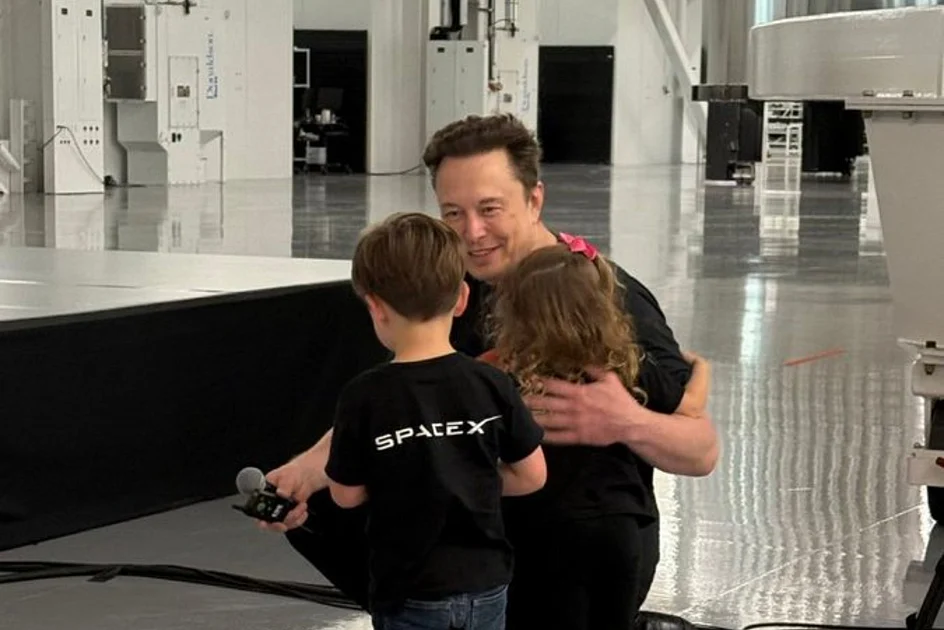
    Elon Musk, the visionary entrepreneur known for his unconventional approaches, has once again captured global attention with the distinctive naming of his twin children with Neuralink executive Shivon Zilis. In a recent social media revelation, Musk disclosed that his son bears the name Strider Sekhar—a deliberate homage to both J.R.R. Tolkien’s legendary character Aragorn from *The Lord of the Rings* and the groundbreaking Indian-American astrophysicist Subrahmanyan Chandrasekhar, Nobel laureate in Physics (1983).

    The name ‘Strider’ evokes the rugged Ranger who eventually ascends as king in Tolkien’s epic fantasy series, while ‘Sekhar’ honors Dr. Chandrasekhar, renowned for his seminal work on stellar evolution and black hole theory. Musk’s daughter, conversely, is named Comet Azure, inspired by the immensely powerful spell within the acclaimed action role-playing game *Elden Ring*, which features narrative world-building by George R.R. Martin.

    This naming choice continues Musk’s pattern of selecting unique and culturally rich names for his children, reminiscent of his earlier decision to name his son with musician Grimes ‘X Æ A-Xii’. The twins, born via IVF in 2021, are part of a larger family dynamic—Musk and Zilis share four children together, with two more born via surrogacy in 2024 and 2025. Notably, Zilis herself has familial ties to India through her mother, Sharda Zilis, who is of Punjabi descent, adding a layer of personal significance to the tribute paid to Dr. Chandrasekhar.

  • Two-week trip reshapes views of China

    Two-week trip reshapes views of China

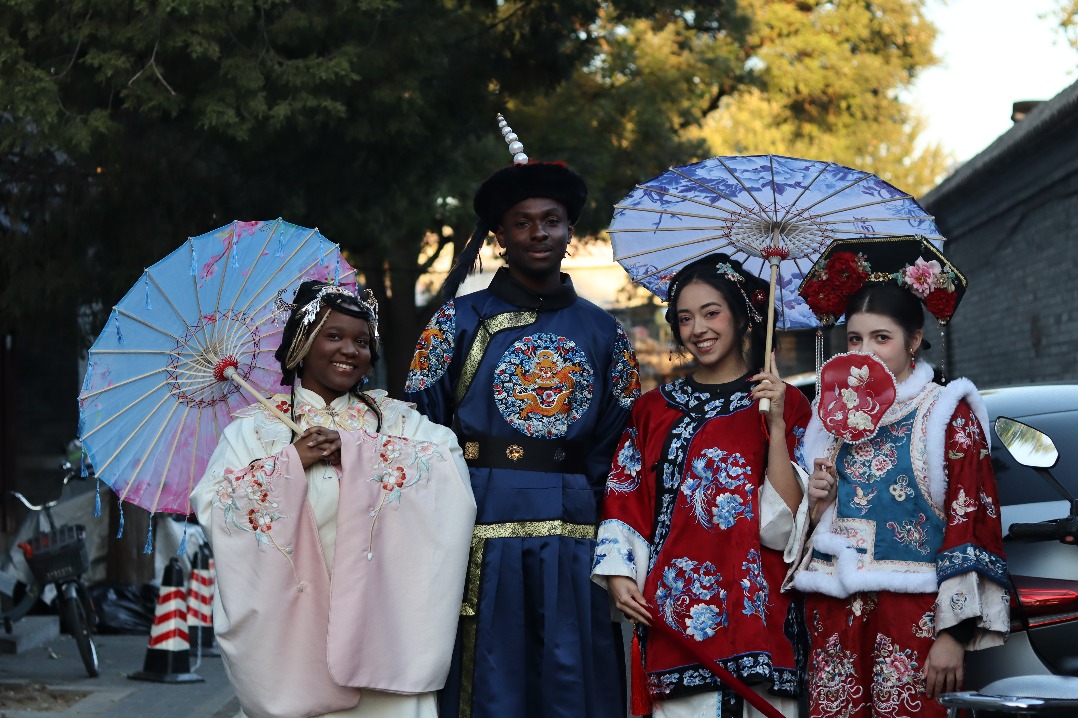
    A group of Canadian university students returned from a transformative two-week cultural immersion program in Beijing with perspectives dramatically altered from their pre-trip expectations shaped by Western media. The program, hosted by Beijing Normal University last fall, provided firsthand experience that participants described as fundamentally reshaping their understanding of modern Chinese society.

    Daniel William Ho, a University of Waterloo student, noted the profound disparity between media portrayals and reality. “Beijing felt safe, secure and the cleanest I’ve ever seen,” Ho reported, describing the public transit system as “on another world” and characterizing the experience as “the most freeing and transformative two weeks in my university career.”

    For political science major Conner Sherman Tye, the visit prompted a reevaluation of political discourse surrounding China. “Western media outlets nearly always portray China in a negative light, citing its problems as an indictment of the whole society,” Tye observed. After direct engagement with Beijing residents, he concluded that Chinese citizens demonstrate greater political awareness than the average American or Canadian.

    Participants particularly noted China’s unique integration of rapid modernization with historical preservation. Gia-Thanh Yvonne Ly described an architectural landscape reflecting “a long and rich history as well as a strong sense of modern ambition,” from ancient temples to innovative skyscrapers. She emphasized the efficiency of daily systems, noting that “delivery services, transportation systems and digital payment methods were efficient, fast and widely integrated into routines” creating a more streamlined daily life than what she experiences in Canada.

    The program also challenged preconceptions about safety and social atmosphere. Natalie Hermila Garcia Munoz, who has traveled to 24 countries, found Beijing distinctive for its advanced subway system and sense of security even during late hours. Mudupeola Aladetokunbo Caxton-Martins appreciated the city’s smooth operation and vibrant community life, feeling comfortable going out at 3 am.

    Notably, students of color who had been warned about potential discrimination reported overwhelmingly positive experiences. Aliyah Novia-Georgia Alexander-Tinker, who had been cautioned as a Black traveler, stated: “Fortunately, I had no reason to worry. I felt welcomed during my entire stay.” Caxton-Martins described locals initiating conversations, requesting photos, and shop owners offering free food—an experience “nothing like I had ever expected.”

  • California winemaker honors Chinese roots

    California winemaker honors Chinese roots

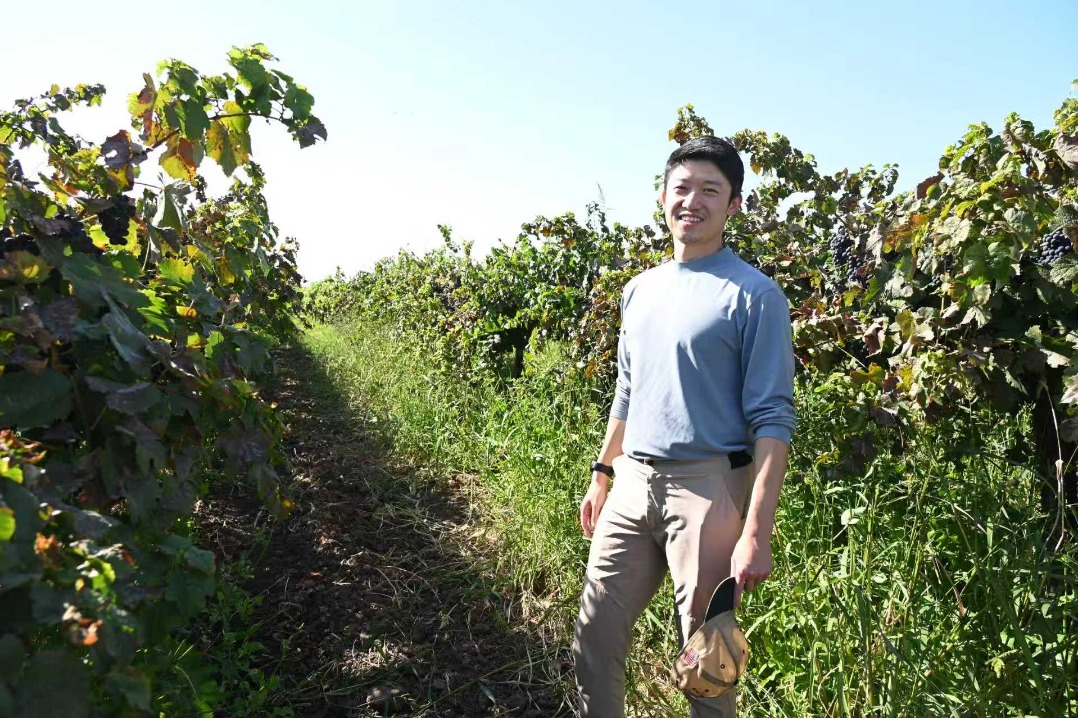
    In the prestigious vineyards of California’s wine country, a significant transformation is underway as Han Han ascends to the role of Director of Winemaking at Bear Creek Winery in Lodi. His appointment marks both a personal achievement and a historical correction in an industry that has largely overlooked the foundational contributions of Chinese laborers.

    More than a century ago, Chinese workers performed the backbreaking labor that established California’s premier wine regions—terracing hillsides, digging irrigation channels, and tending vines under discriminatory conditions. Despite their instrumental role, their stories were systematically erased from the industry’s narrative that primarily celebrated European vintners and American entrepreneurs.

    ‘It embodies the spirit of ‘chiku’—those Chinese laborers who endured immense hardship to build this industry,’ Han explained, referencing the Chinese concept of ‘eating bitterness’ to achieve future rewards. ‘Their legacy has been largely forgotten, yet they made contemporary California wine country possible.’

    Han’s journey to leadership represents a challenge to the industry’s Eurocentric traditions. Born in Harbin, China, he immigrated with his parents to South Dakota in the 1990s, where he witnessed firsthand his parents’ embodiment of perseverance—working at a Chinese restaurant while pursuing engineering degrees with limited English proficiency.

    ‘Observing my parents overcome such obstacles taught me that determination can conquer any difficulty,’ reflected Han, now a father of two.

    After initially pursuing biochemistry at UC Davis, Han discovered winemaking through a friend in the viticulture program. Despite sending 20 applications post-graduation, he received only one response—from Chateau St Jean Winery in Sonoma County. This single opportunity launched his career, beginning in 2012 as a lab technician at Bear Creek Winery where he rapidly advanced from enologist to his current directorship in just over a decade.

    Han acknowledges the industry’s relational nature presented significant barriers: ‘Without established connections or family history in wine, building networks from scratch proved intimidating. The field heavily emphasizes who you know.’

    His bicultural background has evolved into a professional advantage. Bear Creek now exports its Ironstone label to China, with Han creating Chinese-language promotional materials and leveraging his language skills—a capability he credits to his parents’ insistence on maintaining cultural ties.

    Facing contemporary industry challenges including climate change and shifting consumer preferences, Han applies the long-term perspective inherited from his heritage: ‘During uncertain times, we focus not merely on immediate concerns but on five or ten years ahead. This industry requires patience and perseverance—the essence of ‘chiku’.’

    Standing among the barrels at Bear Creek, Han embodies both the realization of immigrant dreams and the belated recognition of those Chinese workers whose contributions built an industry that once excluded them.

  • Watch: Police rescue cows from burning barn

    Watch: Police rescue cows from burning barn

    In a dramatic display of emergency response, law enforcement personnel executed a successful large-animal rescue operation from a fully engulfed agricultural structure. Responding to reports of a rapidly spreading barn fire, officers arrived on scene to find the building consumed by flames with multiple bovines trapped inside.

    Demonstrating exceptional crisis management and animal handling skills, the responding team coordinated efforts to safely guide the disoriented livestock away from the immediate danger zone. The operation required careful navigation through compromised structural elements and intense heat conditions to reach the animals.

    Following established emergency protocols for livestock incidents, personnel worked systematically to create evacuation pathways while containing the fire’s advance. The successful intervention resulted in the complete preservation of all animal lives present at the location.

    Authorities confirmed that the comprehensive rescue operation concluded without a single casualty among either the responding emergency personnel or the agricultural assets. The incident highlights the expanding role of law enforcement in agricultural emergency response and specialized animal rescue techniques that have become essential in rural communities.

    Fire investigation units have initiated standard procedures to determine the origin and cause of the blaze, while animal welfare officials have verified the satisfactory condition of all evacuated livestock.