标签: North America

北美洲

  • America’s Soviet moment: Why Trump is looking like Yeltsin

    America’s Soviet moment: Why Trump is looking like Yeltsin

    For decades, Cold War geopolitics framed the 20th century around a sharp ideological split: the U.S.-led model of decentralized, market-driven capitalism stood opposed to the Soviet Union’s centralized, state-planned communism. Each system positioned itself as the correction for the other’s flaws, yet both ultimately developed fatal internal contradictions that undermined their long-term stability.

    The Soviet Union did not fall because it lacked military or material power; at its peak, it controlled vast natural reserves, a robust industrial base, and one of the world’s most formidable standing militaries. Its collapse stemmed from inherent structural design flaws: by sidelining private entrepreneurs, the engine of market innovation and exchange, the Soviet system eliminated the incentives that sustain long-term economic vitality. Over time, production became rigid, resource allocation was driven by political favor rather than need, and widespread scarcity coexisted with systemic waste. Most critically, a gradual psychological erosion set in: ordinary citizens stopped believing the system worked to serve their interests. By the time large-scale reform was attempted, the system had grown too inflexible to adapt, and it unraveled.

    Today, the United States faces a structurally analogous, if inverted, systemic imbalance. Where the Soviet order sidelined entrepreneurs, the modern American system has increasingly marginalized ordinary wage-earning workers, the backbone of the country’s real economy. Since the closing decades of the 20th century, three forces — globalization, offshore outsourcing, and the rising dominance of the financial sector — have remade the U.S. economic landscape. Capital has become hyper-mobile across borders, but labor remains rooted in place; manufacturing jobs have shifted overseas, while Wall Street has expanded its size and political influence exponentially.

    The outcome of this shift is not immediate collapse, but deep structural imbalance. The U.S. continues to generate unprecedented levels of aggregate wealth, but that wealth is increasingly concentrated in a tiny share of the population. Federal Reserve data confirms this: the top 1% of U.S. households now hold 31.7% of total national household wealth, a record high not seen in more than a century. The historic link between worker productivity and wage growth has snapped, and for a majority of American households, broad national economic growth no longer translates to rising living standards. Stagnant wages and pervasive economic insecurity have become the norm for working and middle-class communities across the country.

    Like the late Soviet Union, this imbalance is not merely economic — it is a crisis of systemic legitimacy. Polling data reflects a profound erosion of public trust: roughly 60% of Americans now believe the country is moving in the wrong direction, a stark contrast to Russia where, even amid ongoing war and international sanctions, 61% of citizens still view their country as on the right track. A growing share of the U.S. public has concluded that the current system does not work to advance their interests.

    Political outsiders like Donald Trump do not create these systemic crises; they emerge as symptoms of underlying societal strain. In the Soviet Union, Boris Yeltsin rose to power at a moment when the communist system had already lost ideological and institutional coherence. He did not engineer the collapse of the old order — he embodied the public anger that the collapse had generated. His tenure accelerated the disintegration of the old regime, but the rapid, unregulated privatization of state assets that followed gave rise to a powerful oligarchic class, leaving most ordinary Russians facing widespread economic dislocation rather than prosperity.

    Vladimir Putin’s subsequent rise addressed that immediate crisis: he reasserted central state authority, reclaimed state control over strategic economic sectors, restored fiscal discipline, and pulled Russia out of the chaotic post-collapse stagnation. While his model carries long-term tradeoffs, it responded directly to the systemic breakdown that preceded it.

    Trump’s political ascent follows a comparable structural sequence, even within a vastly different national context. His core base draws heavily from communities that have been economically and culturally displaced by the shifts reshaping the U.S. economy. His rhetoric upends longstanding trade frameworks, alliance structures, and domestic governance norms that many voters see as unresponsive to their needs. This analysis is not an moral or political equivalence between Trump and Soviet-era leaders — it is an observation of historical sequence: Trump functions not as a stable, long-term solution to the U.S.’s systemic imbalance, but as a transitional figure, far closer to Yeltsin than to Putin. He is the type of leader that emerges when a longstanding system begins to break its own rules.

    For decades, the U.S. has been buffered from the full impact of its internal imbalances by a unique global advantage: the U.S. dollar’s role as the world’s primary reserve currency. Since the 1970s, global oil trade has been overwhelmingly denominated in dollars, creating constant, structural demand for dollar-denominated assets. Today, the dollar still accounts for roughly 60% of global foreign exchange reserves, and U.S. financial markets remain the deepest and most liquid in the world. This petrodollar system has allowed the U.S. to run persistent large fiscal deficits while keeping borrowing costs low, acting as a financial cushion that has delayed the pressure for painful structural adjustment. But no such cushion is permanent.

    In recent years, a gradual but meaningful shift has begun. China has expanded the use of the yuan in cross-border energy transactions, Russia has slashed its dollar holdings following Western sanctions, and a growing number of countries are exploring alternative currency settlement mechanisms. These changes remain incremental today, but they point toward an increasingly diversified global monetary system that will erode the dollar’s unique advantage over time.

    Unlike Putin, who cut Russia’s national debt to just 20% of GDP and restored long-term fiscal discipline, Trump has put forward no serious plan to address the U.S.’s soaring $40 trillion national debt, where growing interest payments now consume an ever-larger share of federal spending. Instead of tackling this fiscal burden, Trump has pushed for further expansion of the U.S. defense budget, adding even more strain at the exact moment the petrodollar cushion is beginning to thin. This combination of soaring debt, rising military spending, and a lack of structural economic reform leaves the U.S. more vulnerable to a sudden financial shock than at any point since the 2008 global financial crisis. Deep political polarization further blocks any possibility of coordinated, long-term policy action, leaving the country exposed if global demand for dollar assets declines faster than currently projected.

    The core lesson of the Soviet collapse is not that great powers collapse suddenly; it is that they weaken gradually when their core institutional systems stop aligning with the interests of their population. If the Yeltsin analogy holds, it carries a sobering warning: transitional figures do not fix the crises they embody. They only clear the ground for what comes next. The outcome will depend on whether the next era of U.S. politics brings genuine structural rebalancing — a serious reckoning with the gap between concentrated capital and stagnant worker wages, between aggregate growth and shared prosperity — or merely a harder entrenchment of the existing unequal order.

    The Soviet precedent makes clear that existing systems rarely reform themselves from within until the cost of inaction becomes unavoidable. For the United States, that threshold has not yet been reached, but it is closer than most policymakers and analysts acknowledge. A meaningful reckoning would require rebalancing power between capital and labor, restoring broad-based wage growth, and stabilizing a debt trajectory that neither major U.S. political party has yet been willing to address seriously.

    The question facing the United States is not whether it will eventually face this reckoning. It is whether it will recognize the urgency of the moment enough to address the imbalance on its own terms.

  • Labrinth not involved in Euphoria’s third season

    Labrinth not involved in Euphoria’s third season

    As HBO’s hit teen drama *Euphoria* prepares to launch its third and potentially final season this Sunday, a high-profile shakeup has dominated pre-premiere headlines: British singer and composer Labrinth, who built the show’s iconic sonic identity across its first two installments, will not be contributing to the new season, multiple U.S. entertainment outlets have confirmed.

    Labrinth, the London-based producer and performer behind *Euphoria*’s haunting, moody original score and fan-favorite tracks including *Formula*, *Still Don’t Know My Name*, and the Grammy-nominated *Never Felt So Alone* featuring Billie Eilish, originally was announced as part of the season three creative team last year, alongside legendary Hollywood composer Hans Zimmer. But the collaboration fell apart after an explosive expletive-laden Instagram post in March, where Labrinth publicly criticized HBO and soundtrack label Columbia Records before signing off with, “I’m out. Thank you and good night.”

    At the time, the root of his frustration remained unclear. Now, Rolling Stone and *The Hollywood Reporter* have verified that Labrinth has fully parted ways with the project ahead of the season’s streaming launch this weekend. When asked to comment on the split, *Euphoria* creator Sam Levinson simply told Rolling Stone, “I don’t know.” Levinson did praise Labrinth’s foundational work on the series, noting, “He is an incredible collaborator and someone who really built the foundation of the sound of *Euphoria*.”

    Levinson went on to explain the creative shift that led to adding Zimmer to the team, saying that the third season’s narrative called for a major sonic evolution. Now that the core cast has graduated from high school, Levinson said he wanted to move away from the series’ original pop-driven sound and lean into the style of a classic Hollywood Western score. “On *Euphoria*, each character’s storyline is like its own film in a way. In general, I was less interested in needle drops and more interested in something that guided us through this world,” he explained. “They’re out of high school, so the pop roots of it have faded away. At the same time, because of how I imagined it visually, I wanted to lean into an old-fashioned Hollywood Western score.”

    Zimmer, the Oscar-winning composer behind iconic film scores for *Dune*, *The Lion King*, and *Interstellar*, previously spoke positively about the collaboration, acknowledging Labrinth’s core contribution to the show’s identity. “Labrinth has shaped the show’s identity,” he said, adding that he was “looking forward to contributing to the ongoing story and helping shape this new season through music.”

    BBC News has reached out to representatives for Labrinth, HBO, and Columbia Records for further comment on the split. Notably, Labrinth remains scheduled to perform at the Coachella Valley Music and Arts Festival in California this same weekend.

    Off-screen, the third season has brought the show’s breakout cast back together for a red carpet premiere in Los Angeles earlier this week. *Euphoria* is widely credited with launching the mainstream careers of A-list Hollywood stars including Zendaya, Sydney Sweeney, and Jacob Elordi, all of whom attended the event. Four years have passed since the second season aired, and the new installment finds the series’ core characters navigating young adulthood, carrying the same emotional struggles that defined their teen years into their 20s.

    Early critical reviews of the third season are deeply divided. Multiple outlets have panned the new season, arguing it has lost the cultural relevance and sharp edge that made the first two installments a global phenomenon. *The Telegraph*’s Eleanor Halls gave the season just two stars, calling it “one man’s creepy, sex-obsessed fantasy,” while BBC Culture’s Caryn James also awarded two stars, writing that “the show has lost its zeitgeisty edge.” *Variety* critic Alison Herman described the season as “entertaining but disjointed fan fiction,” and *The Hollywood Reporter*’s Daniel Fienberg noted that while lead star Zendaya still “dazzles,” the series has likely “aged out of relevance.”

    Not all reviews were negative, however. The Independent’s Nick Hilton gave the new season four out of five stars, framing *Euphoria* as a “generation-defining show” that “paints a clear-eyed, unflattering portrait of modern America.”

  • Lava soars into air as Hawaii’s Kilauea volcano erupts again

    Lava soars into air as Hawaii’s Kilauea volcano erupts again

    One of the most consistently active volcanic systems on the planet has erupted once again, sending towering plumes of lava hundreds of feet into the air above Hawaii’s Big Island. Kilauea, a shield volcano famous for its frequent, low-explosivity eruptions that draw both scientific curiosity and tourist attention, has entered a new active phase after months of intermittent activity stretching back to late 2000s.

  • Trump threatens Iran over tanker transit fees in Strait of Hormuz

    Trump threatens Iran over tanker transit fees in Strait of Hormuz

    Fresh geopolitical friction has emerged along one of the world’s most critical energy chokepoints, as former U.S. President Donald Trump has publicly threatened Iran over plans to charge transit fees for commercial tankers passing through the Strait of Hormuz.

    The confrontation unfolded in a series of public statements, beginning with comments to ABC News Wednesday, where Trump floated the idea of establishing a U.S.-Iran joint venture to collect tolls from vessels transiting the strategic waterway. He framed the proposal as a mutually beneficial project, describing it as “a beautiful thing” that would generate large revenues for both parties. He doubled down on that framing hours later in a post to his social media platform Truth Social, noting that the U.S. could earn “big money” by supporting traffic management efforts in the strait.

    By Thursday, however, Trump shifted to a more confrontational tone, responding to emerging reports of Iran’s planned fee structure. In an explicit public warning posted to Truth Social, Trump stated, “There are reports that Iran is charging fees to tankers going through the Hormuz Strait — They better not be and, if they are, they better stop now!”

    Citing The Wall Street Journal’s Thursday reporting, Iran has formally demanded that oil tankers pay a $1 transit fee per barrel of oil carried to cross the strait, which handles roughly 20% of the world’s daily global oil trade and is widely considered one of the most geographically and economically strategic maritime passages on the planet.

    The latest developments come amid a fragile ceasefire that took effect in the region Tuesday. As of Thursday, commercial marine traffic through the strait remained severely constrained, according to reporting from The New York Times. Citing data from global ship-tracking firm Kpler, the outlet confirmed that only two non-Iranian oil tankers had completed transits of the strait since the ceasefire went into effect, marking the first such crossings since the truce was agreed. For days prior, the strait had been effectively closed to most non-Iranian commercial traffic, forcing hundreds of tankers to divert to alternative routes and pushing up global energy shipping premiums.

  • Trump vents frustration on NATO again

    Trump vents frustration on NATO again

    The growing divide between the United States and the North Atlantic Treaty Organization has deepened further in recent days, after a planned meeting to repair strained transatlantic ties ended with President Donald Trump publicly lashing out at the 75-year-old alliance he has long criticized. Following Wednesday’s closed-door talks with NATO Secretary General Mark Rutte in Washington D.C., Trump took to his social media platform to issue a blunt rebuke of the military bloc, which the U.S. has led since its founding in 1949. Writing in all capital letters, Trump declared: “NATO wasn’t there when we needed them, and they won’t be there if we need them again.”

    This latest accusation aligns with a long-running narrative Trump has pushed since returning to the White House: he insists NATO should have directly joined U.S. and Israeli strikes on Iran, a demand that ignores the alliance’s core founding mandate as a strictly defensive collective security pact, designed to respond to attacks on member states rather than launch offensive military operations.

    Rutte, who assumed the NATO secretary general role earlier this year, framed the discussion with Trump as “very frank” in an interview with U.S. broadcaster CNN. Rather than emphasizing NATO’s defensive rules of engagement, he pushed back on Trump’s criticism by highlighting the practical support European NATO members already provided, noting that “the large majority of European nations have been helpful with basing, with logistics, with overflights.” He added that the situation was a “nuanced picture” rather than a total failure of support.

    The dispute over Iran is just the latest flashpoint in a series of escalating tensions between the Trump administration and the alliance. Earlier disagreements have included a high-profile standoff over Trump’s public claim that the U.S. should acquire Greenland, an autonomous territory that belongs to NATO member Denmark and is not available for purchase. The Trump administration has also repeatedly berated European NATO members for failing to meet the alliance’s target of devoting 2 percent of their annual GDP to defense spending, a longstanding point of U.S. criticism that predates Trump’s first term in office.

    White House Press Secretary Karoline Leavitt reiterated Trump’s harsh assessment Wednesday, confirming the president had told her that NATO had been “tested and they failed.” The escalating string of disputes has also led Trump to repeatedly threaten to withdraw the U.S. from the 32-member transatlantic alliance, a move that would fundamentally reshape global security architecture.

    However, many European policy experts and lawmakers argue that European nations were correct to avoid full participation in the Iran conflict. Koert Debeuf, a distinguished adjunct professor of Middle East studies at the Brussels School of Governance, told China Daily that European capitals have been unified in their position that the Iran conflict is not their war. “If they choose to assist countries such as Saudi Arabia, the United Arab Emirates, or Qatar, they would only do so after the war ends. For now, no European country wants to be involved, and that is unlikely to change,” Debeuf explained.

    He added that while a small number of European leaders, including Spain’s prime minister and Germany’s president, have publicly stated that the U.S.-Israeli strikes on Iran likely violate international law, most have chosen to stay largely silent. This silence, he noted, reflects “deep discomfort with the situation” among European political elites. “What is clear is that this is widening the gap between the United States and Europe in the short term,” Debeuf concluded.

    Ondrej Dostal, a Czech member of the European Parliament, went further in his criticism of Trump’s approach, telling China Daily that European nations must draw a line in opposing the administration’s actions. Dostal pointed to a series of aggressive social media posts from Trump in recent days, including open threats to “exterminate a whole civilization” and reduce Iran to the “Stone Age,” as well as other insulting language directed at the Iranian people. “Europe must clearly and unequivocally reject this,” Dostal said.

    He argued that Europe has repeatedly capitulated to the Trump administration on past disputes, from the lopsided EU-U.S. trade deal to Washington’s coercive policies toward Cuba and Venezuela, and now its illegal offensive against Iran. “This must end now,” Dostal said. “We must be clear: it was the tacit acceptance by the entire European establishment of US hegemonic aspirations that has led to the catastrophe in Iran. Had Europe stood its ground in defending international law and the UN Charter, much could have been prevented.”

  • How the moon and music have collided in space

    How the moon and music have collided in space

    When it comes to curating playlists for different settings, most people stick to unwritten rules: high-energy techno for gym sessions, groovy disco for nightclubs, and upbeat pop for cross-country road trips. But what does the perfect playlist look like 240,000 miles from Earth, orbiting the moon? For the four-person crew of NASA’s Artemis II mission, that question has an answer that mixes modern pop, hip-hop, classic rock, and deeply personal meaning — and the world is getting a glimpse of how music connects isolated astronauts to the home they left behind.

    One of the biggest breakout names from the Artemis II wake-up playlist is American rapper Denzel Curry, whose collaborative track *Tokyo Drifting* (with Glass Animals) has become one of the crew’s daily morning greetings. Curry told BBC Newsbeat he was shocked and thrilled to see his work reach such unprecedented heights. A lifelong fan of space-focused media, Curry said he would jump at the chance to meet the Artemis II crew to thank them for including his track, and he has already set a bold new career goal: becoming the first rapper to perform live from space. He hopes the cosmic placement will give his track a new wave of popularity among listeners back on Earth.

    Curry is far from the first artist whose work has made the journey to orbit, and the tradition of waking up astronauts with custom-picked songs stretches back more than 60 years. Retired British astronaut Tim Peake, who became the first Briton to walk on the International Space Station (ISS) in 2015, says music is far more than just entertainment in the isolated environment of space. As he prepared for his launch, Peake hand-picked three tracks to accompany him: Queen’s *Don’t Stop Me Now*, U2’s *Beautiful Day*, and Coldplay’s *A Sky Full of Stars*. “It gives you a connection back to Earth,” Peake explained. “It reminds you of times in your life when you’ve heard that music, of friends and family waiting for you back home.” The experience of listening to familiar music while floating above Earth, a “lovely, beautiful blue, green, white marble in the blackness of space,” is deeply surreal, he added, and that emotional connection makes the soundtrack an essential part of any space mission.

    Antonia Jaramillo, a NASA mission control team member based in Houston, echoed that sentiment, noting that the daily routine of wake-up music helps ground astronauts during high-stakes missions far from home. “They are by themselves, going around the moon,” Jaramillo said. “We all have our morning wake-up routine back on Earth, a soundtrack that gets you in the right headspace for the day. It’s a very similar thing we’re doing for our crew.” The process of getting the custom playlist to the crew is simpler than many might think: tracks are downloaded ahead of time, and flight controllers at mission control broadcast the songs to the capsule just like any other communication with the crew. For Artemis II, the full nine-song playlist was curated by the crew themselves, with input from their friends and family members, blending personal favorite tracks with songs that carry special meaning for the historic moon mission.

    Space researchers say the longstanding marriage of music and space exploration is no accident. Dr. Eleanor Armstrong, a space researcher at the University of Leicester, explained that the morning wake-up song tradition dates all the way back to NASA’s 1960s Gemini program, drawing on a long history of military organizations like the U.S. Navy using music to structure the start of a work day. That tradition has included many iconic moments beyond pre-planned playlists: during the 1965 Gemini 6A mission, astronauts Thomas Stafford and Wally Schirra smuggled a harmonica and set of small bells on board to celebrate the first successful space rendezvous, surprising mission control with a live performance of *Jingle Bells*. Those first instruments played in space are now on permanent display at the Smithsonian National Air and Space Museum in Washington D.C.

    Music has also been woven into uncrewed exploration missions: NASA’s 1977 Voyager 1 probe, now traveling through interstellar space beyond the edges of our solar system, carries a golden record filled with songs and sounds that represent the diversity of human life on Earth. More recently, the Tesla Roadster that SpaceX launched into orbit in 2018 is programmed to play David Bowie’s *Space Oddity* on an endless loop.

    Artemis II crew member Christina Koch, who has long been fascinated by the intersection of music and space, has carried on that tradition in her own career. Koch famously located the original cassette tape used to play music during the 1969 Apollo 11 mission, and played it from the ISS during the 50th anniversary of the historic moon landing. During her 2019-2020 ISS mission, she even learned to play a keyboard song for her husband as a surprise for their wedding anniversary, and the pair collaboratively build playlists for her missions, so they can share the experience of her journey even when separated by hundreds of thousands of miles.

    Koch told Canada’s Prime Minister Mark Carney earlier this week that the Artemis II wake-up playlist is “absolute perfection,” though she joked she was disappointed that Chappell Roan’s *Pink Pony Club* was cut off right before the iconic chorus — adding that she sang the track to herself all day after the partial play. For other crew members, the songs carry equally personal meaning: Commander Reid Wiseman said *Tokyo Drifting* reminds him of annual family vacations to Florida, where he and his daughters listen to the track on the road. Canadian astronaut Jeremy Hansen’s family picked Queen and Bowie’s *Under Pressure* for his wake-up, while NASA astronaut Victor Glover said his wife surprised him by swapping one of his planned picks for Mandisa’s *Good Morning*, a pleasant start to his days in orbit.

    The full Artemis II wake-up playlist is now available to stream on Spotify, giving listeners on Earth the chance to hear the same soundtrack that’s greeted the crew during their history-making lunar orbit. The nine-track list includes *Sleepyhead* by Young & Sick, *Green Light* by John Legend and André 3000, *In a Daydream* by the Freddy Jones Band, *Pink Pony Club* by Chappell Roan, *Working Class Heroes* by CeeLo Green, *Good Morning* by Mandisa and TobyMac, *Tokyo Drifting* by Glass Animals and Denzel Curry, *Under Pressure* by Queen and David Bowie, and *Lonesome Drifter* by Charley Crockett.

  • Bronny James sets up father LeBron in Lakers win

    Bronny James sets up father LeBron in Lakers win

    The NBA’s regular season delivered a one-of-a-kind milestone this week, as 19-year-old Bronny James recorded the first son-to-father assist in league history, finding his 41-year-old father LeBron James for an easy breakaway dunk during the Los Angeles Lakers’ 119-103 victory over Pacific Division rival Golden State Warriors. The historic play marked the second time the father-son duo have made NBA history in the span of a month: just four weeks prior, LeBron notched the first father-to-son assist against the Brooklyn Nets, cementing their place as the first parent-child pairing to share the court in NBA history.

    In the Warriors game, LeBron turned his 26 points into a dominant offensive performance, adding 11 assists to lead the Lakers to a critical late-season win. Young Bronny held his own against the playoff-bound Warriors, putting up 10 points and three assists of his own. Both the Lakers, now fourth in the Western Conference, and the 10th-place Warriors have already locked in their spots for the 2026 postseason, which tips off on April 18.

    The night brought a slate of other consequential late regular season matchups across the league. The New York Knicks pulled out a 112-106 win over the Boston Celtics, with Josh Hart leading all scorers with 26 points. The result puts mounting pressure on the Celtics, who enter the final two games of the regular season second in the Eastern Conference standings, while the Knicks climb to third. The Toronto Raptors earned a comfortable 128-114 win over the Miami Heat, and the Houston Rockets held off the Philadelphia 76ers 113-102 to boost their own playoff positioning. For teams already eliminated from postseason contention, the Chicago Bulls defeated the Washington Wizards 119-108, and the Indiana Pacers cruised to a 123-94 win over the Brooklyn Nets.

    Off the court, women’s basketball reached a major expansion milestone this week, with the Women’s National Basketball Association board of governors approving three new expansion franchises in Cleveland, Detroit, and Philadelphia that will grow the league to 18 teams by 2030. The Cleveland team will be the first of the three to take the court, making its debut in the 2028 WNBA season, with Detroit joining the league in 2029 and Philadelphia following a year later in 2030.

    The latest expansion marks the latest in a series of growth moves for the WNBA, which has added four new franchises in a five-year window. The Golden State Valkyries are set to make their debut in 2025, with the Toronto Tempo and Portland Fire launching their inaugural seasons this coming year. The 2026 WNBA regular season is scheduled to tip off on May 8 and run through September 24, kicking off what will be a historic period of growth for the league.

  • This coat cost $248 in illegal tariffs. Will he ever get the money back?

    This coat cost $248 in illegal tariffs. Will he ever get the money back?

    When Massachusetts personal trainer Alex Grossomanides ordered a French down jacket last year, he thought he had locked in a solid deal. That excitement quickly faded when a $400 bill for tariffs and processing fees landed in his inbox — a charge that came close to matching the purchase price of the coat itself. The unexpected cost stemmed from a little-known detail: the parka was manufactured in Myanmar, which at the time fell under a 40% US tariff rate, adding $248.04 in duties alone. Months later, the U.S. Supreme Court overturned the controversial 40% tariff and dozens of other levies first introduced by former President Donald Trump, triggering what is set to become the largest tariff refund program in U.S. history. But even as authorities prepare to launch the repayment process, thousands of consumers and small business owners like Grossomanides fear they will never see their money returned.

    The court’s ruling only extends eligibility for refunds to importers who paid the duties directly to U.S. Customs. This narrow scope excludes the vast majority of people who ultimately bore the cost of the tariffs through indirect channels: higher retail prices, hidden processing fees, and supply chain markups. Grossomanides, who paid his tariff through global shipping firm DHL, says he wants to believe he will recoup his funds, but he has received no communication from the company and is not optimistic. “They should be refunding people,” the 37-year-old said. “It’s all my money and I took the hit for it, which I don’t think is fair.”

    In March, the U.S. Court of International Trade ordered U.S. Customs and Border Protection to return the more than $160 billion in duties the federal government collected from the invalidated tariffs, opening the door for roughly 330,000 direct importers to claim back at least a portion of their costs. Fears that the Biden administration would challenge the court order have not come to pass, and customs officials working on the program say the refund portal is scheduled to go live this month, with a progress update due to the Court of International Trade on April 14. Even so, economic analysts warn that fully reversing the financial damage of the tariffs is functionally impossible. Multiple independent studies confirm that most importers already passed the bulk of tariff costs on to consumers in the form of higher prices — a cost shift that the court’s ruling does nothing to address.

    For small businesses across the country, the pain is particularly acute. Sue Johnson, owner of Sue Johnson Lamps, a small lighting design firm based in Berkeley, California, says her business suffered a major blow when the tariffs forced her mica supplier to double the price of the raw material she uses for her Art Deco-inspired lamp designs. Despite the Supreme Court ruling, Johnson says she has no expectation of receiving any compensation for the extra costs she absorbed. “Maybe big direct importers will get repaid, but I have no hope they’re going to refund me,” she said.

    Small importers note that the issue is far more complex than the refund program acknowledges. While many raised prices to offset tariff costs, most could not raise them enough to cover the full expense, eating into already thin profit margins. Beyond direct duty costs, the tariffs triggered a cascade of secondary financial harm: many small businesses took on high-interest debt to cover unexpected duty bills, lost sales from price-sensitive customers, and spent thousands of dollars on administrative work just to navigate the claims process. Kacie Wright, who works for Houghton Horns, a small Texas-based importer of musical instruments, told a forum hosted by small business advocacy group We Pay the Tariffs that even if her firm ultimately receives a refund, it will not make the business whole. “Just making sure our business was lined up to receive a refund has been costly, requiring more than six months of back-and-forth with customs officials to properly register in the agency’s online system,” Wright explained.

    Jared Slipman, chair of the tax department at law firm Obermayer, which advises dozens of small businesses on the refund process, says U.S. Customs has placed the full burden of gathering documentation and filing claims on the claimants themselves. For many small businesses, Slipman says, the administrative requirements are so burdensome that many will conclude the potential payout is not worth the time and cost of applying. Other businesses, he predicts, will be forced to file additional litigation just to recoup the funds they are owed. Most of all, Slipman says, ordinary consumers get the worst end of the deal. “It may very well be the case that this is an orchestrated theft from the American consumer… and that would be very unfortunate,” Slipman said.

    For consumers like James Tak, a 41-year-old Washington resident who paid a $24 tariff fee to UPS last year when he received a shipment of video games as a gift from a friend in Japan, even small charges add up. Tak says he understands that processing refunds for millions of indirect payers would be a logistical nightmare, but he still believes he is owed his money back. “I just think it’s money I shouldn’t have to pay,” Tak said.

    A small number of shipping firms, including global logistics giant FedEx, have publicly stated they intend to pass any refunds they receive back to the consumers and small businesses that originally paid the charges. But most importers have issued only vague, limited promises, especially for firms that passed tariff costs through to consumers as general price hikes rather than separate line-item charges. The dispute over unclaimed refunds has already sparked a wave of class-action lawsuits against major U.S. retailers and brands, including warehouse club Costco, eyewear maker EssilorLuxottica (parent company of Ray-Ban), and activewear brand Fabletics, founded by actress Kate Hudson. Fabletics previously broke out tariff charges as a separate line item on customer receipts, leading plaintiffs to accuse the firm of “unjust enrichment” — collecting extra tariff costs from customers and now standing to collect the same funds again from the federal government.

    Adrian Bacon, head of litigation at the Law Offices of Todd Friedman, which brought the class-action suit against Fabletics and is investigating multiple other firms, says while government watchdogs like the Federal Trade Commission typically handle consumer protection issues, the involvement of federal trade policy means private legal action is the only available avenue to force companies to pass refunds on to consumers. That has not stopped current Trump administration officials from weighing in on the debate. U.S. Trade Representative Jamieson Greer last month called on companies that receive “windfall” refunds to pass the money on to workers in the form of performance bonuses. Last February, Treasury Secretary Scott Bessent cast doubt on the likelihood that ordinary consumers would ever see any of the refund money. “I got a feeling the American people won’t see it,” Bessent said.

  • How the Artemis crew will splash down on Earth

    How the Artemis crew will splash down on Earth

    NASA’s groundbreaking Artemis lunar mission is approaching its final milestone, as the four-person crew prepares to wrap up their 10-day journey around the Moon and make their dramatic return to Earth via splashdown on April 10. This mission marks a critical step in humanity’s renewed push for deep space exploration, building on decades of lunar research and laying the groundwork for future crewed landings on the lunar surface. Unlike the Apollo missions of the 20th century, this flight tests updated life support systems, navigation technology, and reentry protocols that will be essential for the upcoming Artemis III landing, which aims to place the first woman and person of color on the Moon. The splashdown process itself is a carefully choreographed operation: after the crew module separates from the service module, it will enter Earth’s atmosphere at hypersonic speeds, with heat shields absorbing the extreme temperatures generated by atmospheric friction. Parachutes will then deploy in sequential stages to slow the capsule down to a safe landing speed, before it touches down in a pre-determined open ocean area. NASA recovery teams, working alongside the U.S. Coast Guard and other partner organizations, have completed months of training to rapidly locate the capsule, extract the crew, and transport them to waiting facilities for medical checks and debriefing. Every step of this return operation is being closely watched by space agencies and aerospace teams around the world, as success here will clear the way for the next phase of the Artemis program, which ultimately aims to establish a sustainable lunar outpost and prepare for future human missions to Mars.

  • With Middle East in flames, Trump eyes ‘next conquest’

    With Middle East in flames, Trump eyes ‘next conquest’

    Six weeks after former U.S. President Donald Trump partnered with Israeli Prime Minister Benjamin Netanyahu to launch a military conflict that has left the Middle East mired in deadly violence, the commander-in-chief has stoked global alarm with a provocative late-night boast that the U.S. military is already eyeing its “next conquest.”

    The controversial remark came in a Wednesday evening post to Trump’s Truth Social platform, where he outlined that U.S. forces would remain deployed near and within Iranian territory until Washington secures what he calls a “real agreement” to end the ongoing hostilities. The timeline of the comment comes just one day after a fragile two-week ceasefire between the U.S. and Iran was announced, a truce that already hangs in the balance following Israel’s large-scale bombardment of neighboring Lebanon.

    Trump doubled down on aggression in the same post, threatening that Washington would launch a “bigger, and better, and stronger” attack on Iran if negotiations fail to deliver his desired outcome. He then added that the U.S. military is “Loading Up and Resting, looking forward, actually, to its next Conquest.” The inflammatory statement has already sparked pushback even within his own administration, with multiple senior national security officials privately acknowledging that Trump’s claims of imminent victory in Iran are dangerously premature.

    International relations scholars and political observers have roundly condemned the president’s remarks. Branislav Slantchev, a political science professor specializing in global affairs at the University of California San Diego, wrote in response to the post that “this depraved idiot is out of control.” Journalist Marisa Kabas echoed that outrage, adding simply, “We cannot live this way.”

    Critics have long highlighted a stark contradiction in Trump’s foreign policy: despite running for office on a pledge of “no new wars,” he has ordered military strikes in more countries than any modern U.S. president in history. In his Wednesday post, Trump did not name a specific target for what he called the military’s “next conquest,” but context makes clear potential targets are no mystery. Over recent months, Trump has repeatedly issued violent threats against both Cuba and Greenland, openly threatening to seize both territories by force. In a separate Truth Social post the same night, Trump derided Greenland in all capital letters as a “BIG, POORLY RUN, PIECE OF ICE.”

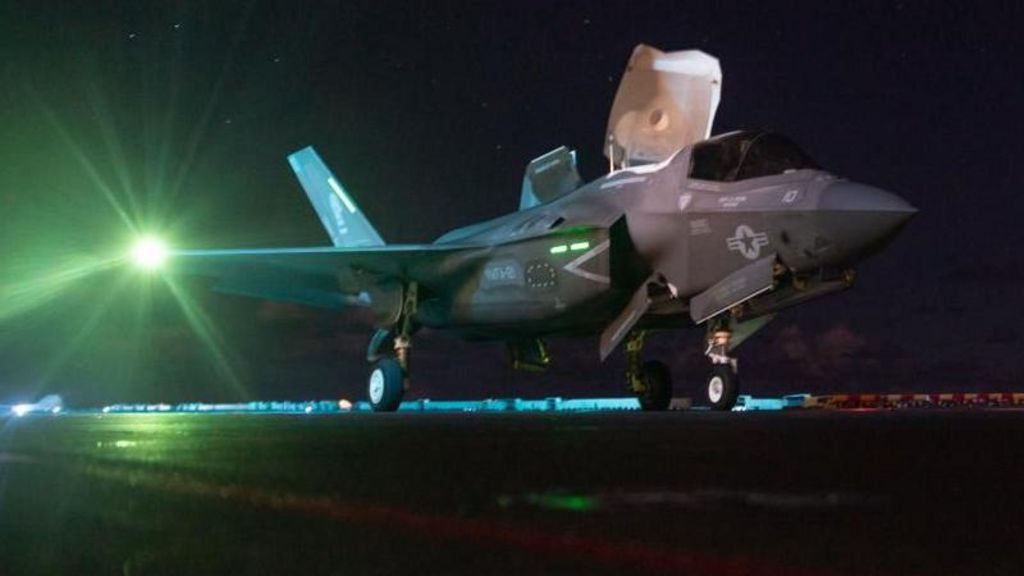
    Just last week, Trump submitted a formal request to Congress for a $1.5 trillion military budget for the upcoming fiscal year, a proposal that allocates tens of billions of dollars for new battleships and fighter jets. The expansionist rhetoric lines up with comments he made one month prior at a Saudi-backed investment summit held in Miami, where he celebrated past U.S. military strikes on Venezuela and Iran before bluntly declaring, “Cuba is next.” He quickly added, “Pretend I didn’t say that,” after making the remark.

    Foreign policy analysts argue that Trump’s aggressive rhetoric is a reaction to a costly failure of his Iran war gambit. Brian Finucane, senior adviser to the U.S. Program at the International Crisis Group, explained that Trump is “lashing out because his war on a whim did not result in the hoped-for ‘Venezuela’ in Iran but a historic debacle instead.”

    Reporting from last month by The Intercept’s Nick Turse adds context to expanding U.S. military operations even beyond the Middle East. Turse revealed that amid the ongoing Iran conflict, a top Pentagon official unveiled a new Western Hemisphere initiative dubbed “Operation Total Extermination,” targeting armed groups across the Americas. Joseph Humire, the Pentagon’s acting assistant secretary for homeland defense and Americas security affairs, told Congress that the U.S. military backed joint kinetic strikes against cartel targets along the Colombia-Ecuador border in early March. Turse’s reporting confirmed that the cross-border campaign has already spilled into Colombian territory: on March 3, a Colombian farm was hit by errant fire or a ricochet from the strikes, leaving an unexploded 500-pound bomb abandoned in the country’s border region. Since taking office for his second term, Trump has launched offensive military operations not only in Iran but also in Iraq, Nigeria, Somalia, Syria, and Yemen — most of which were long-running theaters of conflict from the post-9/11 war on terror.

    Beyond his threats of new conquests, Trump has also lashed out at U.S. allies over their refusal to back his unauthorized Iran war, while simultaneously demanding they help clean up the geopolitical and economic disaster the conflict created. In his post attacking Greenland, he launched an all-caps tirade against NATO member states that declined to deploy troops to a conflict Trump launched without any prior consultation or alliance approval: “NATO WASN’T THERE WHEN WE NEEDED THEM, AND THEY WON’T BE THERE IF WE NEED THEM AGAIN.”

    Just hours after that tirade, multiple sources confirmed to Bloomberg that Trump is now demanding NATO allies draft concrete plans to mitigate the crisis he created. According to Thursday’s Bloomberg reporting, Washington is pushing for “specific commitments from European allies on their pledge to help secure the Strait of Hormuz after the fighting in Iran stops,” and has given allies just days to present detailed operational plans for guaranteeing open navigation through the strategic waterway. This is not the first time Trump has pressured allies to deploy forces to the strait: last month, he attempted to strong-arm European nations into sending their navies to the region to support commercial shipping security, but every participating nation rejected the request.

    Even the core objective of the ceasefire Trump announced last Tuesday remains unmet more than 24 hours later: the Strait of Hormuz, one of the world’s most critical energy chokepoints, remains completely closed to most commercial traffic, just as it has been since the war began more than a month ago. Bloomberg’s Thursday reporting confirmed that ship traffic through the strait has “remained blocked,” being “limited to a handful of Iran-linked ships, another sign that a fragile ceasefire between the US and Iran has yet to improve flows through the world’s key energy chokepoint.”

    The ongoing closure has already shaken global energy markets: Brent crude futures initially dropped sharply when the ceasefire was announced, but have steadily climbed back toward the $100 per barrel mark as the closure continues.

    Given that Trump has failed to deliver even the most basic outcome of his own ceasefire deal, many analysts and policymakers are questioning why U.S. allies should step in to resolve a crisis he created. Dominic Waghorn, international affairs editor at Sky News, observed that “neither a military escort nor military force can reopen the Strait, short of a full scale occupation of southern Iran – and even then insurgents could keep it closed with the threat of action.” Prominent economist Dean Baker has urged U.S. allies to outright reject Trump’s demand, writing that “The European countries should specifically commit to pay the toll Iran is requesting.” White House correspondent SV Dáte of HuffPost summed up Trump’s approach to the crisis in one blunt line: “I broke it, someone else can fix it.”