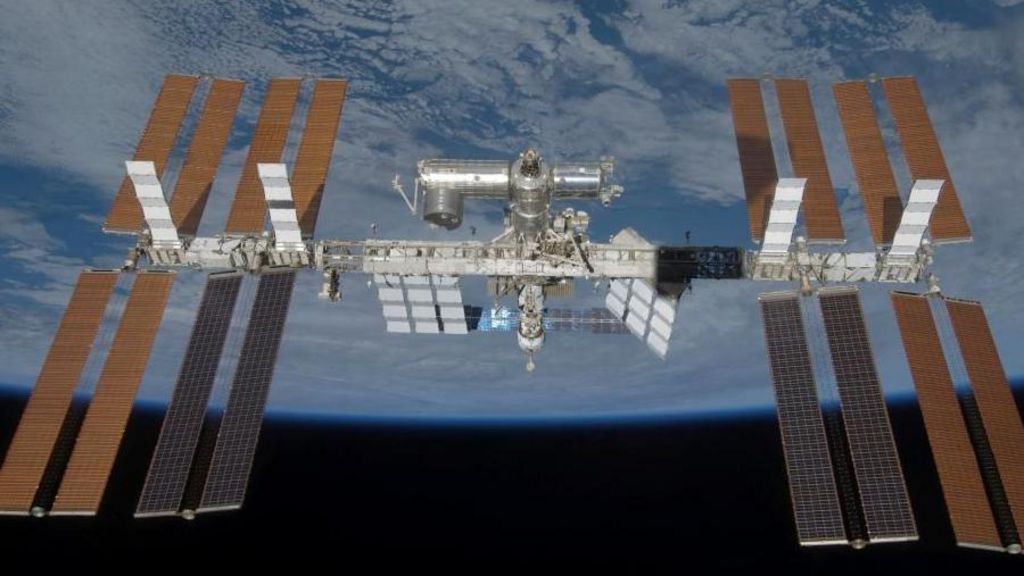
A sudden acceleration in an ongoing air leak on the International Space Station (ISS) triggered emergency shelter protocols Friday, sending five of the outpost’s seven crew members to a docked SpaceX Dragon capsule as two Russian cosmonauts attempted targeted repairs on the affected Russian segment of the station.
The leak, located in the PrK transfer tunnel connecting to Russia’s Zvezda service module, has been a persistent issue for the orbital complex for roughly six years, caused by gradual cracking that has flared up and been patched intermittently. A new development emerged last month, however, following the docking of a new Russian cargo vessel: Roscosmos, Russia’s national space agency, detected a faster rate of pressure drop in the tunnel, indicating the leak had worsened. That prompted mission teams to schedule a more extensive repair operation Friday to address the problem permanently, rather than relying on temporary fixes.
Friday afternoon, the two Russian crew members, station commander Sergey Kud-Sverchkov and flight engineer Sergei Mikaev, began preparations to access the crack using a saw. The approach sparked concern from NASA mission control in Houston, which ordered five of the seven-person ISS crew to move to the docked SpaceX Dragon capsule Freedom, their designated emergency lifeboat, as a precaution. The five astronauts — Jessica Meir, Jack Hathaway, Chris Williams of NASA, Sophie Adenot of the European Space Agency, and Andrey Fedyaev of Roscosmos, all of whom arrived at the station in February — were instructed to don their spacesuits and stand by for a potential emergency undocking and return to Earth. Unlike many spacecraft that only ferry crew to and from the station, docked crew capsules remain permanently attached as lifeboats, ready to depart for Earth within minutes if the station faces an irreparable catastrophic threat. Kud-Sverchkov and Mikaev retained their own escape route via the separately docked Soyuz MS-28 crew capsule.
Within hours of the shelter order being issued, Roscosmos directed its cosmonauts to pause the repair work, and NASA subsequently lifted the safe-haven protocol. In a public statement posted to the social platform X, NASA spokeswoman Bethany Stevens confirmed: “Given this development, Nasa has instructed the crew members inside the Dragon spacecraft to end the safe haven procedures and return to planned operations aboard the International Space Station.”
Russian state news agency Tass, citing official comments from Roscosmos, reported that at no point during the incident did the leak or repair attempt pose a threat to the safety of the crew or the ISS’s critical onboard systems.
The ISS, the largest human-made object ever placed in orbit, stretches roughly the length of an American football field. It has been continuously occupied and operated by a multinational consortium led by the United States and Russia since 1998, with additional partners including Canada, Japan, and 11 European nations through the European Space Agency. The long-running orbital outpost has weathered a series of incremental structural issues over its decades in operation, including the recurring cracking in the Zvezda module that first emerged six years ago.