标签: North America

北美洲

  • ‘Canada lives because of US’, Trump digs at Carney in Davos speech

    ‘Canada lives because of US’, Trump digs at Carney in Davos speech

    In a highly anticipated address at the World Economic Forum in Davos on Wednesday, former U.S. President Donald Trump delivered a speech that blended economic nationalism with pointed criticisms of international counterparts. While emphasizing America’s economic strength and revisiting his interest in acquiring Greenland, Trump dedicated significant portions of his remarks to targeting world leaders including Canada’s Prime Minister Mark Carney, France’s Emmanuel Macron, and Switzerland’s former President Karin Keller-Sutter.

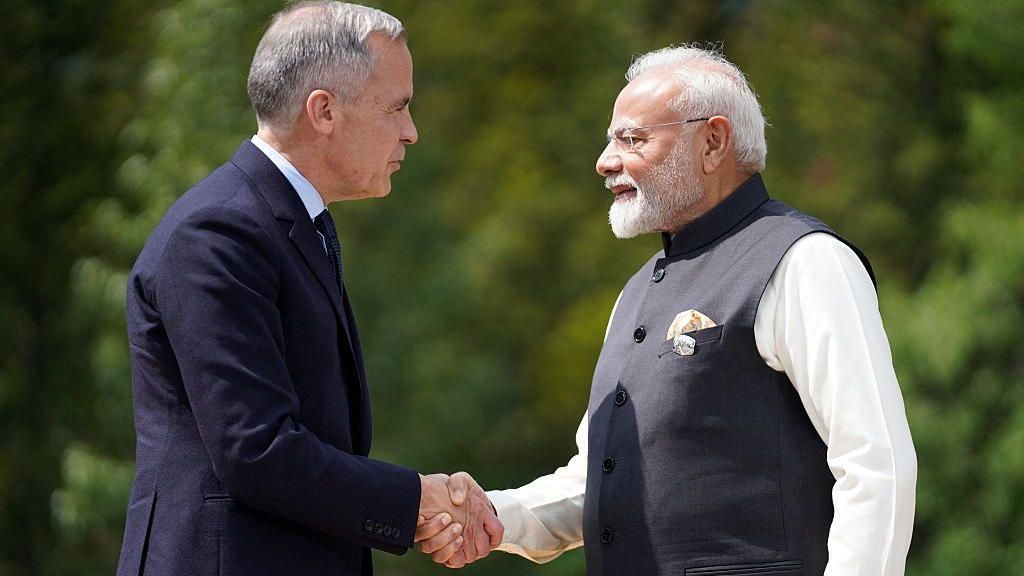
    Trump’s most assertive comments targeted Canadian Prime Minister Mark Carney, whom he addressed by first name while declaring: ‘Canada exists because of the United States. Remember that Mark, the next time you make your statements.’ The former president asserted that Canada ‘receives numerous benefits’ from its southern neighbor and ‘should express gratitude.’ These remarks came just one day after Carney’s own Davos speech where he criticized ‘great powers’ for weaponizing economic influence without explicitly naming Trump.

    The address also included personal critiques of French President Emmanuel Macron’s fashion choices. Trump questioned Macron’s decision to wear reflective aviator sunglasses during his indoor forum address, asking ‘What occurred there?’ without acknowledging the medical explanation—Macron has been managing a burst blood vessel in his eye that French officials have described as benign.

    Trump further recalled interactions with Switzerland’s former President Karin Keller-Sutter, whom he mistakenly identified as ‘prime minister.’ He characterized their discussion about potential tariff increases as frustrating, claiming she ‘repeated the same phrases continuously’ and ‘irritated me, to be candid.’ Trump revealed that following their conversation, he raised tariffs on Swiss goods to 39%, though they were later reduced to 15% following pressure from major Swiss corporations.

    The diplomatic tensions occur against a backdrop of ongoing trade concerns. Canada continues to navigate U.S. tariffs on metals and automotive sectors while seeking renewal of the USMCA agreement, critical for an economy that exports 75% of its products to the United States. Meanwhile, European leaders including Macron have accused the U.S. of attempting to ‘weaken and subordinate Europe’ through tariff threats related to Greenland.

    Trump concluded with a warning that reduced tariff rates ‘could increase again,’ emphasizing that his decisions were motivated by not wanting to ’cause harm to people’ while maintaining flexibility in trade policy.

  • Ghislaine Maxwell agrees to testify before US Congress in Epstein probe

    Ghislaine Maxwell agrees to testify before US Congress in Epstein probe

    In a significant development regarding the ongoing congressional investigation into the federal government’s handling of Jeffrey Epstein cases, imprisoned associate Ghislaine Maxwell has consented to provide sworn testimony. House Oversight Committee Chairman James Comer confirmed that Maxwell will appear virtually before the committee on February 9th, marking a pivotal moment in the high-profile investigation.

    The decision comes after months of legal maneuvering between Maxwell’s defense team and congressional investigators. Previously, Maxwell’s attorneys had insisted she would invoke her Fifth Amendment right against self-incrimination unless granted formal legal immunity. Chairman Comer acknowledged these previous positions, noting that her lawyers had consistently indicated she would ‘plead the Fifth’ without immunity protections.

    Maxwell, currently serving a 20-year sentence for recruiting and trafficking underage girls for Epstein’s sexual abuse network, finds herself at the center of multiple legal and political battles. The committee had previously denied her immunity request in July, followed by issuing formal legal summons in August compelling her testimony under oath.

    Her legal representatives had characterized testifying from prison without immunity as ‘non-starters,’ citing concerns about ‘further criminal exposure in a politically charged environment’ and legitimate security risks that could ‘undermine the integrity of the process.’

    The testimony occurs against the backdrop of continued scrutiny toward the previous administration’s handling of the Epstein case. Meanwhile, the Justice Department faces its own challenges regarding the delayed release of Epstein-related documents, with only a fraction of files made public by the December 19th deadline amid bipartisan criticism over excessive redactions.

    In a related development, the committee is simultaneously addressing former President Bill Clinton and Hillary Clinton’s refusal to testify, with lawmakers considering contempt charges against the couple. Maxwell’s unsuccessful appeal to the Supreme Court in October 2021 leaves presidential pardon as her only potential path to early release, though the White House has denied such considerations while not explicitly ruling out the possibility.

  • Faisal Islam: What it was like inside the room with Donald Trump at Davos

    Faisal Islam: What it was like inside the room with Donald Trump at Davos

    In a remarkable display of diplomatic duality, President Donald Trump delivered a speech at the Davos summit that oscillated between conciliatory gestures and territorial ambition. The atmosphere was electric as Trump entered the hall, receiving an initial standing ovation from attendees despite unprecedented security measures that even barred some heads of state from entry.

    The president’s address began with unexpectedly diplomatic tones, acknowledging Western allies who had expressed concern over his previous social media provocations. He specifically referenced the Greenland controversy, conceding he ‘probably shouldn’t speak’ about the territory he has repeatedly vowed to acquire. This momentary restraint quickly gave way to more characteristic rhetoric as Trump claimed credit for European security, asserting attendees ‘would be speaking German’ without U.S. intervention.

    The speech reached its dramatic climax when Trump formally announced his intention to pursue ‘immediate negotiations’ for the United States to acquire Greenland. While explicitly ruling out military force, he demanded ‘full title’ to the territory, describing it as ‘a very small ask’ for what he termed ‘a piece of ice.’ The president envisioned building ‘the greatest Golden Dome ever built’ on the territory while simultaneously offering to use it to defend Canada.

    The reaction among attendees revealed deep divisions. Some offered polite applause for Trump’s attempts at charm, while others sat in stunned disbelief. California Governor Gavin Newsom mocked the presentation as ‘TACO Tuesday’—referencing the ‘Trump Always Chickens Out’ catchphrase—suggesting the president had backtracked following pushback from European leaders. Even Republican Senator Thomas Tillis indicated congressional opposition to any annexation attempt.

    The address concluded with Trump maintaining that Greenland would ultimately become part of America while promising not to invade, creating a paradoxical conclusion that left the international community contemplating the president’s true intentions and the future of transatlantic relations.

  • Fact-checking Trump’s Davos speech

    Fact-checking Trump’s Davos speech

    During a wide-ranging address at the World Economic Forum in Davos, former President Donald Trump presented several controversial assertions that have undergone rigorous verification analysis. The speech, exceeding one hour in duration, covered topics ranging from territorial ambitions to international defense spending and renewable energy policies.

    Regarding Greenland, Trump characterized his desire to acquire the autonomous Danish territory as a “small ask” while questioning America’s historical decision to “give Greenland back to Denmark” after World War II. Historical records indicate this characterization misrepresents actual events. In 1933, an international court precedent to the ICJ formally recognized Danish sovereignty over Greenland. The 1941 agreement between the U.S. and Danish representatives authorized American military presence to prevent Nazi occupation but explicitly did not transfer territorial sovereignty.

    On NATO contributions, Trump asserted the United States funded “virtually 100%” of the alliance while claiming member nations now pay “5%” of GDP. Defense expenditure data reveals different figures: U.S. spending constituted approximately 70% of total NATO defense expenditure in recent years, declining to an estimated 62% in 2025 as all members met the 2% GDP benchmark for the first time. The referenced 5% target represents a long-term objective for 2035, with no nation currently exceeding 4.5%.

    The former president additionally claimed the U.S. “never gotten anything” from NATO, despite the alliance invoking Article 5 collective defense specifically following the 9/11 attacks. Multiple NATO members, including Denmark which suffered high per-capita casualties, contributed substantially to subsequent military operations in Afghanistan.

    Trump’s criticism of wind energy included claims that China, despite manufacturing turbines, lacked operational wind farms. This contradicts documented evidence showing China operates the world’s largest wind farm in Gansu Province (visible from space) and leads global wind energy generation at 997 terawatt-hours in 2024—more than double U.S. output.

    The speech also inaccurately characterized UK North Sea oil taxation, claiming companies surrendered “92% of revenues.” Actual taxation involves a 30% corporation tax plus 10% supplementary charge on profits, with a temporary windfall tax raising the total levy to 78% on profits—not revenues.

    Finally, Trump’s repeated assertion of securing “$18 trillion” in investment commitments lacks publicly verifiable evidence. Official White House tracking data from November 2024 documents $9.6 trillion in pledged investments, including a $1.4 trillion decade-long commitment from the UAE. Experts note these figures represent pledges rather than realized investments, with some already facing complications due to diplomatic tensions over Greenland.

  • Surprise jump in UK inflation not expected to derail rate cuts

    Surprise jump in UK inflation not expected to derail rate cuts

    Britain’s inflation rate defied economic forecasts in December 2026, climbing to 3.4% from November’s 3.2% according to Office for National Statistics data. This unexpected increase marks the first upward movement since July, primarily driven by seasonal airfare adjustments and tobacco duty increases implemented during the holiday period.

    Despite this temporary acceleration, economic analysts maintain that the trajectory toward price stability remains intact. Services inflation—a critical metric monitored by the Bank of England—edged upward to 4.5%, aligning precisely with economist projections in Reuters’ polling. The nation continues to exhibit the highest inflation rate among G7 countries despite experiencing sluggish economic growth patterns.

    Market reactions remained notably subdued following the announcement, with investors maintaining existing positions regarding anticipated interest rate reductions. Financial instruments currently price in one to two quarter-point cuts by the Bank of England throughout 2026. Governor Andrew Bailey has previously indicated that inflation should approach the central bank’s 2% target around April or May, reflecting expectations that utility cost increases and government-regulated tariffs from the previous year will cycle out of annual comparisons.

    Geopolitical tensions introduce potential complications to this forecast. British natural gas futures have surged approximately 25% over recent weeks, partly attributable to deteriorating transatlantic relations following controversial tariff threats by U.S. leadership. The Monetary Policy Committee’s December decision to reduce Bank Rate to 3.75% encountered significant dissent, with nearly half of members advocating for maintaining previous levels due to persistent inflation concerns.

    Fourth-quarter data revealed notable pressures in services sector producer prices, which accelerated to 2.9% from the previous quarter’s 2.0%, while manufacturing output prices remained stable. Economic research institutions including the National Institute of Economic and Social Research anticipate at least one rate reduction in the first half of 2026, contingent upon geopolitical developments not disrupting current inflation pathways.

  • Canadian teen who died in Australia remembered for ‘infectious laugh’ and adventurous spirit

    Canadian teen who died in Australia remembered for ‘infectious laugh’ and adventurous spirit

    Australian authorities are investigating the tragic death of 19-year-old Canadian backpacker Piper James, whose body was discovered surrounded by dingoes on K’Gari Island’s shoreline Monday morning. The teenager had been working at a local hostel for six weeks before her life ended under mysterious circumstances near the historic Maheno shipwreck site.

    Queensland coroners are examining whether James drowned during an early morning swim, fell victim to animal attacks, or succumbed to another unknown cause. The investigation may require substantial time to reach definitive conclusions, according to official statements from the Coroners Court.

    The young traveler’s family shared heartfelt memories of their daughter’s adventurous spirit and determination. Her father recalled her insistence on making the journey despite parental concerns, quoting her decisive words: ‘I’m 18, and you can’t stop me!’ Angela James, Piper’s mother, expressed profound grief to Global News, acknowledging their daughter had broken safety protocols against swimming alone—a decision with tragic consequences.

    K’Gari Island, a World Heritage site formerly known as Fraser Island, sustains approximately 200 dingoes protected under Queensland’s conservation laws. The wild canines, considered native species, frequently roam beach areas where the incident occurred. Two witnesses driving along the coast at approximately 6:30 AM initially spotted about ten dingoes congregating around what they later identified as human remains.

    Piper had meticulously saved funds following her high school graduation to fulfill her travel aspirations, embodying the adventurous spirit her family now commemorates through stories of her infectious laughter and compassionate nature.

  • Supreme Court sceptical of Trump firing of Lisa Cook

    Supreme Court sceptical of Trump firing of Lisa Cook

    In a landmark hearing with profound implications for central bank autonomy, U.S. Supreme Court justices across ideological lines expressed significant skepticism toward the Trump administration’s unprecedented dismissal of Federal Reserve Governor Lisa Cook. The case, which questions the boundaries of presidential authority over independent agencies, saw unusual alliances form as conservative and liberal justices alike raised concerns about due process and institutional integrity.

    The legal confrontation stems from President Trump’s August declaration removing Cook from her position over allegations of mortgage fraud—claims she has consistently denied. During oral arguments, Justice Brett Kavanaugh, a Trump appointee, emerged as a pivotal voice questioning the administration’s stance. “What’s the fear of more process here?” he asked, later warning that the administration’s interpretation could “weaken, if not shatter, the independence of the Federal Reserve.”

    Central to the dispute is the statutory requirement that Fed governors may only be removed “for cause,” a provision designed to insulate monetary policy from political pressure. The White House contends Cook’s mortgage filings—which allegedly claimed two different primary residences simultaneously—constitute sufficient cause for dismissal. Solicitor General D. John Sauer argued that even inadvertent errors could undermine confidence in the institution, asserting that courts should defer to presidential judgment on such matters.

    Cook’s legal team presented a starkly different narrative, characterizing the allegations as “cherry-picked, incomplete snippets” taken out of context. In a November letter to the Justice Department, her attorneys explained that a single stray reference in an Alabama mortgage application was accompanied by “truthful and more specific disclosures about the property’s use.” They maintained there was “no fraud, no intent to deceive, nothing whatsoever criminal or remotely a basis to allege mortgage fraud.”

    Justice Samuel Alito questioned the hurried nature of the proceedings, asking why the matter required such expedited treatment. Justice Amy Coney Barrett, another Trump appointee, pressed the administration to explain what harm would come from allowing lower courts to fully examine the evidence first. The court appeared particularly concerned about the economic ramifications of a ruling that might undermine confidence in the Fed’s independence, with Justice Sonia Sotomayor noting that “the independence of the agency is very important and that independence is harmed if we decide these issues too quickly.”

    The case unfolds against a backdrop of ongoing tension between the Trump administration and the Federal Reserve, with the president previously criticizing the institution’s interest rate policies. The outcome could redefine the relationship between the executive branch and independent agencies for generations to come.

  • Taylor Swift makes history as she joins Songwriters Hall of Fame

    Taylor Swift makes history as she joins Songwriters Hall of Fame

    In a landmark achievement for contemporary music, Taylor Swift has shattered another industry barrier by becoming the youngest female artist ever inducted into the prestigious Songwriters Hall of Fame. The 36-year-old musical phenomenon joins an elite 2026 class that includes Canadian-American icon Alanis Morissette and veteran producer Walter Afanasieff, renowned for his collaborations with Mariah Carey.

    The recognition arrives amid an extraordinary career surge for Swift, whose latest album ‘The Life of a Showgirl’ shattered her own sales records upon its October release. The album achieved the UK’s largest opening week of 2025 with 304,000 copies sold within just three days, demonstrating her enduring commercial dominance.

    Established in 1969, the Songwriters Hall of Fame honors creators whose compositions form the foundation of global popular music. With fewer than 500 inductees over its fifty-year history, the organization maintains exceptionally selective membership standards. Nile Rodgers, chairman and Chic frontman, praised this year’s cohort for both their iconic compositions and their ability to transcend musical boundaries.

    ‘These songwriters have profoundly impacted the lives of billions of listeners worldwide,’ Rodgers stated during the induction announcement. ‘Their work celebrates unity across various genres while showcasing the enduring power of songcraft.’

    The 2026 induction class further includes hitmaker Christopher ‘Tricky’ Stewart (architect of Beyoncé’s ‘Single Ladies’ and ‘Break My Soul’), Kiss members Paul Stanley and Gene Simmons, ‘Footloose’ creator Kenny Loggins, and the writing duo behind Tina Turner’s ‘What’s Love Got To Do With It’.

    Swift’s induction reinforces her status as one of music’s most accomplished artists, with twelve studio albums and four re-recorded ‘Taylor’s Version’ collections. Her recent reclamation of ownership rights to her first six albums concluded a highly publicized battle over artistic control, while her unprecedented four Album of the Year Grammy wins already cemented her legacy as a recording innovator.

    The formal induction ceremony will occur during a private event in New York later this year.

  • US to transfer Islamic State prisoners from Syria to Iraq

    US to transfer Islamic State prisoners from Syria to Iraq

    In a significant strategic shift, the United States military has commenced a large-scale operation to relocate up to 7,000 captured Islamic State (IS) fighters from detention facilities in northeastern Syria to secure locations within Iraq. This decisive action comes as Syrian government forces rapidly expand their control over territories previously held by Kurdish-led militias.

    US Central Command confirmed the transfer of an initial contingent of 150 IS detainees from Syria’s Hassakeh province, citing imperative security concerns. Military officials emphasized that this preemptive measure aims to eliminate potential prison breaks that could ‘pose a direct threat to the United States and regional security interests.’

    The geopolitical landscape shifted dramatically following Tuesday night’s announcement of a new ceasefire agreement between Damascus and the Kurdish-led Syrian Democratic Forces (SDF). This development occurred simultaneously with the SDF’s withdrawal from the contentious al-Hol camp, which houses thousands of IS family members.

    Tensions escalated further on Wednesday when Syria’s defense ministry reported seven soldiers killed in a suspected Kurdish drone attack in Hasakah province. This incident followed mutual accusations between government forces and the SDF regarding a major security breach at Shaddadi prison, where approximately 120 IS militants escaped earlier this week.

    Syrian interior ministry officials disclosed that security operations had successfully recaptured 81 fugitives, while SDF spokesman Farhad Shami claimed through Reuters that nearly 1,500 IS members had escaped during coordinated attacks by ‘Damascus-affiliated factions.’ The SDF additionally alleged government assaults on al-Aqtan prison near Raqqa, which holds high-value IS leadership.

    Despite being militarily weakened, IS remains operationally active in 2025, primarily executing attacks against Kurdish forces in northeastern regions. The United States, previously the SDF’s primary ally, has detained over 300 IS operatives and eliminated more than 20 this year alone.

    US Special Envoy Tom Barrack signaled a fundamental policy reevaluation, stating the rationale for US-SDF cooperation has ‘largely expired.’ Current American efforts focus on securing detention facilities and mediating negotiations between Kurdish forces and President Ahmed Sharaa’s government. Barrack characterized this moment as a potential pathway toward ‘full integration into a unified Syrian state with citizenship rights, cultural protections, and political participation.’

  • Watch: How was Trump’s Davos speech received?

    Watch: How was Trump’s Davos speech received?

    During his keynote address at the World Economic Forum in Davos, President Donald Trump articulated a nuanced position regarding U.S. territorial ambitions while simultaneously assuring a peaceful approach. The BBC’s Chief Economics Editor, Faisal Islam, who was present in the audience, reported that the President explicitly ruled out the use of military force to acquire Greenland. However, Trump proceeded to deliver a comprehensive and lengthy justification for why the vast Arctic territory would be a strategic and valuable asset for the United States. His speech wove together themes of economic opportunity, national security, and historical precedent, arguing that American stewardship could unlock the island’s potential. The delivery, observed firsthand, blended Trump’s characteristic transactional diplomacy with a pledge of non-coercion, creating a complex narrative that left the international audience processing the blend of reassurance and expansionist rhetoric.