标签: North America

北美洲

  • Oil faces price ceiling as supply surge outpaces demand

    Oil faces price ceiling as supply surge outpaces demand

    A substantial supply surplus is poised to dominate global oil markets throughout 2026, effectively imposing a ceiling on prices despite ongoing geopolitical instability, according to a definitive assessment by the International Energy Agency (IEA). The agency projects that worldwide oil supply will expand by approximately 2.5 million barrels per day (bpd) this year, reaching a staggering 108.7 million bpd. This follows an even larger increase of around 3 million bpd recorded in 2025.

    This robust production growth, originating predominantly from non-OPEC+ nations including the United States, Canada, Brazil, Guyana, and Argentina, is dramatically outpacing the modest rise in global consumption. The IEA forecasts demand growth of merely 930,000 bpd for 2026, driven almost entirely by emerging economies outside the OECD. This supply-demand imbalance, nearly a threefold difference, has created a significant market buffer that is expected to confine benchmark crude prices within a volatile $60 to $70 per barrel range, suppressing any sustained price rallies.

    The physical evidence of this glut is unmistakable. Global observed inventories swelled by approximately 470 million barrels throughout 2025, equating to a build of nearly 1.3 million bpd. A sharp acceleration occurred in November alone, with stocks jumping over 75 million barrels, primarily in onshore crude storage. Preliminary data indicates this trend continued into December. Consequently, OECD industry stockpiles have climbed to 2.84 billion barrels, aligning with the five-year average but standing markedly higher than levels seen a year prior.

    Refining activity surged late in the previous year, with global crude throughputs rising by about 2 million bpd in December to 85.7 million bpd ahead of planned seasonal maintenance. For 2026, refinery runs are forecast to average 84.6 million bpd. However, refining margins weakened considerably toward the end of 2025, especially in Europe, where middle distillate cracks halved from their November peaks—a symptom of softening industrial demand and burgeoning product inventories.

    Despite repeated geopolitical shocks, prices have consistently failed to maintain upward momentum. North Sea Dated crude averaged just $62.64 a barrel in December, marking a sixth consecutive monthly decline and reaching lows unseen since early 2021. Benchmark prices remain roughly $16 a barrel below the previous year’s levels. A brief January price spike of $6, triggered by renewed tensions involving Iran and Venezuela, quickly subsided as market attention returned to overwhelming fundamentals.

    Leading financial institutions echo this cautious outlook. Goldman Sachs analysts noted that geopolitical risk premiums are being overwhelmingly “absorbed by the weight of surplus supply,” projecting Brent to trade within the $60-$70 band. JPMorgan issued a more bearish warning, suggesting prices could test the low-$60s or even high-$50s if demand weakens further or if OPEC+ accelerates its production increases, citing a market that is “structurally long barrels.” Morgan Stanley tempered extreme downside fears, noting that OPEC+ retains sufficient spare capacity and policy flexibility to intervene should prices fall too sharply.

    Notably, actual supply disruptions have failed to materially tighten market balances. While Iranian exports fell by 350,000 bpd from October highs and Venezuelan shipments dropped under tightened U.S. sanctions, these losses were offset by a strong rebound in Russian output, which rose by 550,000 bpd month-on-month in December to a multi-year high. Temporary disruptions in Kazakhstan also had a muted impact amid the pervasive supply abundance.

    While OPEC maintains a more optimistic demand outlook citing steady economic growth, it acknowledges headwinds from trade tensions and slowing industrial activity. The U.S. Energy Information Administration has similarly highlighted relentless growth in U.S. shale output and rising exports from the Americas as key factors ensuring well-supplied markets. Analysts conclude that with storage tanks brimming and supply growth set to vastly exceed demand, abundance—not scarcity—is the defining characteristic shaping the direction of global crude markets for the foreseeable future.

  • CRDB Bank opens Dubai office to channel Gulf capital into Africa’s $3.4 trillion economy

    CRDB Bank opens Dubai office to channel Gulf capital into Africa’s $3.4 trillion economy

    In a landmark move for Africa-UAE economic relations, Tanzania’s CRDB Bank has inaugurated its Dubai Representative Office at the Dubai International Financial Centre (DIFC), marking the first Tanzanian financial institution to establish a presence within this globally influential financial hub. This strategic expansion positions Tanzania and the broader East and Central Africa region directly within the global capital ecosystem, utilizing an African-born financial institution as the crucial conduit between regional opportunities and international finance.

    The official launch ceremony gathered senior leaders from international financial institutions, global investors, multinational corporations, and development finance partners, signaling increasing global interest in Africa as the world’s next major growth frontier. Ambassador Mahmoud Thabit Kombo, Minister for Foreign Affairs and East African Cooperation, delivered a keynote address on behalf of Tanzanian President Samia Suluhu Hassan, commending CRDB Bank for advancing Tanzania’s national economic vision through a domestically-grown institution operating at global standards.

    Minister Kombo emphasized the strategic selection of Dubai, citing its status as a premier global capital hub and the robust regulatory framework of DIFC. “The presence of a Tanzanian bank in Dubai will significantly deepen economic, trade, and investment relations between Tanzania and the United Arab Emirates,” he stated, referencing existing bilateral trade that has already reached approximately $2.5 billion annually.

    Tanzania’s economic stability provides a strong foundation for this expansion. With over 60 million people, the country has maintained average GDP growth of 6-7% for more than two decades, preserved single-digit inflation, and demonstrated macroeconomic resilience even during global disruptions. This stability has transformed Tanzania into a natural gateway economy, connecting the Indian Ocean to landlocked markets across East and Central Africa.

    CRDB Bank, founded three decades ago, has evolved alongside Tanzania’s economy and regional integration agenda. The Group now serves over six million customers across the region with a balance sheet exceeding $9 billion, maintaining footprints in Tanzania, Burundi, and the Democratic Republic of Congo that mirror the region’s most vital trade, logistics, and investment corridors.

    Abdulmajid Nsekela, Group CEO of CRDB Bank, characterized the Dubai expansion as the logical progression in a regional strategy rooted in Tanzania’s economic geography and Africa’s integration agenda. “CRDB Bank was built to finance Tanzania’s growth. As Tanzania became a gateway, the Bank became regional,” he explained. “Dubai now enables us to complete the triangle—connecting global capital, Tanzania, and East and Central Africa through one trusted African institution.

    The targeted region represents a nearly 400 million-person market characterized by rising intra-African trade, expanding infrastructure networks, vast mineral and energy resources, and one of the world’s youngest labor forces. Africa collectively hosts 1.4 billion people, generates over $3.4 trillion in GDP, and is projected to account for a quarter of the global population by 2050.

    Despite this enormous potential, access to long-term, structured capital remains a persistent challenge. The CRDB Bank Dubai Representative Office specifically addresses this gap by originating deals, structuring financing, and mobilizing global capital for African projects requiring both local understanding and international standards. “Africa does not lack opportunity,” Mr. Nsekela noted. “What it often lacks is a bridge between capital and execution. This office is that bridge.”

    Through its DIFC presence, CRDB Bank is expected to enhance trade finance, cross-border investment structuring, and syndicated financing between the Gulf and Africa, utilizing Tanzania as the anchor and East and Central Africa as the growth hinterland. The office additionally strengthens Africa’s engagement with Islamic finance, a global market exceeding $4 trillion in assets.

    Neema Mori, Chairperson of the CRDB Bank Board of Directors, stated that this milestone reflects growing confidence in African institutions operating at the highest global level. “This is a statement about governance, capability, and trust,” she affirmed. “CRDB Bank’s presence in Dubai demonstrates that African banks can anchor global partnerships while remaining firmly aligned with Africa’s development priorities.”

    Leadership from the Dubai Financial Services Authority welcomed CRDB Bank into the DIFC ecosystem, recognizing that an African bank with profound regional roots strengthens the Africa-Middle East financial corridor and enhances the flow of long-term capital into emerging markets.

  • Trump defends Greenland bid and tariffs at Davos as EU weighs retaliation

    Trump defends Greenland bid and tariffs at Davos as EU weighs retaliation

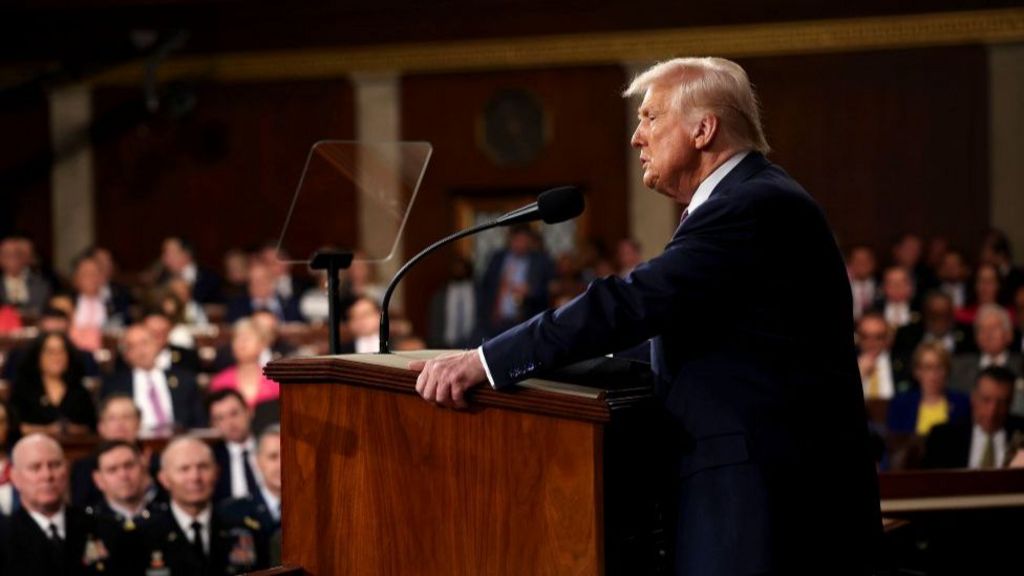
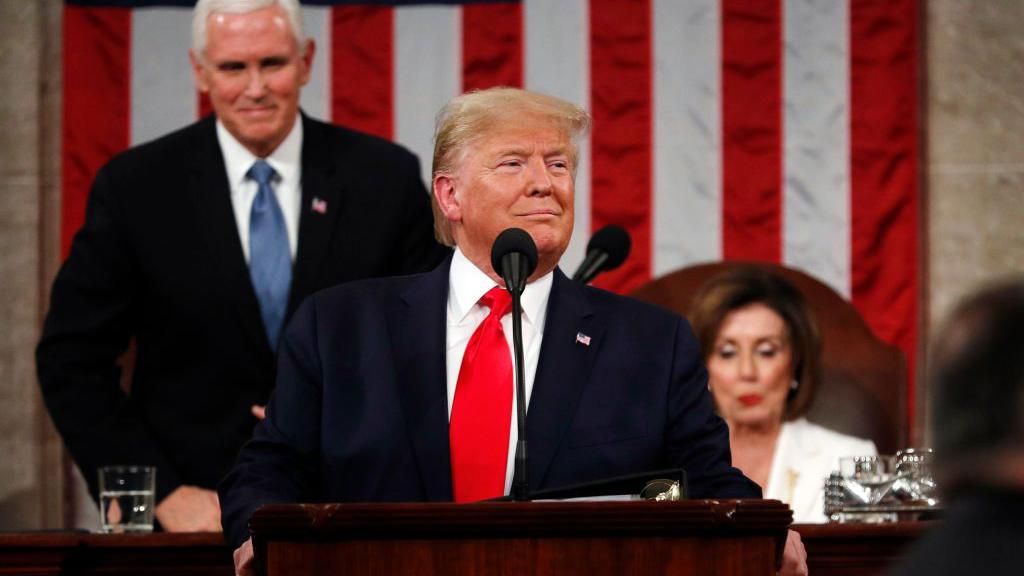
    At the World Economic Forum in Davos on January 21, 2026, U.S. President Donald Trump vigorously defended his controversial proposal to acquire Greenland from Denmark while justifying his tariff-based economic approach. The American leader characterized the Arctic territory as a critical strategic asset for national and international security, asserting that “no nation or group of nations is in any position to be able to secure Greenland other than the United States.”

    Trump’s address came amidst growing European opposition to both his territorial ambitions and economic policies. The president explicitly ruled out military force while demanding “immediate negotiations” for the purchase, framing it as a straightforward transaction rather than an expansionist maneuver.

    Regarding economic policy, Trump positioned tariffs as fundamental to American prosperity, declaring that “We have made some great trade deals; everyone knows when the U.S. grows, you will follow.” This defense followed his weekend threat on Truth Social to impose escalating tariffs—starting at 10% on February 1 and potentially reaching 25% by June—on eight NATO allies including the UK, Germany, and France unless they acquiesced to the Greenland acquisition.

    European leaders mounted a coordinated response ahead of Trump’s appearance. French President Emmanuel Macron rejected what he termed “the law of the strongest,” criticizing Trump’s approach as “new colonialism” and reaffirming Europe’s commitment to international law. European Commission President Ursula von der Leyen warned that tariff threats risked creating a “downward spiral” in transatlantic relations, while UK Prime Minister Keir Starmer condemned the proposed measures as “completely wrong.”

    The confrontation escalated following Trump’s speech, with the European Parliament formally suspending work on approving a previously negotiated U.S.-EU trade deal. European Council President Antonio Costa confirmed an emergency summit in Brussels to coordinate retaliatory measures, potentially targeting €110 billion ($129 billion) worth of American exports.

    Trump further complicated diplomatic tensions by attacking European renewable energy policies, particularly wind power, which he dismissed as a “hoax” that allegedly benefits China. However, industry data from the World Wind Energy Association directly contradicted his claims, showing China as the world’s largest wind power market with cumulative installed capacity exceeding 600 GW by mid-2025, including 51.4 GW added in the first half of that year alone.

  • US allies won’t soon forget Greenland crisis triggered by Trump

    US allies won’t soon forget Greenland crisis triggered by Trump

    A tense diplomatic standoff over Greenland’s sovereignty, ignited by Donald Trump’s acquisition threats and military rhetoric, appears to have been resolved through high-level NATO intervention. The crisis, which unfolded over two weeks and threatened transatlantic relations, culminated in a strategic agreement focused on Arctic security rather than territorial transfer.

    NATO Secretary General Mark Rutte played a pivotal role in de-escalating tensions following Trump’s provocative statements about purchasing Greenland and imposing tariffs on European allies. The breakthrough built upon preliminary discussions between Washington and a diplomatic delegation comprising Danish and Greenlandic foreign ministers, which established a working group to address the island’s future.

    While specific terms remain confidential, emerging details suggest the arrangement involves enhanced U.S. military presence on Greenland rather than sovereignty transfer. Anonymous officials cited by The New York Times indicate potential Danish cession of small territorial parcels for American military bases, mirroring the UK’s sovereign base model in Cyprus. President Trump additionally referenced secured access to Greenland’s substantial mineral resources, though neither Danish authorities nor NATO have confirmed these claims.

    NATO clarified that discussions center on collective Arctic security efforts among the seven Arctic allies—United States, Canada, Denmark, Norway, Sweden, Finland and Iceland—with explicit intent to counter Russian and Chinese military and economic expansion in the region.

    The resolution leaves behind diplomatic reverberations, with Canadian Prime Minister Mark Carney describing the episode as a ‘rupture’ in traditional alliances and EU Commission President Ursula von der Leyen referencing ‘seismic change’ in international relations. Observers note the crisis has accelerated calls for European strategic independence and exposed the fragility of existing alliance structures in the face of unilateral actions.

  • UAE weather tomorrow: Rough sea alert issued, mercury to dip further

    UAE weather tomorrow: Rough sea alert issued, mercury to dip further

    The United Arab Emirates is bracing for significant weather developments as meteorological authorities issue comprehensive advisories for residents and mariners. The National Center of Meteorology has activated rough sea alerts across coastal regions, particularly highlighting dangerous conditions in the Oman Sea where wave heights are anticipated to reach six feet.

    Weather patterns for January 22 indicate partly cloudy conditions with low cloud formations expected along coastal and northern territories. A notable temperature decline continues across the emirates, with Dubai, Sharjah, and Abu Dhabi experiencing maximum temperatures of 23°C. Minimum temperatures will vary significantly between urban centers and mountainous regions, with Jais Mountain in Ras Al Khaimah recording an early morning low of 4.7°C.

    Wind patterns will feature moderate to fresh northwesterly and northeasterly currents, occasionally intensifying to 45 km/h during morning hours over maritime zones. These atmospheric conditions will likely cause blowing dust and sand across terrestrial areas, reducing visibility and creating challenging travel conditions.

    The Arabian Gulf will experience very rough to rough sea states during daylight hours, gradually moderating overnight. Mariners are advised to exercise extreme caution due to strong northwesterly winds reaching 40 km/h, particularly between Wednesday morning and Thursday evening.

    Humidity levels are forecasted to increase substantially during overnight and early morning periods, with mist formation probable in western regions. This combination of temperature fluctuations, wind activity, and maritime disturbances characterizes a complex weather system affecting the UAE region.

    Authorities continue to monitor developments closely and recommend that residents stay updated through official channels for the latest weather advisories and safety recommendations.

  • Trump credit card plan would be a ‘disaster’, JP Morgan boss warns

    Trump credit card plan would be a ‘disaster’, JP Morgan boss warns

    JPMorgan Chase CEO Jamie Dimon has issued a stark warning against former President Donald Trump’s proposal to cap credit card interest rates at 10%, characterizing the measure as potentially catastrophic for the U.S. economy. Speaking at the World Economic Forum in Davos, Dimon asserted that such a cap would drastically reduce credit access for approximately 80% of Americans and negatively impact multiple sectors including restaurants, retailers, travel companies, and educational institutions.

    The controversial proposal, which Trump initially floated during his 2024 presidential campaign and recently reaffirmed via Truth Social on January 13, calls for a one-year interest rate limitation effective from January 20, 2026. The former president framed the measure as protection for consumers against what he described as predatory practices by credit card companies. However, the mechanism for implementation and its legal enforceability remain unspecified.

    Dimon challenged the proposal’s feasibility, suggesting that if proponents like Senators Bernie Sanders and Elizabeth Warren support the concept, it should first be tested in their home states of Vermont and Massachusetts. The banking executive emphasized that the most severe consequences would not be borne by financial institutions but rather by small businesses and municipalities as consumers struggle to meet payment obligations.

    The financial industry has united in opposition to the concept, with banking associations warning that rate caps would ultimately restrict credit access and prove devastating to families and small businesses. Market reactions were immediately observable following Trump’s social media announcement, with shares of major credit card companies including American Express, Visa, Mastercard, and Barclays experiencing declines.

    Currently, the average credit card interest rate in the United States stands at approximately 20%, significantly higher than the proposed cap. While positioned as consumer protection, economists and financial experts caution that artificial rate limitations could constrict credit availability particularly for higher-risk borrowers, potentially exacerbating rather than alleviating financial pressures on American consumers.

  • Watch: Russian cosmonaut captures stunning aurora from space

    Watch: Russian cosmonaut captures stunning aurora from space

    Russian cosmonaut Sergey Kud-Sverchkov has documented one of space’s most breathtaking phenomena from the unique vantage point of the International Space Station. His recently released footage showcases an intense auroral display dancing across Earth’s atmosphere during what scientists have identified as the most significant solar storm event in over two decades.

    The spectacular visual records were captured as our planet experienced heightened geomagnetic activity resulting from powerful solar eruptions. These celestial disturbances created ideal conditions for the vibrant aurora borealis, typically visible only in polar regions, to extend to unusually low latitudes.

    From his orbital perspective 400 kilometers above Earth, Kud-Sverchkov’s imagery provides unprecedented detail of the luminous phenomenon. The footage reveals the full spectral dimension of the aurora, with shimmering green ribbons intertwined with rare crimson hues, creating an otherworldly corona effect around our planet’s curvature.

    Space weather experts at NASA and Roscosmos confirm this event represents a G4-class geomagnetic storm, ranking as ‘severe’ on the space weather scale. Such intense solar activity originates from coronal mass ejections – massive expulsions of plasma and magnetic field from the Sun’s corona that travel through interplanetary space before interacting with Earth’s magnetosphere.

    The scientific community emphasizes that while these storms create visual marvels, they also demonstrate the importance of monitoring space weather due to potential impacts on satellite operations, communication systems, and power grids. Kud-Sverchkov’s documentation contributes valuable observational data to ongoing research in heliophysics and atmospheric sciences.

  • Massive winter storm expected to bury much of US with snow and ice

    Massive winter storm expected to bury much of US with snow and ice

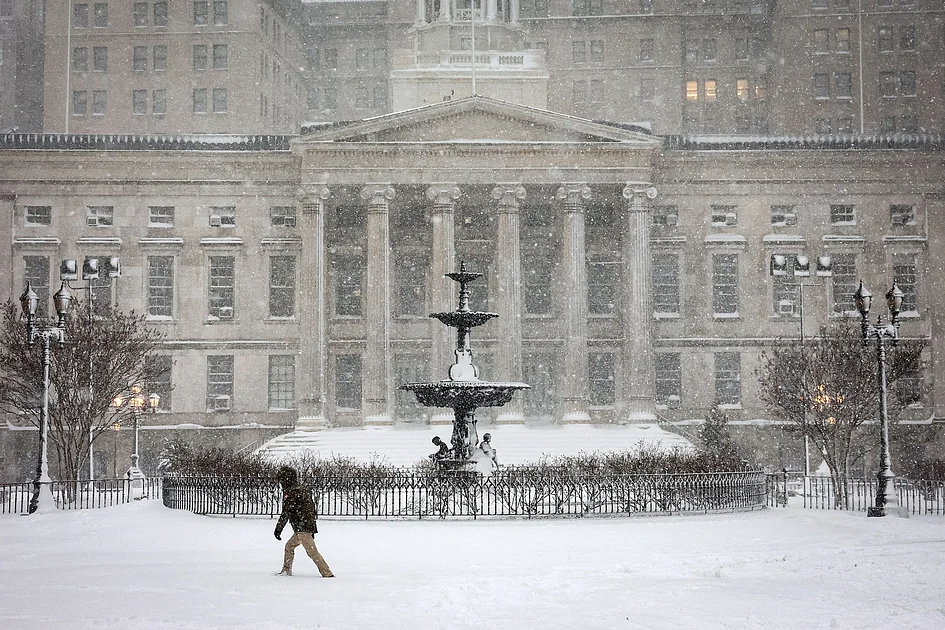
    Meteorological authorities are issuing urgent warnings as an immense Arctic air mass prepares to engulf the continental United States, threatening to disrupt daily life for approximately 160 million citizens across nearly thirty states. The formidable weather system, originating from the Polar Vortex, is projected to initiate its southward trajectory on Thursday, commencing in the southwestern regions before advancing toward the Eastern Seaboard throughout the weekend.

    According to expert forecasts, this unprecedented cold front will generate dangerously subfreezing conditions, with interior plains regions potentially experiencing temperatures plummeting to -40°F (-40°C) or lower. The Rocky Mountain states are bracing for substantial snowfall accumulation by Friday, while metropolitan corridors including Memphis, Nashville, Washington D.C., Baltimore, Philadelphia, and New York anticipate significant winter precipitation.

    The National Weather Service has emphasized the grave risks associated with the impending conditions, noting that wind chill factors could create life-threatening scenarios where exposed skin might develop frostbite within minutes. Southern regions face particular peril from freezing rain that could glaze vegetation and infrastructure with ice, potentially triggering widespread power outages and structural damage.

    Transportation networks nationwide are preparing for substantial disruptions. Aviation authorities at major hubs have advised travelers to anticipate considerable delays and cancellations. State executives in Texas, North Carolina, and South Carolina have preemptively declared states of emergency, mobilizing National Guard units and emergency response teams.

    Texas Governor Greg Abbott referenced the state’s traumatic 2021 winter crisis in his emergency declaration, stating: “The State of Texas is implementing comprehensive measures to ensure resource availability before severe weather impacts our communities.” Officials nationwide are cautioning residents about potential pipe bursts and extended road closures, particularly in southern jurisdictions lacking robust winter infrastructure.

    Meteorologists indicate the severe conditions will likely persist through next week, creating prolonged hazards including treacherous travel, reduced visibility, and possible utility failures.

  • Blockbusters, battles and Brits: Hollywood gears up for Oscar nominations

    Blockbusters, battles and Brits: Hollywood gears up for Oscar nominations

    Hollywood’s awards season reaches its pivotal moment as the Academy prepares to announce Oscar nominations, with Paul Thomas Anderson’s politically charged thriller “One Battle After Another” positioned as the frontrunner. The film featuring Leonardo DiCaprio as a former revolutionary battling white supremacists could deliver Anderson his long-awaited Oscar after 11 previous nominations.

    This year’s ceremony introduces significant changes, including a new category for Best Casting and plans to move the Oscars to YouTube by 2029. The Academy is also implementing stricter viewing requirements for voters, mandating either streaming through official channels or documented cinema attendance.

    While blockbuster sequels like “Avatar: Fire and Ash” and “Wicked: For Good” achieved commercial success, they face diminished awards traction. James Cameron notably dismissed Oscar campaigning, stating, “You can play the awards game, or you can play the game I like to play and that’s to make movies people actually go to.”

    The acting categories feature intriguing narratives: Timothée Chalamet (“Marty Supreme”) leads a competitive Best Actor field against DiCaprio and Michael B. Jordan (“Sinners”). Potential first-time nominees include established stars like Adam Sandler (“Jay Kelly”) and Jacob Elordi, while Amy Madigan could secure her first nomination in 40 years for horror film “Weapons.”

    International talent shines particularly bright from Ireland, with Jessie Buckley and Paul Mescal expected recognition for “Hamnet,” while British representation appears weaker with Wunmi Mosaku (“Sinners”) as the strongest contender.

    Netflix’s animated phenomenon “KPop Demon Hunters” dominates the animation category and could win Best Original Song for “Golden,” while the ceremony itself will be hosted by comedian Conan O’Brien on March 15th.

  • California Gov Newsom says Trump administration blocked his Davos event

    California Gov Newsom says Trump administration blocked his Davos event

    California Governor Gavin Newsom has accused the Trump administration of preventing him from speaking at the official US pavilion during the World Economic Forum in Davos, Switzerland. The incident has sparked a political confrontation between the Democratic governor and the White House.

    According to Newsom’s office, USA House—the designated US venue at the global summit—denied him entry to speak at an event organized by media partner Fortune, despite a prior invitation. Newsom took to social media to express his frustration, stating, ‘California was just denied at the USA House. Last we checked, California is part of USA.’

    The White House responded sharply through spokeswoman Anna Kelly, who dismissed Newsom’s presence at the forum as unnecessary and criticized his governance in California. ‘No one in Davos knows who third-rate governor Newscum is or why he is frolicking around Switzerland instead of fixing the many problems he created in California,’ Kelly stated in an official communication.

    Newsom’s team claims the cancellation occurred under direct pressure from the White House and State Department. Shortly before the scheduled event, a USA House representative informed Fortune that their programming was being canceled and that Newsom would not be permitted to speak at the pavilion. The governor’s office was offered an alternative speaking slot at a nightcap reception, which they declined.

    The conflict unfolded amid appearances by several Trump administration officials at the same venue. Treasury Secretary Scott Bessent openly mocked Newsom during his address, suggesting the governor should prioritize state issues like homelessness and wildfires over international forums.

    Later that day, Newsom was present during President Trump’s wide-ranging speech, which included remarks aimed directly at the California governor. Trump referred to Newsom as a ‘good guy’ and suggested that Democratic governors should collaborate with him. Cameras captured Newsom smiling at moments during Trump’s address, though he later described the speech as ‘boorish’ and ‘inconsequential.’

    The incident highlights ongoing tensions between the Trump administration and prominent Democratic figures, with Newsom positioned as a vocal critic and potential presidential candidate for 2028.