标签: North America

北美洲

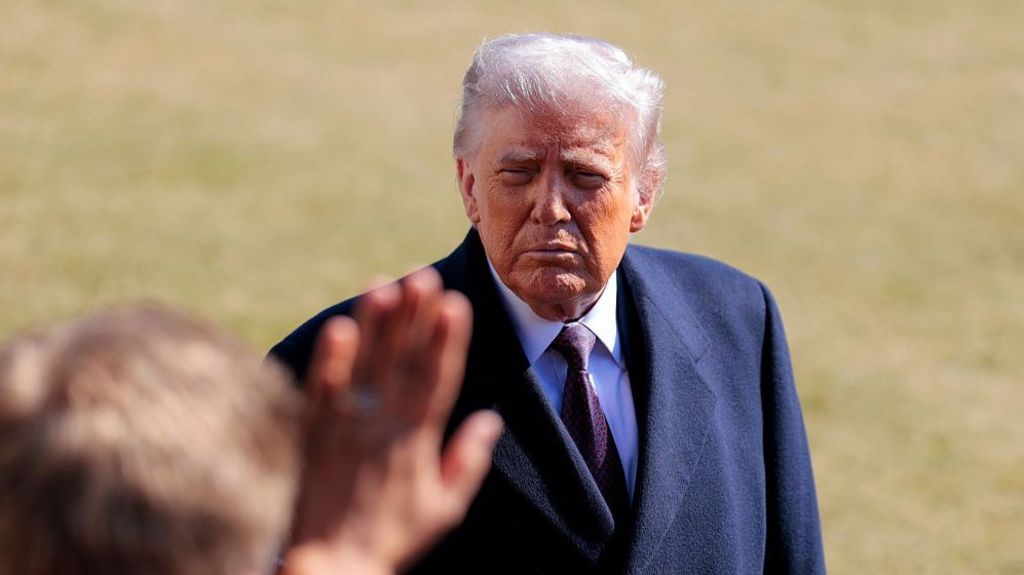
  • Ros Atkins on… How popular is President Trump?

    Ros Atkins on… How popular is President Trump?

    BBC Analysis Editor Ros Atkins has launched a comprehensive examination of former President Donald Trump’s current standing with the American public during what has been an exceptionally eventful period in early 2026. The analysis comes as the nation navigates a series of consequential developments both domestically and internationally that have shaped the political landscape.

    The assessment delves beyond superficial polling numbers to explore the nuanced dimensions of Trump’s popularity, measuring public sentiment through multiple indicators including approval ratings, voter enthusiasm, and demographic breakdowns. The investigation considers how recent policy decisions, international engagements, and domestic controversies have collectively influenced perceptions of the former president’s leadership.

    Atkins’ methodology incorporates comparative historical data, placing current approval metrics within the context of previous administrations at similar junctures. The analysis further examines regional variations in support, highlighting the evolving political allegiances across different states and constituencies. Special attention is given to how independent voters and moderate Republicans view Trump’s handling of the pressing issues that have dominated the national conversation throughout this period.

    The timing of this deep dive proves particularly significant as the political ramifications of these approval ratings could influence upcoming electoral strategies and policy directions. The comprehensive assessment provides stakeholders across the political spectrum with critical insights into the American electorate’s current disposition toward one of the nation’s most polarizing political figures.

  • US to gain sovereignty over Greenland areas where American bases are located: Trump

    US to gain sovereignty over Greenland areas where American bases are located: Trump

    In a groundbreaking development reported by the New York Post on Saturday, President Donald Trump revealed that the United States will establish sovereignty over specific territories in Greenland where American military installations are currently situated. This announcement represents a significant shift in Arctic geopolitical dynamics and follows Trump’s persistent interest in acquiring the strategically vital island.

    The President’s statements clarify that this sovereignty arrangement specifically applies to zones containing U.S. military facilities, rather than encompassing the entire Danish autonomous territory. This distinction emerges after previous suggestions of potential acquisition through purchase, which Denmark consistently rejected despite the nations’ allied relationship.

    Notably, during mid-week discussions, President Trump explicitly dismissed the possibility of military intervention as a method to secure control over Greenland. Instead, he emphasized having negotiated access guarantees through NATO channels, suggesting a diplomatic approach to securing American interests in the resource-rich Arctic region.

    The development signals a recalibration of U.S. strategic positioning in the increasingly contested Arctic, where melting ice has opened new shipping routes and access to untapped natural resources. This sovereignty arrangement would mark the most significant territorial adjustment in the region in decades, with implications for international law, Arctic governance, and NATO alliance dynamics.

  • Man shot dead by federal agents in US Minneapolis: media

    Man shot dead by federal agents in US Minneapolis: media

    A fatal shooting incident involving federal immigration agents resulted in one death in Minneapolis, Minnesota, on Saturday morning, January 24, 2026, according to local law enforcement authorities.

    The confrontation occurred during an ongoing federal immigration enforcement operation in Minnesota’s largest metropolitan area. Witness accounts indicate the unidentified male victim sustained multiple gunshot wounds to the chest during the encounter with federal agents. Emergency medical services transported the critically injured man to a nearby hospital where he was subsequently pronounced dead.

    Minneapolis Police Chief Brian O’Hara confirmed the fatality to the Minnesota Star Tribune, marking another violent episode in the city’s recent history of law enforcement interactions. The scene following the shooting reportedly descended into chaos as federal agents deployed crowd-control measures including tear gas and non-lethal projectiles to disperse agitated bystanders and protesters.

    The incident has sparked immediate concerns regarding the escalation of federal immigration operations in urban communities and the use of lethal force during enforcement actions. Local community leaders have called for transparency and a thorough investigation into the circumstances surrounding the shooting.

    This event represents the latest in a series of tense encounters between federal authorities and residents during immigration operations across various American cities, raising questions about enforcement protocols and community safety measures.

  • What we know about man shot dead by federal agents in Minneapolis

    What we know about man shot dead by federal agents in Minneapolis

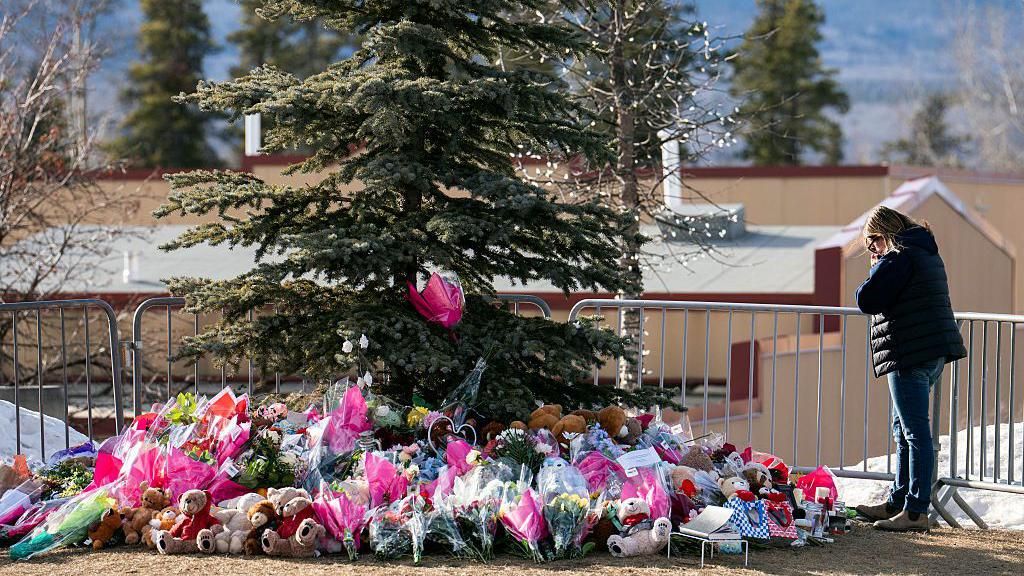
    Minneapolis has become the epicenter of escalating tensions between federal authorities and local communities following the fatal shooting of 37-year-old nurse Alex Pretti by a US Border Patrol officer on January 24. The incident marks the second deadly shooting by federal agents in the city this month, reigniting protests that had initially erupted after the January 8 killing of Renee Nicole Good.

    The confrontation occurred during what Homeland Security spokesperson Tricia McLaughlin described as a ‘targeted operation’ targeting an ‘illegal alien wanted for violent assault.’ According to official accounts, Pretti approached agents while carrying a 9mm semi-automatic handgun. McLaughlin stated that officers attempted to disarm him but he ‘violently resisted,’ prompting an agent to fire ‘defensive shots’ fearing for safety.

    Verified video footage obtained by the BBC shows agents surrounding and tackling Pretti to the ground outside a Nicollet Avenue coffee shop, with one agent appearing to strike him multiple times before gunshots are heard. The Department of Homeland Security subsequently released photographic evidence of the firearm allegedly carried by Pretti, who police described as a lawful gun owner with only minor prior interactions with law enforcement.

    The shooting has intensified existing tensions stemming from the Trump administration’s deployment of 2,000 federal agents to Minneapolis on January 6 following allegations of welfare fraud. This deployment supports an ICE campaign targeting immigrants with deportation orders, particularly members of the city’s Somali community.

    In response to the latest incident, authorities deployed tear gas to disperse protesters who returned to the streets. Minnesota Governor Tim Walz has demanded that state authorities lead the investigation, while Minneapolis Mayor Jacob Frey condemned ICE operations as ‘not creating safety in our city’ and characterized the federal presence as an ‘invasion’ of masked agents operating with impunity.

    President Trump escalated political tensions by sharing the weapon image on social media while questioning local law enforcement’s response and accusing local officials of inciting insurrection. Without providing evidence, Trump alleged a ‘cover up’ to hide theft and fraud, demanding that ICE agents be allowed to ‘do their job.’

  • Video shows fatal shooting in Minneapolis

    Video shows fatal shooting in Minneapolis

    A dramatic video recording has emerged documenting the fatal shooting of a 37-year-old Minneapolis resident by a federal law enforcement officer. The incident, which occurred under circumstances that remain under official investigation, has drawn significant public attention and raised questions about use of force protocols.

    The victim, confirmed to be a United States citizen, was reportedly engaged in an encounter with federal authorities when the lethal confrontation unfolded. Law enforcement sources indicate the shooting took place during an operational engagement, though specific details regarding the nature of the federal operation have not been fully disclosed to the public.

    Minneapolis police officials have acknowledged cooperation with federal investigators as multiple agencies work to establish a comprehensive timeline of events. The emergence of video evidence has added a crucial dimension to the investigation, potentially providing visual documentation of the critical moments preceding and during the shooting.

    Community leaders have called for transparency in the investigation process, emphasizing the need for thorough examination of both procedural compliance and the contextual circumstances that led to the use of deadly force. The incident occurs against a backdrop of ongoing national conversations regarding police reform and accountability measures.

    Federal authorities have pledged full cooperation with the investigation while emphasizing the complex and often dangerous nature of law enforcement operations. The case continues to develop as investigators review evidence, including the controversial video footage, witness statements, and official reports from involved officers.

  • Trump says UK soldiers in Afghanistan ‘among greatest of all warriors’

    Trump says UK soldiers in Afghanistan ‘among greatest of all warriors’

    A diplomatic firestorm erupted following former U.S. President Donald Trump’s controversial characterization of NATO allies’ contributions to the Afghanistan conflict, triggering widespread condemnation from military families, veterans, and political leaders across multiple nations.

    During a recent Fox News interview, Trump asserted that NATO forces historically avoided front-line combat roles, stating: ‘We’ve never needed them. They’ll say they sent some troops to Afghanistan… they stayed a little back, a little off the front lines.’ These remarks immediately drew fierce criticism from international officials who characterized them as factually inaccurate and deeply offensive to fallen soldiers.

    The backlash intensified when Prince Harry issued a rare public statement emphasizing that NATO’s Article 5 collective defense provision had been invoked specifically following the 9/11 attacks, marking the only time in the alliance’s history that members were formally obligated to support U.S. military operations. ‘Thousands of lives were changed forever,’ the Afghanistan veteran noted. ‘Those sacrifices deserve to be spoken about truthfully and with respect.’

    Statistical data reveals the substantial human cost borne by coalition partners: over 3,500 coalition fatalities occurred during the conflict, with British forces suffering 457 deaths—the second-highest toll after American casualties. Veterans like Corporal Andy Reid, who lost three limbs to an IED explosion, provided firsthand accounts contradicting Trump’s assertions: ‘If [American soldiers] were on the front line and I was stood next to them, clearly we were on the front line as well.’

    The political response proved equally forceful. UK Opposition Leader Keir Starmer condemned the remarks as ‘insulting and frankly appalling,’ while Polish Foreign Minister Radosław Sikorski—among 33,000 Polish troops deployed to Afghanistan—declared that ‘no one has the right to mock the service of our soldiers.’ Canadian Defense Minister David J. McGuinty emphasized his nation’s participation stemmed from moral conviction rather than obligation.

    Following a Saturday conversation with UK Prime Minister Rishi Sunak, Trump posted a modified statement on Truth Social acknowledging British soldiers as ‘among the greatest of all warriors’ and recognizing their 457 fatalities. While stopping short of a direct apology, this revised messaging represented a notable softening of his initial position. Conservative leader Kemi Badenoch welcomed the acknowledgment while maintaining that ‘it should never have been questioned in the first place.’

    The episode highlights ongoing tensions regarding NATO’s strategic future and the complex legacy of multinational military cooperation in prolonged conflicts, with diplomatic relationships showing strain despite Trump’s subsequent attempt to mitigate the damage through revised praise for allied forces.

  • Snow ploughs battle blizzards on roads and runways in Oklahoma

    Snow ploughs battle blizzards on roads and runways in Oklahoma

    Oklahoma’s transportation and aviation authorities are engaged in a monumental battle against a severe winter storm system that has unleashed blizzard conditions across the state. Road crews and airport operations teams are working around the clock to clear accumulating snow from critical infrastructure as the powerful storm continues to deliver freezing temperatures and heavy precipitation.

    The extensive weather system, affecting an unprecedented portion of the United States population, has triggered emergency response protocols throughout Oklahoma. Highway maintenance departments have deployed their entire fleet of snow ploughs and de-icing equipment to maintain passable conditions on major thoroughfares and secondary roads alike. Simultaneously, airport ground crews are conducting continuous runway clearing operations to minimize travel disruptions despite challenging visibility conditions.

    Meteorologists report this storm system represents one of the most extensive winter weather events in recent history, with its impacts stretching far beyond Oklahoma’s borders. The combination of heavy snowfall rates and strong winds has created particularly difficult working conditions for emergency personnel, who face rapidly accumulating snow drifts and dangerously low wind chill values throughout their operations.

    State officials have urged residents to avoid unnecessary travel as the winter weather event continues to develop. The coordinated response effort involves multiple agencies working in concert to address both immediate safety concerns and the longer-term recovery operations that will follow the storm’s passage.

  • Why healthcare workforce shortages are a system design problem, not a hiring one

    Why healthcare workforce shortages are a system design problem, not a hiring one

    A profound paradigm shift is required in how global healthcare systems address workforce challenges, according to industry analysis. Rather than confronting a mere talent shortage, healthcare organizations worldwide are grappling with a fundamental design flaw in how human resources are coordinated and utilized.

    Three critical indicators consistently emerge across international healthcare systems: First, simply increasing hiring volumes without improving deployment strategies fails to enhance outcomes. Second, workforce instability predominantly stems from poor utilization rather than insufficient recruitment efforts. Third, technology’s genuine value lies not in automation but in creating transparent, coordinated, and predictable workforce systems.

    The core issue represents a significant misalignment between contemporary healthcare delivery models and outdated workforce organization structures. While talent pools often remain substantial, the mechanisms for deploying, supporting, and sustaining that talent have failed to evolve alongside care delivery innovations.

    In markets including the GCC region, employers frequently receive abundant applications. The actual challenge involves assessing readiness, role suitability, and long-term compatibility. Current models still prioritize credentials and documentation, which provide limited insight into real-world clinical performance over time.

    This systemic failure results in capable professionals being placed into roles without adequate context or support, while healthcare teams expend increasing energy compensating for predictable mismatches. What superficially appears as staffing shortages often masks deeper utilization problems where existing skills are poorly aligned with actual care delivery requirements.

    Traditional workforce cycles—where demand triggers supply adjustments eventually restoring equilibrium—no longer apply. Contemporary realities include rapidly aging populations, extended careers, global mobility, and transformed post-pandemic work expectations. Yet most workforce models still assume stable domestic supply, linear progression, and limited market movement.

    The consequence is extreme fragmentation: sourcing, training, licensing, relocation, deployment, and management operate separately through different actors with conflicting incentives. Few systems view the workforce journey holistically or connect planning directly to care delivery needs.

    When operational pressure mounts, organizations typically accelerate hiring, compress timelines, and expand sourcing geographies. While providing short-term relief, these measures often introduce new instabilities. International hiring cycles spanning months conflict with operational realities, and compressed cycles without improved readiness assessment lead to fatigue, early attrition, and regulatory vulnerabilities.

    These outcomes signal that hiring activity has been prioritized over systemic workforce design. Recruitment brings people into systems but doesn’t inherently improve care delivery.

    Continuity of care directly depends on workforce continuity—a reality well understood by frontline providers yet frequently absent from planning models and performance metrics. Retention alone proves insufficient without proper utilization, role alignment, and career pathways.

    Technology’s transformative potential lies not as a hiring accelerator but as a system stabilizer. Digital and AI-enabled systems create value by reducing blind spots through connected data on skills, readiness, and deployment. This enables anticipatory rather than reactive planning, allowing precise skill-to-need matching, early capacity constraint anticipation, and sustained continuity without rigid staffing models.

    Thoughtfully implemented technology strengthens trust and stewardship; carelessly applied, it merely accelerates existing inefficiencies. The objective isn’t automation for its own sake but clearer coordination and optimized use of existing human capacity.

    The UAE’s healthcare market exemplifies intentional design with long-term vision-led expansion, adaptive regulatory frameworks, and technological openness that enhances accountability. This creates opportunity for evolution from a destination for healthcare professionals to a reference model for modern workforce systems that treat human resources as essential infrastructure rather than variable costs.

    The future will belong not to those who hire fastest but to those who design most deliberately. Healthcare stabilization requires neither recruitment nor retention initiatives alone, but rather continuity, coordination, and system-level thinking. The most resilient environments will shift focus from how quickly roles are filled to how effectively human effort is utilized.

  • eVoost AI: Proptech emerging as a key pillar in UAE real estate

    eVoost AI: Proptech emerging as a key pillar in UAE real estate

    Abu Dhabi-based proptech innovator eVoost AI is spearheading a digital revolution in global real estate markets through its artificial intelligence-powered sales platform. Co-founded by Koh Onozawa and Cristian G. Pastrana, the company has positioned itself at the forefront of property technology transformation as digital tools transition from peripheral applications to core components of real estate transactions.

    The United Arab Emirates’ proptech sector has demonstrated remarkable growth, with market valuations reaching approximately $607 million in 2024 and projections indicating expansion beyond $1.5 billion by 2030. This represents a compound annual growth rate nearing 17.5%, fueled by robust investor confidence, government digitalization initiatives, and escalating demand for data-driven solutions in property development and management.

    eVoost AI’s integrated platform combines data intelligence, emotional artificial intelligence, and strategic real estate expertise to create a comprehensive digital ecosystem. The system enables developers to decode market signals into actionable insights, deploy personalized customer engagement across digital channels, and monitor performance through real-time dashboards integrated with existing operational frameworks.

    Executive Chairman Koh Onozawa emphasizes the company’s commitment to long-term value creation rather than short-term market disruption. ‘Our vision centers on enabling intuitive access to real estate opportunities regardless of geographical constraints,’ Onozawa stated. ‘We’re building a connective platform that integrates data, emotion, and technology to facilitate informed decisions for both developers and prospective buyers.’

    Chief Executive Officer Cristian G. Pastrana brings practical development experience to the venture, ensuring the technology maintains essential human elements in trust-based transactions. ‘Real estate remains fundamentally relationship-driven,’ Pastrana explained. ‘Our systems enhance transparency and operational efficiency while preserving the human connections that remain vital throughout the purchasing journey.’

    The company’s growth reflects Abu Dhabi’s emergence as a global innovation hub, providing technology entrepreneurs with access to capital, infrastructure, and international market connections. eVoost AI has established commercial partnerships with developers across multiple regions and collaborates with data analytics platforms to enhance market intelligence capabilities.

    As global real estate markets adapt to evolving consumer expectations and digital transformation, eVoost AI continues expanding its international presence while refining its artificial intelligence capabilities and strengthening its interdisciplinary team. The company represents how AI is becoming integral to real estate’s technological evolution, with the UAE serving as a strategic launchpad for scalable proptech solutions.

  • Trump threatens Canada with 100% tariffs over China trade deal

    Trump threatens Canada with 100% tariffs over China trade deal

    In a significant escalation of diplomatic tensions, former U.S. President Donald Trump has threatened to impose 100% tariffs on all Canadian goods should Prime Minister Mark Carney finalize a trade agreement with China. The warning was issued via Trump’s Truth Social platform on Saturday, where he specifically targeted Canada’s potential role as a transit point for Chinese products entering the United States.

    The confrontation follows Carney’s recent address at the World Economic Forum in Davos, Switzerland, where he criticized great power politics without directly naming Trump. The Canadian leader’s subsequent meeting with Chinese President Xi Jinping resulted in announcements of a bilateral trade agreement covering electric vehicles and agricultural products—a development Trump initially praised but now vehemently opposes.

    Trump’s rhetoric has intensified considerably, referring to Carney as ‘Governor Carney’ and reviving previous characterizations of Canada as America’s ’51st state.’ This linguistic framing accompanies substantive policy threats, including the withdrawal of Canada’s invitation to join the newly formed ‘Board of Peace,’ an international conflict resolution body proposed by the Trump administration.

    The underlying tensions reflect broader strategic disagreements, including Canada’s opposition to Trump’s proposed missile defense system in Greenland (dubbed ‘The Golden Dome’) and fundamental differences regarding NATO and international governance structures. Carney’s assertion that Canada’s relationship with China has become ‘more predictable’ than its relationship with Trump’s America highlights the profound shift in North American dynamics.

    Trade experts observe that Canada’s diplomatic recalibration toward China stems from persistent uncertainty in U.S.-Canada relations, particularly since Trump’s return to office last year brought new tariffs on Canadian goods. The ongoing review of the countries’ free trade agreement adds another layer of complexity to these developments.

    Both the White House and Carney’s office have declined to comment on whether the referenced China-Canada trade agreement has been formally implemented, leaving the precise catalyst for Trump’s latest threat unclear.