标签: North America

北美洲

  • US Justice Dept releases documents, images, videos from Epstein files

    US Justice Dept releases documents, images, videos from Epstein files

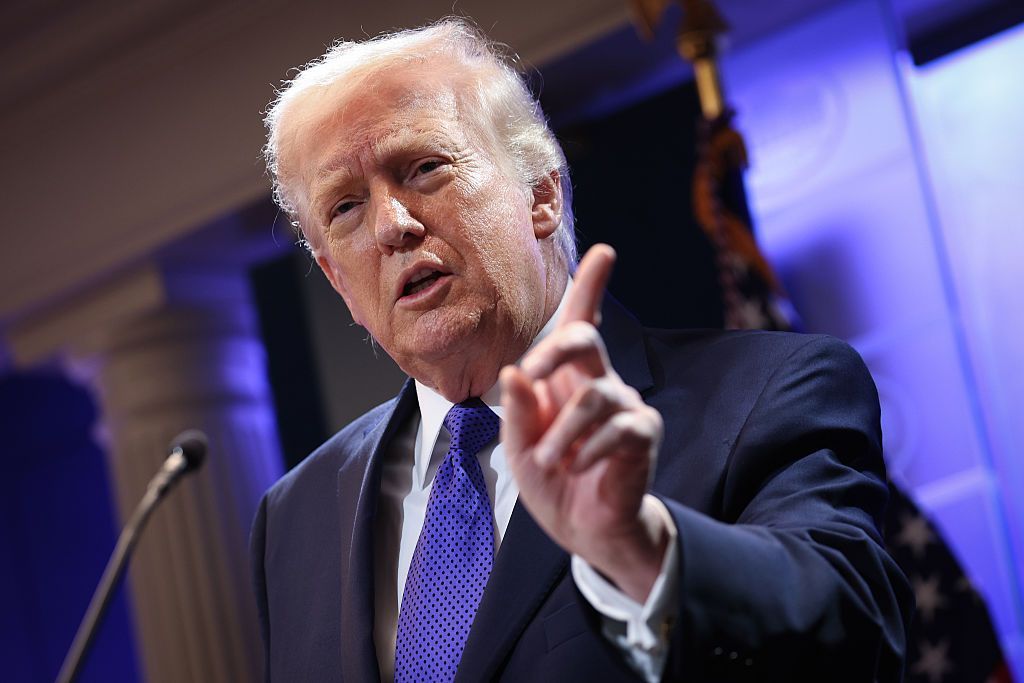
    The U.S. Justice Department initiated the substantial release of documents from the Jeffrey Epstein case on Friday, disclosing millions of pages alongside photographs and video evidence. This development intensifies the politically charged atmosphere surrounding President Donald Trump, who has been persistently linked to the controversial financier.

    Deputy Attorney General Todd Blanche emphasized the administration’s non-interference during a press conference, stating, “The White House played no role in directing our review process—including decisions regarding redactions.” He further asserted that no protective measures were extended to President Trump or any other individuals mentioned in the files.

    Among the released materials are over three million documents, 180,000 images, and 2,000 videos. The Justice Department noted that some submissions contained what it characterized as “untrue and sensationalist claims” about the 79-year-old president, which were presented to the FBI prior to the 2020 election.

    Blanche confirmed that all images of female victims, except those of convicted accomplice Ghislaine Maxwell, have been redacted to protect identities. However, a coalition of 19 survivors issued a statement contending that their identifying information remains inadequately protected, while the men implicated in the abuse continue to be shielded.

    Jeffrey Epstein, the financier accused of orchestrating a widespread sex trafficking operation, died in prison in 2019 under circumstances ruled a suicide. Previous document releases have revealed associations with high-profile figures including business leaders, celebrities, and politicians such as Bill Gates, Woody Allen, and former President Bill Clinton.

    Notably, a draft email within the files contained allegations about Gates’ personal life, which the Gates Foundation vehemently denied as “absurd and false.” Other communications detailed Epstein’s introductions involving Steve Tisch, a prominent film producer and co-owner of the New York Giants.

    The disclosure follows the Epstein Files Transparency Act, which mandated full document release by December 19. Blanche attributed delays to the extensive redaction process necessary to safeguard the identities of Epstein’s alleged victims, believed to number over 1,000.

  • Venezuela’s Rodriguez announces mass amnesty proposal, plans to close El Helicoide prison

    Venezuela’s Rodriguez announces mass amnesty proposal, plans to close El Helicoide prison

    In a landmark address at Venezuela’s Supreme Court, Acting President Delcy Rodriguez unveiled transformative national reconciliation measures, including a comprehensive amnesty proposal and the planned closure of the notorious El Helicoide prison. The announcement marks the most significant reform initiative since the U.S.-led ouster of authoritarian leader Nicolas Maduro just weeks ago.

    Rodriguez detailed legislation that would grant general amnesty covering the entire period of political violence from 1999 to present, encompassing both the Hugo Chavez presidency and Maduro’s subsequent authoritarian rule. “This law will serve to heal the wounds left by political confrontation, fueled by violence and extremism,” Rodriguez declared before assembled government officials, framing the measure as essential for restoring judicial integrity.

    The acting president simultaneously announced plans to convert the infamous El Helicoide detention facility—where human rights organizations documented systematic torture of political prisoners—into a multipurpose community center. The massive structure, originally constructed as a shopping mall, will be repurposed as a “sports, cultural and commercial centre for police families and neighboring communities.”

    The reforms generated immediate emotional responses from affected families. Betsy Orellana, 63, expressed overwhelming joy at the prospect of her son’s release after six months without communication: “It’s wonderful! This is a huge joy, it’s an amnesty, my God, it’s total liberation.”

    These developments follow Rodriguez’s rapid implementation of U.S.-backed reforms since assuming power less than four weeks ago. The government has already passed legislation opening Venezuela’s critical oil sector to private investment—a key Washington demand—prompting the immediate rollback of U.S. sanctions targeting Venezuelan petroleum.

    However, opposition figures remain cautiously optimistic. Nobel Peace Prize laureate Maria Corina Machado characterized the amnesty as a response to American pressure rather than voluntary regime action, while opposition lawmaker Tomas Guanipa expressed hope that the measure would terminate “an era of repression” and initiate a genuine democratic transition.

    Concurrently, U.S. authorities confirmed the release of all known American prisoners in Venezuela, including Peruvian-American Arturo Gallino Rullier. In further normalization steps, the Trump administration lifted flight bans to Venezuela and prepared to reestablish diplomatic presence in Caracas, with seasoned diplomat Laura Dogu appointed as charge d’affaires.

  • Pedro Pascal and Meryl Streep lead tributes to Catherine O’Hara

    Pedro Pascal and Meryl Streep lead tributes to Catherine O’Hara

    The entertainment world is grieving the passing of Emmy-winning comedic actress Catherine O’Hara, who died at age 71 following a brief illness at her Los Angeles home on Friday. The Canadian icon, celebrated for her remarkable versatility and unparalleled comic timing, leaves behind an indelible legacy spanning five decades of film and television.

    Tributes poured in from Hollywood’s elite, with Meryl Streep commemorating O’Hara’s ability to bring ‘love and light to our world through whip-smart compassion for the collection of eccentrics she portrayed.’ The actresses had previously collaborated in the 1980s comedy ‘Heartburn,’ with Streep characterizing the loss as profound for both personal connections and the audiences who cherished her performances.

    O’Hara’s career encompassed iconic roles that became cultural touchstones. She achieved household recognition as Kate McCallister in the ‘Home Alone’ franchise and delivered memorable performances in Tim Burton’s ‘Beetlejuice’ (1988) and its 2024 sequel. Burton himself shared a poignant cast photo on social media, writing: ‘Catherine, I love you. This picture shows how much light you gave to all of us.’

    Her recent career resurgence came through the critically acclaimed series ‘Schitt’s Creek,’ where her portrayal of the eccentric Moira Rose earned her a Golden Globe for Best Actress in 2021. Co-creator Dan Levy described her as ‘family before she ever played my family,’ emphasizing the deep personal bonds formed during production.

    Michael Keaton, her ‘Beetlejuice’ co-star, reflected on their long professional relationship: ‘We go back before the first Beetlejuice. She’s been my pretend wife, my pretend nemesis and my real life, true friend. This one hurts.’

    Beyond her acting prowess, O’Hara was celebrated for her influence on comedy itself. Ben Stiller noted it was ‘hard to explain the impact she had on comedy,’ asserting there was ‘no one better.’ Director Christopher Guest, who collaborated with her on four films including ‘Waiting for Guffman,’ called her ‘one of the comic giants of our age.’

    Her ‘Home Alone’ son Macaulay Culkin posted an emotional Instagram tribute: ‘Mama. I thought we had time. I wanted more. I wanted to sit in a chair next to you. I heard you. But I had so much more to say.’

    O’Hara’s impact extended beyond Hollywood to her native Canada, where Prime Minister Justin Trudeau described her as a ‘beloved Canadian icon’ and comedian Mike Myers noted her passing marked ‘a very sad day for comedy and for Canada.’

    She is survived by her husband Bo Welch, whom she married in 1992, their two sons Matthew and Luke, and six siblings. O’Hara remains nominated posthumously at the upcoming Actor Awards for her role in Seth Rogen’s Hollywood satire ‘The Studio.’

  • Chinese Ambassador Xie Feng responds to ‘Becoming Chinese’ trend

    Chinese Ambassador Xie Feng responds to ‘Becoming Chinese’ trend

    Chinese Ambassador to the United States Xie Feng has formally acknowledged the burgeoning ‘Becoming Chinese’ social media phenomenon during a public address in Philadelphia on January 28. The diplomatic official extended a welcoming invitation to American citizens to visit China and personally engage with its cultural landscape, marking a significant diplomatic outreach effort.

    Ambassador Xie’s remarks represent the first official Chinese response to the organic trend that has gained substantial traction across various American social media platforms. The movement features content creators and ordinary users exploring and adopting aspects of Chinese culture, lifestyle, and customs in their daily lives.

    The ambassador’s Philadelphia appearance served as a strategic platform to address growing American interest in Chinese cultural elements. His comments emphasized the importance of direct cultural exchange and firsthand experience as foundations for mutual understanding between the two nations.

    This diplomatic overture occurs amid ongoing efforts to stabilize Sino-American relations through cultural diplomacy and people-to-people exchanges. The ambassador’s recognition of this grassroots social media trend signals China’s willingness to engage with organic cultural movements that emerge outside formal diplomatic channels.

    The invitation extended to American travelers aligns with China’s broader strategy of promoting cultural soft power and enhancing international perception through tourism and cultural exchange programs. This approach recognizes the growing influence of social media trends in shaping cross-cultural perceptions and international relations.

  • US Senate approves government funding deal

    US Senate approves government funding deal

    WASHINGTON — In a critical legislative maneuver, the United States Senate ratified a provisional government funding measure late Friday, narrowly averting a complete federal shutdown. The eleventh-hour approval came mere hours before existing budgetary allocations were scheduled to terminate at midnight.

    Despite this congressional action, a temporary interruption in government financing remains probable due to procedural constraints. The House of Representatives currently stands in recess until Monday, creating an unavoidable gap between the Senate’s passage and the lower chamber’s opportunity to consider the legislation.

    This funding package represents a bipartisan compromise reached after intensive negotiations between Senate Democratic leadership and the White House. The arrangement ensures continued operation of federal agencies and services while legislators work toward a more comprehensive budgetary solution.

    The Senate’s decisive action prevents what would have been the fourth partial government shutdown in the past decade, maintaining essential services and preventing furloughs for hundreds of thousands of federal employees. However, the delayed House consideration means technical funding lapses may still affect some governmental operations over the weekend.

    This legislative development occurs against a backdrop of heightened political tensions regarding fiscal policy and government spending priorities. The successful Senate vote demonstrates the current administration’s ability to navigate complex legislative challenges despite a divided Congress.

  • US government partially shuts down despite last minute funding deal

    US government partially shuts down despite last minute funding deal

    The United States federal government has entered a partial shutdown following a legislative impasse, despite the Senate’s approval of a last-minute funding arrangement just hours before the midnight Friday deadline. This marks the second government shutdown within the past year, occurring merely 11 weeks after the conclusion of the record 43-day funding crisis in 2025.

    The Senate-approved bill proposed funding most federal agencies through September but specifically excluded the Department of Homeland Security, granting it only a two-week funding extension. This temporary measure was designed to create a negotiation window for immigration enforcement policies, which have become a contentious issue following recent events in Minneapolis.

    The legislative process remains incomplete as the House of Representatives, where Republicans hold majority control, has not yet voted on the measure. President Trump has publicly urged Republican representatives to support the agreement when they reconvene on Monday.

    The current shutdown differs significantly from the prolonged 2025 closure in both scope and anticipated duration. While the White House has instructed several agencies including Transportation, Education, and Defense to implement shutdown protocols, the impact is expected to be more limited. A White House memorandum indicated that employees should report for duty to conduct orderly shutdown activities while expressing optimism that “this lapse will be short.”

    The funding dispute stems from Democratic refusal to approve additional immigration enforcement funding after the fatal shooting of two U.S. citizens by federal agents in Minneapolis. This incident has sparked intense criticism from both parties regarding immigration enforcement tactics.

    In response to the shooting of Alex Pretti, an intensive care nurse, by a Border Patrol agent during an altercation, the Justice Department has initiated a civil rights investigation. The tragedy has intensified calls for reform, with Senate Minority Leader Chuck Schumer demanding increased oversight, judicial warrants, visible identification for officers, and an end to roving patrols by immigration authorities.

    Lawmakers are expected to use the two-week Homeland Security funding extension to negotiate comprehensive immigration enforcement policies, though significant partisan differences remain regarding the appropriate scope and methods of immigration control.

  • US cities hold anti-ICE protests during nationwide day of action

    US cities hold anti-ICE protests during nationwide day of action

    A wave of coordinated demonstrations, dubbed the ‘National Shutdown,’ swept across the United States as thousands of protesters mobilized against Immigration and Customs Enforcement (ICE) operations. The movement, catalyzed by the fatal shootings of two U.S. citizens by federal agents, prompted widespread civil action with participants urged to abstain from work, education, and commerce on January 30th.

    Minneapolis emerged as the epicenter of dissent, where large-scale protests unfolded following the deaths of Alex Pretti, a 37-year-old nurse, and Renee Good. Pretti’s killing, which occurred after Good’s January 7th death, marked the second fatal shooting by federal immigration officials in the city, prompting the U.S. Justice Department to initiate a civil rights investigation.

    Visual symbolism dominated the protests as demonstrators formed a massive ‘SOS’ signal on the frozen surface of Lake Bde Maka Ska in south Minneapolis, while others marched through urban centers carrying an enlarged replica of the U.S. Constitution’s Preamble. The cultural dimension of the movement gained prominence when Bruce Springsteen performed his newly released tribute song ‘Streets of Minneapolis’ at a local concert.

    The political landscape revealed deepening divisions as the Trump administration defended its immigration enforcement strategy. Tom Homan, the administration’s border coordinator, suggested potential reduction of federal forces contingent on local cooperation, emphasizing strategic refinement rather than mission abandonment. President Trump reiterated his commitment to national security, stating ‘We will keep our country safe, we’ll do whatever we can to keep our country safe.’

    Operation Metro Surge, which deployed approximately 3,000 federal agents to Minnesota at presidential directive, has drawn significant criticism. While the Department of Homeland Security maintains it targets ‘the worst of the worst criminal illegal aliens,’ opponents argue the campaign has ensnared immigrants with clean records and U.S. citizens alike. Minnesota Governor Tim Walz and Minneapolis Mayor Jacob Frey have jointly demanded the withdrawal of federal agents from their jurisdiction.

    The protest movement expanded beyond Minneapolis to include major demonstrations in New York, Los Angeles, Chicago, and Washington D.C., with organizers highlighting additional casualties including Silverio Villegas-Gonzales, who was fatally shot by an ICE agent in September 2025.

  • Canada’s Conservative leader calls for national unity ahead of key leadership vote

    Canada’s Conservative leader calls for national unity ahead of key leadership vote

    CALGARY – Conservative Party leader Pierre Poilievre delivered a defining address to party faithful on Friday, framing national unity as paramount while confronting growing separatist sentiments in Alberta and Quebec. Speaking before a consequential leadership review vote, Poilievre invoked Lincoln’s historic warning that “a house divided cannot stand” as he outlined his vision for a cohesive Canada.

    The address came amid significant political challenges for Poilievre, who lost both the 2025 general election to Mark Carney’s Liberals and his own parliamentary seat after two decades in office. Despite these setbacks, the Conservative leader received strong support from delegates at the Calgary convention, where he positioned affordability concerns and crime reduction as central pillars of his platform.

    Poilievre’s speech directly addressed the escalating separatist movements in Conservative strongholds. In Alberta, grassroots activists are gathering signatures for an independence referendum, while in Quebec, the sovereignist Parti Québécois leads polls ahead of provincial elections. The Conservative leader attributed these centrifugal forces to Liberal policies that have allegedly eroded hope in the federation.

    The leadership review, automatically triggered after the party’s election defeat, represents Poilievre’s most significant political test since assuming leadership. His supporters point to historic gains under his guidance, including a record 41% popular vote share in the last election and remarkable success with younger voters concerned about housing affordability and cost-of-living issues.

    However, challenges persist. Recent defections of Conservative MPs to Carney’s centrist Liberal camp have raised questions about party unity, while Poilievre struggles with personal popularity—surveys indicate over half of Canadians view him negatively, citing an overly combative tone. His ambiguous stance toward U.S. President Donald Trump, whose tariffs and “51st state” rhetoric alarm many Canadians, remains another vulnerability.

    Current polling shows Conservatives trailing Liberals by nine points, according to recent Léger data. The leadership vote, conducted by constituency delegates immediately following Poilievre’s speech, will determine whether he maintains command to lead the party into the next electoral contest.

  • What we learned – and didn’t – from the Melania documentary

    What we learned – and didn’t – from the Melania documentary

    A new documentary offering a curated glimpse into Melania Trump’s world has sparked both public fascination and significant controversy. ‘Melania: 20 Days to History,’ co-produced by the First Lady herself and director Brett Ratner, premiered in U.S. theaters this Friday, presenting a carefully constructed narrative of her transition into the White House during the lead-up to her husband’s January 2025 inauguration.

    The film arrives amidst a turbulent political climate, with its release timing criticized as insensitive following fatal shootings by federal agents in Minneapolis. Despite this backdrop, the documentary deliberately sidesteps political discourse, focusing instead on the First Lady’s personal journey, her meticulous attention to detail in event planning and fashion, and her navigation of grief following her mother’s death in January 2024.

    Viewers are offered intimate, though often superficial, moments: Melania reviewing fabric swatches with her long-time stylist Hervé Pierre, discussing mutual interests with France’s First Lady Brigitte Macron, and privately mourning her mother. The documentary reveals her musical preferences, including a fondness for Michael Jackson’s ‘Billie Jean,’ and captures her candid admission of the challenges inherent in her ‘structured’ role, which affords ‘fewer quiet moments.’

    President Donald Trump appears sparingly, primarily to offer praise, stating on camera that his wife ‘has done a great job.’ Notably absent are deeper explorations of Trump family dynamics or substantive policy discussions. The film instead portrays Melania’s philosophy of using her influence to ‘fight for those in need,’ exemplified by an emotional meeting with former Israeli hostage Aviva Siegel.

    The project’s association with Amazon MGM Studios—which reportedly spent $40 million for rights and $35 million on marketing—has drawn scrutiny from government watchdogs, questioning the optics of such financial investment during heightened billionaire access to the White House. Furthermore, the involvement of director Brett Ratner, previously accused of sexual misconduct, has added another layer of controversy. Despite these criticisms, initial screenings attracted supportive, flag-attired audiences who cheered throughout, highlighting the deeply polarized reception of a documentary that seeks to redefine a famously enigmatic figure.

  • Cuba declares international emergency in response to US executive order

    Cuba declares international emergency in response to US executive order

    The Cuban government has formally declared an ‘international emergency’ in response to a new executive order signed by US President Donald Trump that threatens crippling tariffs on nations trading oil with the Caribbean island. Cuban Foreign Minister Bruno Rodríguez Parrilla announced the drastic measure on Friday, characterizing the US policy as an existential threat with global implications.