标签: North America

北美洲

  • Iran has weakened US in the great power game

    Iran has weakened US in the great power game

    It has been more than two centuries since Napoleon Bonaparte offered one of history’s most cutting observations of geopolitical strategy: “Never interrupt your enemy when he is making a mistake.” For policymakers in Moscow and Beijing, this maxim has guided their response to the recent weeks-long U.S. war in Iran, and even with a 14-day ceasefire now holding between Tehran and Washington – both sides have publicly declared victory – the two great power rivals continue to reap strategic benefits from what many analysts have labeled Washington’s latest strategic blunder in the Middle East.

    Over the course of the conflict, China and Russia have navigated a carefully calibrated diplomatic balancing act. Neither country has thrown its full public support behind Iran – a partner that both nations count as an ally to varying degrees – nor have they committed substantial resources to the war effort. Instead, they have limited their backing to small-scale intelligence sharing and targeted diplomatic support.

    As a scholar of international security and great power politics, I argue this restrained approach is rooted in clear strategic logic. Leaders in Beijing and Moscow have long recognized that Iran cannot achieve a decisive military victory against the combined military strength of the United States and Israel. For their own geopolitical interests, however, Iran does not need to win – it only needs to survive the conflict to weaken Washington’s global standing. The 2025 Iran war has eroded U.S. influence in four key ways that play directly into the hands of China and Russia.

    ### 1. A Reverse of Washington’s Push to Counter Great Power Influence in the Middle East

    As outlined in my book *Defending Frenemies*, the United States has struggled for decades to reconcile competing strategic objectives in the Middle East. During the Cold War, Washington’s core priority was blocking Soviet expansion in the region, even as it navigated the nuclear ambitions of two problematic allies: Israel and Pakistan. By the 2020s, U.S. regional strategy has shifted to limiting the expanding influence of its great power rivals – China first, and Russia second.

    Under President Xi Jinping and Vladimir Putin, both China and Russia have worked steadily to expand their regional footprints through a mix of formal partnerships and informal outreach. For Russia, this has meant deepening alignment with Iran, including joint efforts to prop up former Syrian President Bashar al-Assad’s regime throughout the Syrian civil war. For China, influence growth has come largely through diplomatic diplomacy, most notably its successful 2023 mediation of a deal restoring diplomatic ties between historic rivals Saudi Arabia and Iran.

    The irony of the 2025 Iran war is that it broke out just after a string of setbacks for Russian and Chinese influence expansion. The December 2024 fall of Assad’s regime stripped Russia of its most reliable regional ally, while U.S. President Donald Trump’s May 2025 tour of Gulf states secured major new technology and economic agreements with Saudi Arabia, the United Arab Emirates, Qatar and Bahrain, explicitly designed to roll back China’s growing economic and diplomatic clout in the region.

    Now, however, the war has shifted perceptions dramatically. As the United States grows increasingly seen as an unreliable security partner, Gulf nations are far more likely to pursue deeper security and economic cooperation with Beijing and Moscow to hedge their bets.

    ### 2. The War Pulls U.S. Focus Away From Its Core Stated Strategic Priorities

    Over the past two decades, China and Russia have expanded their economic, diplomatic and military ties across the Middle East by exploiting a deliberate U.S. shift: after the costly decades-long wars in Iraq and Afghanistan, Washington had signaled it planned to reorient its assets and strategic attention away from the region toward higher-priority theaters.

    Trump’s decision to launch a full war against Iran directly contradicts the U.S. national security strategy his own administration released just months earlier, in November 2025. That document explicitly identified the Western Hemisphere and the Indo-Pacific as Washington’s top priorities, declaring that the Middle East’s strategic importance “will recede” in U.S. planning.

    By launching the war in Iran alongside Israel without prior consultation with U.S. allies, Trump has openly dismissed the strategic and economic concerns of partner nations. Already fractured by Trump’s repeated threats to withdraw from NATO and his unilateral designs on Greenland, the alliance has seen new, deep rifts open over the Iran conflict – divisions that China and Russia have long worked to exploit for their own gain.

    Again, irony abounds: the Iran war comes at a moment when Trump’s agenda of consolidating U.S. hegemony in the Western Hemisphere was actually making progress. Putting aside questions of international law and legitimacy, Washington had recently removed the Maduro regime in Venezuela, a longstanding thorn in its side, and installed a far more compliant government.

    ### 3. The Conflict Creates Disproportionate Economic Benefits for U.S. Rivals

    When Iran closed the Strait of Hormuz – the chokepoint through which roughly 20% of the world’s global oil supplies pass – the move was as predictable as it was damaging to U.S. interests. For Russia, however, the closure has driven up global oil prices, providing a major boost to its war-focused economy. It has also led to a temporary but ongoing easing of U.S. sanctions on Moscow, a critical economic lifeline after years of punishing pressure tied to Russia’s invasion of Ukraine.

    While a prolonged closure of the strait and widespread damage to oil and gas infrastructure across Iran and the Gulf would harm China’s energy security and economic growth, Chinese leaders have signaled they are willing to accept these short-term risks. Years of investment in strategic petroleum reserves, and a push to diversify energy supplies to include solar power, battery storage and domestic coal production, have left China far better positioned to weather a global energy crisis than the United States. Beijing has also spent years reorienting its economy to rely more on domestic consumption for growth, rather than overreliance on global trade, buffering it from the global economic shock triggered by the war.

    As the United States struggles to reassert control over traffic through the Strait of Hormuz, particularly as Iran enforces targeted restrictions on vessels from unfriendly nations, its regional influence erodes further.

    ### 4. The Conflict Accelerates the Transfer of Global Soft Power Leadership From the U.S. to China

    Trump’s choice to abandon diplomatic talks in favor of immediate war, paired with the contradictory rhetoric his administration has deployed throughout the conflict, has severely damaged the global perception of the United States as a neutral, credible global leader. That shift has delivered a massive soft power windfall for Beijing.

    It was China that pressured Iran to accept the 14-day ceasefire proposal brokered by Pakistan, marking the latest step in Beijing’s slow erosion of the United States’ longstanding status as the global mediator of first resort. China has already successfully mediated high-stakes diplomacy between Iran and Saudi Arabia, and has launched similar mediation efforts for the Russia-Ukraine war and the Israeli-Palestinian conflict.

    More broadly, the Iran war reinforces Beijing’s core narrative that the U.S.-led liberal international order has collapsed. Even though China benefited from the continuation of the conflict, its role in brokering the ceasefire demonstrates it is increasingly stepping into the global leadership vacuum that the United States once filled.

    For Russia, the war offers a different, equally valuable benefit: by splitting NATO and drawing U.S. strategic attention back to the Middle East, it shifts global focus and U.S. involvement away from the ongoing war in Ukraine, easing pressure on Moscow.

    This analysis is by Jeffrey Taliaferro, professor of political science at Tufts University, republished under a Creative Commons license from The Conversation.

  • Justin Bieber headlines Coachella with nostalgia-fuelled set

    Justin Bieber headlines Coachella with nostalgia-fuelled set

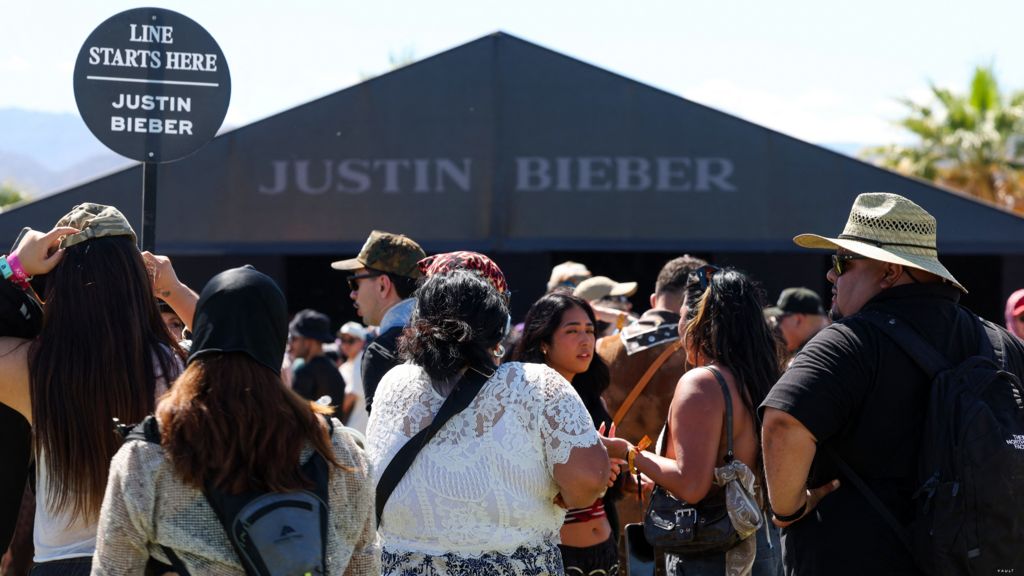
    After a four-year hiatus from major live performances forced by unexpected health struggles, global pop icon Justin Bieber stepped back into the spotlight on Saturday night, closing out the first night of Coachella Valley Music and Arts Festival as one of the event’s most hotly anticipated headliners. The 32-year-old singer, who first rose to fame after his early performance clips went viral on YouTube, crafted a nostalgia-driven set that paid homage to the platform that launched his unprecedented career.

    In a stark departure from Coachella’s typical high-production headline sets, Bieber performed on a largely empty, stripped-back stage, dressed casually in a hoodie and athletic shorts. For much of the first half of his performance, he sat center stage in front of a laptop, pulling up original YouTube uploads of his breakout early hits including *Baby* and *Never Say Never* to sing along with, while 12-year-old home videos that first caught the music industry’s attention played on the massive overhead screen. He even incorporated real-time live comments from the official YouTube stream of his Coachella set, interacting with fans watching from across the globe. Mid-set, he repeatedly asked the packed crowd of over 100,000 attendees a question that anchored his nostalgic theme: “How far back do you go?”
    Bieber also surprised fans by including the recent viral clip that sparked widespread speculation about his mental health, in which he confronted a paparazzi photographer with the line, “It’s not clocking to you, I’m standing on business.” Though he performed the majority of the set solo, he brought out a slate of high-profile guest collaborators throughout the night, including chart-topping artists The Kid Laroi, Wizkid, Tems, and Dijon. In the crowd, his wife, model and media personality Hailey Bieber, watched from the side alongside other A-list attendees including power couple Timothée Chalamet and Kylie Jenner.

    This headline set marks Bieber’s largest full live performance since he was forced to cancel his 2022 Justice World Tour after a diagnosis of Ramsay Hunt syndrome, a rare shingles complication that left him facing partial facial paralysis. The singer has slowly returned to public performance in recent months: he surprise-released his seventh studio album *Swag* in July 2025, and made a high-profile return to the stage with a performance at the 2025 Grammy Awards in February. Saturday’s Coachella set leaned heavily into new material from *Swag* early on, before Bieber pivoted to the nostalgic retrospective of his 18-year career, telling the crowd he wanted to take them “on a journey” through his evolution as an artist.

    The stripped-back, intimate concept of Bieber’s set stood in sharp contrast to the previous night’s headline performance from pop star Sabrina Carpenter, who delivered a glitzy, Hollywood-themed production complete with multiple costume changes, choreographed dance numbers, and an elaborate multi-level stage design. The annual Coachella festival, held across two consecutive weekends at the Empire Polo Club in the Southern California desert, has been a staple of the global live music calendar since 2002, drawing more than 100,000 attendees each day of the event according to local Indio law enforcement. Colombian reggaeton and pop star Karol G is set to close out the first weekend of the festival as Sunday’s headline act.

  • Why this disillusioned Trump voter spends hours searching Epstein files

    Why this disillusioned Trump voter spends hours searching Epstein files

    Nearly a decade after Jeffrey Epstein’s first arrest and years after his controversial prison death, the trove of court and investigative files tied to the disgraced convicted sex offender remains a raw, dividing issue within former President Donald Trump’s Make America Great Again movement—even as top headlines have shifted to pressing international crises like the ongoing conflict in Iran. For 19-year-old Cayden McBride, a Rome, Georgia college student and self-identified lifelong Trump supporter, digging through thousands of pages of declassified documents released by the U.S. Department of Justice has become a daily routine. After wrapping up his classes each day, McBride opens his laptop and spends hours sifting through flight logs, witness transcripts, photos, and video footage, chasing new details about Epstein’s crimes and his long-rumored connections to powerful figures across U.S. politics and public life.

  • From blast off to splashdown: My days following Nasa’s historic mission to the Moon

    From blast off to splashdown: My days following Nasa’s historic mission to the Moon

    Over 10 extraordinary days that will be written into the annals of human spaceflight, four astronauts made unprecedented history, venturing deeper into deep space than any humans have ever traveled on a round-trip voyage to the Moon and back. As a BBC journalist embedded with the science team covering every phase of the Artemis II mission, I tracked every moment from the thunderous launch to the dramatic lunar flyby and the heart-pounding final landing back on Earth.

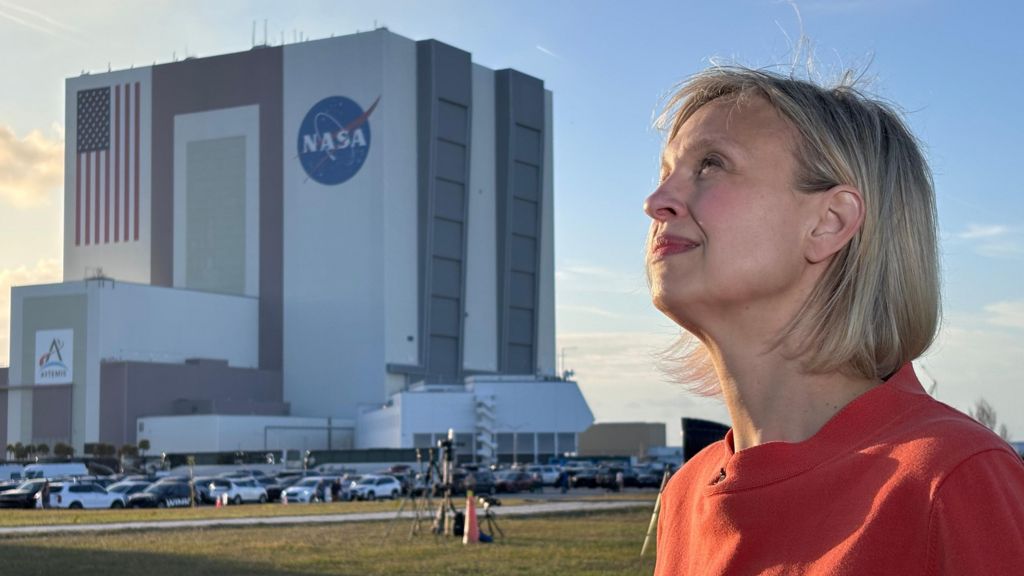
    Before liftoff, the crew reminded reporters that on launch day, astronauts are consistently the calmest people on site. I cannot say the same. My excitement bubbled over completely, and my unfiltered reaction as the 98-meter tall rocket ignited its massive boosters and climbed skyward quickly went viral across social media.

    Standing beside the countdown clock at Florida’s Kennedy Space Center alongside BBC colleagues Alison Francis and Kevin Church, the experience felt visceral enough to touch. The blinding burning white glow of the launch was impossible to look away from, the deafening roar took several seconds to reach the crowd and shook every bone in my body, and the shockwave of the blast rippled straight through the ground. More than anything, I still struggled to process the reality that four living, breathing people were strapped into the capsule at the top of that massive rocket, on their way to the Moon.

    As commander Reid Wiseman, pilot Victor Glover, mission specialist Christina Koch and Canadian astronaut Jeremy Hansen caught their first full view of Earth from deep space, Glover shared his thought with the world: “Planet Earth, you look beautiful.” After a short burn of the Orion capsule’s main engine, the crew set off on the 250,000-mile journey toward the lunar orbit.

    Live streams beamed directly back to Earth from the capsule as the crew adjusted to microgravity, and viewers immediately got a sense of just how cramped their living quarters were. For 10 days, the four astronauts ate, slept, worked and lived in a space no larger than the interior of a minivan. No privacy existed between crew members, and none from the millions of people around the globe following every development of the mission in real time.

    One of the mission’s most high-profile (and widely discussed) snags emerged early on: the $23 million custom-designed Universal Waste Management System, better known as the crew’s toilet, developed unexpected plumbing issues. During a live media briefing, reporters got unvarnished details on how the issue impacted the crew’s daily routine. As it turned out, solid waste operations functioned as normal, but the crew had to rely on collapsible, portable contingency bags with funnels for urine collection.

    Later in the mission, I got the chance to visit the Johnson Space Center in Houston to stand inside mission control, the central nervous system of the entire Artemis II operation. The team of flight controllers sat glued to their displays, monitoring a constant flood of real-time data from every one of the capsule’s systems, from navigation to life support. This constant vigilance was never unnecessary: Artemis II was a test flight, the first time humans had flown both the new Space Launch System rocket and the Orion capsule, and test flights carry inherent, tangible risks.

    Those risks were driven home in an interview I did with Canadian astronaut Jeremy Hansen for the 13 Minutes Presents: Artemis II podcast, recorded while he was in pre-launch quarantine. Hansen told me he had spoken openly with his wife and three children about the very real possibility that he might not return home from the mission. Commander Reid Wiseman similarly shared that he had been fully honest with his two daughters about the dangers of the mission; Wiseman has raised his daughters alone as a single father since his wife Carroll died six years before the flight.

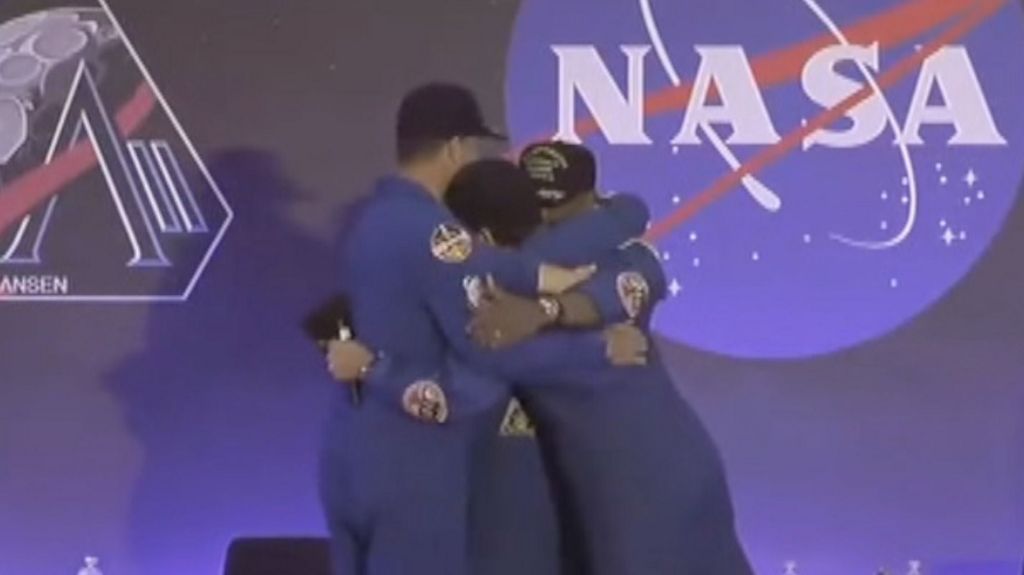
    That personal loss became one of the most poignant, memorable moments of the entire mission. As the capsule approached the Moon, and the lunar surface grew larger in the capsule’s viewing window, the crew spotted a striking, bright new crater visible from Earth that had not yet been named. To honor Wiseman’s late wife, they officially named the crater after her. The entire crew, gathered to hug their commander, were all in tears, and back in Houston’s mission control, there was not a dry eye in the room, including among our BBC reporting team.

    Every NASA staff member we spoke to, from administrator Jared Isaacman to junior engineers and veteran fellow astronauts, felt a deep personal connection to the four-person crew, and pulled for them with every fiber of their being. And in the end, the crew delivered on every expectation.

    After breaking the 50-year-old record set by Apollo 13 for the farthest humans have ever traveled from Earth, the Artemis II crew kept pushing forward, ultimately reaching 252,756 miles from Earth’s surface. As they flew past the Moon, the crew captured thousands of high-resolution images and recorded detailed audio descriptions of the stark, desolate beauty of the lunar landscape passing beneath their capsule.

    The legacy of the Apollo program runs deep through the Artemis program. Pre-recorded messages from Apollo veteran astronauts Charlie Duke and Jim Lovell (recorded before Lovell’s death in 2025) were played for the crew during their voyage. Still, critics have questioned whether the $93 billion investment in the Artemis program is just an exercise in nostalgic nostalgia, asking why the U.S. is returning to the Moon when it already landed astronauts there more than 50 years ago.

    Administrator Isaacman explained that NASA’s goal is to build on the Apollo program’s achievements, not just repeat them. The agency already has a full slate of future lunar exploration plans, including a crewed landing scheduled for 2028, a permanent lunar outpost, and long-term ambitions to land the first humans on Mars. Critics have also questioned whether human exploration of the Moon is necessary at all, when robotic orbiters, rovers and landers can carry out research at a far lower cost and risk. Isaacman pushed back firmly, arguing that human exploration is encoded in human DNA, and that robotic missions cannot replace the insight and judgment that human researchers bring to exploration. He did, however, acknowledge that all progress in space exploration comes with inherent risk.

    That risk was never more visible than during the mission’s final and most dangerous phase: the crew’s re-entry and return to Earth. Glover described re-entry as riding on the back of a fireball through the atmosphere; as the capsule hurtled toward the ocean, its heat shield reached temperatures equal to half the temperature of the surface of the Sun. Watching the descent from mission control was a nail-biting, anxiety-fueled experience, made all the more tense when communications went completely black for six long minutes as the capsule was enveloped in plasma during re-entry.

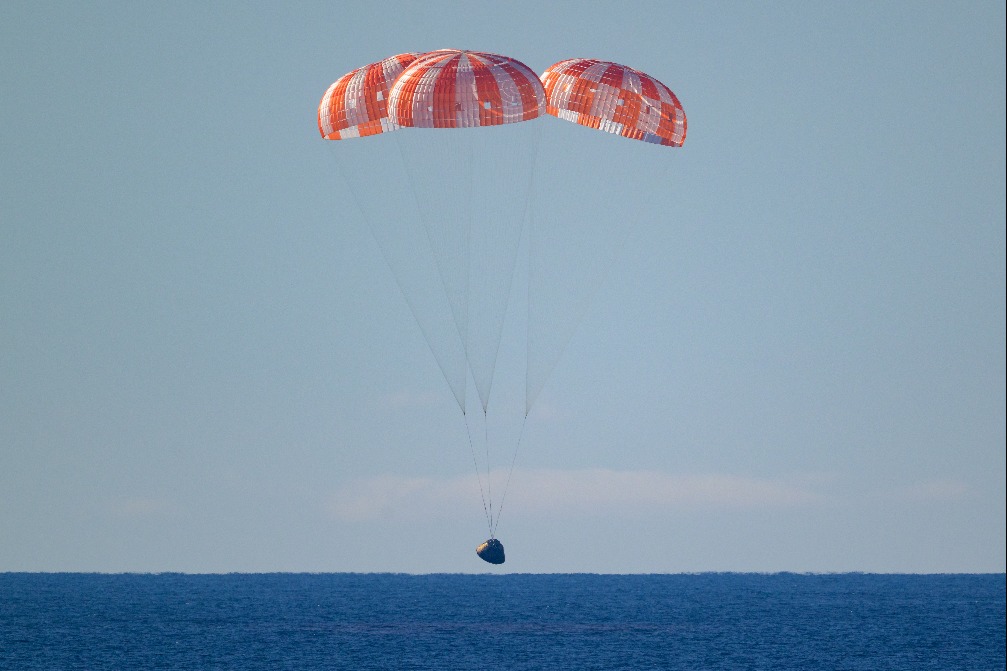
    When a tiny, bright white dot of the descending capsule was spotted high above the Pacific Ocean, and Wiseman’s voice came through loud and clear with “Houston, We have you loud and clear,” the wave of relief in mission control was palpable. The capsule descended slowly under massive parachutes and made a gentle splashdown in the Pacific, and the four astronauts were safely back on Earth. The focused, quiet calm of mission control evaporated as the room erupted in cheers and celebration; the thousands of people who worked years on the project had brought their friends home safe.

    The Artemis II crew has had an experience unlike any other in human history, and they have acknowledged it will take a long time to fully process what they have seen and done. They have also formed an unbreakable bond with each other. Near the end of their voyage, I spoke to the crew from Earth and asked what they would miss most once they got home. Without a moment of hesitation, Koch said she would miss the camaraderie – that after 10 days crammed together in deep space, the crew is now family.

    When they launched, the four astronauts were little known to the general public. Now, after their historic voyage, Wiseman, Glover Koch and Hansen have returned to Earth as household names. Covering this mission has felt like having a front row seat to history being written. My colleagues and I have been constantly surprised by how deeply this mission has gripped the public imagination, as we worked around the clock to meet the world’s insatiable demand for every new update from the voyage. For 10 extraordinary days, the four astronauts took millions of people around the world along with them, pulling us away from our daily lives on Earth and letting us share in the adventure of deep space exploration. If NASA achieves its ambitious exploration goals, and other spacefaring nations join the effort, this will only be the first chapter of a new era of human lunar exploration.

  • ‘It’s a special thing to be on Planet Earth’: Artemis crew welcomed home in Houston

    ‘It’s a special thing to be on Planet Earth’: Artemis crew welcomed home in Houston

    Houston’s Johnson Space Center rolled out a warm, celebratory welcome on Monday for the four-member Artemis II crew, whose landmark nine-day journey around the Moon has secured its place in human exploration history. The mission marked an extraordinary milestone for space travel: the four-person team traveled farther from Earth than any humans have ever gone before, pushing the boundaries of human deep-space exploration and paving the way for NASA’s ambitious goal of returning astronauts to the lunar surface.

    Addressing an audience of thousands of cheering NASA employees, space industry partners, and family members, crew commander Reid Wiseman summed up the profound emotion of the journey, saying, “It’s a special thing to be on Planet Earth.” The comment reflected the transformative perspective the astronauts gained from seeing Earth rise against the black expanse of space from lunar orbit, a view that only 24 humans have witnessed firsthand since the Apollo era.

    The nine-day mission, which launched from NASA’s Kennedy Space Center in Florida earlier this month, was a critical uncrewed test flight no—wait, correction, this was the first crewed test flight of the Space Launch System rocket and Orion capsule, the core vehicles that will power future Artemis landing missions. The successful voyage validated key life support, navigation, and heat shield systems that will be used when the first woman and first person of color step onto the Moon during Artemis III, currently scheduled for 2026.

    NASA officials emphasized that the mission’s success is more than a symbolic win for space exploration; it lays the groundwork for eventual human missions to Mars, turning decades of planning into tangible progress. For Houston, which has served as the heart of American human spaceflight for more than 60 years, the homecoming celebration was also a reminder of the city’s enduring role in leading humanity’s push beyond low Earth orbit.

  • Manhattan prosecutor investigates abuse claims against congressman Eric Swalwell

    Manhattan prosecutor investigates abuse claims against congressman Eric Swalwell

    A high-stakes political drama has unfolded in American politics this week, after the Manhattan District Attorney’s Office confirmed it has opened a formal investigation into multiple sexual misconduct allegations against U.S. Representative Eric Swalwell, a leading Democratic candidate for governor of California.

    Four women have now come forward with accusations against the congressman, ranging from persistent sexual harassment to non-consensual sexual assault, with one of the alleged incidents occurring on Manhattan soil. Swalwell, who has represented a Northern California district covering areas near San Francisco since 2012 and launched a high-profile bid to replace outgoing Governor Gavin Newsom in this year’s election, has forcefully denied every claim. In public statements, he has pledged to clear his name using documented facts and has not ruled out pursuing legal action against his accusers.

    In an official public statement released Saturday, the New York prosecutor’s office extended an invitation for survivors and any other individuals with information relevant to the allegations to reach out to its Special Victims Division. “Our specially trained prosecutors, investigators and counselors are well-equipped to help you in a trauma-informed, survivor-centered manner,” the office said. Representatives for Swalwell did not issue an immediate response to repeated requests for comment from the BBC following the announcement of the investigation.

    The first public allegation against Swalwell appeared Friday in the *San Francisco Chronicle*, from a woman who previously worked as a staff member in his Castro Valley district office. She told the outlet that shortly after she was hired, Swalwell began making unwanted inappropriate comments, repeatedly solicited her for sexual encounters and sent unsolicited sexual messages. The former staffer alleges she was assaulted by Swalwell on two separate occasions: the first in September 2019, after the pair went out for drinks, and the second in 2024 following a charity gala in New York City. Both times, she told the newspaper, she was too impaired by alcohol to give legal consent. The BBC has not been able to independently confirm the details of her account or verify her identity, but has reached out to her legal representation for comment.

    Shortly after the first report, CNN published accounts from three additional women, bringing the total number of accusers to four, all raising claims of varying degrees of sexual misconduct against the congressman. The network also reported that Swalwell’s legal team has already sent cease-and-desist letters demanding retractions to two of the women making accusations.

    In a public video message posted to Facebook Friday, Swalwell addressed the allegations directly to voters. He acknowledged he has made errors in judgment earlier in his life, framing those past mistakes as private matters between himself and his wife, to whom he issued a deep apology for the public scandal. “I do not suggest to you that I am perfect or a saint,” he said. “I’ve certainly made mistakes in judgment in my past. But those mistakes are between me and my wife. And to her, I apologise deeply for putting her in this position.” He reiterated his denial of all the misconduct allegations, stating: “For nearly 20 years, I have served the public – as a prosecutor and a congressman and have always protected women. I will defend myself with the facts and where necessary bring legal action.”

    The timing of the allegations could not be more consequential for Swalwell’s gubernatorial campaign. The investigation comes just weeks before California begins mailing out ballots to voters for the June 2 primary, in an open race to lead the nation’s most populous state. Before the allegations surfaced, two separate public opinion polls ranked Swalwell as one of the top two front-runners for the Democratic nomination in the crowded primary field. Within hours of the first reports of the accusations, Swalwell lost the public endorsement of several of his most prominent political backers, including U.S. Senator Adam Schiff and House Democratic Leader Hakeem Jeffries, whose support had been a major boost to his campaign credibility.

  • Knifeman calling himself ‘Lucifer’ slashes three at NYC’s Grand Central

    Knifeman calling himself ‘Lucifer’ slashes three at NYC’s Grand Central

    A violent, unprovoked attack at one of the United States’ busiest transportation hubs left three people injured and the assailant dead on a recent Saturday morning, sending shockwaves through New York City’s transit system and prompting a major law enforcement response. The incident, which unfolded across two platforms at New York’s iconic Grand Central-42 Street subway station, forced service disruptions for thousands of commuters and drew swift comment from top city and state officials.

    According to official statements from the New York Police Department (NYPD), the attacker — identified as 44-year-old Anthony Griffin — entered the city’s subway network at the Vernon Boulevard–Jackson Avenue station in Queens early that morning. He traveled aboard the 7 train east into Manhattan, disembarking at Grand Central, the country’s largest rail hub, before launching his attack. NYPD Police Commissioner Jessica Tisch shared details of the rampage at a press briefing shortly after the incident, confirming that Griffin first stabbed one passenger on the initial platform before moving upstairs to a second platform, where he attacked two more people.

    The three victims, all older adults, suffered serious but non-life-threatening injuries: an 84-year-old man sustained deep lacerations to his head and face, a 65-year-old man suffered matching cuts alongside an open skull fracture, and a 70-year-old woman was left with cut wounds to her shoulder. All three were quickly transported to local medical facilities for treatment.

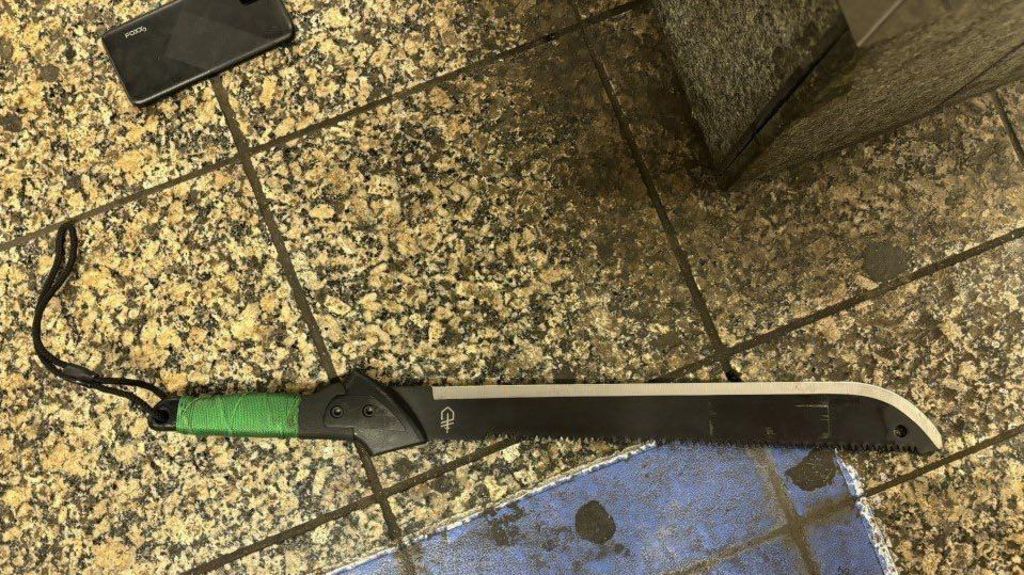
    Two transit officers who were already in the area were alerted to the attack at 9:40 a.m. Eastern Daylight Time, and arrived on scene within minutes to confront the attacker. Tisch confirmed that Griffin was carrying a large machete recovered by investigators at the scene, was acting in an extremely erratic manner, and repeatedly told responding officers he was Lucifer. Even after officers issued more than 20 separate verbal demands for him to drop his weapon, Griffin refused to comply and advanced toward the officers with the blade extended. One officer opened fire, striking the suspect twice. First responders administered emergency life-saving care at the scene before transporting Griffin to Bellevue Hospital, where he was pronounced dead.

    In the wake of the attack, NYPD urged local residents and commuters to avoid the Grand Central area while investigators processed the crime scene, leading to temporary service diversions for trains passing through the major transit hub. Officials later confirmed that Griffin had three prior arrests on his record, but had no documented history of being flagged as an Emotionally Disturbed Person (EDP) in NYPD records. City officials also announced plans to release full body camera footage of the entire incident to the public as the investigation moves forward.

    New York Governor Kathy Hochul issued a formal statement condemning the attack, calling it a “senseless act of violence” targeting innocent members of the public. She also praised the quick action of responding officers, saying “I’m grateful to our brave officers who acted quickly to stop the suspect.” New York Mayor Zohran Mamdani echoed that praise, commending law enforcement for their rapid response that prevented additional violence from occurring. “Our officers put themselves in harm’s way to protect New Yorkers, and their quick thinking likely saved more lives,” Mamdani’s statement read, confirming the upcoming release of body camera footage to maintain transparency with the public.

  • Coachella kicks off with Sabrina Carpenter and surprise guests

    Coachella kicks off with Sabrina Carpenter and surprise guests

    One of the world’s most iconic and highly anticipated annual music gatherings, the Coachella Valley Music and Arts Festival, kicked off its 2026 iteration in the Southern California desert this Friday, bringing together more than 100,000 daily attendees across two consecutive weekends of performances. The opening night of the festival, hosted at Indio’s Empire Polo Club, delivered a series of showstopping surprises, led by first-time headliner Sabrina Carpenter’s elaborately produced Hollywood-themed set.

    Carpenter reimagined her stage as a faux Los Angeles landmark, rebranding the space “Sabrinawood” to match her creative concept. The 26-year-old pop star opened her performance with a pre-taped short film, where actor Sam Elliott pulled her over for a late-night traffic stop before letting her proceed to the main stage. Midway through her set, Academy Award-winning actor Susan Sarandon made an unannounced guest appearance, delivering a heartfelt monologue portraying an older version of Carpenter. Later, funnyman Will Ferrell joined the lineup of surprise guests, taking the stage in character as a quirky stage electrician to the delight of the crowd. The opening night bill also featured a roster of other high-profile acts, including global girl group KATSEYE — formed in 2023 via the reality competition series Dream Academy — British electronic duo Disclosure, and hip-hop legend Snoop Dogg.

    However, the opening evening was not without disruptions, as pre-forecasted severe weather conditions forced organizers to cancel a scheduled performance by DJ Anyma immediately following Carpenter’s set. In a public statement posted to the festival’s official Instagram account Friday night, event leadership explained the cancellation was a joint decision made with the artist to prioritize attendee safety, as strong sustained winds had damaged the structural integrity of Anyma’s custom stage build.

    The National Weather Service had issued advance warnings for the area, predicting wind gusts reaching up to 25 miles per hour throughout Friday. Compounding the weather concerns, the Coachella Valley also remained under an air quality advisory from Friday afternoon through Sunday morning, driven by windblown particulate dust that poses heightened health risks for vulnerable populations. The National Weather Service cautioned that fine particle pollution can penetrate deep into lung tissue, triggering asthma attacks, exacerbating existing heart and lung conditions, and increasing susceptibility to respiratory infections. While Indio was named as one of the areas at potential risk of poor air quality, the local air quality management district reported that pollution levels stayed between good and moderate from midday Thursday onward.

    Looking ahead to the rest of the weekend, pop superstar Justin Bieber is slated to take the headline spot on Saturday, with reggaeton icon Karol G closing out the first weekend’s performances on Sunday. A strong contingent of UK talent is also featured across this year’s lineup, including indie rock outfit Wet Leg, punk group Lambrini Girls, rapper Little Simz, and experimental artist FKA Twigs. The full lineup of performances will repeat again for the festival’s second weekend, which draws the same massive scale of crowds to the Southern California desert. First launched in 2002, Coachella has grown from a small regional gathering to one of the most high-profile cultural events on the global entertainment calendar.

  • NASA’s Artemis II crew splashes down in Pacific Ocean

    NASA’s Artemis II crew splashes down in Pacific Ocean

    After a groundbreaking 10-day journey around the moon that set new human spaceflight records, NASA’s Artemis II mission crew has completed a successful return to Earth, splashing down safely in the Pacific Ocean off the coast of San Diego, California, at 8:07 pm Eastern Time on Friday evening. The parachute-assisted landing marked a major milestone for the United States’ deep space exploration program, bringing the four-person international crew home without incident.

    Shortly after the capsule touched the ocean surface, mission commander Reid Wiseman confirmed that all crew members were in excellent health, easing pre-landing concerns tied to known technical vulnerabilities on the spacecraft. By 10 pm ET, recovery teams had helped the astronauts exit the Orion capsule, and they were airlifted by helicopter to the USS John P. Murtha, an amphibious transport dock stationed nearby. U.S. media reports confirm all four crew members walked across the ship’s flight deck unassisted to begin routine post-mission medical checks.

    Following the completion of initial health screenings aboard the vessel, the crew will undergo a more comprehensive series of medical evaluations before traveling back to shore. They will then fly to NASA’s Johnson Space Center in Houston, where they will continue debriefing and analysis of their mission. Parallel recovery operations are already underway for the Orion capsule itself: Navy divers will lift the spacecraft from the Pacific and transport it first to U.S. Naval Base San Diego, before it is shipped to NASA’s Kennedy Space Center in Florida for full engineering inspections and post-mission analysis.

    The mission’s atmospheric re-entry carried higher-than-usual safety risks, stemming from documented design flaws in Orion’s heat shield — the critical component that protects the crew from thousands of degrees of heat generated during descent through Earth’s atmosphere. To reduce this risk, NASA engineers adjusted the capsule’s re-entry trajectory ahead of landing, opting for a steeper, faster descent that cut down the capsule’s exposure to peak re-entry temperatures.

    Launched from Kennedy Space Center on April 1, Artemis II marked the first crewed lunar flyby mission humanity has launched in more than 50 years. The 10-day mission did not include a lunar landing, instead focusing on testing core systems for future crewed lunar missions. The crew includes three NASA astronauts — commander Wiseman, pilot Victor Glover, mission specialist Christina Koch — and one Canadian Space Agency astronaut, Jeremy Hansen, making the mission a truly international collaborative effort.

    Early in the mission, the crew set a new world record for the farthest distance human beings have ever traveled from Earth, reaching a peak distance of 406,771 kilometers from our planet. That mark surpasses the previous 400,171-kilometer record set by the Apollo 13 mission in 1970, a record that had stood for more than half a century. During the mission’s lunar flyby segment, the Orion capsule passed within 6,550 kilometers of the lunar surface, and the crew carried out nearly seven hours of direct lunar observation. The mission marked a rare opportunity for human observers to study the moon’s far side, a hemisphere never visible from Earth and rarely seen by humans directly.

    As the first crewed mission of NASA’s broader Artemis lunar exploration program, which was first announced in 2019, Artemis II was designed to test and validate the full range of technologies and operational procedures needed for future deep space and lunar missions. Key objectives included verifying the functionality of Orion’s life support systems and practicing mission operations that will be critical for upcoming crewed landing missions. Before Artemis II, NASA completed the uncrewed Artemis I lunar orbiting mission in November 2022, laying the groundwork for this first crewed flight.

    The original Artemis program roadmap set a goal of landing the first woman and first person of color on the lunar surface by 2024, but NASA revised the program’s timeline in February this year, adding an extra interim mission and pushing back the targeted landing date. Under the updated plan, Artemis III will now focus on testing new systems and operational capabilities in low Earth orbit in 2027, clearing the way for the Artemis IV crewed lunar landing mission to take place in 2028.

  • Baseball statue broken as it is unveiled in Seattle

    Baseball statue broken as it is unveiled in Seattle

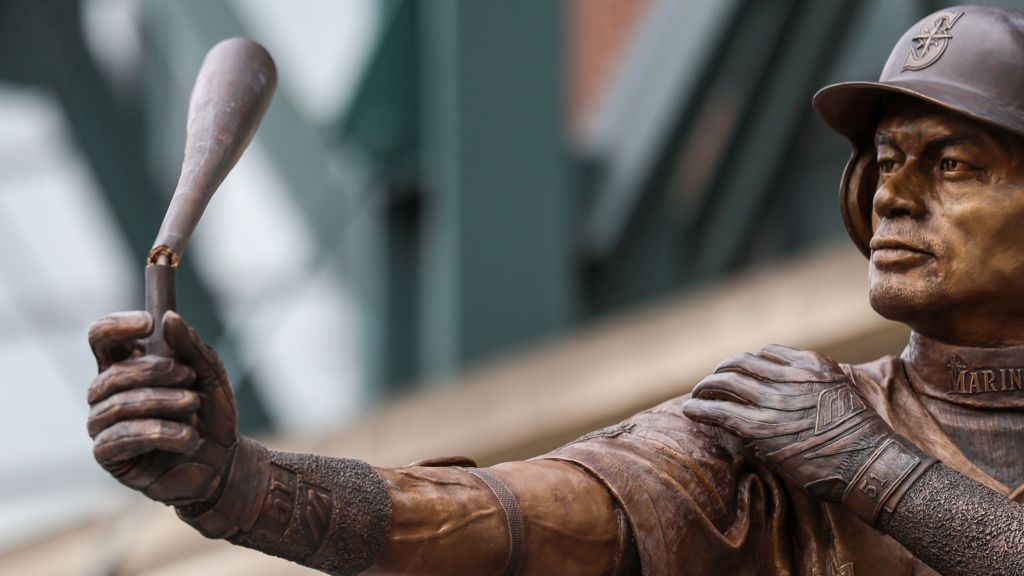
    A planned moment of baseball immortality took an unexpected, humorous turn Friday outside T-Mobile Park, when a bronze statue honoring former Seattle Mariners legend Ichiro Suzuki suffered an embarrassing mishap during its official unveiling. As the protective blue covering was pulled away from the monument by team officials, hundreds of gathered fans and dignitaries heard a sharp snapping noise, followed by a visible drop in the statue’s upper section: the sculpted replica of Suzuki’s signature game bat had split clean off. The 52-year-old Hall of Famer, who was on hand for the ceremony, reacted with immediate good humor, pointing at the broken bat in amused disbelief before breaking into a hearty laugh that quickly diffused any awkwardness among the crowd. The lighthearted incident came exactly one year after Suzuki received one of the highest honors in North American baseball, earning near-unanimous induction into the National Baseball Hall of Fame, capping a trailblazing 28-year professional career that spanned leagues in both Japan and the United States. After moving from Japan’s Nippon Professional Baseball to Major League Baseball in 2001, Suzuki spent 12 of his 18 MLB seasons with the Mariners, cementing his legacy as one of the franchise’s most iconic players before brief stints with the New York Yankees and Miami Marlins. He returned to Seattle for his final two seasons before retiring in 2019. The statue itself captures Suzuki in his iconic 2001 rookie season right fielder uniform, posed in his recognizable batting stance. Speaking to reporters after the incident, Suzuki shared a fun behind-the-scenes detail of the statue’s creation: sculptor Lou Cella had asked him to model the original 2001 uniform for reference photos, and the legend said he was pleased to discover he could still fit into the two-decade-old uniform years after his retirement. Mariners CEO John Stanton, who helped pull the tarp off the monument that would lead to the broken bat, praised Suzuki’s relentless commitment to the sport before the mishap, telling the crowd that the outfielder’s meticulous approach to preparation and play made him fully deserving of the everlasting honor the statue represents. Far from hiding the accidental break, the Mariners organization leaned into the humor of the moment. On social media, the team posted a playful joke about the incident, writing “Breaking: We’ve updated tonight’s Ichiro Replica Statue giveaway” alongside a photo of a mini figurine that also featured a broken bat matching the full-size monument. Crews worked quickly to repair the damage, and the statue was fully restored in time for the Mariners’ Friday night matchup against the Houston Astros, allowing fans to take in the tribute as planned after the morning’s unexpected joke. Over his legendary career, Suzuki rewrote the MLB record book: one of his most notable achievements came in 2004, when he broke an 84-year-old longstanding record for most hits in a single regular season, notching 262 hits — five more than the previous record set by baseball icon George Sisler back in 1920. The moment of unexpected comedy during the unveiling has already become a memorable add-on to Suzuki’s legacy, with fans and the team embracing the unplanned moment as a uniquely human tribute to one of baseball’s most beloved figures.