标签: North America

北美洲

  • Trump hints Iran talks could resume this week as US port blockade continues

    Trump hints Iran talks could resume this week as US port blockade continues

    Nearly two months after Iran came under coordinated air strikes from the United States and Israel, the region remains at a dangerous geopolitical crossroads, with a new US naval blockade of Iranian ports threatening to upend a fragile two-week ceasefire and raise the stakes for upcoming diplomatic talks.

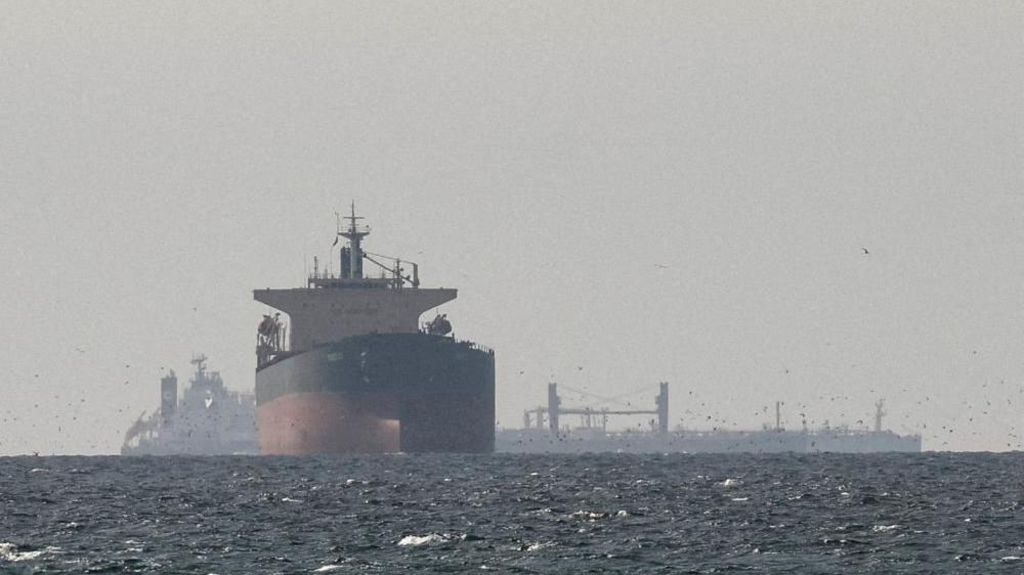
    The current crisis traces back to collapsed weekend negotiations hosted in Islamabad, Pakistan, that failed to bridge deep divides between Washington and Tehran, primarily over the future of Iran’s nuclear program. In the wake of the failed talks, US President Donald Trump ordered the full enforcement of a maritime blockade targeting all commercial traffic entering or exiting Iranian coastal areas, a move designed to cut off two of Tehran’s most critical revenue streams: crude oil exports and shipping tolls collected for passage through the Strait of Hormuz. As of Tuesday, more than a dozen US warships and roughly 10,000 American military personnel are deployed to enforce the blockade.

    US Central Command, which oversees American military operations across the Middle East and Central Asia, confirmed that in the first 24 hours of the blockade going into effect, six commercial merchant vessels complied with US orders to turn back toward Iranian ports. But independent verification by BBC Verify’s ship-tracking analysis tells a more complicated story: at least seven vessels, four linked directly to Iranian shipping interests and three foreign-flagged ships, successfully crossed the Strait of Hormuz despite the US operational order.

    The military escalation has thrown the future of the existing two-week ceasefire, which is scheduled to expire next week, into serious question. Even so, there have been tentative signals from multiple stakeholders that negotiations between the US and Iran could restart as soon as this week. In an interview with the *New York Post*, President Trump suggested that a resumption of talks was likely within 48 hours, noting that US negotiators remain positioned in the region to reconvene. “You should stay there [Islamabad], really, because something could be happening over the next two days, and we’re more inclined to go there,” Trump told the outlet.

    United Nations Secretary-General António Guterres has also voiced cautious optimism, saying he considers it “highly probable” that talks will get back on track. Separate anonymous official sources from Gulf states, Pakistan and Iran confirmed to Reuters that both US and Iranian negotiating teams are expected to return to Islamabad later this week, though a firm starting date has not yet been finalized. Tehran has not yet issued an official public response to Trump’s latest remarks on restarting talks.

    The core sticking point that derailed the previous round of talks remains Iran’s nuclear program. A senior US official told CBS News, a partner outlet of the BBC, that Washington has demanded a 20-year full suspension of all Iranian uranium enrichment activities. But Tehran has only offered a five-year halt to enrichment, according to sources cited by other US media outlets, leaving a significant gap between the two sides’ opening positions.

    The economic fallout of the ongoing standoff has already rippled through global commodity markets. For weeks, the conflict has disrupted global energy supplies, after Iran effectively closed the Strait of Hormuz—one of the world’s most critical chokepoints for global oil and natural gas transportation—shortly after the February air strikes. On Tuesday, however, growing hopes that diplomatic talks would resume calmed volatile oil markets, pushing benchmark crude prices below the $100 per barrel threshold for the first time in recent weeks.

    Global powers have already begun weighing in on the US blockade, with starkly differing views. The International Monetary Fund has already warned that the protracted conflict could push the entire global economy into a recession, but US Treasury Secretary Scott Bessent defended the strategy in comments to the BBC, arguing that a “small bit of economic pain” is a reasonable tradeoff for long-term global security. China, a key diplomatic and economic partner of Iran, has taken a far harder line, calling the blockade “dangerous and irresponsible” on Tuesday and warning that it would only inflame regional tensions and irreparably damage the fragile ceasefire agreement.

    In a separate, unrelated development in regional diplomacy, Israel and Lebanon announced Tuesday that they will launch the first direct official negotiations between the two nations since 1993, following a day of talks in Washington DC. The talks stem from ongoing cross-border tensions triggered by Israeli air strikes targeting the Iran-backed militant group Hezbollah in southern Lebanon. Both sides described the initial meeting at the US State Department as a positive step: Lebanon’s ambassador to the US called the discussions “productive”, while his Israeli counterpart said the talks open a path to a “new era of peace.” A senior unnamed US official emphasized to the BBC that the Israel-Lebanon negotiations are completely separate from the ongoing US-Iran talks in Pakistan, with no overlapping agenda or linkage.
  • Texas lawmaker resigns after admitting affair with aide who died by suicide

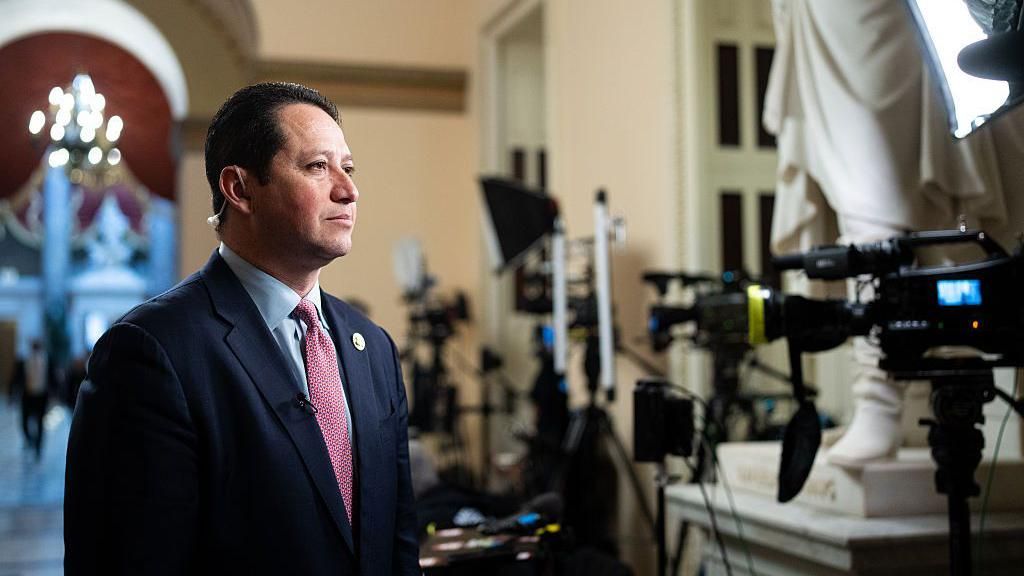
    Texas lawmaker resigns after admitting affair with aide who died by suicide

    In a seismic development that has sent shockwaves through Capitol Hill, two sitting U.S. congressmembers — one Republican and one Democrat — formally stepped down from their congressional seats this week, exiting office amid mounting ethical pressure and public allegations of sexual misconduct.

    Texas Republican Representative Tony Gonzales was the second lawmaker to submit his resignation on Tuesday, capping weeks of growing controversy that began when he ultimately confirmed a years-long extramarital affair with a married congressional staffer, Regina Santos-Aviles. Santos-Aviles died by suicide in September 2025 near her Uvalde, Texas home after setting herself on fire, a finding confirmed by the local medical examiner and first reported by CBS News, the U.S. partner of the BBC.

    The timeline of the scandal accelerated rapidly over the past month. Gonzales, who had initially dismissed the claims of an affair as a coordinated political blackmail campaign to force him out of office, had already announced he would not seek re-election in the November 2026 midterm vote. But as new details of his misconduct emerged and a formal congressional ethics probe was launched, pressure for an immediate departure grew overwhelming.

    Parallel developments unfolded for California Democratic Representative Eric Swalwell, who faced a separate set of public allegations ranging from sexual harassment to assault against a former member of his own staff. After the allegations became public over the weekend, a groundswell of bipartisan criticism erupted, and congressional leadership moved quickly to open a formal ethics inquiry and debate holding full votes to expel both men from office. Maneuvering to avoid a humiliating forced expulsion — which would have cost both lawmakers their post-congressional pension benefits — both lawmakers opted to submit voluntary resignations, effective immediately this week.

    Swalwell, who had been running for the Democratic nomination for California governor before the allegations broke, dropped his gubernatorial campaign Sunday and announced his resignation Monday, even as he and his legal team have forcefully denied all claims against him. “These accusations are false, fabricated, and deeply offensive – a calculated and transparent political hit job,” said Swalwell’s attorney Sara Azari. In his final resignation letter submitted Tuesday, however, Swalales offered a muted apology, writing: “I am deeply sorry to my family, staff, and constituents for mistakes in judgement I’ve made in my past.”

    Gonzales, for his part, offered only a brief farewell in his own resignation letter, noting: “It has been my privilege to serve the residents of Texas’s 23rd congressional district.”

    The dual resignations, one from each major political party, have little impact on the partisan balance of power in the U.S. House of Representatives, where Republicans hold a narrow but stable majority. Even with the two vacancies, Republicans will retain their controlling grip on the chamber for the remainder of the 119th Congress.

    The scandal has already reignited broader conversations about congressional accountability, workplace culture on Capitol Hill, and the leniency of rules that allow members accused of misconduct to resign voluntarily and retain taxpayer-funded benefits, rather than face expulsion and lose those privileges.

  • Man drowns in Colorado River after jumping off boat to retrieve his hat

    Man drowns in Colorado River after jumping off boat to retrieve his hat

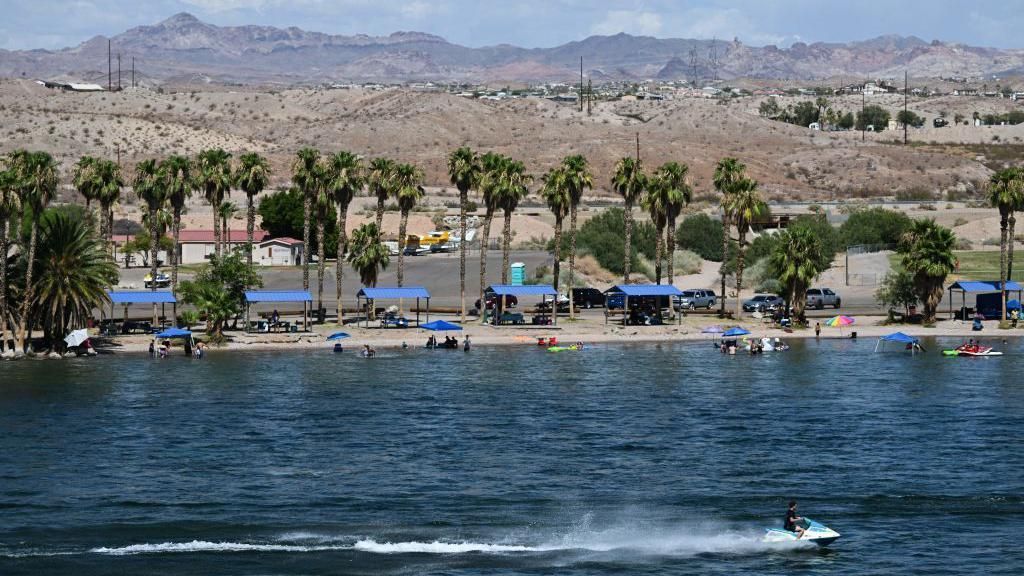
    A devastating recreational accident has claimed the life of a 26-year-old California man near the Arizona-Nevada border, prompting public safety officials to issue a renewed call for waterway safety precautions. Kristopher Nathaniel Logan lost his life on Monday morning after jumping into the Colorado River to retrieve a hat that blew off his head while he enjoyed an outing with friends.

    Local emergency responders received the first report of a potential drowning at approximately 11:15 a.m. local time, near the popular Davis Camp recreational area in Mohave County, Arizona. According to official statements from Bullhead City Police, Logan was aboard a rented pontoon boat with companions when the incident occurred. The group had planned a day of recreation and fishing on the river, and was positioned on the waterway in front of Davis Camp property, closer to the Nevada side of the border, when a gust of wind carried Logan’s hat into the water.

    Logan jumped overboard to retrieve the item, but quickly began struggling to stay afloat and never resurfaced. A specialized dive recovery team later retrieved his body from the riverbed, and first responders pronounced him dead at the scene. Investigators have ruled the death an accident, and confirmed that Logan was not wearing a life jacket at the time of the incident.

    Davis Camp, located along the Colorado River at the Arizona-Nevada border, is a well-loved destination for water sports enthusiasts, bird watchers, and cross-country campervan tourists. The Colorado River itself is the seventh-longest river in the United States, cutting through seven U.S. states before reaching its delta in northern Mexico.

    In the wake of the fatal accident, Mohave County park administrator Bo Hellams spoke to the BBC about the importance of consistent water safety practices. “We urge everyone that occupies the Colorado River waterway to follow all Coast Guard recommendations and regulations,” Hellams said. He emphasized that even experienced swimmers should never skip critical safety gear, adding that all visitors should “wear recommended personal protective equipment regardless of assumed swimming ability.”

  • King will not meet Epstein survivors on US visit

    King will not meet Epstein survivors on US visit

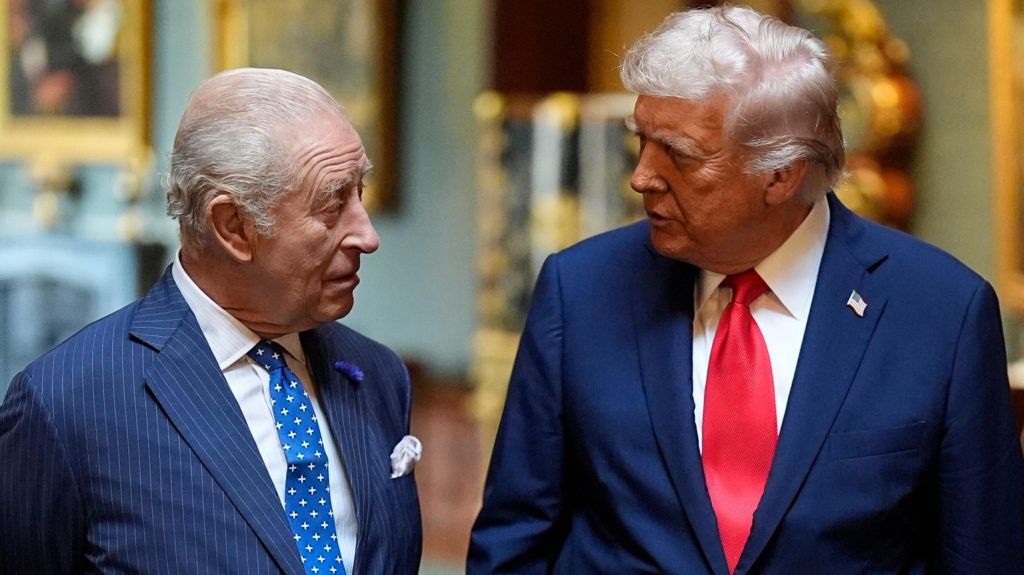
    In late April 2026, King Charles III and Queen Camilla of the United Kingdom will undertake a historic state visit to the United States, a trip crafted to mark the 250th anniversary of American independence. But even weeks before the royal party touches down in Washington D.C., the visit has been tangled in two overlapping sources of friction: growing public calls for a meeting with survivors of convicted sex offender Jeffrey Epstein, and unusually strained political relations between the UK and US governments.

  • ‘I can feel the difference’ – Americans react to soaring gas prices

    ‘I can feel the difference’ – Americans react to soaring gas prices

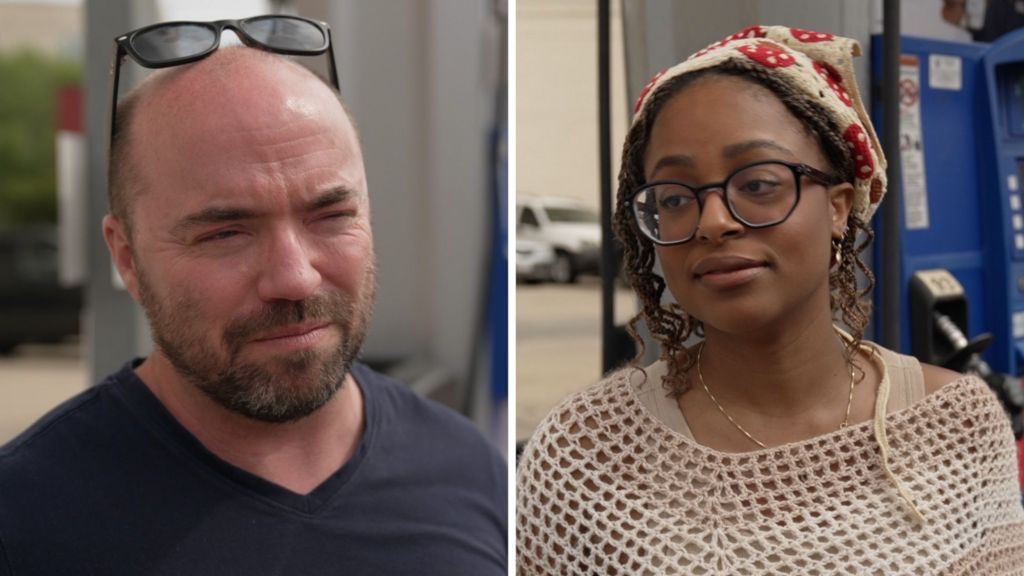
    Across the United States, ordinary drivers are already grappling with the tangible impact of skyrocketing gasoline prices, with many reporting they can already sense the heavy financial strain hitting their monthly budgets. As fuel costs continue to climb at pumps nationwide, the issue has moved rapidly to the forefront of national economic and political conversation.

    Over the recent weekend, former President Donald Trump offered a sobering forecast for the months ahead. Speaking on the trajectory of oil and gasoline prices, Trump stated that current costs are likely to remain at their elevated levels, or could even climb higher in the coming months.

    The prediction has amplified concerns among American households, which already face broader inflationary pressures across food, housing, and other essential goods. For millions of commuters who rely on personal vehicles to get to work, school, and daily errands, rising gas prices directly cut into disposable income, forcing many to adjust spending habits by cutting back on leisure activities, delaying major purchases, or carpooling to cut down on fuel use.

    As the issue continues to develop, energy market analysts are closely watching global oil supply dynamics and domestic policy decisions that could shape future price movements, while American consumers wait to see whether Trump’s forecast will prove accurate.

  • ‘Bit of pain’ worth long-term security from Iran, Bessent tells BBC

    ‘Bit of pain’ worth long-term security from Iran, Bessent tells BBC

    The ongoing US-Israel conflict with Iran has sparked fierce debate over the trade-off between short-term global economic stability and long-term international security, as the International Monetary Fund (IMF) has laid out stark worst-case projections that could tip the world into recession for the first time since the COVID-19 pandemic.

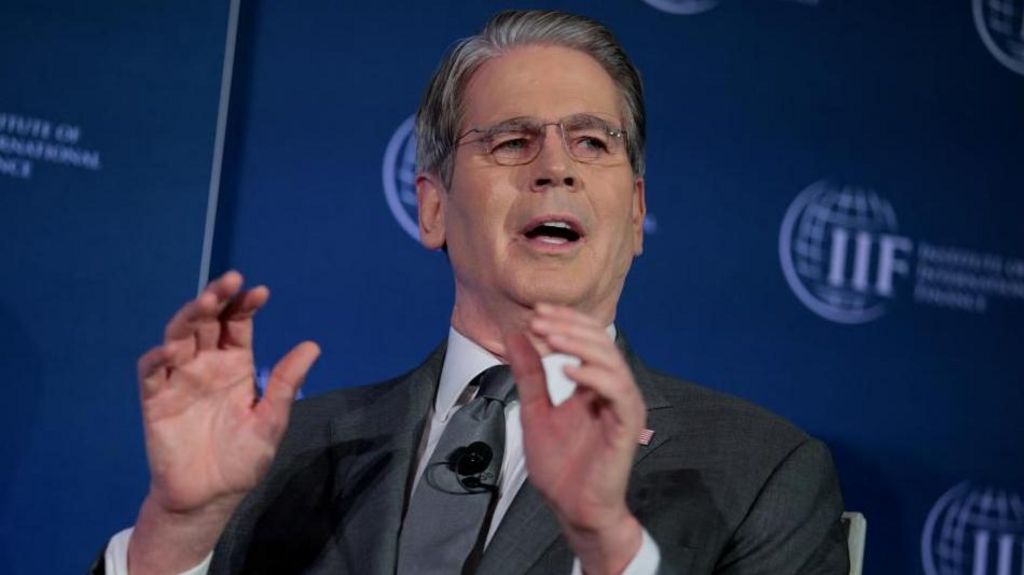
    In an exclusive interview with the BBC, US Treasury Secretary Scott Bessent argued that a modest period of near-term economic hardship is a necessary sacrifice to eliminate what he frames as a growing Iranian threat to Western capitals. “I wonder what the hit to global GDP would be if a nuclear weapon hit London,” Bessent said. “I am saying that I am less concerned about short-term forecasts, than I am about long-term security. The biggest risk you can take is one you don’t know you were taking.” He claimed that recent US and Israeli strikes have eliminated the so-called “tail risk” of Iranian nuclear strikes against Western nations, noting that Iran had enriched uranium to 60% purity—close to the level required for a functional nuclear weapon—at the start of the conflict. He also pointed to Iran’s strike on Diego Garcia as evidence the country already possesses mid-range intercontinental ballistic missiles capable of reaching the United Kingdom.

    However, multiple official sources have pushed back on Bessent’s framing. The BBC has previously confirmed that the threat of an Iranian ballistic missile strike on London remains extremely remote, and Iran does not currently possess a nuclear weapon. A spokesperson for the UK government added: “There is no assessment Iran is trying to target Europe with missiles. But we have the military capability we need to keep Britain safe from any kind of attacks, whether it’s on our soil or from abroad. We are ready to defend the country, whatever the threat.”

    In its latest World Economic Outlook report, the IMF detailed the severe economic risks the conflict poses six weeks after it began in late February 2026. The closure of the strategic Strait of Hormuz, a critical chokepoint for global energy shipping, and the collapse of US-Iran peace talks have sent energy prices soaring, with crude prices peaking near $120 a barrel before moderating to $95 per barrel as of Tuesday.

    The IMF laid out two core scenarios for global growth. In the most severe outcome, if energy and food prices spike and remain elevated through 2027, global growth will drop below 2% in 2026—an outcome the IMF calls a near-certain global recession, a situation that has only occurred four times since 1980. Under this scenario, oil prices would average $110 per barrel in 2026 and rise to $125 in 2027, pushing global inflation as high as 6% next year and forcing central banks to implement aggressive interest rate hikes to cool price growth. IMF chief economist Pierre-Olivier Gourinchas warned that a prolonged conflict would trigger spiraling inflation, rising unemployment, and widespread food insecurity in vulnerable nations, noting that even an immediate end to the conflict would leave an economic impact comparable to the 1970s oil crisis. Still, he added that the global economy is far less dependent on fossil fuels today than it was 50 years ago, softening the blow for consumers.

    In the more optimistic baseline scenario, where the conflict is resolved within the next few weeks and energy exports and production return to normal by mid-2026, global growth will slow to 3.1% this year—down just 0.2 percentage points from the IMF’s January forecast—before rebounding to 3.2% growth in 2027, a projection that remained unchanged from earlier estimates.

    The report also breaks down the uneven economic impact of the conflict across major economies and regions. Among advanced economies, the UK is projected to bear the brunt of the energy shock, with its 2026 growth forecast cut from 1.3% to 0.8% before a 1.3% recovery in 2027. Most Gulf energy exporting nations face steep slowdowns or outright contraction this year: the IMF projects Iran’s economy will shrink by 6.1% in 2026, before a 3.2% rebound in 2027 if the conflict ends soon—a projection that remains highly uncertain following US President Donald Trump’s recent announcement of a full blockade on Iranian port exports to halt all Iranian oil shipments. Qatar, home to the world’s largest liquefied natural gas refinery at Ras Laffan, faces an 8.6% contraction this year after the facility was struck by Iranian drones and missiles, leaving it non-operational for the foreseeable future. Iraq, Iran’s neighboring state, will see growth slow by 6.8% in 2026 before bouncing back to 11.3% growth in 2027.

    The IMF notes that national economic resilience depends on key factors including infrastructure damage, reliance on the Strait of Hormuz, and access to alternative export routes. For example, Saudi Arabia’s East-West pipeline, which can carry up to 7 million barrels of oil per day from the Persian Gulf to the Red Sea, allows the kingdom to avoid the worst disruptions. The IMF still projects 3.1% growth for Saudi Arabia in 2026, followed by 4.5% expansion in 2027, in line with broader forecasts for a regional upturn next year if energy markets normalize. The IMF cautioned, however, that this optimistic outlook could be revised downward if the conflict drags on and infrastructure damage worsens.

    Globally, the IMF cut its 2026 growth forecast for China to 4.4%, down 0.1 percentage points from January, while leaving its 2027 projection of 4% growth unchanged. One major beneficiary of the surge in global energy prices, the IMF found, is Russia, which has been under sweeping Western sanctions since its full-scale invasion of Ukraine four years ago. The IMF now projects 1.1% growth for Russia in both 2026 and 2027, up from earlier forecasts of 0.8% and 1% respectively, after Trump lifted all restrictions on Russian oil exports and temporarily unfroze 140 million barrels of Iranian oil for 30 days to curb global price spikes.

    European officials have pushed back against the easing of sanctions, warning that Russia is positioned to emerge as a winner from the conflict. “Energy prices are up, and that gives additional revenues for Russia’s war machine,” European Commissioner for finance Valdis Dombrovskis told reporters on the sidelines of the IMF summit in Washington. “Now is not the time to ease the pressure on Russia.”

  • 7-Eleven expects to close hundreds of its stores in North America this year

    7-Eleven expects to close hundreds of its stores in North America this year

    Global convenience retail leader 7-Eleven is set to undergo a major restructuring of its North American footprint, with plans to shutter hundreds of underperforming locations while shifting strategy toward wholesale fuel-focused outlets amid ongoing economic headwinds.

    Newly released earnings filings from parent company Seven & i Holdings Co., a Japan-based retail conglomerate, show that 7-Eleven’s North American operating subsidiary has approved the closure of 645 brick-and-mortar stores during the 2026 fiscal year. This net reduction of locations comes even as the brand opens 205 new stores across the U.S. and Canada in the same period, marking the first time in recent years that closures will far outpace new openings in the region.

    Seven & i’s official filings confirm that a portion of the planned closures will involve converting existing traditional convenience stores to stand-alone wholesale fuel outlets. The company has steadily built out this alternative store format in North America over the past half-decade, with the wholesale fuel network already topping 900 locations as of December 2025. As of press time, 7-Eleven has not released a full list of locations targeted for closure or shared additional details on the specific reasoning behind the restructuring plan; the Associated Press has requested further comment that has not yet been returned.

    Today, 7-Eleven boasts a global footprint of more than 86,000 stores spread across 19 countries, with the Texas-based North American subsidiary overseeing more than 13,000 locations across the U.S. and Canada. The planned cuts represent a continuation of the brand’s longstanding practice of culling low-performing stores on a regular basis, but the 2026 plan is far larger than previous rounds of cuts, coming amid a broader period of economic pressure on consumers worldwide.

    Persistent inflation that began before recent geopolitical unrest has already squeezed household budgets, particularly for low-income shoppers who make up a large share of 7-Eleven’s core customer base. In its April 9 financial report, Seven & i noted that even with overall moderate economic growth in North America during the 2025 fiscal year, personal consumption has softened noticeably, with inflation continuing to drag down discretionary spending among lower-income groups.

    The recent outbreak of conflict between the U.S.-Israel coalition and Iran has exacerbated these pressures, roiling global energy markets and driving a sharp spike in retail gasoline prices that cuts directly into both consumer disposable income and 7-Eleven’s fuel retail margins.

    Unlike the North American market, Seven & i’s international operations will see net growth in store counts over the coming fiscal year. Even the brand’s home market of Japan will follow this pattern: Seven-Eleven Japan plans to close 350 underperforming locations while opening 550 new stores, resulting in a net gain of 200 outlets.

    Parent company Seven & i projects that group-wide revenue will decline by 9.4% in the current fiscal year, hitting a projected total of roughly 9.45 trillion Japanese yen, equal to approximately $59.5 billion. The restructuring of the North American footprint comes as part of a broader corporate transformation launched under new leadership last year. Stephen Hayes Dacus took over as CEO of Seven & i in spring 2025, and has since outlined a new growth strategy focused on updating 7-Eleven’s core convenience offerings. Key priorities of the turnaround plan include expanding fresh food selections at existing stores and scaling up the brand’s 7NOW on-demand delivery service to capture new revenue streams in a shifting retail landscape.

  • Husband of US woman missing in Bahamas released, says he will keep looking

    Husband of US woman missing in Bahamas released, says he will keep looking

    A months-long missing person case that has captured transatlantic attention has taken a new turn, as Brian Hooker, the Michigan man detained by Bahamian law enforcement after his wife Lynette disappeared during a sailing trip, has been released from custody — and he remains firm in his commitment to finding her, insisting he believes she is still alive.

    The incident unfolded on the evening of April 4, when the Hookers, both experienced sailors who regularly shared their nautical adventures on social media, were out exploring Bahamian waters on an 8-foot hard-bottom dinghy, separate from their larger main sailing vessel. According to Brian Hooker’s account, Lynette fell overboard alongside the dinghy’s keys, and strong ocean currents quickly swept her away before he could reach her. The 59-year-old has repeatedly denied any involvement in his wife’s disappearance, calling all suggestions of foul play unfounded.

    Four days after Lynette went missing, on April 8, Brian Hooker was taken into Bahamian police custody for questioning. During that detention period, he even joined search efforts while handcuffed, and ended up needing rescue himself after falling overboard in rough, choppy sea conditions, according to local reports. Last week, Bahamian authorities announced that their initial search and rescue operation had been reclassified as a recovery mission, a shift that signaled growing pessimism about finding Lynette alive.

    But following his release on the evening of Monday, Brian Hooker told CBS News — the U.S. partner of the BBC — that he has no intention of abandoning his search. “I won’t be able to stop looking,” he said. When asked if he believed Lynette could still be alive more than a week after her disappearance, Hooker responded: “I want to.” He went on to note that there are documented cases of people surviving for days or even weeks after going overboard in Bahamian waters, pointing to the region’s hundreds of small islands, sandbars, and isolated atolls that could offer shelter to a stranded person. “There are so many islands, there are so many sandbars, little atolls and spits of land. Of course you think about alternatives to that, but I’m not really capable of just turning away from this,” he added.

    Hooker’s attorney, Terrel Butler, told NBC News that her client needs time to decompress after what she described as an incredibly traumatic experience. During his detention, Butler noted, Hooker was completely devastated by the disappearance and distraught at being kept from continuing his own search for Lynette. The BBC has reached out to Butler for additional comment following Hooker’s release, and has not yet received a response.

    The case is already marked by significant family division: Lynette’s daughter, Karli Aylesworth, who is Brian Hooker’s stepdaughter, has publicly said she does not accept his account of the incident. Aylesworth emphasized that her mother is an experienced sailor and strong swimmer, casting doubt on the version of events Brian has presented.

    A formal criminal investigation into Lynette’s disappearance remains open, led jointly by U.S. and Bahamian authorities. A U.S. Coast Guard representative confirmed the investigation’s existence to the BBC but declined to share any further details, including information about potential persons of interest in the case.

  • New footage shows moment Orion capsule hatch is opened at sea

    New footage shows moment Orion capsule hatch is opened at sea

    Freshly unveiled video footage has pulled back the curtain on a long-awaited milestone in NASA’s Artemis program, capturing the exact second that the hatch of the Orion capsule, designed to carry the Artemis II crew, swings open following a successful ocean splashdown. The short but emotionally charged clip shows the immediate aftermath of the capsule’s return, where the four mission astronauts are greeted by recovery teams, breaking into smiles and warm celebration as the barrier between their deep-space test flight vessel and the outside world is finally removed.

    This footage offers the public an unprecedented, up-close look at one of the most critical steps of any crewed space mission: the safe recovery of astronauts after their journey. As the Artemis program continues to push toward humanity’s return to the lunar surface, tests of crew recovery procedures like the one documented in this video are key to validating the safety protocols that will support the first crewed lunar mission in more than 50 years. The joyful energy captured in the clip underscores the collaborative spirit of the thousands of engineers, technicians, and recovery personnel who have worked for years to make the Artemis program a reality, building on the legacy of the original Apollo missions while integrating cutting-edge new technology to expand human exploration deeper into the solar system.

  • Accusers seek justice after unwanted explicit messages from Congressman Eric Swalwell

    Accusers seek justice after unwanted explicit messages from Congressman Eric Swalwell

    Long-serving Democratic U.S. Representative Eric Swalwell, who represented a Northern California district near San Francisco for over a decade, has announced his resignation from Congress and withdrawn from the California gubernatorial race following a cascade of sexual misconduct allegations from multiple women. Two of his accusers, Annika Albrecht and Ally Sammarco, have gone on record with CBS News, the U.S. partner of the BBC, saying they feel vindicated by his sudden exit after years of alleged unpunished behavior.

    Albrecht, who had not previously revealed her identity publicly, shared her account with reporters: she first met Swalwell during a college class trip, where he connected with her under the pretense of offering professional political mentorship. Over time, she said, he sent sexually inappropriate photos via Snapchat, the ephemeral messaging platform that automatically deletes content after viewing, and ultimately invited her to meet him in a hotel room. “I keep thinking about how lucky I am that I didn’t go to that hotel,” Albrecht told CBS, adding that learning other women shared similar experiences has been deeply upsetting.

    Sammarco, who first went public with her claims last week, met Swalwell in 2018 when she was 24 years old and reached out to him on Twitter to discuss a career in politics. She told reporters he sent her unsolicited nude images through the same Snapchat platform. Both women say Swalwell operated for years with a belief that he was untouchable, free from any accountability for his behavior toward women.

    Last week, the dam broke when four women came forward with allegations ranging from persistent sexual harassment to violent rape. The revelations triggered an official ethics inquiry by the U.S. House of Representatives, with bipartisan discussions underway to forcibly expel Swalwell if he did not step down. Sammarco characterized his decision to resign as a forced move to salvage what remains of his public reputation. “He was pushed into a corner, essentially, because they were planning to expel him … so I think he resigned to save face a little,” Sammarco said. “But I also felt very vindicated that he realized it was over for him.”

    In his official public statement released Monday, Swalwell acknowledged poor past judgment and issued an apology to his family, staff, and constituents. He admitted to making unspecified mistakes, offering a mea culpa that stopped short of validating the most serious claims against him. “I will fight the serious, false allegation made against me,” he wrote. “However, I must take responsibility and ownership for the mistakes I did make.” The representative, first elected to Congress in 2012, also apologized to his wife for the personal and professional scandal.

    The allegations do not end with the two public accusers. Democratic social media influencer Cheyenne Hunt, who first brought the collective allegations to wide public attention with a viral video detailing multiple women’s claims, told CBS that more than 30 different women have reached out to her to report varying forms of misconduct by Swalwell since she posted her first video. Additionally, the Manhattan District Attorney’s Office has launched a formal investigation into a sexual assault accusation from an unnamed former staff member, first reported by the *San Francisco Chronicle*. That staff member alleges she was assaulted by Swalwell in a New York hotel room in 2019, waking up naked with no clear memory of the previous night after sharing drinks with the congressman.

    For Albrecht, the resignation is only a first step toward meaningful accountability. “For me, justice won’t be until he can’t ever harm a woman ever again, and he has faced the consequences for the women that he has harmed,” she said.

    Congress is set to return from its scheduled recess this Tuesday, where the House Ethics Committee will proceed with inquiries into two separate congressional misconduct cases: Swalwell’s, and that of Texas Republican Representative Tony Gonzales, who dropped his re-election campaign last month after admitting to an extramarital affair with a member of his congressional staff.