标签: North America

北美洲

  • Saving a neighborhood jewel: Iconic tea shop finds rebirth under new owner

    Saving a neighborhood jewel: Iconic tea shop finds rebirth under new owner

    In a remarkable turnaround story, Manhattan’s iconic Alice’s Tea Cup has been revitalized under new ownership after facing near-collapse following the pandemic. Jeni He, the establishment’s current proprietor, rescued the beloved Upper West Side institution from financial ruin through strategic restructuring and difficult operational decisions.

    The whimsical tea shop, inspired by Lewis Carroll’s Alice in Wonderland and founded in 2001 by sisters Lauren and Haley Fox, had once been a neighborhood staple frequented by celebrities and families alike. At its peak, the brand operated three locations across Manhattan, serving afternoon tea sets, freshly-baked scones, and storybook charm to generations of patrons.

    However, like many hospitality businesses, Alice’s Tea Cup struggled profoundly during COVID-19 lockdowns. Indoor dining restrictions, staffing shortages, and rising operational costs created insurmountable challenges despite federal relief funding. By 2024, the business faced substantial unpaid bills and declining viability, prompting the founders to seek new ownership to preserve their legacy.

    He, who grew up in the restaurant industry through her father’s Chinese restaurant in Pennsylvania, made the painful but necessary decision to close two unprofitable locations to save the flagship store. ‘If you try to keep all three open, they will all fail,’ He explained. ‘Sometimes you have to cut one part to save the whole.’

    The strategy proved successful, with the remaining location returning to profitability after months of losses. He is now expanding the brand through innovative channels, developing an online store to serve customers beyond New York and negotiating franchising opportunities, including a forthcoming New Jersey location.

    The emotional connection to the community remains central to the tea shop’s identity. Elderly patrons who have frequented the establishment for over two decades have expressed gratitude through personal gestures, including gifting He Christmas-themed gloves and a scarf. The shop continues to serve as a gathering place for celebrations, relaxation, and neighborhood connection, offering more than 50 varieties of tea alongside traditional afternoon tea service.

    He’s entrepreneurial journey represents both business acumen and cultural preservation, ensuring that what began as a neighborhood fantasy continues to enchant customers for years to come.

  • First stop, the Moon. Next stop, Mars? Why Nasa’s mission matters

    First stop, the Moon. Next stop, Mars? Why Nasa’s mission matters

    NASA is poised to launch its groundbreaking Artemis II mission within days, sending four astronauts on a historic journey to orbit the Moon. This critical mission establishes the foundation for subsequent lunar landings and the eventual establishment of a permanent Moon base.

    Despite the iconic Apollo missions that placed twelve astronauts on the lunar surface over fifty years ago, NASA’s Artemis program represents a fundamentally different endeavor. With an estimated investment of $93 billion and thousands of contributors, this new lunar campaign moves beyond symbolic achievement toward sustained planetary presence.

    Scientific exploration drives much of this renewed interest. Planetary scientist Professor Sara Russell explains that the Moon contains identical elements to those found on Earth, including concentrated rare earth elements crucial for technology, along with metals like iron and titanium. The most significant discovery, however, is water—trapped within lunar minerals and accumulated as ice in permanently shadowed polar craters. This water proves essential for human survival, providing drinking water, breathable air through electrolysis, and even rocket fuel.

    The contemporary space race features different geopolitical dynamics than the Cold War-era competition with the Soviet Union. China has emerged as a major space power, having successfully deployed robotic missions to the Moon and announced plans for human landings by 2030. Both nations seek access to resource-rich lunar territories, particularly the South Pole region, despite the 1967 Outer Space Treaty prohibiting national claims to celestial bodies.

    Dr. Helen Sharman, the first British astronaut, clarifies the legal landscape: ‘Although you can’t own a piece of land because of the UN treaty, you can basically operate on that land without anybody interfering with it. The big thing right now is to try to grab your piece of land. You can’t own it, but you can use it.’

    Beyond lunar exploration, NASA views the Moon as a crucial testing ground for eventual human missions to Mars. Libby Jackson, head of space at the Science Museum, emphasizes the strategic rationale: ‘Going to the Moon and staying there for a sustained period is much safer, much cheaper and much easier to be a test bed for learning how to live and work on another planet.’ The Moon provides an ideal environment to develop technologies for life support, radiation protection, and habitat construction without the catastrophic risks of testing them during a Mars mission.

    Scientific discovery remains another compelling motivation. The Apollo missions transformed our understanding of the Moon’s formation through a colossal impact between Earth and a Mars-sized body. As a geological time capsule preserving 4.5 billion years of solar system history, the Moon offers unparalleled insights into Earth’s own evolution.

    The Artemis program also aims to inspire new generations through high-definition live streams of lunar exploration, potentially creating what space advocates hope will be a ‘Apollo effect’ for the 21st century—stimulating interest in science, technology, engineering, and mathematics careers while fostering international cooperation in space exploration.

  • Partial government shutdown becomes the longest in US history

    Partial government shutdown becomes the longest in US history

    The United States has entered uncharted territory as its partial government shutdown became the longest in the nation’s history, reaching 44 days on Sunday and surpassing the previous record set in November 2025. This political stalemate has triggered severe disruptions at airports nationwide, with security lines stretching outside terminals and causing hours-long delays for travelers.

    The core of the dispute centers on funding for the Department of Homeland Security (DHS), which has remained in limbo since February 14th. The impasse has left thousands of Transportation Security Administration (TSA) officers working without pay, resulting in significant staffing shortages at critical security checkpoints. According to DHS reports, approximately 12.35% of TSA personnel called out of work on Friday alone, with nearly 500 agents having quit entirely due to financial hardship.

    Congressional efforts to resolve the crisis have repeatedly failed. While the Senate passed a compromise bill that would provide partial funding for DHS and address airport delays, House Republicans rejected this measure in favor of a short-term solution that funds the department entirely. Democrats have opposed comprehensive funding without immigration reforms, including restrictions on Immigration and Customs Enforcement (ICE) practices.

    The travel disruptions have raised concerns about the country’s preparedness to co-host the upcoming World Cup in June. In response to the crisis, ICE agents have been deployed to assist at several major airports. White House border coordinator Tom Homan indicated that some ICE units might remain stationed at airports even after the shutdown concludes, depending on how many TSA agents return to work once paid.

    In a controversial move, the administration has directed that TSA agents receive paychecks by Monday or Tuesday through executive action, a decision that legal experts warn may violate the Antideficiency Act and constitutional provisions regarding congressional spending authority.

  • Canada’s New Democratic Party elects Avi Lewis as its leader

    Canada’s New Democratic Party elects Avi Lewis as its leader

    In a decisive leadership contest, veteran journalist and activist Avi Lewis has been elected to lead Canada’s New Democratic Party (NDP), securing 56% of the vote. His victory comes as the left-leaning party confronts its most challenging period in recent history, holding just six seats in the House of Commons following devastating losses in the 2025 federal election.

    Lewis triumphed over Member of Parliament Heather McPherson and three other candidates with a campaign centered on radical economic transformation. His platform prioritizes worker protections in the AI era, halting all new oil and gas infrastructure, and establishing state-owned, non-profit grocery stores to combat soaring living costs.

    Addressing supporters in Winnipeg, the 58-year-old leader delivered a fiery victory speech condemning Canada’s ‘rigged economy’ that benefits the wealthy while leaving working families behind. ‘Canada, mark your calendar: the NDP comeback starts now,’ declared Lewis, promising to build ‘a government that works for the many, not the money.’

    The leadership transition follows the resignation of Jagmeet Singh, who stepped down after the NDP’s catastrophic election performance that saw the party lose 17 seats—10 to Conservatives and 7 to Liberals. Current polling places national support at just 12%, with a quarter of former voters considering the party ‘irrelevant’ according to recent Angus Reid data.

    Despite federal struggles, the party maintains strong provincial presence, governing British Columbia and Manitoba where Premier Wab Kinew enjoys 61% approval ratings. Lewis himself faces governing challenges as an unelected leader, having lost parliamentary bids in Vancouver during both 2021 and 2025 elections. Party rules permit his leadership without a seat, though he cannot participate directly in House debates until securing election.

    Lewis brings considerable name recognition and fundraising prowess—amassing C$1.2 million during his campaign—along with deep party roots. His grandfather David Lewis was among the NDP’s founding members and 1970s leader, while father Stephen Lewis led Ontario’s NDP. The new leader’s professional background includes journalism roles at CBC and Al Jazeera English, alongside activist credentials co-authoring The Leap Manifesto with wife Naomi Klein, the renowned author and social activist.

    His policy agenda combines wealth taxation, affordable housing initiatives, and climate action with controversial energy positions that already face internal criticism. Former Alberta NDP minister Shannon Phillips warned Lewis’s anti-pipeline stance could alienate voters in oil-rich provinces, highlighting the balancing act required for national relevance.

    The leadership victory coincides with fresh challenges including the recent defection of Nunavut MP Lori Idlout to Prime Minister Mark Carney’s Liberals, despite her initial endorsement of Lewis’s leadership bid.

  • Cuba slams US for ‘lying’ over fuel blockade

    Cuba slams US for ‘lying’ over fuel blockade

    HAVANA – Cuban Foreign Minister Bruno Rodríguez has launched a vehement condemnation against the United States, accusing it of engaging in systematic deception regarding its enforcement of a comprehensive fuel blockade against the Caribbean nation. The diplomatic offensive unfolded on social media platform X this past Saturday.

    Rodríguez presented what he characterized as incontrovertible evidence contradicting Washington’s official statements, specifically referencing a January 29 executive order alongside subsequent regulatory measures. According to the top diplomat, these documents explicitly establish what he termed a ‘brutal blockade’ designed to prevent fuel from reaching Cuban territory.

    The minister detailed the mechanisms of this economic pressure campaign, highlighting Washington’s alleged threats of sanctions against third-party nations and international corporations that attempt to supply petroleum products to Cuba. Rodríguez further cited what he described as hostile maneuvers specifically targeting vessels attempting to transport oil to Cuban ports.

    This policy, Rodríguez asserted, represents a calculated strategy to undermine Cuba’s economic foundations by deliberately restricting development opportunities, eliminating revenue streams, and creating artificial barriers to essential markets and technologies.

    The current allegations emerge against the backdrop of a severe multidimensional crisis gripping the island nation. Decades of comprehensive US economic sanctions have precipitated what international observers describe as one of Cuba’s most challenging economic and energy crises in recent history. United Nations assessments indicate the escalating fuel shortage is rapidly evolving into a full-scale humanitarian emergency, with widespread implications for basic services and quality of life.

  • Nationwide ‘No Kings’ demonstrations take place across US

    Nationwide ‘No Kings’ demonstrations take place across US

    A widespread wave of coordinated demonstrations under the banner of ‘No Kings’ swept across the United States on Saturday, marking one of the most extensive grassroots mobilizations in recent political history. The movement, which expanded beyond major metropolitan centers to include suburban and rural communities, saw participation across all fifty states with over 3,100 organized events.

    The protests, which also garnered international support with simultaneous events reported across several European nations including Italy, France, Germany, and Spain, represented a coalition of advocacy groups addressing diverse domestic and international concerns. Organizers from the No Kings Coalition reported unprecedented participation from traditionally less politically active demographics, with nearly two-thirds of registered attendees hailing from suburban or rural areas.

    Aerial footage from Philadelphia captured substantial crowds marching through city streets, while California hosted more than 300 individual events spanning from Los Angeles to Sacramento. The demonstrations maintained a consistent emphasis on nonviolent action, with organizers providing comprehensive safety and de-escalation training to participants.

    The movement emerged against a backdrop of mounting economic pressures, including rising fuel prices and living costs, combined with concerns about international conflicts and domestic policies. Civil rights leader Rev. Al Sharpton characterized the events as transcending traditional political divisions, stating at a news conference: ‘We may not all agree on some issues, but we all agree that if we do not protect the right to vote and protect democracy, it doesn’t matter where we disagree.’

    The White House responded dismissively to the demonstrations, with spokesperson Abigail Jackson describing them as ‘Trump Derangement Therapy Sessions’ primarily of interest to media personnel. However, organizers pointed to the geographic diversity and scale of participation as evidence of sustained public engagement with democratic processes.

    Notable gatherings included an anticipated attendance of 100,000 participants at Minnesota’s state capitol in St. Paul, building on previous protests related to federal immigration enforcement operations in the region. The coalition behind the movement includes major organizations such as Indivisible, MoveOn, the American Federation of Teachers, the American Civil Liberties Union, and the Service Employees International Union.

  • Prison phone call recordings raise questions over ex-Abercrombie boss’ fitness for trial

    Prison phone call recordings raise questions over ex-Abercrombie boss’ fitness for trial

    A high-stakes legal drama unfolds in a New York federal court as former Abercrombie & Fitch CEO Mike Jeffries fights to prove mental incompetency ahead of his sex trafficking trial. The 81-year-old fashion executive, charged alongside his British partner Matthew Smith and alleged middleman James Jacobson, faces life imprisonment if convicted of operating a global sex trafficking operation.

    The courtroom has become a battleground for medical experts offering diametrically opposed assessments of Jeffries’ mental capacity. Defense experts Dr. Jacqueline Valdes, Dr. Alexander Bardey, and Dr. Miranda Rosenberg testified that Jeffries suffers from dementia, Alzheimer’s disease, and residual effects of a traumatic brain injury sustained in a 2018 fall in South Africa. They presented evidence of cognitive decline dating to 2013, with MRI scans showing mild brain atrophy.

    Prosecutors counter with prison medical experts Dr. Tracy O’Connor Pennuto and Dr. Cassondra Morris, who after four months of evaluation at the Federal Medical Center in Butner, declared Jeffries competent for trial. They argue his cognitive abilities remain superior to 95% of patients they assess and attribute improved test scores to alcohol abstinence and better medication management.

    The case took a dramatic turn with the introduction of 109 prison phone calls totaling over 22 hours of recordings. In these conversations, Jeffries is heard telling Smith ‘we’re screwed’ if found competent, explicitly stating ‘you better find me incompetent’ to doctors, and discussing defense strategies including witness discreditation techniques.

    Despite defense claims of severe cognitive impairment, recordings reveal Jeffries discussing sophisticated literary content, analyzing LGBTQ+ representation in media, and emotionally recounting his 22-year career at Abercrombie & Fitch, including detailed memories of store openings. Prosecutors highlighted the contradiction between remembering professional achievements while allegedly forgetting the ’50 to 60 wild orgies’ central to the charges.

    Judge Nusrat J. Choudhury must reconcile these conflicting medical opinions to determine if Jeffries understands the charges against him and can assist in his own defense. The decision, expected in May, will determine whether the October trial proceeds against all three defendants or continues without Jeffries if ruled incompetent.

    The case originated from a 2023 BBC investigation that exposed an alleged sophisticated operation recruiting young men for sex events worldwide during Jeffries’ tenure as CEO. Despite the serious charges, Abercrombie & Fitch remains financially responsible for Jeffries’ defense under an indemnification agreement signed upon his 2014 departure, with legal costs anticipated to reach millions.

  • No Kings protests across the US rally against Donald Trump

    No Kings protests across the US rally against Donald Trump

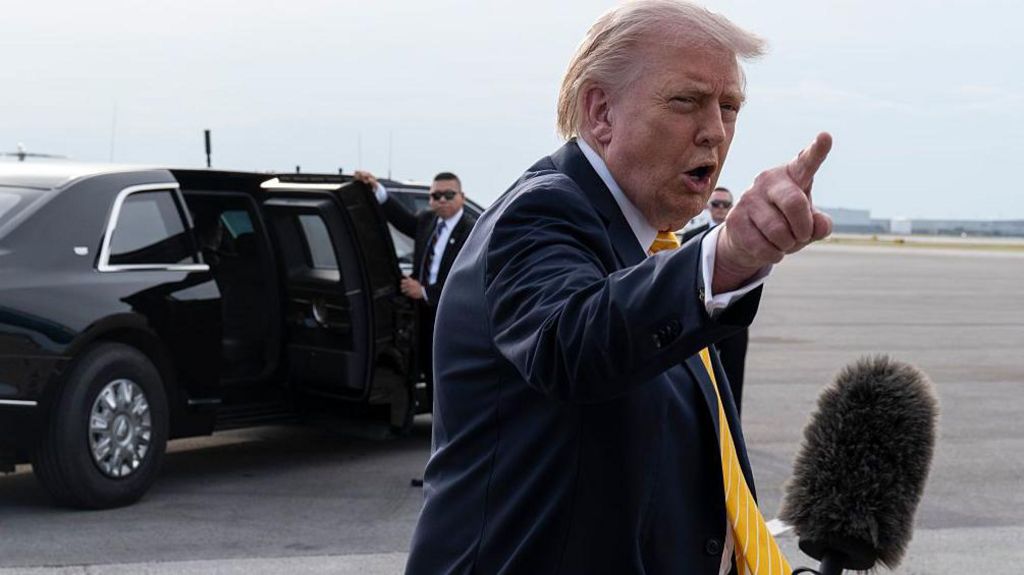
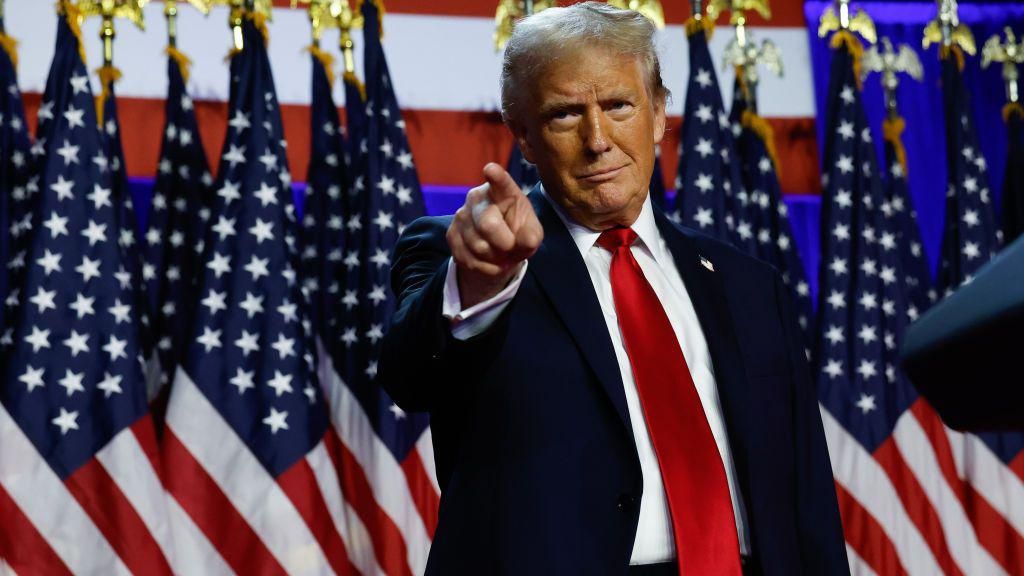
    Massive demonstrations under the banner of ‘No Kings’ have erupted across the United States, with thousands of protesters flooding streets from Washington D.C. to small-town America in a widespread rejection of President Donald Trump’s policies. The movement, now in its third major iteration, has drawn participants from major metropolitan centers to rural communities, all united in their opposition to the administration’s direction.

    Organizers have characterized the protests as a grassroots response to what they describe as authoritarian tendencies within the Trump presidency. Central grievances include the ongoing military engagement in Iran, aggressive federal immigration enforcement tactics, and the escalating cost of living affecting American households. The movement’s name itself serves as a direct rebuke to accusations of monarchical aspirations within the executive branch.

    Visual displays of dissent have become hallmarks of these demonstrations, with participants carrying effigies of Trump, Vice President JD Vance, and other administration figures while demanding their removal from office. The symbolic locations chosen for rallies—including the Lincoln Memorial and National Mall in Washington—carry profound historical significance in the context of American democratic traditions.

    Beyond domestic participation, the movement has garnered international support with American expatriates organizing parallel demonstrations in European capitals including Paris, London, and Lisbon. These overseas gatherings have echoed domestic messaging, with signs labeling the president a ‘fascist’ and ‘war criminal’ while calling for impeachment proceedings.

    The scale of mobilization recalls previous iterations of the movement, with October’s events drawing approximately seven million participants nationwide. While several states have preemptively activated National Guard units, organizers maintain their events remain peaceful expressions of constitutional rights.

    This wave of protests occurs against a backdrop of significant executive actions since Trump’s return to the White House in January. The administration has substantially expanded presidential authority through executive orders that have restructured federal agencies and deployed National Guard troops to various cities despite objections from state governors. These actions, coupled with controversial incidents involving federal agents and the president’s calls to prosecute political opponents, have intensified debates about constitutional boundaries and democratic norms.

    The administration has dismissed criticism as hyperbolic, with Trump personally rejecting characterizations of authoritarianism during media appearances. Nevertheless, critics from across the political spectrum continue to voice concerns about potential erosion of democratic institutions and norms.

  • Bank of America to pay out $72.5m over Epstein lawsuit

    Bank of America to pay out $72.5m over Epstein lawsuit

    Bank of America has agreed to a $72.5 million settlement in a high-profile class-action lawsuit alleging the financial institution facilitated Jeffrey Epstein’s sex trafficking operations. The resolution, filed in New York federal court on Friday, awaits final judicial approval.

    The legal action was initiated in October by an anonymous Florida woman identified as ‘Jane Doe,’ who claimed Epstein abused her ‘on at least 100 occasions’ between 2011 and 2019. The plaintiff maintained two Bank of America accounts under the direction of Epstein’s business associates, which allegedly displayed ‘incredibly alarming and erratic banking behavior.’

    Court documents reveal the lawsuit accused Bank of America of possessing ‘a plethora of information regarding Epstein’s sex trafficking operation but chose profit over protecting the victims.’ The banking giant had previously moved to dismiss the case, characterizing the allegations as ‘threadbare and meritless’ and maintaining it provided routine services to clients without known Epstein connections.

    In an official statement Saturday, Bank of America clarified the settlement represents ‘no admission of liability’ or ‘wrongdoing,’ adding that the resolution ‘allows us to put this matter behind us and provides further closure for the plaintiffs.’

    The case marks the third major financial settlement in the Epstein scandal, following JP Morgan Chase’s $290 million and Deutsche Bank’s $75 million agreements. Notably, the lawsuit referenced over $150 million in payments made to Epstein by billionaire Leon Black, co-founder of Apollo Global, for purported ‘tax and estate planning advice’ through Black’s Bank of America account. Black, who resigned from Apollo amid scrutiny of his Epstein connections, has denied any wrongdoing.

    Sigrid McCawley, legal representative for the victims, characterized the settlement as ‘one more step on the road to much deserved justice.’ The plaintiff described Epstein’s August 2019 jail death—ruled a suicide—as her ‘ultimate escape.’

  • Expectant mothers in Cuba struggle under fuel blockade

    Expectant mothers in Cuba struggle under fuel blockade

    A deepening energy crisis fueled by stringent economic sanctions is creating dangerous conditions for pregnant women across Cuba, exposing stark disparities in healthcare access. Reporting from Havana, the BBC documents how expectant mothers face radically different pregnancy experiences based on their proximity to power resources and transportation options.

    The national fuel shortage has crippled transportation infrastructure, making routine prenatal visits nearly impossible for many women. Those without access to private vehicles or sufficient funds for exorbitant taxi fares must walk miles under the Caribbean sun to reach medical facilities. Hospital generators frequently fail during blackouts, compromising critical medical equipment and climate control essential for patient care.

    This energy emergency compounds existing medical supply shortages, creating a perfect storm of challenges for Cuba’s once-vaunted healthcare system. Doctors report increasing difficulties in maintaining sterile environments and reliable cold storage for medications. The situation illustrates how geopolitical tensions directly impact civilian populations, particularly vulnerable groups like pregnant women and their unborn children.